

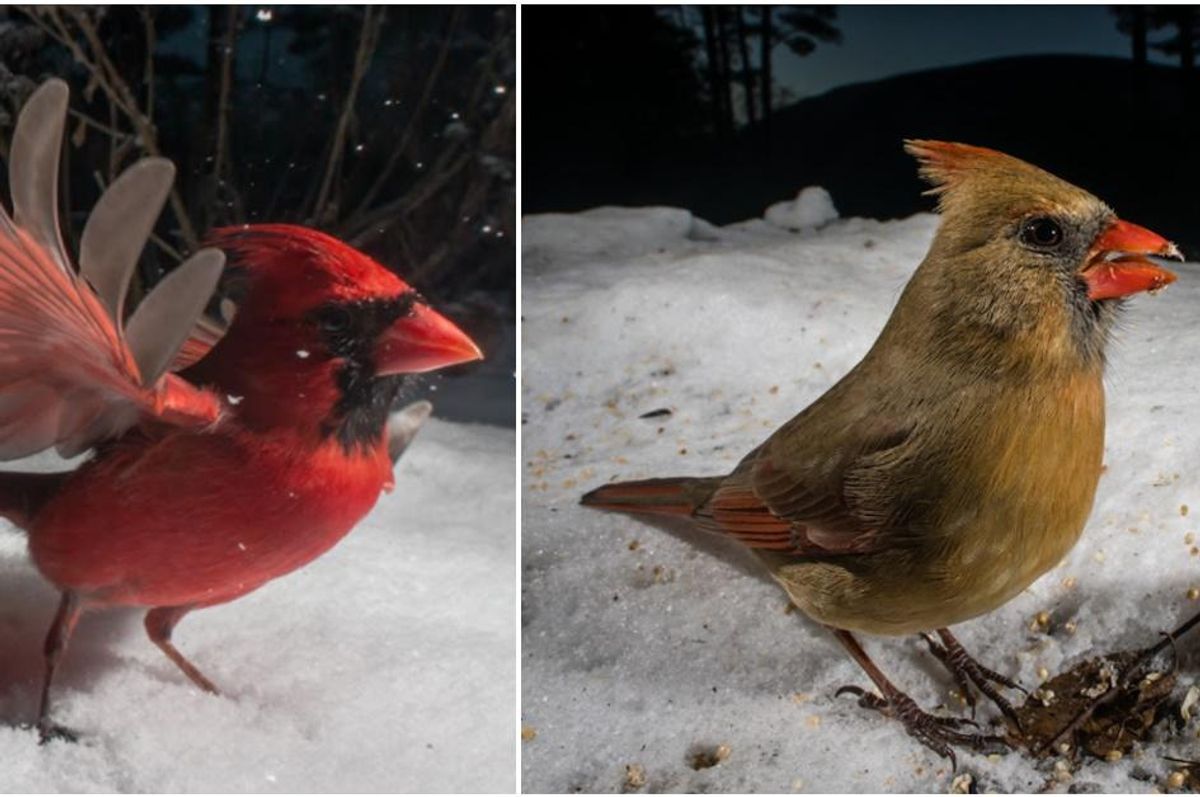
Two northern cardinals captured on Carla Rhodes' bird-feeder camera.
The pandemic has caused many people to reevaluate their surroundings. When you’re stuck at home more often than you’d like, you start to pay a lot more attention to what goes on in your own backyard.
This type of introspection inspired wildlife photographer Carla Rhodes to get a closer look at the furry friends that live near her home in the Catskill mountains of New York.
What she found was magical.
“The winter of 2020-2021 was particularly brutal to humankind. After months of enduring the Covid-19 pandemic, we were now collectively slogging through winter. As a result of being stuck at home, I focused on my immediate surroundings like never before,” Rhodes said in a statement.
Rhodes positioned a DSLR camera trap beneath her bird feeder to get an up-close glimpse of the wildlife that came to sample her delicious seeds.
The results are an incredible series of photos of birds and other woodland creatures from a vantage point most people never see. Rhodes calls her project, "Beneath the Bird Feeder."
The birdfeeder photos also gave a new glimpse into the behavior of several species of birds and rodents that call the Catskills home.
“As I got deeper into the project, intriguing observations emerged,” Rhodes says. “I noticed distinct repeat visitors such as a Dark-Eyed Junco with an overgrown beak, a deer mouse with a notched ear, and an irruption of Red-Breasted Nuthatches. Dark-Eyed Juncos always showed up at the crack of dawn and Northern Cardinals would always be the last visitor of the day as dusk turned into evening.”
Here are 15 of the most captivating photos that Rhodes captured from beneath her bird feeder.
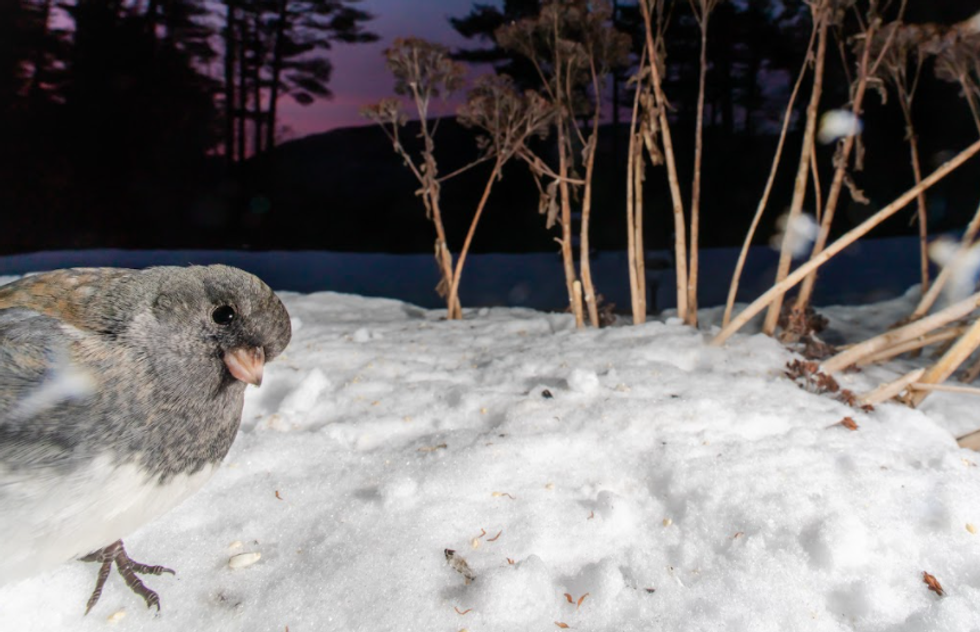
1. Dark-eyed junco
via Carla Rhodes
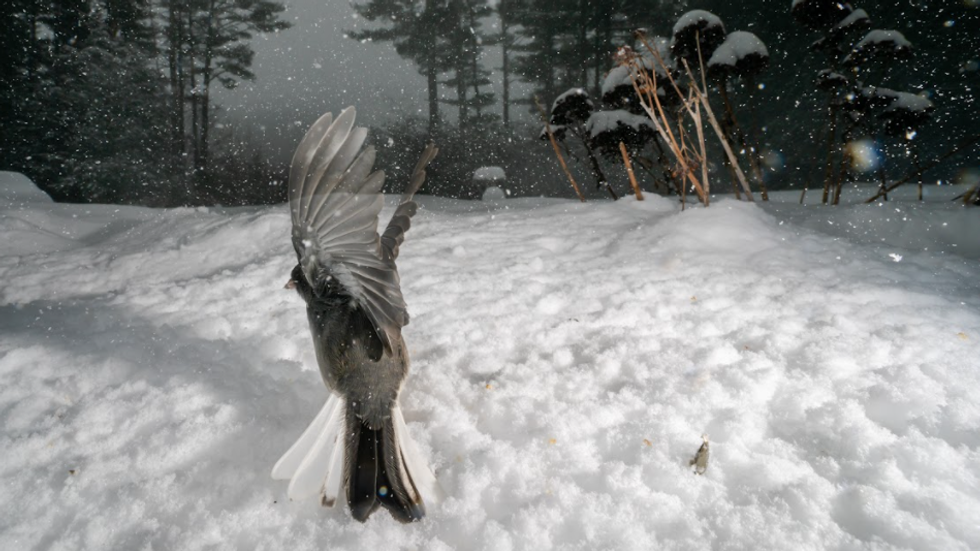
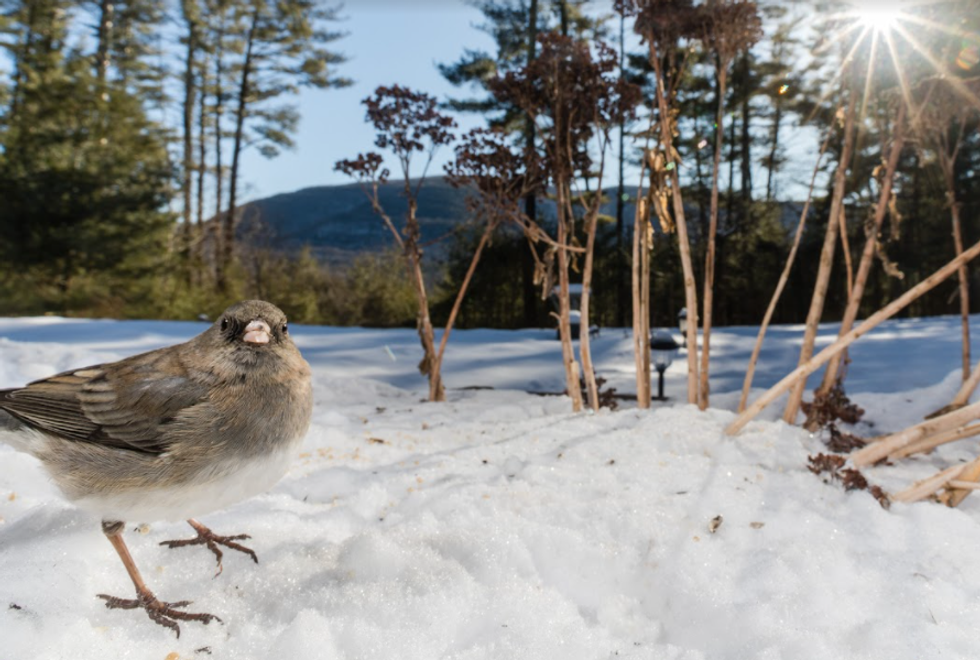
"Often overlooked and considered drab ground-feeding birds, Dark-Eyed Juncos hold a special place in my heart due to their funny and curious behaviors. Every day they were first to arrive beneath the bird feeder," Rhodes says. "Dark-Eyed Juncos were one of the most frequent and curious subjects beneath the bird feeder."
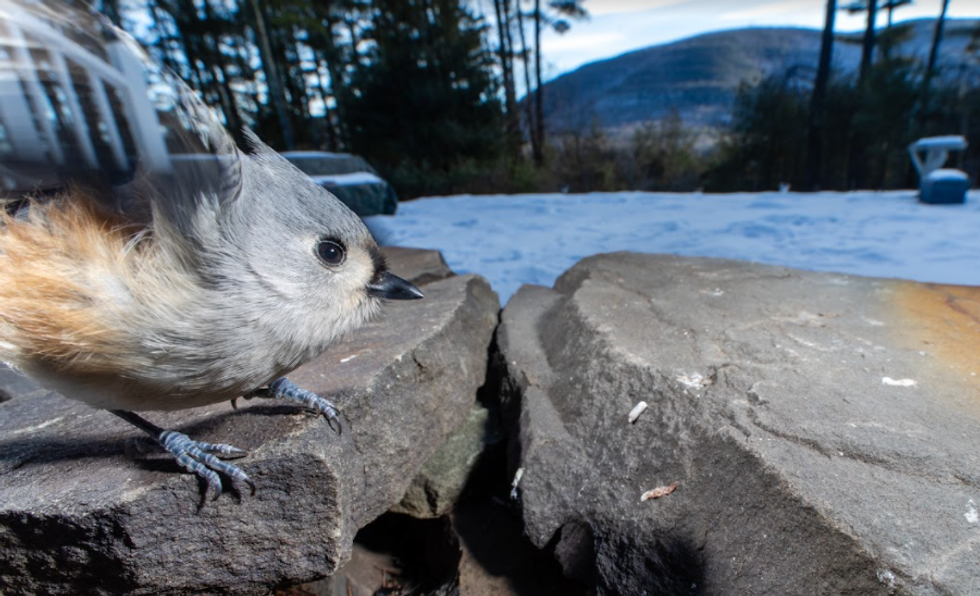
4. Tufted titmouse
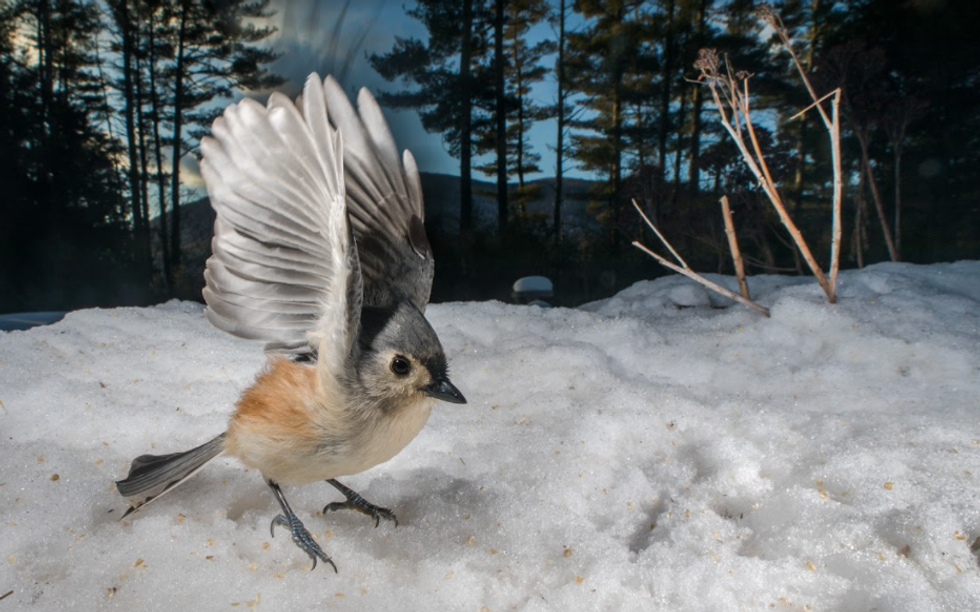
via Carla Rhodes
According to All About Birds, the tufted titmouse is "common in eastern deciduous forests and a frequent visitor to feeders."
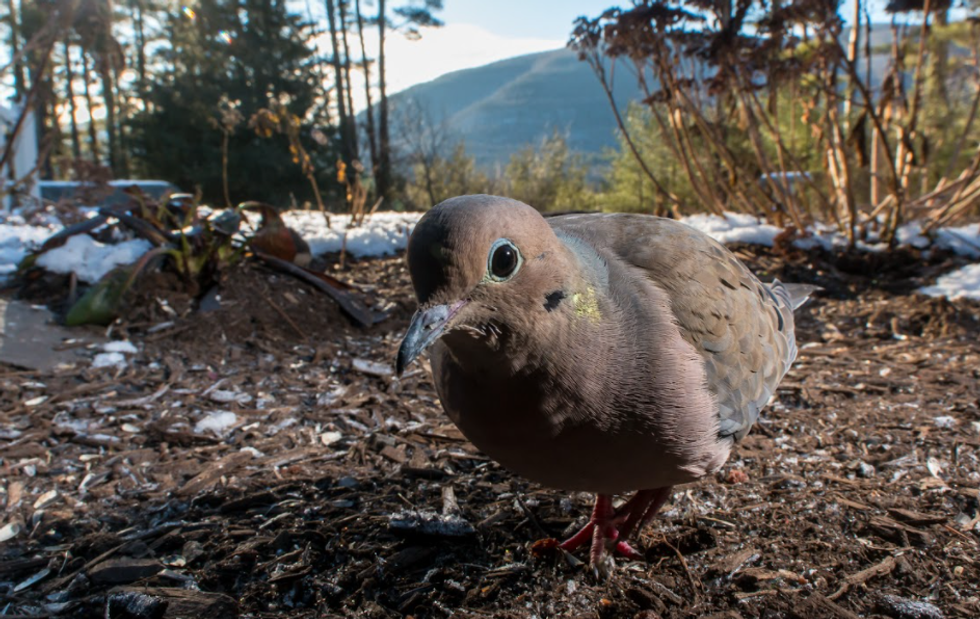
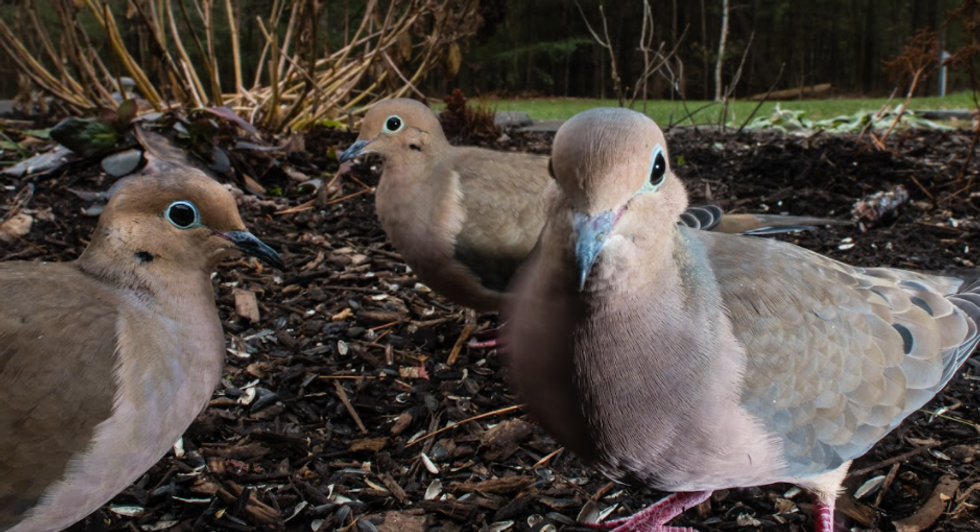
5. Mourning dove
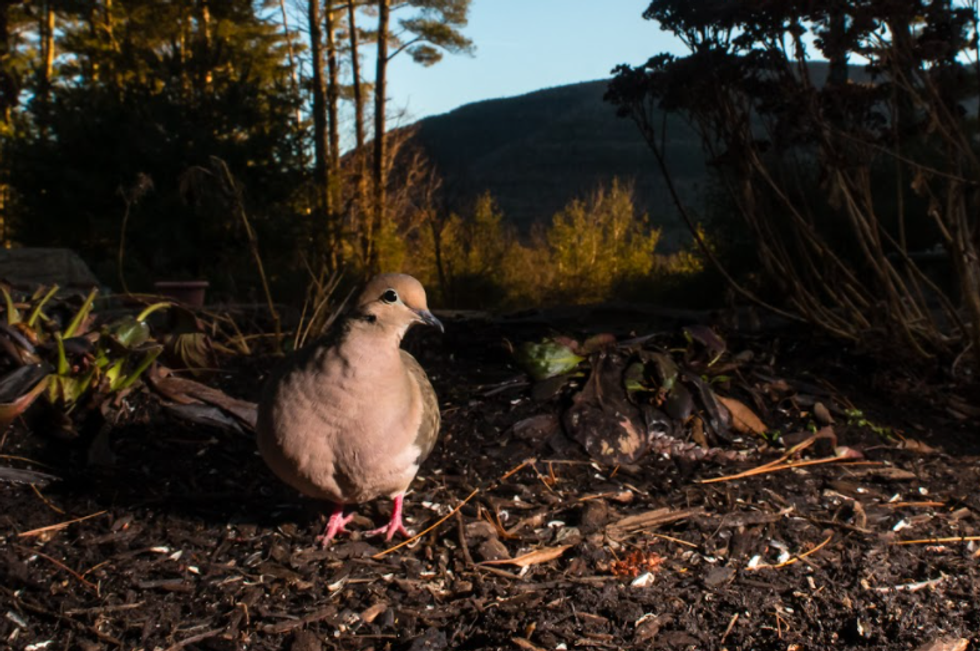
via Carla Rhodes
"Observing Mourning Doves was a daily pleasure, especially when they gathered to form a clean-up crew beneath the bird feeder. Mourning doves are monogamous and possibly mate for life," Rhodes writes.
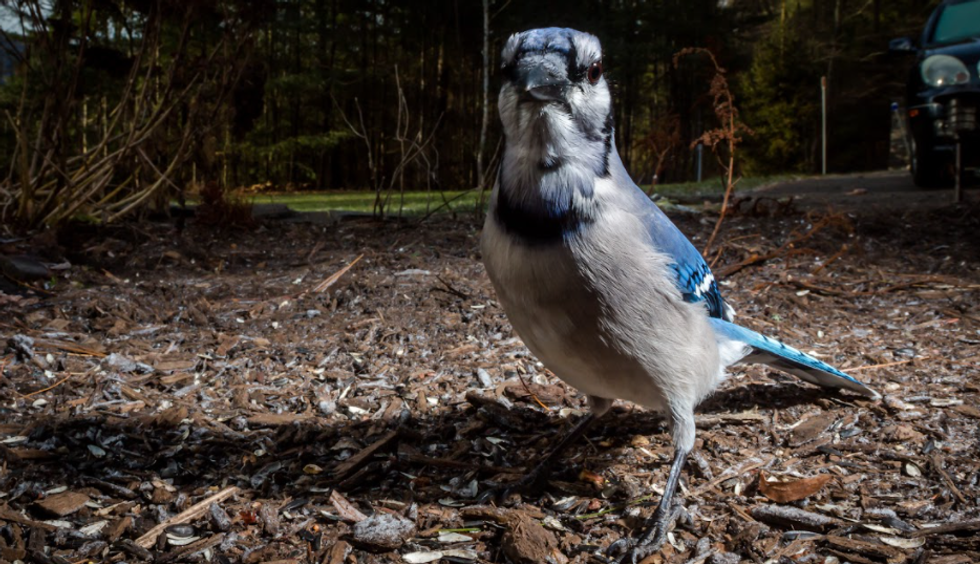
8. Blue jay
via Carla Rhodes
"Blue Jays are known for their intelligence and complex social systems with tight family bonds," All About Birds says. "Their fondness for acorns is credited with helping spread oak trees after the last glacial period."
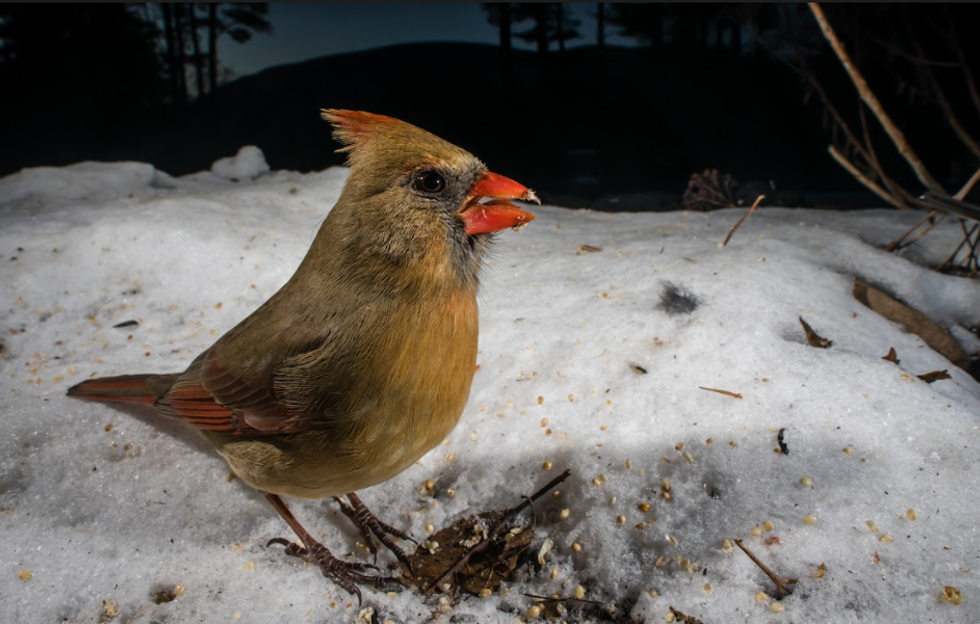
9. Northern cardinal
via Carla Rhodes
"Northern Cardinals were always the last to show up beneath the bird feeder, shortly after dusk every evening," Rhodes writes.
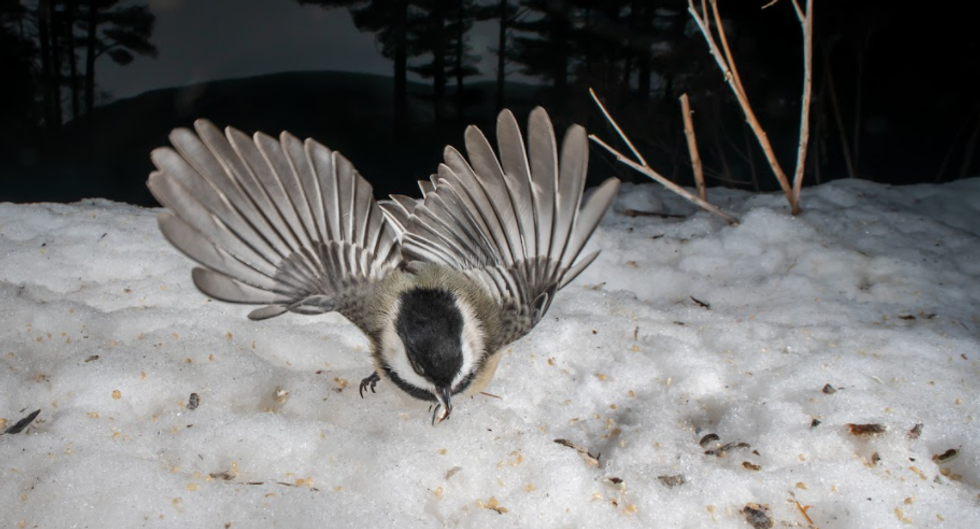
10. Black-capped chickadee
via Carla Rhodes
"Little flocks of Black-capped Chickadees enliven the winter woods with their active behavior and their cheery-sounding chick-a-dee callnotes as they fly from tree to tree, often accompanied by an assortment of nuthatches, creepers, kinglets, and other birds," the Audubon field guide to North American birds says.
12. Eastern gray squirrel
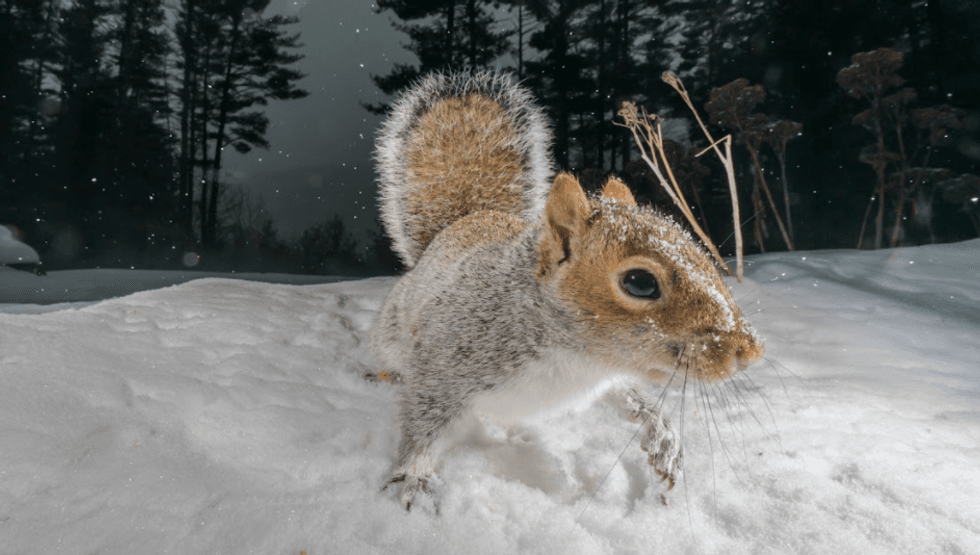
via Carla Rhodes
Eastern gray squirrels are important members of forest ecosystems as they play a vital role in dispersing seeds.
13. American red squirrel
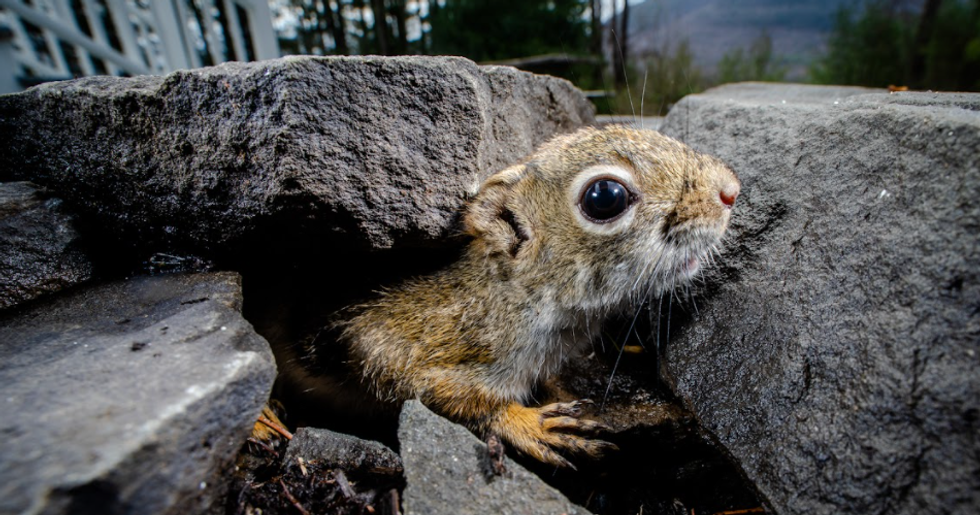
via Carla Rhodes
The American red squirrel is known for its distinct bushy and dark red tail with hints of a white outline.
14. American red squirrel
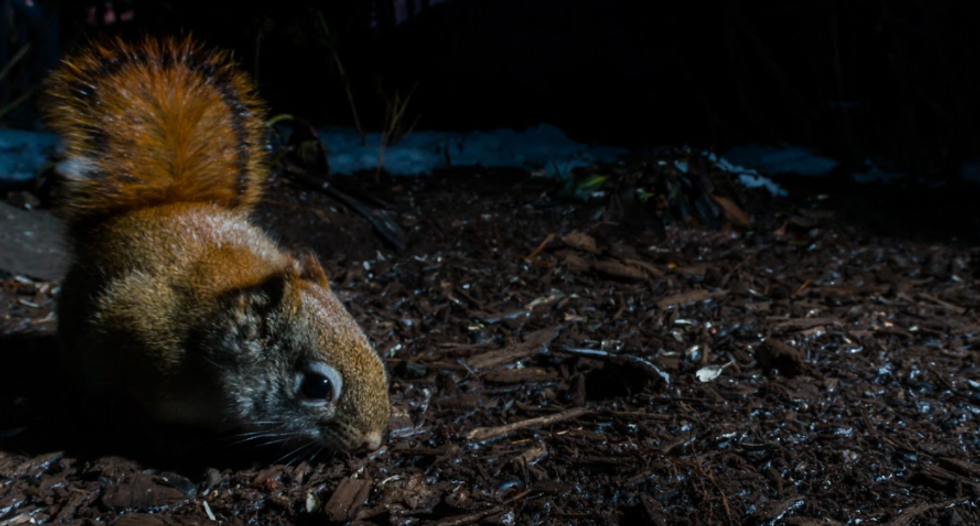
via Carla Rhodes
15. Northern short-tailed shrew
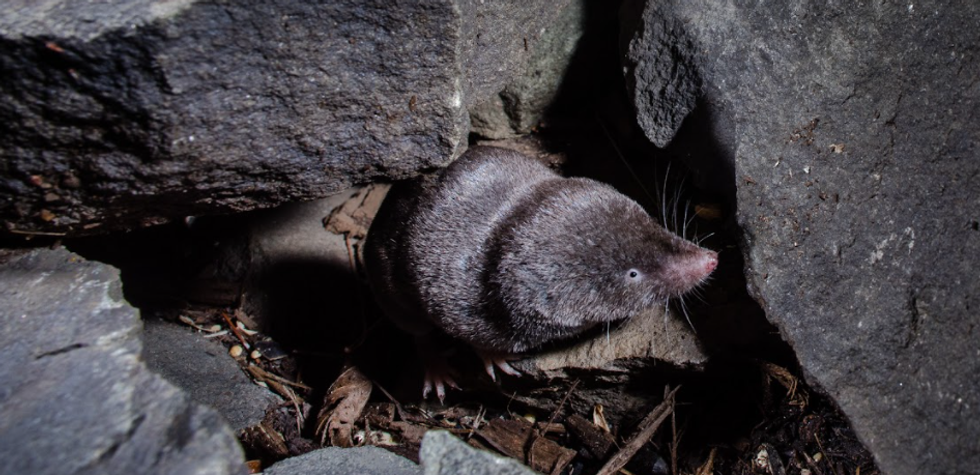
via Carla Rhodes
If you see a northern short-tailed shrew, be careful. It's venomous and paralyzes its victims with poisonous saliva. In humans, a bite can cause swelling and intense pain.
This article originally appeared on 01.03.22
- 15 of the best entries in the 2022 Comedy Wildlife Photography Awards contest ›
- 21 of the funniest photos from the Comedy Wildlife Awards - Upworthy ›
- Bird Buddy is a fun AI-enabled feeder - Upworthy ›
- Why we need to change our attitudes about pigeons - Upworthy ›
- Cemetery films bluebird couple in camera-equipped birdhouse - Upworthy ›
- 12 birds that are so odd-looking they almost don't seem real - Upworthy ›
- The heartbreaking history of the inflight magazine - Upworthy ›
- Robert Irwin honors his father's legacy—wrestling crocs and teaching us to respect nature - Upworthy ›
- The 2021 Comedy Wildlife Awards winners - Upworthy ›
 A Generation Jones teenager poses in her room.Image via Wikmedia Commons
 An office kitchen.via
  An angry man eating spaghetti.via



An Irish woman went to the doctor for a routine eye exam. She left with bright neon green eyes.
It's not easy seeing green.
Did she get superpowers?
Going to the eye doctor can be a hassle and a pain. It's not just the routine issues and inconveniences that come along when making a doctor appointment, but sometimes the various devices being used to check your eyes' health feel invasive and uncomfortable. But at least at the end of the appointment, most of us don't look like we're turning into The Incredible Hulk. That wasn't the case for one Irish woman.
Photographer Margerita B. Wargola was just going in for a routine eye exam at the hospital but ended up leaving with her eyes a shocking, bright neon green.
At the doctor's office, the nurse practitioner was prepping Wargola for a test with a machine that Wargola had experienced before. Before the test started, Wargola presumed the nurse had dropped some saline into her eyes, as they were feeling dry. After she blinked, everything went yellow.
Wargola and the nurse initially panicked. Neither knew what was going on as Wargola suddenly had yellow vision and radioactive-looking green eyes. After the initial shock, both realized the issue: the nurse forgot to ask Wargola to remove her contact lenses before putting contrast drops in her eyes for the exam. Wargola and the nurse quickly removed the lenses from her eyes and washed them thoroughly with saline. Fortunately, Wargola's eyes were unharmed. Unfortunately, her contacts were permanently stained and she didn't bring a spare pair.
- YouTube youtube.com
Since she has poor vision, Wargola was forced to drive herself home after the eye exam wearing the neon-green contact lenses that make her look like a member of the Green Lantern Corps. She couldn't help but laugh at her predicament and recorded a video explaining it all on social media. Since then, her video has sparked a couple Reddit threads and collected a bunch of comments on Instagram:
“But the REAL question is: do you now have X-Ray vision?”
“You can just say you're a superhero.”
“I would make a few stops on the way home just to freak some people out!”
“I would have lived it up! Grab a coffee, do grocery shopping, walk around a shopping center.”
“This one would pair well with that girl who ate something with turmeric with her invisalign on and walked around Paris smiling at people with seemingly BRIGHT YELLOW TEETH.”
“I would save those for fancy special occasions! WOW!”
“Every time I'd stop I'd turn slowly and stare at the person in the car next to me.”
“Keep them. Tell people what to do. They’ll do your bidding.”
In a follow-up Instagram video, Wargola showed her followers that she was safe at home with normal eyes, showing that the damaged contact lenses were so stained that they turned the saline solution in her contacts case into a bright Gatorade yellow. She wasn't mad at the nurse and, in fact, plans on keeping the lenses to wear on St. Patrick's Day or some other special occasion.
While no harm was done and a good laugh was had, it's still best for doctors, nurses, and patients alike to double-check and ask or tell if contact lenses are being worn before each eye test. If not, there might be more than ultra-green eyes to worry about.