upworthy
Add Upworthy to your Google News feed.
Google News Button
Joy

Until we meet again: How Hana Hou! became America’s final inflight magazine

“I could make that magazine last for almost my entire flight as I looked through every item and tried to picture the type of person that would buy that stuff.”

Flying, airlines, magazine, in-flight magazine, publication

Sky-high publications are vanishing.

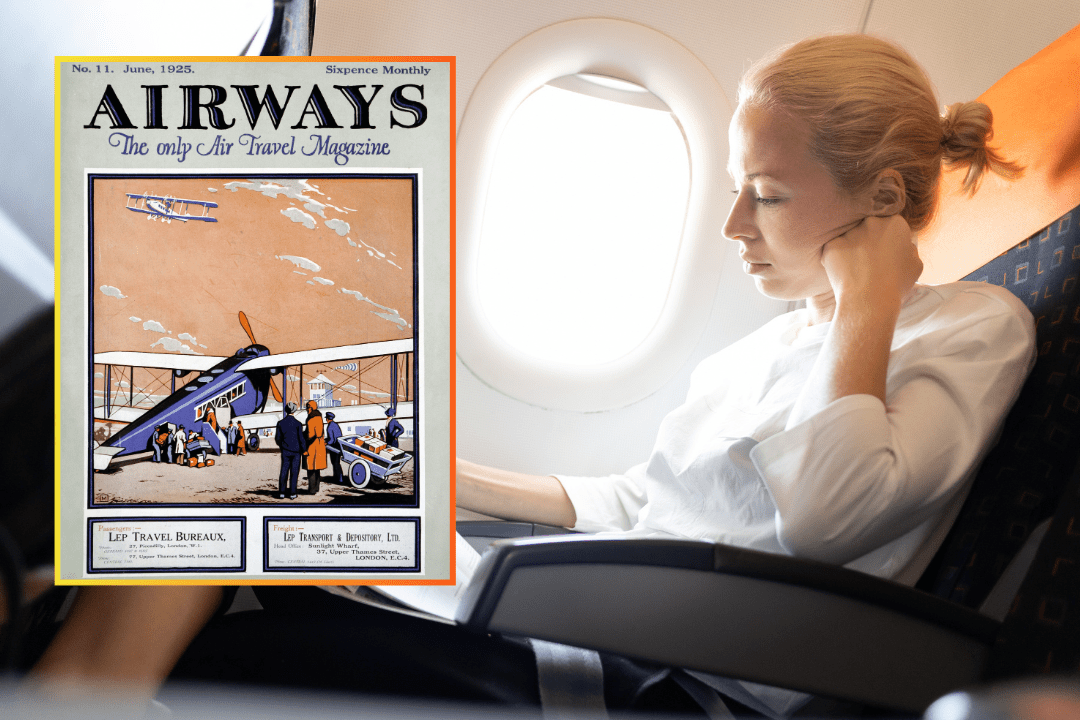
Glossy pages, local travel tips that get you psyched for your arrival, and sudoku puzzles that bear the wrong answers of past travelers—inflight magazines have been a staple of air travel practically since aviation’s invention. But in today’s increasingly digital world, these sky-high publications have nearly vanished in America, with one notable exception: Hawaiian Airlines’ Hana Hou! magazine, which is now the final printed airline magazine by a major U.S. carrier.

Before that was Hemispheres, the inflight magazine of United Airlines, which, after 32 years, published its final edition in September 2024. Ellen Carpenter, the former editor-in-chief of Hemispheres, told the Columbia Journalism Review that, although the magazine reached 12 to 15 million people per month, print was no longer feasible or a priority for the airline.


Airline, magazine, flying, skies, readershipWe will miss you, airline magazines. Giphy


“As the Internet grows and grows, it’s harder and harder to find curated content,” she explained. Hemispheres marked the latest casualty in what has become a mass extinction of in-flight magazines: once cherished travel companions and information-rich texts are now completely gone from the seatback pockets. Over the past decade, we’ve seen numerous airlines discontinue their print publications, including those from Delta, Alaska, Southwest, and American Airlines, which ended its American Way publication in 2021. This shift is larger than cost-cutting for airlines: it’s the end of a tradition that once united us, strangers, in the sky.

The history

The inflight magazine began, where else, but Pan American Airlines in the 1950s. Commonly known as Pan Am, the airline “epitomized the luxury and glamor of intercontinental travel,” a status reflected in its magazine, Clipper Travel. Although, the golden era of the inflight magazine was arguably in the 1980s, which approximately lines up with or directly after the golden era of journalism. At the most basic level, these free magazines offered small details about the fleeting and sumptuous advertisements for luxury goods. However, they could also be gold mines—bastions of local journalism with a trick up its sleeve. You see, airplane magazines enjoyed the attention of captive audiences with few other means of distraction. As airlines began to see the potential their magazines had to attract business travelers and advertisers, they began heavily investing in these publications, which included offering writers a unique type of freedom not found anywhere else.

American Way, the former in-flight magazine of American Airlines, reached more than 73 million people on planes alone in 1990, according to The Washington Post. Back then, inflight magazines were not merely promotional brochures; they were legitimate publications with the budgets and reach to create content that flyers actually wanted to read.

“It really was a golden age,” said Doug Crichton, editor of American Way from 1988 to 1993. “The airline just said, ‘Do whatever you want.’ …Our goal was to make it a New Yorker of the sky.”

Writers during this time could earn between $1 and $3 per word, with article features commanding a substantial $2,500 (when adjusted for inflation, that equals about $6,000 today). "The airline magazines were really still that bastion of great print journalism where they would say we’re going to send you to Spain, we’re going to send you to Mexico,” said Jenny Adams, a freelance journalist based in New Orleans who wrote for American Way, Hemispheres and other in-flight magazines.

However, as technology advanced, the inflight magazine found itself competing against movie screens, gaming consoles, personal entertainment systems, smartphones, and high-speed Wi-Fi for attention. They began to lose their allure. Then, in 2020, as the COVID-19 pandemic shocked the airline systems, it delivered a final blow as airlines temporarily removed magazines to ensure safety regarding surface transmissions.

Reading, inflight magazine, airlines, flying, covid19Airline magazines have lost their allure. Photo credit: Canva

On Reddit, many users lamented the loss of the inflight magazine, with one writing, “I miss the [American Airlines] magazine. They always did deep dives into interesting locations.”

Another commented, “There was a great interview with Bill Murray in one of the last issues I read. They were always a bit off-beat like that, and I remember thinking ‘I wonder what Bill Murray’s publicist thought when whoever called was like, you know, it’s for the magazines that go on airplanes.’”

Still others missed the SkyMall shopping magazine, writing, “I could make that magazine last for almost my entire flight as I looked through every item and tried to picture the type of person that would buy that stuff.”

Hana Hou!

However, there is one saving grace: Hana Hou! magazine. Published bi-monthly, the Honolulu magazine is still prized for its high-quality journalism and engaging storytelling centered around Hawaiian culture and the islands’ heritage. The magazine, which roughly translates to “Encore!”, has received awards from the Society of Professional Journalists and maintains an extensive archive dating back 20 years.

"Hana Hou! has not only served as an entertainment option but also as a cultural ambassador, connecting travelers to Hawaii," notes Beat of Hawaii. This travel website suggests that readers "might want to pick up a copy of Hana Hou! soon,” because it “might become a valuable collector's item one day."


Indeed, the future of Hana Hou! remains uncertain, with Hawaiian Airlines’ recent acquisition by Alaska Airlines (which previously discontinued its print magazine), so it’s possible that the publication’s days may be numbered. That outcome would be heartbreaking because we’re not just losing magazines, we’re losing a tangible artifact—something that any one of us could pick up while flying, that had the power to connect us, even just for a second. To make us feel human. Inflight travel writer, Jenny Adams, sums it up perfectly: "It's hard now when you're on your phone. You don't have that same connection. It's not tactile. You're not, like, excited to go fly somewhere. I'm just gutted that that's all gone.”

generation jones, gen jones, gen jonesers, girls in 1970s, 1970s, teens 1970s
Image via Wikimedia Commons

Generation Jones is the microgeneration of people born from 1954 to 1965.

Generational labels have become cultural identifiers. These include Baby Boomers, Gen X, Millennials, Gen Z and Gen Alpha. And each of these generations is defined by its unique characteristics, personalities and experiences that set them apart from other generations.

But in-between these generational categories are "microgenerations", who straddle the generation before and after them. For example, "Xennial" is the microgeneration name for those who fall on the cusp of Gen X and Millennials.


And there is also a microgeneration between Baby Boomers and Gen X called Generation Jones, which is made up of people born from 1954 to 1965. But what exactly differentiates Gen Jones from the Boomers and Gen Xers that flank it?

- YouTube www.youtube.com

What is Generation Jones?

"Generation Jones" was coined by writer, television producer and social commentator Jonathan Pontell to describe the decade of Americans who grew up in the '60s and '70s. As Pontell wrote of Gen Jonesers in Politico:

"We fill the space between Woodstock and Lollapalooza, between the Paris student riots and the anti-globalisation protests, and between Dylan going electric and Nirvana going unplugged. Jonesers have a unique identity separate from Boomers and GenXers. An avalanche of attitudinal and behavioural data corroborates this distinction."

Pontell describes Jonesers as "practical idealists" who were "forged in the fires of social upheaval while too young to play a part." They are the younger siblings of the boomer civil rights and anti-war activists who grew up witnessing and being moved by the passion of those movements but were met with a fatigued culture by the time they themselves came of age. Sometimes, they're described as the cool older siblings of Gen X. Unlike their older boomer counterparts, most Jonesers were not raised by WWII veteran fathers and were too young to be drafted into Vietnam, leaving them in between on military experience.

How did Generation Jones get its name?

generation jones, gen jones, gen jones teen, generation jones teenager, what is generation jones A Generation Jones teenager poses in her room.Image via Wikmedia Commons

Gen Jones gets its name from the competitive "keeping up with the Joneses" spirit that spawned during their populous birth years, but also from the term "jonesin'," meaning an intense craving, that they coined—a drug reference but also a reflection of the yearning to make a difference that their "unrequited idealism" left them with. According to Pontell, their competitiveness and identity as a "generation aching to act" may make Jonesers particularly effective leaders:

"What makes us Jonesers also makes us uniquely positioned to bring about a new era in international affairs. Our practical idealism was created by witnessing the often unrealistic idealism of the 1960s. And we weren’t engaged in that era’s ideological battles; we were children playing with toys while boomers argued over issues. Our non-ideological pragmatism allows us to resolve intra-boomer skirmishes and to bridge that volatile Boomer-GenXer divide. We can lead."

@grownupdish

Are you Generation Jones? Definitive Guide to Generation Jones https://grownupdish.com/the-definitive-guide-to-generation-jones/ #greenscreen #generationjones #babyboomer #generationx #GenX #over50 #over60 #1970s #midlife #middleage #midlifewomen #grownupdish #over50tiktok #over60women #over60tiktok #over60club

However, generations aren't just calculated by birth year but by a person's cultural reality. Some on the cusp may find themselves identifying more with one generation than the other, such as being culturally more Gen X than boomer. And, of course, not everyone fits into whatever generality they happened to be born into, so stereotyping someone based on their birth year isn't a wise practice. Knowing about these microgenerational differences, however, can help us understand certain sociological realities better as well as help people feel like they have a "home" in the generational discourse.

As many Gen Jonesers have commented, it's nice to "find your people" when you haven't felt like you've fit into the generation you fall into by age. Perhaps in our fast-paced, ever-shifting, interconnected world where culture shifts so swiftly, we need to break generations into 10 year increments instead of 20 to 30 to give everyone a generation that better suits their sensibilities.

This article originally appeared two years ago. It has been updated.

teenage boy, teenage girl, conversation, meeting people, talking
Photo credit:Canva/Photos

A teenage girl and boy having a nice chat.

You’re standing in line at the grocery store and you see someone cute. You’d like to strike up a conversation without it being awkward...but that feels kinda nerve-wracking, right? Or maybe you’re standing around at a party and see someone you’d like to get to know, and want to approach them in a way that doesn’t feel uncomfortable. That probably feels a little scary, too.

The good news is that with a few easy tricks, you can improve your communication skills and feel confident approaching anyone.


According to years of psychological research, several principles can help make striking up conversations with strangers easier. The great thing is that they all work best when approached in a casual, effortless way.

1. Comment on the environment

Let’s say you’re at a party in someone’s living room. You can comment on physical objects: “Gee, this guy sure has a lot of books.” Or maybe you’re at a party where everyone brought food: “The food smells great. What are you grabbing first?” You can also comment on people’s behavior: “Is it me, or is everyone really well dressed tonight?”

This works because of the Joint Attention Effect, which says that when two people pay attention to the same thing at the same time, they create a common point of reference. This shared focus can immediately make people feel closer, even in social situations.

man and woman, wine, social skills, conversation

2. Make a playful comment

People will usually respond when you make a playful or unexpected comment, as long as it isn’t threatening. For example, if the person you want to talk to is holding a cocktail, you might joke, “That drink looks serious.” If you’re stuck in a long line: “Do you know why we’re here? I almost forgot why we’re in line—it’s been so long.” Or if you’re at a child’s birthday party and spot another parent you’d like to talk to: “Be honest, how tired of Little Caesars’ pizza are you?”

This works because of the Benign Violations Theory, which suggests that when someone violates a social norm in a non-threatening way, it makes people laugh and activates bonding mechanisms. It signals to your new friend that you’re playful and friendly, and when they laugh at your joke, it shows that you share similar values.

man and woman, people laughing, sitting on couch, good company, jokes

3. Ask their opinion

Another effortless way to engage someone you don’t know is to ask their opinion. For example, if you’re in the produce section at the supermarket, you might ask, “Do these peaches look good to you?” Or if you’re at a party and bring up a pop culture moment most people watched: “So, was Bad Bunny great at the Super Bowl, or is he overrated?”

This works because of what’s known as Cognitive Ease: people are more likely to respond to questions that are easy to process. Asking someone for their subjective opinion is non-threatening, and it’s easy for them to come up with an answer that makes them feel comfortable. Plus, if social media has taught us anything, it’s that everyone loves to share their opinions.

drinks, bar, socializing, man and woman, party

Next step: Pivot and ask questions

Given that all of these strategies are psychologically designed to elicit a response, even from someone you’ve never met, you have a strong chance of sparking a conversation. The key is to widen the exchange once you get that response by asking two more questions. In fact, a Harvard University study found that one of the easiest ways to be likable is to start a conversation with a question and then follow up with two more.

“We identify a robust and consistent relationship between question-asking and liking,” the study's authors wrote. “People who ask more questions, particularly follow-up questions, are better liked by their conversation partners.”

These three psychological rules show that it doesn’t take a Herculean effort to coax a stranger into having a conversation. All you have to do is make an effortless invitation by tapping into the environment you share with them, make a playful joke, or ask their opinion. Then ask a few questions, listen, and there’s a good chance you’ve made a new friend.

nail salon ad; funny nail salon ad; Henry Pro Nails videos; viral videos; canada manicure; canadian nail tech

This Canadian nail salon has people packing their bags for a manicure

There are a lot of nail salons out there, and without word-of-mouth recommendations from people you trust, it can be impossible to know which salon to visit. Thanks to social media, many businesses can advertise their services without spending much on traditional marketing like television, billboards, and radio. Using pictures and videos of their amazing work to market can help maintain a steady flow of customers, but one Canadian nail salon is taking a slightly different approach.

Henry Pro Nails which started in Toronto, Canada, is leaving the Internet in stitches after creating a viral ad for his nail salon. The video uses the beginnings of several viral clips, but instead of the expected ending, Henry pops in to complete the viral moment in hilarious, unexpected ways.


HenryProNails takes viral videos and turns them into funny marketing

It opens with a familiar viral video of a man on a stretcher being pulled by EMS when the stretcher overturns, flopping the man onto the ground. But instead of it ending with the injured man on the ground, Henry seamlessly appears, lying out on the floor of his salon and delivers his first line, "Come to my nail salon. Your nails will look beautiful."

nails, nail salon, red nail polish, manicure, hands A woman getting her nails painted.via Canva/Photos


In another clip, a man holds his leg straight up and somehow flips himself into a split. When the camera cuts back to Henry, he's in the splits on the floor of his nail salon promoting loyalty discounts. The ad is insanely creative, and people in the comments can't get enough. Some are even planning a trip to Toronto just to get their nails done by the now Internet-famous top nail artist in Canada. This isn't Henry's first rodeo making creative ads, but this one is, without a doubt, his most popular—and effective.

People love Henry's videos

"I will fly to Canada to get my nails done here just because of this hilarious video. You win this trend for sure," one woman says.

"Get yourself a passport and make a road trip! My bf and I are legit getting ours, and it's only a 4 hr drive from where we are in Pennsylvania. Their prices are a lot better than other places I've been too," another person says while convincing a fellow American citizen to make the trip.

"Omg, where are you located? I would fly to get my nails done by you," one person writes.

"The pedicure I had at Henry’s was the best I have ever had. Unfortunately, it made all other places disappointing, and I don’t live close enough for Henry’s to be my regular spot," someone else shares.


In another hilarious video, Henry urges a woman not to divorce her husband for not cooking her dinner, but instead to come get her nails done so she'll feel a lot better.


Henry also jumped onto the "very demure, very mindful" trend on TikTok with his own take on the phrase.


It just goes to show that creative advertising can get people to go just about anywhere, but great service is what keeps them coming back. If you're ever in Canada and find yourself needing an emergency manicure, Henry's Pro Nails is apparently the place to be.

This article originally appeared two years ago. It has been updated.

Jim Henson interviewing with Muppets is a delightful reminder of his magical genius

Even adults would forget that his characters weren't actually alive.

jim henson, muppets, puppets, puppeteering, the muppet show
Public domain

Jim Henson with some of his Muppets

Few individuals have had an impact on the childhoods of millions and the imaginations of people of all ages like Jim Henson. From Sesame Street to The Muppet Show to The Dark Crystal and Labyrinth, Gen Xers grew up with Henson's magic being a familiar and comforting presence. And to this day, over three decades after his death, the characters he created are still household names.

For those of us who were raised on Big Bird, Bert and Ernie, Kermit, and Miss Piggy, Henson's creatures feel as real as any living, breathing performer from our childhoods. But it's not just because we were kids when we were introduced to them. Even adults who met the Muppets found themselves transported into Henson's imaginary world, and after seeing interviews of the puppeteer with his creatures, it's easy to see why.


Watch:

Henson didn't even pretend to not be controlling Kermit. He didn't bother with ventriloquism. And yet, Kermit feels truly alive and separate from the person animating him. It almost feels surreal. Or perhaps just...real.

Henson's characters even convinced film crew members

Both guests and crew members alike found themselves pulled into Henson's world, even while fully understanding that the puppets were being controlled by people. The crew would sometimes move the boom mic to a puppet instead of the puppeteer. Directors would sometimes give stage directions directly to the Muppet instead of the human animating it. Dick Cavett, who interviewed Henson with his Muppets, said, “No matter how much you know about this, it’s completely convincing.”

Even when a Muppet would explain the fact that the person was speaking to a puppet, it still seemed like a sentient being. Case in point:

(This may be the one time you see Henson swear, but in context, it's brilliantly wholesome.)

@guygilchrist

My old boss’s last public performance as Rowlf.🐶🙏🏻 . . #jimhenson #jimhensonscartoonist #themuppets #fyp #foryoupage


Frank Oz shared what it was like to work with Henson

Of course, Henson didn't work alone. Bringing his characters to life in all the ways he envisioned took the work of many people, but none were more aligned with Henson himself than his partner-in-puppetry, Frank Oz. Oz was the Miss Piggy to Henson's Kermit, the Bert to his Ernie, the Animal to his Dr. Teeth.

Oz started working with Henson when he was just 19 years old, and for 27 years the duo created unforgettable magic together. It wasn't just the puppets. It was the voices, the comedic timing, the way they could make you laugh in one moment and well up with tears in the next. Their creatures entertained us but also taught us about being human, which was a truly remarkable feat.

Oz shared what it was like to work with Henson with Gene Shalit after Henson's death in 1990:

- YouTube www.youtube.com

Like Fred Rogers, Jim Henson is remembered for being a distinctly decent person in addition to his creative work. He brought the ancient art of puppetry into the modern world, touching every generation in his lifetime and after in a way that remains unmatched. As the tribute song "A Boy and His Frog" by Tom Smith says:

"They say, 'Oh that's foam and a wire, attached to a green velvet sleeve. Anyone can do that.' Well, that's true, I suppose, but who else can make them believe?" (Grab a tissue before listening to this song, Henson lovers. It's a doozy.)

- YouTube youtu.be

How his legacy lives on

Henson’s children, Lisa, Cheryl, Brian, John, and Heather, have carried on his work by running the Jim Henson Company and Jim Henson Foundation, performing themselves, and continuing to advocate for the art of puppetry. They've also kept Jim Henson's Creature Shop running, creating puppets, animatronics, and even digital puppetry. The shop designed and built the full-size animatronic puppets for the 2023 Five Nights at Freddy's movie and works on television, commercial, and themed projects as well.

In 2024, renowned director Ron Howard released a documentary about Henson's life and work, Jim Henson: Idea Man, which can be found on Disney +.

- YouTube www.youtube.com


Malala Yousafzai, Khushal Yousafziai Pakistan, siblings, support, family
Photo credit: Used with permission from Khushal Yousafzai

Malala Yousafzai and her brother, Khushal, pose for a photo.

Malala Yousafzai most certainly has a lot of light. At the young age of 11, she began advocating for education for girls after the Taliban took over her district of Swat in Pakistan. About three years later, she—alongside two other girls—was shot in the head on a bus for her passionate, outspoken views.

She survived and went on to address the United Nations about the importance of education. According to her nonprofit's website:


"The U.N. recognized July 12 as Malala Day, in honour of her courageous advocacy and to highlight the global struggle for education. With her father, her ally and inspiration, she established Malala Fund, an organisation dedicated to giving every girl the opportunity to learn and choose her own future."

Just one year later, she became the youngest-ever recipient of the Nobel Peace Prize. She has received numerous awards, been honored by Time Magazine, and continues to inspire people around the world.

Recently, one of her younger brothers, Khushal Yousafzai, was speaking at the Oxford Scholars Program when he was asked whether he ever felt "overshadowed" by his sister's accomplishments. His answer was vulnerable, heartfelt, and lovely:

"My sister nearly died. Forget her winning the Nobel Prize. Forget her getting the limelight. I would give up my life for you to have a life. Death puts things into perspective like nothing else does."

He pauses, then says, "Why would her success take anything away from me? I'm not in my sister's shadow. I'm in my sister's light. And Rumi has this beautiful quote: 'A candle doesn't lose its light when it lights up another candle.' Actually makes the world a brighter place. It lights up the whole room."

He continues with a message about supporting the people you love:

"So guys, uplift each other. If you see your friend, uplift them. Because guess what? We all are gonna die someday. And your friends, I'm sure they mean a lot to you. And at times, there is that feeling of jealousy. You don't want to be going to their funeral and telling their parents how amazing they were. Because guess what? It's too late. So tell them while they're still alive. You don't want to live with that, so uplift people while they're still here."

Khushal speaks frequently to students about his journey. He is also a fierce advocate for education and finding the fuel to live life to its fullest. According to a biography he shared with Upworthy: "Through his educational platform, Yousafzai Academy, he mentors students about personal and academic growth, learning from setbacks, and leadership."

Many commenters on Instagram expressed heartfelt support and said they were deeply touched by his words.

"So beautiful to see his immense love for his sister shared so honestly, vulnerably, and without any hint of shame or resentment," one commenter said. "And the Rumi quote is just so perfect. ❤"

Another notes that his wisdom isn't surprising, considering his whole family is involved in activism: "This family has got all the right things going on! What a gift to the world."

This person was moved by his words, especially by the idea of uplifting people while there's still time: "Wisdom. Beautiful. Fabulous. What a family! Uplift your friends. Uplift people while they are still here. Yes!"

And this commenter deduces that the trauma his family has been through has created a thoughtful empath: "You have a high level of empathy 🙏🏽💕. Only people who have come close to death know the depth of your words and the bond you share with your sister."