upworthy
Add Upworthy to your Google News feed.
Google News Button
Pop Culture

13 Youtube channels that people say give them comfort in times of stress

We all need a little comfort watch now and then.

best youtube shows, tasting history, youtube, girl with the dogs

Some of the best TV isn't even on TV

Traditional television might have once been the predominant way to escape into a simpler world, but more and more folks are finding the same type of comfort on Youtube.

After all, Youtube was essentially the first platform that enabled people to both create and consume content specifically keened into their unique interests, and it remains an entertainment powerhouse because of that.

On Youtube you can learn new things, see spectacular sights, laugh at funny sketches, go on a deep dive into your favorite bits of pop culture, and more. Sure, you can basically do these things on its social media predecessors like TikTok and Instagram, but in bite-sized versions. For those who still appreciate long form content, i.e. old folks, it’s nice to have something that feels a bit like a comfort tv show, with the candidness of a home video. And for that, Youtube is king.

Odds are your Youtube algorithm is well set with creators you enjoy, but if you’re looking to add something new, we’ve got a curated list of options brought to you by our sponsors. Aka Reddit.


Someone by the user name of ThatsMrMuckToYou asked: “What is your comfort Youtube channel?” and people responded with all kinds of different answers. But overall what people really seemed to find comfort in was helpful information (travel videos, history, science, etc.) combined with a host who was down-to-earth, warm and didn’t promote an agenda.

Take a look at some of the best contributions below.

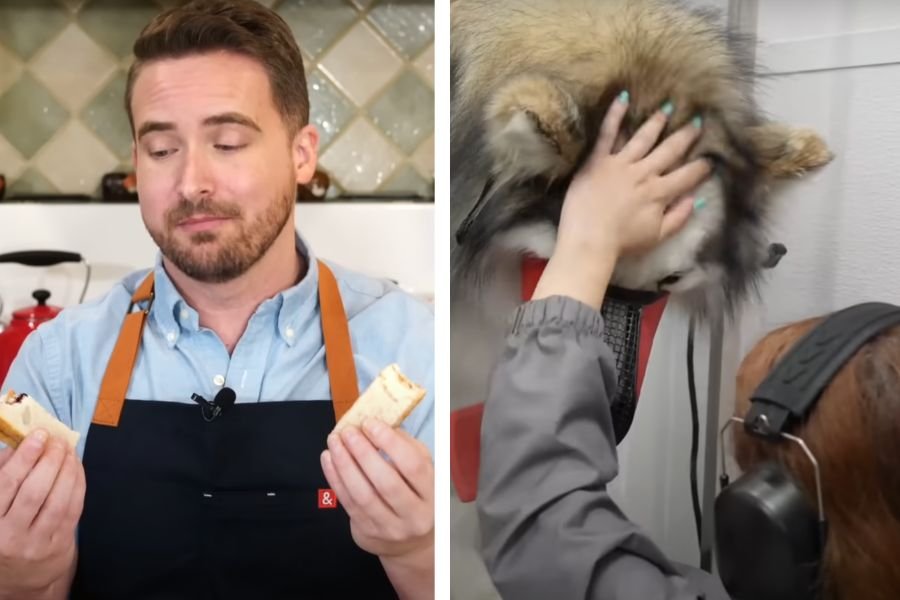
1. Tasting History with Max Miller

Uncover the origins of the world famous PB&J, discover what makes deviled eggs so devilish, find out why the heck the Michelin tire company is the authority on good food, and more with host Max Miller. In each episode, Miller recreates ancient or historical recipes while explaining the very human stories behind them. After each video you’ll feel a little smarter, and a whole lot hungrier.

2. Defunctland

Defunctland got its claim to fame with documentary style videos exploring the history of extinct theme parks and amusement park attractions. Unsurprisingly Disneyland relics make up a bulk of the content.

Nowadays, the Defunct canon also consists of television shows deeply buried within every millennials subconscious, like “Zooboomafoo” and “Between the Lions.”

3. Wolter's World

This channel promises "HONEST travel advice without all the extra fluff" and definitely delivers. Wolter's World primarily focuses on do's and don't of different cities, but will also go off the beaten path every once in a while, like with his "travel scams" video. It's no wonder that folks find comfort in seeing beautiful places around the world, or that they love the charming way Wolter helps them learn about these gems.

4. Steve1989MREInfo

You’ve probably never thought to yourself, “you know what I’d really like to see today? A guy eating vintage military rations.” But still, Steven Thomas quells that curiosity before it happens. Some of Thomas’ most notable reviews are of a 61-year-old peanut butter from a Korean War-era C-ration.as well as an American Civil War-era hardtack from 1863. Besides the obviously unique content, folks really love Thomas’ calm delivery and catchphrases, such as "nice hiss"—referring to the oh-so satisfying sound that can be made when opening hermetically sealed packages.

“Actually really fascinating to see how food preservation has evolved over the decades!” one fan noted.

5. Camping With Steve

Dubbed the “modern day Bob Ross” by some viewers, Steve Wallis doesn’t consider himself a survivalist, but seems to be able to camp anywhere—from mountain terrains to more unusual spots like Walmart parking lots. On his channel, you can learn about all sorts of camping styles, including "boondocking", "urban stealth", “gold mining,” "bushcraft", and yard camping. It’s all in an effort to, as Wallis puts it, to "take back camping for the people."

6. History Tea Time with Lindsay Holiday

As perfectly suggested in the name, Holiday’s 20-ish minute history documentaries feel as fun, warm and refreshing as a nice cuppa tea. Her knowledge is also pleasantly wide spread, allowing her to be able to delve into a variety of topics. But one thing remains the same now matter what—here passion.

As one viewer put it, “the way she breaks down people’s lives really humanizes them and actually makes me interested in learning history.”

7. Food Wishes

In an internet teeming with recipe videos, this one is petty special

John Armand Mitzewich, more commonly known as "Chef John” might never been seen in his videos, save for his hand holding utensils, but his narrations have a lovely singsong tone, and one can always expect some kind of rhyming wordplay joke. For example: "You are, after all, the law man of your slaw, man."

Plus, Chef Jon frequently spices up his recipe with some cayenne pepper, since in his opinion it gives the extra touch of the heat being out “the unique tastes of the dishes forward.”

8. Urban Rescue Ranch

Videos of baby coyotes, vultures, beavers, armadillos, raccoons, kangaroos, capybaras…need I go on?

The Urban Rescue Ranch was originally a “crackhouse,” and turned into a Certified wildlife rehabilitation facility and farm sanctuary for exotic livestock in central Texas that are often hunted. Despite a lot of the cheeky titles (like “How to Catch and Cook a Baby Deer”), these wholesome videos just show reduced animals living their best lives.

9. Smarter Every Day

For the more left-brained folks out there, engineer and science communicator Destin Wilson Sandlin strikes a perfect balance between education and entertainment as he “explores the world through science.

Check out what one viewers had to say:

“Destin is contagiously upbeat, seems to be very passionate about everything he approaches and does an excellent job of explaining whatever the subject matter is. His giddiness about some of the same things I would get excited about is a nice mood boost when I need it sometimes. His appreciation for the workers that make things happen is nice to see too. The guys a legit rocket scientist, but relates to mechanics, farmers, machinists, and a whole bunch of other tradesmen as equals, not in a demeaning way that some presenters can do sometimes.”

10. Kitboga

Being a “great example of chaotic good,” Kitboga records himself getting back at phone scammers. It’s not just some satisfying schadenfreude, either. Kitboga tries to educate people by walking them through common scammer lies, and reports them when able.

11. Primitive Technology

Just as the name suggests, host John Plant demonstrates thow to make tools, traps and forms of shelter using only materials found in the wild.

Though you’ll see a lot of stones axes and woven bark fiber items, there’s “no talking, no cringe intro, no 'like comment subscribe', no flashy editing, no sound effects, no viral thumbnails, no giveaways, no drama, no sob stories, no clickbait, no sponsors, no fakery”…which at least one viewer really appreciates.

12. Adam Savage’s: Tested

If you’re jonesing for more “Mythbusters” vibes, this is the channel for you. Join Adam Whitney Savage, former “MythBusters” host, as he goes behind the scenes of popular movies to dissect how iconic props are made, or as he infuses some wonder into everyday objects like USB cables. The possibilities are endless.

13. Girl With The Dogs

Vanessa De Prophetis has been a professional pet groomer for 12 years, and can attest that “it’s never a dull moment.” So it’s no wonder that she was able to rack up a huge following with her comedic and informative content (which, by the way, goes to help local dog rescues).

De Prophetis shares both her “best” and “worst” canine and feline clients, but it’s clear that she loves them all in the way she interacts with them.

One fan wrote, “It’s great when a really aggressive dog tries to take her head off and she’s just like, “sir.”


Planet

Our favorite giveaway is back. Enter to win a free, fun date! 🌊 💗

It's super easy, no purchase or donation necessary, and you help our oceans! That's what we call a win-win-win. Enter here.

Our favorite giveaway is back. Enter to win a free, fun date! 🌊 💗
True

Our love for the ocean runs deep. Does yours? Enter here!

This Valentine’s Day, we're bringing back our favorite giveaway with Ocean Wise. You have the chance to win the ultimate ocean-friendly date. Our recommendation? Celebrate love for all your people this Valentine's Day! Treat your mom friends to a relaxing spa trip, take your best friend to an incredible concert, or enjoy a beach adventure with your sibling! Whether you're savoring a romantic seafood dinner or enjoying a movie night in, your next date could be on us!

Here’s how to enter:


  • Go to upworthy.com/oceandate and complete the quick form for a chance to win - it’s as easy as that.
  • P.S. If you follow @oceanwise or donate after entering, you’ll get extra entries!

Here are the incredible dates:

1. Give mom some relaxation

She’s up before the sun and still going at bedtime. She’s the calendar keeper, the lunch packer, the one who remembers everything so no one else has to. Moms are always creating magic for us. This Valentine’s Day, we’re all in for her. Win an eco-friendly spa day near you, plus a stash of All In snack bars—because she deserves a treat that’s as real as she is. Good for her, kinder to the ocean. That’s the kind of love we can all get behind.


Special thanks to our friends at All In who are all in on helping moms!

2. Jump in the ocean, together

Grab your favorite person and get some much-needed ocean time. Did you know research on “blue spaces” suggests that being near water is linked with better mental health and well-being, including feeling calmer and less stressed? We’ll treat you to a beach adventure like a surfing or sailing class, plus ocean-friendly bags from GOT Bag and blankets from Sand Cloud so your day by the water feels good for you and a little gentler on the ocean too.

Special thanks to our friends at GOT Bag. They make saving the ocean look stylish and fun!

3. Couch potato time

Love nights in as much as you love a date night out? We’ve got you. Have friends over for a movie night or make it a cozy night in with your favorite person. You’ll get a Disney+ and Hulu subscription so you can watch Nat Geo ocean content, plus a curated list of ocean-friendly documentaries and a movie-night basket of snacks. Easy, comfy, and you’ll probably come out of it loving the ocean even more.

4. Dance all day!

Soak up the sun and catch a full weekend of live music at BeachLife Festival in Redondo Beach, May 1–3, 2026, featuring Duran Duran, The Offspring, James Taylor and His All-Star Band, The Chainsmokers, My Morning Jacket, Slightly Stoopid, and Sheryl Crow. The perfect date to bring your favorite person on!

We also love that BeachLife puts real energy into protecting the coastline it’s built on by spotlighting ocean and beach-focused nonprofit partners and hosting community events like beach cleanups.

Date includes two (2) three-day GA tickets. Does not include accommodation, travel, or flights.

5. Chef it up (at home)

Stay in and cook something delicious with someone you love. We’ll hook you up with sustainable seafood ingredients and some additional goodies for a dinner for two, so you can eat well and feel good knowing your meal supports healthier oceans and more responsible fishing.

Giveaway ends 2/15/26 at 11:59pm PT. Winners will be selected at random and contacted via email from the Upworthy. No purchase necessary. Open to residents of the U.S. and specific Canadian provinces that have reached age of majority in their state/province/territory of residence at the time. Please see terms and conditions for specific instructions. Giveaway not affiliated with Instagram. More details at upworthy.com/oceandate

quiet, finger over lips, don't talk, keep it to yourself, silence

A woman with her finger over her mouth.

It can be hard to stay quiet when you feel like you just have to speak your mind. But sometimes it's not a great idea to share your opinions on current events with your dad or tell your boss where they're wrong in a meeting. And having a bit of self-control during a fight with your spouse is a good way to avoid apologizing the next morning.

Further, when we fight the urge to talk when it's not necessary, we become better listeners and give others a moment in the spotlight to share their views. Building that small mental muscle to respond to events rather than react can make all the difference in social situations.


argument, coworkers, angry coworkers, hostile work enviornment, disagreement A woman is getting angry at her coworker.via Canva/Photos

What is the WAIT method?

One way people have honed the skill of holding back when they feel the burning urge to speak up is the WAIT method, an acronym for the question you should ask yourself in that moment: "Why Am I Talking?" Pausing to consider the question before you open your mouth can shift your focus from "being heard" to "adding value" to any conversation.

The Center for The Empowerment Dynamic has some questions we should consider after taking a WAIT moment:

  • What is my intention behind what I am about to say?
  • What question can I ask to better understand what the other person is saying?
  • Is my need to talk an attempt to divert the attention to me?
  • How might I become comfortable with silence rather than succumb to my urge to talk?

tape over muth, sielnce, be quiet, mouth shut, saying nothing A man with tape over his mouth.via Canva/Photos

The WAIT method is a good way to avoid talking too much. In work meetings, people who overtalk risk losing everyone's attention and diluting their point to the extent that others aren't quite sure what they were trying to say. Even worse, they can come across as attention hogs or know-it-alls. Often, the people who get to the heart of the matter succinctly are the ones who are noticed and respected.

Just because you're commanding the attention of the room doesn't mean you're doing yourself any favors or helping other people in the conversation.

The WAIT method is also a great way to give yourself a breather and let things sit for a moment during a heated, emotional discussion. It gives you a chance to cool down and rethink your goals for the conversation. It can also help you avoid saying something you regret.

fight, spuse disagreement, communications skills, upset husband, argument A husband is angry with his wife. via Canva/Photos

How much should I talk in a meeting?

So if it's a work situation, like a team meeting, you don't want to be completely silent. How often should you speak up?

Cary Pfeffer, a speaking coach and media trainer, shared an example of the appropriate amount of time to talk in a meeting with six people:

"I would suggest a good measure would be three contributions over an hour-long meeting from each non-leader participant. If anyone is talking five/six/seven times you are over-participating! Allow someone else to weigh in, even if that means an occasional awkward silence. Anything less seems like your voice is just not being represented, and anything over three contributions is too much."

Ultimately, the WAIT method is about taking a second to make sure you're not just talking to hear yourself speak. It helps ensure that you have a clear goal for participating in the conversation and that you're adding value for others. Knowing when and why to say something is the best way to make a positive contribution and avoid shooting yourself in the foot.

decluttering, making decluttering fun, decluttering ideas, items to donate, goodwill, how to declutter, decluttering tips

Left: A woman holding her finger up to convey a secret. Right: A hand placing an antique item on a window ledge.

For many of us, decluttering is a necessary evil. We take no joy in it, other than knowing our lives might run a little more smoothly afterward. It's sort of like going to the dentist or getting an oil change.

But like so many of life's mundanities, could decluttering become something we actually look forward to if we found a way to infuse a little playfulness?


For Stephanie Patrick, that meant secretly leaving random items at other people's houses.

In a mega-viral Instagram clip, Patrick is seen placing a tiny bar of soap, a small creamer pitcher, and a vintage glass tealight candle holder on different countertops, accompanied by the caption, "Sometimes you gotta do what you gotta do."

The video has been viewed more than 25 million times, with thousands of people praising Patrick for her "diabolical" yet "genius" idea. Here are just a few of the reactions:

"A clever menace. I love it."

"This is amazing. They are going to go crazy asking each other 'where did this come from? Do you know where this came from?'"

"I have never felt so inspired in my whole entire life."

"UNHEIST"

"Reverse burglary"

This isn't Patrick's first, ahem, unconventional decluttering idea. In another video, we see her placing random items—a picture frame, a mini sewing kit, a sequined heart pillow, and yet another tealight candle holder—along the aisles of Hobby Lobby. Retail sticker and everything.

"I'm sure they will sell eventually," she wrote.

While leaving items for retail workers to deal with isn't the best option, Patrick clarified in the comments that she only "pretended" to leave the items behind. Still, there's something to be said for gamifying decluttering so the process itself becomes a bit more enjoyable.

Here are a few ideas procured from around the web:

Creative ways to make decluttering fun

- YouTube www.youtube.com

Hanger reversal

Turn all your hangers the wrong way. When you wear an item, flip the hanger back. After six months, donate anything that's still reversed.

The "no-thing" prize

Reward yourself with an experience, like a movie or dessert, rather than more items.

Take the 12-12-12 challenge

Locate 12 items to throw away, 12 to donate, and 12 to return to their proper homes. You can customize the challenge however you see fit.

Take before-and-after photos of a small area

Choose one part of your home, like a kitchen counter, and take a photo of a small area. Quickly clear away the items in the photo, then take an after shot. Once you see how your home could look, it becomes easier to start decluttering other areas.

Play the "minimalism game"

Created by Joshua Fields Millburn and Ryan Nicodemus ("The Minimalists"), this game has you determine how many items you'll declutter based on the day of the week, such as 20 items on the 20th. You can find a free printable by clicking here.

Decluttering jar

A "declutter jar" contains color-coded sticks for each area of the house. The kitchen might be marked blue, with each blue stick representing a specific area, such as the pantry, under the sink, the junk drawer, or the cup shelf. Whatever stick you draw is the area you declutter. No decision-making necessary.

The "moving method"

Pretend you're moving into a smaller, but swankier, home and only keep what you absolutely love or need. Tap into your imagination while making room for real life. A win-win.

Lastly, never underestimate the power of simply throwing on a bangin' decluttering playlist. Whatever route gets you there is the route worth taking. Of course, if you follow in Patrick's footsteps, you might have some explaining to do to your friends.

arthur c. brooks, harvard, psychology, happiness research, bucket list

Harvard researcher Arthur C. Brooks studies what leads to human happiness.

We live in a society that prizes ambition, celebrating goal-setting, and hustle culture as praiseworthy vehicles on the road to success. We also live in a society that associates successfully getting whatever our hearts desire with happiness. The formula we internalize from an early age is that desire + ambition + goal-setting + doing what it takes = a successful, happy life.

But as Harvard University happiness researcher Arthur C. Brooks has found, in his studies as well as his own experience, that happiness doesn't follow that formula. "It took me too long to figure this one out," Brooks told podcast host Tim Ferris, explaining why he uses a "reverse bucket list" to live a happier life.


bucket list, wants, desires, goals, detachment Many people make bucket lists of things they want in life. Giphy

Brooks shared that on his birthday, he would always make a list of his desires, ambitions, and things he wanted to accomplish—a bucket list. But when he was 50, he found his bucket list from when he was 40 and had an epiphany: "I looked at that list from when I was 40, and I'd checked everything off that list. And I was less happy at 50 than I was at 40."

As a social scientist, he recognized that he was doing something wrong and analyzed it.

"This is a neurophysiological problem and a psychological problem all rolled into one handy package," he said. "I was making the mistake of thinking that my satisfaction would come from having more. And the truth of the matter is that lasting and stable satisfaction, which doesn't wear off in a minute, comes when you understand that your satisfaction is your haves divided by your wants…You can increase your satisfaction temporarily and inefficiently by having more, or permanently and securely by wanting less."

Brooks concluded that he needed a "reverse bucket list" that would help him "consciously detach" from his worldly wants and desires by simply writing them down and crossing them off.

"I know that these things are going to occur to me as natural goals," Brooks said, citing human evolutionary psychology. "But I do not want to be owned by them. I want to manage them." He discussed moving those desires from the instinctual limbic system to the conscious pre-frontal cortex by examining each one and saying, "Maybe I get it, maybe I don't," but crossing them off as attachments. "And I'm free…it works," he said.

- YouTube www.youtube.com

"When I write them down, I acknowledge that I have the desire," he explained on X. "When I cross them out, I acknowledge that I will not be attached to this goal."

The idea that attachment itself causes unhappiness is a concept found in many spiritual traditions, but it is most closely associated with Buddhism. Mike Brooks, PhD, explains that humans need healthy attachments, such as an attachment to staying alive and attachments to loved ones, to avoid suffering. But many things to which we are attached are not necessarily healthy, either by degree (over-attachment) or by nature (being attached to things that are impermanent).

"We should strive for flexibility in our attachments because the objects of our attachment are inherently in flux," Brooks writes in Psychology Today. "In this way, we suffer unnecessarily when we don't accept their impermanent nature."

What Arthur C. Brooks suggests that we strive to detach ourselves from our wants and desires because the simplest way to solve the 'haves/wants = happiness' formula is to reduce the denominator. The reverse bucket list, in which you cross off desires before you fulfill them, can help free you from attachment and lead to a happier overall existence.

This article originally appeared last year.

Culture

Woman creates 1940s-inspired home to pay off her mortgage in just 8 years

She shared 10 frugal living tips to help transform people's budgets.

1940s, mortgage, vintage house, 1940s house, frugality
Photo credit: Canva, Karola G from Pexels (left) / Doina Gherban's Images (right)

Left: A woman holding money. Right: A toy house in a person's hand.

Anyone who can pay off their mortgage early should be applauded and probably grilled with questions about how they pulled off that minor miracle. Hannah, a content creator from Nottingham, England, made it happen partly by taking inspiration from the 1940s, both in and out of the two-bedroom home she shares with her mother. She documented her approach in an intriguing YouTube video titled "10 Frugal Living Tips from the 1940s That Still Work Today."

Hannah opens the clip with some backstory. She grew up in a one-income household, learning fiscal responsibility from her mother, and together they worked hard to pay off the mortgage on their current home in eight years.


"For as long as I can remember, we've lived in a certain way to get by," she says. "But as I've gotten older and become interested in history, I've discovered another incredible teacher: our ancestors."

Learning from the past also aligned with her love of retro aesthetics, and she's documented both on her social media channels under the name Real Vintage Dolls House.

- YouTube www.youtube.com

Making what you have last

Not all of her frugality tips will work for everyone, since no two situations are identical. For example, she doesn't have children. Still, her advice covers a wide range, from escaping a more-is-more mindset to scaling back food costs. Several points fall into the latter category, including the importance of cooking from scratch.

"In the '40s, people were forced to make rationed food go further," she says. "Nowadays, eating out and takeaways are just so expensive, so this quickly became a very occasional treat for us, not a weekly staple."

She keeps a "modest" pantry of ingredients, like potatoes, that can be stretched to make them last. In addition, she mainly drinks tap water, coffee, and tea, and grows her own fruits and vegetables in the garden.

Several tips focus on doing more around the house, such as using "useful and cheap beauty hacks" like homemade soap, working out at home instead of paying for an expensive gym membership, and cutting heating bills by staying warm with clothes and blankets. That also ties into a broader point about "secondhand living." Hannah says that "almost everything" in her house was purchased secondhand or handed down, including her refrigerator.

"Of course, buying secondhand does limit your choices, but I actually like that because it lessens my decision fatigue," she says. "And if something isn't quite right, I can use my agency and skills to repair it or amend it. And if I don't have these skills then I can learn them, often for free. In the '40s, they called this 'make do and mend.' [By maintaining old items] you're freeing yourself from the upgrade loop."

- YouTube www.youtube.com

Experiences over stuff

Elsewhere, Hannah recommends walking as much as possible to save on gas money and maintaining a "capsule clothing plan," in which you carefully curate a small closet of versatile items with a long shelf life. Finally, she stresses the importance of experiences over things: "If there's one thing that the 1940s has taught me, it's the simple ways that people spent their time to still find enjoyment and pleasure. Picnics, walks, a cup of tea at a cafe: all experience-driven, rather than wallet-driven."

Hannah spoke about her home (and her love of the 1940s) with The Daily Mail in 2021:

"The house is kind of like an ode to my grandpa, who was born in 1936. He was a significant part of my life and really got me interested in the 40s era as a kid—I was enamored by his droplets of wisdom. My nan's taste in vintage and eccentric fashion has also inspired me to dress quirky."

Given the financial hardships they endured, people from the Greatest Generation and Silent Generation may have valuable frugality advice to offer. People on Reddit recently shared tips they learned firsthand from older family members, ranging from hang-drying clothes to driving in ways that reduce wear and tear on their cars.

"My grandma rinsed and reused foil until it crumbled," one user wrote. "I rolled my eyes then, now I catch myself doing it. Funny how those 'silly' habits end up smart."

- YouTube www.youtube.com

influencer, selfoe, content creator, influencer in publish, filiming self

An influencer filming himself in public.

To be human is to navigate a complex world of pretense and subterfuge. You gotta fake it 'til you make it. You have to look the part and play the role. You tell white lies to help others save face and to adhere to rigid cultural norms that are too ingrained to bother challenging.

That's not to say it's all bad. Culture is always evolving, and some behaviors and attitudes that are completely "normal" in one period are seen as completely backward just a few years later. Just 40 years ago, corporal punishment of children was normal, mental health issues were seen as personal weakness, and sexual harassment in the workplace was rampant.


Things do get better, but first we have to point them out. Recently, a Redditor asked, "What's a social norm that you think is absolutely ridiculous?" to highlight today's cultural norms that people find absurd. Many commenters pointed out the excuses and white lies we tell in our social lives to avoid making our friends (and ourselves) uncomfortable. Others called out rigid gender roles we take for granted but deserve questioning.

Here are 15 social norms that people find "absolutely ridiculous"

1. The expectation that women have to wear makeup

"The expectation that women must wear makeup to look professional. A clean, washed face should be professional enough for any job i think."

"And being asked if you are sick or tired just because you aren't wearing a full face of makeup."

makeup, foundation, woman's face, strawberry blonde, woman in mirror A woman putting on makeup.via Canva/Photos

2. Faking workplace passion

"Pretending to be passionate about jobs in interviews when everyone knows it's just to pay bills."

"I applied to McDonald's in college and they asked me why I wanted the job. I said, very calmly, 'I need money and you need people, I don't understand the question.' Recruiter almost fell under the table laughing, I don't think he expected a blunt answer like that."

3. Having to justify turning down an invite

"People often feel they can't just decline an invitation or request with a simple I can't make it or 'that doesn't work for me instead there's this pressure to provide a detailed justification or excuse that proves you have a 'legitimate' reason. And if your reason is just 'I don't want to' or I need time to myself that's often not considered acceptable."

"'Don't make excuses. Your friends don't need them, and your enemies won't believe them,' — unknown."

4. Why we can't judge the dead

"Acting like someone was wonderful just because they're dead. There are absolutely some people that get and deserve a good riddance."

"It really rubs me the wrong way when a person who did or said terrible things died and suddenly all is forgot and they're a hero."

5. Influencers creating in public

"Turning public spaces into personal film studios for content creation and then getting mad when the public does public things and interrupts said content creation."

"This is not a norm. It's rude and should be treated as such. We were at the Louvre last year, and some influencer was trying to get people to move away from 'Liberty Leading the People' so she could film herself contemplating it. Lady, it's the size of a pickleball court. No one gets that much space to themselves there. She was so angry that other people kept looking at the art."

influencer, selfoe, content creator, influencer in publish, filiming self An influencer filming himself.via Canva/Photos

6. Why we always have to be reachable

"Probably the whole 'always be reachable' thing. Like, if you don't reply to a message within 10 minutes, people assume something's wrong, or you're mad. Sometimes I'm just eating or staring at a wall, man. I think phones have blurred the line between urgent and not urgent, and now everyone feels low-key on call all the time. Would be nice if slower replies were normal again."

7. Oversharing on social media

"Everyone posting every aspect of their lives on social media for all to see."

"We should all know less about each other."

Why do some people overshare? In a 2022 study, researchers identified three main reasons. First, people tend to overvalue the positives and undervalue the risks when posting online. They overestimate the benefits and underestimate the downsides of oversharing. Second, oversharing has been linked to anxiety, with some people posting as a way to cope with difficult feelings. Finally, because people often feel relatively anonymous online, even when their name and face are attached to a post, they may feel freer to overshare.

selfie, social media, girl taking photo, filming yourself, smiling girl A woman taking a photo of herself in her bedroom. via Canva/Photos

8. Elbows on the table being considered rude

"That was a social rule from the medieval age - tavern 'tables' were planks of wood laid on top of stumps. If someone put their elbows on that plank, the whole table would see-saw and chuck everyone's refreshments across the room."

"I was taught that it's because it seems like you're guarding your food, like an animal."

It's believed that the "elbows on the table" rule dates back to the Middle Ages, when feasts and festivals were jam-packed affairs and people were crammed around tables. Placing your elbows on the table, like spreading your legs on the subway, meant your neighbor had less room. You might even knock an elbow into their blackbird pie.

9. The need to be intoxicated

"The need to have alcohol at social events otherwise they are not fun or worth it to go to. Peer pressuring folks for not wanting to drink and making them out to seem boring or unfun. Having drug usage/alcohol as a personality trait."

"I tell people I'm straight edge, and they look at me like I'm some kind of monster. I once got told, to my face, someone who has never drank or smoked or done a drug is not a trustworthy person."

drunk guy, intoxicated guy, santa hat, brief case,beer A drunk guy passed out.via Canva/Photos

10. Period shame

"Acting like periods are something to be ashamed of. Never understood as a teenager why people would smuggle their pads into the toilet or whisper about their period or peel back the wrappers really quietly so no one else could hear it. It's completely natural and nothing to be ashamed of. I make an effort as an adult to openly carry pads and talk about it openly. We need to stop acting like it's a big taboo!"

11. Taking the man's last name

"Women and children taking the man's last name by default."

"I think you should have to smoosh the names together to make a new surname, and if you get remarried, you keep smooshing names."

12. Men have to propose

"Believing the male partner in a straight relationship must be the one to propose marriage."

"Or believing that a proposal has to be a grand gesture. My husband proposed to me on his front porch with, 'Hey, you don't happen to want to marry me or anything, do you?' Was it romantic? No. But he did manage to get the point across. This summer we'll be married 38 years."

13. Wearing a tie

“'Humans are the only species that start the day with a noose around their necks,' Source : unknown."

"I still wish we adopted the double necktie as seen in Back to the Future Part II in the far distant future of 2015."

tie, putting on a tie, tying a tie, pink shirt, dress up A man adjusting his tie.via Canva/Photos

14. Smartphones being everywhere

"I've seeing a lot of waiting rooms lately, and I'm trying to just sit there without looking at my phone, and I'm realizing how captivating it is. Everyone is plugged in."

"I agree it's great. As an introvert, to look up and realise NO ONE IS LOOKING AT YOU is like being king of that little space."

15. Saying you're "fine" when you're not

"Being expected to say 'fine' when someone asks how you are, no matter how not fine you feel. Also apologizing when someone else bumps into you, and pretending emails need fake pleasantries instead of just getting to the point."

"Some days when life isn't fine, and someone asks me how life's going, I tell them it's certainly going, they should get the message at that point."