upworthy
Add Upworthy to your Google News feed.
Google News Button
Parenting

2 years before ChatGPT, a kids cartoon warned us about the environmental impacts of AI

Kids should know what AI can and can't do, and what it really costs. Doc McStuffins is on the case.

2 years before ChatGPT, a kids cartoon warned us about the environmental impacts of AI
Disney Jr./YouTube, Unsplash

My 4-year-old watches so much Doc McStuffins that the show has basically become white noise in my household. It's the only thing she'll watch, so when it's on in the background, I barely notice — outside of the absurdly catchy songs living rent-free in my head 24/7. But the other day, she was watching one particular episode when I half tuned in just to see what the plot was.

If you don't have kids in this age bracket, Doc McStuffins is a 10-year-old girl who helps fix up broken toys. It's a really cute show with sweet messages on acceptance, accessibility, imagination, caring, and more. But the episode in question seemed to have a lot more going on plot-wise than the usual, so I sat down and watched a little more. And pretty soon I was hooked into a fascinating story about the climate dangers of Artificial Intelligence and automation. I couldn't believe it!

'The Great McStuffins Meltdown' explained

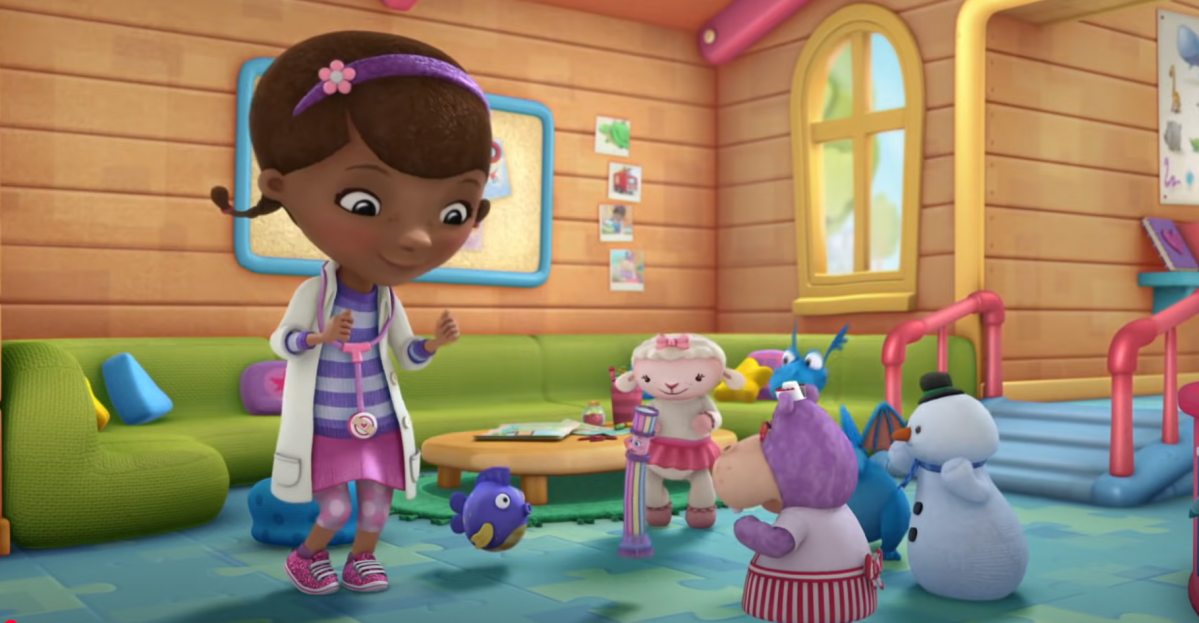
Season 5, Episode 13. Doc McStuffins, in the previous season, has stopped running her toy-doctoring practice out of her childhood home and now works at McStuffins Toy Hospital. In this episode, it has received a major upgrade with lots of fancy new equipment.

The new machines do a lot of the work that Doc and her friends used to do around the hospital. There's a machine that plays with and encourages toy pets, a Cuddle Bot that cuddles sick toys, and even a Check-Up 3000 that gives routine medical care so the Doc herself can do other things. Doc and her friends are a little bored, and the patients aren't so sure about these new machines, but mostly, things are going pretty great. The hospital is able to help more toys, faster this way.

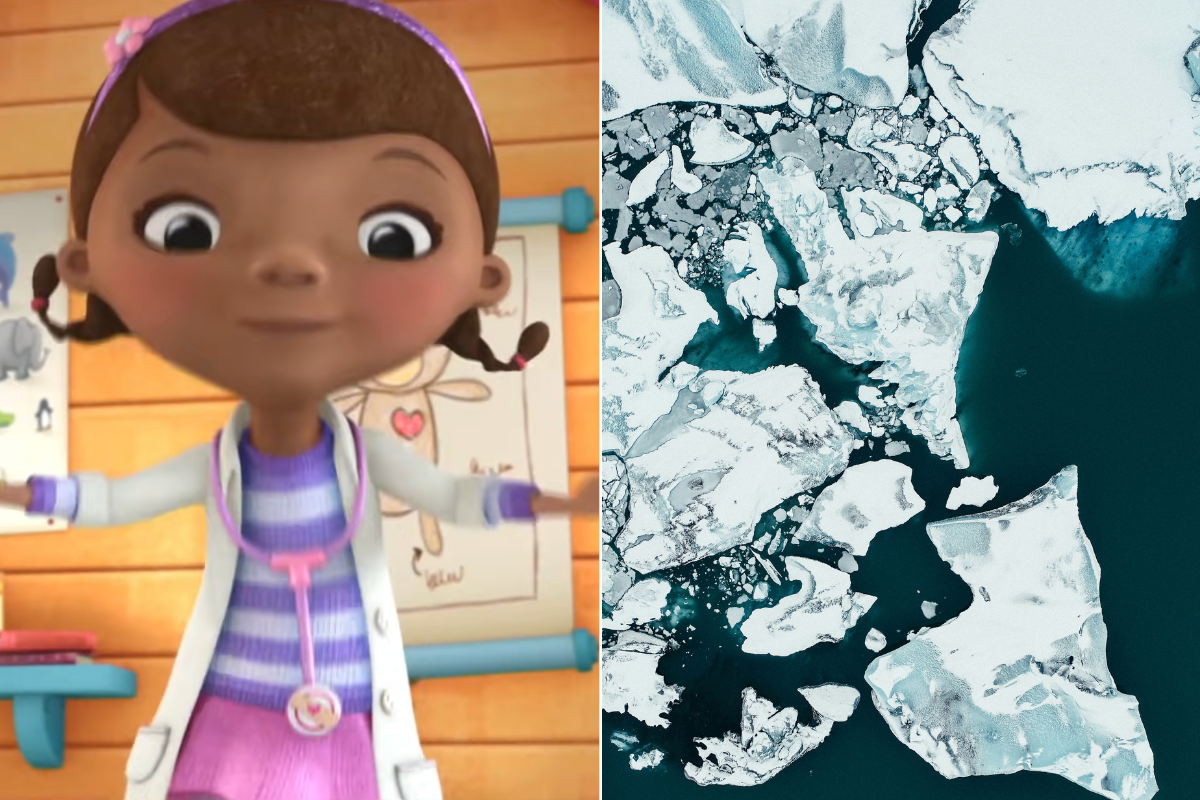
But oh no! Doc gets a distress call from her friends at the Toyarctic, a fictional frozen land where toys live. Chunks of ice have been breaking off their glaciers. The Toyarctic is melting!

Doc and her friends quickly figure out that the Toyarctic has gotten too warm, which is causing the ice to melt. And the culprit is McStuffins Hospital. With all the new automated machines running, the hospital is using too much power and overheating the power grid, which is causing the Toyarctic's climate to warm at a dangerous rate.

I mean... woah! Doc McStuffins definitely did not have to go this hard, but I respect it.

What fascinated me most was that this episode was released in 2020 — a full two years before ChatGPT became publicly available and the AI craze kicked into hyperdrive.
Disney Jr./YouTube

AI and climate change are both inevitable parts of our children's lives. It's crucial that they learn about them both from a young age.

AI is moving so fast and changing every day. It's also publicly available to people of all ages, and so many of us don't understand how it works very well. That's a dangerous combination. Teachers and college professors everywhere are bemoaning that more and more kids are using AI to write their papers and do their homework without ever learning the material.

And, of course, the even bigger elephant in the room is climate change, which will play a major role in our children's lives as they grow into adults. Parents are desperate for some way to help their kids understand how big of a deal it is. A report from This Is Planeted states "Nearly 70% of parents and caregivers surveyed in 2022 believed children’s media should include age-appropriate information about climate, and 74% agreed that children’s media should include climate solutions," but that less than 5% of the most popular children's shows and family films have any content or themes related to climate change.

(I'd be curious how much of the heavy lifting the GOAT Captain Planet is still doing!)

captain planet flyingGiphy

What's not being talked about enough — unless you're a McStuffins-head like my family is — is the relationship between AI and climate change.

In short: It's not good! AI seems like a quick and fun thing we can access on our phones and computers, but the massive data centers that perform the calculations behind this 'intelligence' consume staggering amounts of power and water, while generating heat and harmful emissions. Promises of more energy-efficient intelligence models, like DeepSeek, are murky at best.

Scientific American even writes that the environmental impact of AI goes far beyond its emissions and energy usage. What is it being used for? In many cases, to make things faster and bigger — including industries that can harm the Earth like logging, drilling, fast fashion.

I was so impressed that a show popular with children as young as 2 could tackle such an urgent and important topic.

Watching it together opened doors for us to begin age-appropriate conversations with both of our kids about AI, climate change, and how the two are related. Conversations that, I'm sure, we'll be continuing to have and build on for years to come.

To be fair, Artificial Intelligence can do some good things. You see this play out on the show. Initially, it does help the hospital treat more toys! And in the real world, for all the negative environmental effects, there are people out there trying to use AI to monitor emissions and create more energy-efficient practices that might ultimately help the planet.

In the end, Doc McStuffins and her friends decide to shut down the fancy automated machines at the hospital. Not only are they hurting the toys that live in the Toyarctic, they just aren't as good as the real thing. They don't always know the right questions to ask, they don't make the patients feel safe or cared for, and of course, their machine-cuddles don't come with any real warmth or love.

If nothing else, I hope that's the message that sticks with my kids long after they've outgrown this show.

Gen Z; Millennials; technology; cell phones; social media; teens and technology; teens social media

Gen Z is the first generation less cognitively capable than their parents. Denmark has the solution.

Nearly every parent hopes their child will be better off than they are: smarter, more secure, and more well-adjusted. Many parents see this as a stamp of successful parenting, but something has changed for children growing up today. While younger generations are known for their empathy, their cognitive capabilities seem to be lagging behind those of previous generations for the first time in history.

Dr. Jared Cooney Horvath, a teacher turned cognitive neuroscientist who focuses on human learning, appeared before Congress to discuss concerns about cognitive development in children. In his address to the members of Congress, he says, "A sad fact that our generation has to face is this: our kids are less cognitively capable than we were at their age. Since we've been standardizing and measuring cognitive development since the late 1800s, every generation has outperformed their parents, and that's exactly what we want. We want sharper kids."


kids, intelligence, sharp kids, generations, education, cognitive abilities Student smiling in a classroom, working on a laptop.Photo credit: Canva

Horvath explains that the reason this happens is that each generation has gone to school longer than the previous generation. Gen Z is no exception to the longer duration of time spent in school, but they're the first ones who aren't meeting this normal increase in cognitive development. According to the cognitive neuroscientist, the decline is due to the introduction of screens in the classroom, which started around 2010.

"Across 80 countries, as Jean was just saying, if you look at the data, once countries adopt digital technology widely in schools, performance goes down significantly. To the point where kids who use computers about five hours per day in school for learning purposes will score over two-thirds of a standard deviation less than kids who rarely or never touch tech at school," Horvath reveals.

In most cases, the decline in performance doesn't result in better strategies. The neuroscientist shares that the standardized testing has been adjusted to accommodate lower expectations and shorter attention spans. This is an approach that educators, scientists, and researchers went to Capitol Hill to express wasn't working. But not every country is taking the approach of lowering standards to meet lowered cognitive ability. Denmark went in the opposite direction when it realized their students were slipping behind.

France24 recently interviewed educators in Denmark following their seemingly novel approach to students struggling with cognitive development. Since the beginning of the 2025/2026 school year, Denmark has not only been having students turn in their cellphones, but they've also taken tablets, laptops, and computers out of the classroom. No more digital learning for the majority of the school day. Danes went old school by bringing back physical textbooks, workbooks, and writing assignments. The results have been undeniable. Even the students can't seem to deny the success of the countrywide shift in educational approach.

"I think the biggest issue has been that, because we kind of got rid of the books and started using screens instead, that we've noticed that a lot of the kids have trouble concentrating, so it's pretty easy to swipe with three fingers over to a different screen and have a video game going, for example, in class," Copenhagen English teacher, Islam Dijab tells France24.

Now, instead of computers being part of every lesson, Denmark uses computers very sparingly and with strict supervision. One student says that it has been nice not having screen time at school because she loves to read and write. But it wasn't just the lack of attention span children were developing, they were also developing low self-esteem and poor mental health due to the amount of time spent on devices.

kids, intelligence, sharp kids, generations, education, cognitive abilities Students focused and ready to learn in the classroom.Photo credit: Canva

The data showing the negative impact of screens on teens' brains has prompted a nationwide change in Denmark that extends outside of the classroom. Afterschool activities are eliminating or extremely limiting electronic use. There is also a national No Phone Day that encourages everyone to put away their devices for the day, and Imran Rashid, a physician and digital health expert, is petitioning parliament to ban social media use for children under the age of 15. The no phone movement in Denmark is a nationwide effort that hopes to right the ship before another generation feels the effects.

Pop Culture

17 silly 'house rules' couples made as a joke that worked so well they kept them

"If you want to swap chores you just buy the other person food. I hate putting laundry away, but I'll do it for a burger."

tips for happy marriage, happy marriage, relationships, relationship advice, ask reddit, couples, happy couple, chores

A person with a dog in their lap.

As relationship gurus John and Julie Gottman attest, using humor is an effective way to ease tension, create connection, and maintain the necessary "5:1 positive-to-negative interaction ratio" in a healthy relationship. It serves as a vital repair attempt during conflict, provided that the humor is respectful and not a form of contemptuous mockery.

Sometimes, this takes the form of joke "rules" that somehow stick, either becoming lighthearted rituals that deepen a couple's connection or inadvertently establishing healthy boundaries in a way a "serious" conversation never could.


That's certainly been the experience of the Redditors below, who shared the "dumbest house rules" they established in jest with their partners, only to find that they became something "aggressively" enforced for the foreseeable future.

tips for happy marriage, happy marriage, relationships, relationship advice, ask reddit, couples, happy couple, chores A happy, laughing couple. Photo credit: Canva

Though the answers are a mix of unique, wholesome, and absolute silliness, they're all relatable in their own way and a great reminder that some of the most seemingly insignificant choices we make in our relationships can have the biggest impact.

1. Safe word = "bananas"

"My immediate family is chaotic and we talk a lot and sometimes talk over each other at gatherings. I'm used to it. He was not. We agreed that we'd have a safe word of 'bananas'…He used it a few times at the beginning, he'd just whisper it in my ear and get up from the chaotic table and walk outside. Over the last 15 yrs it has evolved that 'bananas' is now just our everyday safe word, for when you want to be taken seriously. When the teasing is too much, when we feel like the other person isn't listening, when we're fighting a need a break, etc."

2. "Happy Birthday Bob"

"I once ordered a birthday cake for my wife and asked for 'Happy Birthday Mom' to be written on it. I picked it up, never looked at it and upon revealing to the family it said - Happy Birthday Bob. No other inscription is ever again allowed for her birthday cake to this day 15 years later. Our grown kids love it."

3. The pet chooses who does chores

"If the dog has 'chosen you' and sits on your lap, you are released of all responsibilities, and the other partner must get you whatever you want or need while the dog is on your lap. It is like 'king for the day' except it usually maxes out at 30 minutes. We take this rule very seriously…"

"We call this 'with cat' if you are with cat, you are relieved of anything and everything until the cat is removed and someone else must do it. It applies to everyone in the family. In all fairness I try to get everything done before I sit down because I am almost always with cat when I'm sitting."

tips for happy marriage, happy marriage, relationships, relationship advice, ask reddit, couples, happy couple, chores A person with a cat in their lap. Photo credit: Canva

4. "Invoke the right" to rock, paper, scissors

"If there is a job/chore/task that one of us does not want to do, we are allowed to 'invoke the right' which is a game of rock, paper, scissors. You are not allowed to decline when someone 'invokes the right' and the loser must do the task.…This has gone on for 8+ years and is how we solve arguments 99% of the time. It was written into our wedding vows as a joke, but has stuck. We are so serious about it that 'invoking the right' will occur beyond the confines of our home, in public in front of friends and strangers who look at us like we are mad."

5. Matching undies

"Matching undies Mondays (hedgehogs) and Fridays (dinosaurs). Even when (or especially when) we're going through a rough patch, it's a stupid thing that unites us."

6. It's always the pet who farted

"All passed gas is blamed on whichever animal is closer. Every. Single fart."

7. Orange hat = do not disturb

"Everybody wears an orange hat if they are not to be disturbed. Started as a covid era solution to work conference calls and continues to this day."

8. Nightly tuck-ins

"I always go to bed a couple of hours before my husband. To make sure we end the day (aka my day) together, he always tucks me in, gives me a goodnight kiss, and we end with something happy. It started as a joke, but we both realized it was such a good way to end the day well and stay in sync. He has done this every single day for over five years."

9. No badmouthing the cars

"We don't talk sh*t about our cars where they can 'hear' us."

10. Popsicles are a shared treat only

"Popsicles are only to be eaten together. They come in a box with even numbers so if one person eats one then there is only odd numbers left. If you really want a Popsicle then the other must also eat a Popsicle. And when you get a Popsicle, you must also get one for the other."

11. Always say "I love you"

"We have to say I love you to each other when one of us is leaving even if we're furious, because what if the one leaving dies in a car accident."

12. Stringent binge-watching rules

"No more than 2 episodes of each show per day so we don't burn through them. The last 2 episodes per season must always be watched back to back, no cliffhangers."

tips for happy marriage, happy marriage, relationships, relationship advice, ask reddit, couples, happy couple, chores A couple watching television. Photo credit: Canva

13. "Your Shelf/My Shelf"

"Loooooong time ago (like 25+ years), we instituted the Your Shelf/My Shelf rule. Any food or drink on Your Shelf or My Shelf is off limits to everyone else in the house. You are free to share your food, of course. But if I ask for a snack on your shelf, and you say no, I cannot get angry about it. And vice versa. We both got tired of the other one of us eating snacks that we were saving for later. We were so serious about it, that when our kiddo was a kid, they got their own shelf, too. Kid's gone now, but we still do YS/MS. Keeps the peace in the house!"

14. Butts must be smacked

"If youre bent over, and the other person walks by, they have to smack your butt."

15. Funny birthday cards

"You may not give a real birthday card. You must give either a card of the completely wrong age thats funny. Like last year for my 32nd birthday my husband gave me a pop-up YOURE THREE card with a You're three sticker inside, or it must in no way be birthday related. Ive given him a Catholic Confirmation card, a condolences card (I wrote that it was for the passing of his youth when he turned 30) and all manner of other things."

tips for happy marriage, happy marriage, relationships, relationship advice, ask reddit, couples, happy couple, chores Assorted cards.Photo credit: Canva

16. "Captain Morning"

"I don't have a ton of trouble waking myself up, so I elected myself Captain Morning. Captain Morning is a whole persona to help my wife get out of bed. Kinda pirate/nautical in the voice and mannerisms? We start with a cup of coffee from her fancy machine, brought to her in bed. Then morning cuddles with the dog, with an enforced time limit so she stays on track. Captain Morning believes in hydration and nutrition, so I also make her lunch and refill her water bottle. When I'm on business trips I call her to wake her up and text her to make sure she's out of bed, because she's been deputized as First Mate Morning in my absence :)"

17. Chores for food

"If you want to swap chores you just buy the other person food. I hate putting laundry away, but I'll do it for a burger."

Science

Helicopters dump 6,000 logs into rivers in the Pacific Northwest, fixing a decades-old mistake

Forty years ago, restoration workers thought logs were the problem. They were wrong.

river restoration, washington, river fish, restoration, Yakama Nation, indigenous land, indigenoues tribes, salmon, trout, pacific northwest

Restoration workers now see how "critical" wood is to the natural habitat.

For decades, river restoration in the Northwestern United States followed a simple rule: if you saw logs in the water, take them out. Clean streams were seen as healthy streams, fast-moving water was seen as optimal, and wood was treated like a "barrier" to natural processes, particularly those of the local fish.

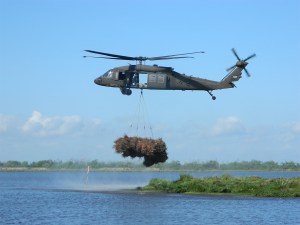
Now, helicopters are flying thousands of tree trunks back into rivers to undo that thinking.


In central Washington, one of the largest river restoration efforts ever attempted in the region is underway. More than 6,000 logs are being placed along roughly 38 kilometers, or 24 miles, of rivers and streams across the Yakama Reservation and surrounding ceded lands.

Nearly 40 years ago, Scott Nicolai was doing the opposite kind of work, all in the name of restoration.

"(Back then) the fish heads — what I call the fisheries folks — we stood on the banks, and we looked at the stream," Nicolai, a Yakama Nation habitat biologist, told Oregon Public Broadcasting. "If we saw a big log jam, we thought, 'Oh, that's a barrier to fish. We want the stream to flow.'"

river restoration, washington, river fish, restoration, Yakama Nation, indigenous land, indigenoues tribes, salmon, trout, pacific northwest Fish find shelter for spawning in the nooks and crannies of wood. Photo credit: Canva

At the time, logs were removed in an effort to simplify the habitat. However, it soon became clear that wood provided vital "complexity," creating sheltered pockets for salmon and bull trout to spawn and supporting algae that feed aquatic insects. Logs also slow water, spread it across floodplains, and allow it to soak into the groundwater. That water is then slowly released back into streams, helping keep them flowing and cooler during hot, dry periods.

The consequences of removing this "critical part of the system" (in addition to overgrazing, railroad construction, and splash dam logging) were made all too clear over the years as the rivers dried up and wildlife populations declined.

"We're trying to learn from our mistakes and find a better way to manage," said Phil Rigdon, director of the Yakama Nation Department of Natural Resources.

That's why Nicolai is now helping lead a project for the Yakama Nation aimed at rebuilding river complexity by returning logs to their rightful place. Many of these streams are now unreachable by road, which is why helicopters are used. Logs are flown from staging areas and carefully placed at precise drop locations marked with pink and blue flagging tape.

river restoration, washington, river fish, restoration, Yakama Nation, indigenous land, indigenoues tribes, salmon, trout, pacific northwest Many of these streams are now unreachable by road, which is why helicopters are used.Photo credit: Canva

The wood comes from forest-thinning projects led by The Nature Conservancy and includes species such as Douglas fir, grand fir, and cedar. Although some of the timber could have been sold, it is instead being used as river infrastructure.

For tribal leaders, the work carries even deeper meaning. During the helicopter flights, they gathered along the Little Naches River for a ceremony and prayer.

river restoration, washington, river fish, restoration, Yakama Nation, indigenous land, indigenoues tribes, salmon, trout, pacific northwest Tribal leaders gathered by the Little Naches River for a ceremony and prayer.Photo credit: Canva

"It was very simple: to bring what was rightfully part of this land back to us," said former tribal chairman Jerry Meninick.

The aftermath of the original restoration project illustrates how human concepts, such as the belief in the superiority of "cleanliness," can be limited and sometimes cause more harm than good. The miracle of nature, however, is that when left to her own devices, she can heal herself.

Boston; nice vs kind; kindness; east coast kind; west coast nice; kind people; faith in humanity restored; good news

A man helping someone out.

People often use "kind" and "nice" interchangeably, but there's a distinct difference between the two. Someone can be kind without being nice, just as someone can be nice but not kind. One man in Boston has people in stitches with his real-life lesson on being a kind human rather than a nice one.

The man, who goes by the name ChuncleRitchie on social media, says he was approached by a presumably disabled man who needed help a few days before Christmas. In the video shared to TikTok, Ritchie can be heard asking, "What do you need?" to someone off camera. The interaction quickly turned into a wild side quest for the content creator, but it was his reaction that had people happy and intimidated simultaneously.


Ritchie keeps the camera trained on himself, never exposing the disabled man's identity, but he can be heard stuttering through his request. Off camera, the man says, "I feel like I'm going to get jumped. I have significant funds in my pocket right now. I need someone to walk with me to the bank."

Boston; nice vs kind; kindness; east coast kind; west coast nice; kind people; faith in humanity restored; good news Walking together: friendship and guidance on a sunny day.Photo credit: Canva

In a thick Bostonian accent, Ritchie asks if the unidentified man thinks he's a police officer, to which the man confirms that he does not think Ritchie's in law enforcement. Clearly confused by the admission and request, the Good Samaritan clarifies, "You're saying you have a significant amount of funds in your pocket and you want me to f------ walk with ya? That's what you're asking?"

When the man confirms, Ritchie doesn't hesitate to assure the man that he will walk behind him to make sure no one tries to take his money. It should feel like a sweet moment, but the tone Ritchie uses sounds as if he's annoyed or upset, confusing commenters who aren't from the East Coast. Ritchie sprinkles expletives the entire walk to the bank, including when a couple of coworkers join the unexpected city stroll. Upon reaching their destination, Ritchie learns that the man's name is Bill before lecturing him on safety.

Boston; nice vs kind; kindness; east coast kind; west coast nice; kind people; faith in humanity restored; good news Friendly conversation on a sunny bus ride.Photo credit: Canva

"Bill, you shouldn't f------ yell that to random people for real. What if I was a f------ maggot psychopath? Dude, what are you nuts? Huh?" Ritchie says, but cuts Bill off when he attempts to explain. "No, I got that. Just don't be yelling like that to anybody else."

People familiar with Boston and East Coast kindness find the interaction hilariously endearing, while others are now afraid to visit the city. One person says, "The epitome of Boston, annoyed and mean but still going entirely out of your way to help a complete stranger."

@chuncleritchie If I didn’t catch it on video, you wouldn’t believe me. Now come with me as a random person approaches me and asks me to escort him to the bank as he’s fearful of being attacked while transporting a “significant amount of money.” #security #help #stranger #helpme #excuseme @JMealey537 @Michael Frazier ♬ original sound - ChuncleRitchie

This person thanks the man for validation and video evidence, "Hi. As someone who moved from the Midwest to New England and had to explain to my family every time we went to Boston … “no, they would do anything for you… they will just cuss and be a little mouthy about it. I swear they are nice”… thank you for this video evidence and being such a good human."

"You are the meanest nice person," another laughs, while someone else explains, "This is the difference between NICE and KIND. You are KIND, but not NICE."

This person plans to stay put in their home state, writing, "I’m not sure my skin is thick enough to live in Boston. Ima stick to the Midwest."

Boston; nice vs kind; kindness; east coast kind; west coast nice; kind people; faith in humanity restored; good news Lost on the road, they seek directions from a map.Photo credit: Canva

"Boston is full of grinches. We’ll go but we’re gonna talk sht the whole time," someone writes.

"Boston: Kind but not nice. LA: Nice but not kind. East coast best coast," one person declares.

Another person giggles at the conflicting tone versus action, saying, "How terrifyingly sweet of you guys."

One Massachusetts commenter confirms their style of kindness, saying, "As a fellow MA resident - this is the most Boston thing. The nicest, grumpiest, annoyed toned - but still going out of your way."

"Hey so I work with disabled adults and I just want you to know that being identified as a safe person to ask for help says a LOT about who you are as a person. I hope you realize that," someone shares.

squirrel, waving man, ranch dressing, american things, rodents

A squirrel, a happy man, and some ranch dressing.

There are obvious things people from overseas expect to find when they come to America on vacation. They'll see big, yellow school buses. They'll go out to dinner, be blown away by the portion sizes, and get excited about taking leftovers home. Of course, they'll also enjoy most Americans' happy-go-lucky attitude.

However, there are also things many people don't expect to find in America when they arrive. Some can be fun and exciting, others downright perplexing. Visitors might enjoy the pleasant surprise of seeing a garbage disposal in action, or feel overwhelmed by the countless massive billboards lining America's highways and byways.


A Redditor asked non-Americans who have visited the United States to share some of the "weirdest" things they noticed that most Americans might not. The responses turned into a fun list of everyday experiences many Americans don't realize are uniquely tied to life in the States. Who knew that seeing squirrels everywhere is a particularly American experience, or that people in other countries don't have to deal with poison ivy on a regular basis?

squirrel, rodents, busy tails, alert squirrel, squirrel in the forest. An alert squirrel. via Canva/Photos

Here are 15 of the strangest things that non-Americans didn't expect when visiting the U.S.

1. The medical advertisements

"How your medical ads show an old guy living life well because of X-drug. He has the best time, the wife is having the best time and it's all because of the drug making things better. The end of the ad is full of warnings about how this happy drug can potentially kill you and your family, nuke your dog and make cats impotent."

"When you have ads for drugs and half of the ad is telling you how the drug will kill you while also showing puppies. It's weird."

2. Military acknowledgements

"I went to SeaWorld with my mum when I was in my mid-teens. Halfway through the show, the performer (Not the whale) asked everybody in the military to stand up, and the whole crowd gave them a round of applause. They sat back down and the show continued as if nothing had happened. Couldn't imagine anything similar happening back in Blighty."

"I love that you specified it wasn't the whale asking questions."

3. Poison ivy is real

"That poison ivy not only exists, but it's so ubiquitous."

"When I was a kid, I walked through the smoke of burning poison ivy. I was out of school for a week after that, I couldn't even get my eyes open."


poison ivy, dangerous plants, poison plants, rashes, trees Poison ivy growing on a tree.via Canva/Photos

4. Thanksgiving invites

"The weirdest thing is that Americans will ask what you are doing for Thanksgiving. Are you going to your family, etc.? When you say no. They invite you to their home. (I was a student, my family was thousands of miles away, and I'm happy that the local Cracker Barrel is open and looking forward to a meal there. My Professor did that. Invited me to his home. I had a good time, but it was strange. I'm meeting his uncles and aunts. And one little girl threw a tantrum, I had to take her to calm her down, etc.... It was weird. But also wonderful. In my country, things like this would never happen. You don't bring a stranger to a family event."

"You don't bring a stranger to a family event. You're only a stranger until you show up, then you're family."

5. The bathrooms

"On behalf of my wife, what's up with the gaps in the toilet stall doors and no bidet?'"

Using a public restroom in the U.S. can be uncomfortable for visitors because of the large gaps beneath the stall doors. Strange as it may seem, those gaps are intentional. They exist for three main reasons: increased visibility makes it easier to spot emergencies, the extra space allows janitors to clean floors more efficiently, and smaller doors are cheaper to manufacture and install.


@mattypstories

And now you know!🚽#bathroom#facts#themoreyouknow

6. Wacky car dealership flags

"Car dealerships have huge flags. I don't get why you'd have a flag the size of ten RVs."

"Would you buy a truck from a guy whose American flag was smaller than a football field? If it's not at least one square mile in size, you're basically a communist, and we don't buy commie trucks."

"That's an advertising thing. In the US, a lot of cities ban signs being above a certain size or quantity, but flags, particularly US flags, are often exempt."

7. Prices on menus

"Why you guys don't put the actual full prices on food menus?"

"You guys don't add the taxes in beforehand."

"Maybe it's to discourage people from buying them with the slightly elevated price?"

8. Ranch is very confusing

"Ranch; it is somehow both delicious and revolting. And changes which with every mouthful."

"Buttermilk, mayo, dill, parsley, garlic."

"In the Netherlands, they don't really know what Ranch is... so we call it 'Cool American.'"


ranch dressing, ranch, cool ranch, hot wings, chicken wings Chicken wings and ranch dressing. via Canva/Photos

9. Casinos in gas stations

"I'm talking about slot/poker machines and sometimes a poker table or two in regular gas stations. Not just truck stops, not on native land. Find a street corner with some gas stations on it in Missoula and odds are at least one of them has a mini casino inside."

"Illinois has slots EVERYWHERE now. Gas stations, hotels, regional airports. It's crazy."

10. Free refills

"Free refills. Went to a restaurant with my dad (both German) and all of a sudden the waiter took away my drink with another perfectly good sipp in it and I must have looked pretty shocked. It was only then when my dad explained to me that you guys have free refills."

"The reason we have free refills is that drinks come in large containers of syrup that get mixed with the water and carbonation in a fountain on site. At fast food restaurants, it costs the restaurant more to provide you with a cup than the liquid that they order in bulk. This makes unlimited refills feasible, vs the individual glass bottles everyone in Europe is serving."

11. Huge squirrel population

"That there are a lot of squirrels."

"Half Spanish, when my godmother visited America for the first time she spent an unreasonable amount of time filming squirrels."

The U.S. has the largest squirrel population in the world, with an estimated 40 million squirrels across the country. What's funny is that this abundance is no accident. In the 1900s, urban parks were considered beneficial to people's health, so when many were built, cities intentionally introduced squirrels to create a more bucolic atmosphere. The result was an explosion in America's squirrel population.

12. Grocery baggers

"Clearly the fact that there are people to put your groceries in a bag for you, I've never been so stressed and uncomfortable that while I was watching this young girl taking care of my groceries."

"Conversely, the first time I went to a European store I stood and watched the cashier not bag things."


grocery stores, grocery bags, grocery checkout, customer service, super market, A woman checking out at the supermarket.via Canva/Photos

13. Y'all is real

"My cousins, who had lived in Kuwait and Australia for many years, came to visit my family back in Texas and laughed at how we said y'all."

"Me, a Southerner at Coachella: I ain't heard that band before...

Californians around me: ...did you just say 'ain't??'

Me: y'all don't say ain't?? WAIT. Do y'all even say y'all??

Californians: hella hella NorCal is hella better than SoCal hella no we don't say y'all."

14. People are really social

"Canadian here, I was blown away by how weirdly social people are with strangers. Like some random guy I've never seen before just starts telling me his life story on the street. He is super normal and doesn't seem crazy; he just wants to talk to me for some reason. But then also, the dude at Wendy's is loudly threatening some 16-year-old cashier in front of like 45 people. I got the impression the Wendy's guy was uncool, but the other guy seemed normal, and where I live, I generally assume that a stranger talking to me for no reason is either crazy or high."

15. Lightning bugs

"I live in the south, and one time I was hanging out with a friend smoking by a lake in late spring / early summer. He was Egyptian and had just moved here over the winter. All of a sudden, he freaked out, saying he was seeing weird lights in the trees. I thought he was too high or something before I realized he meant the lightning bugs. He'd never seen them and didn't know what they were, so I started catching them and he was mind blown that they were just a normal seasonal thing."

"My ex was a native of Colorado and one summer night was completely awestruck by the lightening bugs, which I, as a native Nebraskan, just took for granted. Crazy how drastically different places in the US can be."