Have you ever watched a person who has only ever had dogs try to interact with a cat? When dog-only people encounter cats, the result can be a mix of entertaining, bewildering, and, occasionally, a bit dangerous.
Obviously, cats are not dogs, and treating a cat as if it was a dog may or may not go well for you. So, if you’re one of those dog lovers who find themselves at a loss for what to do with a cat when you’re around one, here are some things to know that may save you some scratches or humiliation.
Ditch the high energy, embrace a sense of aloofness
Dogs are often eager. Cats are usually aloof. With many dogs, the more excited you act, the more they’re like, “Hey, you my friend! We best buds! Let’s play and hang out!”
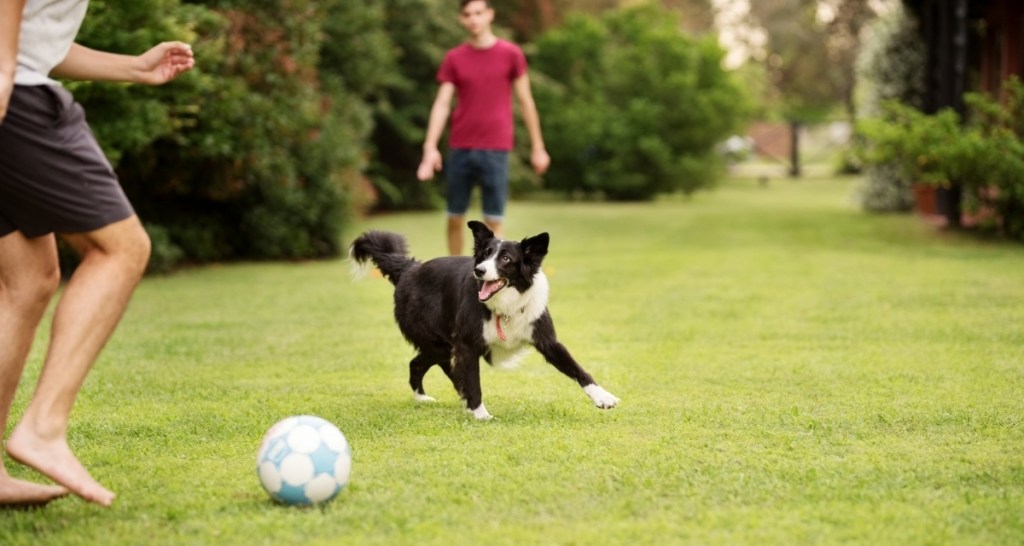
Cats do not play like that.
Approaching a cat with high energy puts them on edge. They might see you as a threat and become aggressive. Or they will simply “peace out” and leave the room. The best thing you can do if you want to make them comfortable is ignore them.
Let them come to you
If you absolutely must approach a cat (because they’re just irresistibly cute), do so very slowly. But it’s really best to just sit on the floor and wait for them to come to you. Don’t try to force it. They might ignore you completely at first, or they might immediately come right up and start rubbing on you. There’s no way to know, so just wait.
Rubbing on you might mean ‘go ahead and pet me.’ But it might not.
If a cat rubs up against you, that’s a good sign. If you’re new to them, it means they’re already comfortable with you. But it’s not necessarily an open invitation to pet them, either. Cats are fickle. Before you get too excited and go in for some pets…
Offer them your fingers
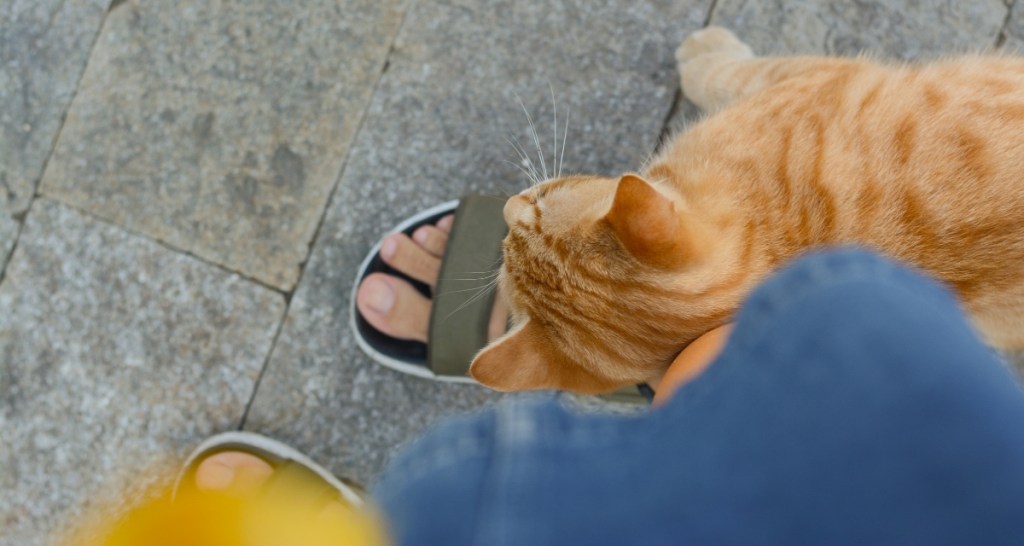
Cats are big on smell. Before your hand touches their fur, they want to know what they’re dealing with. Try holding out a finger or two for them to sniff, preferably coming from below their head instead of above. After they’ve smelled you, they might stick around for pets, or they might not. If they do…
Don’t pet them like a dog
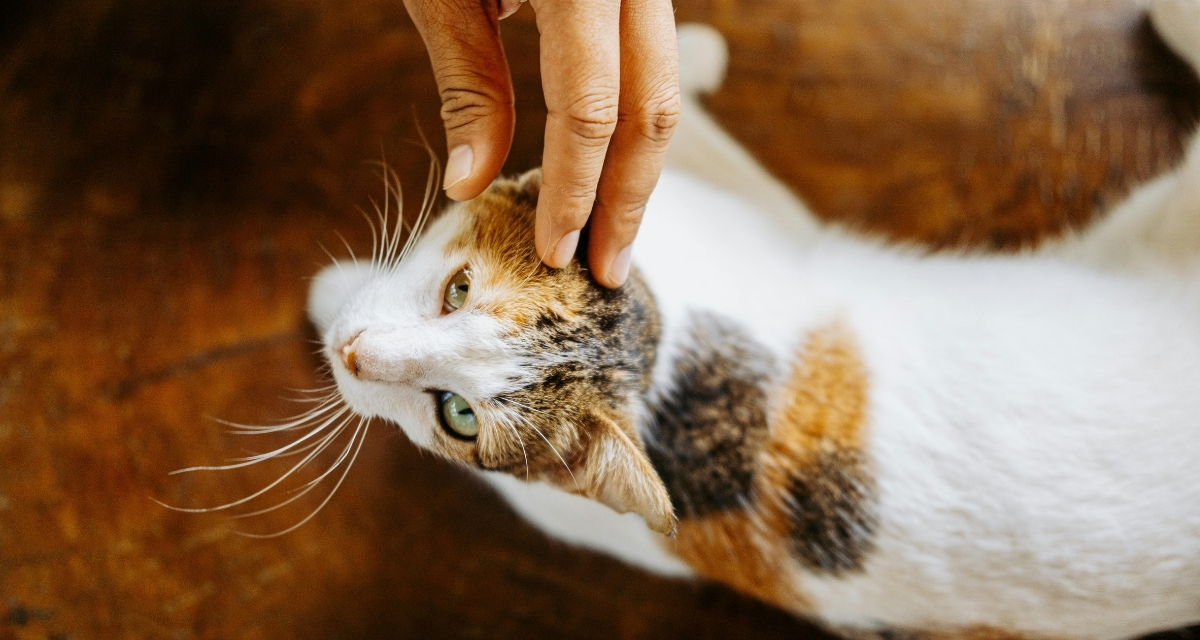
No to head pats. Yes to chin and cheek scratches. No to belly rubs unless their human gives you the green light. (Most cats will destroy your hand if you try to rub their belly, but some love it.) No to hard strokes down their back, at least at first. Cats all have different touch preferences, so gently trying around their chin, cheeks, shoulders, and back is the best way to start.
Happy Cats Haven shared these signs to watch for that indicate a cat might not like the way you’re petting it:
- Restlessness
- Skin rippling
- Ears flattening or flicking
- Tail thumping or thrashing
- Turning head toward the petting
Your hands are not toys
Playing with cats can be a blast. They are predators with excellent hunting skills, so play involves stalking, chasing, and attacking. But to save yourself some painful scratches, use a laser pointer or a cat toy on a string, not your hand. (They’re not likely to actually play with your hand anyway. And if they do, you might regret it.)
Don’t put your face near a cat that doesn’t know you
Even if the cat is lying perfectly contentedly next to you. Even if you’ve had some positive interactions. Not even if the owner says, “Oh, he doesn’t scratch.” The only time our generally docile cat has scratched or bit someone was when a child put their face up to his when he was curled up on a chair. This is one place where the advice for dogs goes equally for cats. Faces and unfamiliar animals don’t mix.
Don’t try to pick it up
Some cats are fine being picked up. Many cats are not. Most cats will not take kindly to some stranger trying to manhandle them, which is (probably) how they view you trying to pick them up. Bodily autonomy is important for our feline friends. Don’t violate it. Sit on a chair or sofa and see if they’ll climb onto your lap, but don’t pick them up to make it happen. Very few cats will respond well to that.

Don’t stare. Blink slowly.
Staring a cat in the eyes can be a sign of aggression, which can stress them out. However, if you do make eye contact, try a very slow, sleepy-eyed blink or two and then look away. Slow blinks are a sign of affection.
But honestly, not looking at them at all might make them more likely to approach you. Again, cats like aloofness.
If a cat deigns to let you pet it, scratch it, play with it, or otherwise interact with it, you may feel like you have been specially chosen. Embrace the feeling, because that’s exactly what has happened.