upworthy
Add Upworthy to your Google News feed.
Google News Button
Pop Culture

Older people agree that no one is 'prepared' for these 17 harsh truths about aging

"How your mind stays young while your body starts to slow down."

aging, ageism, anti-aging, growing older, ask old people, aging parens, ask reddit, turning 60

Reflecting on life's closed doors.

Many of us feel invincible when we are young, believing we can control the aging process so that we’ll always stay forever young, as Bob Dylan once sang. But there’s a moment when everyone realizes aging is an inevitable process and that, eventually, we will have to deal with a slow decline in our physical and, quite possibly, mental capabilities.

This realization and understanding that we won’t be here forever can profoundly change one’s perspective on life. Even though aging is inevitable, studies show how we think about the process can significantly impact our longevity. People with a positive view of aging live an average of 7.5 years longer than those without.

Things happen as we age that are impossible to describe to younger people. However, a group of Redditors did an excellent job of explaining the truths about aging that they were not “prepared” for in a recent thread that made a lot of people feel seen. A user named sofiagympixie asked the AskReddit forum, “What’s a truth about aging that no one prepared you for?” and it received over 2,700 responses.

A big takeaway is that many people feel like they stop mentally aging at a certain point, usually in their late 20s. Still, the continued physical aging they experience makes them feel like they cannot relate to the person in the mirror.

Here are 17 of the most profound responses to the question: What’s a truth about aging that no one prepared you for?

1. There is an end

"You start to realize the older you get that the end is closer than the beginning and you still feel like you have so much more to do."

"That moment where you start to get a sense that there is an end."

aging, ageism, anti-aging, growing older, ask old people, aging parens, ask reddit, turning 60 Photo credit: Canva

2. It takes energy to keep everything afloat

"No one prepared me for how much energy and time it takes to maintain everything—like health, relationships, and just staying organized. It’s way more work than I expected!"

3. Mind/body detachment

"How your mind stays young while your body starts to slow down. You still feel like the same person you’ve always been, but suddenly you notice little things changing."

"This was such a surprise to me. I really expected to feel psychologically older as I aged. But physically, oh my body has betrayed me... Eyes... hair (gray, but at least I still have it)... back... knees... hips... prostate."

4. The past feels closer than it is

"When you get a flashback of a good memory and you realize that was over 10 years ago."

"When I told my daughter about something I did 24 years ago, I had to pause for a moment."

Time flies isn't just a saying. Psychologists agree that our minds lump time together based on novel experiences. When we are older, the days are a lot more similar than when we were young children. That's why when you're 80, time moves a lot faster than it did when you were 8.

aging, ageism, anti-aging, growing older, ask old people, aging parens, ask reddit, turning 60 Photo credit: Canva

5. Stuck in the wrong time

"I’m 61, and sometimes I feel like this world is not for me anymore. I feel almost like an imposter. For example, I can’t find clothes I like that fit correctly, TV is abhorrent, only old music sounds pleasant, shoes are uncomfortable, I don’t recognize most celebrities or famous people in the news or tabloids, and I don’t understand the need for most new and supposedly exciting products. I’m an educated person, I still work and have an active life. I’m not a recluse. But a little at a time, I feel the world is moving on without me. I finally understand why, in her final years, my mother only watched movies from the 1950s and reminisced about the past more than she talked about the present. Her world was long gone."

6. You lose friends

"If you choose not to have kids, you may end up losing your friends. I turn 40 this year, and my partner and I don't see many folks these days. Parents like to hang out with other parents. And I don't have a grudge, I totally see the value for playdates, etc. But it can be a little lonely."

"To be fair, I have 2 kids and lost a lot of friends because we simply don’t have the time/energy to connect regularly enough to maintain a healthy friendship. It instead falls into an awkward acquaintance stage where enough time passes between communication, and you’re not sure if reaching out to connect comes across weird."

7. Your parents are aging, too

"It's not just you who is getting old. Your parents are getting even older."

"I feel this. Lost my mom 2 weeks before my 21st birthday. 40 now with 2 kids. I get angry/sad at a lot of milestones like my wedding and kids' stuff ‘cause my mom was robbed of them, and I was robbed of her."

aging, ageism, anti-aging, growing older, ask old people, aging parens, ask reddit, turning 60 Photo credit: Canva

8. Time wasted caring about other people's opinions

"It’s so freeing when that old twinge of 'why don’t they like me' pops up, and then I remember that I can not be bothered by that anymore, and magically, I don’t care!"

"Just wasting time in general. No thanks. I want to do as many things as possible!"

9. Your friends die

"Your friends start to die. It's something I never thought about."

10. Time flies

"Man. I don’t even feel like the days are long anymore. I just keep blinking and the weeks go by."

"Yup, wake up, eat breakfast, do a couple things. Wait, it’s lunch already? Eat lunch, do a couple more things, time to prep dinner. Eat dinner, clean up, fix a few things, it’s 9 pm. I guess it’s almost time to get ready for bed? This times 10,000 for me."

11. The monotony sets in

"You will realize that you hate planning meals and making food every single day. It's boring, and it's too easy to fall into monotony. But you have to make lunch again and then plan for dinner again then make dinner again and what do you want to eat tomorrow so you plan for breakfast tomorrow and get up and make breakfast again and then plan for lunch again...."

12. You become invisible to much of society

"I wondered what felt off the last year. Gen Z is everywhere now, and I'm still asking myself when that happened."


aging, ageism, anti-aging, growing older, ask old people, aging parens, ask reddit, turning 60 Photo credit: Canva

13. Adults aren't real

"When you're a kid, you can't wait to 'grow up,' and then you do, and you're still you, just older. That voice inside your head doesn't change, but what you see in the mirror does. Only now you're just older and saddled with bills and stress and all of life's 'surprises.' On top of this, everyone is winging it. Absolutely everyone. Because the idea of order and a civilized society is an illusion. We're all playing by made up rules and making imaginary money and all the rest of it. A one-dollar bill costs just as much to print as a hundred-dollar bill."

14. Priorities change

"Things that seemed so important when you were younger, really are not important."

15. Younger people's reverence

"I'm middle-aged, and a funny thing is how younger people get self-conscious or apologize when there is no need. For example, they will apologize for swearing around me or mentioning something like (gasp) drinking, or drugs, or sleeping around. I think it's funny. Why would being on earth longer make me easier to scandalize? I've seen and done things that would shock them, lol, but to them I'm a very proper-looking classy older lady."

16. Ageism

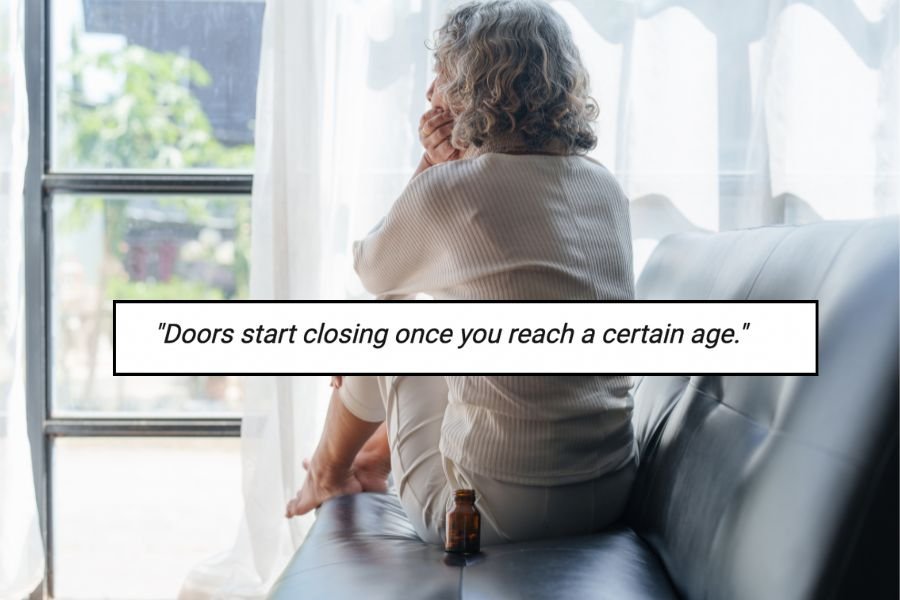
"Doors start closing once you reach a certain age."

"Ageism is real. I just turned 50 and am in a young person's career (software development). I feel how hiring managers look at me when asked to turn my camera on, during an interview that was going very well and suddenly it's 'we'll get back to you.'"

17. It all catches up

"Things like drinking, eating unhealthily, smoking, spending ... they will catch up. When you're young you think you're different, or you think that when it does catch up you'll be old so who cares, I won't care when I'm old anyway. You will care, though. You'll still be you. Those things won't seem like an issue right up to the moment they are. And then it's too late to take them back."

This article originally appeared last year.

Joy

People from around the globe share 15 signs that someone is obviously an American

"An Italian told me that Americans walk confidently in the wrong direction."

tourists, american tourists, us tourists, vacation, american style

Americans on vacation.

One of the fun things about traveling to different countries is that you not only get to learn about other cultures, but you also learn some things about your own. Americans who travel abroad often learn that people around the world appreciate them for being open, friendly, and good at spreading hope and optimism.

On the other hand, people in other countries can often tell when an American is coming from a mile away because they speak loudly, whether indoors or outdoors. Americans also have a very peculiar body language and are known to lean on things when they have to stand for an extended period.


A Reddit user posed a question in the AskReddit subforum to learn more about how Americans stand out abroad: What's an "obvious" sign that someone is American? The post received more than 35,000 responses, with an overwhelming number of commenters noting that Americans are all smiles and love to make small talk, something most people appreciate.

According to Redditors, here are 15 "obvious" signs that someone is American:

1. They have a unique confidence

"An Italian told me that Americans walk confidently in the wrong direction."

"Been taught to walk fast, and look worried.. People think you know what you're doing."

2. They're friendly

"I worked as a cashier in a tourist place in Paris, I always recognised Americans because they were kinda friendly to me and they always left tips."

"I guess there are worse things than friendly and generous."


3. Time = distance

"If someone asks how far away something is, an American will tell how you long it takes to get there as opposed to a physical distance."

"It actually pisses off some Americans to give a distance in miles, unless they're calculating gas mileage. In some places, you have to give with and without traffic options. I think it's more valuable info in time than in distance."

4. Grinning at strangers

"The gentle grins you give to strangers if you make eye contact with them as you pass by, at least in the Midwest. was not well received in Germany."

"I dated a European man here in the US. When we walked together, every time I made eye contact with someone on our path I would smile at them, and they would always smile back. Boyfriend was so confused at all these strangers smiling at me. Kept asking if I knew all these people. It was hilarious."


5. They like personal space

"How much personal space they give themselves. Americans like at LEAST an arm's length."

"We're conditioned to fill spaces evenly. I noticed when i worked delivery, spending lots of quality time on elevators that for every new person that enters, everybody shuffles to even things out. Similar thing plays out in social gatherings and bars. Not sure if that's universal or not, but I find it interesting. I think the size of our personal bubbles is because our spaces are generally much larger because we've got the space (heh) to build bigger buildings, sidewalks, roads etc. Might also explain why we're louder. Used to filling larger spaces with volume."

Body language expert Joe Navarro says that among Americans, the social zone for acquaintances and casual interactions is four to 12 feet, while family and close friends stand 1.5 to four feet apart. The intimate zone, for those closest to us, ranges from the skin to about 18 inches.


6. They lean

"According to the CIA, when training to be a spy, you have to unlearn how to lean. Americans tend to lean on things when standing still."

All of this is true, according to Jonna Mendez, the former chief of disguise at the CIA, who has shared some of her tips and tricks for making Americans seem more European. "So we would de-Americanize you," Mendez told NPR. "They think that we are slouchy, a little sloppy. And they think that they can almost see that in our demeanor on the street because they stand up straight. They don't lean on things."


7. They don't have an indoor voice

"I've lived in America for 25 years, and it still irritates me that instead of lowering their voices in restaurants so everyone can hear, Americans just scream over each other and make their restaurants as loud as clubs."

"For some reason, my otherwise smart and wonderful American friends will speak in the same volume, diction, and speed regardless of any outside factor unless specifically asked."

8. Dessert for breakfast

"In my homestay in London, I was told that I was 'so American' for enjoying a piece of cake for breakfast (not frosted cake, but like a nuts and dried fruit spiced coffeecake kind of thing). Apparently, that's exclusively for like a 4 pm snack, and breakfast is more of a savory meal."

"A lot of American breakfast items in my mind are desserts (pancakes, muffins, waffles, etc.). It doesn't mean I won't eat them, but it's kinda weird to do so."

9. They wear their clothes differently

"A British man once told me he knew I was American because I was wearing a baseball cap backwards."

"An Italian told me they could tell I was American because I wore my sunglasses on the top of my head when I wasn't using them."


10. Exposed soles

"While visiting Turkey, I was told that I looked American because I was sitting with one leg across the other, and the bottom of my shoe was exposed. Apparently, it's rude idk."

"In a lot of places outside of the US, showing the bottom of your shoe is rude."

11. Tactical gear

"Tactical sunglasses."

"I'm in the US, and virtually anything marketed towards men has the word 'tactical' in front of it."

12. They love small talk

"I'm from California (though a smallish town), and we wave to neighbors on our road, even if we haven't met, and start conversations in the grocery line with people if the opportunity presents itself. Also, smiling and saying hello to someone you happen to walk by and make eye contact with is quite normal. We are a social species, it would be so weird not to be friendly, even to strangers, for me, and I'm not even that social of a person."

"What really gets me to it is not that Americans do small talk constantly, but the fact that they are so good and fast at it. I mean, I say 'yeah, it's hot,' and they reply with some interesting fact or make a connection to their hometown. I feel less of myself after this. They must have some small talk class in school or some sh*t."

13. They like to point

"I've always observed my US friends like to point at stuff while walking and say what it is…. We were out walking around Amsterdam recently and they were like 'hey look it's a smoke shop'…. 'Oh look a sex shop'…. 'Oh hey, it's a prostitute' …. 'Look at the canal'…. 'Wow it's another prostitute'….. 'another canal' etc etc. It was like watching Netflix with Audio Descriptions turned on."

"You know that little voice inside your head, your internal monologue? Americans seem to monologue their thoughts."


14. Optimism and enthusiasm

"Dunno in all context, but Americans in Europe stand out with their ceaseless optimism and enthusiasm."

"I'm reminded a lot of Ted Lasso. Everyone I know (all Americans) loves the show. I wonder what kind of European fan base it has."

"Americans are so positive and have such a thirst for life. It sickens me."

15. They eat while walking

"When I lived in Europe, people said only Americans eat while walking. I'd be eating a bagel or something on the way to work or class, and multiple people asked if I was American lol."

"Jay Leno said on Top Gear, I think it was, that Americans are also the only people who eat while driving. I don't do this, but I constantly see people who do, haha, especially in LA, where people spend a lot of time in their cars."

Health

11 people share the 'harsh truths' that helped them become far more emotionally mature

"How people treat me is not my fault, but I am responsible for what I tolerate."

upset woman, hurt people, discussion, argument, heartache
via Pexels

A woman listens to a harsh truth.

It can be heartbreaking to realize that someone you love can't live up to your expectations. It can be even harder to look back at choices you’ve made in life and know you could have been kinder or put more effort into things that really mattered.

However, when we bravely face the hard truths we have to learn in life, we become emotionally stronger. The struggle may be painful at the time, but as the saying goes, “We are stronger in the places where we’ve been broken.” On the other side of the emotional Rubicon is healing, wisdom, and strength.


A poster in Reddit’s emotional intelligence subforum asked users a very personal question that got to the heart of how they became stronger people: “What’s a harsh truth you had to accept to become emotionally mature?” The responses showed the power of taking personal responsibility and seeing yourself and others with rigorous honesty.

upset woman, woman driving, crying in car, honesty, realization An upset woman sits in her car.via Canva/Photos

The discussion is a wonderful reminder of the gold that we can find on the other side of heartache and loss. Here are 11 of the best harsh truths people had to accept to become emotionally mature.

1. Bad parents aren't an excuse

"Having sh*tty parents is not an excuse to be a sh*tty adult. At a certain point, it's on you to do the work and break the cycle."

2. Nobody owes you anything, nobody is coming to save you

"That's right, if you want change, start a revolution yourself."

"Or, as my therapist put it, 'the cavalry is not coming. It's on you.'"

3. You never truly know what anyone is thinking

"You will never really know what people are thinking. They will say what they think people want to hear or avoid the truth. You truly have to trust yourself and work with yourself. Identify what you’re thinking and feeling, and then work with it. And there are no answers. Some things will always be a mystery and never solved."

Psychologists call this phenomenon the Theory of Mind, which holds that we can understand and interpret others' beliefs, thoughts, and feelings to read social situations. However, even though we may come close to understanding other people's inner states, we can never be 100% sure.

upset man, sad man, man in his 30s, man by ocean, anxiety, depression An upset man grabs his head.via Canva/Photos

4. You can mean well and still hurt people

"Two things can exist at once! You can mean well and absolutely hurt someone’s feelings. You arent above accidentally upsetting someone."

"This one is huge to me lately. I had to break up with someone who I do love, but I can't be with anymore. He refused to believe I ever loved him if I was hurting him, I said two things can be true at the same time!"

5. Beware of takers

"Lots of folks are takers, and if you are a giver and don’t know this, they will drain you dry."

"My mum always categorises people by 'radiators' and 'drains.'"

6. Watch where you place your self-worth

"If you tie your self-worth to another person, you are giving them power to take your self-worth out the door with them if they leave. That's not a power you want to give them, and I highly doubt they would want that either."

7. People hear what they want to hear

"Feel what they want to feel, do what they want to do, say what they want to say... all we are control of is our boundaries and what we do with how we feel."

upset woman, woman at computer, calculator, stress, anxiety A stressed-out woman.via Canva/Photos

8. Radical accountability

"Radical accountability is often not fun but will completely transform your capacity, integrity, self-trust, potential for growth, etc."

David Goggins, a motivational speaker and former Navy SEAL, is known for championing the power of radical accountability. Here, he shares how he created an accountability mirror. Every day, he wrote a mistake on a Post-it note and attached it to his mirror. He then methodically worked on fixing each misstep.

- YouTube www.youtube.com

9. Being honest about motivations

"Being able to take responsibility for my actions means considering all of the harm I’ve caused and being able to look at my motivations honestly. It’s really hard to do that because the shame can be so strong, but it’s honestly really healing to be able to face yourself like that."

10. You're responsible for what you tolerate

"How people treat me is not my fault, but I am responsible for what I tolerate. I really didn't want to have to be accountable for myself for a very long time. It was simply easier to blame anyone and anything outside of myself for what happened to me. But I must admit that my life transformed once I started taking responsibility. Many people don't want to admit that they play their part in what happens to them (bar if they're a child, obviously - and very serious cases of abuse and violence). And I was one of them."

11. Some people will never reach emotional maturity

"That the people you love deeply and dearly may never become emotionally mature themselves. They may still try to defend and protect themselves even when all you wanted to do was be seen or heard. Taking it personally when you just want a resolution. It's realizing their limits are so much smaller than yours. What it so simple for you to do, even things like taking accountability for your actions, seems like a fkn mountain for them that they aren't willing to start climbing."

john waite, police, cops, rock stars, musicians
Photo credit: Kiowa County Sheriff’s Office via Facebook, cropped

Kansas police pulled over an '80s pop star, and it led to a wholesome moment.

Being pulled over by the police is always nerve-racking, and it's probably even more awkward when the driver is a pop star with multiple chart-topping singles. In July 2025, one such encounter went viral after sheriff's deputies in Kiowa County, Kansas, stopped a vehicle transporting British '80s hitmaker John Waite. But instead of leading to tension, the traffic stop resulted in a genuinely wholesome moment.

Waite and his band were en route to their concert at United Wireless Arena in Dodge City when they were pulled over for speeding. Sergeant Justin Rugg just happened to be a longtime fan. "I'm not even on cloud nine; I'm on like cloud 12," he said after making the stop, according to the Kiowa County Sheriff Office's Facebook page. The post continued: "It's not every day our Deputies get to pull over cool guys!!"


Everyone was a good sport about the whole thing. Waite took a photo with the officer and even had his band pose for another, leaning over the hood of the patrol car and looking back at the camera in mock confusion. The band eventually made it to the show, and both Waite and the sheriff's office shared the photos. The KCSO wrote to Waite, "Have a rockin' time and check out that beautiful Kansas sky!" On his own account, the musician added, "Pulled over for speeding. Good guy cop!"

- YouTube www.youtube.com

"The next thing I know, I'm taking photographs with him, and we're almost wrestling"

Neither the report nor the social media posts officially say whether Waite's crew received a speeding ticket, but given the cordial tone of the photo session, it seems likely they were let off with a warning.

The comment sections are full of solid jokes and observations, including this one: "Excuse was he didn't want to be late for a show. He got off with a verbal. I'm going to have to try that next time." A commenter whose profile lists their occupation as a 911 dispatcher with the Kiowa County Sheriff's Office wrote: "I was just excited to dispatch on this call lol!! Freaking AMAZING!!!!! Hey, John Waite, stop in here on your way back!! It's my weekend to work so I didn't get to see you!!!!"

Months later, Waite laughed about the viral encounter during an interview with the YouTube channel AccordingToAmabile.

"[The officer] says, 'Who are you?'" he recalled. "I'm going, 'John Waite.' He says, 'John Waite!' And the next thing I know, I'm taking photographs with him, and we're almost wrestling. Everybody's cracking up and laughing. He was a great guy! That night, I look out in the audience, and he's raging, jumping up and down about four rows back! You meet some fantastic people [as a musician]. You really do. And a lot of it's very funny."

- YouTube www.youtube.com

You've probably heard Waite's '80s hits

While many people admitted they don't recognize the singer's name, it's likely they've heard at least a few of his songs.

Waite's first prominent gig came in the late '70s as the frontman and bassist of the hard rock–power pop band The Babys, best known for minor hits like "Isn't It Time" and "Every Time I Think of You." The group, which briefly included Journey keyboardist Jonathan Cain, broke up in 1981, and Waite launched a solo career the following year with his debut LP, Ignition. He enjoyed a long run of commercial success in the decade, landing 10 singles on the Billboard Hot 100, including his ultra-smooth 1984 No. 1 hit "Missing You." (If you haven't seen the music video, do yourself a favor. It's 1984 in visual form. Classic stuff.)

In between his various solo projects and tours, Waite had another breakthrough moment. In 1988, he co-founded the supergroup Bad English, which scored a No. 1 hit the following year with the sleek ballad "When I See You Smile." No wonder Sergeant Rugg was so impressed.

- YouTube www.youtube.com

David Bowie; MTV; MTV ending; David Bowie interview; diversity; music videos

1983 interview shows David Bowie calling out MTV for questionable treatment of Black musicians

With MTV winding down to an end, old interviews are resurfacing online. Recently, an interview featuring the iconic singer, David Bowie, resurfaced showing the late musician essentially taking over the interview in the most respectful way. Bowie exuded kindness and compassion while simultaneously and vigorously advocating for others.

In the clip from a1983 episode of MTV News, the singer is being interviewed by Mark Goodman. It starts seemingly after the interview has been going on for a while. Bowie directly asks Goodman if he might be able to ask him a question. The reporter quickly agrees, not knowing the weight of the question that would soon follow, but Bowie wasted no time getting to the point. As a longtime advocate, he saw a disparity and took the opportunity to ask the source directly.


"I'd like to ask you something," Bowie says while fiddling with his sock, perhaps out of nervous anticipation. "It occurred to me, having watched MTV over the last few months, it's a solid enterprise, and it's going a lot going for it. I'm just floored by the fact that there are so many bl...so few Black artists featured on it. Why is that?"

David Bowie; MTV; MTV ending; David Bowie interview; diversity; music videos David Bowie on swing in red suitElmar J. Lordemann/Wikimedia Commons

He finishes stumbling through his initial question, still picking at his sock, and makes direct eye contact with Goodman. The reporter attempts to explain that the network is trying to move in the direction of playing more Black artists, but is currently focused on "narrow casting." This answer wasn't enough for Bowie to move on. The late singer had several follow-up questions, which turned the interviewer into the interviewee.

"It's evident in the fact that the only few Black artists that one does see are on about two-thirty in the morning until about six," Bowie says matter-of-factly. "Very few are featured predominantly, predominantly during the day." Goodman attempted to interject before the recording artist interrupted to say that, over the last couple of weeks, he had noticed a change but called it a slow process. The reporter attempted to explain away the noticeable lack of diversity in the music videos shown during daytime hours by saying people like Bowie were not watching the channel long enough. But Bowie challenged the deflective answer as he dug for the truth.

David Bowie; MTV; MTV ending; David Bowie interview; diversity; music videos David Bowie album coverPiano, Piano!/Flickr

"Because one sees a lot on the...on the...there's one Black station on television that I keep picking up, and I'm not sure which station it's on. But there seems to be a lot of Black artists making very good videos that I'm surprised aren't used on MTV," Bowie counters.

Goodman then shifts gears a bit, explaining that they're trying to make sure MTV reaches a broad audience, including suburban families. " Oh, of course, also we have to do what we think, not only New York or Los Angeles will appreciate, but also Poughkeepsie or Midwest, pick some town in the Midwest, it will be scared to death by Prince, which we're playing, or a string of other Black faces," the reporter says.

David Bowie; MTV; MTV ending; David Bowie interview; diversity; music videos PrinceWorld's Direction/Flickr

Interestingly, Prince is from Minnesota, which is about as gosh-darned Midwest as a person could get. Yet the late chart-topping artist was the first name listed as being scary to Midwestern suburban moms. David Bowie, still not impressed, simply replies, "Very interesting."

With Bowie delicately placed in the middle of what was likely a highly anticipated interview at the time, Goodman was clearly scrambling and proceeded to only make things worse: the MTV News host shares that once white artists pick up the musical styles and trends of Black music, taking it on as their own, then it will be more acceptable to be seen on the music network. This response came after Bowie asked the host if he felt the stations, including radio stations, had a responsibility to make the process fairer and more integrated.

"Absolutely," Goodman says. "I think it's happening because white music and white musicians are now starting to play more than ever what...more than they have lately. Let's say in the past 10 years, what Black artists have been into, and now, hopefully, the lines are going to start to blur, and when we play a band like ABC, well, there's white and Black kids there enjoying it, and all of a sudden it's a little bit easier for a white kid to understand it."

Goodman goes on to share about a letter he read in a magazine called The Record, where the writer was ranting about the things he didn't want to see on MTV (i.e., Black artists, we can assume). The former Labyrinth star replies to this revelation by stating plainly, "Well, that's his problem."

Even by today's standards, a recording artist openly addressing any lack of diversity in the media is rare. Bowie addressing the inequity during an interview in 1983 was truly groundbreaking.

6 7, 6 7 meaning, group 7, group 7 meaning, slang, gen x parenting, millennial parenting
via @bryaninmsp/Instagram, used with permission. And Hyacinthe Rigaud/Wikipedia

Suddenly "6 7" isn't so aggravating. It's revolutionary!

Hate the "6 7" meme, but love history? You're in for a treat. Real estate agent and all-around funny guy Bryan Clapper may have just saved all of us old-timers from the dreaded tyranny of brain-rot Gen Z slang by, somehow, making it clever.

In a funny Instagram clip styled like an old-school "The More You Know" PSA, Clapper offers to "translate" Gen Z slang for Gen X or Millennial parents who may feel "confused" when their kids use it.


Clapper playfully argues that, rather than brain-rot gobbledygook, it's a reference to the date of June 7th, 1654, which, "as we all remember from our 400-level French history courses in college," marked the coronation of King Louis XIV. Yeah, that's pretty much common knowledge. Right?

6 7, 6 7 meaning, group 7, group 7 meaning, slang, gen x parenting, millennial parenting We really wish this were true. via @bryaninmsp/Instagram, used with permission.

So when your teenager says "6 7," what they're really saying is:

"I disagree with the colonial expansion of the French empire and the perceived divine right of kings, but acknowledge its role in creating the conditions that led to the French Revolution and the model for modern democracy that the United States is built on," Clapper says.

Therefore, the best response parents can use to sound cool is "Vive la France!" Truly, any excuse to shout this is welcome.

On the other hand, "Group 7," another bit of youth lingo, has nothing to do with the French Revolution, and everything to do with the 1920s, apparently. As Clapper jokingly explains, the term refers to the famed Canadian landscape painters known as the Group of Seven, founded by Lawren Harris, J. E. H. MacDonald, A. Y. Jackson, Arthur Lismer, Frederick Varley, Franklin Carmichael, and Frank Johnston.

- YouTube www.youtube.com

"Anyway, the hip kids love Group 7 because of their efforts to create a truly Canadian style of painting, rooted in deep respect for and connection with nature," Clapper says. Sure, yeah, that's it.

Neither slang phrase has anything to do with Clapper's explanations. "6 7" is intentionally nonsensical. "Group 7" carries a little more meaning, often signaling superiority or eliteness, but it also emerged out of nowhere and spread because of the internet.

But it's much more fun to step into Clapper's reality, isn't it? It certainly stoked the creative fires of other history buffs in the comments:

"Sorry you have misunderstood...6,7 refers to the historic Argentinian colony vote to adopt the crop rotation program for olive farmers in 1906. It was the first breakthrough for environmentally-minded produce pioneers. A historic victory for planet lovers and virtue signalers. And now that you know this, you should respond 'Ohhh-I-live that'. Sounds a little like 'olive that'!!...get it?"

"As a Latin teacher I feel like they're talking about Servius Tullius and Tarquinius Superbus, the sixth and seventh kings of Rome, after whom the Monarchy was replaced by the Republic. It's a commentary on the problems with one person having too much power. Such clever children!"

"I thought they were quoting Chaucer 'to set the world on six and seven' or Shakespeare 'But time will not permit: all is uneven, And everything is left at six and seven.'"

And many parents were thrilled to finally have the perfect comeback for the next time they hear the dreaded "6 7" term:

"I will now scream 'Viva la France' at my teenage kids incessantly. Thank you!"

"Irritating my teenager with 6-7 just got levelled up! Viva la France!"

It seems that in the war of words, the old fogies finally have the upper hand once again.