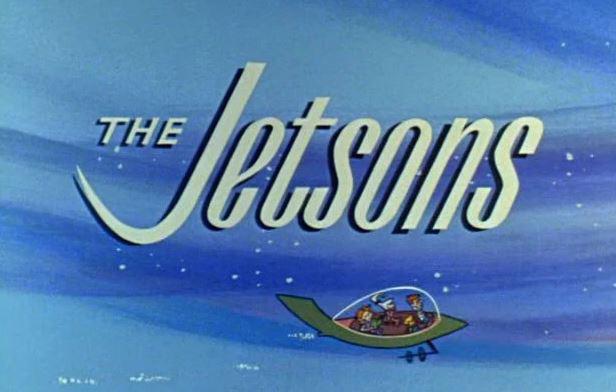
When people talk about visions of the future, “The Jetsons” is often the go-to reference. The Hanna-Barbera cartoon ran for one season of 24 episodes in 1962 and 1963 as a follow-up to “The Flintstones,” a show about people living in a prehistoric age.
“The Jetsons” was later rebooted for another 51 episodes from 1985 to 1987, as IMDB tells us.
“The Jetsons” depicts a future world where we have talking robot maids, flying cars and bathrooms equipped with automatic toothbrushes. What’s interesting is that the future is neither dystopian nor utopian.
“The Jetsons” is based on the idea that even though humanity has evolved technologically, George Jetson still has to deal with the same family and career troubles that any other sit-com dad had in the ‘60s.
In the world of “The Jetsons,” the more things changed, the more they stayed the same.
“We still speak about the future in Jetsons terms,” Jared Bahir Browsh, author of the 2021 book “Hanna-Barbera: A History,” told The New York Post. “A show that originally ran for one season had such an impact on the way we see our culture and our lives.”
A Twitter user by the name of Brendan Kergin went viral recently for pointing out that George Jetson was probably born on Sunday, July 31, 2022. The announcement of the birth of the most famous man of the future felt to many like a defining milestone in human history. Have we finally reached the future? Have we begun our march toward true progress as a species?
In Kergin’s original tweet, “The Jetsons” page on Wikipedia claimed he was born on July 31, 2022. Since then, the page has been changed to 2022, with no specific date given.
According to Snopes, the show debuted in 1962 and was set 100 years in the future. In an episode that ran in the first year, George claims to be 40 years old, putting the year of his birth firmly in 2022.
On a deeper level, that means that, as a species, we have 40 years to get our quality of life up to Jetsons’ standards.
For those who are fretting that humanity has veered off course and is far from hitting the cartoon’s timeline, there is hope. Just think about how far technology has come in the past 40 years.
To all the people wondering where their flying cars are, remember what the world was like in 1982?— Brendan Kergin (@BKergin) July 30, 2022
Somebody needs to bite the bullet and name their newborn George Jetson tomorrow— BeeBricks (@BeeBricks) July 29, 2022
I need to know ASAP because if I have a baby on July 31st, I AM naming him George Jetson.— Connor (@connorclark21) July 29, 2022
But a lot of people still want to know why we don’t have flying cars yet.
FINALLY The Jetsons are catching up to reality!!!
WHERE’S MY FLYING CAR?!?!?!?!— Brandon Hilton (@BRANDONHILTON) July 29, 2022
Oh, crap… that means that we’re getting close to flying cars.
A ton of people can’t control a car on the ground in a safe and controlled manner. We’re doomed. Doomed, I say.— Free Agent Kevin?? (@sportsjunkie007) July 29, 2022
If George Jetson was just born, then his grandfather, Montague Jetson, is in our midst.
We must find Montageu Jetson.— Dr Closer (@RandomUserYeg) July 29, 2022
You must have a Facebook account to view images of him. We at least know that he graduated from Adrian C Wilcox high school. pic.twitter.com/7syRruoxb9— Elliott Oxford (@E_livin) July 29, 2022
A few people thought the Jetsons’ world makes total sense given today’s developments.
Which means that in about 30 to 40 years the earth will be so uninhabitable, we have to live in buildings built way up in the sky. So, checks out.— Detective Bagabitch (@RunMizzou11) July 29, 2022
Also gender and family dynamics will revert to a 1950s paradigm. So yeah, checks out.— not today satan (@basketokittens) July 29, 2022
I’m guessing we’re about to find out how Global Warming is solved. . .by putting every building on the planet on stilts— K.Waza ? (Commissions OPEN 6/7 slots Filled) (@KWaza94874843) July 29, 2022
We’ve come close to re-creating a lot of technology that appeared in “The Jetsons.” We may not have sassy talking robot maids, but we do have Roombas that automatically keep the house tidy. We also have video calls, flat-screen TVs, and TV watches.
In the end, “The Jetsons” may serve as a warning to be careful about how we envision our future because we might just get it.
“[“The Jetsons”] speaks to this idea that as human beings we’ll always have something to complain about,” Danny Graydon, author of “The Jetsons: The Official Guide to the Cartoon Classic,” told The New York Post. “One of the problems with utopia, if you create a perfect world, that world might be quite boring.”

A single door can open up a world of endless possibilities. For homeowners, the front door of their house is a gateway to financial stability, job security, and better health. Yet for many, that door remains closed. Due to the rising costs of housing, 1 in 3 people around the world wake up without the security of safe, affordable housing.
Since 1976, Habitat for Humanity has made it their mission to unlock and open the door to opportunity for families everywhere, and their efforts have paid off in a big way. Through their work over the past 50 years, more than 65 million people have gained access to new or improved housing, and the movement continues to gain momentum. Since 2011 alone, Habitat for Humanity has expanded access to affordable housing by a hundredfold.
A world where everyone has access to a decent home is becoming a reality, but there’s still much to do. As they celebrate 50 years of building, Habitat for Humanity is inviting people of all backgrounds and talents to be part of what comes next through Let’s Open the Door, a global campaign that builds on this momentum and encourages people everywhere to help expand access to safe, affordable housing for those who need it most. Here’s how the foundation to a better world starts with housing, and how everyone can pitch in to make it happen.
Volunteers raise a wall for the framework of a new home during the first day of building at Habitat for Humanity’s 2025 Carter Work Project.
Globally, almost 3 billion people, including 1 in 6 U.S. families, struggle with high costs and other challenges related to housing. A crisis in itself, this also creates larger problems that affect families and communities in unexpected ways. People who lack affordable, stable housing are also more likely to experience financial hardship in other areas of their lives, since a larger share of their income often goes toward rent, utilities, and frequent moves. They are also more likely to experience health problems due to chronic stress or environmental factors, such as mold. Housing insecurity also goes hand-in-hand with unstable employment, since people may need to move further from their jobs or switch jobs altogether to offset the cost of housing.
Affordable homeownership creates a stable foundation for families to thrive, reducing stress and increasing the likelihood for good health and stable employment. Habitat for Humanity builds and repairs homes with individual families, but it also strengthens entire communities as well. The MicroBuild® Initiative, for example, strengthens communities by increasing access to loans for low-income families seeking to build or repair their homes. Habitat ReStore locations provide affordable appliances and building materials to local communities, in addition to creating job and volunteer opportunities that support neighborhood growth.
Marsha and her son pose for a photo while building their future home with Southern Crescent Habitat for Humanity in Georgia.
Everyone can play a part in the fight for housing equity and the pursuit of a better world. Over the past 50 years, Habitat for Humanity has become a leader in global housing thanks to an engaged network of volunteers—but you don’t need to be skilled with a hammer to make a meaningful impact. Building an equitable future means calling on a wide range of people and talents.
Here’s how you can get involved in the global housing movement:
Speaking up on social media about the growing housing crisis
Volunteering on a Habitat for Humanity build in your local community
Travel and build with Habitat in the U.S. or in one of 60+ countries where we work around the globe
Join the Let’s Open the Door movement and, when you donate, you can create your own personalized door
Every action, big and small, drives a global movement toward a better future. A safe home unlocks opportunity for families and communities alike, but it’s volunteers and other supporters, working together with a shared vision, who can open the door for everyone.
A beachgoer couldn’t be bothered by Prince Harry and Meghan Markle’s visit and the internet is absolutely obsessed with her: “The level of not giving a f* I dream of achieving.”
When Prince Harry and Meghan Markle visited Bondi Beach on April 17, they were surrounded by the usual circus: paparazzi, crowds, bodyguards in matching uniforms, the whole production. One woman lay on her mat in the middle of it all, scribbling in her notebook, wearing sunglasses, and apparently not giving a single thought to any of it.
A TikTok clip posted by News.com.au captured the moment as the Duke and Duchess of Sussex walked the beach during the final day of their Australian tour. Their entourage had to navigate around her. She did not look up. The royal couple’s eyes tracked her as they passed. She continued writing.
News.com.au summed it up in their caption: “One woman’s complete indifference is peak Bondi attitude.”
The internet agreed enthusiastically. “The level of not giving a f* I dream of achieving,” one commenter wrote. “Peak unbothered,” said another. “Well done to that lady for not giving a damn,” a Facebook commenter added.
The coda that made the story perfect: a TikTok commenter recognized the woman as her sister and revealed she thought the crowd had gathered around an actor.
Aerial view of Bondi Beach in Australia. Photo credit: Canva
The visit itself was a quieter affair than Harry and Meghan’s 2018 Australian tour, when they were still working royals and the reception was considerably more ceremonial.
This trip included stops to support volunteer first responders at the Bondi Surf Bathers’ Life Saving Club, a Masterchef Australia appearance, and promotion of Meghan’s As Ever lifestyle brand. The Guardian described it as less a royal tour than something else entirely. One woman on a beach mat seems to have agreed.
Robin Williams wrote a letter to the principal who expelled his 15-year-old co-star during Mrs. Doubtfire. The principal framed it. And still didn’t let her back in.
She’d been a 9th grader at a Canadian school when production started. With no internet to submit work digitally, she’d set up a system to mail her assignments back and forth. It worked … until it didn’t. A few months in, the school decided the arrangement wasn’t working for them, and Jakub was out.
At 15, she was devastated. Robin Williams noticed she was upset, and did what Robin Williams apparently just did: he wrote a letter to the principal asking them to support her education and her career.
Jakub shared the story during a Mrs. Doubtfire cast reunion on the Brotherly Love podcast, and the punchline is perfect: “The principal got the letter, framed the letter, put it up in the office, and didn’t ask me to come back.”
She got into the University of Virginia anyway. When she did, a teaching assistant handed back a statistics assignment with the note: “Dear Doubtfire Girl, you got a B-.”
What she also got, from her time on set with Williams, was something harder to grade. She described working with him as a crash course in presence and spontaneity, which was a total departure from the scripted rhythms she’d learned as a child actor. “We had always used a script, so I knew when it was my turn to speak, I could say my line. Then you go on set with Robin, and it’s like, who the f*ck knows what’s going to happen now?”
He also later wrote her a recommendation letter for college. The school never did ask her back. She turned out fine.
In 2000’s Miss Congeniality, Sandra Bullock’s character goes undercover as an FBI agent posing as a contestant in a beauty pageant. One of the film’s most memorable lines comes when the pageant host, portrayed by William Shatner, asks Miss Rhode Island to describe her “perfect date.”
Shatner’s character is beside himself when Miss Rhode Island, played by Heather Burns, describes her perfect calendar date instead of a romantic rendezvous. “I’d have to say April 25th because it’s not too hot, not too cold. All you need is a light jacket,” she responds.
Since the movie’s release, April 25 has become known in some circles as “Miss Congeniality Day,” a pop-culture holiday celebrating the amazing spring weather.
Does April 25 have the best weather of the year?
However, does April 25 really have the best weather of any day of the year? Is it the day when the Earth is at the perfect distance from the sun so it’s not too hot and not too cold? The meteorology team at WeatherBug, a people-first forecasting app, analyzed U.S. weather patterns from 2018 to the present day and found that, unfortunately for Miss Rhode Island, April 25 isn’t even close to the best day of the year.
The WeatherBug team discovered that October 8 is “The Perfect Date,” claiming that it “most consistently delivers the ideal combination of comfortable temperatures and minimal rainfall across the country.” October 8 is the strongest contender for the “Perfect Date” title because it consistently delivers the lowest amount of rainfall, just 0.0573 inches, and a comfortable average temperature of 66°F.
April 25 ranks 80th, with 0.1297 inches of rain and an average temperature of 60°F. Over the past eight years, the best day for weather in America was May 9, 2022. There was virtually no rain and an average temperature of 68°F nationwide.
“Through years of daily weather pattern monitoring and weighing precipitation amounts by population size through WeatherBug’s extensive database of active users, we’ve determined April 25th might hold a special place in pop culture, but the date actually ranks 80th measured against the 365 days of the year,” Brittney Gomez, a meteorologist at WeatherBug, said in a statement. “April 25th saw an average of 0.1297 inches of precipitation in the past 8 years, with an average temperature of 60°F. So, while it might not be the ‘perfect date,’ April 25th is still ‘light jacket’ friendly.”
What are the hottest and coldest days of the year?
The team also found that the hottest day of the year is July 14, reaching a nationwide average of 81°F, and that January 20 is the coldest, averaging just 33°F.
When most people hear that April 25 is the nicest day of the year, they probably take it at face value. It’s a nice spring day—who’s gonna challenge the idea? However, the opinion is coming from Miss Rhode Island, a woman who misunderstood a very basic question at a beauty pageant. While we all nodded our heads in agreement, we never considered the source of the information. So, good on WeatherBug for challenging the status quo and giving us a reason to look forward to early October.
Actor Leonard Nimoy portrayed one of the most famous characters in pop culture: Mr. Spock on Star Trek. Nimoy’s real life helped inspire one of the most famous quotes said by Spock that continues to inspire the world: “Live long and prosper.”
The simple sentence was said by Nimoy’s character in a 1967 episode from Star Trek‘s second season called “Amok Time.”
In a 2012 interview with StarTrek.com, Nimoy explained: “The idea came when I saw the way Joe (Pevney, the episode’s director) was staging the scene. He had me approach T’Pau and I felt a greeting gesture was called for. So I suggested it to Joe, who accepted it immediately.”
The inspiration behind “Live long and prosper”
Nimoy explained that “live long and prosper” came from his experience attending Orthodox Jewish Synagogue in an inner-city neighborhood called the West End in Boston. He shared that both the phrase and the Vulcan salute (the V-shaped hand signal made famous by Spock) were directly inspired by his time there.
“I still have a vivid memory of the first time I saw the use of the split-fingered hands being extended to the congregation in blessing,” he told the website. “There were a group of five or six men facing the congregation and chanting in passionate shouts of a Hebrew benediction. It would translate to ‘May the Lord bless you and keep you,’…etc.”
Nimoy went on to add, “And when I saw the split-fingered gesture of these men… I was entranced. I learned to do it simply because it seemed so magical.”
It was a life-changing idea for Nimoy and Star Trek fans. He said, “It was probably 25 years later that I introduced that gesture as a Vulcan greeting in Star Trek and it has resonated with fans around the world ever since. It gives me great pleasure since it is, after all, a blessing.”
Leonard Nimoy was born on March 26, 1931, in Boston, Massachusetts. He was born to Jewish Ukrainian parents, and began acting in community theatre at a young age.
His interest in acting led him to California to study at the Pasadena Playhouse in 1949. Early in his career, he not only acted, but also wrote and directed. After many years slugging it, Nimoy’s big success came when he landed his role on Star Trek in 1966.
Nimoy was influential in the character development of Spock.
“[During a scene once,] Spock had one word to say and the word was ‘fascinating.’ And we’re looking at this thing on the screen and I got caught up in that energy and I said, ‘fascinating!’” he told the Television Academy. “And the director gave me a brilliant note which said: ‘Be different. Be the scientist. Be detached. See it as something that’s a curiosity rather than a threat.’ I said, ‘fascinating.’ Well, a big chunk of the character was born right there.”
Nimoy died in February 2015 at age 83 due to chronic lung disease, COPD. Despite the loss of one of the greats, his legacy lives on.
Part of what made him such a beloved singer was the uniqueness of his voice. From the time he was a young child singing lead for The Jackson 5, his high-pitched vocals stood out. Hearing him sing live was impressive, his pitch-perfect performances always entertaining.
No one could ever really be compared to MJ, or so we thought. Out of the blue, a guy showed up on TikTok with a performance that sounds so much like the King of Pop it’s blowing people away.
A parking lot performance that broke the internet
Brandon Conway posted his first TikTok video ever on July 24 in 2022, and in less than three weeks it racked up more than 27 million views. It’s just him standing in a parking lot snapping his fingers and singing “The Way You Make Me Feel,” but when he opens his mouth, whoa.
As he keeps going, it gets even more whoa. Then he hits Jackson’s signature “he he” and the whoa turns into what?!?
First post on tiktok let me know what you guys think! More videos coming soon feom mj to country to rock so yall be sure to stay tuned!#fyp#singer#usherchallenge @usher @tpain #letsgo#firstvideo
Uncanny, right? If you need a reminder of how Jackson himself sounded when he sang it, here’s a live performance from Auckland during his 1996 world tour.
Very impressive, to say the least. Especially considering Conway seems to label himself a country singer over a pop artist.
This one goes out to all the ones who maybe going through it right now… the messsge you ask?? The message is knowing that regardless of how bad things may be or get it’s always okay to ask for help… no matter how you do it or when the fact still remains that we all need a little help or “saving” if you will! @Jelly Roll my brother thank you and @Lainey Wilson for such a beautiful song ❤️ I hope you all enjoy my cover of this great record with my right hand man @JoshHamiltonmusic__ strumming his guitar! Happy Monday everyone hope your Christmas filled week is beautiful 🙏🏽#brandonconwaymusic#viralvideo#coversongsontiktok#thereisalwayshope
Comedian Pete Holmes isn’t just funny. He’s a deep thinker who digs so far beneath the crust of your average every day “observational” comic that he might just touch the lava. He takes an aerial view on everything from parenting to science to sex to faith, and all of the tiny minutia that comes with them. His rise as a beloved writer and stand-up has barreled through the atmosphere from tiny gigs to podcasts to TV shows.
Holmes and I have a mutual friend who put us in touch for this Upworthy interview. And although we had never met, I immediately felt like we were long lost friends upon answering his call. He was ready to break down not only the rules (or lack thereof) of comedy, but to deconstruct human thought and how the most sensitive people might navigate the world.
What especially stood out in this half hour chat beyond his quick wit, was his deep commitment to supporting other talented people. He seemingly laughs as easily as he makes others laugh, and that alone is a gift.
Upworthy: I must tell you there’s a podcast interview you did on You Made it Weird with Gareth Reynolds about Doritos where he did a Jay Leno impression. Do you remember this?
Holmes: “Of course!”
Upworthy: I legit look at this once a week when I’m having a bad day and need to laugh. Is there something that you come back to often when you’re in a bad mood and need to laugh?
Holmes: “Oh my God, first of all, I love Gareth so much. What a funny person! In fact, people come up and say, ‘I love your Doritos thing!’ Which is funny because I have a lot of jokes about Doritos, so I’m never sure what they mean.
To answer your question, what do I watch when I’m in a bad mood? I watch Nirvana the Band the Show. They just had their movie come out, and I think the whole second season is on YouTube.
I think Matt Johnson and Jay McCarrol are just two of the funniest people in the world, and I just watch clips from that show sort of endlessly if I’m looking to laugh. The ones that really get me are the ones that are a little bit over the line, and that’s what I like about them.
They’re just two friends finding fun together, and it just makes me so happy. So it’s not just the content, it’s the medium. It’s how they made it, and it really captures the feeling of two just free people, two people that realize that we’re in this weird reality, we’re in this weird world, and we’re only here for a little time. And one of the things we can do is be really funny and make each other laugh, and they just go at it with this innocence that I really admire.”
Upworthy: To that end, who would you say back in the day and now are your major influences as a comic?
Holmes: “I love that question. When I read the book SeinLanguage—which is I’m just so sure that Jerry Seinfeld regrets calling it. I don’t know him. I’m not basing that on anything that you don’t also have access to, just his comedy and his show. I’m just so sure that he is like, “Why did I call it SeinLanguage?“
But I read it because I didn’t really have control over our TV in our house. When a comedy special came out in book form, I could get the book and I could read it privately and re-read it. And he actually talks a bit about comedy theory in it as well. Anyway, I read this book and I just couldn’t believe that the kind of thoughts I was already having were not that different from the thoughts of a professional comedian.
I just didn’t feel like I had that tour de force, wild, loud guy Boston energy, if that makes sense. I felt way more in line with Jerry Seinfeld and Ellen and Ray Romano. These sort of like 7 p.m. show guys.
Okay, I don’t know if you’re old enough to remember, that was the fringe. In the ’90s, comedy was sort of for pirates. And a lot of my best friends are pirates. I’m just saying they hooked up late night, you know, freewheeling lunatics. And I just didn’t see myself up there. So Jerry Seinfeld once said about Robert Klein that he was the first comedian that he saw that was like, ‘Oh, it just seemed like me.’ And when I saw Seinfeld I was like, ‘Oh, this is like me, this is like a guy I know.’ So the book SeinLanguage and the fact that it was clean was really important to me.”
Upworthy: I read there was one point you had plans to be a youth pastor. Was that a real thing you were considering or just what your parents thought you would do?
Holmes: “No, it was my idea. You could look at it two ways: one, my parents were sort of detached in a way that you were like, ‘Shouldn’t you be more involved?’ Or you can be like they really were letting me find my own way, and I actually look at it more the latter.
It was as serious as when you’re in high school you want to be a teacher, you know what I mean? You just don’t know any other jobs. So I knew teachers that I admired, and I knew my youth pastor and my pastor that I admired. And this is a Steve Martin thing: he said, ‘Teachers are in show business.’ Pastors are too. And that doesn’t mean to say they’re phony or false. It just means if you’re up in front of a crowd holding their attention, you’re putting on a show. Teachers and pastors are doing something substantial, but they’re doing it in the style of a show.”
Upworthy: I saw a clip where you were talking about the idea of saying ‘Yes, thank you’ to the universe. It seems very Stoic. Are there other elements of that that help you in your daily life?
Holmes: “I would say that my understanding of ‘Yes, thank you’ has deepened a little bit. There’s a couple different altitudes you can look at that. One of them is just very basic—basic doesn’t mean bad—it’s just basic psychology. Meaning suffering comes from seeking and resisting. I know that’s sort of spiritual terminology, but it’s also psychological terminology. If you’re suffering, you’re by definition seeking a different experience.
And there’s pain or there’s discomfort, but suffering really comes from building a story. And anybody that has kids knows that that’s true. My daughter won’t go to bed, let’s say. And that really is, if we can pause and just be on a planet in outer space in these finite spaces, that is just so insignificant.
So when we’re resourced and with friends and rested and fed and all these things, we can see that. But often when your kid won’t go to bed, you’re not resourced and you start spinning out. People love talking about catastrophizing. You’re just making a story, and it’s never in your favor. You go, ‘She won’t go to sleep. Why is this happening to me?’ You start thinking about what you would be doing if she was asleep. ‘I can’t watch that show, I can’t relax. My whole life is just being a parent.’ None of that is really happening, your brain just sort of is torturing you.
It’s important to recognize that your brain doesn’t always have your best interest in mind. So giving it another path to take, which is ‘Yes, thank you.’ So the flight delayed is a good example, and just about the right temperature of spice for this exercise. You know it can be deeply upsetting when a flight is cancelled until you realize, you know, you don’t resist it, you just go with it, and you realize all you have to do is sit in your chair.”
Upworthy: Sometimes it just takes a little packaging, but just hearing you say that honestly reframed my thinking.
Holmes: “Me too! But it has to be simple. It can’t be like the Buddhists or whoever would say, ‘Don’t resist,’ right? That’s a little too conceptual. I want to get right to the phrase that’s easy to remember, that when you’re stressed you can go to it. To talk about the deepening of that, you can look at yourself. You are what’s aware of your experience, right? You haven’t always been this body, you haven’t always been this age, your name, your country. All of these are concepts that you sort of reinforce by thinking them over and over: ‘My name is Cecily. I live in America.’
All these are things. But what you really are is this space-like aware presence that encompasses your body, encompasses reality, your thoughts, your feelings, your emotions, your perceptions, right? So ‘Yes, thank you’ isn’t just a life hack. It’s actually your nature, meaning awareness or consciousness. This is almost over, by the way.”
Upworthy: Are you kidding? This is amazing. This is therapy.
Holmes: “Awareness is like a mirror, alright? So it’s like a mirror indiscriminately reflects what is in front of it. And you are like that. My voice is being recognized by you completely effortlessly. The feeling of your phone in your hand or your butt in your chair, all of that is just being registered completely defenseless. It just enters, it just comes in.
So thinking ‘Yes, thank you’ isn’t just a trick. It’s actually more in line with your nature. You do say yes to everything. I’m driving down the highway right now, every nanosecond this is just being embraced by my awareness. So when I can get my mind in line with my true nature, which is just free flowing, it’s spontaneous, it’s like jazz.
Like my daughter wouldn’t go upstairs two nights ago. She just wouldn’t even go upstairs to go to bed. And look, I can’t always do this, but in that moment I was able to go, ‘What is 10 minutes?’ And not 10 minutes where I’m trying to get her to go upstairs, 10 minutes where I just sit on the stairs with her, and now I’m looking at my stairs and I’ve never even seen them from that angle. I’m really just dropping the entire agenda. And I really think kids energetically can pick up on that. And I think grown-ups can pick up on that.
Like a good date that you’re on is somebody that’s just awake and aware and spontaneous. Why do we love spontaneity? Why do we love humor? Because it’s so alive and so accommodating and so fresh, right? You are alive, you’re accommodating, you are fresh. Those are aspects of you. I don’t mean you, Cecily, or me, Pete. I mean the thing that’s running the whole show. It’s ‘Yes’ to the whole thing. So when we get in tune with that ‘Yes,’ even when you’re miserable, even when you’re having a bad situation, a bad experience, if you can just sort of go with it.
You know the Stoics are like, ‘Control what you can control.’ You can get on another flight, and if you can’t, so they’re proactive, and I’m all about being proactive. But there is something about like, you know, a 40-minute delay where you don’t really need to look for another flight. You know what I mean? That’s really the right level for this practice.”
Upworthy: Do you find when you travel that you’re freer? I find I am when I’m out of my element and just going with the flow and not making a whole lot of plans.
Holmes: “Well, because when you’re home you have a lot more expectation for how things have gone. That’s why people like traveling, you know? And that’s an Eckhart Tolle thing. It’s like people like traveling because it forces them to be present. I would say when you’re being present, you’re actually being yourself. What you are is present, right? And everything else is mind activity.
Why does it feel so good to not think about anything? Why does it feel so good to just be? If you can stop the anxiety or the fear or the chattering thoughts, if you can just be still, it feels really good. That’s because the present moment and your true self, the nature of awareness, those are the same thing. People are just pointing to it using different words.
And when you travel, you are forced to go with the flow because you don’t even know what’s normal. ‘Oh, in Barcelona, they eat dinner at 10 o’clock.’ You’re completely out of control, so you surrender. And people are much more likely to say ‘Yes, thank you’ when they’re in Spain than they will at their home.”
Upworthy: Back to comedy, would you bill yourself as a ‘clean comic?’ And what are your thoughts on the concept of punching up or punching down?
Holmes: “I think a good entertainer should always be surprising, right? So like I think people that aren’t real fans of mine that just might come to a show, they might be surprised. There might be more swearing. There might be more sex stuff. But, to me, that’s sort of my job. I don’t want to just deliver what you’ve already seen.
Like my new special that just came out (Silly Silly Fun Boy) people have noticed that I’m swearing a little bit more in the beginning. And I’m like, yeah, it was the late Friday show and people weren’t there yet. There were huge sections of the crowd that were empty, and I’m filming a special, so I wasn’t asking. I was going out with a knife between my teeth like Predator. I was going out to insist that I do very well and that we get somewhere that we all want to be.
Other shows, the crowd—and by the way, the crowd was great—it was just kind of chunky up top. Other shows, you know, that’s not required. But I’m not doing a routine. It’s like what we were saying, I’m being present and fresh and alive for that crowd.
And to answer your question more directly… the hour that I’m touring now (which isn’t the hour that I just released) also has what I would call dirtier jokes. Meaning they’re not ugly, but they’re jokes that are sort of a little bit outrageous, I guess.”
Upworthy: So you feel like it’s not that you’re making a choice to be edgier? You’re just doing you.
Holmes: “Oh yeah, and that’s how material shows up too. I always liken it to if you’ve ever gotten an Amazon package on your doorstep and you don’t even remember what it is. That’s how the material shows up. I’m not trying to be a flashy artist like, ‘Oh I’m just the vessel.’ I’m just saying I’m living my life and certain things come up. I write them down, I perform them, people like them, and then you have about an hour and ten minutes of that and you have a show.
I’m not Marvel. I like Marvel, but I’m not Marvel thinking like, ‘Okay, we need a female-led 20-something that has…’ you know, like they’re trying to guess what people want and give it to them. They’re very good at that, but that’s not what I’m doing. I’m much more like a weather vane or a lightning rod. I’m just waiting to see what happens. But to finish my point: I’ll do these jokes—could be considered dirty, meaning I’m swearing, I’m talking about dicks, I’m talking about sex, whatever that might be. And then after the show, literally, this isn’t just something I’m making up, little old ladies will come up and tell me that they love how clean I am.”
Upworthy: The bar has changed, right? The line has moved.
Holmes: “Well, I think it’s the medium, going back to medium and message, right? I think it’s very possible that someone does what’s considered clean comedy, meaning they’re not talking about their penis, or sex, or about drugs, and they’re not swearing. They’re not saying the seven words, right? And that comedy can be toxic. It can be ugly. It can be encouraging really backwards thinking and harmful ideologies, right? By the way, I’ll defend someone’s right to be able to do that, I’m just saying what I see sometimes.
And then I think it’s quite possible to talk about your dick, talk about drugs, acknowledge the existence of sex, and say all of the seven words and do a joke that is really beautiful. In fact, I think that’s part of the message. I talk about this in the special. I am demonstrating to myself and to them: this is what it looks like to be ‘unembarrassingly’ human. I’m not ashamed. I don’t choose my thoughts. I don’t choose my feelings. I’m here to report on them and laugh at them, and thereby take away some of their power.
And that’s what you’re doing by laughing with me, you’re recognizing yourself in me and you’re laughing at yourself, and everybody leaves feeling a little bit lighter. Now did I say ‘f–k’? Yes, but if that’s your line in the sand, whether or not a comic says ‘f–k,’ that’s fine. That was me for the first 28 years of my life. It’s not my line anymore, and I’m happy to say that there are lots and lots of people that are nuanced, that are lovely, compassionate, generous, interesting, interested people that aren’t turned off by the full human experience.
By the way, I love clean comedy too. It’s just like I don’t think clean necessarily means it’s not going to be mean or ugly or somehow harmful, and I don’t think ugly means you swear. I think it’s completely what are you saying and how are you saying it? And I’m proud that even the jokes that I have that are about me letting myself down or making some sort of mistake, there’s something beautiful in the message. We can still laugh at that, and we can still not take ourselves too seriously, and we can get better.”
Upworthy: There are a lot of comics who have been punching down these days, and I’m hoping that becomes unpopular soon.
Holmes: “It’s always a pendulum, and it always goes back and forth. I will defend my fellow comedians whom I don’t agree with, their right to share their experience. That being said, it’s kind of like you wake up one day and every movie that’s in the theater is a horror movie, and you’re like, ‘When did this happen?’ And there can be a parallel there. Like Chris Fleming’s special was probably one of the best specials I’ve ever seen in my entire life, and it couldn’t have been more beautiful, but also deeply hilarious. So it’s not—nor has it ever only been—one thing.
Like look at pictures from 1972. It would look like everybody was a hippie. My dad was alive in 1972, he was not a hippie. These things get painted in these broad brushes, and you see certain trends in comedy, and it can start to feel like it’s been taken over by a certain perspective, but that’s not my experience. When we look at the bird’s-eye view, you’ll go, ‘Oh, every perspective was always being represented the whole time.’”
Upworthy: It’s an algorithm thing, you know?
Holmes: “I really feel like there’s room for everything. I don’t think there are any new groups. I don’t even think there are any really new perspectives. It’s just this constant fluctuation. But everybody was there the whole time. What it looked like, I can’t say, and nobody can. You can just live your life and make a difference where you can.”
There was a massive jump in credit card fraud in America the last few years due to the pandemic. According to a 2025 report from Security.org, 62 million Americans experienced credit card fraud in a single year, with unauthorized purchases exceeding $6.2 billion annually. In a world where online transactions are part of everyday life, it’s hard to completely protect your information. But, by staying vigilant and monitoring your accounts you can report fraud before it gets out of hand.
A TikTok user by the name of Lauren (@absolutelylauren) from San Diego, California, got a notification that there was a $135 charge on her card at Olaplex’s online store that she hadn’t made. Olaplex sells bond-building hair care products designed to repair and strengthen damaged hair. Before reporting the charge to her credit card company she asked her family members if they used her card by mistake.
“I don’t wanna shut my card down if it’s just my mom ordering some shampoo,” Lauren said in the video. “Definitely not my two younger brothers, they’ve got good hair but they don’t color it.”
How Lauren tracked down the person who stole her card
After realizing the charge was fraudulent, most people would have called their credit card company and had their card canceled. But Lauren was curious and wanted to know who stole her information and used it to buy hair care products. So she concocted a plan to get their information. She called Olaplex’s customer service line asking for the name and address of the purchaser to see if it was made by a family member.
“Hey, can you help me with something?” Lauren asked Tanya, the Olaplex customer service agent. “If I can give you the time and date, purchase amount and card number and whatever could you let me know who placed an order?”
Tanya had no problem helping Lauren with her request.
“At this point, I’m willingly giving Tanya enough info to steal my card as well — she could have very well taken advantage of me in that moment but she didn’t,” Lauren said. “She comes back — tell me why she gave me the little scammer their full government name and address.”
Tanya revealed that a guy named Jason in a modest suburb in Texas used her card to buy a gift for his wife. “They also did it on Black Friday so at least they got a deal I guess, it was the gift set,” Lauren continued.
Lauren then called her credit card company and shared the information she had on the fraudster. The card company is currently investigating the situation.
Was the customer service agent supposed to share that information?
One commenter thought that Olaplex wasn’t supposed to share that information with Lauren.
“For some reason, I don’t think Olaplex was supposed to give that info,” Arae270 said.
People should use utmost caution before deciding to track down a credit card thief. But kudos to Lauren for being clever enough to track down the person who stole her card information to help the authorities with their investigation. She didn’t put herself in harm’s way and if someone follows up on the tip, maybe they can prevent the same thing from happening to someone else.
This article originally appeared three years ago. It has been updated.
“If we put a circle next to their name, they got seated in Siberia.” Jennifer Garner just confirmed what a lot of us suspected about restaurant seating.
On the Dish Podcast with broadcaster Nick Grimshaw and Michelin-starred chef Angela Hartnett, released March 4, Garner finally laid it out. “You put the beautiful people at certain tables,” she said. “You put celebrities at certain tables. And if somebody even mildly famous walked in…”
The system had a name for the people who didn’t meet the standard. When Garner and her colleagues wrote down reservation names, some of them got a circle next to them. “If we put a circle next to them, they got seated in Siberia,” she said.
Hartnett confirmed this wasn’t unique to Garner’s restaurant. In high-end dining establishments, she said, the word “Siberia” is industry shorthand for the section where less desirable customers are quietly deposited — away from the windows, away from the room’s natural center of gravity, and away from the diners the restaurant actually wants other people to see.
One of Garner’s clearest memories involves Steve Martin, who was a regular and had a very specific preference: table five. If someone was already sitting at table five when Martin arrived, Garner had to move them. Mid-meal, mid-date, mid-whatever they were doing.
“I would have to go to those people and say, ‘I am moving you to the bar, and I’m going to buy you some calamari and that’s going to be on me,’” she said, describing the awkwardness of being a 22-year-old telling a couple on a date that they were being relocated because someone more famous had shown up.
Garner called the whole practice “merchandizing” the restaurant — treating the dining room the way a retailer treats a window display, positioning the most appealing elements where they’d be seen.
Grimshaw’s response, on hearing the Siberia detail for the first time: “I’m going to rethink every restaurant I’ve ever been in.”
The phenomenon isn’t just anecdotal. A 2016 Channel 4 documentary investigation called Tricks of the Restaurant Trade sent groups of models into three upscale London restaurants. In each case, the models were seated at prime front-of-house tables. When co-presenter Adam Pearson, who has neurofibromatosis, a condition that causes visible tumors on the face and skin, attempted the same exercise, he was seated in a corner at the first restaurant, initially ignored at the second, and turned away entirely at the third.
Research has also found an appearance premium for the servers themselves. One study found that attractive servers earn roughly $1,261 more per year in tips than unattractive ones.
Garner, for her part, said her hostess days were more psychologically taxing than almost anything that came after. “I’ve had more nightmares about my days as a hostess than I have had actor’s nightmares,” she said. “And I’ve had a lot of actor’s nightmares.”