The future is here. Internet sleuths believe George Jetson was probably born in July 2022.

Get ready for flying cars.

george jetson birthday, the jetsons, george jetson age
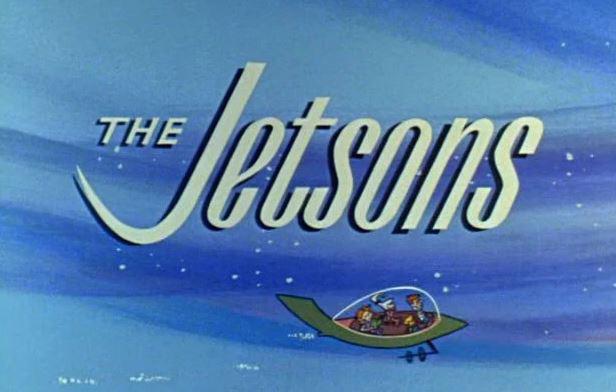
Photo credit: via Jetsons Wiki Hanna-Barbera's "The Jetsons" debuted in 1962.

When people talk about visions of the future, “The Jetsons” is often the go-to reference. The Hanna-Barbera cartoon ran for one season of 24 episodes in 1962 and 1963 as a follow-up to “The Flintstones,” a show about people living in a prehistoric age.

“The Jetsons” was later rebooted for another 51 episodes from 1985 to 1987, as IMDB tells us.

“The Jetsons” depicts a future world where we have talking robot maids, flying cars and bathrooms equipped with automatic toothbrushes. What’s interesting is that the future is neither dystopian nor utopian.

“The Jetsons” is based on the idea that even though humanity has evolved technologically, George Jetson still has to deal with the same family and career troubles that any other sit-com dad had in the ‘60s.

In the world of “The Jetsons,” the more things changed, the more they stayed the same.


“We still speak about the future in Jetsons terms,” Jared Bahir Browsh, author of the 2021 book “Hanna-Barbera: A History,” told The New York Post. “A show that originally ran for one season had such an impact on the way we see our culture and our lives.”

A Twitter user by the name of Brendan Kergin went viral recently for pointing out that George Jetson was probably born on Sunday, July 31, 2022. The announcement of the birth of the most famous man of the future felt to many like a defining milestone in human history. Have we finally reached the future? Have we begun our march toward true progress as a species?

In Kergin’s original tweet, “The Jetsons” page on Wikipedia claimed he was born on July 31, 2022. Since then, the page has been changed to 2022, with no specific date given.

According to Snopes, the show debuted in 1962 and was set 100 years in the future. In an episode that ran in the first year, George claims to be 40 years old, putting the year of his birth firmly in 2022.

On a deeper level, that means that, as a species, we have 40 years to get our quality of life up to Jetsons’ standards.


For those who are fretting that humanity has veered off course and is far from hitting the cartoon’s timeline, there is hope. Just think about how far technology has come in the past 40 years.

But a lot of people still want to know why we don’t have flying cars yet.

If George Jetson was just born, then his grandfather, Montague Jetson, is in our midst.

That also means that George’s boss, Mr. Spacely, is probably a pre-teen right now.

One Twitter user found something interesting in the show’s timeline regarding the birth of the Jetsons’ daughter, Judy.

A few people thought the Jetsons’ world makes total sense given today’s developments.

We’ve come close to re-creating a lot of technology that appeared in “The Jetsons.” We may not have sassy talking robot maids, but we do have Roombas that automatically keep the house tidy. We also have video calls, flat-screen TVs, and TV watches.

In the end, “The Jetsons” may serve as a warning to be careful about how we envision our future because we might just get it.

“[“The Jetsons”] speaks to this idea that as human beings we’ll always have something to complain about,” Danny Graydon, author of “The Jetsons: The Official Guide to the Cartoon Classic,” told The New York Post. “One of the problems with utopia, if you create a perfect world, that world might be quite boring.”


  • Expert reveals the linguistic quirk that explains why every generation loves the word ‘cool’
    Photo credit: via FlickrSnoop Dogg, Audrey Hepburn, and Bad Bunny.
    ,

    Expert reveals the linguistic quirk that explains why every generation loves the word ‘cool’

    From Myles Davis to Bad Bunny, cool is still king while other slang fizzles out.

    Close your eyes and think back to some terms that you heard at a party in the Y2K era. If someone in 2026 genuinely asked, “Do you want to get crunk with that guy wearing bling or is he a scrub?” they’d seem like they were living in the past, right?

    It goes down just as well as greeting someone with a “Wassup!” from the 1999 Budweiser commercials, or referring to someone’s hat as “fly.”

    Slang terms seem to have a shelf life of a couple of years before they fizzle out, and are a clear line of demarcation between who’s young and cool and who’s not. The interesting thing is that the term “cool” has never really gone out of style. It was used to describe James Dean in Rebel Without a Cause in 1955 and in 2025 to describe singer Charli xcx.

    According to sociolinguist Dr. Erica Brozovsky, Ph.D the term “cool” has been used to describe someone who’s incredibly calm for over 500 years. But it really took off in the jazz era, when Black musicians used it to inspire a style and sound. 

    The birth of ‘cool’ 

    “From Anna Lee Chisholm’s ‘Cool Kind Daddy Blues,’ to Miles Davis’ Birth of the Cool, the word was used to describe a certain kind of musicality, but also a type of personality, laid back, competent, and confident,” Brozovsky said. “By the late forties, The New Yorker noted the term’s rising popularity. ‘The bebop people have a language of their own, their expressions of approval include, cool,’” Brozovsky said.

    miles davis, guitar, legends, music, jazz
    Miles Davis. Credit: Winston Vargas/Flickr

    The term has endured for decades, from the definition of cool, Arthur Fonzarelli in the ‘70s, to actor-comedian Eddie Murphy in the ‘80s, to Snoop Dogg in the ‘90s, and Bad Bunny in the modern era. The question remains why “cool ” has stood the test of time while terms such as “swell” or “wicked” have fallen into the cultural dustbin. Brozovsky believes it has to do with a linguistic quirk in which humans tend to repeat metaphors with sensory elements more often than those without.

    It makes sense. “Cool” is something you can feel while “swell” is not.

    Why is it that ‘cool’ has stuck around?

    “A 2015 study tracked the popularity of various words and phrases over time and found that terms that evoke a sensory experience are more likely to persevere than those that don’t. For instance, sharp increase became a more popular way to say sudden increase and a bright future became more common than a promising future,” Brozovsky says.

    Richard Nixon and Elvis Presley. Credit: Marion Doss/Flickr

    “In fact, the study found that people were 50% more likely to remember a list of metaphors if they contain sensory words,” she continues. “Perhaps swell with its convoluted origin was just too abstract to compete with the physical sensation of cool, but it seems to me that the history of the word outweighs its semantic appeal.”

    In a world where styles in clothing, music, and vocabulary are constantly changing, it’s nice to know that some things cut across the generations. Whether you’re 70 or you’re 12, you know what it means to be cool. You probably don’t agree on who fits the bill, but vibe is forever.

  • Singer stopped her concert when she saw a fan’s sign. His confession was 20 years in the making.
    Photo credit: Justin Higuchi via Wikimedia Commons & Rafael Oliveira via UnsplashNatalie Jane performing at the El Rey April 10, 2024 in Los Angeles
    ,

    Singer stopped her concert when she saw a fan’s sign. His confession was 20 years in the making.

    “I had to cut my hair out because of you!” Singer Natalie Jane’s reaction when her childhood bully showed up at her concert with flowers and an apology.

    When singer Natalie Jane took the stage at Neighborhood Theatre in Charlotte on March 25 for the final show of her “The World I Didn’t Want” World Tour, she probably expected the usual concert energy: fans singing along, holding up phones, maybe some signs professing their love for her music.

    What she didn’t expect was a sign that would stop her mid-performance.

    “What does that sign say?” Jane asked into the mic, squinting to make out the words in the dark theater. The camera panned to reveal a big white sign with a simple question: “Do you remember me from 2nd grade?”

    Curious, Jane responded, “I can’t see. Who are you?”

    The fan flipped the sign over. The back read: “I put gum in your hair.”

    Jane let out a shriek. “Benji! I hate you!”

    The crowd erupted. The camera found Benji in the audience, and Jane wasn’t done. “I had to cut my hair out because of you,” she yelled, pointing straight at him.

    Benji’s response was simple and sincere: “You were in town. I had to come by and say I’m sorry for many years ago.”

    Then, from somewhere in the crowd, a bouquet of roses appeared. The audience went wild. Someone handed the flowers to Jane, and her face lit up with a mix of nostalgia, surprise, and what looked like genuine forgiveness.

    “Benji, you are forgiven. Thank you. I love you,” she said into the mic. “Shout out, Benji!”

    She galloped across the stage, whipping her long blonde hair around (the hair that Benji once put gum in, apparently), and continued the show.

    Jane posted the moment on Instagram on March 28, and people immediately started imagining it as the plot of a future rom-com. The comments were full of people joking about wedding invitations and asking if this was staged (it doesn’t appear to be).

    But beyond the rom-com potential, there’s something genuinely touching about someone tracking down a person they wronged as a child and making the effort to apologize decades later. Benji could have just stayed home. Instead, he showed up to her concert, made himself vulnerable in front of hundreds of people, and gave her something most of us never get: actual closure on a childhood hurt.

    Jane walked off that stage a little more healed than when she walked on. And honestly? That’s probably the best kind of encore.

  • Airbnb host ditches the cleaning fee and finds unexpected benefits
    Many frustrated Airbnb customers have complained that the separate cleaning fee is a nuisance.
    ,

    Airbnb host ditches the cleaning fee and finds unexpected benefits

    The host went for a more “honest” approach with her listings and saw the behavior of her guests change dramatically.

    We’ve all been there. We’ve discovered the perfect Airbnb, maybe a little cottage in the mountains, or a condo with stunning beach views. And the price is right in our budget. Hallelujah! Then, unfortunately, when we get to the booking page we realize our total cost is far higher than expected. Why? It’s the dreading cleaning fee.

    Airbnb defines its notorious cleaning fee as a “one-time charge” set by the host that helps them arrange anything from carpet shampoo to replenishing supplies to hiring an outside cleaning service, all in the name of ensuring guests have a “clean and tidy space.”

    One host decided to try something different

    But as many frustrated Airbnb customers will tell you, this feature is viewed as more of a nuisance than a convenience. According to NerdWallet, the general price for a cleaning fee is around $75, but can vary greatly between listings, with some units having cleaning fees that are higher than the nightly rate (all while sometimes still being asked to do certain chores before checking out). And often none of these fees show up in the total price until right before the booking confirmation, leaving many travelers feeling confused and taken advantage of. It’s certainly a case of sticker shock if you’re used to staying in hotels.

    However, some hosts are now opting to build cleaning fees into the overall price of their listings, mimicking the strategy of traditional hotels.

    Rachel Boice runs two Airbnb properties in Georgia with her husband Parker—one being this fancy glass plane tiny house (seen below) that promises a perfect glamping experience.

    Like most Airbnb hosts, the Boice’s listing originally showed a nightly rate and separate cleaning fee. According to her interview with Insider, the original prices broke down to $89 nightly, and $40 for the cleaning fee.

    But after noticing the negative response the separate fee got from potential customers, Rachel told Insider that she began charging a nightly rate that included the cleaning fee, totaling to $129 a night.

    It’s a marketing strategy that more and more hosts are attempting in order to generate more bookings (people do love feeling like they’re getting a great deal) but Boice argued that the trend will also become more mainstream since the current Airbnb model “doesn’t feel honest.” Which is funny, because if anything listing the cleaning charge is more transparent! But users tend to feel duped because they can’t see the full price when they’re browsing the listings.

    “We stay in Airbnbs a lot. I pretty much always pay a cleaning fee,” Boice told Insider. “You’re like: ‘Why am I paying all of this money? This should just be built in for the cost.’”

    Since combining costs, Rachel began noticing another unexpected perk beyond customer satisfaction: guests actually left her property cleaner than before they were charged a cleaning fee.

    Her hypothesis was that they assumed she would be handling the cleaning herself.

    “I guess they’re thinking, ‘I’m not paying someone to clean this, so I’ll leave it clean,’” she said.

    This discovery echoes a similar anecdote given by another Airbnb host, who told NerdWallet guests who knew they were paying a cleaning fee would “sometimes leave the place looking like it’s been lived in and uncleaned for months.” So, it appears to be that being more transparent and lumping all fees into one overall price makes for a happier (and more considerate) customer.

    The psychology behind why it works

    This phenomenon has been studied by economists across many different fields. A blueberry farmer once considered charging customers for grazing on blueberries as they walked until an economist told him paying the fee would just encourage people to eat even more. Daycares who charge parents fees for picking their kids up late often find the fee increases the number of late parents instead of decreasing it.

    It comes down to the “cost” of a decision. If you pay the same cleaning fee no matter what condition you leave the property in, a lot of people will find it’s just not worth their time to tidy up after themselves. When the cost of leaving the place filthy is more nebulous, or human (forcing another person to do it), people are more willing to help out.

    @rachelrboice

    your next nature getaway — only 45 minutes outside of Atlanta! #fyp #travel #exploregeorgia #airbnb #airbnbfinds #tinyhouse

    ♬ home but soft – Good Neighbours

     These days, it’s hard to not be embittered by deceptive junk fees, which can seem to appear anywhere without warning. These can include surprise overdraft charges, surcharges on credit cards and the never convenient “convenience charge” when purchasing event tickets. Junk fees are so rampant that certain measures are being taken to try to eliminate them outright in favor of more honest business approaches.

    And now, the rules are changing for everyone

    Speaking of a more honest approach, Airbnb has gone even further since 2022. As of April 2025, Airbnb eliminated the opt-in toggle entirely and made total price display, including all mandatory fees before taxes, the automatic global default for all users. The change was driven partly by the FTC’s Junk Fees Rule, which took effect May 12, 2025, requiring short-term rental platforms to clearly display the full price upfront.

    As for Boice, business is booming. After her story went viral on TikTok, she decided to expand her property business with another glass house.

    Users were thrilled, especially ones who live in Georgia, within shouting distance of her properties. And after all the viral exposure, she’s still not charging cleaning fees. Although, there’s not much she can do about those pesky “Airbnb service fees.” Oh well. You can’t win ’em all.

    This article originally appeared three years ago. It has been updated.

  • Grandma goes viral with 3 perfect, hilarious rules for her funeral
    Photo credit: Grandma goes viral for her three simple yet hilarious ‘funeral rules’Grandma goes viral for her three simple yet hilarious 'funeral rules'

    Forget kids. Grandmas say the darndest things. One grandma in particular took TikTok by storm for her brutally honest, yet hilarious “funeral rules.” And though Grandma Lill adds the caveat that it won’t be anytime soon, you had better remember these rules when the day finally comes. Or there might be two funerals to plan.

    96-year-old Grandma Lill is no stranger to the spotlight. Her social media bios all read “I’m a celebrity” and she’s not foolin’ around. She has her own clothing line, YouTube Channel and her name has been uttered by the likes of Jimmy Kimmel and Steve Harvey. She’s basically the internet’s favorite granny.

    But this video takes the cake at a whopping 50 million views. She’s gone full-blown viral now. Probably because she inadvertently brings up some little gems of wisdom we could all apply to dealing with the passing of a loved one.

    Or maybe it’s just cause she’s delightfully cantankerous. Either way, it makes for some wholesome entertainment.

    Without further ado, the three rules

    1. Cry, but not too much

    Or, as Grandma Lill puts it, “don’t make a fool of yourself.”

    Funerals can be just as much about commemorating as they are expressing grief. We can also share the happy memories we have of those who have passed, not just shed tears.

    I think this is what grandma Lill was getting at. Or maybe she just doesn’t like you stealing the attention.

    2. Bertha ISN’T invited

    Whoever this Bertha chick is … she messed up. She messed up big time. Bertha, you have been CANCELED.

    And hey, why shouldn’t we decide who’s on the invite list for our last big day? If, for example, there’s a family member who caused a lot of pain, or with whom we just didn’t share a kinship … perhaps there doesn’t have to be an obligation to invite them to these major life moments.

    Basically, this is your permission slip to openly decline any and all Berthas in your life. That goes for weddings, birthday parties, baby showers … you name it. Don’t let her in!

    3. Get drunk afterward

    As long as you take a shot for Grandma Lill.

    After the ceremony honors what’s lost, take a moment to let go and move forward with the life that is still around you. Something tells me that letting it all go and celebrating life is something Grandma Lill’s a pro at.

    Thousands of commenters chimed in to celebrate Lill’s rules. But the overwhelming sentiment from almost every single one of them was: We need the full story of the beef with Bertha!

    We finally found out who Bertha is

    Lucky for us, all was revealed two years later when Grandma Lills made a video about attending Bertha’s funeral. Bertha had, allegedly, tried to hook up with Lill’s late husband. Not cool, Bertha! “I always knew I would outlive her,” grandma joked.

    @grandma_droniak

    Replying to @Rayleigh rip bertha may she slay in peace

    ♬ original sound – grandma_droniak

    In another recent viral video, Lill spoofs popular “Get Ready With Me” videos from other influencers by bringing the viewer along as she gets dressed for a funeral. Of course, funerals aren’t the only topic Grandma Lill can make you laugh about.

    Her TikTok channel is a carefully curated gallery of pure funny. Everything from bingo jokes to advice for getting back at your ex (yeah, she shows no mercy) can be found here.

    @grandma_droniak

    rip arthur. who knows what we could have been

    ♬ original sound – grandma_droniak

    What Grandma Lill gets right about funerals

    No one likes funerals, least of all the person who’s there to be mourned. It’s why the idea of the Irish Wake is so popular: a spirited celebration of life that encourages laughter and merriment. Grandma Lills definitely has the right idea about how she wants to go out, and now that it’s cemented in Internet lore, her kids and grandkids will be forced to honor her wishes when the day comes.

    This article originally appeared four years ago. It has been updated.


  • She refused to ‘sacrifice’ her upgraded seat so a mom could sit next to her preteen kids
    Tammy Nelson refused to change seats for mom and kids

    If you’ve traveled on an airplane in the last several years, you know it’s much cheaper to choose the basic seats in the main cabin. There’s nothing inherently different about these particular seats, other than the fact that it will be randomly selected by the airline. If you’re traveling alone, that’s really not a bad deal, but if you’re traveling with a party that you’d like to keep together, like your children, the risk gets to be a little higher. One mom traveling with an 11 and 15-year old took the risk and banked on a stranger accommodating…that’s not quite how it played out.

    Her seat was taken, on purpose

    Tammy Nelson did a double take at her ticket after seeing the mom in her window seat. Of course, people accidentally sit in the wrong seats on planes all the time. However, Nelson quickly realized that this was no accident. This mom boarded the plane with her older children and had taken it upon herself to sit in the same row as her children, essentially commandeering a stranger’s seat. Nelson assumed it was a mistake and informed the woman that the seat was in fact hers but the response she received was surprising.

    “She said, ‘Oh, you want to sit here?’,” Nelson told Good Morning America. “She said, ‘Oh, well I just thought I could switch with you because these are my kids.’”

     That’s an interesting assumption considering seats are assigned and many people, like Nelson, pay extra to have the seat they prefer. Now, there’s no telling if funds were tight and this was an unplanned trip for the mom and kids which caused her to buy the more budget friendly tickets or if she was simply being frugal and was banking on the kindness of a stranger.

    Either way, Nelson specifically paid for a window seat due to motion sickness and though she paid extra, she was willing to sit in the other row if that seat was also a window seat. But it turns out, it was a middle seat.

    Surely there’s someone out there that loves the middle seat. Maybe a cold natured person that enjoys the body heat of two strangers sitting uncomfortably close. Or perhaps someone that doesn’t mind accidentally sleeping on an unsuspecting passenger’s shoulder. But that person wasn’t Nelson, so when the middle seat was offered in exchange for her bought and paid for window seat, she politely but firmly declined.

    @myconquering

    Having had only 90 minutes of sleep the night before and knowing I had to give a presentation to 500 people, I desperately needed some sleep, so I did not agree to switch seats. 🤷‍♀️ Before anyone comes after me… the kids looked like they were about 11 and 15 years old. And the mom was in arms-reach of both of them from the middle seat in the row behind us. The mom proceeded to complain for at least 15 minutes to the person next to her loud enough for me to hear. But the woman actually defended me – several times. It was so kind and I appreciated it so much because I was feeling really guilty. 🤦‍♀️ #airplaneseat#seatswitching#airplanekarens

    ♬ original sound – MyCONQUERing

    The internet had a lot to say

    Her refusal to give in to the mom’s seemingly entitled request for Nelson’s seat has resulted in parents and child-free people cheering her on after she posted the details on her TikTok page, MyCONQUERing, which quickly racked over 3.4 million views.

    “Nope. If it’s not an upgrade it’s a sacrifice,” a commenter wrote.

    “You did the RIGHT thing. Folks need to plan their travel together. Lack of planning on their part does not constitute an inconvenience on yours,” one person said.

    “I have 3 kids and have sat in different rows when they were passed toddler age. I agree, book your flight earlier,” another said.

    “You were right. As a woman with 3 children, I always pay extra so we’re sat together,” another mom said.

    This story actually changed things

     Luckily, there’s been enough incidences like this to prompt actual change. More airlines are guaranteeing free family seating for parents with children under a certain age (not that that does much more the woman in this story, but still). The U.S. Department of Transportation proposed a rule under the Biden administration requiring airlines to provide fee-free family seating, but as of 2026 its future under the Trump administration remains uncertain. Five of the 10 largest airlines currently guarantee free family seating voluntarily.

    This article originally appeared three years ago. It has since been updated.

  • Anne Hathaway shares the ‘unintended consequence’ of her iconic ‘Princess Diaries’ makeover
    Photo credit: RedditAnne Hathaway in The Princess Diaries.
    ,

    Anne Hathaway shares the ‘unintended consequence’ of her iconic ‘Princess Diaries’ makeover

    One of the film’s most memorable moments came with a “terrible side effect.”

    It’s a trope as old as time: the charming, yet conventionally unattractive girl gets a makeover, and suddenly her looks match her winning personality, opening an entire world of possibilities…and love interests. 

    And how do we know she’s conventionally unattractive? Glasses (because attractive people don’t read and can see perfectly, duh) and unkempt curly hair. 

    In pop culture, almost nothing instantly clocks a woman as less desirable or polished. At best, they can be the carefree bohemian or funny best friend. But you can bet you bottom dollar that if they are to be seen as a romantic love interest in any way, shape, or form, that hair is gonna be flat-ironed within an inch of its life. It’s screenwriting 101, people. 

    An era-defining transformation

    One lasting example of this is the makeover scene in The Princess Diaries, wherein Mia Thermopolis (played by Anne Hathaway) goes from adorkable to refined thanks to a bit of hair straightening, plus some makeup, contacts, and intense eyebrow tweezing. 

    In a recent interview with People, Hathaway shared that the filmmaker never actually intended to promote the “curly = ugly” stereotype. It was actually just a logistical strategy. 

    “My natural hair is rather straight, so we had to create a contrast,” she shared, adding that going with her naturally straight hair meant “less time in the makeup trailer” overall. 

    …with “unintended consequences”

    As a result, however, the message many audiences read was “curly hair is unattractive,” which Hathaway labeled as a “terrible, completely unintended side effect.”

    If the comments section was any indicator, Hathaway was correct in saying the “unintended consequence” of that scene was the profound effect it left with viewers. 

    “I (a curly haired girly) started straightening my hair after I saw the scene at 12.”

    “Yeah, watching this movie when it came out as someone who had curly hair and glasses did something to me lol.”

    “I had curly hair and glasses when this movie came out and was bullied for both. I was in middle school and to this day I can’t watch this movie because it made me feel like the bullies were right. As an adult I know better but the gut feelings are still there.”

    Granted, the creative decision might have been made in part for practical reasons, but let’s not forget that this movie came out in the early 2000s…a fairly rigid time period for beauty standards overall. The Princess Diaries was far from the only movie to portray curls (or glasses, or freckles, or anything past a size 2) as “ugly.” For all its good parts, the film was definitely a product of its time. 

    Straightening out the curl narrative

    Thankfully, we’ve seen a lot of progress in this department. Not only do we see far more characters in media sporting their curls, but, thanks to social media, there’s a much larger wealth of knowledge for how to style and take care of curly hair.

    Truly, there’s an entire language (I’m 2C to 3B type myself…iykyk) dedicated to curls now that simply did not exist at an earlier time. Not knowing that curls require an entirely different routine left many of us to resort to straightening or making peace with feeling like the ”ugly” one. 

    Even still, curls that aren’t styled and left in their Mia Thermopolis state are still often viewed by society as unprofessional, undesirable, or unclean in some way. That’s why representation matters. It’s so important to have our pop culture reflect a different reality so that we might start internalizing a different story and unlearning harmful stigma.

    All this to say…Princess Diaries 3 should definitely let Mia’s curls go free. Just sayin’. 

  • Disney re-animates 3 iconic songs to include ASL, and the Deaf community calls it ‘incredible’
    Photo credit: The Walt Disney Company and Walt Disney Animation Studios/YoutubeMoana 2, Frozen 2, and Encanto

    On April 27, in celebration of National Deaf History Month, Disney unveiled three beloved songs completely reanimated to feature the characters performing in American Sign Language (ASL).

    The idea for the project, titled Songs in Sign Language, came from Senior Animator and Director Hyrum Osmond, whose Disney credits include Frozen (2013) and Zooptopia (2016). 

    In a special “making of video,” Osmond recalled growing up with a father who was “hard of hearing,” but never learning sign language to communicate with him. 

    “I have a lot of regret about that, because I couldn’t connect with him. I wanted to take down barriers with this project. It’s really all about connection.”

    A groundbreaking effort rooted in authenticity

    In a never-before-done undertaking for the studio, a team of more than 20 animators, many of them passionate volunteers, collaborated with the Tony Award-winning company Deaf West Theatre to curate signs that best matched each character’s specific personality. 

    This didn’t only involve hand movements, but “facial grammar” as well, meaning specific ways the face is used in ASL to further convey linguistic information. Raised eyebrows, for example, are used at the end of a sentence when asking simple questions. Furrowed eyebrows, on the other hand, are used when asking more complex “Who, What, Where, Why” type questions.

    These efforts—done without AI, praise be—resulted in new animation for approximately 95% of the shots from “The Next Right Thing” (Frozen 2), “We Don’t Talk About Bruno” (Encanto), and “Beyond” (Moana 2). 

    This is far from Disney’s first attempt at making its magic available in ASL. There have been many heartwarming stories of characters in the park using sign language to connect with guests. But, save that one episode of the Little Mermaid series in the ’90s (iykyk), this is something completely new. 

    “We’ve never done anything like this at Disney Animation before,” shared Osmund. 

    People are already speaking out in praise of Songs in Sign Language, and hoping it leads to more. 

    “As someone who is partially deaf in one ear, I fully support this and think it’s very important and heartwarming that they’re doing this.”

    “I would love to see more Encanto, Frozen II and Moana 2 songs in ASL! I am currently learning ASL and I’m a senior in high school, my ASL teacher who is hearing and is learning ASL like me and my classmates are would love this!”

    Many of the compliments weren’t even about inclusivity. People also shared relief to see “creativity breaking through again,” as one viewer put it. 

    “Disney if you get back into funding cool, artistic and niche things like this that people want you’ll win people back over !!!!!!! What was special was always the details and that’s been lost the last 6 years or so. This is amazing,” commented one viewer. 

    DJ Kurs, artistic director for Deaf West Theatre, also hopes the collaboration will lead to more. 

    “Disney stories are the universal language of childhood. The chance to bring our language into that world was a historic opportunity to reach a global audience. Working on this project was very emotional. For so long, we have known and loved the artistic medium of Disney Animation. Here, the art form was adapting to us. I hope this unlocks possibilities in the minds and hearts of Deaf children, and that this all leads to more down the road.”

    Where to watch

    Songs in Sign Language is currently only available to stream on Disney+, but we know it’s only a matter of time before the Internet does its thing. 

  • The one reason Americans can’t build quaint, walk-up apartments like they have in Europe
    Photo credit: via About Here/YouTubeWhy North America can't build European-style apartments.
    ,

    The one reason Americans can’t build quaint, walk-up apartments like they have in Europe

    The stairs themselves are the problem in North America, though that’s starting to change.

    One of the most beautiful features of old European neighborhoods are the rows of quaint, walk-up apartments that are the backbone of walkable neighborhoods. They help create a community where people can exit their front door and walk to a local café or market without getting in their car. Unfortunately, these neighborhoods are hard to find in the United States, where these types of apartment buildings are exceedingly rare.

    Uytae Lee is the founder of About Here, an adjunct journalism professor at UBC, and a BC Housing Board commissioner. As an urban planner and videographer, he is passionate about sharing stories about our cities.

    In the video below, he explains why regulations in North America have made these quaint walk-up apartments, known by architects as point access blocks, nearly impossible to build.

    It all comes down to staircases

    “Quaint walk-up apartments … are a beloved feature in cities around the world,” Lee says in his video entitled “Why North Americans Can’t Have Nice Apartments.” “They’re inviting and full of character. But, here in North America, they are not allowed to be built today. Instead, our apartments are big and imposing, often stretching across the entire block and the reason why it really comes down to one reason: staircases.”

    The problem is that one stairway in a point access block allows access to all apartments. This became a problem in the late 1800s when fires were commonplace in urban areas worldwide and people were more likely to die in a fire with only one exit route. So, in the U.S. and Canada, they created new regulations that made it so all buildings over two to three stories had to have two staircases to allow them to exit during a fire.

    “Staircases take up a lot of space and fitting two of them in a small building means that there is much less usable floor space on every floor,” Lee says in the video. “As a result, developers here construct much larger buildings so that the staircases and hallways take up a much smaller proportion of the overall building. It’s why apartments in North America, in general, are much bigger and wider than their European counterparts.”

    So why didn’t Europe make the same call?

    But there are fires in Europe, too. Why did they stop short of requiring multiple staircases in apartment buildings on the other side of the Atlantic Ocean? Instead of changing the floorplans on new buildings, Europeans opted to require fireproof materials in new building construction. A big reason why the U.S. and Canada opted for larger buildings over fireproofing was because they had better access to materials and the new direction aligned with the move towards suburban sprawl.

    The two-staircase regulations in the U.S also made it harder to build units greater than one bedroom because the buildings needed long hallways which reduced the number of layout options.

    Now cities are rethinking the rules

    The current housing crisis has many rethinking the regulations that require apartment buildings to have two stairways in North America. Many urban planners believe that modern-day demands mean we should return to building more point access block buildings, but this time with modern fire-retardant materials.

    Cities like Seattle, Washington, were early adopters, but the movement has since gone national. As of 2025, seven states have passed bipartisan legislation allowing single-stairway apartment buildings, including Colorado, Montana, New Hampshire, and Texas, with 19 states and Washington D.C. having introduced bills since 2022.

    “Now, if all this makes you a bit nervous, I get it. After all, these codes are about our safety. But I do want to mention that these codes do change over time as our technology and our understanding of safety evolves,” Lee finishes the video. “It’s important that we discuss and update these rules as our world changes.”

    Pew Charitable Trust reports that small, single-stairway apartments actually have a strong safety record, sharing that those kinds of buildings as tall as six stories are “at least as safe as other types of housing.” As we gather data and learn more, we should be able to adjust our regulations. So maybe, hopefully, there are more quaint apartment buildings in our future.

    This article originally appeared three years ago. It has been updated.

Culture

The fascinating 150-year-old reason why all your jeans have those weird metal buttons on them

Generations

‘Spot the teacher’ trend hilariously highlights how adults are looking younger and younger

Pop Culture

Expert reveals the linguistic quirk that explains why every generation loves the word ‘cool’

Family

Man ran a red light rushing to his wife. What the judge did next left the courtroom silent.