The typical kid’s experience in school is a lot different today than it was 30 to 40 years ago. It’s hard to say whether things are better or worse, but there’s been a sea change in how children are raised.
One negative development is that teachers tend to think parents are more likely to side with their kids over faculty in disputes than they were decades ago. On the positive side, corporal punishment is on the decrease, so students are much less likely to be physically punished for breaking the rules.
A Reddit user with the username u/theSandwichSister asked the ‘80s and ‘90s kids on the forum, “What’s something a school teacher did to you that would not fly today?” A lot of the responses were about the type of physical punishment and humiliation that used to happen in schools that would never happen these days.
There were also a lot of posts about teachers who smoked around their students. Can you imagine a kindergarten teacher lighting up in front of their students these days? They’d be fired in a flash.
Overall, the responses show that schools are a lot more concerned with the mental and emotional health of their students these days, which is a wonderful improvement. Schools also seem to be much more friendly environments to students who are people of color, LGBTQ or have disabilities.
Here are 17 of the best responses to the question, “What’s something a school teacher did to you that would not fly today?”
1.
“Not a teacher, but school one. If you read enough books during the year in elementary school you got to have a sleepover in the library. Like we brought sleeping bags and slept on the floor. In the morning they had griddles out and we made pancakes. I know, total nerds, but it was my favorite elementary school memory.” — 7askingforafriend
2.
“My elementary school principal would pull loose teeth. You could go to his office, have him pull your loose tooth and he would give you a lollipop.” — snowfuckerforreal
3.
“I told my biology teacher that I wasn’t feeling too well, he said that I didn’t look sick, and as punishment made me stand in the corner until I fainted.” — AustrianReaper
4.
“In high school, we would sometimes play knee soccer which was in our wrestling room (wall to wall wrestling mats) and was really just handball but on our knees. The PE teacher (football coach) let us play rough since it was an all male class and we were on our knees and couldn’t do too much damage. During the game, two of the students were grappling for the ball and as these things go, one of them accidentally knocked the other a little too aggressively. The kid that got hit (an known asshole of the school) got pissed and stood up and kicked the other kid.
The PE teacher (225lb jacked military hair cut) stormed over and shoved the kid who flew about 10 feet before crashing to the ground. The kid gets up ready to fight whoever shoved him and the teacher had closed the gap and started screaming at him. Then the teacher lectured the entire class about sportsmanship and honor. The teacher never got in any trouble.” — hangingonwith2fingers
“English teacher in high school used to cuss kids out for being noisy in class and if that didn’t work, he’d throw the blackboard eraser at us. I wasn’t on the receiving end of the eraser. That chalk would leave marks on kid’s backs for the rest of the day so everyone knew who pissed off Mr Charvet.” — Roscoe_Cracks_Corn
10.
“7th-grade science class, the teacher walked around with a beaker full of mercury and told us to stick a finger in it to feel how dense it was. Then he gave us each our own penny-size drop of mercury to play with at our desks, so we could see how it moved. I’m sure we were poisoned that day. Nowadays if a thermometer breaks they clear the school.” — weirdkid71
11.
“Not something done to me per se, but my 3rd grade teacher had a little office with a door inside our classroom, and she would smoke cigarettes in there while we were at lunch/recess.” — HutSutRawlson
12.
“Cheese Day in the Midwest. It was in first grade. For an entire day, all you ate was cheese. Cheese puffs, curls, sticks, slices, balls, and Doritos. Drank orange Hi-C as well. For 10+ years, smelling that fake cheese made me gag. After her wedding, and the birth of her son, my sister says Cheese Day the best day of her life. Wasn’t Wisconsin either.” — 2_Spicy_2_Impeach
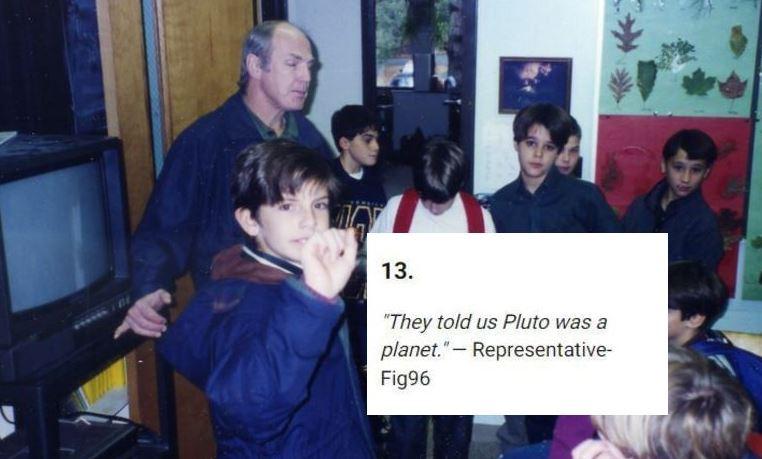
13.
“They told us Pluto was a planet.” — Representative-Fig96
14.
“Best math teacher ever made us say numerator/denominator in Schwarzenegger voices as we were learning fractions.” — kittensington
15.
“High School, we were on campus, drove a van to the locker rooms because I was with The QB, Linebacker and a couple of linemen who needed to get crap from their lockers. We were drinking beer in the van, it was 1:30, the football coach sees us, stops the van, looks inside and sees the beer, and shook his head and told us to be careful and get off campus. I don’t think that would fly today.” — kentro2002
16.
“A lot of people are posting bad stuff, so let me share a good one. In 9th grade, in 1984, I had a class analyzing lyrics in pop music. Students brought in records by Led Zep and John Cougar and we’d discuss what they meant. Seriously a life-changing class. It makes me sad that younger students in America are so caught up in the rat race that they never had experiences like that.” — Adventuresphere
17.
“I had an awesome teacher who would send one of us to the shop (just a minute’s walk away) with enough money to get ice creams for everybody whenever it was hot and she didn’t feel like teaching.” — wanderingsteph
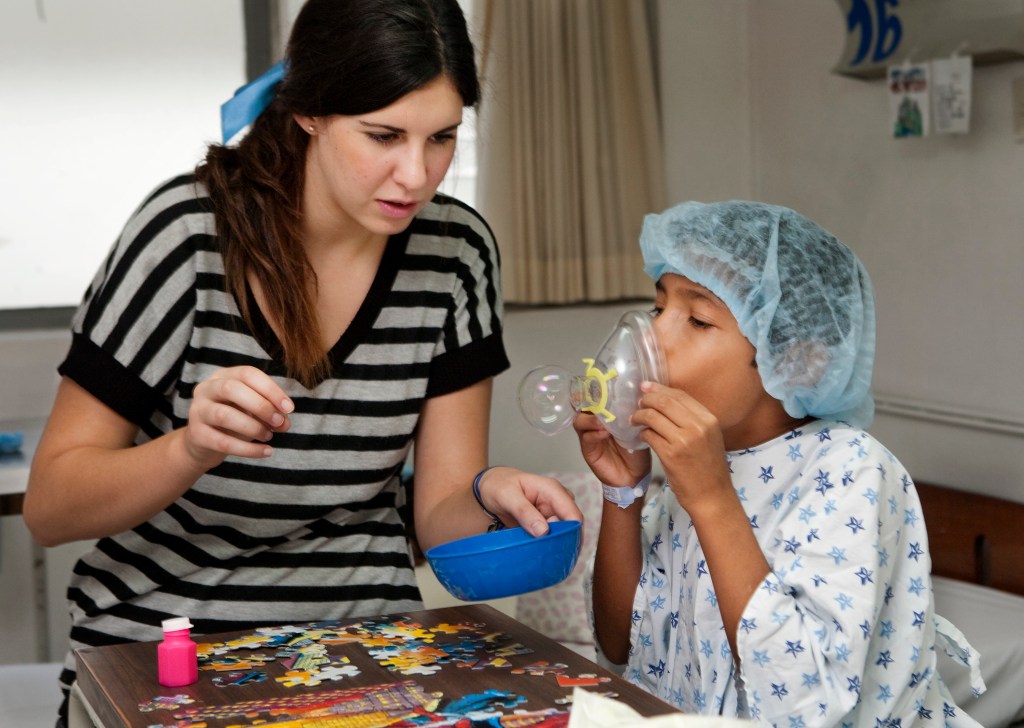
An Operation Smile volunteer reverses an oxygen mask so a child with a cleft condition can blow a bubble for the first time in Guadalajara, Mexico. (Operation Smile Photos)
For thousands of children born with cleft conditions, Operation Smile provides simple, playful tools—like bubbles—to strengthen the skills they need to speak and thrive.
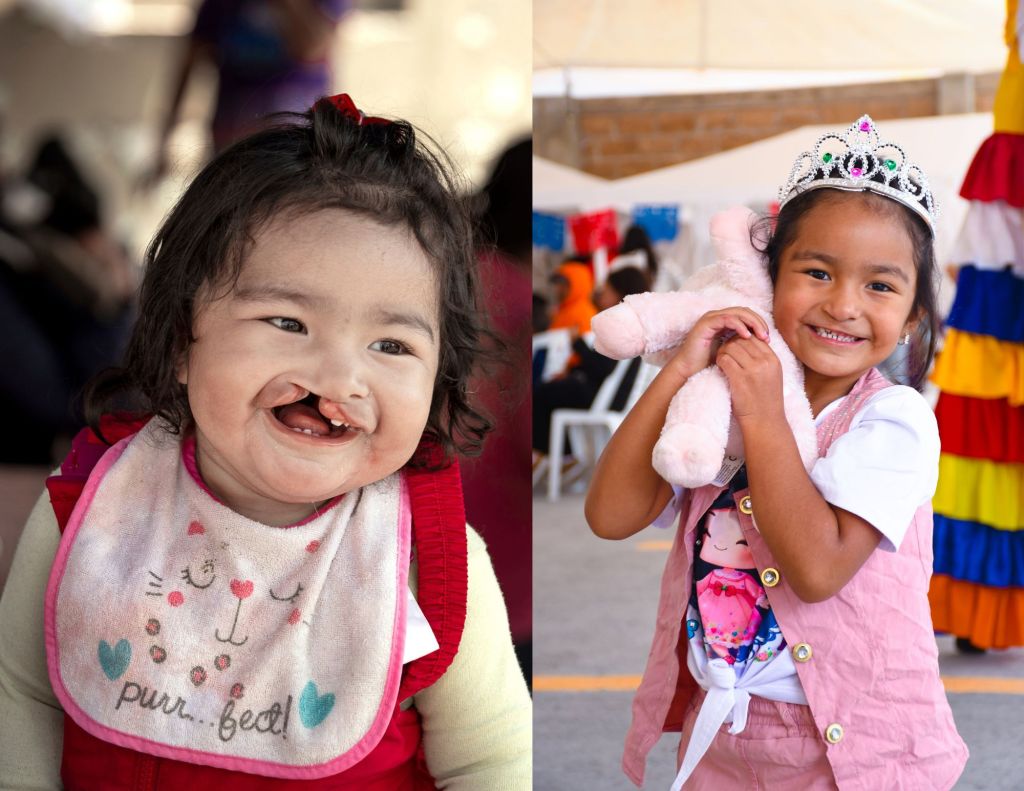
While a bottle of bubbles might seem out of place in a hospital setting, you might be surprised to learn that, for thousands of children around the world born with cleft lip and palate, they can be a helpful tool in comprehensive cleft care. Lilia, who was born with cleft lip and palate in 2020, is one of the many patients who received this care.
As a toddler, Lilia underwent two surgeries to treat cleft lip and palate with Operation Smile’s surgical program in Puebla, Mexico. Because of Operation Smile’s comprehensive care, it wasn’t long before her personality transformed: Lilia went from a quiet and withdrawn toddler to an exuberant, curious explorer, babbling, expressing herself with a variety of sounds, and engaging with others like any child her age.
Lilia is now a healthy five-year-old, with the same cheerful attitude and boundless energy. Her progress is the result of care at every level, from surgery to speech therapy to ongoing support at home—but it’s also evidence that small, sustained interventions throughout it all can make a meaningful difference.
Lilia at age 1, before surgery, and at age 5, 4 years post-surgery
Cleft Conditions: A Global Problem
Since 1982, Operation Smile has provided cleft lip and cleft palate surgeries to more than 500,000 patients worldwide with the help of generous volunteers and donors. Cleft conditions are congenital conditions, meaning they are present at birth. With cleft lip and palate, the lip or the roof of the mouth do not form fully during fetal development. Cleft conditions put children at risk for malnutrition and poor weight gain, since their facial structure can make feeding challenging. But cleft conditions can have an enormous social impact as well: Common difficulties with speech can leave kids socially isolated and unable to meet the same developmental milestones as their peers.
Surgery is a vital step in treating cleft conditions, but it’s also just one part of a much larger solution. Organizations like Operation Smile emphasize the importance of multi-disciplinary teams that provide comprehensive, long-term care to patients across many years. This approach, which includes oral care, speech therapy, nutritional support, and psychosocial care, not only aids in physical recovery from surgery but also helps children develop the skills and confidence to eat easily, speak clearly, and engage in everyday life. This ensures that each patient receives the full range of support they need to thrive.
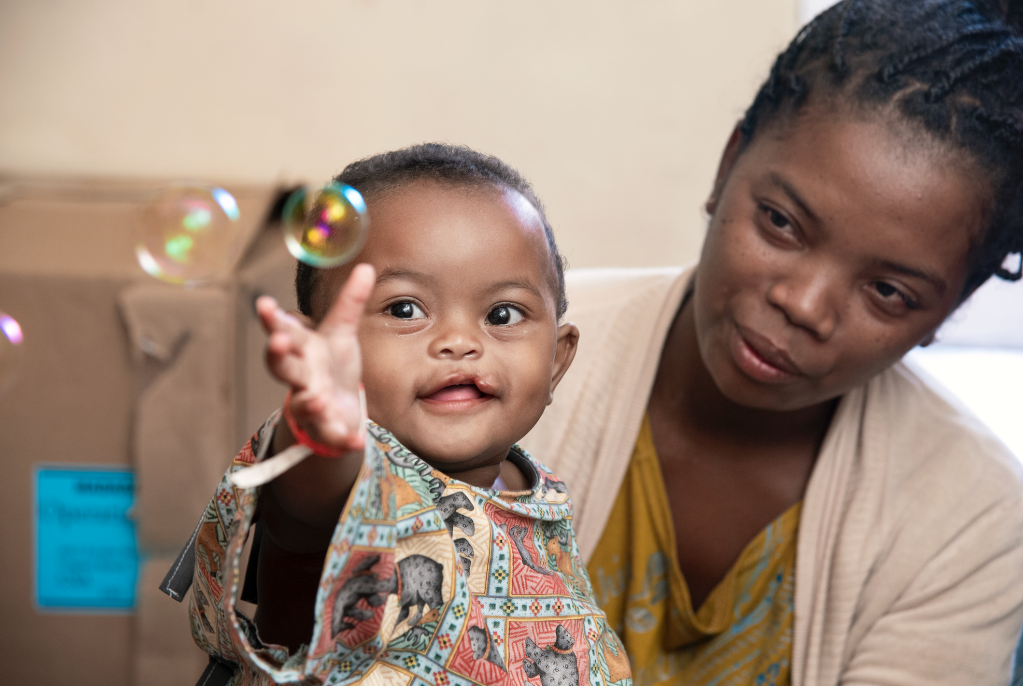
Marie, 11 months, with her mother at Operation Smile Madagascar before her cleft surgery (Operation Smile Photos)
A Playful (and Powerful) Solution
Throughout a patient’s care, simple tools like bubbles can play a meaningful role from start to finish.
Immediately before surgery, children are often in a new and unfamiliar environment far from home, some of them experiencing a hospital setting for the first time. When care providers or loved ones blow bubbles, it’s a simple yet effective technique: Not only are the children soothed and distracted, the bubbles also help create a sense of joy and playfulness that eases their anxiety.
Milagros Rojas, a volunteer speech therapist in Peru, using bubbles in a screening with a patient. (Operation Smile Photos)
In speech therapy, bubbles can take on an even more important role. Blowing bubbles requires controlled airflow, as well as the ability to form a rounded “O” shape with the lips, which are skills that children with cleft conditions may struggle to develop. Practicing these skills with bubbles allows children to gently strengthen their facial muscles, improve breath control, and support the motor skills needed for speech development. Beyond that, blowing bubbles can help kids connect with their parents or providers in a way that’s playful, comforting, and accessible even for very young patients.
Finally, bubbles often follow patients with cleft conditions home in the “smile bags” that each patient receives when the surgical procedure is finished. Smile bags, which help continue speech therapy outside of the hospital setting, can contain language enrichment booklets, a mirror, oxygen tubing, and bubbles. While regular practice with motor skills can help with physical recovery, small acts of play help as well, giving kids space to simply enjoy themselves and join in on what peers are able to do.
Bubbles at Home and Beyond
Today, because of Operation Smile’s dedication to comprehensive cleft care, Lilia is now able to make friends and speak clearly, all things that could have been difficult or impossible before. Instead of a childhood defined by limitation, Lilia—and others around the world—can look forward to a childhood filled with joy, learning, discovery, friends, and new possibilities.
CTA: Lilia’s life was changed for the better with the care she received through Operation Smile. Find out how you can make an impact in other children’s lives by visiting operationsmile.org today.
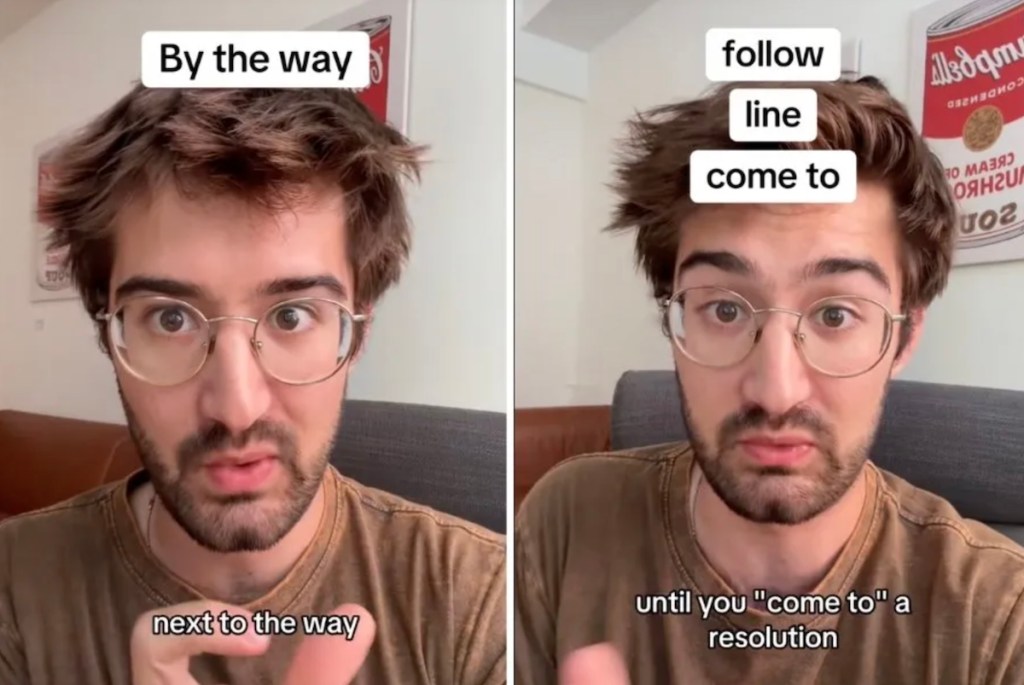
Linguist and self-professed “etymology nerd” Adam Aleksic shared a video on TikTok explaining how many common phrases we use for thinking directly reference walking. We often use metaphors in our speech, of course, but there are many that we likely don’t even recognize as metaphors.
He starts with “by the way,” which literally means being next to the way, or the path we’re supposed to be on. It indicates that we’re taking a mental detour from the path we were supposed to be on to introduce something unrelated. On the other hand, when we’re talking about something that is actually on the path we’re meant to be on, we say, “of course,” which literally means “of the path.”
“We use this metaphor all the time when we say, ‘you’re on track’ or ‘you’re way off,’ literally implying that you’re not where you should be on the ‘path’ of thinking,” Aleksic says, explaining that there’s a greater metaphor at play here that “thinking is walking.”
Once you see some examples, it becomes so clear. Our minds “race” or “wander,” our thoughts “stray,” and we “arrive” at conclusions.
“All this relies on physical motion, even though your mind is stationary,” says Aleksic. “But it’s from that idea (that thoughts can walk) that we can then go ahead and make statements about our own cognition. Like how I just used ‘from,’ originally a preposition for motion, and ‘go ahead’ to indicate continuation. Once you know thoughts can walk, you can ‘follow’ them down ‘a line of thinking’ until you ‘come to’ a resolution.”
Here are a few more you’ll recognize
Even a saying as common as “Way to go!” is a metaphor indicating that you are on the correct path.
Once you start thinking about it, it’s easy to come up with many more examples of how we conceptualize thinking as walking:
“Let’s circle back.”
“Walk me through your thinking.”
“I’m backtracking here.”
“The thought crossed my mind.”
“No way.”
“Let’s move on.”
Other languages do the same thing
Some commenters shared that their languages use similar metaphors:
“In Norwegian you can say ‘du er på helt på bærtur’ when someone is way off, and it means that you are on a berry trip, specifically blueberry trip.”
“In Czech, you say btw as ”mimochodem’, while mimo means outside and chodem means a step or a walk, so literally meaning by the walk.”
“En passant in french is the same way. It’s like ‘I passed near this thought’ while on my way to another thought.”
There’s something to be said for “thinking is walking” even beyond the metaphorical way we describe our thoughts. Many of the world’s greatest thinkers were also obsessive walkers.
Science backs this up, too
In 2014, Marily Oppezzo and Daniel Schwartz of Stanford University conducted a foundational series of studies on 176 people, mostly college students, to see if walking had any effect on different types of thinking. In one test, they had some people walk outside and others walk on a treadmill to see if the environment made a difference.
It didn’t. Wherever people walked, their answers were more creative than those who sat or were pushed in a wheelchair. Participants consistently came up with more creative responses on tests commonly used to measure creative thinking, such as thinking of alternate uses for common objects or coming up with original analogies to capture complex ideas.
“Incorporating physical activity into our lives is not only beneficial for our hearts but our brains as well,” Oppezzo said. “This research suggests an easy and productive way to weave it into certain work activities.” Could we perhaps say, “walking is thinking” in addition to “thinking is walking”?
A 2021 study of students in Japan found similar correlations between walking and strong responses on alternate use tests that measure divergent thinking.
So it appears at least some types of thinking are enhanced by walking, which of course makes it all the more fun that we use so many walking metaphors to describe our thoughts.
You can follow Adam Aleksic for more on TikTok here or check out his book, Algospeak: How Social Media Is Transforming the Future of Language, here.
This article originally appeared one year ago. It has been updated.
In Raleigh, North Carolina, a college graduation turned into something students at North Carolina State University will likely talk about for the rest of their lives.
What began as a classic commencement ceremony for graduates of the Wilson College of Textiles ended with cheers, tears, and a surprise announcement that instantly changed the financial futures of hundreds of students.
As the grads gathered inside Reynolds Coliseum on May 8, commencement speaker Anil Kochhar shared that he and his wife, Marilyn, would pay off all final-year student loans for the graduating class.
The announcement came as a tribute to Kochhar’s late father, Prakash Chand Kochhar, whose own journey to Raleigh began nearly 80 years ago.
A tribute decades in the making
Kochhar explained that his father traveled from Punjab, India, to North Carolina in 1946 on a scholarship to study textile manufacturing at NC State. At the time, he was believed to be only the second Indian student ever to enroll at the university.
His education eventually led to an international career in textiles before his death in 1985. Years later, his son returned to the same institution to honor that legacy in a way no one in the audience expected.
“It is my privilege to announce today that, in honor of my father Prakash Chand Kochhar, Marilyn and I are providing a graduation gift to cover all the final-year education loans incurred by Wilson College graduates during the 2025–26 academic year,” Kochhar announced.
“Marilyn and I hope that all of you leave Reynolds Coliseum today not only with a degree but with greater freedom to pursue your goals, take risks and build the lives you’ve worked so hard to achieve,” he added.
You can watch the video, courtesy of the New York Post, below:
Students were stunned by the announcement
The crowd immediately erupted into applause as students realized what the gift meant. For many students, that payoff will grant more freedom, opening doors that may have previously felt out of reach.
One student, fashion and textile management major Alyssa D’Costa, explained how meaningful the gesture was to her family.
“As a daughter of immigrants, this money helps me and my family a lot, and I’m really fortunate to have an opportunity like this,” D’Costa told the university.
Viewers were moved, too
The emotional response from students spread quickly online, with many people praising the Kochhar family for investing directly in graduates at a time when student debt continues to weigh heavily on young adults nationwide.
“I imagine there are some of those graduates who really really needed that. Just lifted a burden off them. You have honored your father for certain,” wrote one YouTube viewer.
Another said, “This is truly beautiful: Genuinely what a kind soul.”
Why this tribute was extra special
The Kochhar family has previously contributed to the college through scholarships and academic funding, but this particular gift carried a different emotional weight.
During his remarks, Kochhar reflected on how unlikely the moment would have once seemed to his father.
“My father could not have imagined this moment. Not just me standing here, but all of you sitting here,” he said. “A new generation, shaped by a different world, but connected by the same spirit of possibility that brought him here decades ago. And that’s what today represents.”
He also described the courage it took for his father to leave India and begin a new chapter in Raleigh many years ago.
“He could not have known where that journey would lead,” Kochhar said. “He could not have imagined the life it would create, or that one day his son would stand here speaking to a graduating class at the very institution that welcomed him.”
For students crossing the graduation stage that afternoon, the ceremony became more than a celebration of academic achievement. It also marked the beginning of adulthood with a little more breathing room and served as a reminder of how one act of generosity can ripple through an entire community.
An April 2 Washington County School Board meeting in Tennessee took an uncomfortable turn after high school student Hannah Campbell finished delivering her remarks. Seated with the board and directly next to the superintendent, Campbell confidently participated in a discussion with members after presenting research she had conducted on other schools.
The comment is not a baseless allegation. The interaction was caught on video. A few people in the room laughed, Campbell herself quickly brushed off the comment, and the meeting continued as scheduled. Any viewer watching the meeting in person or on YouTube could clearly see what happened.
To many, it was clear that a line had been crossed, and the mood in the room was tense afterward.
The board chair, Annette Buchanan, called an emergency meeting the following week, where members voted to censure Ervin—a public rebuke meant to show that they did not support his comments. But otherwise, as an elected official, Ervin would keep his position on the board.
For his part, Ervin issued a statement apologizing for the incident but insisting that he had not meant any harm.
“I understand why people are reacting the way they are. But that’s not the full conversation, not even close,” he wrote. “When I mentioned she was hot, I meant she was on a roll. It was nothing to do with her appearance.”
The board’s response was not good enough for Campbell, who was also unconvinced by the apology statement.
Student boldly appears at another board meeting to speak up for herself
Campbell refused to shrink or hide. Instead, she returned to a school board meeting on May 7 and confronted not just Ervin, but the entire board, in a courageous four-minute speech.
“I do not forgive you,” she said to Ervin, adding, “The failure to act on the board’s behalf was and is equivalent to his actions, and it has hurt me just as much. To watch the chairperson be so quick to bang her gavel, to control the public, yet not use it once to control her own peer was disgusting … I believe that you are all cowards.”
She sarcastically thanked the board at the end of her speech for showing her that she would do well not to trust adults and authority figures to stand up for her—that she would have to do it herself.
The student’s brave stand earned the support of the community
Campbell was wrong about one thing: There were others in the community who were willing to stand up for her.
One irate father vowed to raise enough money to oust every single board member should they fail to act. “Would you want your kid around that guy without a camera around? I wouldn’t,” he said.
Meanwhile, an online petition calling for Ervin’s removal from the board, along with Superintendent Jerry Boyd’s, has collected nearly 7,000 signatures.
Even more enraging to parents, students, and community members is the fact that Ervin has been accused of inappropriate conduct before. According to WCYB-TV, records show that in 2009, Ervin made a “lewd, juvenile gesture of a sexual nature” in front of students and teachers at a school. He was censured then and barred from school property unless accompanied.
Campbell’s willingness to use her voice may be the difference between a censure and something that makes a real difference for all the students who come before the board after her.
Many people delight in logic puzzles and the brain challenge they offer. But one of the most studied logic tests has proven persistently befuddling for people across the board.
Developed in 1966, the Wason Selection Task has a high failure rate despite its seeming simplicity. According to Michael Stevens of VSauce, studies have shown that somewhere between 90% and 96% of people are unable to come up with the correct answer.
What exactly is this test? There are various versions of it, but let’s look at the original one that Peter Wason created.
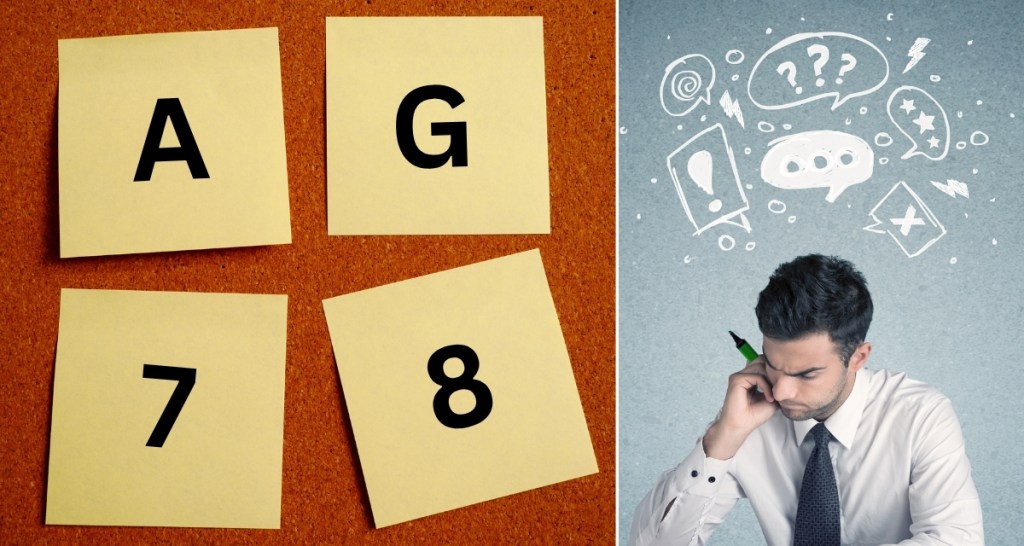
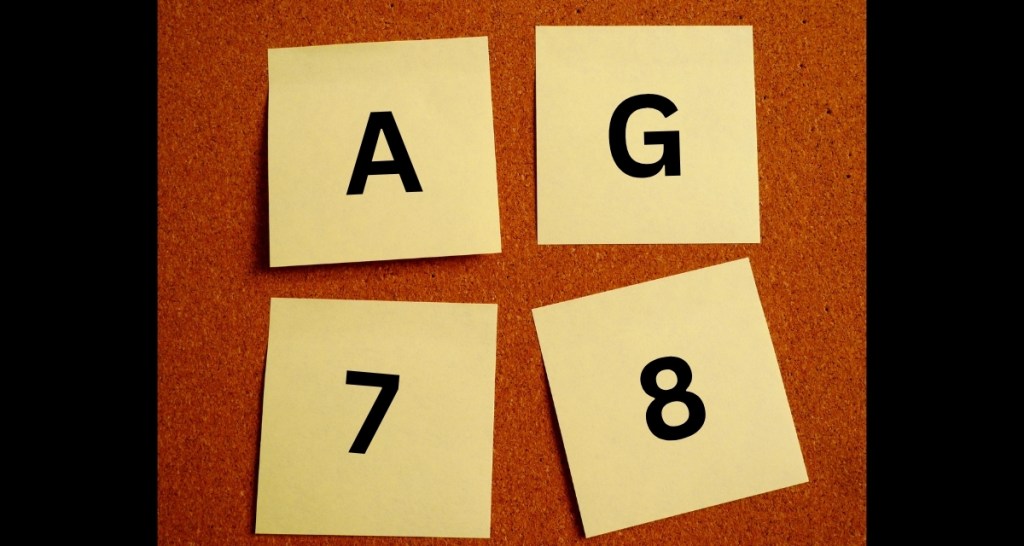
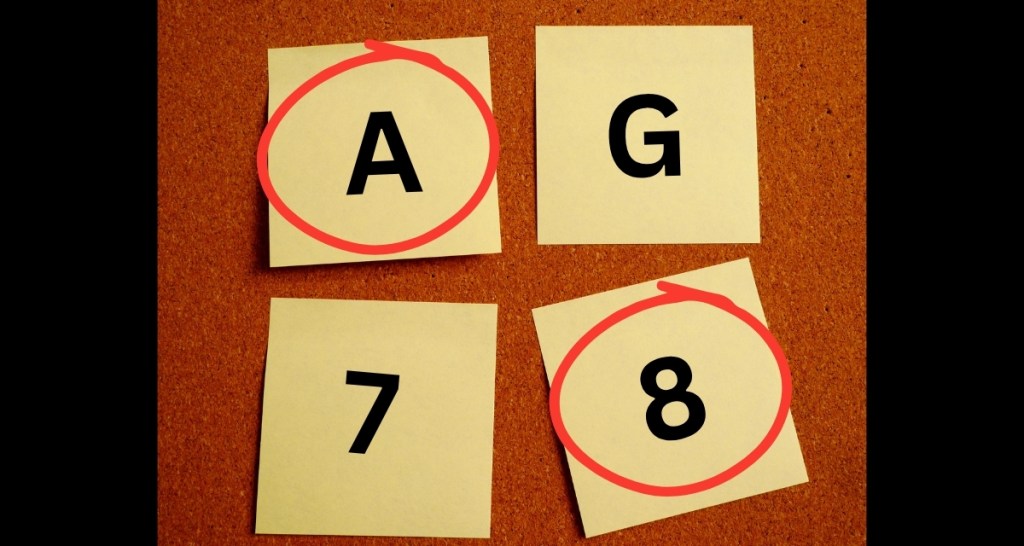
You have four cards in front of you labeled A, G, 7, and 8, like this:
Each card has a letter on one side and a number on the other. Your task is to determine which cards you would need to turn over to judge whether the following rule is true: If there is an A on one side, there is a 7 on the other.
That’s it. Sounds simple enough, right? Then you start working your way through the reasoning, and your brain starts to feel a bit sticky.
Even a Cambridge math professor had to backtrack on the test
Hannah Fry, a British mathematician and University of Cambridge professor, went through this task with Stevens on their joint YouTube channel, The Rest Is Science. Fry said she had encountered a version of the test before and gotten it wrong the first time, but she didn’t remember what trap she had fallen into or why.
This time, she walked through the logic aloud and figured it out. (If you want to try solving it yourself, go for it. Spoilers are below.)
Here’s how Fry worked through the problem in real time:
“So, right, you know that these four cards, a letter on one side, a number on the other, which means that there is a number hiding behind the A, there’s a number hiding behind the G. There’s also a letter behind the 7, and there’s a letter behind the 8.
The rule says if there is (this is what I’m trying to test) if there is an A on one side, there is a 7 on the other. Right? So, turning over the 8 doesn’t tell me anything. I mean, I don’t really care what’s on the other side of the 8 because even if it’s an A…”
Then Fry stopped herself.
“Uh oh, no, wait. That’s not true. Oh, hold on. I’ve got it wrong already.”
She recalibrated.
“Immediately, the first thing you want to do is check whether there’s a 7 on the reverse of the A. To see if there’s a 7. Turning over the G, I don’t think tells me anything because I don’t really care what’s on the reverse of the G. The rule doesn’t involve G’s. It says if there is an A on one side, which there isn’t, so I don’t care. So, I can ignore the G card.
The 7 card I’d be really tempted to turn over to see if there was an A on the other side, because then that would be another instance of the rule. But the way the rule is phrased is that it says if there is an A on one side, there is a 7 on the other. It doesn’t say you can only have sevens where A’s exist. So actually, you could have a J on the other side of the 7, and it wouldn’t violate the rule. That would be fine.
So, even though my temptation is to say turn over A and 7, actually, I think you need to turn over A and 8. Because if you turn over 8 and it’s got an A on the other side, that would violate the rule, right?”
Bingo. You would turn over the A and 8. Fry was correct. But even this Cambridge math professor, who had seen a version of the logic test before, stumbled through it a bit.
Changing the letters and numbers to a story about drinking changes the failure rate
Stevens then asked Fry how she would approach a different version of the task. Instead of letters and numbers, the cards show the ages of different people on one side and what they are drinking at a bar on the other. This version of the task includes a “human” storytelling element.
“Once again, you have four cards,” said Stevens. “And you are a police officer, and it’s your job to make sure that no one is drinking underage. On some of these cards, you can only see their age. You’re going to have to turn them over to see what they’re drinking. On others, you only see what they’re drinking. You’ll have to turn them over to get their age.
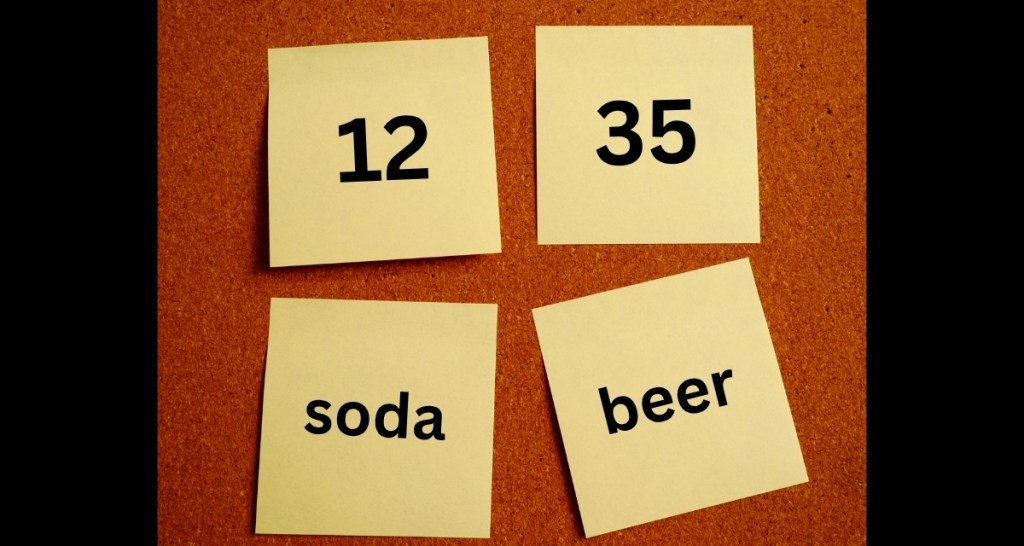
A social rule-oriented version of the Wason Selective Test. Photo credit: Canva
This is what you see in front of you, these four cards: The age 12, the age 35, the drink soda, and the drink beer. Which ones do you need to turn over to determine whether or not the rule is being obeyed that you cannot drink underage?”
The answer is the same as before: the first and last cards. But this task feels much easier than the first. As Stevens and Fry said, “It’s instinctive.”
Making the test about people and a potentially broken social rule makes the task much less abstract. But it also makes it clear that the puzzler needs to do something key to solving the letters-and-numbers version as well: look for a counterexample.
A counterexample is something that would disprove the rule. In the first task example above, if the 8 has the letter A behind it, the “If A, then 7” rule would be disproven. And that’s the only card that could possibly disprove the rule.
In the drinking-age version, we instinctively look for the counterexample, most likely because it’s socially ingrained in us to look for someone breaking the rule. It’s the same logic, but we have a better natural sense of how to figure it out when it involves a human story that taps into the way we naturally think. Few of us naturally think as abstractly as the first version requires without some training in logical deduction.
If you’re interested in diving deeply into the logic details, the full video does just that. But isn’t it fun to see how a small tweak shows us we’re a lot smarter than we thought?
Forget the corner office. Gen Z is rewriting the rules of professional success, and their approach might save us all from burnout.
While previous generations dutifully climbed the corporate ladder rung by rung, Gen Z is choosing to do things differently. These youngsters, born between 1997 and 2012, embrace a clear philosophy: work should fund your life, not consume it. It’s a simple dogma. This emerging trend, dubbed “career minimalism,” goes beyond the corporate buzzword, representing a fundamental shift that challenges what we thought we knew about ambition, success, and the definition of “making it” in today’s economy.
The statistics are striking: 68% of Gen Z workers claim that they would not pursue management rolesunless they came with higher pay or a better title. This isn’t laziness. It’s a well-thought-out strategy. Generation Z watched Millennials sacrifice their twenties to corporate culture, only to face economic uncertainty, housing crises, and unprecedented stress levels.
Gen Z is boldly saying “No thanks” to that traditional blueprint.
Janel Abrahami, Glassdoor’s Career Pivot Strategist, puts it perfectly. “Gen Z is more willing to embrace a flex mindset than older generations,” Abrahami tells Upworthy. “While past generations often prioritized climbing the corporate ladder, Gen Z is looking for the career equivalent of a lily pad: a sustainable route where they can jump to whatever opportunity best fits their needs at the moment. That could mean taking a pay cut for more free time, accepting a lower title for a more creative role, or switching to an industry they see as more stable. Since 70% of Gen Z questions their job security as AI advances in the workplace, many are proactively moving toward sectors like skilled trades, healthcare, and education.”
This lily pad mentality represents a profound shift in how an entire generation views professional growth. Instead of linear progression within a single company, Gen Z sees their careers as a series of strategic moves that prioritize personal fulfillment, financial stability, and most of all, time for the things that actually matter to them.
Generation side hustle
Despite the moniker “career minimalism,” 57% of Gen Z employees have at least one side hustle, more than any generation before them. Is it about the money? Not exactly. For Gen Z, side hustles are where their ambition thrives.
Nearly half (49%) of Gen Z side hustlers say their primary motivation is to be their own boss, while 42% are driven by the desire to pursue their passions. These numbers tell a story about a generation that refuses to wait for opportunities. When their 9-to-5 doesn’t provide creative fulfillment or meaningful impact, they create it themselves.
A teacher in Iowa sums it up, saying, “I always joke that I don’t dream of labor… If people were truly passionate about their job, it wouldn’t pay anything. Passion is for your 5-9 after the 9-5.”
Similarly, a research analyst echoes this sentiment, saying, “While having a job that you’re passionate about is really cool, it’s important to have other interests that are not tied to your work life.”
The broader statistics are even more telling: 66% of Gen Z and Millennials have started or plan to start side hustles, with 65% intending to continue their entrepreneurial ventures long-term. Meaning, this isn’t a phase, it’s a fundamental reimagining of how work fits into a fulfilling life. The pattern is clear: younger generations are diversifying their income streams and refusing to put all their professional eggs in one corporate basket.
Work-life balance as a non-negotiable priority
While older generations might view work-life balance as a nice idea, Gen Z regards it as essential infrastructure for a sustainable life. Thirty-two percent of Gen Z rank work-life balance as the most critical aspect of a job, compared to 28% of Millennials and 25% of Gen X. More significantly, they’re willing to prioritize this balance over higher compensation, a move that would have been unthinkable to previous generations entering the workforce.
“Employers may be surprised by the changing attitudes of Gen Z in the workplace,” says Abrahami. “However, this doesn’t mean that Gen Z is abandoning work; instead, they are redefining ambition through career minimalism. If Gen Z feels unsupported in achieving the work-life balance they seek, they may become less motivated or start looking for opportunities that align better with their values and lifestyles.”
Canva provides a standout example: through initiatives like “Force for Good,” the company encourages employees to contribute over 10,000 hours annually to community projects. This commitment to purpose-driven work has helped Canva achieve a 92% employee satisfaction rate.
These changes aren’t just nice-to-haves, they’re competitive advantages. Companies that embrace Gen Z-friendly policies are seeing measurable improvements in engagement, retention, and overall performance.
What every generation can learn from career minimalism
Gen Z’s approach to work is not radical; it’s rational. After watching previous generations sacrifice their health, relationships, and personal fulfillment for corporate success that often proved fleeting, Gen Z chose a different path.
These lessons are valuable for everyone, regardless of age:
Boundaries create sustainability. Gen Z’s insistence on work-life balance is a nugget of wisdom. By setting clear boundaries, they dodge the burnout that has plagued older generations and create space for long-term productivity and creativity.
Diversification reduces risk. While previous generations sought security in a single employer, Gen Z believes that proper security comes from multiple income streams and transferable skills. Their side hustles are money-generating insurance policies against rapidly changing industries and A.I.
Values-driven work increases engagement. When work aligns with personal values, engagement and performance naturally increase. Gen Z’s demand for meaningful work benefits everyone by forcing companies to clarify their purpose and impact.
Flexibility enhances productivity. The data is clear: flexible work arrangements lead to higher retention, better performance, and increased job satisfaction across all generations.
For Abrahami, the way Gen Z operates in the workplace feels like a breath of fresh air, and she encourages managers to get to know their Gen Z direct reports. “Gen Z’s habits will continue to shape our workforce, so it’s important employers take the time to truly understand them,” Abrahami notes. “Their approach isn’t about laziness; rather, it’s a new representation of how they define success. They want sustainable careers that align with their goals, whether that means prioritizing a job that prevents burnout or one that provides security from layoffs. Older generations have much to learn from Gen Z, and we’re likely to start to see these values become more widely accepted.”
Gen Z’s philosophy in the workplace offers a compelling answer to the age-old question: “What if there’s a better way?” Their formula is refreshingly simple: stable jobs for security, side hustles for passion, and strict boundaries for sustainability.
As workplace dynamics continue to evolve, the rise of career minimalism, fueled by Gen Z’s values, will reshape not only how we define professional success but also how we experience fulfillment. The future of work may belong not to the climbers, but to those content to hop from lily pad to lily pad with purpose and self-awareness.
The corner office can keep its view. Gen Z has found something better: a career that actually fits their life, instead of consuming it. And honestly? The rest of us should take notes.
This article originally appeared one year ago. It has been updated.
Some languages are harder to learn than others. Many who’ve tried will say that Eastern languages like Chinese Mandarin and Japanese are extremely difficult for non-natives because of the unique sounds and intricate writing system. Others, like Hungarian or Finnish, have complex grammar rules that are challenging for beginners.
Some people find pretty much all of them simple. Or at least, they enjoy the challenge.
Arieh Smith, a YouTuber known as Xiaoma, is a polyglot—someone who has mastered many languages. He’s known as a linguistics master and his skill and teachings have earned him nearly a whopping seven million subscribers on social media.
Xiaoma recently traveled to a well-known part of the world and finally met his match in the form of a dialect he just couldn’t crack: English.
No, not regular American or British English, but a specific accent and dialect called Glaswegian; spoken in Glasgow, Scotland.
Xiaoma says Glaswegian is known as one of the trickiest English accents in the entire world, and so he was eager to go and see—or hear—it for himself. He quickly meets up with a local guide who has agreed to show him around the city, and immediately, Xiaoma can hardly understand the man at all. When the guide tells Xiaoma that the day is going to have “tops off weather,” the YouTuber is baffled. (It’s just a clever, and cheeky way, of describing good weather.)
“You guys speak English, but it’s different, it’s like…”
“Swahili,” the guide finished for him. Xiaoma agrees.
Later, Xiaoma interacts with a few randoms on the street, who all greet and welcome him warmly, even though they can’t understand each other all that well. Eventually, Xiaoma tries his hand at a few of the Glaswegian phrases he’s picked up, but he just can’t seem to match the pace and cadence of the natives—even though they’re technically speaking the same language!
You’ve got to watch the whole series of interactions to truly appreciate this fascinating dialect:
Reactions poured in as nearly a million people have viewed the video to date. Many were fascinated by the language, but even more viewers appreciated the cultural representation on display in the video.
The video resonated especially with UK residents and people who had Scottish ties:
“This might be the most authentic representation of glasgow ive seen on an international channel – no sanitised tourist pish, just normal folk on the street.”
“Was born and raised in Glasgow for the first 9 years of my life, been back there a few times over the year but not returned in maybe 20 odd years now, this made me extremely homesick as to how friendly and willing to chat to strangers everyone is, you don’t get that South of England.”
“The language is rich but their cheekiness is richer”
“Glaswegians you’ll notice are very informal but very friendly. Most of the slang is crude humour jabbing at the nature of things and I wouldn’t have it any other way.”
“Man, being a native Scot I always have a big smile on my face hearing Scottish folk talk, especially Glaswegians. Pure magic, like!”
Many different towns and regions across the UK have their own specific dialects, but a lot of them are becoming “diluted” due to global television, social media, etc. It’s related to a concept called “global homogenization.” The more we’re able to travel both physically and digitally, and the more we all consume the same media and culture on a large scale, the more we lose some of the regional intricacies that make the world so fascinating. Languages blend together, cultures flatten on, accents disappear. For example, the Brogue—an extremely rare English dialect found in some Atlantic coast islands in the United States—is quickly fading away.
Not Glaswegian.
“Interestingly, what is not happening in Scotland is the dilution of accents to a more homogenised anglicised accent on the scale that we are seeing in England, and in fact the Scots accent remains very distinctive,” Professor Jane Stuart-Smith of Glasgow University told The Independent in 2015.
While the accent is beautiful, in its own strange way, maybe its the local culture and the good-hearted nature of the people who speak it that keeps it alive. You might not be any closer to understanding or speaking Glaswegian after watching Xiaoma’s video, but with any luck, your interest in visiting Scotland will be piqued.
This article originally appeared last year. It has been updated.
I briefly explained and then he sat down to watch with me. It was 2022. A discussion about fascism on X had led me to look up “The Wave,” a 1981 ABC Afterschool Special based on a real-life high school experiment in Palo Alto, California, in 1967.
The real experiment was both fascinating and terrifying
In the real experiment, first-year history teacher Ron Jones had students at Cubberley High School engage in a simulation of how fascism spreads as part of a lesson on World War II, with him playing the role of the dictator. His intent was to show skeptical students how the Nazis came to power by creating a social movement he dubbed the Third Wave.
“It started out as a fun game with the most popular teacher at school,” Mark Hancock, one of the students in Jones’ history homeroom class, told Palo Alto Online in 2017. “He told us, ‘If you’re an active participant, I’ll give you an A; if you just go along with it, I’ll give you a C; if you try a revolution, I’ll give you an F, but if your revolution succeeds, I’ll give you an A.’”
Hancock said he started off planning to get that revolution A, but it quickly grew beyond grades and turned into something real. “At the end, I was scared to death,” he shared.
It began with Jones rallying the students around the idea of “strength through discipline” and “strength through community.” He had them engage in regimented behaviors and handed out membership cards. At first, it was just fun, but students began to enjoy feeling like part of a special community. Jones pushed the importance of following the rules. The students even formed a “secret police” to monitor other students, and if someone broke a Third Wave rule, they’d be reported and publicly “tried” by the class.
The students got wrapped up in it to a frightening degree and even Jones found himself enjoying the way the students responded to him. “It was pretty intoxicating,” he told Palo Alto Online.
But according to Verde Magazine, Jones felt like he’d lost control of it by the fourth day.
The experiment ended at the end of the week with a rally. Jones told the students they were actually part of a real national Third Wave movement and that the national leader was going to speak to them at the rally. Jones turned on the televisions to white static and watched the students eagerly wait for their leader to speak. That’s when he broke the news to them that they’d fallen for a totalitarian regime. Instead of a Third Wave leader speech, he played them a video of a Nazi rally.
According to a school newspaper at the time, most students were disillusioned. But one student said, “It was probably the most interesting unit I’ve had. It was successful in its goal to achieve the emotions of the Germans under the Nazi regime.”
What the 1981 film gets right
“The Wave” follows the true story quite closely and still holds valuable lessons. One chilling scene shows a kid who had been sort of an outcast prior to the “movement” saying, “For the first time, I feel like I’m a part of something great.” He was particularly crushed to find out it was all a fascist facade.
As is the cyclical nature of history, “The Wave” and what it can teach us is especially relevant today. According to NPR, “surveys of more than 500 political scientists find that the vast majority think the United States is moving swiftly from liberal democracy toward some form of authoritarianism.” The benchmark survey, known as Bright Line Watch, had “U.S.-based professors rate the performance of American democracy from zero (dictatorship) to 100 (perfect democracy),” noted NPR. After President Trump’s election in November 2024, scholars gave American democracy a rating of 67. By April 2025, that figure had dropped to 53, and public ratings fell below 50 for the first time since Bright Line Watch began collecting data in 2018.
Why this story feels so timely right now
The most recent Bright Line Watch surveys from early 2026 show expert ratings have stabilized around 57, still the lowest recorded since the project began.
John Carey, co-director of Bright Line Watch and a professor of government at Dartmouth, summed up the matter by saying, “We’re moving in the wrong direction.”
Since President Trump’s election in November, various publicationsworldwide have suggested that much of Trump’s rhetoric echoes that of Nazi Germany, with some pointing out parallels between each administration’s first 100 days in office. Other publications have criticized the comparison.
At any rate, this afterschool special is incredibly timely. If you can get past the ’80s aesthetic, it’s worth watching. Even my teen kids got into it, once they stopped making fun of the hair and film quality.
This article originally appeared four years ago. It has been updated.
Many kids are seriously struggling in school. According to the National Center for Education Statistics, an estimated 49% of public school students started off the 2022-2023 school year behind in at least one subject. More recent data shows some improvement, with that figure dropping to 44% for the 2023-24 school year, though millions of students remain behind.
While there are several factors contributing to this issue, including the lasting effects of the COVID-19 pandemic, underfunded schools, and a growing teacher shortage, many educators feel that one majorly overlooked factor is parental involvement, or the lack of it, in their child’s education.
A former teacher’s blunt take on parental denial
One former teacher bluntly stated that it was parents’ “denial” that’s to blame. Odion, who now works as a flight attendant, made her case in response to another teacher’s TikTok asking parents why they’re unaware that their children are underperforming for their grade level.
In the original video, user @qbthedon laments that his 7th grade students still perform at a 4th grade level, and, despite his efforts, those kids still move onto the next grade even though they’re not ready. The worst part is that the parents don’t seem to be aware that their kids are extremely behind.
This lack of awareness and engagement dates back further than the pandemic years, says Odion, who taught Pre-K and Kindergarten in 2013.
Case in point: parent-teacher conference nights, where virtually no parent would show up. Odion then recalled one father who did attend with his daughter, called Tia for the story, but would not believe that Tia did not know the full alphabet.
“In kindergarten, you have to at least know, I think it was 80% of the 52 letters, as in uppercase and lowercase, and you have to be able to identify at random. So, I’m telling the dad that she barely knows 10 letters. And he’s in denial. ‘Nah, you know, she knows her letters,’” Odion says.
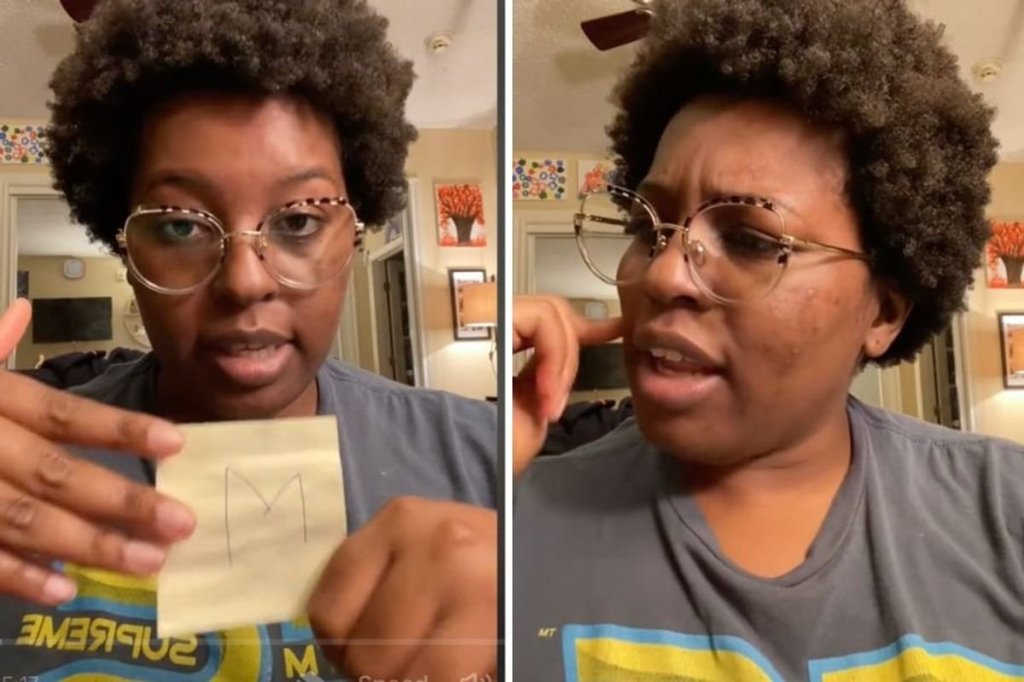
She then acts out that night, using a makeshift flashcard like she did to test Tia.
“I literally said, ‘What letter is this?’” Odion says while holding up the letter “M.” “She said something that’s not it. Put another one down. ‘What letter is this?’ She don’t know it.”
Still, the dad insisted that Tia knew her letters. Eventually, he blamed Tia’s older brother, who, despite only being a sixth grader himself, was “supposed to teach her.”
“It is not up to a child in elementary school, or middle school, or really any of your older kids, as someone who’s an older child… It is not up to the kids to teach younger kids,” Odion says in the clip.
Using another example, Odion states that a fifth grader in her class was reading at a kindergarten level and could only process basic sentences like “I see you” and “I like to see.”
In this instance, the students should be held back in order to fully learn the year’s curriculum. But Odion argues that parents fight against it “because they are more concerned about the optics of a child being held back than actually taking care of the child’s needs.”
Why holding kids back is not a simple solution
While the research shows that holding kids back a grade does improve their academic performance by granting them more time, there are still significant pros and cons to consider. In other words, being held back might not be the best solution for every struggling child. The biggest point Odion seems to be trying to make is that in addition to teachers and administrators, parents need to be more proactive in their child’s education.
“Parents, y’all can’t be backseat drivers about your child’s learning. You have to help reinforce it at home. You put a kid in front of that phone or iPad whenever they come home, it better be on YouTube, and it better be learning about letters and sight words. You can’t tell me you can’t read to the kid. It takes 10 minutes to read to the kid. No one is that busy,” she concludes.
This article originally appeared two years ago. It has been updated.