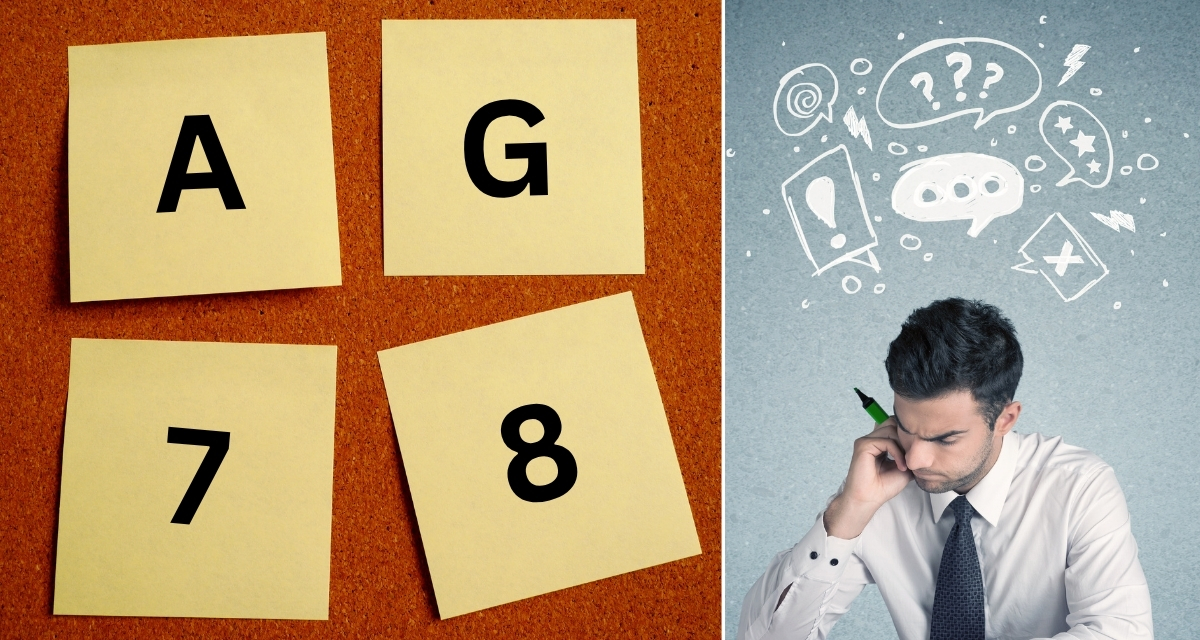
Many people delight in logic puzzles and the brain challenge they offer. But one of the most studied logic tests has proven persistently befuddling for people across the board.
Developed in 1966, the Wason Selection Task has a high failure rate despite its seeming simplicity. According to Michael Stevens of VSauce, studies have shown that somewhere between 90% and 96% of people are unable to come up with the correct answer.
What exactly is this test? There are various versions of it, but let’s look at the original one that Peter Wason created.
You have four cards in front of you labeled A, G, 7, and 8, like this:
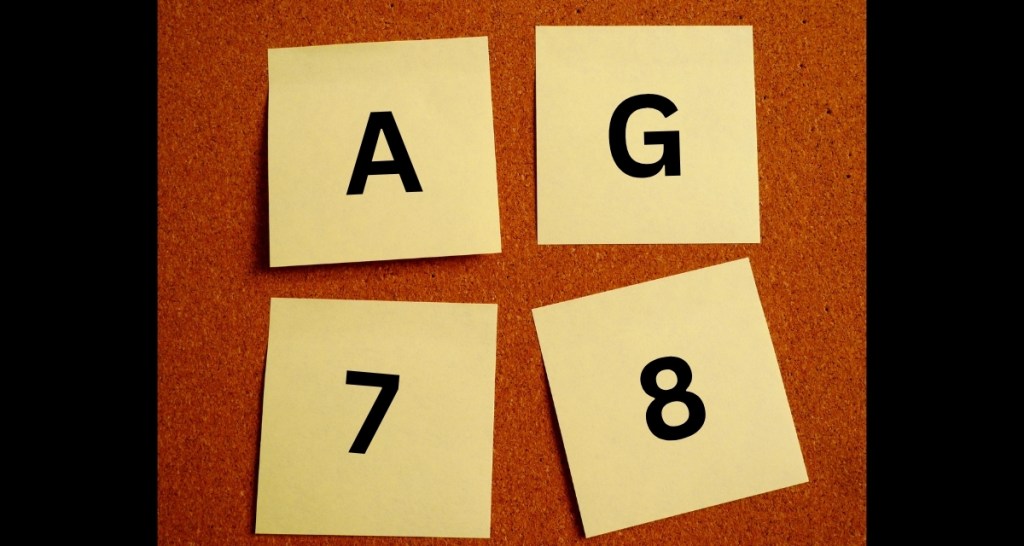
Each card has a letter on one side and a number on the other. Your task is to determine which cards you would need to turn over to judge whether the following rule is true: If there is an A on one side, there is a 7 on the other.
That’s it. Sounds simple enough, right? Then you start working your way through the reasoning, and your brain starts to feel a bit sticky.
Even a Cambridge math professor had to backtrack on the test
Hannah Fry, a British mathematician and University of Cambridge professor, went through this task with Stevens on their joint YouTube channel, The Rest Is Science. Fry said she had encountered a version of the test before and gotten it wrong the first time, but she didn’t remember what trap she had fallen into or why.
This time, she walked through the logic aloud and figured it out. (If you want to try solving it yourself, go for it. Spoilers are below.)
Here’s how Fry worked through the problem in real time:
“So, right, you know that these four cards, a letter on one side, a number on the other, which means that there is a number hiding behind the A, there’s a number hiding behind the G. There’s also a letter behind the 7, and there’s a letter behind the 8.
The rule says if there is (this is what I’m trying to test) if there is an A on one side, there is a 7 on the other. Right? So, turning over the 8 doesn’t tell me anything. I mean, I don’t really care what’s on the other side of the 8 because even if it’s an A…”
Then Fry stopped herself.
“Uh oh, no, wait. That’s not true. Oh, hold on. I’ve got it wrong already.”
She recalibrated.
“Immediately, the first thing you want to do is check whether there’s a 7 on the reverse of the A. To see if there’s a 7. Turning over the G, I don’t think tells me anything because I don’t really care what’s on the reverse of the G. The rule doesn’t involve G’s. It says if there is an A on one side, which there isn’t, so I don’t care. So, I can ignore the G card.
The 7 card I’d be really tempted to turn over to see if there was an A on the other side, because then that would be another instance of the rule. But the way the rule is phrased is that it says if there is an A on one side, there is a 7 on the other. It doesn’t say you can only have sevens where A’s exist. So actually, you could have a J on the other side of the 7, and it wouldn’t violate the rule. That would be fine.
So, even though my temptation is to say turn over A and 7, actually, I think you need to turn over A and 8. Because if you turn over 8 and it’s got an A on the other side, that would violate the rule, right?”
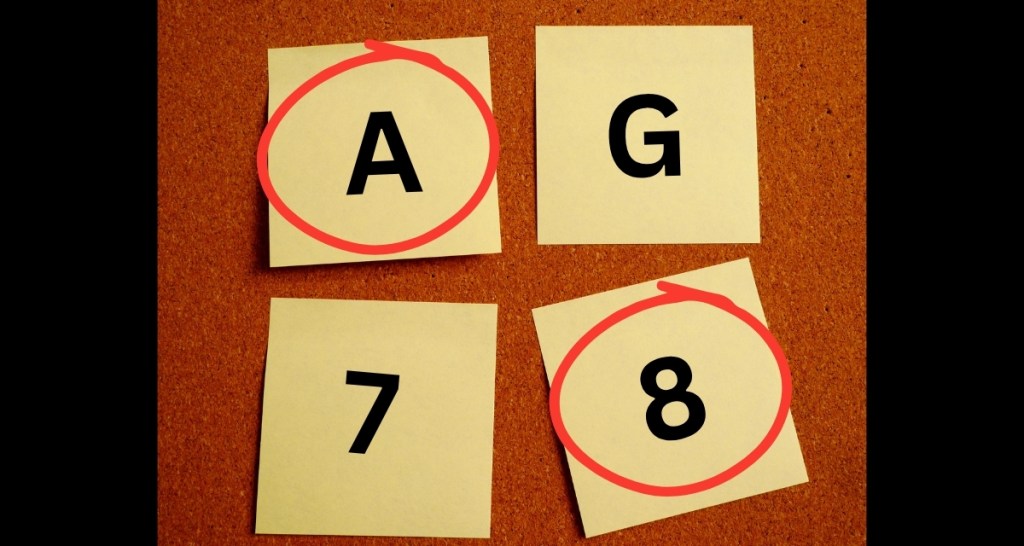
Bingo. You would turn over the A and 8. Fry was correct. But even this Cambridge math professor, who had seen a version of the logic test before, stumbled through it a bit.
Changing the letters and numbers to a story about drinking changes the failure rate
Stevens then asked Fry how she would approach a different version of the task. Instead of letters and numbers, the cards show the ages of different people on one side and what they are drinking at a bar on the other. This version of the task includes a “human” storytelling element.
“Once again, you have four cards,” said Stevens. “And you are a police officer, and it’s your job to make sure that no one is drinking underage. On some of these cards, you can only see their age. You’re going to have to turn them over to see what they’re drinking. On others, you only see what they’re drinking. You’ll have to turn them over to get their age.
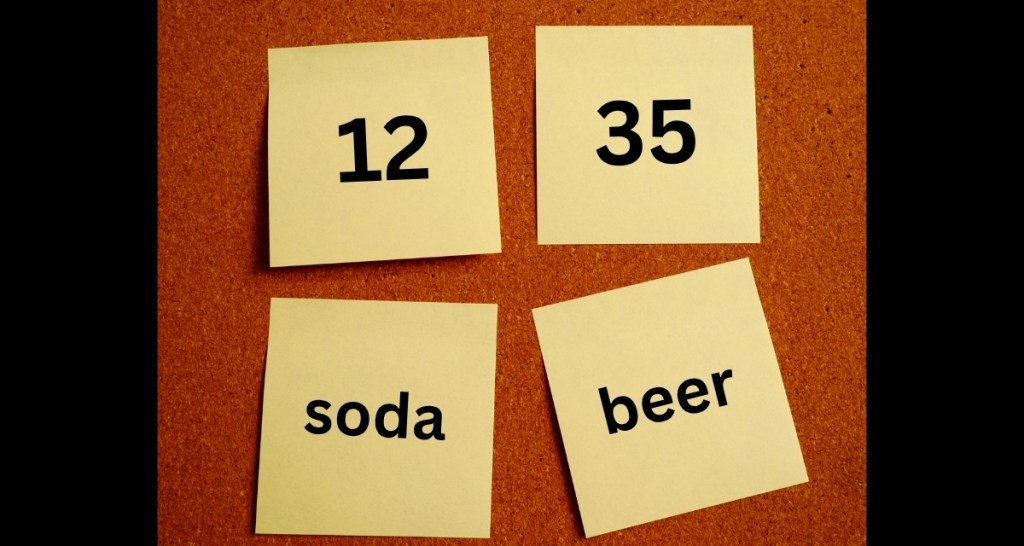
This is what you see in front of you, these four cards: The age 12, the age 35, the drink soda, and the drink beer. Which ones do you need to turn over to determine whether or not the rule is being obeyed that you cannot drink underage?”
The answer is the same as before: the first and last cards. But this task feels much easier than the first. As Stevens and Fry said, “It’s instinctive.”
Making the test about people and a potentially broken social rule makes the task much less abstract. But it also makes it clear that the puzzler needs to do something key to solving the letters-and-numbers version as well: look for a counterexample.
A counterexample is something that would disprove the rule. In the first task example above, if the 8 has the letter A behind it, the “If A, then 7” rule would be disproven. And that’s the only card that could possibly disprove the rule.
In the drinking-age version, we instinctively look for the counterexample, most likely because it’s socially ingrained in us to look for someone breaking the rule. It’s the same logic, but we have a better natural sense of how to figure it out when it involves a human story that taps into the way we naturally think. Few of us naturally think as abstractly as the first version requires without some training in logical deduction.
If you’re interested in diving deeply into the logic details, the full video does just that. But isn’t it fun to see how a small tweak shows us we’re a lot smarter than we thought?
You can follow The Rest Is Science on YouTube for more brainy fun.