Paris is banning cars. Here’s why U.S. cities need to follow suit — basically now.
Paris’ romantic air just got more breathable, and its world-famous streets more stroll-able. The city’s government unveiled an ambitious plan to ban gas-powered cars from the city by the end of the next decade. “We have planned the end of thermic vehicle use, and therefore of fossil energies, by 2030,” Christophe Nadjovski, Paris deputy mayor…
“We have planned the end of thermic vehicle use, and therefore of fossil energies, by 2030,” Christophe Nadjovski, Paris deputy mayor in charge of transportation, told France Info radio.
The city’s mayor, Anne Hidalgo, had already announced a plan to ban diesel-powered vehicles from the city by 2024.
The French capital is the latest in a string of European cities cracking down on cars.
“If we do not act to reduce greenhouse gas emissions forcefully prior to the 2020 election, costs to reduce emissions at a magnitude and timing consistent with averting dangerous human interference with the climate will skyrocket,” Steven Skerlos, University of Michigan professor of mechanical engineering, said in a news release announcing the results. “That will only make the inevitable shift to renewable energy less effective in maintaining a stable climate system throughout the lives of children already born.”
Some U.S. cities and states are taking steps to reduce vehicle emissions within their borders.
In August, New York Governor Andrew Cuomo announced his administration was exploring congestion pricing — a toll on cars that enter certain central regions of New York City, though similar proposals have previously floundered in the state’s legislature.
Could an enterprising American metropolis follow Paris’ lead and banish gas-powered motor vehicles entirely?
A single door can open up a world of endless possibilities. For homeowners, the front door of their house is a gateway to financial stability, job security, and better health. Yet for many, that door remains closed. Due to the rising costs of housing, 1 in 3 people around the world wake up without the security of safe, affordable housing.
Since 1976, Habitat for Humanity has made it their mission to unlock and open the door to opportunity for families everywhere, and their efforts have paid off in a big way. Through their work over the past 50 years, more than 65 million people have gained access to new or improved housing, and the movement continues to gain momentum. Since 2011 alone, Habitat for Humanity has expanded access to affordable housing by a hundredfold.
A world where everyone has access to a decent home is becoming a reality, but there’s still much to do. As they celebrate 50 years of building, Habitat for Humanity is inviting people of all backgrounds and talents to be part of what comes next through Let’s Open the Door, a global campaign that builds on this momentum and encourages people everywhere to help expand access to safe, affordable housing for those who need it most. Here’s how the foundation to a better world starts with housing, and how everyone can pitch in to make it happen.
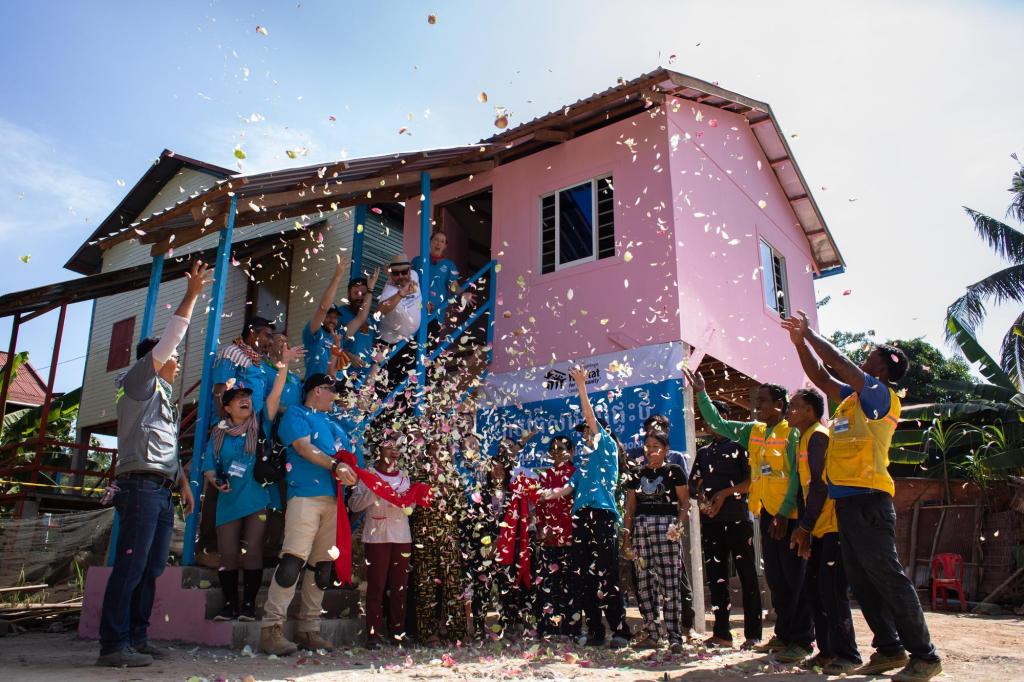
Volunteers raise a wall for the framework of a new home during the first day of building at Habitat for Humanity’s 2025 Carter Work Project.
Globally, almost 3 billion people, including 1 in 6 U.S. families, struggle with high costs and other challenges related to housing. A crisis in itself, this also creates larger problems that affect families and communities in unexpected ways. People who lack affordable, stable housing are also more likely to experience financial hardship in other areas of their lives, since a larger share of their income often goes toward rent, utilities, and frequent moves. They are also more likely to experience health problems due to chronic stress or environmental factors, such as mold. Housing insecurity also goes hand-in-hand with unstable employment, since people may need to move further from their jobs or switch jobs altogether to offset the cost of housing.
Affordable homeownership creates a stable foundation for families to thrive, reducing stress and increasing the likelihood for good health and stable employment. Habitat for Humanity builds and repairs homes with individual families, but it also strengthens entire communities as well. The MicroBuild® Initiative, for example, strengthens communities by increasing access to loans for low-income families seeking to build or repair their homes. Habitat ReStore locations provide affordable appliances and building materials to local communities, in addition to creating job and volunteer opportunities that support neighborhood growth.
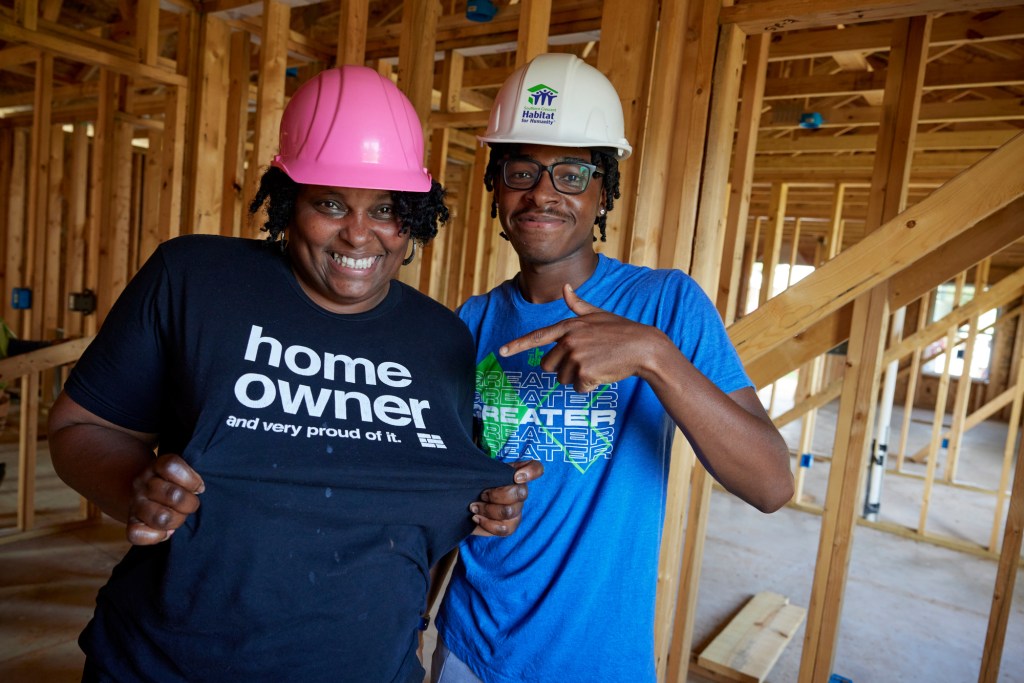
Marsha and her son pose for a photo while building their future home with Southern Crescent Habitat for Humanity in Georgia.
Everyone can play a part in the fight for housing equity and the pursuit of a better world. Over the past 50 years, Habitat for Humanity has become a leader in global housing thanks to an engaged network of volunteers—but you don’t need to be skilled with a hammer to make a meaningful impact. Building an equitable future means calling on a wide range of people and talents.
Here’s how you can get involved in the global housing movement:
Speaking up on social media about the growing housing crisis
Volunteering on a Habitat for Humanity build in your local community
Travel and build with Habitat in the U.S. or in one of 60+ countries where we work around the globe
Join the Let’s Open the Door movement and, when you donate, you can create your own personalized door
Every action, big and small, drives a global movement toward a better future. A safe home unlocks opportunity for families and communities alike, but it’s volunteers and other supporters, working together with a shared vision, who can open the door for everyone.
If you stumbled upon Victor Widell’s website, you might think your computer was experiencing some technical difficulties. But you’d be wrong.
The letters within each word on the site are scrambled and moving around erratically, and although you might be able to read each sentence if you slow down and focus, it’s no walk in the park.
Widell designed it that way on purpose. It’s a glimpse into what someone who has dyslexia might have to deal with every day.
“A friend who has dyslexia described to me how she experiences reading,” Widell writes on his site which has spread far and wide across the Internet. “She can read, but it takes a lot of concentration, and the letters seem to ‘jump around.’”
Seeing letters “jump around” is a common experience among (the very large number of) people who have dyslexia.
Dyslexia occurs when there’s a problem in the area of the brain that interprets language, as the National Library of Medicine points out. And it may affect more people than many of us realize.
Dyslexia is still underdiagnosed and kids in communities of color are disproportionately affected.
About 20% of the total population is affected by dyslexia according to The Yale Center for Dyslexia and Creativity, yet many remain undiagnosed and secretly battle this “hidden disability” without proper help.
“While there are numerous curricula and programs designed to increase literacy, dyslexia is often overlooked when searching for causes of illiteracy,” the center explains, noting black and Latino students are more likely to go undiagnosed, seeing as the disorder flies even more under the radar in urban schools.
Given that about 1 in 5 of people live with dyslexia, it’s no wonder Widell’s website is striking a chord with plenty of people online.
His work to help nondyslexic people empathize with those who have DRD isn’t the first empathetic take on dyslexia to go viral though.
Back in 2014, Dutch designer Christian Boer created a dyslexic-friendly font for folks like himself.
The font, called Dyslexie, not only helps people with dyslexia, it also helps those who don’t live with it to better understand how similar-looking letters within a standardized alphabet can be a big bottleneck to those who do.
At first glance, Dyslexie doesn't look all that different from a regular font. By studiostudio graphic design – Fair Use
The letters in Dyslexie may look like any other letters, but they have key characteristics, like exaggerated stick and tail lengths (on letters like “j” or “b”) and heavy base lines. These subtle but important factors help to differentiate letters that may seem similar in appearance to someone who has dyslexia.
Take the letters “h” and “n,” for example. They sort of look a bit alike, right? Dyslexie’s “h” has a longer ascender and its “n” has a shorter one.
“When they’re reading, people with dyslexia often unconsciously switch, rotate, and mirror letters in their minds,” Boer told Dezeen magazine in 2014. “Traditional typefaces make this worse because they base some letter designs on others, inadvertently creating ‘twin letters’ for people with dyslexia.”
In the same vein as Dyslexie, Widell’s site aims to help those without the condition know what it’s like to walk in someone else’s shoes.
Widell’s website, of course, doesn’t give someone the authority to know what dyslexia is like if they don’t have the disorder themselves.
As The Independent noted, people who have dyslexia experience it differently and through various symptoms. Widell’s site can’t possibly simulate the one and only experience of someone who has dyslexia because there isn’t a one and only experience.
Still, the outlet notes, it’s “a great way to give people a taste of the difficulties faced.”
“Nothing will ever show [people who don’t have dyslexia] exactly how it truly feels to read while dyslexic,” one Redditor who claims to have the disorder pointed out about Widell’s site. “But this is damn close.”
To learn more about how Dyslexie works, check out the video below:
This article was originally published in 2016. It has been updated.
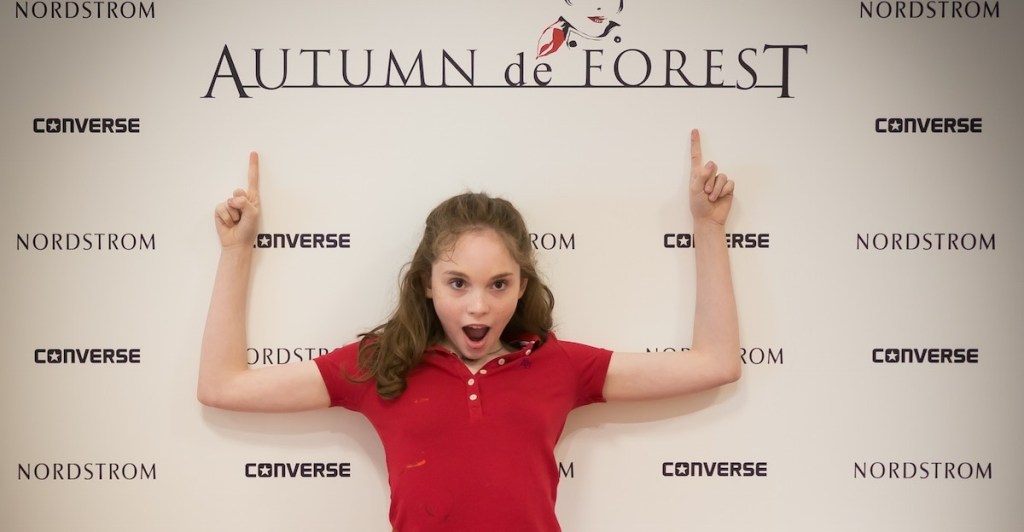
When Autumn de Forest was 5, she picked up a paintbrush for the first time.
It wasn’t long before she was ready to show the world what she could do.
After a year of practice, the then-6-year-old asked her father if he could get her a booth at a local art-in-the-park program. “People would come up to the booth, and they would talk to my father, and they’d say, ‘This is great!’” she said. “Apparently they thought it was Take Your Daughter to Work Day.”
Almost everyone thought the artwork was her father’s. And when they found out that tiny Autumn was the artist, people couldn’t believe their eyes.
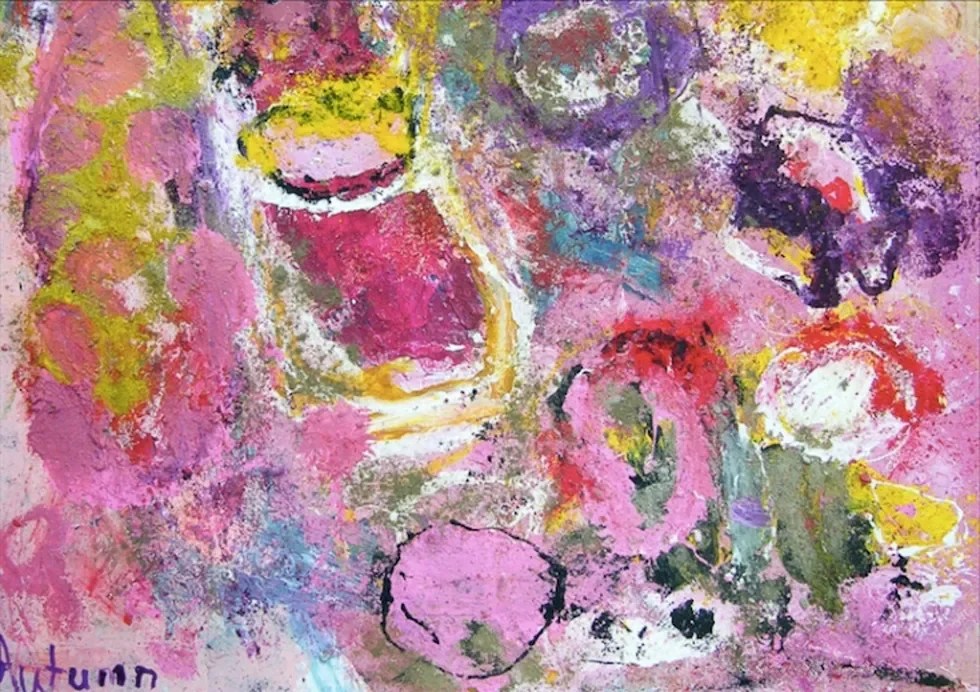
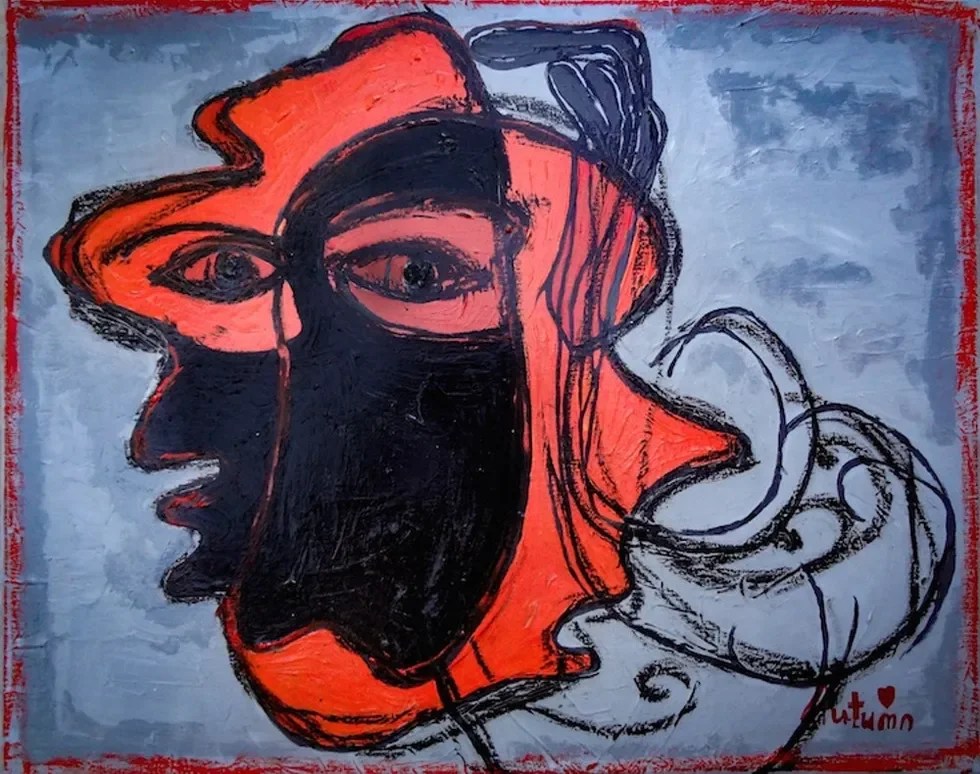
Autumn created this piece when she was just 5 years old. Autumn de Forest
Soon, Autumn rose to national fame.
When Autumn was 8, she was featured on the Discovery Health Channel. There was a slew of media attention in the years that followed. There was Disney. There was The Today Show. There was Wendy Williams.
She was called a child genius, a prodigy, and an expert painter.
Suddenly, Autumn de Forest was everywhere.
But not everyone was so accepting of the young artist and her work. Some people in the art world had … questions. Sure, she was good for a kid. But was her art actually good? Others wondered if the whole thing might be an elaborate hoax.
Autumn decided not to listen.
By 14 she developed a startlingly organized daily routine that went far beyond a 9 to 5.
Somehow, as the focus on her age begins to wear off, Autumn’s work ethic and art only grow stronger. She said that most days, she’d wake up in her parents’ Las Vegas home at 7:30 a.m. After breakfast, she’d break out her supplies for a one- or two-hour painting session.
From there, she dove into her school work. Most brick-and-mortar schools can’t accommodate her travel schedule, so she did the majority of her schooling online.
Before dinner, it’s back into the studio.
“That session can last much longer, that can be three or four hours when I really get into it,” she said. “Then I probably have dinner and go to bed.”
The results? They speak for themselves.
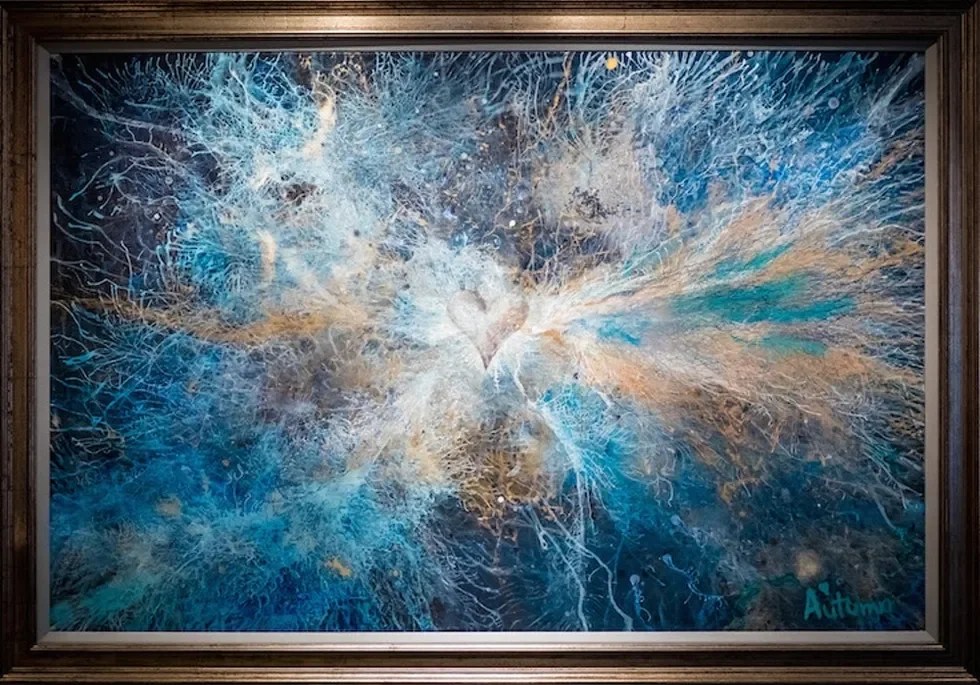
Her work has been displayed in galleries and exhibitions all over the world.
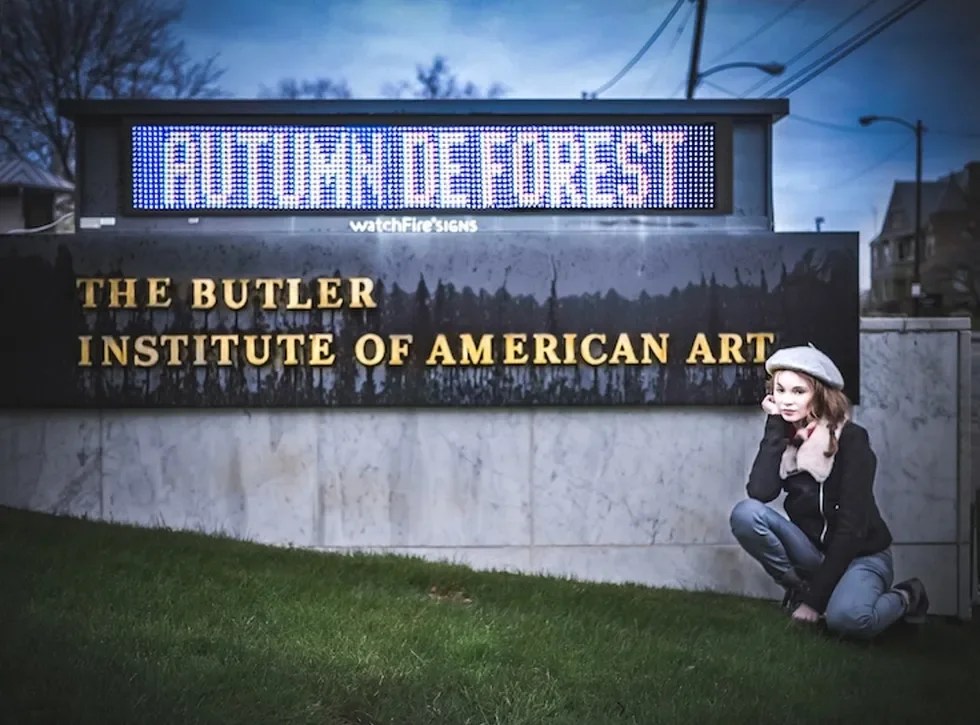
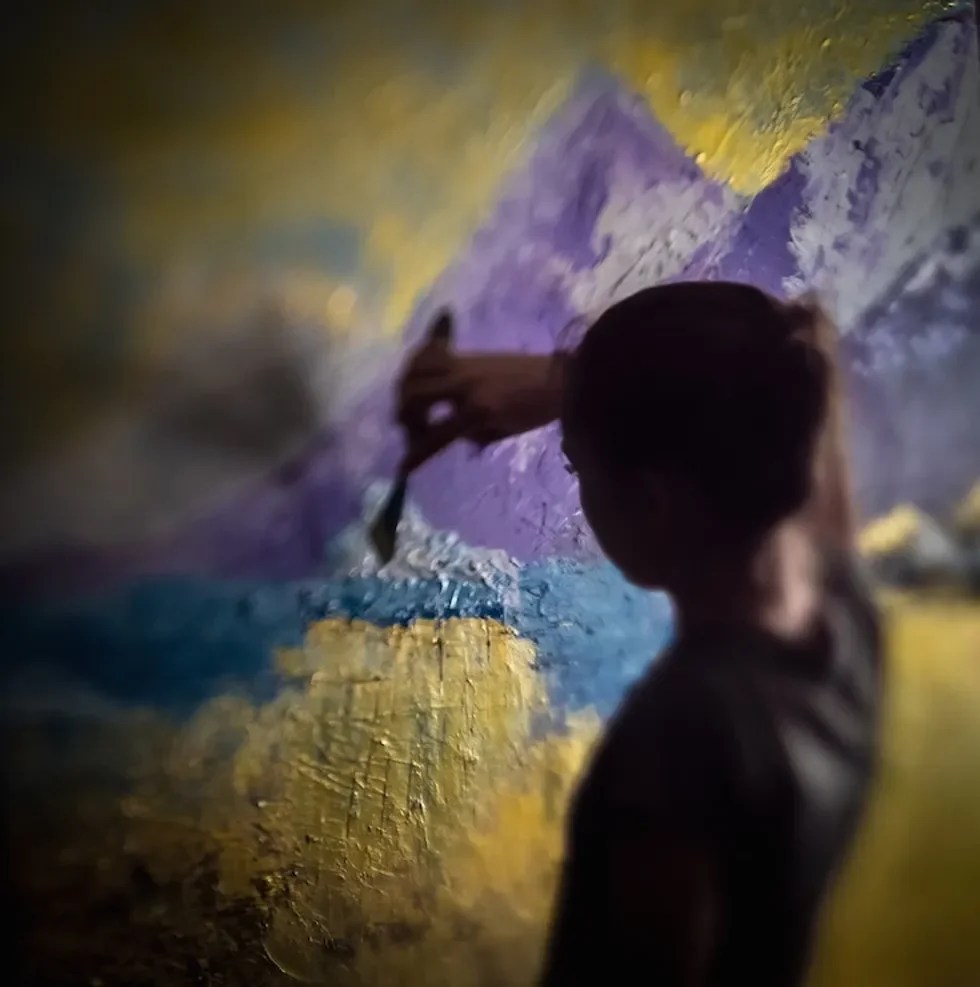
Autumn held a public demonstration before a showing at The Butler Institute of American Art.
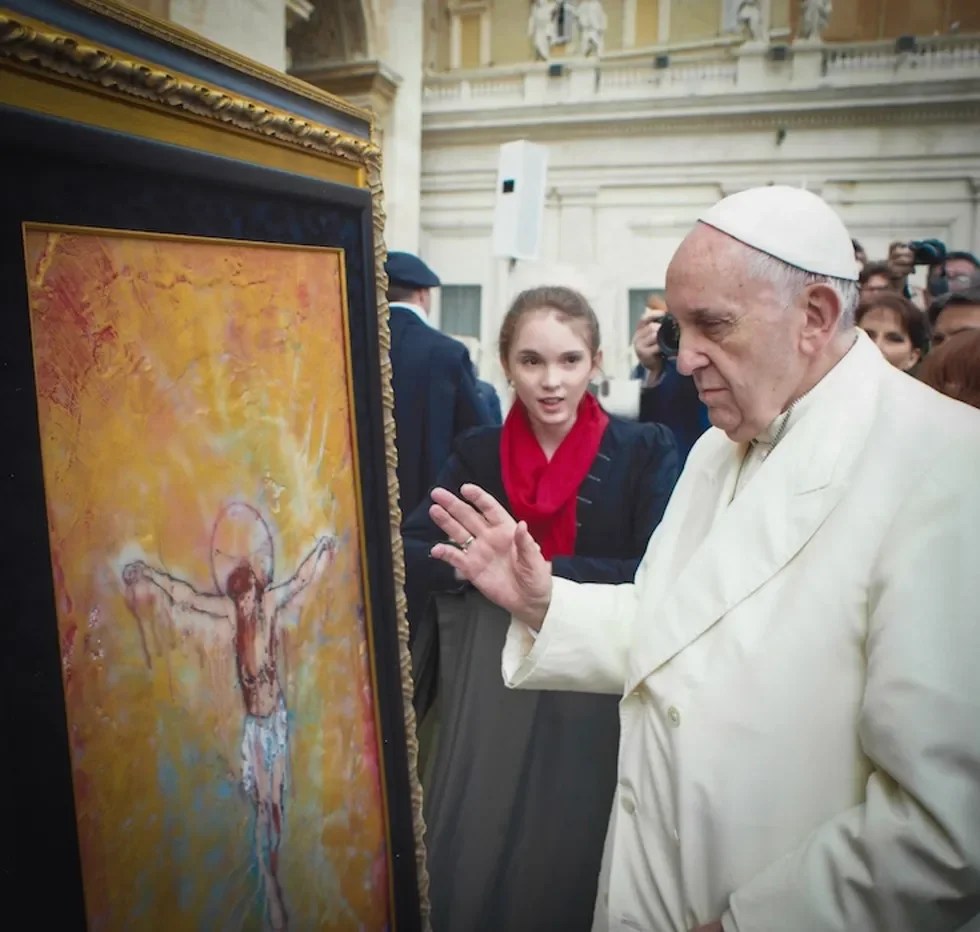
In 2015, Autumn received the International Giuseppe Sciacca Award in Painting and Art.
The award took her to the Vatican for a private showing of her artwork with the pope.
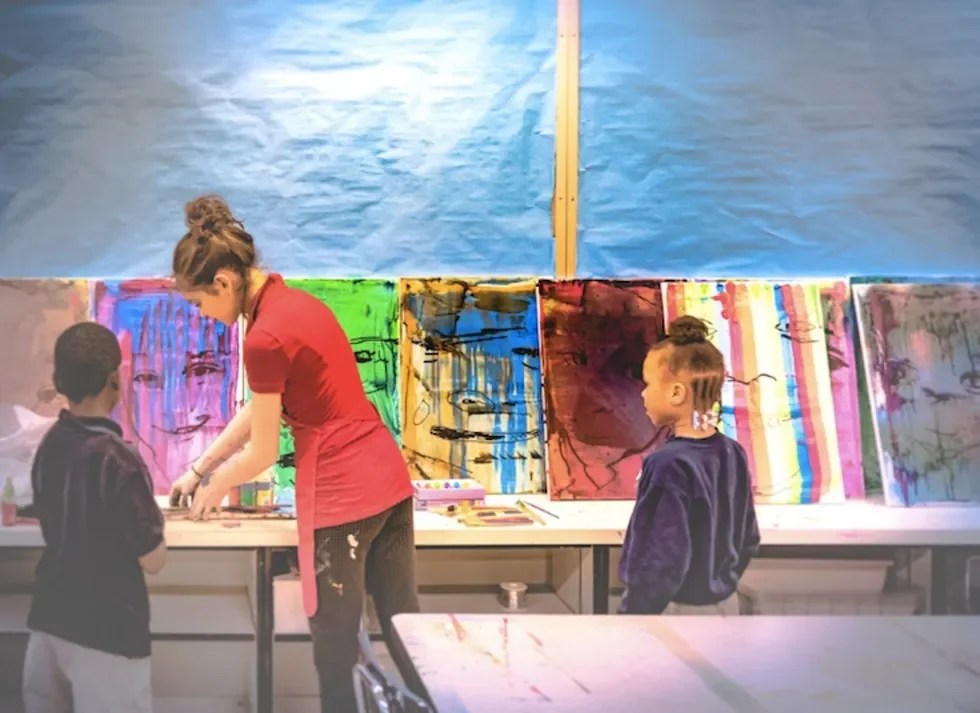
She’s also worked with the President’s Committee on the Arts and the Humanities, headed up by Michelle Obama.
As part of the program, de Forest traveled to underprivileged schools around the country and led painting workshops.
Oh, and if you’re looking for some hard numbers to attach to Autumn’s talent, she’s got those, too.
Her paintings raked in over $7 million at auctions by the time she was a teenager — fetching as much as $25,000 each — much of which has gone directly to charities and disaster relief funds.
At 22 years old now, what’s Autumn de Forest up to lately?
A lot!
The transition from child prodigy to respected artist has kept her busy.
In 2017, the Monthaven Arts and Cultural Center in Hendersonville, Tennessee hosted a major solo exhibition for de Forest titled “Her White Room: The Art of Autumn de Forest.”
That same year, de Forest was listed as one of Teen Vogue’s “21 Under 21.” In her profile she was praised for her talent as well as her commitment to art education.
“In disadvantaged schools, they consider the arts an extracurricular activity,” she told Teen Vogue. “It’s devastating, as there could be child prodigies in these schools, but they don’t know that they have this God-given gift because they’re not given the opportunity because there’s nearly no art programs in schools.”
In 2018, de Forest was featured in the music video for the song “Youth” by best-selling recording artists Shawn Mendes and Khalid. The video highlights exceptional young people working to change the world, including de Forest, Emma González, and Elias and Zion Phoenix.
The video has over 17 million plays on YouTube.
And of course, Autumn continues to share her absolutely incredible artwork on Instagram and in shows and exhibitions around the globe.
The Autumn de Forest Foundation, helps her keep track of the kids she’s met throughout the years and to continue to help them with their art careers.
A portion of the foundation’s money goes to a 529 account set up for the students while 10% goes to them directly.
“A lot of these kids that I work with, they’re not very old, they’re in second grade, third grade, fourth grade. Maybe in 10 years, they may only have four or five thousand dollars but that could be the difference between them going to college or not,” Autumn told Teen Vogue.
Autumn’s incredible rise in the art world is an astonishing feat for someone who’s still in her teens. But that accomplishment is easily matched by her generosity and commitment to helping develop tomorrow’s prodigies as well.
Update from the author: I wrote a follow-up to this article sharing a trauma-informed perspective of the activity. You can read it here.
Karen Loewe has been teaching for more than years. Clearly, all of that experience has given her a solid bead on what her students really need.
The middle school English teacher from Oklahoma shared an activity she did with her students for the first day of school on Facebook and it’s gone insanely viral. In just three days, her post has already been shared more than 335,000 times.
What has caught people’s attention is something we all have in common—emotional baggage. We live in an era of rising mental health awareness, but also increased social pressures to appear as if you have all of your sh*t together. For kids in the turbulent middle school years, whose their bodies, minds, and spirits are growing at breakneck pace, having a place to share their emotional turmoil can be incredibly helpful. But many kids don’t have a safe, supportive place to do that.
Ms. Loewe’s classroom just became that place.
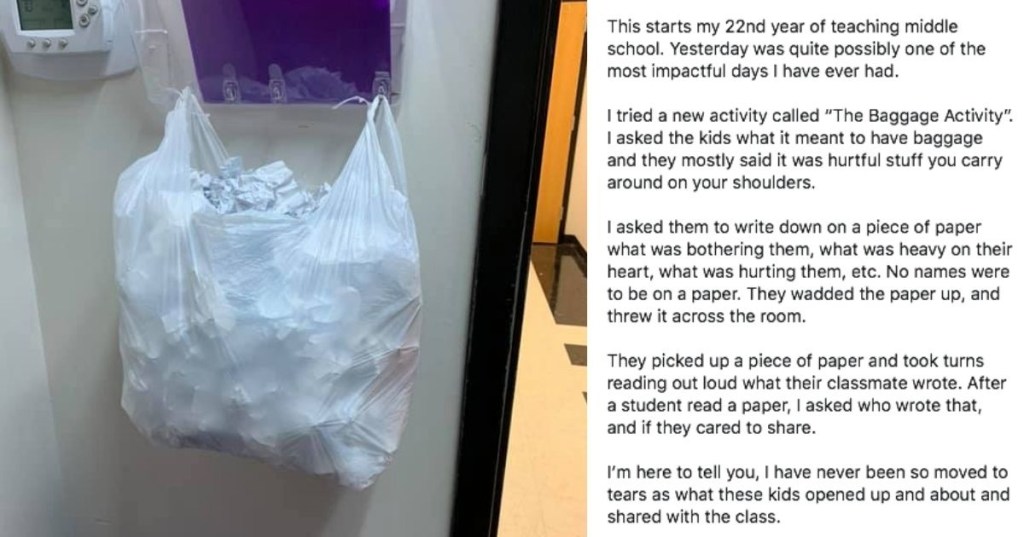
Loewe shared a photo of a plastic sack filled with crumpled up paper, with the story of what transpired in her classroom:
This starts my 22nd year of teaching middle school. Yesterday was quite possibly one of the most impactful days I have ever had.
I tried a new activity called “The Baggage Activity”. I asked the kids what it meant to have baggage and they mostly said it was hurtful stuff you carry around on your shoulders.
I asked them to write down on a piece of paper what was bothering them, what was heavy on their heart, what was hurting them, etc. No names were to be on a paper. They wadded the paper up, and threw it across the room.
They picked up a piece of paper and took turns reading out loud what their classmate wrote. After a student read a paper, I asked who wrote that, and if they cared to share.
I’m here to tell you, I have never been so moved to tears as what these kids opened up and about and shared with the class.
Things like suicide, parents in prison, drugs in their family, being left by their parents, death, cancer, losing pets (one said their gerbil died cause it was fat, we giggled ) and on and on.
The kids who read the papers would cry because what they were reading was tough. The person who shared (if they chose to tell us it was them) would cry sometimes too. It was an emotionally draining day, but I firmly believe my kids will judge a little less, love a little more, and forgive a little faster.
This bag hangs by my door to remind them that we all have baggage. We will leave it at the door. As they left I told them, they are not alone, they are loved, and we have each other’s back.
Seriously, what a fabulous idea. It gives students a chance to get their troubles off their chest and heart, but also maintain anonymity if they want to. It gives classmates a chance to hear what’s going on in each other’s emotional worlds, to understand what everyone is going through, and to know they are not alone in their struggles.
Good teachers go beyond textbooks and curriculum, knowing that education is more than just acquiring information and memorizing facts. When students feel seen and heard, it’s easier for them to learn. And when kids have empathy for one another, a classroom can become a safe place for learning to take place.
Well done, Ms. Loewe. Let’s hope other teachers and students benefit from your wisdom.
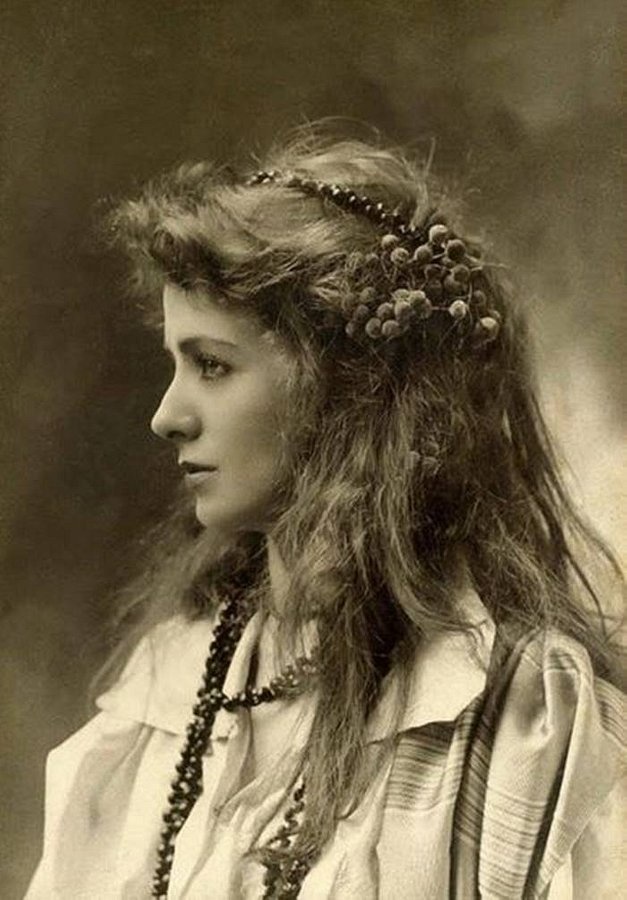
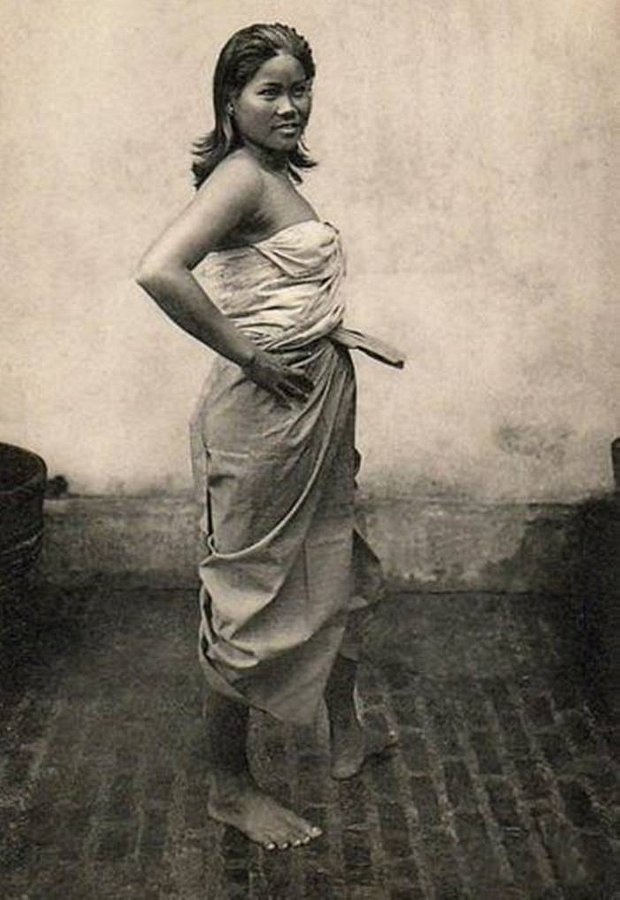
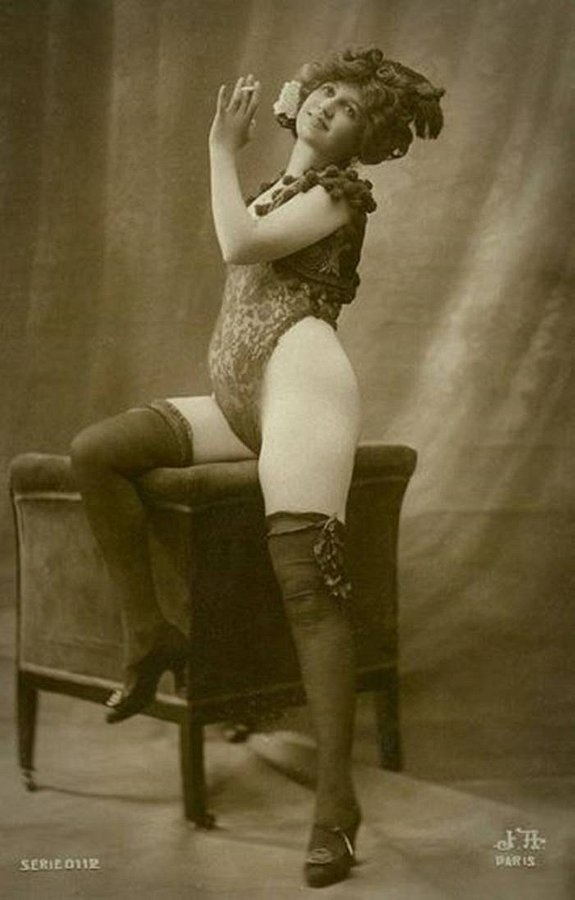
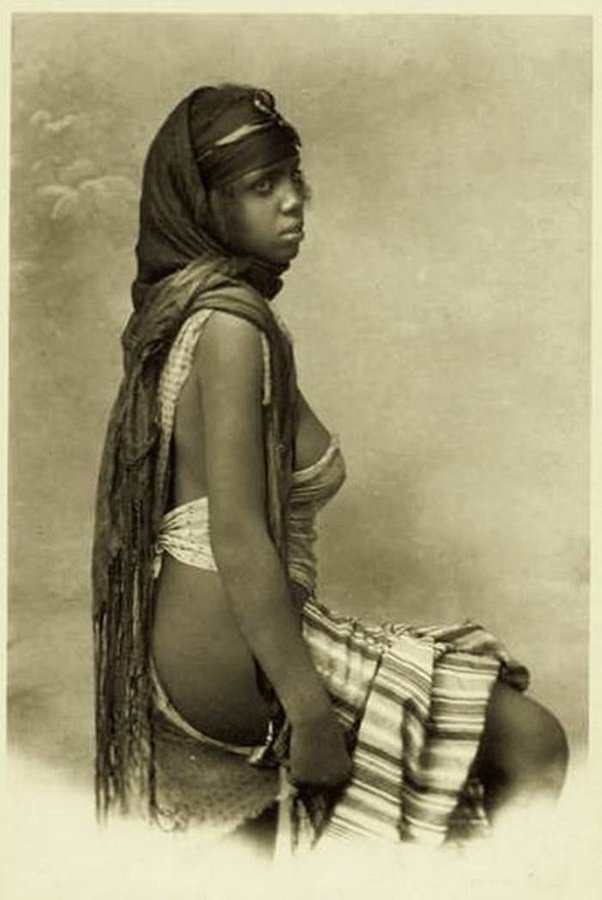
A vintage post-card collector on Flickr who goes by the username Post Man has kindly allowed us to share his wonderful collection of vintage postcards and erotica from the turn of the century. This album is full of exquisite photographs from around the world of a variety of people dressed in beautiful clothing in exotic settings. In an era well before the internet, these photographs would be one of the only ways you could could see how people in other countries looked and dressed.
Photo courtesy of <a href="https://www.flickr.com/photos/82293232@N03/">Flickr user Post Man</a> <a href="https://assets.goodstatic.com/s3/magazine/assets/556876/original/CArd_1.jpg=s900x900">assets.goodstatic.com</a>
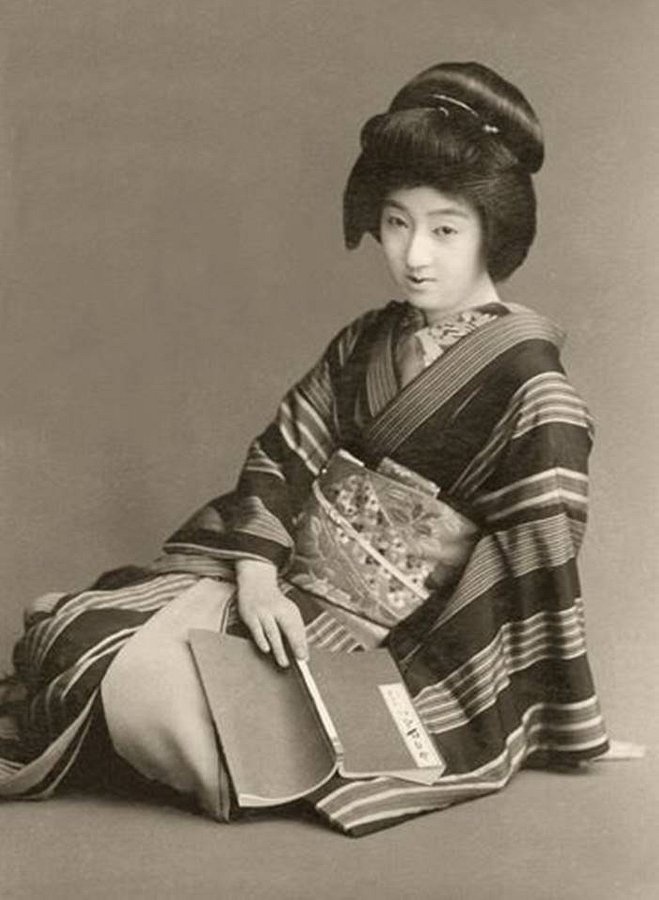
Japanese woman c. 1913
Photo courtesy of <a href="https://www.flickr.com/photos/82293232@N03/">Flickr user Post Man</a> <a href="https://assets.goodstatic.com/s3/magazine/assets/556877/original/Card_2.jpg=s900x900">assets.goodstatic.com</a>
Maude Ewing Adams Kiskadden an American stage actress c. 1895
Photo courtesy of <a href="https://www.flickr.com/photos/82293232@N03/">Flickr user Post Man</a> <a href="https://assets.goodstatic.com/s3/magazine/assets/556878/original/Card_3.jpg=s900x900">assets.goodstatic.com</a>
Cambodian girl c. 1906
Photo courtesy of <a href="https://www.flickr.com/photos/82293232@N03/">Flickr user Post Man</a> <a href="https://assets.goodstatic.com/s3/magazine/assets/556879/original/Card_4.jpg=s900x900">assets.goodstatic.com</a>
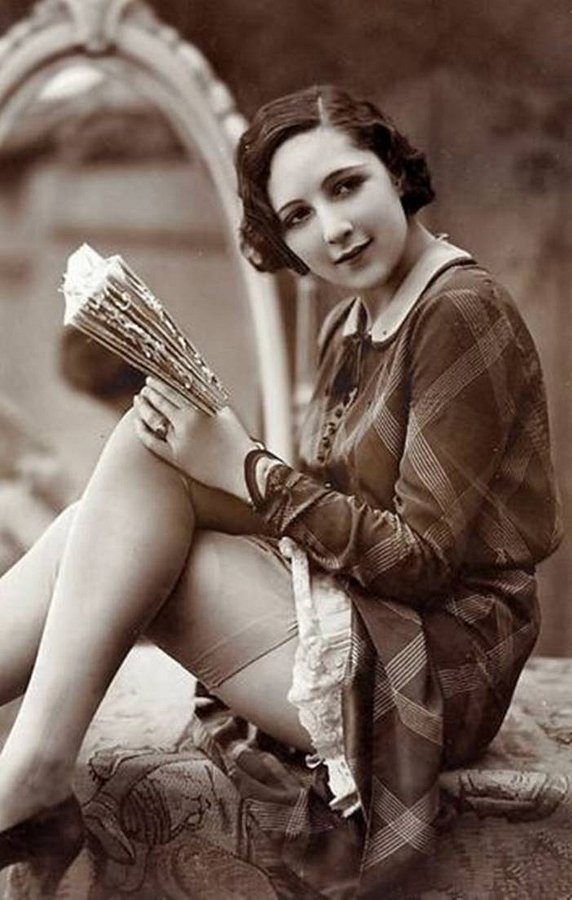
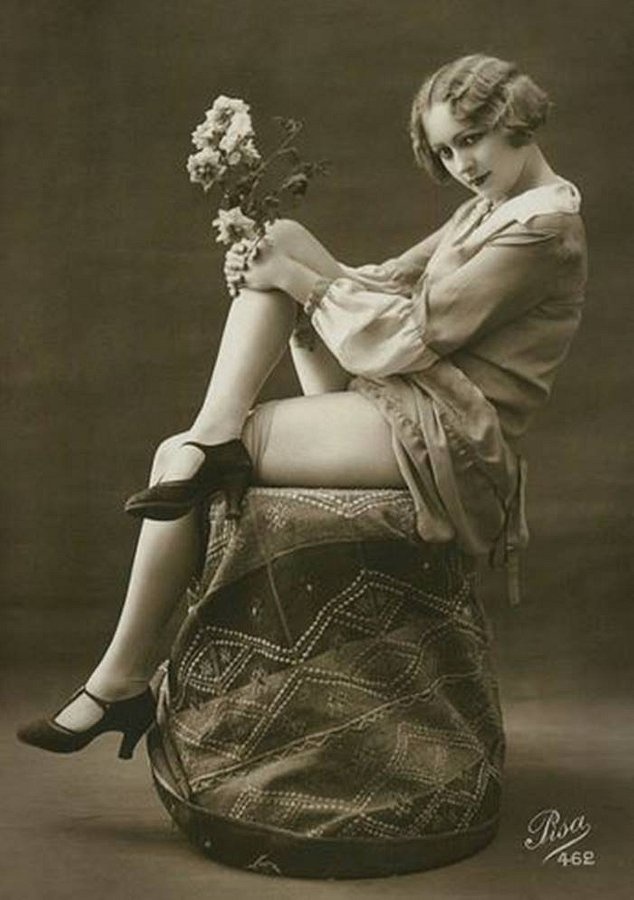
Vintage erotica c. 1913
Photo courtesy of <a href="https://www.flickr.com/photos/82293232@N03/">Flickr user Post Man</a> <a href="https://assets.goodstatic.com/s3/magazine/assets/556880/original/Card_5.jpg=s900x900">assets.goodstatic.com</a>
Beduinin woman c. 1919
Photo courtesy of <a href="https://www.flickr.com/photos/82293232@N03/">Flickr user Post Man</a> <a href="https://assets.goodstatic.com/s3/magazine/assets/556881/original/Card_6.jpg=s900x900">assets.goodstatic.com</a>
Japanese woman c. 1920
Photo courtesy of <a href="https://www.flickr.com/photos/82293232@N03/">Flickr user Post Man</a> <a href="https://assets.goodstatic.com/s3/magazine/assets/556882/original/Card_7.jpg=s900x900">assets.goodstatic.com</a>
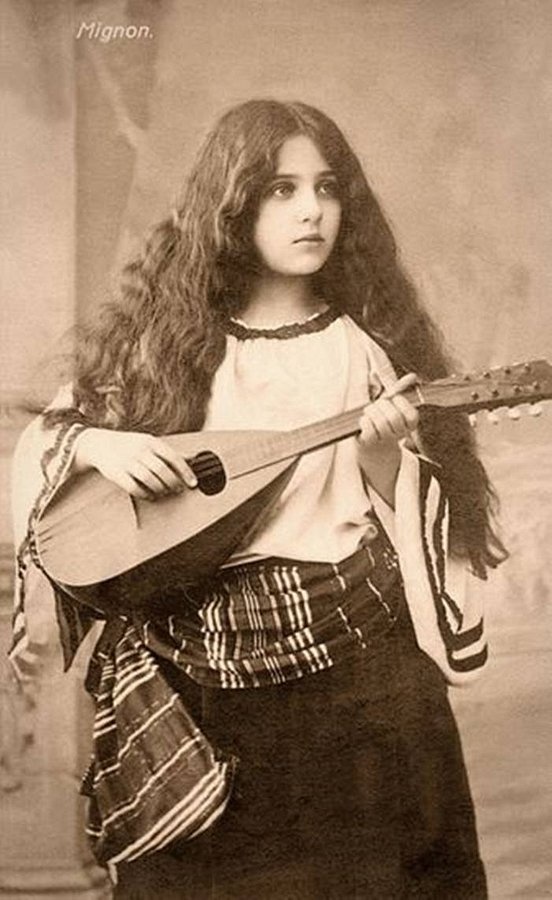
Gypsy girl with Mandolin c. 1911
Photo courtesy of <a href="https://www.flickr.com/photos/82293232@N03/">Flickr user Post Man</a> <a href="https://assets.goodstatic.com/s3/magazine/assets/556883/original/Card_8.jpg=s900x900">assets.goodstatic.com</a>
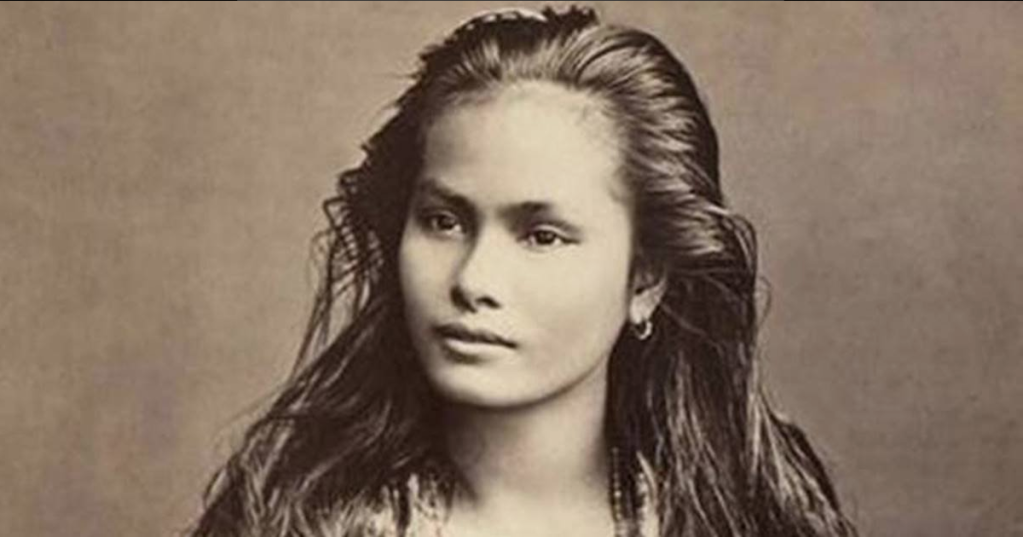
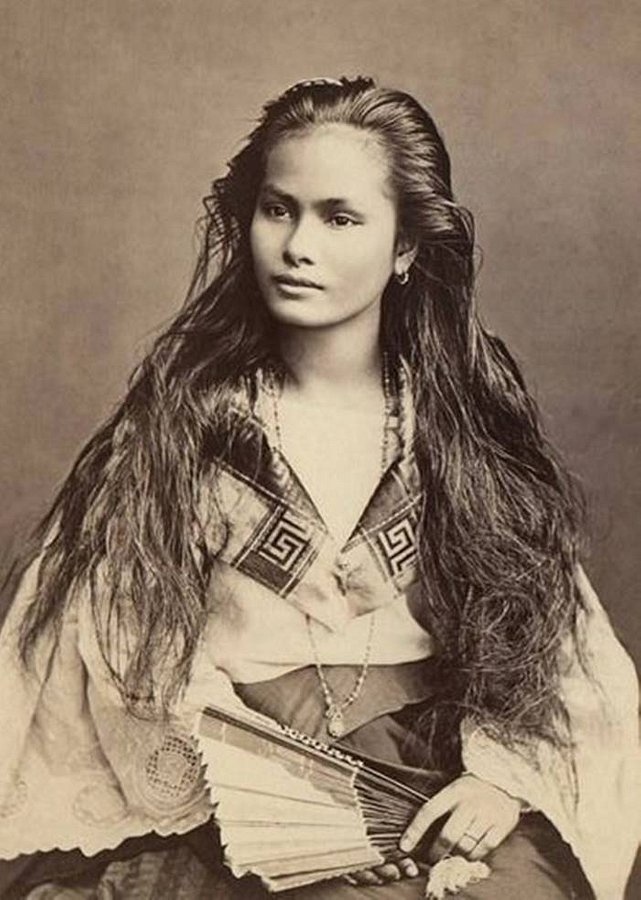
Luzon Woman c. 1909
Photo courtesy of <a href="https://www.flickr.com/photos/82293232@N03/">Flickr user Post Man</a> <a href="https://assets.goodstatic.com/s3/magazine/assets/556884/original/Card_9.jpg=s900x900">assets.goodstatic.com</a>
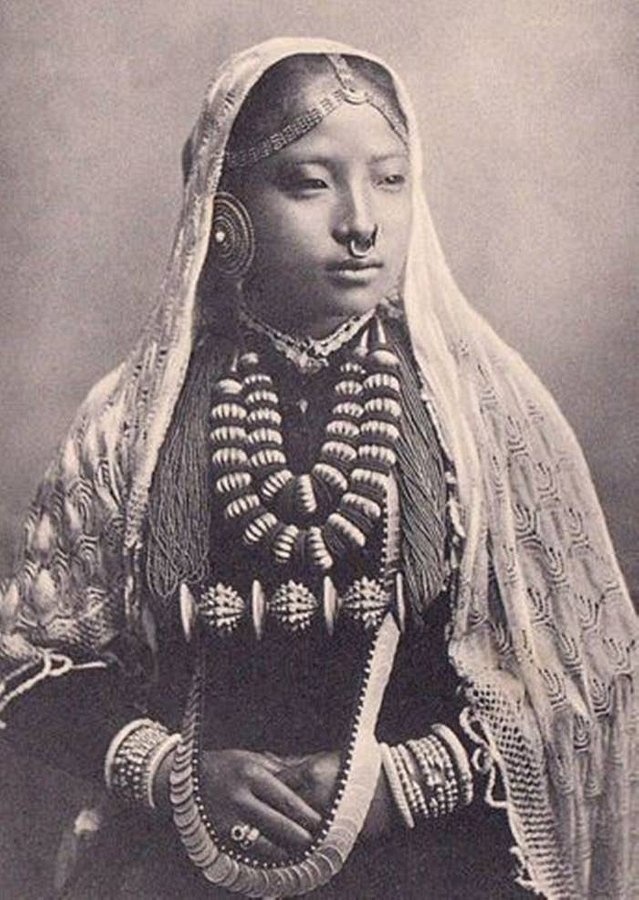
Nepalese lady c. 1905
Photo courtesy of <a href="https://www.flickr.com/photos/82293232@N03/">Flickr user Post Man</a> <a href="https://assets.goodstatic.com/s3/magazine/assets/556886/original/Card_10.jpg=s900x900">assets.goodstatic.com</a>
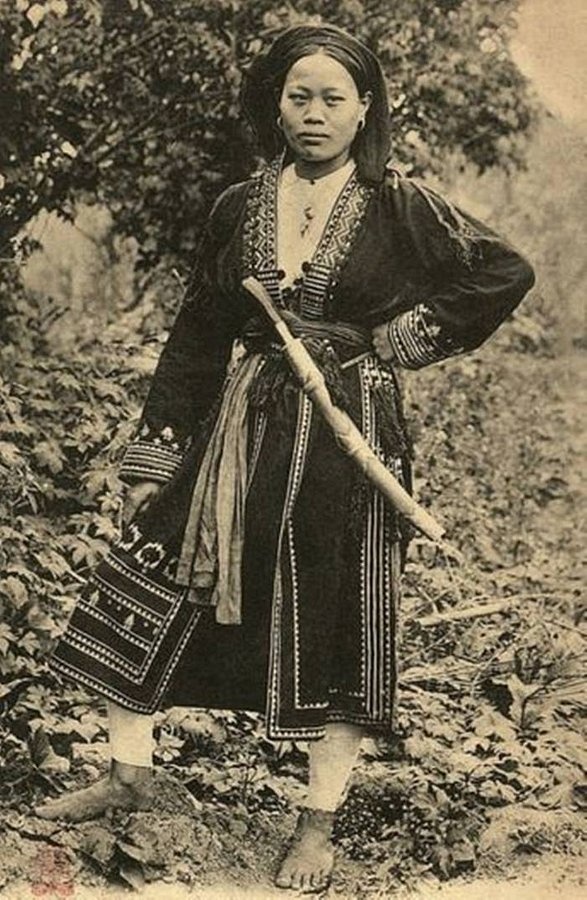
Vietnamese woman c. 1908
Photo courtesy of <a href="https://www.flickr.com/photos/82293232@N03/">Flickr user Post Man</a> <a href="https://assets.goodstatic.com/s3/magazine/assets/556887/original/CArd_11.jpg=s900x900">assets.goodstatic.com</a>
Vintage erotica c.1919
Photo courtesy of <a href="https://www.flickr.com/photos/82293232@N03/">Flickr user Post Man</a> <a href="https://assets.goodstatic.com/s3/magazine/assets/556888/original/Card_12.jpg=s900x900">assets.goodstatic.com</a>
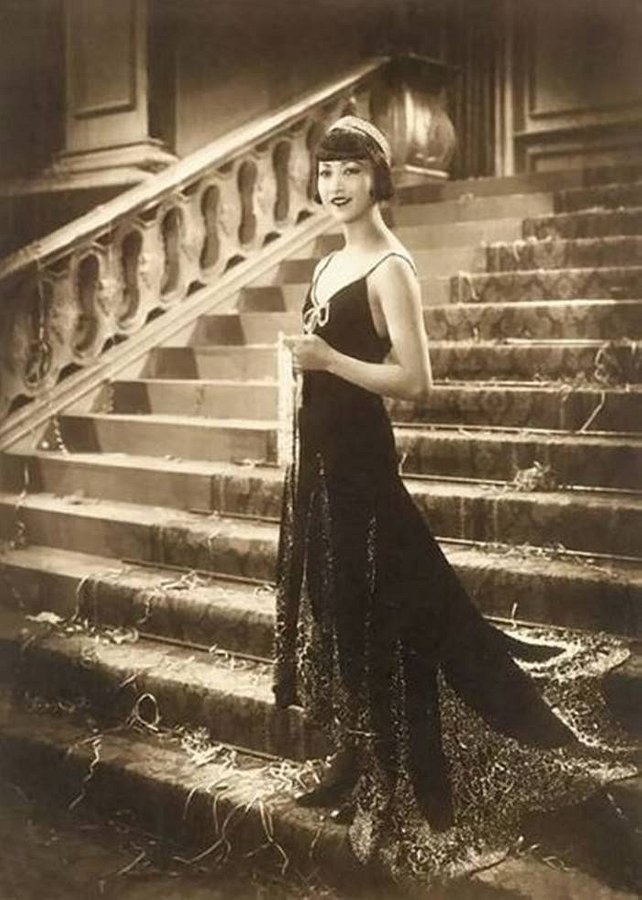
Actress Anna May Wong c. 1927
Photo courtesy of <a href="https://www.flickr.com/photos/82293232@N03/">Flickr user Post Man</a> <a href="https://assets.goodstatic.com/s3/magazine/assets/556889/original/Card_13.jpg=s900x900">assets.goodstatic.com</a>
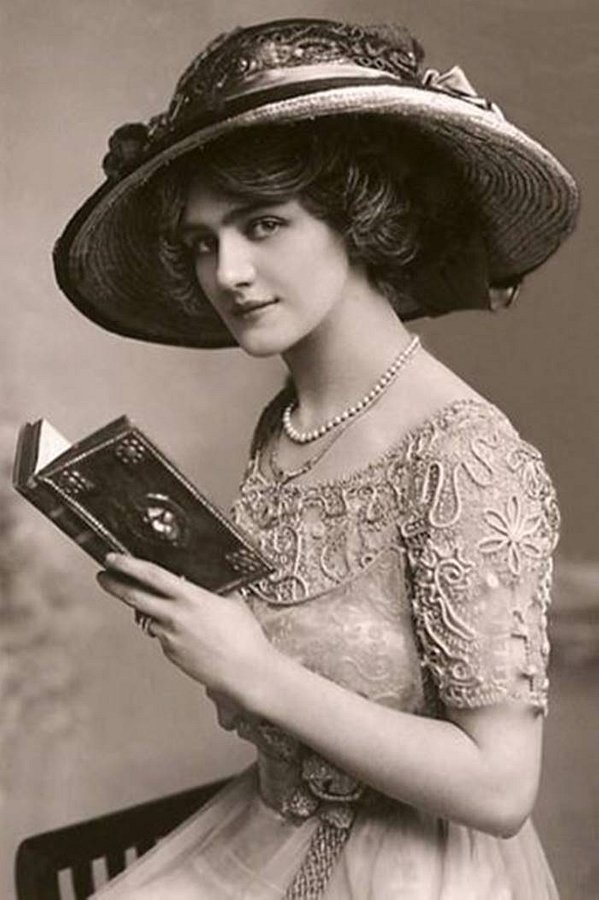
English actress Lily Elsie c. 1909
Photo courtesy of <a href="https://www.flickr.com/photos/82293232@N03/">Flickr user Post Man</a> <a href="https://assets.goodstatic.com/s3/magazine/assets/556890/original/Card_14.jpg=s900x900">assets.goodstatic.com</a>
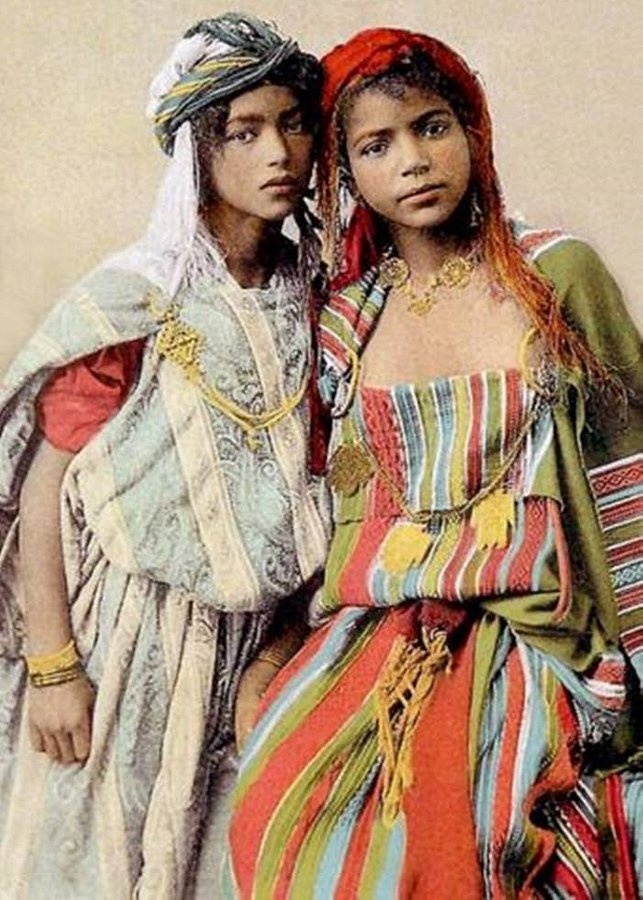
Two women from Bou-Saâda c. 1911
Photo courtesy of <a href="https://www.flickr.com/photos/82293232@N03/">Flickr user Post Man</a> <a href="https://assets.goodstatic.com/s3/magazine/assets/556891/original/Card_15.jpg=s900x900">assets.goodstatic.com</a>
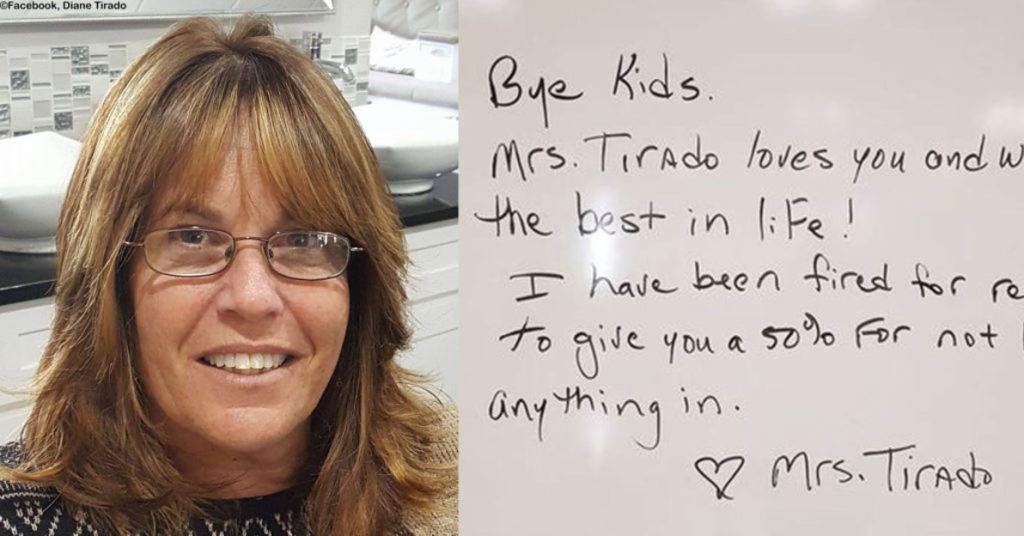
A Florida teacher has been fired for giving her students zeros for missing assignments.
Diane Tirado has been a teacher for years. Most recently, she was an eighth-grade history teacher at Westgate K-8 School in Port St. Lucie, Florida.
Diane recently gave her students two weeks to complete an Explorer notebook project, but several students simply didn’t hand it in. Since there was zero work done, Diane gave them zeros.
She got fired for it.
The elementary school has a rule called the “no zero policy.”
The lowest possible grade that teachers can give students is a 50, even if they don’t turn anything in.
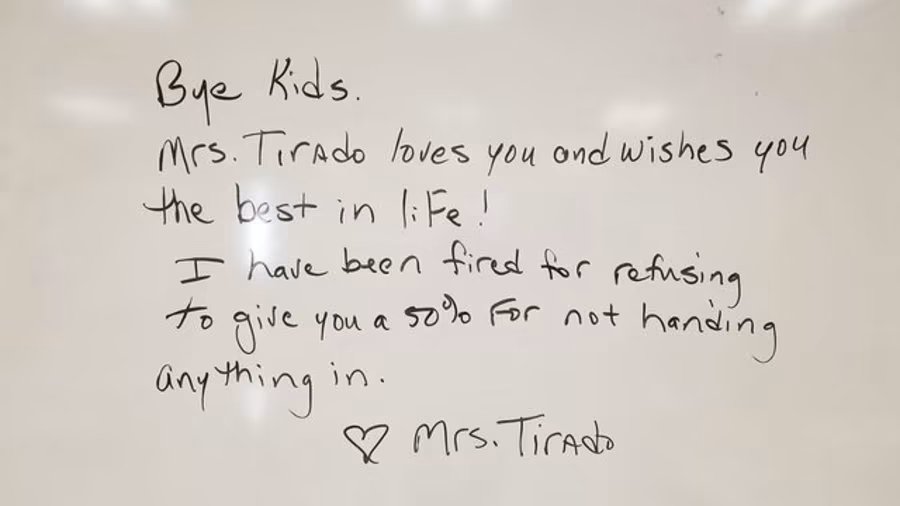
A letter from fired teacher Diane Tirado Diane Tirado/Facebook
It’s a rule that Diane, unsurprisingly, does not agree with. After she was fired for disobeying, she left her students a charming goodbye message on the whiteboard.
“Bye kids. Mrs. Tirado loves you and wishes you the best in life. I have been fired for refusing to give you a 50 percent for not handing anything in. Love, Mrs. Tiado”
The scale, as outlined by the school, reads as follows:
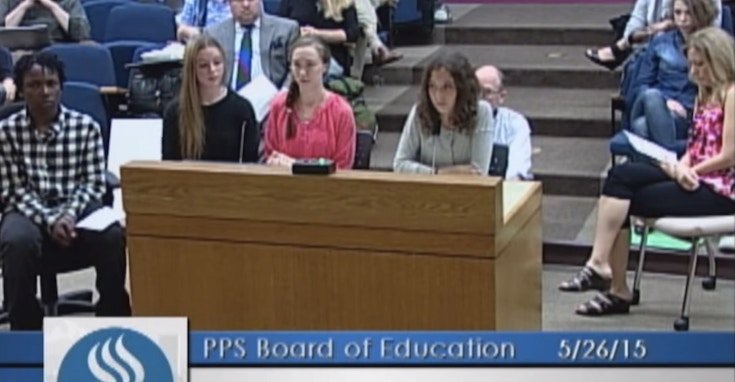
Four middle-schoolers sat at the podium. Poised. Confident. Ready to challenge the Portland Public Schools board on its dress code.
Four students from Portland, Oregon, testified in front of the board in May 2015 Image via PPS Communications/YouTube.
AnaLuiza, a seventh-grader, told a story of a friend who was pulled aside one day for wearing a skirt deemed to be too short.
The friend sat in the principal’s office for hours while the staff tried to get ahold of her parents. She missed important classwork, and worse yet, felt humiliated by the ordeal.
“The only reason I go to school is to get my education,” AnaLuiza told the board. “When I get dressed in the morning, my intention is not to provoke or be sexualized. My intention is to feel comfortable in my own skin.”
Sophia, also in seventh grade at the time, spoke last.
“My problem with the dress code is that 100% of the students that get sent home are female. … In a way, you’re telling [a girl] that boys are more entitled to their education than she is. And I don’t think that’s acceptable.”
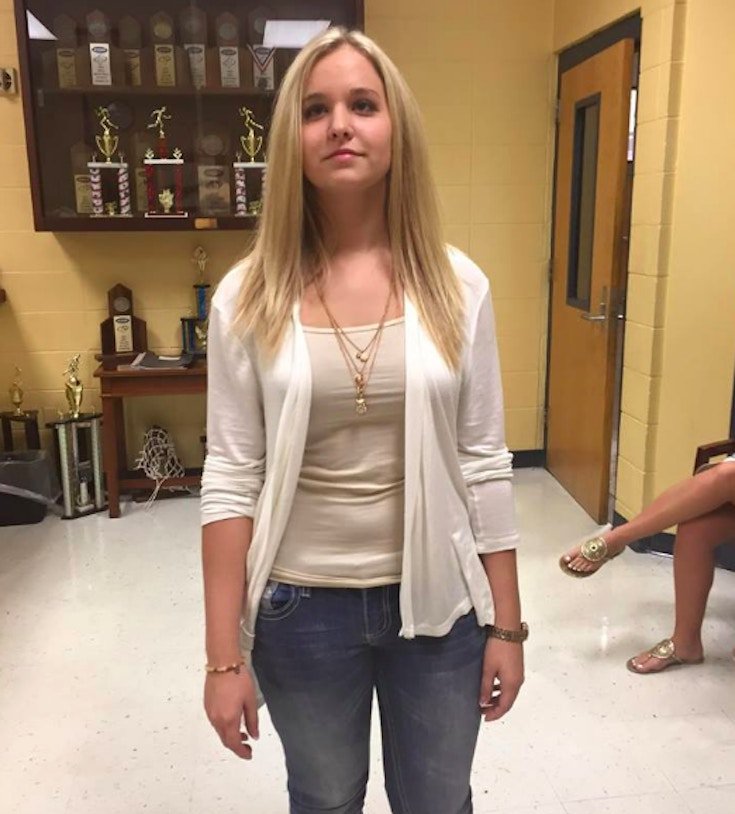
They were absolutely right. Because if you’re a preteen or teenage girl in America, you can get a dress code violation for almost anything: showing your midriff, shoulder, collarbone, leg, bra strap, or, in some cases, for just wearing something as harmless as spaghetti straps.
Stephanie Hughes of Kentucky was cited for a dress code violation for this outfit, which sometimes shows her collarbone. Photo by Stacie Dunn/Facebook
Girls who violate their schools’ dress codes are accused of being distractions and are often humiliated in front of their classmates.
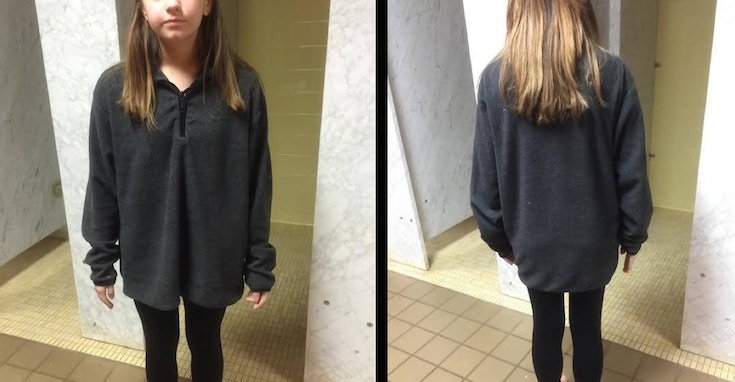
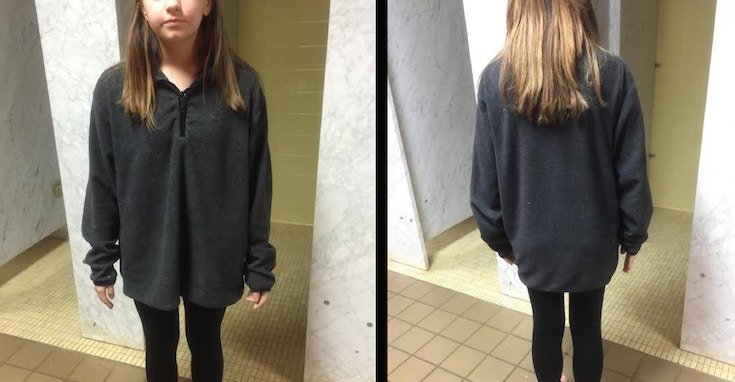
They’re then either sent home to change (missing valuable class time) or forced to cover up with “shame clothes,” like old sweatpants that have been lying around the guidance counselor’s office for who knows how long.
This has been a problem for years, and a particularly frustrating one to solve. Almost everyone agrees schools need some kind of dress code, but almost no one can agree on what that should look like.
Deanna Wolf of Alabama says her 15-year-old daughter missed an entire class period simply for wearing leggings and a loose-fitting shirt. Deanna Wolf/Facebook
But now, thanks to these brave Portland students and a couple of key community members, we might finally be making some progress.
The school board, to the surprise of many, agreed the dress code needed fixing. But that didn’t mean it would be easy.
A committee was formed, including Sophia (one of the girls who testified in front of the board), parents, teachers, and other community leaders. Lisa Frack, president of the Oregon chapter of the National Organization of Women, and a parent, was one of them.
Frack said some issues were easy to fix, like the ban on spaghetti straps. That was quick to go. Others? Not so much.
There was plenty of back-and-forth. Are short shorts OK? How about cleavage? What about all of the subtle (and not-so-subtle) policies that unfairly target students of color?
Marian Wilson-Reed of Texas says her 9-year-old daughter was pulled out of class because school administrators thought her natural hairstyle looked like a mohawk, which was against the rules. Marian Wilson-Reed/Facebook
Then there was the issue of enforcement. Although hopefully, with the new dress code, there would be fewer violations, the committee wanted to find ways to eliminate shaming and missed class time for students who broke the rules.
Despite debate on some of these specific issues, Frack said, the conversation always came back to the same basic point.
Some board members “felt like they wanted a little line in there reminding everyone that this is a learning institution. But that’s exactly what we’re trying to get away from,” Frack said.
“We don’t want to link clothing and learning. … You can’t learn math better or worse whether you have a tie on or a collared shirt or a tank top.”
“We’re going to basically have people covering what you have to do to not be naked.”
The final approved dress code, one of only a few like it in the U.S., was a major improvement. But perhaps just as important was the conversation sparked by the process.
Gone was phrasing that specifically targeted bare midriffs, “plunging necklines,” or “sexually suggestive clothing.” The new, gender-neutral code essentially asks that students wear a top and a bottom (or a dress), and that their clothes not show profanity or reference drugs.
It’s pretty simple. But the conversations that led to this point were anything but.
“It raised the issue of people’s discomfort with how girls are objectified in this country. Is it a solution to tell them to cover up?” Frack said. She even recalled some of the adult members of the advisory committee having trouble talking about things like breasts and sexuality with a straight face — which, she said, is part of the problem.
For now, though, Frack just hopes this code can serve as a model to other districts looking to get with the times. Portland just rolled out the new policy in the fall of 2016, so it remains to be seen how it’ll fare — especially when the weather gets hot again.
But so far, Frack said, all she’s heard from parents is how happy their kids are to be free to be themselves without judgment.
Some 300 million people live in the United States. And over 40 million of them are immigrants.
Now, some people might have you believe that too many immigrants might cause us to lose our identity as Americans or that we ought to be fighting and clinging to “the way things were.”
But if you look around, you’ll see that more than 1 in 10 Americans were born somewhere else — meaning they have their own unique set of amazing experiences to share and their own amazing stories about why they’re here.
They each have their own ideas about what being an American means to them, too. And they each have their own reasons for celebrating American independence on the Fourth of July.
So if you want to feel proud, excited, and maybe even a teensy bit emotional about being an American, this one’s for you.
Meet five immigrants from all over the country (and all over the world!) who are showing their American pride in many, many shades of red, white, and blue this year.
Traditional food the celebrate the Fourth of July. Photo by <a href="https://unsplash.com/@briewilly?utm_source=RebelMouse&utm_medium=referral">Chad Montano</a> on <a href="https://unsplash.com/?utm_source=RebelMouse&utm_medium=referral">Unsplash</a>
1. Nayeli Ruvalcaba’s Fourth of July is full of traditional Mexican food and mariachi music.
Ruvalcaba, who was born in Mexico but moved to Chicago when she was 4, spent her early childhood in a mostly caucasian neighborhood called Lakeview. There, she says the Fourth of July was pretty much what you’d expect.
“Everyone would be making ribs and burgers and mac and cheese. And my dad would be drinking Budweisers and Coors Light,” she said with a laugh.
Nayeli with her parents.
But when she was 16, she moved to a more diverse area of the city filled with families from Mexico, Puerto Rico, and Poland.
There, she says, their holidays are much more vibrant. Neighbors gather in the alleys and share their customs and cultures with one another. They sing along with music (her boyfriend, who is in a mariachi band, often gets the party going). They play games. And then there’s the food: Nayeli says she loves to chow down on delicious Fourth of July dishes like arrachera (a Mexican skirt steak), polish sausage, guacamole, and, of course, burgers.
“I know it’s an American holiday,” she says. “Buteveryone has their own culture. You just mix it in with what everyoneelse does.”
Nayeli and her boyfriend in full mariachi get-up!
Celebrating with a U.K. twist on the Fourth of July. Photo by <a href="https://unsplash.com/@cajugos?utm_source=RebelMouse&utm_medium=referral">Caju Gomes</a> on <a href="https://unsplash.com/?utm_source=RebelMouse&utm_medium=referral">Unsplash</a>
2. Johanna Dodd and her family celebrate their Fourth of July the “old fashioned way” but with a small U.K.-based twist.
A one-year work contract for her husband brought the Dodds to Connecticut from the U.K. years ago. 12 years later, they’re still here.
The Dodds!
On their Fourth of July, she says, “We tend to do what everyone else in town does. We’ll head to the fireworks display with our cooler packed full of food, and, occasionally, we’ll sneak in some alcohol.”
Sounds pretty American to me!
Johanna’s young daughter watches the fireworks.
“The kids run around, there’s lots of glow sticks, lots of football (both kinds) being played, lots of fun stuff happening. As it gets darker, there’s the national anthem, and then out come the fireworks.”
But there is one slightly British twist to the Dodds’ holiday: “We don’t really do the tailgating thing. We bring what we would call ‘an English tea.’ There’s watermelon, yogurts, cheese sandwiches. Kind of a mishmash of both cultures.”
Bringing home country traditions to the American experience. Photo by <a href="https://unsplash.com/@clintbustrillos?utm_source=RebelMouse&utm_medium=referral">Clint Bustrillos</a> on <a href="https://unsplash.com/?utm_source=RebelMouse&utm_medium=referral">Unsplash</a>
3. Martin Matthews says he never misses a Fourth of July parade and for a powerful reason.
Matthews was 8 years old when he first came to America to escape a civil war in his home country of Liberia. One of his first memories? A huge Fourth of July parade in New Jersey.
“I had never seen anything like that. The flags, the drums, everything. I remember watching in awe.”
Martin with his wife.
He returned to Africa later on but came back to live in America again when fighting broke out in his home country. And when he returned, that big parade stuck in his memory.
“I always loved that about America. It was a place I could be safe. A place I could enjoy freedom,” he said. “To celebrate the independence of the United States holds a deep place in my heart.”
These days, Martin is big on having barbecues with friends to celebrate Independence Day. There are a lot of burgers and hot dogs, but he’ll sometimes mix in traditional African dishes, too, like African-style kabobs, to introduce his friends to his heritage.
“It’s a big thing in Africa for people to put fish on the grill, like the whole fish,” he added. “You put the whole thing on there. It was the first time some of my American friends had ever tried fish on the grill that wasn’t salmon.”
But his favorite thing about the holiday is still the parades. “We get there early and wave our American flags. Every year I always wear some kind of American shirt. We sit there and watch everything. It’s my way of saying thanks to my adopted country.”
Changing the rules to make it work. Photo by <a href="https://unsplash.com/@alken?utm_source=RebelMouse&utm_medium=referral">Alfred Kenneally</a> on <a href="https://unsplash.com/?utm_source=RebelMouse&utm_medium=referral">Unsplash</a>
4. Jay Pockyarath mixes cricket with an American-style barbecue on Independence Day.
“Ever since I was in eighth grade, all I wanted to do was come to the United States,” he told Upworthy. After finishing college in India, he finally got the chance when studying nuclear medicine at the University of Michigan. From there, he married an American woman and started a family.
“The thing that works [in America] is that it’s a meritocracy,” Pockyarath said. “July Fourth is a celebration of that, in my mind. Of independence. Of the freedom to succeed.”
Jay, who was born in India, proudly flies an American flag outside his home for July Fourth.
Pockyarath has lived in the United States for over 40 years, so it’s no surprise that his holiday celebration looks pretty familiar: steak, hamburgers, and hot dogs on the grill. To him, what’s really important is spending time with family.
“Usually we make up games,” he laughed. “We play cricket — not the way it’s supposed to be played, but with a tennis ball. We make up our own rules.”
Embracing the traditions and bringing your own flare to it. Photo by <a href="https://unsplash.com/@genefoto?utm_source=RebelMouse&utm_medium=referral">Gene Gallin</a> on <a href="https://unsplash.com/?utm_source=RebelMouse&utm_medium=referral">Unsplash</a>
5. Natalia Paruz is originally from Israel, and she decorates everything in red, white, and blue.
Natalia is now a musician in New York City.
“First I came here with my parents [about 20 years ago] for a year. At the end of the year, they went back to Israel, and I wanted to stay here,” she told Upworthy.
Now she works as a musician in New York City. And she absolutely, positively loves the Fourth of July.
“It’s a really fun day. It’s a day where you can put politics aside. It’s a day for celebrating the joy of this country.”
Natalia and her husband host friends every year for a big meal. “I love decorating the house for the holiday with the flags. There’s always a big flag hanging from the flagpole. In the back, that’s where I really go all out. Every tree gets some kind of decoration!”
“We make hot dogs, hamburgers — how can you not?” she said. “We also make tahini, which is a traditional Israeli food. It’s made of sesame seeds and it becomes a paste and you spread it on pita bread. Our friends here love it.”
Natalia says an overabundance of food “as if you’re going to entertain a bunch of soldiers” is a nod to her Israeli roots.
This year, she’s going out with friends to watch fireworks. “I wear a T-shirt that has an American flag on it and a bracelet with the colors of the flag. If you’re celebrating, you might as well go to the maximum.”
It turns out, celebrating America means different things to different people. And that’s kind of the point.
In my mind, the only thing better than a Fourth of July party filled with burgers, steaks, beer, and fireworks is a Fourth of July party filled with all of those things plus Mexican food and African music and “English tea” and tahini and mariachi bands and more.
So whether we choose to embrace the “American way” of celebrating Independence Day (red meat and fireworks) or to use it as a chance to celebrate the unique melting pot of culture that is our country today or something in between, I think we can all agree that the America we have now is already pretty great.
Anyone who’s ever been on Tinder knows having a cute animal in the photo is usually a big hit. But what if Tinder profile photos only featured that cute animal? And what if, instead of a millennial would-be hooker-upper, it was the adorable dog or cat itself looking for true love? That’s an idea some…
Anyone who’s ever been on Tinder knows having a cute animal in the photo is usually a big hit.
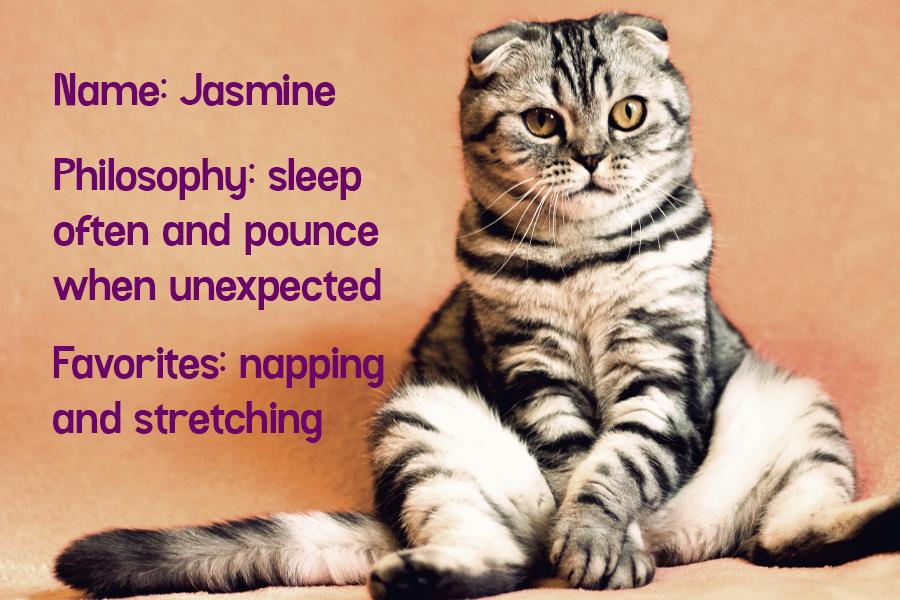
But what if Tinder profile photos only featured that cute animal? And what if, instead of a millennial would-be hooker-upper, it was the adorable dog or cat itself looking for true love?
That’s an idea some animal shelters are toying with.
“We are always trying to come up with … creative new ways to get our shelter dogs out in front of potential adopters,” says Karen Hirsch, public relations director at LifeLine Animal Project in Georgia.
Animal Profile created by Mark Wales Photo from Pixabay
And experimenting with online dating for dogs and cats might just be working.
The harsh world of pet adoption is extremely competitive: About 6.5 million dogs and cats enter U.S. shelters every year, each seeking a good forever home. It’s too big a need for shelter operators to just sit back and hope they all get adopted.
That’s why you see adorable dogs on display outside the grocery store, partnerships with Uber that will bring puppies directly to you for playtime, and aww-inspiring social media campaigns like dogs in pajamas.
An estimated 50 million people worldwide use Tinder. So LifeLine and other shelters and rescues figure why not give it a shot?
After all, people using online dating apps are already looking for love and companionship — just maybe a slightly different kind.
Hirsch says they recently created profiles for 22 of their dogs and cats.
Animal profiles are also showing up on Bumble, which is home to another 20 million users or so.
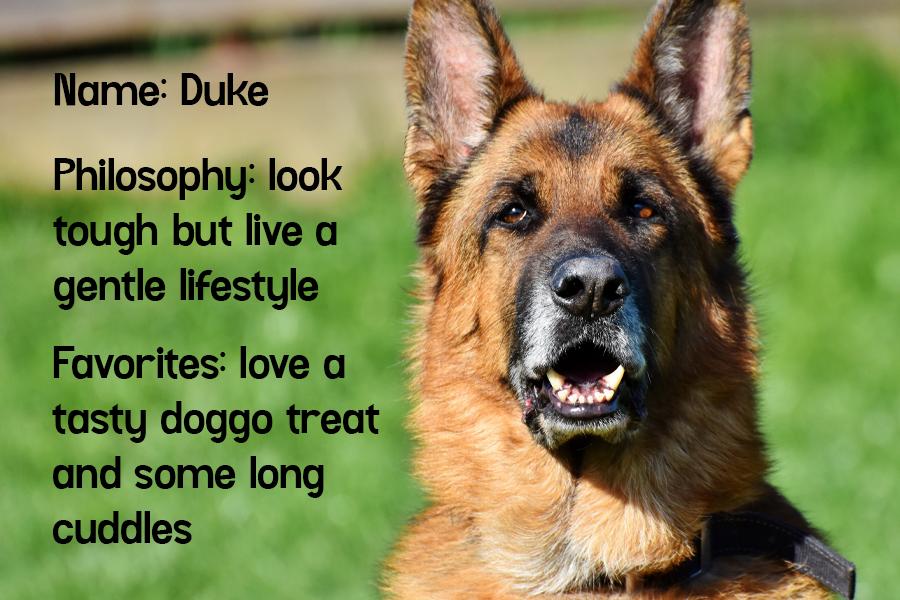
Like sweet Duke here.
Animal Profile created by Mark Wales Original photo from Pixabay
Each pet is assigned to a volunteer who creates the profile and handles the conversations after a match
“In a crowded shelter, pets often get overlooked, but on a dating app, the animal becomes an individual,” Hirsch says. “People learn about them and form a ‘virtual’ attachment.”
Plus the witty banter is oodles of fun.
For LifeLine, the experiment is still new. But Hirsch says people are responding to it incredibly well so far.
At the very least, Tinder and Bumble have proven to be great for word-of-mouth awareness-building on the importance of adopting shelter pets. The animals are getting dozens of matches. Hirsch says there have been more than a few online adoption inquiries, as well as people coming into the shelter to meet their “match” in person.
She also notes that one of the matches even became a regular volunteer at LifeLine.
This new animal dating idea has another upside for apps — and the people using them, too.