Central Park birder Christian Cooper rewrites his own narrative in National Geographic show

Christian Cooper is back in the public eye on his own terms.

bird watching, christian cooper, extraordinary birder, birds
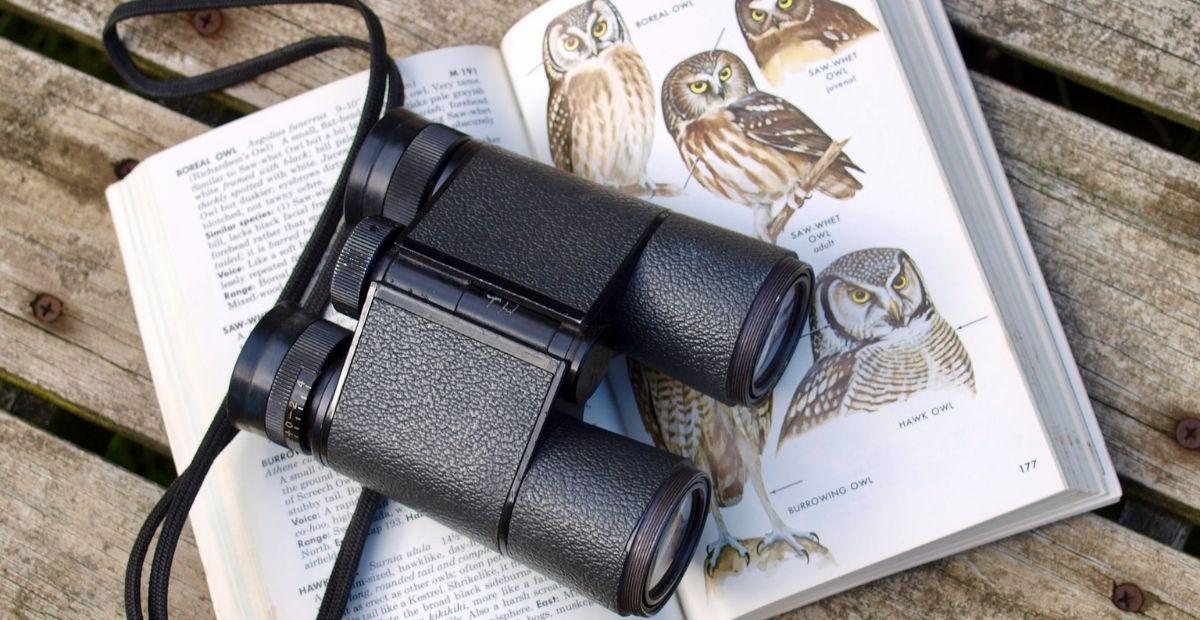
Photo credit: Photo by Diane Helentjaris on UnsplashBird-watching is in focus on a new National Geographic show.

You may remember the name Christian Cooper, but if you don’t, this will jog your memory. In summer 2020, Cooper made the national news when a white woman, Amy Cooper (no relation), called the police, falsely accusing him of threatening her. Christian Cooper was out in the early morning at Central Park doing what he does often: bird-watching. It’s a longtime hobby that, thanks to that unfortunate exposure, he’s now taking to the next level and sharing with the world. Cooper recently finished filming six episodes of “Extraordinary Birder” for National Geographic.

“Whether braving stormy seas in Alaska for puffins, trekking into rainforests in Puerto Rico for parrots, or scaling a bridge in Manhattan for a peregrine falcon, he does whatever it takes to learn about these extraordinary feathered creatures and show us the remarkable world in the sky above,” National Geographic wrote in a press release announcing its new slate of personality-driven exploration and adventure themed storytelling.


Cooper is an avid bird watcher and has observed birds all over the world, but he’s most at home watching the more than 200 species of birds in New York City’s Central Park. Thankfully he hasn’t let his encounter with Amy Cooper and her dog taint his feelings about his favorite spot. The show will allow him to create a new association with his name and bird watching, and presumably he’ll be spending some time in the park, showing viewers just how magical the wildlife there is.

He explained to the New York Times that he first heard from National Geographic about collaborating on the show about a year and a half ago. “I was all in,” he said. “I love spreading the gospel of birding.”

Additionally, he shared excitement about getting more people “to stop and watch and listen and really start appreciating the absolutely spectacular creatures that we have among us.”

Cooper’s reverence for birds was formed in childhood. He explained to the Times that he has been in love with birds since the age of 10. Growing up on Long Island, he was fascinated with red-winged blackbirds. No matter where in the world he is, he’ll take the time to listen for birdsong.

“It adds another dimension to just being on the street,” he explained. “It adds another dimension to how you exist in the world.”

Filming the show allowed Cooper to expand his birding experiences, following his passion to see new (to him) species. He got to see some burrowing owls, which he found “actually quite adorable.”
Look out for a further announcement on the release date of the series. “Extraordinary Birder” will run on National Geographic channels and Disney+. It’s heartening to see that something wonderful came out of such a traumatic experience.

  • Colorado elementary school puts on 75-minute Phish musical, and it was delightfully epic
    Photo credit: @erathpercussion/Instagram, used with permissionWho knew Phish's Gamehendge worked so well for a kid's musical?

    Sure, you could venture to Vegas to experience Phish’s legendary Gamehendge saga in 360 at the Sphere…but it would all pale in comparison to the palpable, electric joy that permeated throughout the audience after an elementary school cast decided to bring it to life. 

    A small town teacher with a big idea

    Every year, music teacher Kirk Kubicek, the leader behind this massive project, tries to give his students in the smaller schools throughout the mountains of Colorado something special for their year-end musical production, despite them not having access to the same resources that other schools in the flatlands might have. 

    “They have heart, they have courage, and they deserve every bit as much ambition and opportunity as anyone else. Every year I try to give them something bigger, something that asks more of them and leaves them with something they carry forever,” he wrote in an Instagram post

    This year, that meant telling the tale of Colonel Forbin, Icculus, and the Mockingbird, who help the “Lizard” community regain their sacred “Helping Friendly Book” stolen by the greedy King Wilson. With DIY costumes, cardboard sets, a four-person instrumental backing band, and a passionate teacher orchestrating it all, start to finish. 

    The result was something spectacular and heartwarming, whether you’re a card-carrying Phishhead/Phan or have never heard any of their songs. 

    “I wanted to recreate what it feels like to be at a Phish show,” Kubicek told Rolling Stone. As you can see in the video above, that mission was certainly accomplished. 

    Not only did Kubicek and his merry band of kindergarten through 5th graders recreate peak Phish vibes, but they stayed true to the themes presented throughout the album (and arguably through all of Phish’s work), including community, sharing wisdom, and, most importantly, “surrendering to the flow.” 

    “This elementary adaptation celebrates those same values: that knowledge shared becomes more powerful, that true importance comes from connection rather than control, and that sometimes the bravest thing we can do is remember to have fun and embrace the vibration of life,” the program reads

    Why Gamehendge means so much to fans

    For longtime Phish fans, Gamehendge occupies an almost mythical place in the band’s history. The rock opera originated as guitarist Trey Anastasio’s senior thesis project at Goddard College in the late 1980s and became the foundation for some of Phish’s most beloved songs.

    Instead of releasing it as a traditional album with widespread radio promotion, Phish allowed the story to evolve through live performances over the years. That helped turn Gamehendge into something fans passed down almost like folklore, with audiences eagerly waiting for rare full performances.

    The story itself blends fantasy, humor, and surprisingly heartfelt messages about kindness and knowledge. Which, in hindsight, makes it a pretty perfect fit for an elementary school production.

    A wholesome, inspiring memory for all 

    Part of what makes the video so charming is how fully committed the students are to the material. Nobody appears self-conscious. They sing, dance, act, and throw themselves into the wildly imaginative world with complete sincerity, thanks in no small part to the teacher who gave them the encouragement to do so. 

    That enthusiasm clearly rubbed off on the crowd as well, many of whom can be heard cheering throughout the performance like proud parents witnessing the world’s sweetest jam band concert. 

    And then for us online viewers, we got to witness how live music, when performed with passion, still brings people together in the best possible way. Basically, for everyone involved, the production became something much more magical than a simple school activity. 

    Graciously, the full production of Gamehendge was posted on YouTube and is available for viewing below. Enjoy. 

  • A seemingly innocent painting of a farmer and family member caused outrage in 1930
    Photo credit: Grant Wood/Wikimedia CommonsAmerican Gothic by Grant Wood.
    ,

    A seemingly innocent painting of a farmer and family member caused outrage in 1930

    When looking at “American Gothic,” context is everything.

    One of the most iconic American images is American Gothic, a 1930 painting by Grant Wood of a farmer holding a pitchfork, standing next to his annoyed daughter (or wife). It’s been parodied everywhere from Homer and Marge standing in the pose on The Simpsons, to advertisements for Nicole Ritchie and Paris Hilton’s The Simple Life (2003 to 2007), to Magenta and Riff Raff recreating the painting in The Rocky Horror Picture Show (1975).

    To modern eyes, the painting appears to be a traditional depiction of a couple living on the farm. It’s as wholesome as America gets. However, when it was first hung in the Art Institute of Chicago, it was a cultural Rorschach test that offended rural Americans and delighted city slickers. “We should fear Grant Wood. Every artist and every school of artists should be afraid of him, for his devastating satire,” writer Gertrude Stein said of the painting.

    Why was American Gothic so controversial?

    With American Gothic, context is everything. The painting was released on the precipice of the Great Depression at a time when the Dust Bowl was killing American agriculture. It was also after a great migration when Americans left farms in droves for city life. Rural Americans were mocked for their simpler, conservative ways, with cultural voices such as H.L. Mencken referring to rural Americans as “booboisie.” 

    The painting showed a dour, joyless couple wearing simple clothing and was painted in a style that could be called medieval—no doubt, a comment on their traditional ways. After the painting caught the public’s attention, an Iowa farmer’s wife phoned Wood and didn’t hold back. “She claimed she wished to come over and smash his head for depicting her countrymen as grim Bible-thumpers,” Art History School host Paul Priestley said, according to Open Culture.

    american gothic, grant wood, american art, art gallery, paintings
    Museum patrons looking at American Gothic. Credit: Kevin Dooley/Wikimedia Commons

    The artist’s background also plays a big role in how the painting is interpreted. Wood grew up in Cedar Rapids, Iowa, but often traveled to Europe to study Impressionism. This meant that he had one foot in the world of Bohemian Europe and another as an Iowa farm boy. 

    Wood would never admit that his painting was anything but an expression of genuine affection for its subjects. Wood “said he painted American Gothic to extol rural American values, real people in their well-ordered world: an image of reassurance during the onset of the Great Depression,” Priestly continues

    american gothic, american gothic home, artwork, famous homes, iowa
    The home that inspired American Gothic. Credit: Ser Amantio di Nicolao/Wikimedia Commons

    How American Gothic’s meaning changed over time

    “American Gothic” was born at the beginning of the Great Depression, and its meaning would evolve over the difficult period. By the end of the decade, working people of the Midwest had begun to be seen as noble by city dwellers, who embraced folk music and workers’ rights. Further, mocking the “yokels” who were devastated by a natural disaster felt rather cruel. 

    The painting’s meaning evolved “because over the course of the thirties in the context of the depression and throughout World War II, it changed from being that satirical image to a national symbol of stability, order, prosperity, virtue and wholesomeness,” Steven Biel, historian and author of American Gothic: A Life of America’s Most Famous Painting, told Pop Entertainment

    Great pieces of art can mean different things to different people and evolve with the times. For many, in 2026, American Gothic is seen as simple American iconography and little more than a template for satire. But those who intend to tap into its cultural cache should first understand that it has undergone an incredible cultural arc: it redeemed those it intended to mock while softening the hearts of its jaded first audience. That’s something that the farmer’s wife (or daughter?) probably couldn’t even scoff at. 

  • Pianist stuns by using every part of his piano to perform ‘Africa’ by Toto
    Photo credit: via Peter Benace/YouTubePeter Bence plays the entire piano, and he does it barefoot.
    , ,

    Pianist stuns by using every part of his piano to perform ‘Africa’ by Toto

    “I don’t think I’ve ever seen anyone has so much fun playing the piano.”

    Peter Bence’s performance of “Africa” by Toto has over 19 million views on YouTube because of his creative reimagining of the song and, well, just about everyone loves “Africa.” Bence is a Hungarian composer and producer who has become a viral sensation for his Michael Jackson, Queen, Sia, and Beatles covers. He has over 1.1 million followers on YouTube and has toured the globe, playing in more than 40 countries across four continents.

    His performance of “Africa” is unique because it opens with him creating a rhythm track and looping it by strategically tapping the piano and rubbing its strings to create the sound of shakers and conga drums.

    The video eventually becomes rapturous, with Bence making the piano sound like an entire orchestra. 

    The comments say it all

    As the video caption says, “Toto x Peter Bence = Africa Piano Symphony.” Indeed. People were blown away by Bence’s impressive rendition of the classic 80s song.

    “I’m so glad to watch and see a fellow musician, that enjoys the music deep down. Excellent playing man!”

    “So fluid. The piano is an extension of your whole body. Amazing.”

    “I don’t think I’ve ever seen anyone has so much fun playing the piano. You’re not just terrifically talented, I love the creativity.”

    “Brilliant! Loved it. It made me think what would J S Bach have done with looping on a piano/harpsichord?”

    “Mesmerizing! He became the music and the music became him.”

    “Are you kidding me!!!! This cover is incredible. Still listening to it, years after I discovered it.”

    I return to this regularly, it’s absolute witchcraft levels of genius. This level of talent isn’t written in any handbook, it’s completely unworldly.”

    “I love how PB plays a piano worth more than my house in his bare feet like it’s an actual extension of his body. Pure brilliance.”

    baby at piano, toddler piano, piano prodigy
    Peter Bence was considered a musical prodigy as a child. Photo credit: Canva

    He has been a prodigy since toddlerhood

    If it seems like Bence was born to do this, that appears to be accurate. According to the bio on his website:

    “Starting as early as age 2 he already played back melodies by ear from his favorite cartoons and films on his grandparents’ upright piano. Showing serious interest and talent, he soon began his musical education at 4 in the local music school of his hometown, Hajduboszormeny in Hungary.

    He was considered a musical prodigy by teachers and peers, and was already accepted at Franz Liszt University of Music in Debrecen, despite he was still being enrolled at elementary school.

    At 7 he wrote his first composition, which was heavily influenced by the music of Mozart and Chopin, and at 11 he published his first solo piano album of his early compositions.”

    So yeah. The guy has had piano chops since toddlerhood, and he’s made the instrument his own with unique, edgy pieces like this one.


    And about the song itself

    Released in 1982 and peaking at number one in the U.S. in February 1983 and number three in the UK, “Africa” was Toto’s biggest hit, and the top 10 globally. It’s a stirring piece of music that’s beautifully arranged with an anthemic chorus. However, the lyrics aren’t that accurate.

    The song’s author, Toto drummer Jeff Porcaro, describes it as: “A white boy is trying to write a song on Africa, but since he’s never been there, he can only tell what he’s seen on TV or remembers in the past.”

    Nevertheless, the song is an iconic tune that captures a specific spirit of the early ‘80s when the world turned its focus to Africa. Over 40 years later, the song’s wholesome sincerity has made it a piece of music that every few years captures the hearts of a new generation.

    This article originally appeared three years ago.

  • High school salutatorian’s Goth yearbook photo goes viral for the most inspiring reason
    Then-17-year-old Weronika Jachimowicz
    ,

    High school salutatorian’s Goth yearbook photo goes viral for the most inspiring reason

    “I was always trying to please others and be like what everyone else wanted me to be.”

    Back in April 2021, then-17-year-old Weronika Jachimowicz got a lot of attention for subverting people’s expectations of who excels in high school—and that’s exactly what she wanted. Jachimowicz was named New York’s Mattituck-Cutchogue Union Free School District’s 2021 salutatorian. Her yearbook photo next to valedictorian Luke Altman is going viral because of her dramatic Goth makeup and attire.

    It all started when assistant professor and writer Dr. Jules Lipoff’s tweet of the photo of the valedictorian and salutatorian he saw in a newspaper went viral. How many salutatorians have you seen wearing pentagram hoop earrings, a choker, and black devil horns? The juxtaposition of her next to the bowtie-wearing Altman makes the photo even more amusing.

    The Today Show reports that Jachimowicz at first took her senior photo dressed “normal.” During the retake, she decided to “go all out and be herself.”

    Jachimowicz wanted the world to know that there’s no one way someone has to look or present themselves if they want to be academically successful, or successful in any right.

    What research actually says about Goth kids

    In fact, it’s completely normal for kids who are interested in the Goth subculture, as well as any other clique or community, to be good students.

    “The scene has quiet middle-class values—education, highbrow culture, theatre, museums, romantic literature, poetry, philosophy, Gothic architecture,” Dr. Dunja Bril, who studies Goth culture in England, told The Independent in 2006.

    “Many Goths like classical music. It’s a status symbol to have a good collection of classical pieces—mostly requiems and darker pieces,” she added.

    “Going to do a university degree is encouraged,” Bril continued. “[Being Goth] doesn’t encourage people to drop out of school. Whereas in the Punk scene you turn down the normal educational values, in Goth you gain status if you’re perceived as being educated. You get people who are in it for the shock value, but they are usually the ones who grow out of it.”

    Another study found that joining the Goth subculture may be good for young people’s mental health, offering them protection in the form of strong peer support and community. “Rather than posing a risk, it’s also possible that by belonging to the goth subculture, young people are gaining valuable social and emotional support from their peers,” writes New Scientist, quoting the study’s author.

    The response from young people was overwhelming

    Since her photo went viral, Jachimowicz has received countless messages of thanks from young people who say she’s inspired them to express themselves.

    “In all honesty, that’s all I wanted. I wanted to help anyone I could who is struggling with expressing themselves because I’ve been in the exact same position,” Jachimowicz told Yahoo! Life. “When people message me telling me how I have given them the confidence to be who they truly are, I almost cry from happiness.”

    Jachimowicz says that she was able to be herself because she was encouraged by others, so this is her chance to pay it forward.

    “I was always trying to please others and be like what everyone else wanted me to be, or at least try to fit into what was ‘normal.’ However, I did slowly start to realize that it’s OK to be different,” she said. “I’ve met people in my life who gave me the confidence to fully be myself,” she added.

    By the way, her resume is incredible

    In addition to having an unweighted GPA of 97.27%, Jachimowicz was on the fencing, ping pong, and winter track teams. She was also a member of the National Honor Society, Students Against Drunk Driving, and the Unity Club. The Suffolk Times says Jachimowicz had some of her hand-drawn art chosen to appear on the cover of the senior yearbook, as well.

    She told Fox 5 New York in a 2021 interview that she planned to major in biology and forensics after graduation, with hopes of becoming a forensic pathologist.

    Jachimowicz’s accomplishments are another reason to never judge someone for how they look or their interests. Just because someone is wearing satanic earrings doesn’t mean they aren’t highly intelligent or athletic.

    She believes the most important thing is to be yourself, regardless of what anyone else thinks. “Even if others don’t really like my style, it’s what makes me happy and I’ve worked hard to finally come to that conclusion,” she said.

    This article originally appeared five years ago. It has been updated.

  • Michael Jordan made a beloved high school staffer’s final wish come true while she lay in hospice
    Photo credit: DiversifyLens/Canva and D. Myles Cullen/Wikimedia CommonsMichael Jordan and a woman in hospice.

    NBA legend Michael Jordan is known as one of the most ruthless competitors ever to step foot on a basketball court. But he also understands that success isn’t everything, and that it all works toward fulfilling a greater life purpose. “To be successful, you have to be selfish, or else you never achieve. And once you reach your highest level, you have to be unselfish. Stay reachable. Stay in touch,” he once said

    Jordan recently showed that he has never forgotten where he came from by reconnecting with Ms. Etta, the transportation coordinator at Emsley A. Laney High School where he graduated 45 years ago. Ms. Etta was a hospice patient at Lower Cape Fear LifeCare in Jordan’s hometown. In her final days, she couldn’t stop talking about Jordan, who was one of her favorite students. Her biggest wish was to hug him one last time.

    Jordan reaches out to a beloved high school teacher in her final days

    Administrators at LifeCare tried to reach out to Jordan, but they never heard back. Then, on May 12th while at home, Wendy, a LifeCare social worker, received a call from an unknown number. It was Jordan: “Is this Ms. Etta?” he asked. Wendy then drove over to Ms. Etta’s bedside, and they set up a video call with Jordan.

    “They laughed, reminisced, picked at each other, and shared a moment that brought tears to everyone in the room,” LifeCare wrote in the caption of an Instagram post showing Ms. Etta and Jordan smiling and talking together. “A memory her family will carry with them forever.”

    High school plays a big role in Jordan’s legend. He graduated from the school in 1981, but as a sophomore in 1979, Jordan was “cut” from the varsity basketball team. Jordan has always said this was the catalyst for his becoming one of the greatest pro athletes the world has ever seen. However, at that time, sophomores rarely played on varsity teams. Jordan was sent to Junior Varsity because the team needed taller players. 

    Michael Jordan, Air Jordan 1984, Michael Jordan 80s, Jordan press conference
    Michael Jordan in 1984. Credit: United Press International/Wikimedia Commons

    Jordan never forgot about his high school days

    Jordan has clearly gotten over the slight, and, in 2019, he donated $1.1 million to Laney as part of an agreed-upon deal between Jordan, the school, and Nike for the 2013 sales of Jordan’s special Laney 5 sneakers. 

    “Mike decided that he wanted to take care of Laney High School,” Laney Athletic Director Fred Lynch said, according to WECT. “With him and his attorneys wanting to make sure that it would go entirely to Laney High School. So, Mike is still the man.” Half of the money went to the athletic department, while the other half was used at the school’s discretion. “It’s a very good thing. It’s a blessing to give that much money to a school,” Laney student Dariius Dutton said. “It means a lot to me because I love Laney, I love my school. And I think it will help a lot.”

    One can have all the success in the world, but without gratitude, it’s as empty as never having achieved anything in the first place. For Jordan to reach out to someone who helped him as a child in their final days shows that, although he may have reached incredible heights as an athlete, he never forgot those who helped him get off the ground.

  • Four guys try a menstrual cramp simulator and can’t remotely handle it
    Men try a period simulator and hilarity ensues.

    They say the best way to understand another person is to walk a mile in their shoes. If you ask most women, though, they’ll tell you to forget about the shoes. They’ve got much bigger problems they wish men could understand.

    Imagine how different the world would be if cis-gendered men had the ability to give birth, for example? Would Roe v. Wade have been controversially overturned in 2022, thus ushering in some truly draconian abortion policies, restrictions, and near total bans in various states? If men needed access to abortions, would they be available on-demand? Would we live in a country without mandatory paid maternity leave? How much more affordable would childcare be? Would there be a tax on period products? Overall, how would we treat people experiencing period pain?

    Well, in 2021, a few men decided to see what life was like for people who have periods in a funny but enlightening video that went viral on TikTok. In fact, the video started a trend that’s still going strong today.

    So some men actually tried it out

    In a video posted by Benz Trap House that has millions of views, a group of guys tried a period simulator to experience what menstrual cramps really feel like. Period simulators are essentially the same as labor simulators. They’re called transcutaneous electrical nerve stimulation (TENS) machines that are designed to relieve pain. But when turned up a notch, they can create intense, debilitating discomfort.

    The group took a semi-scientific approach to the experiment with a woman acting as a control subject. At the beginning of the video, she attaches the simulator to her abdomen and turns it up to ten, the highest setting. In the clip, the group looks impressed as she endures the extreme setting without showing any discomfort.

    The men would not do as well.

    When the first guy tried the simulator, he was shocked by the discomfort. “Is it supposed to hurt like that?” the second guy says before erupting in nervous laughter.

    The third guy said that he felt the pain all the way down to his knee caps.

    The men’s description of the pain certainly seems to indicate that the simulator machine is pretty accurate. According to Mayo Clinic, menstrual cramps are a “throbbing or cramping pain” that radiates to the lower back and thighs. The pain itself, during actual menstruation not simulated by electrical charges, is caused by repeated contractions of the uterus as it sheds its lining.

    The cramps can be much worse for women and menstruating people with certain conditions. In fact, they can be debilitating and excruciating. Despite all this, women are expected to just soldier on as if nothing’s happening. In many male-dominated spaces, pain or other difficulties associated with periods are not considered a valid excuse for needing a day off, taking a break, or even going to the bathroom!

    The side by side comparison says everything

    At one point in the video, the period simulator is attached to a woman and a man at the same time. When the device is turned on, the guy is in extreme pain while the woman stands still, claiming the feelings created by the machine are “not even as bad as a cramp.”

    “Yeah, my cramps hurt worse than this,” she added.

    See, this is exactly what they mean when they say women have a higher pain tolerance than men. Scientifically, that claim may be dubious, but when it comes to this specific kind of reproductive discomfort, women are far more used to sucking it up.

    The comments from women said it all

    A lot of people who menstruate felt validated after seeing the guys experience their first period.

    “‘You feel that in your back, boi?’ every month, friend,” one commenter said.

    One of the most popular comments said: “I’m convinced if men could get pregnant they’d have abortion clinics on every corner and paid maternity leave the whole pregnancy.”

    Another commenter pointed out that women have to go through an entire day in pain without a break. “When he said ‘it’s stabbing me what do I do?’ You go to work, clean the house and continue on bb,” they wrote.

    “Please this needs to be added to every high school health class … cause some guys really don’t understand the pain” another user added.

    This comment took reality up a notch, writing, “Let’s add headaches. And period poops. And bloating. And the feeling of blood leaving you. And the nausea,” she wrote.

    periods, period pain, menstruation, women's health, reproduction
    Woman experiencing cramps. Photo credit: Canva

    If only there were a machine that could simulate all that!

    It remains a good thing that this lighthearted video went viral because it’ll give some people newfound respect for the pain that people who have periods go through. Some who watched the video thought that period simulators should be mandatory in sex ed classes.

    Imagine how different the world would be if everyone experienced menstrual pain just once in their life.

    This article originally appeared five years ago. It has been updated.

  • Watch a 5-yr-old Italian piano prodigy blow away the crowd with his extraordinary ability
    Alberto Cartuccia Cingolani wows audiences with his amazing musical talents.

    Mozart was known for his musical talent at a young age, playing the harpsichord at age four and writing original compositions at age five. So perhaps it’s fitting that a video of five-year-old piano prodigy Alberto Cartuccia Cingolani playing Mozart has gone viral as people marvel at his musical abilities.

    Alberto’s legs couldn’t even reach the pedals, but that didn’t stop his little hands from flying expertly over the keys as incredible music pours out of the piano at the 10th International Musical Competition “Città di Penne” in Italy in 2022. Even if you’ve seen young musicians play impressively, it’s hard not to have your jaw drop. Sometimes a kid comes along who just clearly has a gift.

    Of course, that gift has been helped along by two professional musician parents, but no amount of teaching can create an ability like this.

    How this all got started during lockdown

    Alberto first started playing in 2020 in the early months of the COVID-19 pandemic. Italy was one of the first countries to experience a serious lockdown, and Alberto’s mother used the opportunity to start teaching her son to play piano. Alessia Cingolani and her husband Simone Cartuccia are both music conservatory graduates, and mom Alessia told Italian entertainment website Contra-taque that she and her husband recognized Alberto’s talent immediately.

    She said that although Alberto spends a lot of time at the piano, he also has plenty of time for school and play and television, like a normal kid.

    There’s genuinely nothing “normal” about this kid’s piano playing, though. Watch him playing a piece by Edvard Grieg in front of a crowd in Italy at age five:

    Wow, right? There are countless adults who took years of piano lessons and never got to that level of playing.

    According to Corriere Adriatico, by the time he was four and a half years old, Alberto had participated in seven competitions and won first place in all of them. He has since gone on to collect more than 70 first prizes in national and international competitions. His mother told the outlet that he started out practicing for about 10 minutes a day and gradually increased to three hours.

    “He has a remarkable flair for the piano,” she said. Um, yeah. Clearly.

    Some commenters expressed some concern for the boy based on his seriousness and what looks like dark circles under his eyes in the competition video, but if you check out other videos of Alberto playing at home, he is more relaxed. In interviews, his mother has made it clear that they prioritize normal childhood activities.

    Now watch him at age eight with an orchestra

    Alberto also plays with other musicians. Watch him playing Haydn along with a small orchestra at age eight in 2025:

    Where musical ability comes from continues to be somewhat of a mystery, and experts frequently debate how much is due to nature and how much is due to nurture. Some argue that anyone can develop musical skills with enough practice and a supportive environment, but sometimes a kid clearly displays an innate musical sensibility that defies explanation. Some children are just genuine prodigies, and Alberto certainly seems to fit that bill. Can’t wait to see what kind of musical future awaits him.

    This article originally appeared four years ago and has been updated.

  • A teacher asked 7th graders the worst part of the 80s, and their answers have us howling
    Teacher asks 7th graders about the 80s. Their answers have us howling.

    Gen Zers joke that their parents were born in the 1900s as a way to teasingly make it seem like their parents are much older than they actually are. But the kids coming up behind them are either really good at sarcasm or they actually believe the 80s were more like the 1780s.

    A 7th grade teacher asked her class full of Gen Alphas what they thought the worst part of the 80s was, and no one was prepared for their answers.

    When most people think about the 80s, they think of big hair teased and sprayed to the gods. Bright colors, roller skates, and people walking around with giant boomboxes on their shoulders (as if everyone wanted to hear their music choices) are also at the top of the list for things that represent the 80s. But when thinking of the worst part of that decade, the lack of things like GPS, cell phones, and search engines would probably be at the top of that list.

    Gen Alpha; Gen Z; millennials; life in 80s; 80s life; 1980s; Oregon trail generation
    Retro vibes with bold colors and music! #80sFashion Photo credit: Canva

    Their answers were not what anyone expected

    Gen Alpha has other ideas about the worst part of the 80s. If you lived through that decade, you may want to remove your hat so you can scratch your head. The teacher who goes by Meliciousmo on social media uploaded the prompt and her students’ answers on TikTok, giving viewers a chuckle.

    One kid answers the prompt with, “No electricity. No good food.” It’s starting out pretty questionably, but let’s give him the benefit of the doubt by assuming his family watches a lot of Little House on the Prairie and his centuries are mixed up. The next kid’s response will probably nail it.

    Well, maybe not. Through a few spelling errors, the response explains that the worst part about the 80s is that they didn’t have cars. Yes, this sweet summer child surmised that life was tough because cars didn’t exist, so walking everywhere or riding a horse and buggy was imperative. Obviously, this is false, because there were cars in the 80s. They had seatbelts in them for decoration, and kids would slide across the backseat when their dad turned a corner too fast as their mom reflexively extended a stiff arm to stop them from flying out of the car.

    A few kids actually nailed it

    Clearly, some of the students were exposed to either 80s movies or TV shows because a couple of answers were spot on. One student wrote that running out of hairspray was the worst thing about the 80s, while another said, “People listening to other people’s phone calls.” Yikes. They’re right. There were no cell phones, so there were no Bluetooth devices, so everyone was privy to your private conversation. Another child said nothing was bad about the 80s because “they had cool clothes, music, people, and hair.” Those are big facts, kid.

    But other suggestions included having to walk through rivers because of the lack of buses. (And for what it’s worth, “the Cold War” is actually a pretty accurate answer.)

    The viewers had thoughts about this too

    One person writes, “There’s[sic] like 3 kids who know the 1980s are not the same as the 1780s. LOL.”

    Another laughs, “Gosh I’m still tired from walking through all the rivers to school.”

    Someone else thinks the generational gap between parents has something to do with it, “Some of these are spot on…some think we’re over 100 years old! You can tell who has Gen X parents and who has Millennial parents!”

    Book It pizza party anyone? (Or was that the 90s?) Either way, someone is proposing that iconic classic, writing, “Ok so some good ones, shoulder pads, people listening in to phone calls and hair spary[sic] are all legit. Give those kids a classic 80s pizza paety[sic]!! As for WW2, no tv, cars, and the great depression. Well those kids need a new history book lol.”

    Another person adds a pressure that only those who were adults in the 80s could appreciate, saying, “I didn’t even grow up in the 80s and I KNOW it was writing a check at the grocery store with four people behind you and the person behind you had a full belt. The pressure must have been CRIPPLING.”

    This article originally appeared last year. It has been updated.

Culture

High school salutatorian’s Goth yearbook photo goes viral for the most inspiring reason

Science

30 years ago, Carl Sagan revealed exactly how a ‘charlatan’ leader could take over the U.S.

Family

Empty nesters share their genius, and surprisingly touching, downsizing hack

Culture

People share 20 everyday things from the 90s and early 2000s that are now considered ‘luxuries’