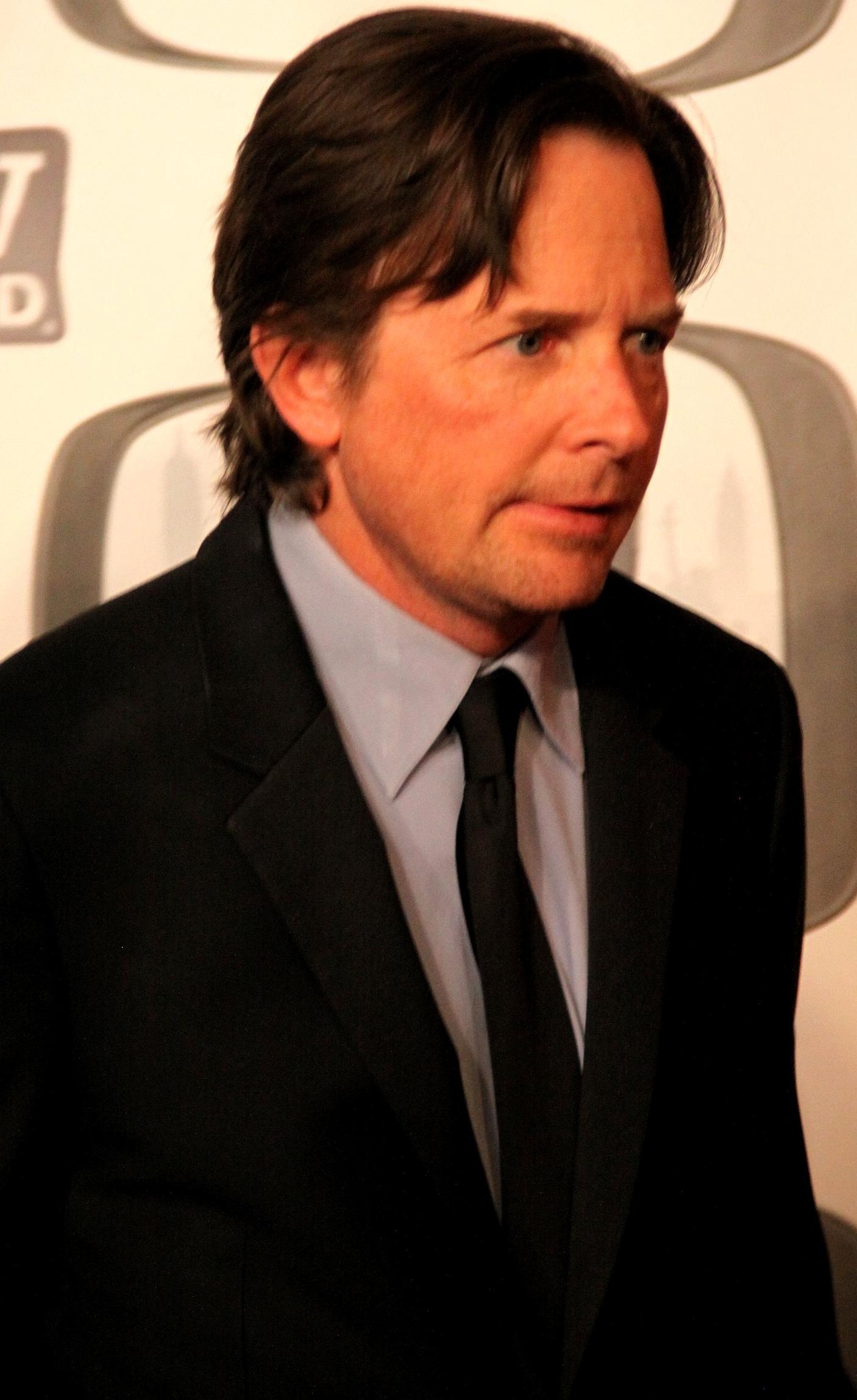
'With gratitude, optimism is sustainable'—Michael J. Fox accepts honorary Oscar with moving speech
The speech is full of hope, heart and Fox's classic sense of humor.

Fox was granted the award for his contributions to Parkinson's disease research through his foundation.
Following his diagnosis of Parkinson’s disease back in the early '90s, beloved “Back to the Future” star Michael J. Fox became an unwavering advocate for others living with the condition. His Michael J. Fox Foundation, founded in 2000, has become the leading provider of funds for Parkinson's research in the world. A large chunk of that research goes into investigating potential cures for the disease.
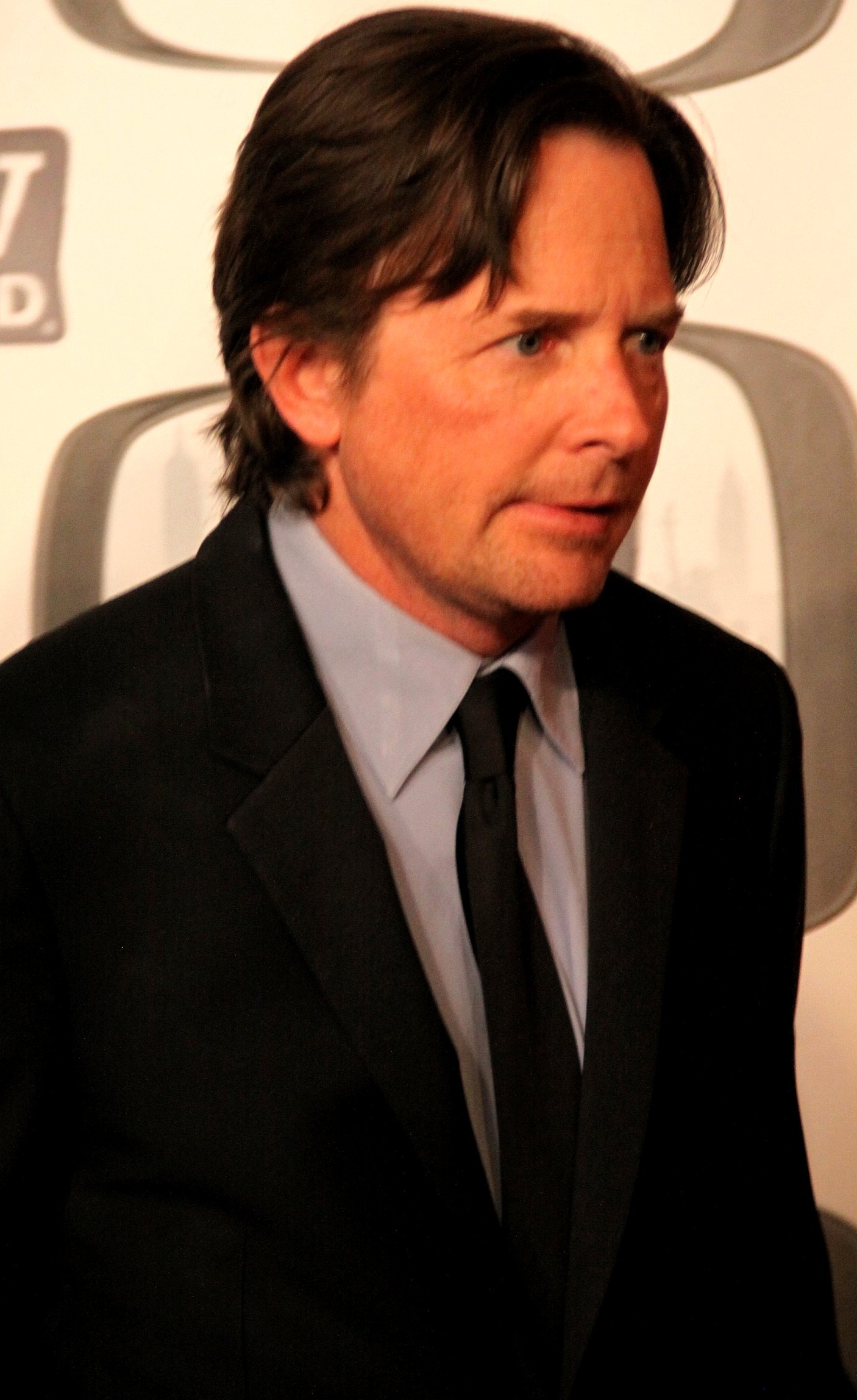
His contributions to Parkinson's research were highlighted at the 13th Annual Governors Awards on Saturday, Nov. 19, in Los Angeles as a recipient of the Jean Hersholt Humanitarian Award, which honors individuals "whose humanitarian efforts have brought credit to the industry.”
As the now-retired actor took to the stage to accept his honorary Oscar, he delivered a speech full of emotion, grace and a sense of humor that shoots straight to the heart.
After an outpouring of applause, Fox made the quip, “You’re making me shake, stop it.” In case anyone was wondering—his effortless charm is still completely intact.
He then went into the “serious business of the speech,” expressing his gratitude for the award. Specifically, he thanked Gary David Goldberg, his “boss, friend and mentor” from the sitcom “Family Ties,” who introduced him to the concept “for whom much is given, much is required.” He also shared stories from his life and career—from dropping out of high school to pursue a job in Hollywood, to getting his GED at around 30 at the bequest of his son, and everywhere in between.
Of his Parkinson’s diagnosis, he recalled that "the hardest part was grappling with the certainty of the diagnosis and the uncertainty of the situation. The diagnosis was definite and the progress was indefinite and uncertain.”
Despite this uncertainty, over the years the support he received from his wife Tracy (who "made it clear that she was with me for the duration") would prove “transformative.”
"It struck me that everything I had been given—success, my life with Tracy, my family—had prepared me for this profound opportunity and responsibility … I referred to Parkinson's as the gift that keeps on taking ... but it truly became a gift."
He remarked that once he became engaged in learning about the disease, it became clear that his previous success could be a catalyst for helping raise awareness and eventually gain answers for a cure. Thus his Michael J. Fox Foundation was created.
Fox concluded his speech praising the work of those diligently working at his foundation, saying, “My optimism is fueled by my gratitude. With gratitude, optimism is sustainable."
This unwavering optimism in particular struck viewers, who filled the comments section of YouTube with heartfelt appreciation. In particular, those who either have the disease or have a loved one affected by it shared how inspired they were. One person wrote, “In March this year I lost my father who struggled with Parkinson's for more than a decade. All he wanted was to have some dignity around those that knew him. Michael J. Fox not only has that, but respect from both his peers in the entertainment business and anyone and everyone that understands what they are going through, but will still love them all the same. Thank you for your courage and example to millions of others that suffer the same disease globally.”Others were moved simply by Fox’s emotional resilience. “What a mensch!,” wrote one person. "He is truly a great man. Despite his health issues he has maintained his good humor. I’m sure his positivity has sustained him well beyond the doctors’ initial prognosis of his illness. Long live Michael J. Fox!”
Fox’s speech is a testament to the power of finding hope and purpose even in times of adversity. He remains beloved in the hearts of fans not just for adding magic and laughter to our childhoods, but for constantly spreading kindness throughout the world. He deserves every bit of goodness that he gets.

- Dad makes movie magic with his 5-year-old daughter by re-creating iconic film scenes in photos ›
- 'Back to the Future' actor sings a hilarious song about all the questions fans ask him ›
- 5 faces of Parkinson's disease, brought to you by Michael J. Fox. ›
- This woman's nose could be the key to spotting Parkinson's early. - Upworthy ›
- 10 things that brought us joy this week - Upworthy ›
- People share which popular films they think are overrated - Upworthy ›
- Michael J. Fox saw Harrison Ford's Parkinson's acting on 'Shrinking,' and immediately reached out - Upworthy ›


a man sitting at a desk with his head on his arms Photo by
Can a warm cup of tea help you sleep better? If you believe it, then yes. Photo by 
A woman is getting angry at her coworker.via
A man with tape over his mouth.via
A husband is angry with his wife. via 
Three women sit on a blanket in the park. 
Two women engaging in a pleasant conversation inside a coffee shop
Two men engaging in a peaceful disagreement.
Resurfaced video of French skier's groin incident has people giving the announcer a gold medal
"The boys took a beating on that one."
Downhill skiing is a sport rife with injuries, but not usually this kind.
A good commentator can make all the difference when watching sports, even when an event goes smoothly. But it's when something goes wrong that great announcers rise to the top. There's no better example of a great announcer in a surprise moment than when French skier Yannick Bertrand took a gate to the groin in a 2007 super-G race.
Competitive skiers fly down runs at incredible speeds, often exceeding 60 mph. Hitting something hard at that speed would definitely hurt, but hitting something hard with a particularly sensitive part of your body would be excruciating. So when Bertrand slammed right into a gate family-jewels-first, his high-pitched scream was unsurprising. What was surprising was the perfect commentary that immediately followed.
This is a clip you really just have to see and hear to fully appreciate:
- YouTube youtu.be
It's unclear who the announcer is, even after multiple Google inquiries, which is unfortunate because that gentleman deserves a medal. The commentary gets better with each repeated viewing, with highlights like:
"The gate the groin for Yannick Bertrand, and you could hear it. And if you're a man, you could feel it."
"Oh, the Frenchman. Oh-ho, monsieurrrrrr."
"The boys took a beating on that one."
"That guy needs a hug."
"Those are the moments that change your life if you're a man, I tell you what."
"When you crash through a gate, when you do it at high rate of speed, it's gonna hurt and it's going to leave a mark in most cases. And in this particular case, not the area where you want to leave a mark."
Imagine watching a man take a hit to the privates at 60 mph and having to make impromptu commentary straddling the line between professionalism and acknowledging the universal reality of what just happened. There are certain things you can't say on network television that you might feel compelled to say. There's a visceral element to this scenario that could easily be taken too far in the commentary, and the inherent humor element could be seen as insensitive and offensive if not handled just right.
The announcer nailed it. 10/10. No notes.
The clip frequently resurfaces during the Winter Olympic Games, though the incident didn't happen during an Olympic event. Yannick Bertrand was competing at the FIS World Cup super-G race in Kvitfjell, Norway in 2007, when the unfortunate accident occurred. Bertrand had competed at the Turin Olympics the year before, however, coming in 24th in the downhill and super-G events.
As painful as the gate to the groin clearly as, Bertrand did not appear to suffer any damage that kept him from the sport. In fact, he continued competing in international downhill and super-G races until 2014.
According to a 2018 study, Alpine skiing is a notoriously dangerous sport with a reported injury rate of 36.7 per 100 World Cup athletes per season. Of course, it's the knees and not the coin purse that are the most common casualty of ski racing, which we saw clearly in U.S. skier Lindsey Vonn's harrowing experiences at the 2026 Olympics. Vonn was competing with a torn ACL and ended up being helicoptered off of the mountain after an ugly crash that did additional damage to her legs, requiring multiple surgeries (though what caused the crash was reportedly unrelated to her ACL tear). Still, she says she has no regrets.
As Bertrand's return to the slopes shows, the risk of injury doesn't stop those who live for the thrill of victory, even when the agony of defeat hits them right in the rocks.