Crying fan embraced by Drew Barrymore explains why the moment was ‘super special’

“Like myself, Drew has had a super hard life,” she said.

drew barrymore, drew barrymore fan, drew barrymore show
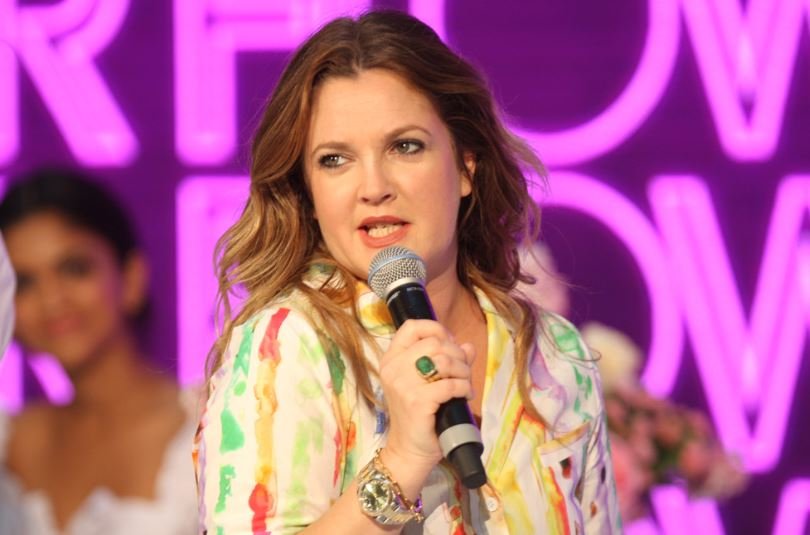
Drew Barrymore speaks during the FLOWER Beauty launch at Westfield Parramatta on April 13, 2019, in Sydney, Australia. Photo credit: via Eva Rinaldi/Flickr

Drew Barrymore, 48, has been in the public consciousness since she starred as Gertie in 1982’s mega-blockbuster, “E.T.: The Extra-Terrestrial,” a performance that earned her an Oscar nomination for Best Supporting Actress. So, it makes sense that many people of a certain age feel as if they’ve grown up with her.

Now, she’s an even more significant part of people’s lives as the host of “The Drew Barrymore Show,” which runs every weekday on CBS.

On May 25, the show’s Instagram page posted a touching video of an off-the-cuff moment between Barrymore and a fan during a taping of her show. In the clip, Barrymore realizes that someone in the audience is crying. So, instead of ignoring the fan, she jumps to action to see what is the matter.


The fan is Olivia Radford, 21, who recently moved to Los Angeles from Salt Lake City, Utah.

“Are you OK? Did anything happen? Whose a** do I have to kick?” she said while approaching the audience member. The crying fan’s friend clarified things for Barrymore, saying she loves her. “Oh, thank God, it’s nothing bad,” Barrymore exclaimed.

“I was like, ‘Tell me who they are, and I will take them down.’ Who made you cry?” she joked.

“You’re just, like, my childhood idol. I don’t want to be that person to cry,” Radford admitted. Then Barrymore assured her that emotional outbursts are acceptable and encouraged in her studio.

“Oh, screw that! Be that person!” Barrymore said.

“I really love you. I’m sorry,” the fan said as she was handed a tissue. The talk show host then sat on Radford’s lap and comforted her. “I have the urge to do this,” Barrymore said as she held her.

“This is such an honor for me to meet you. I’m sorry I have dumpling breath,” Barrymore told Radford. “It’s so funny that you would say you don’t want to cry here,” she continued. “I cry here all the time.”

Radford told Upworthy that her “all-time favorite movie growing up” was “50 First Dates” starring Barrymore and Adam Sandler. “As you can tell from the video, I’m quite an emotional person,” she told Upworthy. “I cry every single time I watch that movie. It’s extremely inspiring. I’m a huge fan of Adam Sandler as well!”

Radford feels a kinship with Barrymore that goes even deeper than her films.

“Like myself, Drew has had a super hard life,” Radford said. “Drew is an extremely loving person, despite all the hardships she’s had to overcome. At the taping, she told me that there was a reason we met and that she sees herself in me, which felt super special.”

Radford was able to briefly speak with Barrymore after the taping, and the talk show host wished her luck on her new life in Los Angeles. She hopes to make the experience permanent by getting Barrymore’s words of advice tattooed in her handwriting because “she told me to always ‘Be that person.’”

The tender exchange between Barrymore and Radford shows that the talk show host is just as sweet and caring off-camera as she is when she does her show. They always say you should never meet your heroes, but it’s probably a good idea if yours is Drew Barrymore.

  • People are falling in love with Staples all over again thanks to one employee dubbed the ‘Staples Baddie’
    "Staples Baddie" Kaeden Rowland became an accidental brand ambassador. Photo credit: @blivxx/TikTok
    , ,

    People are falling in love with Staples all over again thanks to one employee dubbed the ‘Staples Baddie’

    Her viral videos showing all the hidden services you can get done are bringing the brand back to life.

    Everyone’s heard of Staples. But now people are actually going there in droves thanks to one employee affectionately known online as the “Staples Baddie.”

    Back in January, Kaeden Rowland, a Staples employee, filmed a brief clip of herself during a work shift. Donning the recognizable red shirt and lanyard, she quipped, “You finna need something printed? I gotchyu.” 

    That single video quickly turned into a mega-viral series. It’s a fun combination of slang-filled humor, nail-clacking ASMR, and genuinely helpful tutorials and insights. The content is breathing new life into the brand and being hailed by fans and experts alike as “marketing genius.”

    A major aspect of Rowland’s shtick is explaining certain lesser-known services you can get at Staples. In one particularly popular video, she quips:

    “It’s come to my attention that y’all don’t really know the full scope of what Staples, like, does. We can make ornaments. We can make mugs, shirts, backpacks, signs, posters, whatever you could need. A banner that’s like eight feet long? Sure. Why not?”

    In another video, she explains the difference between Staples’ direct-mail services. One is for business and can generate a mailing list based on a target demographic. The other is for personal use, like wedding invitations. Though she jokes that either service is too pricey for committing “evil against your ex.

    @blivxx

    Both are more pricey but are worth it depending on your needs

    ♬ original sound – 🦷✨oblivion✨🦷

    Other times, you might catch her letting you know when certain things go on sale: “You’re not getting your shawty a 40% off mug from Staples? And men wonder why women cheat.”

    She also dissects the different personalities of the printers (the Xerox PrimeLink C9200 has “clean girl” vibes, apparently). Finally, she hits a groove showcasing some of her favorite stationery products. At the moment, she’s very into a tiny botanical planner that fits into her small purse.

    @blivxx

    Yall wanted to meet the printers

    ♬ original sound – 🦷✨oblivion✨🦷

    Despite not having any formal marketing training, Rowland has made an undeniable impact. A company struggling to stay competitive now has fresh enthusiasm. Folks are getting their personalized mugs there. They’re switching suppliers. They’re even using Staples to supply their best analog life. The best part is none of this is because of an expensive micro-influencer, but someone who actually works there.

    In a video analyzing the Staples Baddie, marketing analyst and PR expert Katie Omstead said, “Just a scan of the comments on any of these videos will show you that people are thinking about Staples more than ever before.”

    Rowland is just the latest in a growing trend of people who happened to share their creative ideas at just the right time, somehow skyrocketing to full-blown brand collaborations. Think back to Romeo, whose silly Dr Pepper jingle went viral.

    MarketerMilk calls this “human-first media,” where corporations rely on the fact that “people buy things from people they trust, not from businesses.” This can look like companies “leveraging their existing employees to become influencers.”

    This, of course, can also look like corporations trying to recreate something organic, thus squelching its spark. One Staples employee lamented on Reddit that their team is being encouraged to replicate the Staples Baddie moment in their own stores.

    On the bright side, Staples has shared their appreciation for their resident “Baddie.” Not only have they sent a care package Rowland’s way, according to Fast Company, it’s also “exploring opportunities to collaborate and continue supporting her creativity and engagement with the community.”

    We very well might be seeing much more of the Staples Baddie in the future.

  • In 1982, Jim Henson shared the secret to his success with a young actor. It still touches his heart.
    Jim Henson and the Muppets.Photo credit: JulieLion/Wikimedia Commons

    When people refer to artistic or creative geniuses, we often praise them as rugged individualists who pursued a singular vision. But many times, that story is too simple. In reality, great artistic achievements are made through collective effort. This is especially true in film and television.

    One artistic genius who changed the world by empowering his creative partners and giving them credit was Muppets creator Jim Henson.

    Henson helped create some of the most popular TV shows in the ‘70s and ’80s, including Sesame Street, The Muppet Show, and Fraggle Rock, as well as iconic films such as The Dark Crystal and Labyrinth.

    jim henson, miss piggy, fozzy muppets, sesame street,
    Jim Henson alongside Miss Piggy and Fozzie. Photo credit: Bernard Gotfryd/Wikimedia Commons

    Henson shares the secret to his incredible success

    Actor Alexander Polinsky recently shared rare insight into Henson’s creative process and how much he owed to his collaborators in a TikTok post that received over 650,000 views. Polinsky played Adam Powell on the TV show Charles in Charge from 1987 to 1990 and has done voice acting on shows such as Teen Titans, Teen Titans Go!, and the Ben 10 franchise.

    Polinsky was seven years old in 1982, when Henson’s dark fantasy film The Dark Crystal was in theaters. His mother worked at a gallery hosting an exhibition on the film. Henson was there when young Polinsky was visiting, and his mother pushed him to ask the creator a question:

    “She pushed me in front of him. I was the only kid, besides my two other friends, that were in the whole place that morning. And I said, ‘How did you make this stuff?’ And instead of saying ‘hot glue and learn to sew,’ he said, ‘First, gather a group of people around you that you love and that love you. And give them an idea that has enough empty space in it so that they can take it on and make it their own. And when you get it back, it’s more beautiful than you ever thought possible.’”

    Polinsky ended his video by saying, “So make art with the people that you love.”

    Jim Henson and George Lucas. Photo credit: AP Wirephoto/Wikimedia Commons

    Henson loved to collaborate with people who thought differently

    Steve Whitmire, a Muppet performer who eventually took over as Kermit (Henson’s signature character) after his death, told D23.com that Henson believed in the power of the ensemble. A great example was when The Muppet Show won an Emmy for Outstanding Comedy–Variety or Music Series in 1978.

    “I remember Jim’s Emmy acceptance speech very well because he made eye contact with me,” Whitmire, who was newly hired at the time, said. “I was in the third row, and he was looking at me. He was kind of uncomfortable onstage as himself to some degree, but he said, ‘I just want to let everybody know that this is not about me, it’s about our group and our group dynamic.’”

    “‘Appreciate each other for your differences and not for your similarities’ was a theme that went through all of his work,” the creator’s son, Brian Henson, added. “Clearly, this was a wonderful message that got picked up all around the world. Everyone got it, everywhere.”

    Henson’s belief in providing space for his creative partners shows that he had an astonishing lack of ego—rare in the world of entertainment—and an incredible amount of faith in his collaborators. But it must have been a lot easier for him to keep his faith in those around him because their relationship was based on a power even greater than artistic integrity: love.

  • A linguist from Alabama explains the surprising origin story of the Southern word ‘y’all’
    The history of the word "y'all."Photo credit: Wikimedia Commons

    Head anywhere in the Southern United States, and you are likely to hear one distinct word: “y’all.” “Y’all,” which combines the words “you” and “all,” may be predominantly used in the South—but not for long.

    Paul E. Reed, a linguist at the University of Alabama who studies Southern American English and Appalachian English, told NPR in 2025 that “it’s expanded much more outside of the South” thanks to Americans under 40. (Add it to the list of Gen Z slang.)

    How “y’all” entered the English vernacular is a fascinating tale. Linguist Danny Hieber, PhD, explained the origin story of “y’all” to his TikTok followers—and it stems from a surprising language.

    @linguisticdiscovery

    What do all y’all think about “y’all”? @Landon If you enjoyed this video, you’ll love the Linguistic Discovery newsletter! Deep dives into how language works, language profiles, explainers of terms/concepts in linguistics, reviews, and more! LinguisticDiscovery.com/newsletter (Also available on Substack or Patreon.) #yall #yalldve #South #Southern #English #dialects #grammar #pronouns #linguistics #language#French#LingTok#LearnOnTikTok

    ♬ original sound – Linguistic Discovery – Danny Hieber, PhD

    A linguist explains the ‘y’all’ backstory

    According to Hieber, present-day English doesn’t have a plural form of the word “you” like other languages. In Old English, there were three forms of “you”:

    • Thou (subject)
    • Thee (object)
    • Thine (possessive)

    Hieber goes on to explain that “you” became singular thanks to French. In French, “you” translated to:

    • Tu (singular)
    • Vous (plural + polite)

    “After the Norman Conquest of England in 1066, French had a huge influence on English,” he said. “So English speakers started borrowing that pattern into English and used ‘you’ to politely address one person.”

    He added that over time, this became the default way to address a single person. Along those same lines, the word “be” also followed suit.

    “It used to be that the verb ‘be’ was conjugated like this,” explained Hieber, with the plural use becoming “are.” “That singular verb got pulled along into the singular too, and now the conjugation of ‘be’ looks like this:”

    • I am / we are
    • Thou art / you are
    • He, she, it is / they are

    However, it created a “gap,” and “English speakers have been trying to settle on a ‘you [plural]’ ever since,” said Hieber. Enter: y’all.

    @genteelandbard

    Where and how did the word “Y’all” begin in the southern United States? #genteelandbard #savannah #storytime #historytok #southerncharm

    ♬ Natural Emotions – Muspace Lofi

    The history of ‘y’all’ in the South

    There are many theories as to how y’all infiltrated American English in the 1700s, per NPR. One theory states that it has British origins, where the words “ye” and “aw” were combined and used in the British Isles. From there, Scots-Irish immigrants brought it to Appalachia in the U.S.

    The other theory is that it originated in West Africa, and when enslaved people were brought from there to the South, it began to spread. After the Great Migration, Black Americans brought the term north with them, expanding its use.

    However, the term “you guys” is still commonly used in most Northern states. There are also many regional variations throughout the country, including “yinz” (used in Pittsburgh, Pennsylvania) and “youse” (used in Philadelphia, Pennsylvania).

    Americans respond

    Viewers had lots of opinions on Hieber’s video, including how different regions have termed the plural form of “you”—and their thoughts on y’all:

    “Sorry… y’all is singular all y’all is plural.”

    “In the upper Ohio Valley, we also say things like, ‘All yinz guys,’ a sort of amalgamation of Pittsburgh’s ‘yinz’ (we’re an hour away), and the Midwest ‘you guys.’”

    “From CA but living in the south..I just cannot bring myself to say y’all..feels so unnatural.”

    “Washington born and y’all made it into my vocab.”

  • This 2016 concert footage of Adele meeting two young fans keeps going viral for the best reason
    Adele performs in Australia in 2017Photo credit: Photo by Robst56 via Wikimedia Commons
    ,

    This 2016 concert footage of Adele meeting two young fans keeps going viral for the best reason

    It captures something you don’t often see from artists at that level: genuine surprise.

    There are concerts, and then there are moments that happen inside concerts that nobody planned and nobody could have scripted. Adele has a gift for the latter.

    During her Adele Live 2016 tour stop at the Ziggo Dome in Amsterdam on June 1st, she did what she often does between songs: she invited a couple of kids from the crowd to come up on stage. Two young girls clambered up. Adele hugged them, crouched down to their level, and started chatting. Names, where are you from, the usual warm Adele small talk. Then one of the girls said she was from London.

    Adele paused. She glanced out at the crowd and saw a man she recognized.

    And then it hit her.

    “Oh my god! No way! I knew you from when you were a baby!” she gasped, as Today reported in its coverage of the moment. “Her mum plays for me. She plays the cello. You were like two weeks old when I first met you.” She then rattled off four OMGs in quick succession, trying to process the fact that the small child she’d last seen as an infant was now standing on her stage at a sold-out arena in Amsterdam, having been pulled from the crowd entirely at random. “That just freaked me out,” she told the audience. “You were like 2 feet tall when I first met you.”

    The girl’s mother plays cello in Adele’s touring band. Her father, who’d brought the girls to the show, was the familiar face in the crowd that gave it away. The girls, nicknamed Daiz and Roo according to an Instagram post captured by NME at the time, had no idea any of this was coming.

    The video, originally captured by a fan and shared on YouTube, has been resurfacing regularly ever since. It’s easy to see why. In a single unscripted minute, it captures something you don’t often see from artists at that level: genuine surprise. Not performed delight, not a rehearsed crowd moment, but the specific look of a person trying to reconcile the baby they once held with the kid standing right in front of them. The whole arena got to watch Adele put the pieces together in real time.

    This is something of a pattern. In a separate concert moment shared on TikTok by user @hannnny3, Adele spotted a young boy in the audience mid-performance, walked over to him, and sang directly to him as he visibly welled up. She brushed his cheek gently and kept going. No announcement, no setup. Just attention, fully given.

    It’s a different kind of stagecraft. Most performers work the crowd. Adele tends to actually notice it.

    This article originally appeared last year.

  • People are shocked to learn the real meaning behind The Lion King’s ‘Circle of Life’ song
    The meaning of the Zulu chant in "The Lion King" song "Circle of Life."Photo credit: Wikipedia/ Walt Disney Feature Animation

    The Disney movie The Lion King was released in 1994, and it had a soundtrack full of bangers. Produced by Hans Zimmer with assists from Elton John, there are so many songs that remain classics—including “Circle of Life.”

    The song begins with the iconic Zulu chant by singer and composer Lebo M at the start of the Disney film, as the sun rises and baby Simba is lifted into the sky by Rafiki: Nants ingonyama bagithi Baba Sithi uhm ingonyama

    And more than 30 years later, people are finally learning what it translates to. On the One54 Africa podcast, Zimbabwean comedian Learnmore Jonasi shared with hosts Akbar Gbajabiamila and Godfrey Daneschmah (and the rest of the world) the meaning of the Disney tune’s chant—and it’s hilariously underwhelming.

    “I’ve seen The Lion King 100 times,” Gbajabiamila says, before giving his own soulful rendition of the chant. “What did I say?”

    Jonasi tells him he said “nothing,” adding that it’s Zulu, a language from South Africa, and that it translates to: “Look! There is a lion. Oh my God.”

    The three burst into guttural laughter. Gbajabiamila and Daneschmah react in disbelief, saying, “You are joking! That is not what that means!”

    Jonasi assures him that’s exactly what it means, and they can’t contain their laughter.

    “This whole time I thought it was like this beautiful, majestic [thing],” Gbajabiamila howls.

    People react to Zulu chant meaning

    On Reddit, people did not hold back their shock and hilarious disappointment about the song’s iconic opening:

    “And here I thought it was some majestic phrase about life 😂.”

    “It does. It does mean that. I found this out and had the same reaction. I f**king howled. ‘Oh look, here comes a lion, father a lion’ or something was how I was told it was. I was amused and somehow disappointed. But like… it’s accurate.

    “I mean it works in the song too since all the animals look at the lions at this part.”

    “You know what… I’m okay with this.”

    “See? This simpleton answer actually fits. Try and think about the sheer amount of people who’ve run around shouting this phrase in public looking like idiots (myself included), and then match their idiocy with the simplicity of this answer!!!”

    “Okay so quite mundane and hilariously so.”

    How “The Circle of Life” was made

    The film’s composer, Hans Zimmer, “tapped Lebo M, a then-exiled South African composer living in the U.S., to help with the music,” according to Rotten Tomatoes.

    Zimmer and Lebo M “riffed” together to come up with the film’s opener, along with Elton John and lyricist Tim Rice, but struggled to nail down an idea until inspiration came to Lebo.

    “Then, suddenly, Lebo cried out ‘Nants ingonyama bagithi Baba,’ and all present agreed—instantly—that the chant would open the film,” the publication noted.

    “Circle of Life” was nominated for an Oscar for Best Original Song at the 1995 Academy Awards but lost to another of the film’s iconic songs, “Can You Feel the Love Tonight?”

  • In 1973, the Bee Gees sang an unplugged medley tribute to the Beatles. It’s gorgeous.
    The Bee gees playing a medley of Beatles hits in 1973.Photo credit: via Midnight Special/YouTube

    By 1973, the Bee Gees’ career had hit a low. After a series of hits in the late 1960s and early 1970s, including “To Love Somebody,” “How Can You Mend a Broken Heart,” and “I Started a Joke,” the band was in a rut. Their latest album, Life in a Tin Can, and single “Saw a New Morning” sold poorly, and the band’s popularity declined.

    On April 6, 1973, the Gibb brothers (Barry, Robin, and Maurice) appeared on The Midnight Special, a late-night TV show that aired on Saturday mornings at 1 a.m. after The Tonight Show with Johnny Carson. Given the lukewarm reception to their recent releases, the Bee Gees decided to change things up and play a medley of hits from their idols, The Beatles, who had broken up three years before.

    the beatles, bee gees, 1960s
    The Beatles were the biggest band on Earth in their heyday. Giphy

    The performance, which featured five of the Fab Four’s early hits, including “If I Fell,” “I Need You,” “I’ll Be Back,” “This Boy,” and “She Loves You,” was a stripped-down, acoustic performance that highlighted the Bee Gees’ trademark harmonies.

    “When you got brothers singing, it’s like an instrument that no one else can buy. You can’t go buy that sound in a shop. You can’t sing like The Bee Gees because when you got family members singing together, it’s unique,” Noel Gallagher, who sang with his brother Liam in Oasis, said according to Far Out.

    A year later, the Bee Gees performed in small clubs, and it looked like their career had hit a dead end. Then, at the urging of their management, the band began to move in a new direction, incorporating soul, rhythm and blues, and a new, underground musical style called disco into their repertoire. Barry also adopted a falsetto singing style popularized by Black singers such as Curtis Mayfield and Marvin Gaye.

    This unlikely change for the folksy vocal group catapulted them into the stratosphere and they became the white-satin-clad kings of disco.

    john travolta disco GIF by uDiscoverMusic Giphy

    In the late ‘70s, the band had massive hits, including songs featured on the 40-million-selling Saturday Night Fever soundtrack: “Stayin’ Alive,” How Deep is Your Love,” More Than a Woman,” Jive Talkin’,” and “Night Fever.”

    In 1978, the band made a significant misstep, starring in a musical based on The Beatles’ music called Sgt. Pepper’s Lonely Hearts Club Band, produced by Robert Stigwood, the man behind Saturday Night Fever and Grease. The film was a colossal bomb, although the soundtrack sold well.

    The Beatles’ George Harrison thought the Bee Gees film was about what happens when you become successful and greedy.

    “I just feel sorry for Robert Stigwood, the Bee Gees, and Pete Frampton for doing it because they had established themselves in their own right as decent artists,” Harrison said. “And suddenly… it’s like the classic thing of greed. The more you make the more you want to make, until you become so greedy that ultimately you put a foot wrong.”

    Even though the Bee Gees’ Beatle-themed musical was a flop, former Beatle John Lennon remained a fan of the group. He sang their praises after the public’s growing distaste of disco resulted in a significant backlash.

    john lennon, the beatles
    John Lennon was a fan of the Bee Gees. Giphy

    “Try to tell the kids in the seventies who were screaming to the Bee Gees that their music was just the Beatles redone,” he told Playboy magazine in 1980. “There is nothing wrong with the Bee Gees. They do a damn good job. There was nothing else going on then.”

    The Bee Gees historic career ended when Maurice passed away in 2003 at 53. Robin would follow in 2009 at 62. Barry is the final surviving member of the band.

    This article originally appeared last year.


  • Wish you could belt out Broadway tunes at the top of your lungs in public? There’s a nightclub for you.
    Imagine singing along to your favorite Broadway show tunes at a club.Photo credit: Canva

    Broadway Rave is every theater kid’s dream come true.

    When you’re a fan of Broadway musicals, the world is your stage. Or at least, you wish it was. The urge to break out in song always bubbles under the surface, but other than annoying your friends at karaoke or singing into your spatula while you make dinner, there aren’t a lot of opportunities to indulge the impulse.

    Singing by yourself in your kitchen can be fun, but sometimes you want to experience the energy of joining a full chorus. What if there was a place where it’s not only okay to sing show tunes at the top of your lungs, but where everyone else will sing along with you?

    Singing in your kitchen is fine, but not the same as a full chorus. Photo credit: Canva

    Enter Broadway Rave, the nightclub experience for theater kids, Broadway fans, and anyone who prefers an alternative to the traditional clubbing experience. Broadway Raves take place in dance clubs, but instead of house music, you get Hamilton, Heathers, and Hairspray.

    Imagine walking into a club and hearing the sound of your people:

    Is it a rave in technical terms? That’s up for debate. But it certainly is a chance for people who want the energy of a communal social experience without all the stuff that goes along with clubbing. If a Broadway singalong appeals to you more than navigating a dance floor, it might be worth checking out.

    Not that there isn’t dancing. It just might be more The Greatest Showman than “In Da Club.”

    I mean, few Hamilton fans wouldn’t appreciate an opportunity to sing some of those iconic tunes with wild abandon, especially in a group that fully appreciates it.

    Billed as a “musical theatre dance party celebrating the best of Broadway,” Broadway Rave takes place in various cities at different times. You can check their website for upcoming shows. If you don’t find one near you, you can submit a request for a rave to come to your city. They have shows around the United States as well as in Canada and the United Kingdom.

    What musicals do they play songs from? That may depend on the DJ. Here’s what one person shared about their experience:

    “The last time I went I stayed from 9:30 until about midnight. Went and looked up my post from that night.

    They played songs from a bunch of shows, including Hamilton, Heathers, Rent, Dear Evan Hansen, Sweeney Todd, Cats, Six, Mamma Mia, Hairspray, Phantom, Les Miz, Grease, High School Musical, Hercules, Frozen, Waitress, Legally Blonde, Greatest Showman, Book of Mormon, Chess and I’m sure I’m forgetting some.

    It was so much fun.”

    Who would pass up a chance to join in on a group version of Wicked‘s “Defying Gravity”?

    Most reviews of Broadway Rave have been positive, though some people have said the DJ really makes a difference. Shows last around 2.5 hours, and age restrictions vary by venue. Generally, they are either 18+ or 21+, which is a bummer for the high school drama club kids.

    What a great idea, though, to give those of us who don’t really fit the typical nightlife mold a space to let our drama geek flag fly freely and proudly.

    You can find more on Broadway Rave’s website or follow them on Instagram or TikTok.

  • Robin Williams landed his breakout ‘Happy Days’ role after literally flipping the audition on its head
    Robin Williams as Mork on "Happy Days." Photo credit: METV/YouTube

    George Lucas’ Star Wars: Episode IV — A New Hope hit theaters in 1977, capturing the imaginations of people across the globe and launching a renewed interest in science fiction. Gary Marshall, producer of the hit show Happy Days, was looking to keep the series fresh in its fifth season, so he listened to his son—a huge Star Wars fan—who asked if there could be an alien on the show.

    The show’s cast wasn’t too excited about the bizarre episode, which centered on an alien, Mork from the planet Ork, who landed on Earth in an attempt to bring Richie Cunningham back to his home planet. “It really wasn’t a very good script. It was the worst script we ever had,” Anson Williams, who played Potsie Weber on the show, later recalled.

    The actor originally cast as Mork quit just two days before filming, leaving the crew scrambling to find another alien. Al Molinaro, who played diner owner Al Delvecchio on the show, suggested Robin Williams, an actor from his improv class. Williams was brought in to read for the role, and his surprising take on the alien would launch him into superstardom.

    Williams made an incredibly unexpected choice during the audition—one that could have jeopardized his chances of securing the role. When Marshall asked Williams to take a seat, he turned upside down, with his head in the chair and his butt in the air.

    “He did the whole audition standing on his head,” Marshall said, according to Parade. “He was a whole different, fresh view of a guy doing an outer-space alien.” The producer gave Williams the role, explaining that “he was the only alien to audition.”

    “When Robin Williams came on as a Martian, he was all over the place and was improvising some, and they gave him room,” Marshall recalled. “At the end of the episode, 300 people in the audience stood up and applauded, which is not usually done. It didn’t take a genius to know he could do his own show, and we made one for him, Mork & Mindy.”

    During rehearsals, the rest of the cast gave Williams room to improvise, and he quickly created the unique Mork character with his “Na-Nu-Na-Nu” greeting and Star Trek-esque handshake.

    The episode, “My Favorite Orkan,” which originally aired on Feb. 28, 1978, would go on to become one of the most memorable in the series. “It was one of the best shows in the history of the series,” Anson Williams recalled.

    Robin Williams’ performance as the character was so memorable that Paramount rushed an entire show based on the alien, Mork & Mindy, which debuted on Sept. 14, 1978. The Mork character was also invited back on Happy Days the following year for a follow-up episode, “Mork Returns.”

    Mork & Mindy initially surpassed Happy Days in the ratings before experiencing a sharp decline over the next three seasons. In the final season, Mork and Mindy had an Orkan baby, played by Jonathan Winters, who aged backward. By the final episodes in 1982, Williams had become a bona fide movie star, having starred in Popeye and The World According to Garp.

    Williams was such an incredible talent that one audition—where he stood on his head—probably wasn’t the sole reason for his incredible success. But it is a great example of how extraordinary talent expresses itself in ways most people can’t fathom. Kudos to Gary Marshall and the producers of Happy Days for embracing his lunacy instead of laughing Williams out of the studio, and for giving him the space to explode into America’s living rooms.

Wholesome

7-year-old boy obsessed with UPS asks for a themed birthday party, and his mom delivers big time

Wholesome

21-year-old woman asks for ‘random, specific advice.’ Here are the 22 best answers.

Generations

Gen X is stunned to learn just how old the actors on their favorite shows actually were back then

Family

Dad shares how he raises his 2-year-old daughter while working on a cruise ship