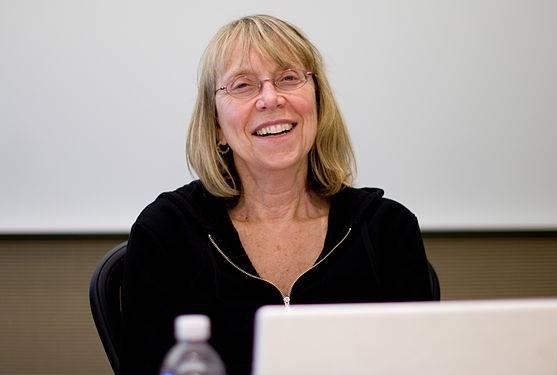
Esther Wojcicki has earned the right to tell people how to raise their kids. She’s an educator, journalist and bestselling author of “How to Raise Successful People” who has raised three daughters—two are CEOs and the other a doctor.
Susan Wojcicki is the CEO of YouTube, Anne Wojcicki is the co-founder and CEO of 23andMe and Dr. Janet Wojcicki is an anthropologist and epidemiologist who works on HIV progression and obesity risk in children.
In “How to Raise Successful People” Esther Wojcicki says the secret to success is the result of “TRICK”: trust, respect, independence, collaboration and kindness. In a new article she wrote for NBC Chicago, she boiled that down to one rule, “Don’t do anything for your kids that they can do for themselves.”
“Parents need to stop coddling their kids,” she continues. “The more you trust your children to do things on their own, the more empowered they’ll be. The key is to begin with guided practice: It’s the ‘I do, we do, you do’ method.”
The “I do, we do, you do” method is used by teachers to gradually give students new responsibilities. The teacher first demonstrates the task, then they do it with the student and finally, the student does it alone.
Wojcicki says that parents can start with their children by asking them to make their beds, pick their own outfits and to help with dishes and making dinner.
It’s funny that every child is raised by a parent who cooks them meals, but an astonishing number of them grow up having no idea how to boil water. Why? Because nobody bothered to get them involved.
As the old saying goes, “Give a man a fish and he’ll eat for a day. Teach him to fish and he’ll eat forever.”
“The idea is to teach them how to cope with what life throws at them,” she writes. “One of the most important lessons I taught my daughters is that the only thing you can control is how you react to things.”
Wojcicki’s rules are a reaction to the modern trend of helicopter parenting, which is “overly focused on their children” where parents “take too much responsibility for their children’s experiences and, specifically, their successes or failures.”
This can result in children who grow into adults with lower self-confidence and self-esteem, poor coping skills, increased anxiety and a sense of entitlement.
Simply put, when children are too dependent on their parents, they become ill-equipped to deal with real-world challenges. So when parents think they’re helping their children, they are actually setting them up for failure. Is it any wonder why we live in an age where more and more people suffer from crippling anxiety and depression? The world is a lot scarier when you’re not properly equipped to deal with everyday problems.
“When you trust kids to make their own decisions, they start to feel more engaged, confident and empowered,” Wojcicki writes. “And once that happens, there’s no limit to what they can achieve.”
While, at first, this dramatic change in parenting may seem difficult for parents who have a hard time letting go, it’s an opportunity for them to grow. “What I realized, through a lot of conscious effort, is that parenting gives us perhaps the most profound opportunity to grow as human beings,” she writes in “How to Raise Successful People.”
This article originally appeared on 11.02.22