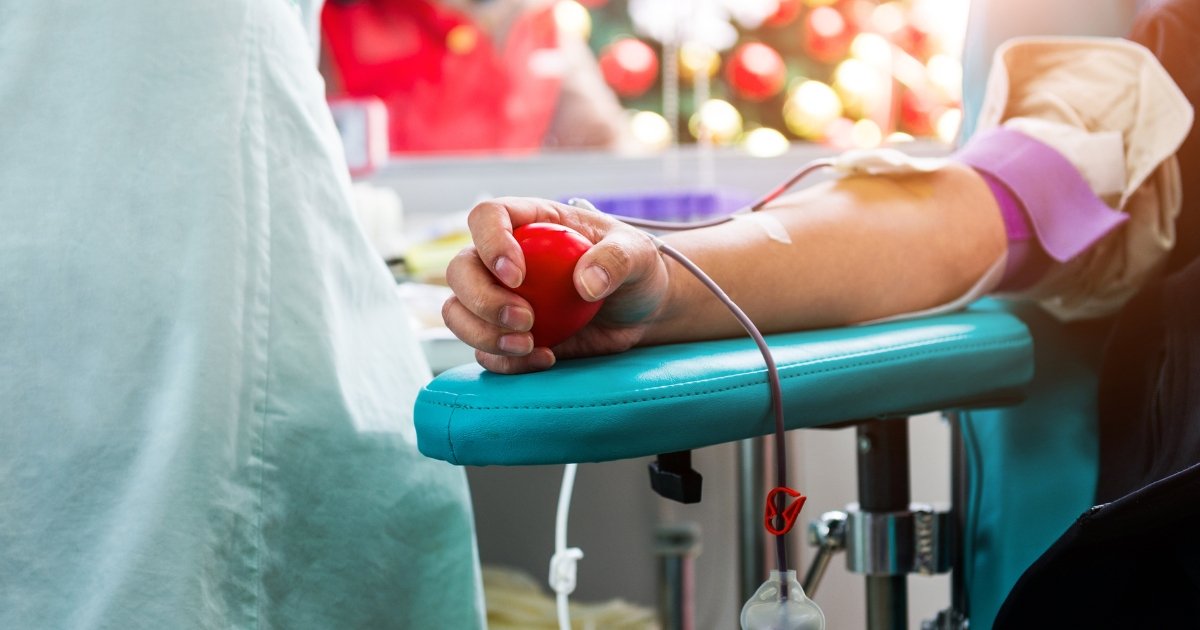
Some people never donate blood due to medical conditions or a fear of needles. Others consent to be jabbed on occasion in order to replenish the life-saving blood and plasma supply at hospitals. Among people who donate blood in the U.S., the average frequency is about twice a year.
So imagine someone donating blood or plasma twice a month, every month, for 64 years, without fail.
From 1954 to 2018, an Australian man named James Harrison donated his blood every two weeks, never missing an appointment, according to Australian Red Cross Lifeblood. After receiving a blood transfusion himself during a major surgery on his lungs at age 14, Harrison vowed to become a donor. He made good on that promise from age 18 to age 81, having his blood drawn 1,173 times over more than six decades.
All blood donations are valuable, of course, but Harrison’s plasma was particularly valuable because it carried the rare anti-D antibody. Discovered in the 1960s, anti-D immunoglobulin is used to treat pregnant mothers with Rh-negative blood, which can cause rhesus disease in a fetus with blood incompatibility. The anti-D antibody prevents rhesus disease—also known as haemolytic disease of the fetus and newborn (HDFN)—and it literally saves lives, as more than half of babies who develop the disease die from it. It’s estimated that Harrison’s anti-D-rich plasma saved the lives of 2.4 million babies in Australia during his lifetime.
Harrison held the world record for the most plasma donated by an individual from 2005 to 2022, and he was dubbed “The Man with the Golden Arm” in his home country. Despite earning multiple accolades and awards for his consistent donations over the decades, including In the Medal of the Order of Australia, one of the country’s highest civilian honors, Harrison always stayed humble about his contributions.
“Some people say, ‘Oh, you’re a hero,’” Harrison told NPR in 2015. “But I’m in a safe room, donating blood. They give me a cup of coffee and something to nibble on. And then I just go on my way. … No problem, no hardship.”
In the United States, people are usually paid for plasma donations with amounts ranging from $30 to $70 per donation. But Australia doesn’t pay blood or plasma donors, so Harrison’s donations were pure giving. Harrison’s daughter, Tracey Mellowship, said her father was “very proud to have saved so many lives, without any cost or pain,” his daughter, Tracey Mellowship, told the BBC. “He always said it does not hurt, and the life you save could be your own.”
Harrison had already been a consistent blood donor for about a decade when the anti-D antibody was discovered and he found out he had the rare combination of RhD-negative blood and Rh+ antibodies, which made him an ideal plasma donor. He happily switched over to donating plasma—a similar process to giving blood, but quite a bit more time consuming, as the blood runs through a special machine to remove the plasma before being injected back into the donor. He wanted this blood to do the most good.
Lifeblood told NPR that more than 3 million doses of anti-D containing Harrison’s blood have been issued to Australian mothers since 1967, including Harrison’s own daughter. “As an anti-D recipient myself, he has left behind a family that may not have existed without his precious donations,” Mellowship said in a statement. “It made him happy to hear about the many families like ours, who existed because of his kindness.”
Harrison only stopped giving plasma at age 81 because he had aged out—Australia doesn’t allow blood donations past age 81. he expressed sadness upon giving his final donation in 2018. “I’d keep on going if they let me,” he told the Sydney Morning Herald.
He lived another seven years, passing away in March of 2025. Lifeblood is working with an Australian research institute to create a way to continue using Harrison’s anti-D antibodies long after his passing in a project they call “James in a Jar.”
“Using the blood of James and other donors, the team has successfully recreated and grown his antibody in the lab — with the hope it will one day help prevent [HDFN], not just for pregnant women in Australia, but also worldwide,” Lifeblood told NPR.
We often think of heroes as people who risk their own lives to save another, but selflessly donating time and blood throughout an entire lifetime to save millions of babies is no less heroic than deeds that make for dramatic headlines. Perhaps we might all consider donating blood or plasma in honor of Harrison’s extraordinary commitment. The need is always there, and you never know how many lives you might save.