upworthy
Add Upworthy to your Google News feed.
Google News Button
Celebrity

Martin Sheen reveals the reason he regrets changing his name for Hollywood success

"I'm still Ramón Gerard Antonio Estévez, and I love my name."

Martin Sheen; Charlie Sheen; Emilio Estevez; name change; Martin Sheen name change; name change regret

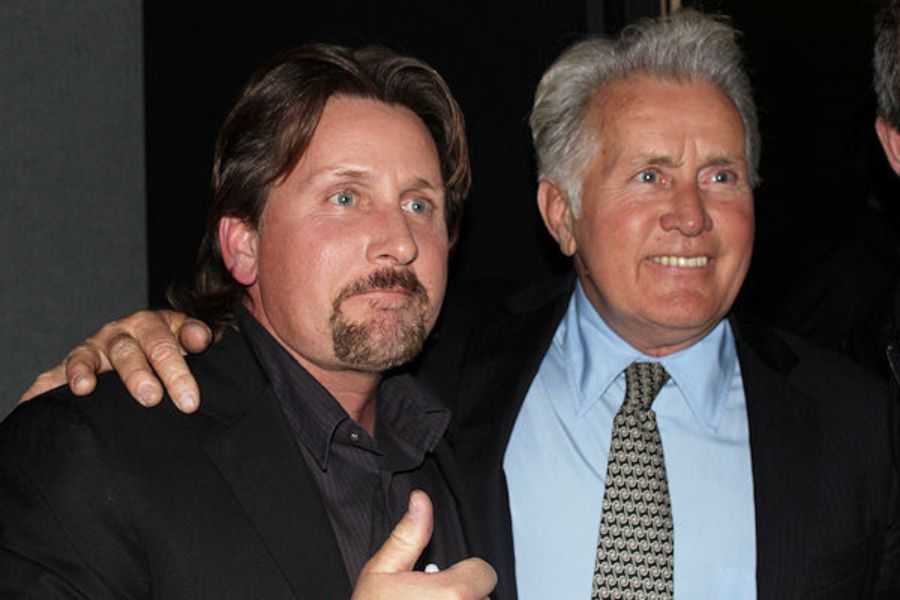
Martin Sheen, right, reveals the reason he regrets changing his name.

It's not uncommon for entertainers to change their names. It can be something easily identifiable in some situations, like 50 Cent; most people would reason that his parents didn't name him after a denomination of money. But for some, it's harder to pick out, like Miley Cyrus. While her name is now legally Miley, her birth name was Destiny.

The reason entertainers change their names varies; for some, it's because it sounds cooler, or it's their nickname, but for others, it's simply because there is already someone else in the acting guild who already uses the name.

When it comes to Martin Sheen, his name was chosen for none of the above reasons, and in a recent interview, he reveals that he regrets making the change. Sheen, who's the father of two famous sons, Charlie Sheen and Emilio Estevez, wasn't born Martin. In fact, his first name isn't even remotely close to Martin. As a child born to a father from Spain, the elder Sheen was originally named Ramón Gerard Antonio Estévez.

It was his move to New York City to become an actor that had him questioning how far he would get with the name his parents gave him. In a clip from the Happy, Sad, Confused podcast hosted by Josh Horowitz, Sheen explains why he felt the need to change his name.

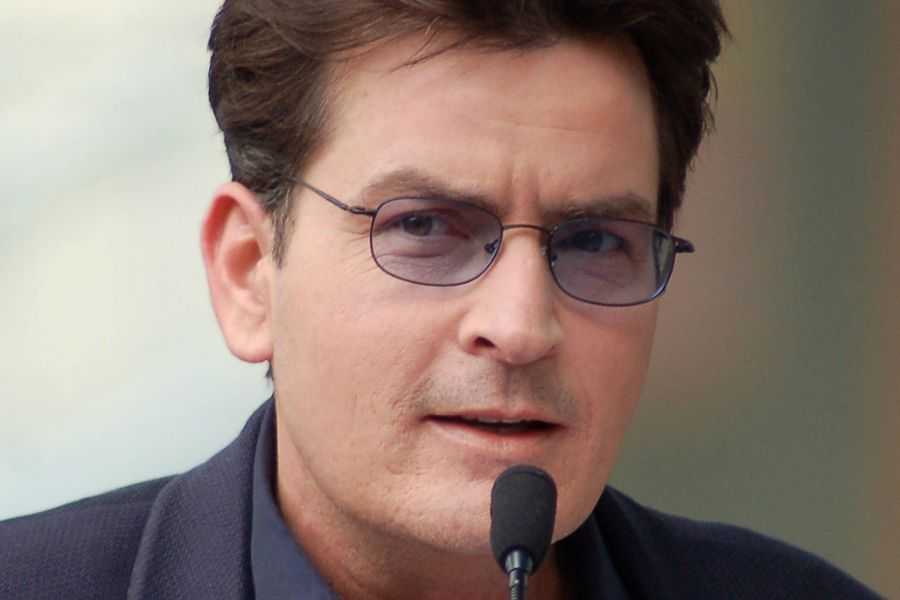
Martin Sheen; Charlie Sheen; Emilio Estevez; name change; Martin Sheen name change; name change regret Martin Sheen, Charlie Sheen, and Emilio Estevez.John Matthew Smith/Wikimedia Commons, Angela George/Wikimedia Commons, Gabriele/Wikimedia Commons

"Officially, I've never changed my name," he said. "I'm still Ramón Gerard Antonio Estévez, and I love my name. I just arrived at a time, in a place where it was hard enough to get a job as an actor when I started in 1959 in New York City. To have a surname, a Hispanic surname at that time was not an advantage because, unfortunately, there was great prejudice in the city against Puerto Ricans and the Puerto Rican community."

Sheen laughs before finishing his thought, "Of course, they were American citizens by birth, they still are, but they were the 'newest immigrants' so called at the time, and they were taking the blame for all the problems in the city at that time."

He explains that though he identified with the Hispanic community, he had to step outside of his name to be more anonymous in nationality. Sheen knew that it was only his name that would identify him as Hispanic since he did not present with the more stereotypical Hispanic features many Americans associate with the ethnicity.

He further recognizes that changing his name disappointed his father. Though he never made the name change legal, the elder Sheen expresses deep regret for doing it at all. It was this deep regret that pushed him to encourage his son, Emilio, not to follow in his footsteps by assuming a more American-sounding name.

"I regret it deeply," Sheen says. "I remember when my children were starting to come into the profession and they were deciding whether or not to use the Estévez or to change it, and Emilio was on the verge of changing the last name, and just using Emilio Sheen, and then he saw it in print, and this just doesn't fit. And frankly, I begged him to keep it. I said you know, it's one of my biggest regrets that I didn't keep my name. I said, you know, we're going into a new millennium and Hispanic people in our country...particularly in the state of California, are going to be almost in the majority. So, I said that I think that the reverse is happening for you, that I had to deal with."

Sheen thought that the Hispanic population was ingrained into the community enough that his child wouldn't need to succumb to the pressure to alter the outward display of his ethnicity.

In an interview on Talk Stoop with Nessa, Emilio chats with the host about his father's name change regrets and why he didn't change his name as well.

"A lot of people, a lot of his agents were saying if you want to work in this business you've gotta have a more anglo sounding name and of course times have changed," Emilio shares before later adding his reason for keeping the original last name. "So when I began to get into this business, we had that conversation and he said don't make the same mistake I did. But I pushed back and was like 'well, you know, I don't really look Latino anyway.' He said the face of Latin America is changing, we come in all sizes and shapes, and I realize this now on a much deeper level but it was honoring the Hispanic heritage and I own that, and the Hispanic community has embraced me because of that."

Emilio continues, "And I can't tell you how many people on the street stop me on the street and say just seeing your name on a poster, just seeing your name on the screen meant so much to me, you have no idea, so that was ultimately a very important step."

Martin Sheen; Charlie Sheen; Emilio Estevez; name change; Martin Sheen name change; name change regret Charlie Sheen.Angela George/Wikimedia Commons

Charlie Sheen was born Carlos Estévez but adopted the nickname Charlie at age four due to his uncle also being named Carlos. When he got into acting, he decided to go with Sheen, explaining in his memoir, The Book of Sheen that he wanted to honor his father.

"Using Sheen allowed me to slam the door on the recent academic and athletic failures I felt I was connected to with Estevez,” Sheen explained. “I wasn’t ashamed of the name, but if this was gonna be a fresh start across new horizons, I wanted to sound different when spoken of."

Charlie temporarily went back to his birth name for the 2013 film Machete Kills to honor his Hispanic heritage.


guitar, learning a skill, neuroscience, music, exposure, passive exposure, gardening

A woman learning how to play guitar.

Learning a new skill, such as playing an instrument, gardening, or picking up a new language, takes a lot of time and practice, whether that means scale training, learning about native plants, or using flashcards to memorize new words. To improve through practice, you have to perform the task repeatedly and receive feedback so you know whether you’re doing it correctly. Is my pitch correct? Did my geraniums bloom? Is my pronunciation understandable?

However, a new study by researchers at the Institute of Neuroscience at the University of Oregon shows that you can speed up these processes by adding a third element to practice and feedback: passive exposure. The good news is that passive exposure requires minimal effort and is enjoyable.


"Active learning of a... task requires both expending effort to perform the task and having access to feedback about task performance," the study authors explained. "Passive exposure to sensory stimuli, on the other hand, is relatively effortless and does not require feedback about performance."


woman reading, woman book, young woman, studying, new skills A woman reading a book.via Canva/Photos

How to pick up new skills faster?

So, if you’re learning to play the blues on guitar, listen to plenty of Howlin’ Wolf or Robert Johnson throughout the day. If you’re learning to cook, keep the Food Network on TV in the background to absorb some great culinary advice. Learning to garden? Take the time to notice the flora and fauna in your neighborhood or make frequent trips to your local botanical garden.

If you’re learning a new language, watch plenty of TV and films in the language you are learning. The scientists add that auditory learning is especially helpful, so listen to plenty of audiobooks or podcasts on the subject you’re learning about.

But, of course, you also have to be actively learning the skill as well by practicing your guitar for the recommended hours each day or by taking a class in languages. Passive exposure won't do the work for you, but it's a fantastic way to pick up things more quickly. Further, passive exposure keeps the new skill you're learning top-of-mind, so you're probably more likely to actively practice it.

What is passive exposure?

Researchers discovered the tremendous benefits of passive exposure after studying a group of mice. They trained them to find water by using various sounds to give positive or negative feedback, like playing a game of “hot or cold.” Some mice were passively exposed to these sounds when they weren't looking for water. Those who received this additional passive exposure and those who received active training learned to find the water reward more quickly.

gardening, woman gardening, gardening shears, leaning gardening, weeds A woman tending to her garden.via Canva/Photos


“Our results suggest that, in mice and in humans, a given performance threshold can be achieved with relatively less effort by combining low-effort passive exposure with active training,” James Murray, a neuroscientist who led the study, told University of Oregon News. “This insight could be helpful for humans learning an instrument or a second language, though more work will be needed to better understand how this applies to more complex tasks and how to optimize training schedules that combine passive exposure with active training.”

The one drawback to this study was that it was conducted on mice, not humans. However, recent studies on humans have found similar results, such as in sports. If you visualize yourself excelling at the sport or mentally rehearse a practice routine, it can positively affect your actual performance. Showing, once again, that when it comes to picking up a new skill, exposure is key.

The great news about the story is that, in addition to giving people a new way to approach learning, it’s an excuse for us to enjoy the things we love even more. If you enjoy listening to blues music so much that you decided to learn for yourself, it’s another reason to make it an even more significant part of your life.

- YouTube www.youtube.com

This article originally appeared last year.

Alisha Michele, Barbie, funeral, viral video, AMPx3, Azariah, Amari
Photo Credit: Alisha Michele, Instagram

Azariah sings at her doll's "funeral."

When Alisha Michele picked up her phone to record her 5-year-old daughter Azariah singing at a Barbie's funeral in 2021, she couldn't have imagined the places their family would go. Sure, she knew the whole family (herself and her two kids) were ultra talented, musically, but that doesn't always translate to fandom.

Just recently, Alisha (@Alishahasfavor) was digging through old videos and posted a "Barbie funeral" online, garnering millions of likes and tens of thousands of comments on an Instagram Reel. The chyron reads, "One of my daughter's dolls passed and she had to sing at the funeral." Realizing that obviously her kids are talented, Michele also noted the humor of it all. "I'm so glad she's done playing with dolls because somebody was killing them off. Just laugh with me."


In the clip, one can see a young Azariah in a yellow suit jacket, standing stoically as a doll (dressed similarly) lays in a makeshift "casket" made out of an Air Jordan shoe. Other dolls are seated in plastic chairs with an arm weight standing in as a podium.

Her then 9-year-old brother, Amari, stands behind her wearing purple "deacon" gloves that look suspiciously like dish gloves. As the organ music heats up, he can't help but giggle while Azariah holds what appears to be a flashlight and sings her little heart out.

There are 2.3 million likes and over 60,000 comments on Instagram. Many are incredibly supportive of how outrageously funny and clever it all was. One writes, "Bro in deacon gloves. The Jordan casket. Her suit matching the casket. The weight as the podium for Pastor Ken." Another adds, "Not people at the service with crop tops and no shirt."

Another notes how well attended the funeral was, writing, "The service was PACKED."

And some are just impressed by how well put together everyone looked. "What a beautiful service!! And look at sista Gloria with them new purple highlights," they shared.

It's not surprising how well Azariah can sing. The family are part of a music trio called AMPx3. Merely four years after this clip was shot, their group "got discovered" after a clip of their music went viral.

Upworthy had a chance to chat with Alisha, who gave a little more context about her kids (now 10 and 14). "We went viral in Jan of 2025 singing songs while my son played the keyboard. It caught the attention of a lot of people, including Tamron Hall, and she invited them to be on her show on the "Little Dreamers" segment, where they performed our original song 'Your Name' by AMPx3, which is our group name. All of our initials are A M P."

Azariah and Amari sing an original song on the Tamron Hall Show. www.youtube.com, Rickey Smiley

The kids are still doing incredibly well. Alisha shares, "Azariah is a 5th-grade honor roll student. She is a cheerleader and an amazing singer. Her brother Amari is an 8th-grade straight-A star football player who is in advanced band playing the trombone, and he taught himself to play the keyboard. No formal lessons as of yet."

And as for Alisha, she is going places too. "I am a single mother who battled alcohol addiction for many years, but I will celebrate 14 months of sobriety 2/16/2026. I have written an e-book that is for sale on our website, titled Crowned In Clarity. It’s about becoming the sober woman and mom you were meant to be."

Pets

Vet demonstrates 'squish the cat' method of safe cat handling in delightfully helpful video

There's a reason Dr. Burstyn's "How to pick up a cat" video has been viewed 23 million times.

cats, pets, cat handling, veterinarian, feline behavior

Handling a cat may seem like a delicate matter, but being delicate isn't actually the way to go.

If you've ever tried to make a cat do something it doesn't want to do, you've likely experienced the terror that a cat's wrath can invoke. Our cute, cuddly feline friends may be small, but the razor blades on their feet are no joke when they decide to utilize them. Even cats who love us can get spicy if we try to manhandle them, so we can imagine how things will go with cats who don't know us well. But sometimes it's necessary to handle a cat even if it's resistant to the idea.

This is where Vancouver veterinarian Dr. Uri Burstyn comes in. His "How to pick up a cat like a pro" video, in which he demonstrates a few ways of picking up and handling a cat, has been viewed over 23 million times since he shared it in 2019. Unlike many viral videos, it's not humorous and nothing outrageous happens, but the combo of Burstyn's calm demeanor and his repeated instructions to "squish that cat" has endeared him to the masses.


- YouTube www.youtube.com

The video truly is helpful; he shows the ways to pick up a cat that make them feel the most secure using his cats, one-year-old Claudia and 14-year-old Mr. Pirate. He explains that cats spook very easily and it's best to introduce yourself to them gently. Let them sniff your fingers, keeping your fingers curled in, and once they've sniffed you, you can often give them a light rub on the cheek or under the chin.

Picking them up is a different story. The reason many cats will claw or scratch you when you try to pick them up is because they feel unsupported or unsafe, so they'll scramble around trying to get some footing. Burstyn shows how he picks up Claudia with one hand under the chest and one hand under her abdomen. If he needs to carry her around, he squishes her into his body so she feels "nice and supported." He may even put a hand under her front paws.

cats, pets, cat handling, veterinarian, feline behavior Cats can be finicky about how they're held. Photo credit: Canva

Then came the best part of the video: "Squish That Cat"

"Now if we do have a cat who's trying to get away from us?" Burstyn said. "We always squish that cat. If you're trying to hold the cat down, whether it's to trim their nails or to give them a pill, or whether you just want to have a cat not run off for a moment, squish that cat. All you need to know about cat restraint is to squish that cat."

Burstyn explains that cats generally feel very secure being squished, even if they're really scared.

"Sometimes cats come to me in the clinic, and they're quite afraid," he said. "And you just gently squish them, and they'll sit there and kind of not hurt themselves, not hurt us. Just hang out and let us do our thing."

He demonstrated putting a towel over the cat, explaining, "If you have a towel handy, this is one of the best cat restraint tools around. You can just throw a towel on the catty and squish her with the towel, that way they won't get a claw into you if they are scrambling about a bit. Very safe and gentle, and generally cats are very, very happy to be squished like that."

cats, pets, cat handling, veterinarian, feline behavior Squish that cat. Photo credit: Canva

Dr. Burstyn also showed how to do a "football hold," tucking the cat under your arm with them facing backwards. "So this is kind of an emergency way if you really need to carry a cat somewhere in a hurry," he said. Scooping up Claudia, he explained, "Little head's under your arm, butt in your hand, and you squish her tight to your body. And with that little football carry, you can basically hold a cat very securely and very safely, because it's really hard for them to rake you with their hind legs."

If you're worried about over-squishing your cat, Dr. Burnstyn says don't. "You don't have to worry about hurting a cat," he said. "They're very, very tough little beasts. You know, just squishing them against your body's never going to do them any harm. In fact, they tend to feel more safe and secure when they're being held tightly."

Dr. Burnstyn also demonstrated how to pick up and set down a "shoulder cat" who insists on climbing onto people's shoulders and hanging out there, as Mr. Pirate does. It's highly entertaining, as Mr. Pirate is a big ol' chonky kitty.


@yozron

she loves my shoulders i guess #catcore #kittendad #kittensoftiktok #cat #fyp

People in the comments loved Dr. Burnstyn's demonstration, with several dubbing him the Bob Ross of veterinary medicine. Even people who don't have cats said they watched the whole video, and many loved Claudia and Mr. Pirate as well.

"This is just proof that cats are liquid."

"12/10 cat. Excellent squishability."

"So essentially, cats love hugs? That's the most wonderful thing i've heard all day."

"This cat is so well mannered and looks educated."

"Mr Pirate is an absolute unit."

"S q u i s h . T h a t . C a t ."

"I need 'Squish that cat' shirt.

"Dang, that actually helped with my female cat. She has been through at least two owners before me and had some bad expriences which obviously resulted in trust issues. She has now been with me for two years and it had gotten loads better, but she still did not want me to hold her. Normally I simply would have let her be, but for vet visits and such it was not an ideal situation. But then I saw this video and tried to squish the cat. And she loves it! She is turning into quite the snuggly bug. Thank you!"

So there you go. When all else fails, squish that cat and see what happens.

You can follow Dr. Burstyn on YouTube at Helpful Vancouver Vet.


Parenting

A Millennial mom shared that she is raising 'soft' kids. Fellow parents have lots of thoughts.

"Just because they're soft and kind, doesn't mean they'll never push through."

Millennials, Millennial, Millennial parents, Millennial parenting, soft kids, raising soft kids, Millennials with kids

A mother and her child play together.

Millennial parents led the charge with gentle parenting, a sharp turn from their Baby Boomer parents' approach. The undeniable tension between how the two generations parent (and grandparent) continues to play out.

A Millennial mom on Reddit caused a stir among fellow Millennial parents after sharing that she is choosing to raise "soft" kids. In her heartfelt post, she explained that her goal as a parent is to do things completely different from how she was raised.


"I'm aware I occasionally do too much coddling. But I was rarely coddled," she wrote. "I grew up in a codependent home where the Matriarch always got what she wanted and my feelings didn't matter. The female elders were always priority. I lived in fight or flight for the first thirty some years of my life. It's taken over twenty years of therapy to undo all the toxicity I learned from my family."

- YouTube www.youtube.com

Instead, she is choosing to raise her kids in a different dynamic, with the goal of "soft, thoughtful, loving compassionate kids."

"I'm raising kids that listen to their bodies," she added. "Yes I'm raising kids that are in tune with their emotions and ask for mental health days. I'm also raising kids that will make compassionate and kind partners. Ones that will listen, hold their partners and care for them when they're done."

The Millennial mom also addressed how her approach to gentle parenting may be viewed as extreme compared to previous generations who parented more harshly:

"Why would we want to be raising hard kids like they had to on the prairie? Just because they're soft and kind, doesn't mean they'll never push through. Literally everything in life is about balance and moderation. Even too much water will kill you. So raise those soft kind kids, but make sure they aren't quitters who never push through."

@thedailytay

GENTLE HANDS. 🙃🫶🏻🤭❤️ #fyp #millennialsoftiktok #momsoftiktok #gentleparenting #parentsoftiktok #foryoupag #comedyvideo

One example of how her parenting approach has paid off came when she asked her teenage son to load the dishwasher instead of playing video games after explaining that she'd had a hard week. His response was full of empathy: "Just because I don't want to do something doesn't mean I can't. You've had a hard day and it's your birthday week. I can load the dishwasher."

Her Millennial parenting perspective garnered a mix of supportive and critical responses.

- YouTube www.youtube.com

People in support of raising "soft" kids

"I don't think Millennials will be blamed for raising 'soft children.' Hell, Millennials were always considered soft and entitled anyway so I'm not sure what's changed other than every previous generation thinks they're tougher. What I think the issues will be are more 'parent by iPad', overconsumption of SM, isolation, inability to handle conflict or regulate emotions, etc. But this isn't unique to Millennials. I'm glad your parenting skills are paying off. Good for you." - mcsmith610

"'Raising soft kids' and 'soft parenting' are not the same thing. You can raise 'soft kids' who understand respect, boundaries and responsibilities, who aren't little narcissist sh*ts." - Other_Bus9590

"You mean considerate thoughtful kids? There is nothing 'soft' about that. Our society is in desperate need of more people like this. Those sound like good neighbors to me." - The_Playbook88

"I know you are using 'soft' to make a point, which is that from the point of view of stoicism, showing weakness and talking about feelings makes a person less capable. However you are clearly raising emotionally intelligent humans who are capable and able to weather the difficulties of modern life. The more parents like you, the better." - Stratix

"Yeah, I figure the world is going to do plenty of 'toughening up' that it seems backwards for a parent to try to preemptively 'toughen them up'. I want my kids to be resilient, not 'hard'. I treat them with kindness and love (as best I can), and when stuff out in the world is hard, I'm there to pick them up and build their confidence in themselves that it's all stuff they can handle, even if it's hard and hurts sometimes. There's also a huge difference between being overly permissive and being 'soft' in the sense of the emotional affect you display. I have firm boundaries, enforce consequences for actions, etc., but to the eye of older generations I would probably be considered very soft on them." - ReturnOfBigChungus

"We treat our children like they are people, then get surprised when they turn around and ALSO treat us like human beings. It's happened to me before, also. I keep waiting for the 'rebellious phase.' I think maybe Boomers were just bad parents, and they made it way more difficult than it had to be." - Aggressive_Mouse_581

"Like others have said, soft doesn't mean weak. They're kind, compassionate and thoughtful. That's how I'm trying to raise my son too. He's not afraid of emotion and if he sees a need he steps in, often without being asked. You're doing your best and seems like you're raising pretty great kids." - MoonlitMousey13

People critical of raising "soft" kids

"The problem with soft kids is the world isn't soft, and if they are they will get taken advantage of, or be unreliable when things get tough to rarely do life go smoothly 100% of the time." - Piemaster113

"That and teaching them that sometimes you don't always do what you want and it's ok to be uncomfortable within reason. Like the post about the dude taking many mental health days and his manager being upset. Like sometimes you just gotta go." - MembershipScary1737

"You can be both 'hard' and emotionally intelligent. I'm not sure anyone benefits from coddling in the long run, certainly not your child. My goal is self sufficient and kind people. I don't see how you can get both (or either) if them reluctantly loading the dishwasher once after you asked is a win." - WingShooter_28ga

"You are conflating soft with kind. I've met plenty of hard people that are also kind (most farmers would drop everything to help a neighbor, but are tougher than a coffin nail). While it's great that you have conscientious kids. Being conscientious isn't a 'soft' trait." - rjwyonch

"These kids have a strong chance of being devoured by a neurotic demanding partner." - dumbanddumbanddumb

"Nothing wrong with raising soft children. When tossed into the harsh hard realities of the real world though? You will not have helped in that angle." - Intelligent_Road2084

boomer wedding, millennial wedding, 1978 wedding, 2020 wedding, man and bride,  marriage

A Baby Boomer couple and a Millennial couple getting married.

Traditionally, prenuptial agreements were made when one spouse entered the relationship with significantly more money than the other. A wealthy person with a spouse who isn’t expected to contribute much financially to the household would have an agreement to protect their assets in case of a divorce. On the one hand, a prenup protected the wealthy from losing their assets, but on the other, it signaled some mistrust of their spouse. So, for older generations, these arrangements were rare.

However, it’s 2026 and prenups are all the rage, and, for the most part, it isn’t because people want to protect their wealth; it’s that couples want protection from debt. That’s why a recent study by LegalShield found that Millennials (ages 29 to 45) enter into prenuptial agreements 10 times more often than Baby Boomers (ages 60 to 79).


“While marriage is usually based on love, it is now defined by debt,” Warren Schlichting, CEO of LegalShield, said in a press release. “Prenups have become essential protection for young couples facing heavy financial burdens due to the student debt crisis.” The study found that 39% of Millennials, 37% of Gen Xers, and just 4% of Baby Boomers get prenups.

marriage, divorce, lawyers, wedding ring, splitting up, lawyer A husband hands over his wedding ring to his soon-to-be ex-wife.via Canva/Photos

Why are prenuptial agreements so popular with Millennials?

The massive generational swing is driven by the fact that Millennials often carry significant college loan debt, and, in the event of a divorce, couples want those who brought the debt into the relationship to leave with it as well. The study found that 77% of those with student debt say they’d consider a prenup.

Another big reason is that many Millennials stand to inherit a substantial amount from their Baby Boomer parents. “Millennials are pragmatic, financially literate, and far more open to planning than generations prior ever were, treating prenups not as a prediction of divorce but as a healthy conversation about expectations and long-term stability. And layered on top of this is the largest intergenerational wealth transfer in history, over $80 trillion passing from boomer parents to their millennial children, which makes it even more important for couples and families to protect inheritances and financial gifts,” Julia Rodgers, CEO of HelloPrenup, told Newsweek.

marriage, divorce, lawyers, splitting up, divorce attorney, couple A couple talks to a lawyer.via Canva/Photos

Millennials get married much later in life than Baby Boomers

Millennials also marry much later in life than their Boomer parents, and they are also more likely to have a college degree. This means they have many more working years behind them when they first tie the knot and may have developed a substantial savings or retirement plan.

Also, culture has changed a lot for Millennials. Prenuptial agreements are now being used by content creators to protect their digital assets from being taken in a divorce. Sixty-two percent of Millennials say a prenup should cover YouTube channels or podcasts created together. They also want to protect their pets. Fifty-one percent of Millennials believe that custody of shared pets should be covered as well.

The rise in Millennials getting prenups is really a mixed bag. On the one hand, it’s because the younger generation is saddled with more debt, but in many cases, that is because they are better educated. The rise in prenuptial agreements is also due to their greater access to generational money than their Baby Boomer parents had. This cultural shift has also drastically changed people’s views of prenuptial agreements, from an attempt by one partner to protect their wealth to a mutual agreement that, in many cases, is about safeguarding each other from debt.