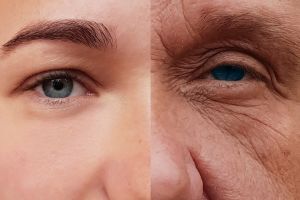
That feeling when you find out your donation is making a huge impact? Incredible.
If you gather enough snowflakes, you can create an avalanche. Thousands of worthy organizations rely on individual donations to do good work in the world. And there are millions of people who feel compelled to donate, but they might think their modest contributions won’t really make a difference. But they do — especially when enough…
If you gather enough snowflakes, you can create an avalanche.
Thousands of worthy organizations rely on individual donations to do good work in the world. And there are millions of people who feel compelled to donate, but they might think their modest contributions won’t really make a difference.
But they do — especially when enough people show up. When we hear about a major donation, it’s easy to think that those are the ones that really make a difference. And, no doubt, those windfalls create big opportunities.
Las Americas, an advocacy group that provides legal representation for immigrants, received a $100,000 donation from Priorities USA — which had a huge impact. “We are all crying in the break room,” wrote one of the organization’s employees. “Our legal staff is 5 people (2 of us in stipends) and one attorney with at least 300 open cases and clients. This is going to expand the number of people we can help by so much.”
But whether it’s one person or organization giving $100,000, 100 people giving $1,000 each, or 10,000 people giving $10 each, the effect is the same. For nonprofits, every dollar counts, and the more people they have supporting them, the better.
A viral fundraiser succeeded beyond any expectation — with donations averaging around $38.
When the Trump administration enacted a sweeping policy of separating children from parents at the border, people of all beliefs and backgrounds were appalled. One couple started a Facebook fundraiser to raise money for the Refugee and Immigrant Center for Education and Legal Services (RAICES), a Texas-based legal aid organization serving refugees and immigrants. It went wildly viral, and in less than a week raised more than $17 million.
As of this writing, almost 450,000 people have donated to the RAICES fundraiser — a participation level that calculates to an average donation around $38 each. Obviously, some people gave more than that, which means some gave less. And yet all of those individual dollars came together to form an avalanche of funds to help.
“We’ve been occasionally crying around the office all day when we check the fundraising totals,” the organization wrote on Facebook. “… There are terrible things happening in the world. And there are many people who are deciding not to look away but to do something. Thank you. Thank you. Thank you.”
Another nonprofit group has raised millions using a model of intentionally small donations — where no one gives more than $25.
Known for their “Love Flash Mobs,” Together Rising encourages huge participation with small amounts of money. Love Flash Mobs are time-limited fundraisers — usually less than a day for a specific cause, shared through social media. Most Together Rising fundraising campaigns cap donations at $25 — people are asked not to give more. This practice ensures that “every giver is equally vital to meeting the specific need,” according to the organization.
The organization has raised funds for refugees in Greece, abandoned kids in Indianapolis, opioid recovery for pregnant teens, and more. In May 2018, it raised $1 million in just nine hours to help get legal aid to families at the border. Here’s the update on the impact of those funds:
Don’t let having little to give discourage you from giving.
In a perfect world, we wouldn’t need to have fundraisers to support people’s basic needs and human rights, but here we are. And a whole lot of “little” adds up to a lot. If everyone with the means gave small amounts on a regular basis, imagine the avalanche of generosity it would create.
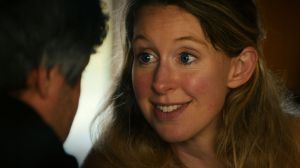
In March 2023, after months of preparation and paperwork, Anita Omary arrived in the United States from her native Afghanistan to build a better life. Once she arrived in Connecticut, however, the experience was anything but easy.
“When I first arrived, everything felt so strange—the weather, the environment, the people,” Omary recalled. Omary had not only left behind her extended family and friends in Afghanistan, she left her career managing child protective cases and supporting refugee communities behind as well. Even more challenging, Anita was five months pregnant at the time, and because her husband was unable to obtain a travel visa, she found herself having to navigate a new language, a different culture, and an unfamiliar country entirely on her own.
“I went through a period of deep disappointment and depression, where I wasn’t able to do much for myself,” Omary said.
Then something incredible happened: Omary met a woman who would become her close friend, offering support that would change her experience as a refugee—and ultimately the trajectory of her entire life.
Understanding the journey
Like Anita Omary, tens of thousands of people come to the United States each year seeking safety from war, political violence, religious persecution, and other threats. Yet escaping danger, unfortunately, is only the first challenge. Once here, immigrant and refugee families must deal with the loss of displacement, while at the same time facing language barriers, adapting to a new culture, and sometimes even facing social stigma and anti-immigrant biases.
Welcoming immigrant and refugee neighbors strengthens the nation and benefits everyone—and according to Anita Omary, small, simple acts of human kindness can make the greatest difference in helping them feel safe, valued, and truly at home.
A warm welcome
Dee and Omary's son, Osman
Anita Omary was receiving prenatal checkups at a woman’s health center in West Haven when she met Dee, a nurse.
“She immediately recognized that I was new, and that I was struggling,” Omary said. “From that moment on, she became my support system.”
Dee started checking in on Omary throughout her pregnancy, both inside the clinic and out.
“She would call me and ask am I okay, am I eating, am I healthy,” Omary said. “She helped me with things I didn’t even realize I needed, like getting an air conditioner for my small, hot room.”
Soon, Dee was helping Omary apply for jobs and taking her on driving lessons every weekend. With her help, Omary landed a job, passed her road test on the first attempt, and even enrolled at the University of New Haven to pursue her master’s degree. Dee and Omary became like family. After Omary’s son, Osman, was born, Dee spent five days in the hospital at her side, bringing her halal food and brushing her hair in the same way Omary’s mother used to. When Omary’s postpartum pain became too great for her to lift Osman’s car seat, Dee accompanied her to his doctor’s appointments and carried the baby for her.
“Her support truly changed my life,” Omary said. “Her motivation, compassion, and support gave me hope. It gave me a sense of stability and confidence. I didn’t feel alone, because of her.”
More than that, the experience gave Omary a new resolve to help other people.
“That experience has deeply shaped the way I give back,” she said. “I want to be that source of encouragement and support for others that my friend was for me.”
Extending the welcome
Omary and Dee at the Martin Luther King, Jr. Vision Awards ceremony at the University of New Haven.
Omary is now flourishing. She currently works as a career development specialist as she continues her Master’s degree. She also, as a member of the Refugee Storytellers Collective, helps advocate for refugee and immigrant families by connecting them with resources—and teaches local communities how to best welcome newcomers.
“Welcoming new families today has many challenges,” Omary said. “One major barrier is access to English classes. Many newcomers, especially those who have just arrived, often put their names on long wait lists and for months there are no available spots.” For women with children, the lack of available childcare makes attending English classes, or working outside the home, especially difficult.
Omary stresses that sometimes small, everyday acts of kindness can make the biggest difference to immigrant and refugee families.
“Welcome is not about big gestures, but about small, consistent acts of care that remind you that you belong,” Omary said. Receiving a compliment on her dress or her son from a stranger in the grocery store was incredibly uplifting during her early days as a newcomer, and Omary remembers how even the smallest gestures of kindness gave her hope that she could thrive and build a new life here.
“I built my new life, but I didn’t do it alone,” Omary said. “Community and kindness were my greatest strengths.”
Are you in? Click here to join the Refugee Advocacy Lab and sign the #WeWillWelcome pledge and complete one small act of welcome in your community. Together, with small, meaningful steps, we can build communities where everyone feels safe.
This article is part of Upworthy’s “The Threads Between U.S.” series that highlights what we have in common thanks to the generous support from the Levi Strauss Foundation, whose grantmaking is committed to creating a culture of belonging.
Everyone’s heard of Staples. But now people are actually going there in droves thanks to one employee affectionately known online as the “Staples Baddie.”
Back in January, Kaeden Rowland, a Staples employee, filmed a brief clip of herself during a work shift. Donning the recognizable red shirt and lanyard, she quipped, “You finna need something printed? I gotchyu.”
That single video quickly turned into a mega-viral series. It’s a fun combination of slang-filled humor, nail-clacking ASMR, and genuinely helpful tutorials and insights. The content is breathing new life into the brand and being hailed by fans and experts alike as “marketing genius.”
A major aspect of Rowland’s shtick is explaining certain lesser-known services you can get at Staples. In one particularly popular video, she quips:
“It’s come to my attention that y’all don’t really know the full scope of what Staples, like, does. We can make ornaments. We can make mugs, shirts, backpacks, signs, posters, whatever you could need. A banner that’s like eight feet long? Sure. Why not?”
In another video, she explains the difference between Staples’ direct-mail services. One is for business and can generate a mailing list based on a target demographic. The other is for personal use, like wedding invitations. Though she jokes that either service is too pricey for committing “evil against your ex.”
Other times, you might catch her letting you know when certain things go on sale: “You’re not getting your shawty a 40% off mug from Staples? And men wonder why women cheat.”
She also dissects the different personalities of the printers (the Xerox PrimeLink C9200 has “clean girl” vibes, apparently). Finally, she hits a groove showcasing some of her favorite stationery products. At the moment, she’s very into a tiny botanical planner that fits into her small purse.
Despite not having any formal marketing training, Rowland has made an undeniable impact. A company struggling to stay competitive now has fresh enthusiasm. Folks are getting their personalized mugs there. They’re switching suppliers. They’re even using Staples to supply their best analog life. The best part is none of this is because of an expensive micro-influencer, but someone who actually works there.
In a video analyzing the Staples Baddie, marketing analyst and PR expert Katie Omstead said, “Just a scan of the comments on any of these videos will show you that people are thinking about Staples more than ever before.”
Rowland is just the latest in a growing trend of people who happened to share their creative ideas at just the right time, somehow skyrocketing to full-blown brand collaborations. Think back to Romeo, whose silly Dr Pepper jingle went viral.
MarketerMilk calls this “human-first media,” where corporations rely on the fact that “people buy things from people they trust, not from businesses.” This can look like companies “leveraging their existing employees to become influencers.”
This, of course, can also look like corporations trying to recreate something organic, thus squelching its spark. One Staples employee lamented on Reddit that their team is being encouraged to replicate the Staples Baddie moment in their own stores.
On the bright side, Staples has shared their appreciation for their resident “Baddie.” Not only have they sent a care package Rowland’s way, according to Fast Company, it’s also “exploring opportunities to collaborate and continue supporting her creativity and engagement with the community.”
We very well might be seeing much more of the Staples Baddie in the future.
Do you feel like your brain is constantly juggling a million things? Like your mind is on overload and you cannot focus? Between the effects of scrolling social media, navigating the 24/7 news cycle, and managing work and family life, your brain can easily feel overwhelmed.
Even when you have quiet moments of calm, your mind might still feel too cluttered to get your thoughts in order. However, according to pediatric neurologist Dr. Arif Khan, there is an old-school solution to that problem with modern science to back it up: journaling. Khan goes a step further by sharing three specific techniques and the neuroscience behind why they help.
“In brain scans, something remarkable happens when people write about their feelings,” Khan says in a YouTube video. “The regions for motion and the regions for reasoning begin to synchronize, as if the brain is learning to talk to itself. That is the hidden power of journaling. It’s not just reflection. It’s neurological repair.”
Khan explains that when you write, your prefrontal cortex—the brain area that helps with planning and analysis—begins to communicate with your amygdala, the brain’s emotional reaction center. He cites a 2021 Stanford University study, which demonstrated that expressive writing can help your brain recover from stress.
“The mid-cingulate cortex, which usually fires under emotional pressure, becomes calmer and more coordinated,” says Khan. “And when you put emotions into words, the ventrolateral prefrontal cortex turns on, helping to quiet the amygdala. This process is called affect labeling; it allows you to feel without drowning in the feeling.”
Writing by hand matters, Khan adds.
“A 2023 study in Frontiers in Psychology showed that handwriting activates more areas of the brain than typing,” he says. “When your hand moves with your thoughts, that is, the mind slows down just enough to make sense of itself.”
Here are three journaling techniques Khan recommends to reduce brain clutter:
Technique #1: Expressive writing
Expressive writing, a technique developed by psychologist James Pennebaker, involves writing about something you feel strongly about.
“Think about something you still carry—a disappointment, a loss, a moment that lingers longer than it should,” Khan says. Then write about it for 15 to 20 minutes.
“Don’t worry about grammar,” he adds. “Don’t edit. Don’t write for anyone else. Write until you run out of words.”
Khan says this technique is effective because the brain treats emotional suppression as “unfinished work.”
“Studies show that after expressive writing, the brain’s emotional centers quiet down while cognitive control increases,” he explains. “Your body feels lighter because your mind has stopped trying to contain what it has finally released. You might cry. You might feel tired. You might want to stop halfway. That’s okay. Healing requires a small amount of discomfort before calm returns.”
Technique #2: Gratitude journaling
Gratitude journals aren’t new, but Khan explains how and why they work from a neurological point of view.
Instead of writing about what’s troubling you, write down two or three things you’re grateful for. It could be anything, but stay specific. (Khan gives examples like “the smell of rain,” “a message from a friend that came at just the right time,” or “a meal that made you feel safe.”)
“Gratitude journaling doesn’t force positivity,” says Khan. “It retrains your attention. Neuroscientists have found that practicing gratitude activates the ventral striatum and the medial prefrontal cortex regions that regulate mood and motivation. When you do this daily, you teach your brain to look for what is stable instead of what is threatening.”
Khan says gratitude journaling “tunes your nervous system towards balance.” Rather than erasing struggle, it helps you see beyond it.
Technique #3: Reflective reframing
Reflective reframing journaling focuses on a specific incident and helps you work through it. Khan says to think of a challenge you’ve had and write about it plainly. No judgment, just write what happened. Then write down:
What it meant.
What it revealed.
What it taught you.
One small action you can take the next time something like that happens.
Emotion regulation is like other skills: it takes practice.
After 2 weeks of daily journaling to reframe unpleasant events, depression dropped, life satisfaction rose, and the benefits lasted at least a month.
“This pattern strengthens the prefrontal regions that regulate emotional reactivity,” Khan says. “It builds the ability to pause and reinterpret before reacting. You learn to step back—not to detach, but to understand. Over time, this practice reshapes resilience itself. You begin to see difficulties not as failures, but as data points for growth. That subtle shift changes how your brain responds to future stress.”
Journaling rewires the brain over time
Khan says you don’t have to use all three journaling techniques every day.
“Think of journaling as mental cross training,” he says. “Use expressive writing when emotions feel heavy. Use gratitude journaling when you feel numb or distant. Use reflective reframing when life feels confusing. Each practice strengthens a different circuit of awareness.”
Khan says that journaling isn’t just self-expression but self-construction. While it can help in the moment, the real power is the change that happens over weeks or months. “You pause longer before reacting. You remember more clearly. You recover more quickly,” says Khan.
Journaling has genuinely changed my life.
I used to think it was just another trend people hype up for a few weeks and move on from. But it works like magic, and the reason is surprisingly simple: it reduces cognitive load.
If you are someone who deeply cares about everything,…
People in the comments of Khan’s video shared their own experiences with how journaling has impacted their lives:
“I’ve done all these. I’m 68 now, and I’ve been journaling since I was 13. I have all of these journals. It is all very true and tried out. Today, people ask me how do I live my life so well. This is one of the secrets…..”
“This is fascinating. When I was about 12, I had a teacher who made us keep journals, and we would write about a given promt for 10 minutes at the start of each class. On the days when we wrote about something negative/stressful, she always told us to just keep writing until every single word we had about the topic had drained out. Sounds like we were actually doing technique #1!”
“I recently went thru a 12 year relationship breakup. I felt so bad , like no pain I had ever experienced before. After two weeks of this agony I started a journal and wrote whatever came into my mind including my diet. Now, a month and a half later I have stopped daily entries and my anxiety has dropped from 100 pc every day for a month to almost zero. I write as I feel the need. What an amazing insight this video has given me.”
“I have survived and thrived by doing this kind of journaling since 1996 when my husband left me with our three wonderful children (thank God for them!). I highly recommend writing as often as you can on both good and bad days.”
“I’m 27. I’ve been journaling since 16/17. I can honestly say it’s gotten me out some pretty dark places. All types a writing, expressing, pain, gratitude, to God, to my future self, it all helps. Writing and journaling are a lost art. I hope more people get in tune with themselves a little more and open up to writing and journaling. It’s a beautiful experience.”
“I started to write about my life at 75, mainly for my children, grandchildren and future generations. I have to say that getting all the hurt, upset, sorrows and jubilation has given me peace at last.”
You can follow Dr. Khan’s The Brain Project channel on YouTube for more neuroscience info.
When people refer to artistic or creative geniuses, we often praise them as rugged individualists who pursued a singular vision. But many times, that story is too simple. In reality, great artistic achievements are made through collective effort. This is especially true in film and television.
One artistic genius who changed the world by empowering his creative partners and giving them credit was Muppets creator Jim Henson.
Henson helped create some of the most popular TV shows in the ‘70s and ’80s, including Sesame Street, The Muppet Show, and Fraggle Rock, as well as iconic films such as The Dark Crystal and Labyrinth.
Henson shares the secret to his incredible success
Actor Alexander Polinsky recently shared rare insight into Henson’s creative process and how much he owed to his collaborators in a TikTok post that received over 650,000 views. Polinsky played Adam Powell on the TV show Charles in Charge from 1987 to 1990 and has done voice acting on shows such as Teen Titans, Teen Titans Go!, and the Ben 10 franchise.
Polinsky was seven years old in 1982, when Henson’s dark fantasy film The Dark Crystal was in theaters. His mother worked at a gallery hosting an exhibition on the film. Henson was there when young Polinsky was visiting, and his mother pushed him to ask the creator a question:
“She pushed me in front of him. I was the only kid, besides my two other friends, that were in the whole place that morning. And I said, ‘How did you make this stuff?’ And instead of saying ‘hot glue and learn to sew,’ he said, ‘First, gather a group of people around you that you love and that love you. And give them an idea that has enough empty space in it so that they can take it on and make it their own. And when you get it back, it’s more beautiful than you ever thought possible.’”
Polinsky ended his video by saying, “So make art with the people that you love.”
Henson loved to collaborate with people who thought differently
Steve Whitmire, a Muppet performer who eventually took over as Kermit (Henson’s signature character) after his death, told D23.com that Henson believed in the power of the ensemble. A great example was when The Muppet Show won an Emmy for Outstanding Comedy–Variety or Music Series in 1978.
“I remember Jim’s Emmy acceptance speech very well because he made eye contact with me,” Whitmire, who was newly hired at the time, said. “I was in the third row, and he was looking at me. He was kind of uncomfortable onstage as himself to some degree, but he said, ‘I just want to let everybody know that this is not about me, it’s about our group and our group dynamic.’”
“‘Appreciate each other for your differences and not for your similarities’ was a theme that went through all of his work,” the creator’s son, Brian Henson, added. “Clearly, this was a wonderful message that got picked up all around the world. Everyone got it, everywhere.”
Henson’s belief in providing space for his creative partners shows that he had an astonishing lack of ego—rare in the world of entertainment—and an incredible amount of faith in his collaborators. But it must have been a lot easier for him to keep his faith in those around him because their relationship was based on a power even greater than artistic integrity: love.
Head anywhere in the Southern United States, and you are likely to hear one distinct word: “y’all.” “Y’all,” which combines the words “you” and “all,” may be predominantly used in the South—but not for long.
Paul E. Reed, a linguist at the University of Alabama who studies Southern American English and Appalachian English, told NPR in 2025 that “it’s expanded much more outside of the South” thanks to Americans under 40. (Add it to the list of Gen Z slang.)
How “y’all” entered the English vernacular is a fascinating tale. Linguist Danny Hieber, PhD, explained the origin story of “y’all” to his TikTok followers—and it stems from a surprising language.
According to Hieber, present-day English doesn’t have a plural form of the word “you” like other languages. In Old English, there were three forms of “you”:
Thou (subject)
Thee (object)
Thine (possessive)
Hieber goes on to explain that “you” became singular thanks to French. In French, “you” translated to:
Tu (singular)
Vous (plural + polite)
“After the Norman Conquest of England in 1066, French had a huge influence on English,” he said. “So English speakers started borrowing that pattern into English and used ‘you’ to politely address one person.”
He added that over time, this became the default way to address a single person. Along those same lines, the word “be” also followed suit.
“It used to be that the verb ‘be’ was conjugated like this,” explained Hieber, with the plural use becoming “are.” “That singular verb got pulled along into the singular too, and now the conjugation of ‘be’ looks like this:”
I am / we are
Thou art / you are
He, she, it is / they are
However, it created a “gap,” and “English speakers have been trying to settle on a ‘you [plural]’ ever since,” said Hieber. Enter: y’all.
There are many theories as to how y’all infiltrated American English in the 1700s, per NPR. One theory states that it has British origins, where the words “ye” and “aw” were combined and used in the British Isles. From there, Scots-Irish immigrants brought it to Appalachia in the U.S.
The other theory is that it originated in West Africa, and when enslaved people were brought from there to the South, it began to spread. After the Great Migration, Black Americans brought the term north with them, expanding its use.
However, the term “you guys” is still commonly used in most Northern states. There are also many regional variations throughout the country, including “yinz” (used in Pittsburgh, Pennsylvania) and “youse” (used in Philadelphia, Pennsylvania).
Americans respond
Viewers had lots of opinions on Hieber’s video, including how different regions have termed the plural form of “you”—and their thoughts on y’all:
“Sorry… y’all is singular all y’all is plural.”
“In the upper Ohio Valley, we also say things like, ‘All yinz guys,’ a sort of amalgamation of Pittsburgh’s ‘yinz’ (we’re an hour away), and the Midwest ‘you guys.’”
“From CA but living in the south..I just cannot bring myself to say y’all..feels so unnatural.”
“Washington born and y’all made it into my vocab.”
Autisticspecial interests are intense, deeply focused passions or hobbies that provide joy, structure, and anxiety regulation, often serving as a key part of an autistic person’s identity.
For Jenny Grant, her seven-year-old son Sebastian had a special interest in UPS. This naturally meant having a UPS-themed birthday party.
Technically, Sebastian only asked his mom for “a chocolate UPS cake,” along with “a million people” for his birthday, as she shared with People. But his mom made up for that latter request by going all out on the decor.
In a now-viral (and very adorable) TikTok video, we see an array of brown and gold balloons, banners, and other favors with a UPS sticker placed on top, as well as actual UPS packages and a tiny cardboard cutout of a UPS center. Plus the pièce de résistance: a UPS cake.
In her video’s caption, Grant wrote, “Having a ‘normal’ birthday party theme with an autistic son. Level: impossible.”
As Grant told People, her local UPS was a major help with her plan. Her own mother went there while procuring decorations, mentioned the themed party they were throwing, and the store gave logos, packaging materials, and even some pens as party favors—all to give the shindig some extra authenticity, free of charge.
Wild birthday party themes
The super-cute clip inspired viewers to share how their own kids’ ultra-niche passions led to some pretty wild birthday party themes:
How stinking cute was that? His little “ohhhhh my goodness” shoots straight to the heart. And, as Grant pointed out, the way Sebastian’s party blew up online did sort of fulfill his initial request.
“In a crazy way, his celebration ended up being shared with well over the million people he asked for!” said Grant.
One more wholesome chapter
UPS apparently reached out and offered to arrange a visit with a UPS driver so Sebastian can “see the truck up close.”
“I haven’t told him yet, but I have my fingers crossed,” Grant told People. “It would absolutely make his year!”
Sebastian’s UPS party may not have been “normal” by traditional standards, but it was perfect for him. That’s what truly makes a birthday unforgettable.
Sometimes, when a person is in the early part of adulthood, they seek actual, usable advice and not just broad “bumper-sticker” platitudes. So when a 21-year-old woman took to Threads, she was very specific about the practical wisdom she was seeking.
Elisabeth Bergbom wrote, “I’m 21. Give me oddly specific life tips. No general ‘surround yourself with positive people’ tips. I want the most random, specific advice possible.”
Commenters came through. In fact, more than 11,000 people shared their very specific insights, and they didn’t hold back.
“Take as many pics with your mom as possible. Moms tend to stay behind the camera. Take pictures of her and with her. Ask for samples of her handwriting and a lock of hair for a necklace. Record and keep voicemails in case, heaven forbid, something happens. Same for your dad.”
“Don’t expect one person to fill all the roles in your life. I have the ‘going out’ friend, the ‘chill out’ friend, the ‘adventure’ friend, the ‘lifetime’ friend…etc. You’ll always be disappointed when you expect the wrong thing from the wrong person.”
“Invest in 2-3 close female friendships where you support each other fiercely. If there’s underlying competition vibes, find different friends to prioritize. Send voice notes every day. Show up for each other. Dutifully advocate for each other to mitigate the effects of crappy romantic relationships, draining jobs, family drama.”
Practical advice
“If the pants fit perfectly, buy them in every colour, and twice in your favourite colour. Clothing companies love to discontinue the lines that actually fit!”
“You said oddly specific, so it’s your own fault for asking. Live east of your job. Driving into the sun both ways means you start and end your day with a headache, and nobody needs that.”
“Spend for quality on everything that anchors you to the ground: Shoes. Mattresses. Car tires.”
“Never cut your bangs after midnight. Reason retires early, but regret is tireless and she delights in uneven fringes. Photograph your hands occasionally. One day, you will search for her, the girl you once were, and find she has been living there all along.”
“Keep sugar-free gum by your bed. Sometimes you may feel too tired, sick, or late to brush your teeth, and your mouth will thank you.”
“Drink a large glass of water — preferably with lemon and cayenne — first thing upon waking. Before coffee, before eating. Game changer.”
“When you’re grocery shopping, bring a snack. You’ll save tons.”
Loving yourself
“Don’t wait for anyone to do the things you want to do. Go to concerts alone. Movies alone. Take yourself to dinner alone. And getting drunk is overrated. Hangovers are the worst.”
“Allow me to offer you some advice: Take a thousand naked pictures of yourself now. You may currently think, ‘Oh, I’m too spooky.’ Or, ‘Nobody wants to see these tiny boobies.’ But, believe me, one day you will look at those photos with much kinder eyes and say, ‘Dear God, I was a beautiful thing!’” (Moira Rose’s quote from Schitt’s Creek)
“You can always leave. Bad dates. Jobs. Relationships. The state. The country. People too often forget that they can always leave.”
“Learn to keep a commonplace book. One day, it will help you remember the significant things you no longer have in your active memory.”
“Do not fall into the hustle culture mentally. Rest. Stillness. And a peaceful life matter so much.”
“You always deserve the name-brand toilet paper.”
Financial advice
“Open a Roth IRA account, even if you only put in $5 a month.”
“Live below your means, nobody cares.”
“Learn to cook 10 good cheap meals that you like. Eat out as little as possible.”
“Pay credit card bills off every month. Don’t carry a balance unless you’re in dire circumstances and have no other choice.”
“Don’t be fooled with needing the latest phone or a new car. It’s sexier to save money. To have a budget and invest in your future.”
Love
“Date with the intention of finding someone who matches ‘your weird’ instead of changing your weird to match someone else’s. Or, in other words, don’t worry so much about getting them to like you. Instead, use dating for finding out if you like ‘them.’”
While caring for the elderly can be extremely rewarding, it comes with a specific set of challenges that aren’t often discussed. Delivering high-quality care is vital for anyone in this position, but this must come with a level of patience many of us might take for granted.
While visiting my own mother in the senior living home where she resides, I was able to sit down for heart-to-hearts with a few of the caregivers who work for various residents. They opened up in a way I found beautifully vulnerable and surprising. Here are their stories. (At their request, I have changed their names.)
Setting boundaries with families
Caregiver discusses a patient with another family member. / Image via Canva
A woman named Veronica shared that she often feels stuck in the middle of family disputes. “I don’t like it when I’m just trying to do my job and take care of clients and I’ve got 20 people calling me. Sisters, wives, brothers, daughters, sons, and even best friends. Everyone has an opinion. I wish they’d have family meetings and decide what to do without sticking me in the middle.”
Another woman, Anne, added her two cents, saying, “Family dynamics are tricky. I want to respect how hard it is to age on everyone in the family, without feeling like I’m inserting myself in the drama.”
They want to be asked about their day
A caregiver takes a break. / Image via Canva
Anne shares that she sometimes feels invisible. “Sometimes I wish they would ask how things are in my life. What my hopes and wishes are. I would like it if they understood that sometimes I need a day off, or that my body hurts sometimes.”
On a resource site for caregivers, one of the helpful tips is finding the balance between helping others and self-care. This means paying attention to their own mental and physical health needs. “Maintaining your health is crucial for being able to care effectively for your loved one. Take care of your own health by focusing on nutrition, exercise, and sufficient rest. Regular self-care routines can help you stay strong and resilient in the face of caregiving demands.”
Mental Health America also has a few articles dedicated to self-care as a caregiver. “If you cannot remember the last time you slept properly, ate adequately, exercised weekly, or did not feel guilty about taking a sick day, then you’re probably feeling the impacts of caregiving on your mental and physical health. Ask yourself: ‘What could I do to replenish myself?’”
They go on to give tips: “Is there any small action that could improve my life or make me feel more content with my present state? If you’re treating yourself fairly, the answer should be yes. Everyone always has some need that could be better fulfilled—caregivers are no exception.”
Sometimes, especially after a caregiver has worked with a person for more than a month or two, they develop a true bond. While the connection is genuinely satisfying, it can make the loss of that patient even harder.
Mark, who has been working with senior citizens for two decades, explains how devastating the losses can feel. “I worked with a woman named Evelyn for seven years. She passed away at the age of 94. It’s especially hard because when you’re in this business, you might have three clients pass in the span of a few weeks.”
Veronica added, “Sometimes people forget how much we love the elderly we work with.”
These sentiments come back to decompression. Processing just one loss can be difficult. Having to do so for multiple people in a short amount of time takes extra healing time for everyone.
The resource site also notes how important it is to take breaks when needed. “Caregiving can be overwhelming, so taking respite breaks regularly is important. These breaks can help prevent burnout and give you time to recharge. Schedule time for yourself to engage in activities that you enjoy and that help you relax.”
It’s true that we all have the same 24 hours in a day. But it’s our own personal relationship to those 24 hours that greatly determines what that day looks like.
Time is one of those things that is both a constant in our collective reality, and yet highly subjective to the individual. It’s why one person hears “We need to be there 6:30” and translates that to “We need to be out the door in fifteen minutes,” and another person translates it as “Oh, I have plenty of time to change my clothes, walk the dogs, listen to a podcast, and clean out that junk drawer!” And of course, these two individuals will be spouses. It is universal law.
It would seem that—much like how knowing whether you’re an introvert, extrovert, or somewhere in between can help you navigate social settings—knowing your MO when it comes to time management can really help make your day flow a lot smoother.
That’s where the four “time personalities” come in.
In an article for Verywell Mind, experts Kristin Anderson, LCSW, and Dr. Ryan Sultan, explained that most of us fall somewhere on a spectrum between “very rigid” and “very flexible.” There are, of course, various factors that dictate why we might fall into a certain spot—including neurodiversity, age, and other aspects of our overall personality. But regardless, knowing the gifts and challenges of our go-to time management settings can greatly affect how we “function.”
See which one below seems to resonate the most.
The 4 Time Personalities
1. The Time Optimist
The never-ending mantra, or perhaps the “famous last words,” of this personality is “I’ve got plenty of time!” regardless of what the clock says.
Because of this, Sultan says time optimists “don’t really feel pressure under a time crunch.” They truly believe they can fit multiple tasks into a short amount of time and don’t easily account for potential delays, which leads to chronic tardiness.
“They’re ones who leave for a dinner reservation with just enough time to get there, as long as there’s no traffic and they hit every green light,” said Sultan.
Folks who consider themselves time optimists might benefit from exploring the “double it rule,” which has you automatically double the amount of time you think it’ll take to get somewhere or complete a task.
2. Time Anxious
Unlike time optimists, “time anxious” personalities feel an enormous amount of pressure, assuming “everything that can go wrong, will go wrong (e.g., traffic, delays, getting lost on the way).” Therefore, they attempt to ease this tension by showing up to things incredibly early.
Dealing with time anxiety involves many of the same tools to handle everyday anxiety, such as grounding techniques (5-4-3-2-1 technique, deep breathing), cognitive restructuring (challenging perfectionism, setting realistic goals), and structured planning (using calendars/apps, setting “worry time”). These strategies help shift focus from the future to the present, reducing the fear of wasted time. And maybe, just maybe, the time anxious can experiment with being fashionably late to low-pressure situations.
3. Time Bender
For time benders, the whole concept of time is merely subjective. Where time optimists overestimate what they can accomplish within a certain amount of time, time benders create entirely different time rules for themselves. “Being 10 minutes late basically counts as on time,” Anderson uses as an example.
These are the curious, creative souls who thrive under pressure and easily lose track of time when they reach a flow state, or bounce from inspiring task to inspiring task.
To help curb time-bending tendencies, a good option could be the “Pomodoro Technique,” which has you working in focused, 25-minute bursts followed by short breaks to maintain high energy and concentration.
“Time blindness” might sound very close to “time optimism” and “time bending,” but the former is associated with an actual inability to perceive the passage of time. That’s why Anderson and Sultan explained that this category is frequently found in those with ADHD or executive function issues.
4. Time Blind
“It’s not that these folks don’t care about being late or making other people wait,” said Anderson. “Without external reminders or cues, it’s easy for them to lose track of how long things take, which makes sticking to a schedule more challenging.”
Sultan added, “Their brains actually have a difficult time registering and processing temporal information, causing impairments in working memory, executive functioning, and temporal discounting.”
Though time blindness might be more deeply ingrained than the other three personalities, there are several proven tools that can help—from simple, tried-and-true methods like visual/audio timers (think hourglasses and analog clocks) to apps designed to help strengthen time estimation. And of course, these tools aren’t exclusively beneficial to those with bona fide time blindness. Optimists and benders can try them out as well.
Once you better understand how you uniquely navigate time, you’re better able to (a) incorporate strategies that help you work within your limitations and (b) give yourself a little grace. Perhaps that last part is most important.