Struggling to make friends as an adult? You may have fallen into the ‘liking gap.’

Making friends isn’t always easy for kids, but it’s pretty straightforward. Kid friendships usually start with something like, “Hey, cool bike.” Or “Hey, want to run across the field with me?” Or “Hey, let’s pretend [fill in imaginary scenario].” If the other kid responds positively, boom, you’re friends. If only it were that simple for…

A woman sits on a wall looking lonely
Making friends as an adult can be hard. Photo credit: Canva

Making friends isn’t always easy for kids, but it’s pretty straightforward. Kid friendships usually start with something like, “Hey, cool bike.” Or “Hey, want to run across the field with me?” Or “Hey, let’s pretend [fill in imaginary scenario].” If the other kid responds positively, boom, you’re friends.

If only it were that simple for grown-ups. Making friends in adulthood can be tough, and for some it might feel impossible. There are several reasons for that, but let’s start with one that may be easier to change than you might think.

The “liking gap”

One reason it can be hard to make friends as an adult is that we fear feeling rejected. Are other adults even looking for new friends? Will they like us enough to want to become our friend?

That fear may itself be the problem, or at least part of it. Researchers who studied people talking to strangers in various settings found that “following interactions, people systematically underestimated how much their conversation partners liked them and enjoyed their company.” In other words, people tend to be more likable than they think. The study’s authors called this illusion the “liking gap.”

If you chat with someone and come away thinking they didn’t enjoy it, you may have fallen into the liking gap. “Our studies suggest that after people have conversations, they are liked more than they know,” the researchers wrote.

What’s the solution? Another phenomenon known as the “acceptance prophecy,” which is based on research showing that when we believe others are going to like us, we tend to be more open and warm in our behavior toward them—thereby making them like us. The reverse is also true. When we think people won’t like us, we’re more closed off. It’s a self-fulfilling prophecy: when we think we’re likable, we behave in more likable ways, leading others to like us.

Essentially, we close the liking gap by seeing ourselves as likable. That may be harder than it sounds in practice, but it’s a pretty simple fix. (If you can convince your brain to cooperate, of course.)

But what about the harder problems to solve?

The time and energy problem

One of the biggest obstacles to making friends as an adult is simply time. Between work, family, keeping a home in order, taking care of our health, and everything else, grown-up life is busy. And yet, many adults yearn for more friend connections in the free time they do have.

Then there’s the energy question. “After a long workday, the idea of a night out with friends may not sound as appealing as it once did,” wrote psychologist Loren Soeiro. “This energy shortage can also make it difficult for friends to sustain their bonds: When both people feel depleted, neither is likely to take the initiative.”

How do we make or maintain friendships when we’re so often short on time and energy?

Adult friendships are more complex

What formed the basis of friendships in our childhood may not be sufficient to sustain a friendship in adulthood. Shared interests, or simply enjoying someone’s company, are often how friendships begin. But is that enough to overcome the time and energy constraints that make friendship harder?

As Emma Barr, LPA, pointed out, they may not be: “What becomes more important are character traits like dependability, supportiveness, or loyalty. Those are things that aren’t immediately self-evident. That can make it hard to tell if this is a person you really want to be friends with.”

We have fewer shared experiences baked into daily life

When we’re young, much of our day is structured around group experiences like school and after-school activities. In adulthood, our work might be a group experience, but it might not be. Many people work from home, which makes forming friendships at work difficult. Some people belong to churches or religious groups and might be able to form friendships there. Beyond that, much of adult life is individually oriented. We simply don’t have as many structured social experiences as we did when we were young.

How to be better at grown-up friendship

Friendships can be complicated, but there are some ways to make and maintain them better:

Be the one to reach out

“Don’t wait for others to suggest socializing opportunities,” Soeiro wrote. “You may wish your old friends would reach out to you, but the odds are your friends harbor the same wishes, the same needs. Break the logjam by initiating plans yourself.”

Be honest about wanting to keep friendships up

As adults, sometimes the best bet is to refresh the friendships you already have, especially if they’ve begun to fade.

“Because your friends probably also think their peers have more friends than they do, it makes sense to talk about the problem,” Soeiro wrote. “Letting them know you want your friendships to stay strong, or that you sometimes feel distant, can help normalize these feelings. (Remember, when you can share your vulnerability and feel accepted in return, relationships grow stronger.)”

Adjust your expectations

Therapist Kati Morton shared that as she’s gotten older, she’s felt like every friendship needs to be a deep, sisterly relationship.

“That’s just not possible,” she said. “And so I have to almost recalibrate my own brain to be like, no, it’s okay to have different friends for different reasons. We can have a friend that is helpful at work. We can have a friend who is great for holding us accountable to go to our yoga class or go walking. We can have a friend as part of our book group.”

Don’t let social media fool you

It’s easy to see people posting pictures of friend hangouts and assume that everyone else is better at friendship than we are.

Soeiro described findings from researcher Kristine Lehman, saying she “noted that on apps like Instagram, other people appear to have more friendships, and more satisfying ones, than we do. This perception can heighten a sense of FOMO, magnifying our feelings of shame and isolation.”

Give it time

As kids, forming a friendship may have been as simple as asking, “Want to be friends?” As adults, the process isn’t so cut and dried.

“Allow the process to take time,” Barr wrote. “A friend is someone you trust, but trust takes time to build. You may find that there isn’t a moment where you went from not being friends to being friends; people tend to grow on us slowly.”

Grown-up friendships may be trickier, but they are no less valuable than those we made as kids.

  • Woman sparks surprising debate after singing the praises of dating divorced men
    A couple on a date. Photo credit: Canva
    ,

    Woman sparks surprising debate after singing the praises of dating divorced men

    Dating is hard, no matter who you are. Some people struggle to find any dates at all. Others come by them easily but can’t seem to make a genuine connection. By and large, many Americans report being frustrated by a dating-app culture that promised to make things easier but, in most cases, has not. If…

    Dating is hard, no matter who you are. Some people struggle to find any dates at all. Others come by them easily but can’t seem to make a genuine connection. By and large, many Americans report being frustrated by a dating-app culture that promised to make things easier but, in most cases, has not. If you’re someone who’s fresh off a divorce, you’re playing on hard mode. It can all feel a little hopeless.

    But it shouldn’t. One social media user is going viral for taking a stand: She said dating divorced men has led to some of the best dating experiences of her life. And she’s not the only one.

    Artist and musician Kady Brown caused a stir on Threads recently when she shared her controversial opinion:

    “Dating a divorced man has been one of the most agreeable dating experiences of my life. It makes sense but I don’t think I expected that. It’s like he has relational basics like consideration, accountability, and resolution skills down in a way I haven’t always seen in single (never married) men without asking or explaining. It’s kind of lit … and very attractive”

    marriage, divorce, dating after divorce, dating divorced men, love, relationships, relationship tips, marriage tips
    A man kisses a woman on the head. Photo credit: Canva

    Hundreds of people chimed in to agree.

    “Yes. I love my men pre-yelled at,” one joked.

    “Second wife perks. His first wife molded him. The second reaps the benefits,” another added.

    “Certified preowned…but seriously he already been thru the trenches…learned some lessons…understands dynamics…and overstands communication and consideration,” a commenter noticed.

    “I agree. He’s taught me that I’m not as good with communication as I thought I was. It’s been refreshing,” another wrote.

    @iamalilizzi

    Honestly, almost didn’t date him cause of how soon he had just gotten divorced, but I helped him heal and now we are spending the rest of our lives together 🥹 #relationshipgoals #relationshipproblems #recentlydivorced #newlymarried

    ♬ Disturbia GTTG remix – GTTG

    Divorce is not generally considered a good thing. But there can be a bright side.

    Few people are happy about the failure of a marriage they had hoped would last a lifetime. Interestingly, many people do not report feeling happier after ending a conflict-fueled marriage. But in certain situations, it can be the right move for all parties involved.

    Like any breakup, a divorce can be a tremendous opportunity to learn from your mistakes and grow as a person. According to Psychology Today, people who have been honest about their role in the split, taken the opportunity to discover what they want out of a partner and out of life, and allowed enough time to heal can become terrific partners to someone new down the road.

    But as many commenters on Brown’s post pointed out, not everyone will take that path.

    “[Maybe] he just got good at masking the parts on himself that likely ran the last woman away,” one commenter wrote.

    “I fell in love with a divorced man. Later, I realized he was just parroting what his ex wife and ex girlfriend had they wanted and he was lacking,” someone added.

    “Ok but anecdotally, some divorced men are just teenagers who will never realize they’re the reason all their relationships are burnt bridges, smoldering stacks of self-centered arrogance,” wrote another commenter.

    The “good ones” are out there

    Laura Bonarrigo, a divorce and life coach, said the same is true for anyone who finds themselves dating a woman who’s been through a divorce.

    The “good ones,” she wrote, are out there in spades, and dating one can be a massively refreshing experience after the unpredictability, flakiness, and ghosting of modern dating.

    “There’s accountability in the way she reflects on her history, and rather than reenacting old wounds, she’s choosing to build something healthier moving forward,” she added. “Instead of clinging, chasing, or disappearing only to resurface with flimsy explanations, she moves through dating in a steady and predictable way. Reliability matters to her. She’s looking for a connection that feels mutual, grounded, and emotionally safe, not a dynamic filled with mixed signals or chaos.”

    Whether this outcome requires growing up, therapy, a period of focusing on self-improvement, or just some time, it’s safe to say that divorced people bring more than just “baggage” to the dating scene. There’s a heavy stigma against divorced folks, who are often viewed as failures or damaged, but it’s steadily getting better—partly thanks to voices like Brown’s, who are willing to challenge that outdated notion head-on.

  • What is choremancing? Meet the practical 2026 dating trend that turns errands into relationship tests.
    Choremancing is the new trend sweeping the dating scene. Photo credit: Canva
    ,

    What is choremancing? Meet the practical 2026 dating trend that turns errands into relationship tests.

    “People are no longer waiting for the perfect moment; they’re making everyday experiences meaningful”

    You’ve heard of dinner dates, coffee dates, and movie dates. But what about grocery runs? Or walking your dog around the block until it gets tired and no longer has the zoomies? That’s the idea behind choremancing, the 2026 dating trend that turns to-do lists into opportunities for love connections—one errand at a time.

    “Choremance” is a term coined by the dating app Plenty of Fish in its ninth annual dating trends report. The word is a portmanteau, blending “chore” and “romance” to describe a simple concept: combining a date with the everyday tasks you need to do. Think grocery shopping, walking the dog, or even doing laundry.

    In its survey of nearly 6,000 singles, Plenty of Fish found that in 2025, 42% of respondents were already choremancing in their own lives, whether they were familiar with the term or not. This trend is far from niche—it’s a cultural shift.

    But what’s driving this trend? And will it stick around after the novelty wears off? Let’s explore why choremancing is so popular right now, what science says about bonding over mundane tasks, and when this trend might spell doom for your relationship.

    The rise of low-pressure dating

    Somewhere between swiping fatigue and the pressure of planning the “perfect” first date, something in the dating world cracked. A growing number of singles—particularly Millennials and Gen Z—have grown tired of the performative side of dating: the carefully curated profile, the buzzy restaurant reservation, the rehearsed talking points that make you look cool and totally not damaged by your ex. All of it can feel exhausting before you even shake hands. 

    dating, millennials, gen z, choremancing, trends
    Young singles are becoming disenchanted with dating. Photo credit: Canva

    In its survey of 1,000 singles, Arrows (a modern matchmaking service) found that 65% of respondents are done with high-pressure first dates and prefer low-key meetups centered around everyday tasks. The numbers don’t lie: young singles today crave connections that feel natural.

    Eva Gallagher, a resident expert for Plenty of Fish, put it this way

    “What we’re seeing for 2026 is a real shift in mindset. Trends like Choremance and Love Bubbling show that people are no longer waiting for the perfect moment; they’re making everyday experiences meaningful and embracing connection wherever it shows up. There’s a growing confidence amongst singles, and that optimism is exactly what gives people hope in their dating lives.”

    The shift toward casual dating has been brewing for a long time. Authenticity is no longer a buzzword; it’s a real priority. When you meet someone at a farmers’ market in your worn-out blue jeans and the stained T-shirt you got in middle school after qualifying for the regional spelling bee, it’s harder to keep your social mask on than at, say, a cocktail bar downtown. That’s the point.

    The psychology of boring

    There’s a scientific reason why doing chores together can make you feel closer to someone. When you cooperate on a shared task, your brain releases oxytocin, a chemical that helps people bond. The effects become even stronger when the activity involves working together in close proximity. Completing an errand—like finding the best, perfectly ripe avocados at the grocery store—creates a shared sense of accomplishment, and your brain links that positive experience to the person you’re with.

    Shared routines build consistency and familiarity, which our brains interpret as safety. This sense of security is essential for deeper emotional vulnerability, meaning that, yes, doing the dishes together might open the door to conversations that a romantic candlelit dinner might not.

    And it’s not just a hunch—the research agrees. Daniel Carlson, a sociologist at the University of Utah, discovered that couples who shared three or more household tasks reported greater relationship satisfaction than those who divided the chores. A study from Brigham Young University found something similar: the way couples did housework mattered more than who did what. It was the quality of their teamwork, not just how they divided the work, that made all the difference.

    Dr. Bruce Y. Lee, a contributor to Psychology Todayput it best:

    “Through chores, you can see how both of you handle a little work and potential challenges. You can see who a person really is—helpful, adaptable, and resourceful versus selfish, inflexible, and easily frazzled.”

    The case against choremancing

    Before you cancel every dinner date on your calendar, there are a few cautions about choremancing you should know.

    The Guardian highlighted a key tension in the trend: while choremancing can be a great compatibility test, it could also be a “horrible indictment of the societal pressures that have transformed love into yet another tick-box on a constantly updating to-do list.” That’s a critique with some merit.

    choremancing, negatives, dating, singles, trend
    Choremancing doesn’t work in every situation. Photo credit: Canva

    Psychologist Lordy Santos told PhilSTAR L!fe that, with choremancing, people may “begin to treat productivity or practicality as the sole metric for determining romantic compatibility,” thereby completely sidelining emotional connection or attraction. 

    Another caution: don’t get too comfortable. While choremancing creates casual, low-stakes dating opportunities, sometimes you still want to dress up, put on your best unstained clothes, and eat at a fancy restaurant. It’s nice to feel like someone planned a date for you. Dating should feel intentional, too.

    In short, choremancing should complement intentional quality time, not substitute for it. Research also shows that relationships still need novelty, planned dates, and genuine fun to thrive. Yes, shared errands build familiarity, but shared adventures build memories. Both are essential for a healthy partnership.

    Top choremancing activities to try

    Ready to give choremancing a shot? Data from Plenty of Fish found that the most popular activities for sparking a connection are walking (52%), running errands (51%), and grocery shopping (41%). If you’re looking for more ideas, here are a few other activities to consider:

    cooking, choremancing, couple, dating, singles
    Cooking a meal together can be low-pressure and very cute. Photo credit: Canva
    • Cook a meal together: Sharing the whole process—from the Trader Joe’s run to the finished product—makes it a flirty and fun joint effort.
    • Visit a farmers’ market: A low-pressure outing with fresh air, plus plenty of sensory details to spark easy, natural conversations.
    • Meal prep for the week: A practical and collaborative task that can reveal a lot about your priorities and lifestyle habits. And even if the date goes poorly, at least you’ll wind up with a week’s worth of food.
    • Browse a thrift store or bookstore: A relaxed and exploratory way to learn about the other person’s tastes and sense of humor.
    • Tackle a small DIY project: Assembling furniture or mounting a television is a great way to test your teamwork, communication skills, and patience.
    • Go for a walk: Movement helps reduce social anxiety and awkwardness, allowing conversation to feel more organic.
    • Run errands together: A quick trip to the post office or dry cleaner can be surprisingly fun and revealing.

    The key to all of these activities is that they serve a primary goal: connection. The errand is simply the vehicle, not the destination.

    Finding the delicate balance

    Choremancing isn’t a replacement for traditional romance; it’s an expansion of it. The healthiest relationships have a balance of both: the “everyday togetherness” of shared tasks and the “intentional dates” that remind you why you fell for each other in the first place.

    Perhaps the truest definition of compatibility isn’t found across a candlelit table, but in the simple ease of an ordinary Tuesday. Give it a try. You might be surprised by what you learn from a simple trip to the grocery store.

  • Wedding photographer shares the surprising but ‘surefire’ ways she knows a relationship won’t last
    Wedding photographer Ona Vicente.Photo credit: @onavicente/TikTok

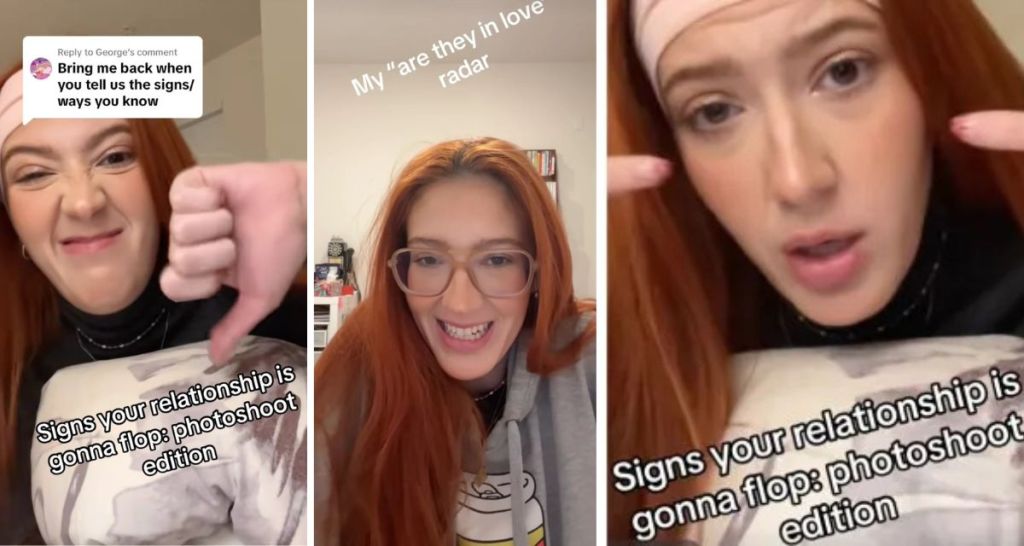
    After years of photographing soon-to-be-married couples, wedding photographer Ona Vicente says she can spot the “surefire” signs a relationship won’t last simply by going off the “vibes” of the photoshoot.

    “You spend enough time with couples, you develop a spidey-sense,” she says in a TikTok video.

    These red flags include: being dressed to go to “two completely different places,” when one spouse refuses to take off a piece of clothing (a coat, for example) for at least one shot, having constant arguments over “small stuff,” making fun of each other “in a mean way,” and getting verbally or physically aggressive.

    What do these “red flags”mean?

    All of these signs point to an unhealthy communication dynamic, which can undermine one of the most important keys to a lasting relationship: healthy communication. After all, Dr. John Gottman, a renowned relationship researcher, has famously said he can predict with over 90% accuracy whether couples will stay together or divorce simply by analyzing their communication patterns.

    @onavicente

    Replying to @George signs I know as an engagement and wedding photographer, that your relationship won’t last #dating #photographer #wlw #weddingphotographer #relationships

    ♬ original sound – Oniii

    As psychotherapist Eliza Davis explains, couples who have healthy communication can “navigate misunderstandings” and high-pressure situations, such as a wedding shoot, because they know how to “repair” after conflict. In one of Vicente’s scenarios, that might look like instantly knowing to apologize and reset the tone after saying something snippy.

    Cheryl Groskopf, an anxiety and trauma therapist, points out that even healthy couples may find themselves acting more hostile toward one another in “emotionally loaded environments.”

    “Stress isn’t personal,” she tells Upworthy. “When people are overwhelmed, the brain shifts into survival mode. The prefrontal cortex, aka the part responsible for patience and thoughtful communication, gets quieter, while the threat-detection system gets louder. That’s why someone might sound sharper than usual or seem short-tempered. It’s often physiology, not intention.”

    How couples can navigate high-stress situations

    That said, couples can help mitigate these tiffs by building in “small regulation moments,” suggests Groskopf.

    “When the schedule is packed, people forget to pause,” she adds. “Even something as simple as stepping aside together for a few breaths, holding hands for a moment, or sharing a quick joke can reset the nervous system. These micropauses help your body move out of stress mode and back toward connection.”

    In a subsequent video, Vicente shares that she’s seen plenty of “green flags” during her shoots as well, like reassuring one another during bouts of awkwardness, expressing the same level of enthusiasm while sharing their love story, being able to laugh with one another, and generally being on the “same page.”

    @onavicente

    Replying to @CatchinupwithCath love radar green flag edition!! #wlw #dating #relationship #greenflag #weddingphotography

    ♬ original sound – Oniii

    Vicente says couples who don’t display these traits shouldn’t consider themselves doomed; she was merely reflecting on patterns she’s witnessed. This is also reflected in how experts assess the health of a relationship—by looking at what patterns emerge. How often do bids for connection get recognized? What is the positivity-to-negativity ratio? Does feedback tend to result in curiosity or contempt?

    Moral of the story

    No two people are perfect, and therefore no relationship is going to be perfect. But what really matters is how the two prioritize their connection with one another throughout all the inevitable twists and turns of life.

  • She told him she was a recovering alcoholic. Then he picked two bars for their second date.
    An irritated woman texts someone on her phonePhoto credit: Canva

    She wasn’t hard to please. She ate almost everything, loved most cuisines, and was perfectly comfortable sitting across from someone who ordered a drink with dinner. She had exactly two requests for a second date: somewhere that served food she could eat, and somewhere that wasn’t a bar. That’s it.

    He picked two bars.

    The story, shared in late January 2026 by Reddit user u/EquivalentOk6093, has been circulating widely because so many people recognize exactly what happened here. The 28-year-old woman had met a 38-year-old man through a dating app. Their first date went well enough, over coffee, and when they started planning a follow-up dinner, he offered to handle the reservations. She told him what he needed to know: she avoided red meat for health reasons, and she was a recovering alcoholic with nearly two years of sobriety. She wouldn’t be drinking. She was clear that she didn’t mind if he ordered something, but alcohol wasn’t on the table for her.

    The night before the planned date, he sent over his choices. The first was a cocktail lounge she’d never heard of. She looked it up. The menu offered a meat and cheese board, a pepperoni pizza, a burger, and a cheese pizza. One option she could eat. He then suggested they cap the evening at a nearby art-themed bar for a nightcap. Two venues. Both bars. No food she could meaningfully eat at either. No acknowledgment of anything she’d told him.

    “At that point, I was honestly pretty thoroughly confused,” she wrote in her post.

    sobriety, dating, boundaries, self-respect, recovery
    Patrons enjoy a drink at a fancy bar. Photo credit: Canva

    She canceled. His response: “We’ll leave it at that.”

    What made her story resonate with so many readers wasn’t the canceled date itself. It was her reasoning. She wasn’t angry, exactly. She was paying attention. A city full of restaurants, two stated needs, and he’d come back with two bars. To her, that gap between what she’d shared and what he’d planned felt less like an oversight and more like a signal. “I could tell he wasn’t testing my sobriety,” she clarified, “but he was kind of testing my willingness to put his preferences ahead of my own needs.” She doubted herself afterward, as many people do when they hold a line. But she came back to the same conclusion.

    For people in recovery, the nuances of dating are genuinely complicated. Having to explain sobriety to a relative stranger, to distinguish between “I’m sober” and “I need you to change everything about your social life,” and to figure out whether someone’s choice of venue reflects carelessness or something more revealing, is exhausting work that doesn’t come up in most dating advice. As alcohol rehab resource AlcoholRehabHelp.org notes, experts recommend having authentic conversations about sobriety early, precisely so both people can figure out quickly whether they’re actually compatible.

    The woman who posted this story wasn’t looking for someone to stop drinking on her behalf. She was looking for someone who listened. She mentioned in her post that her life was already full: a small business she’d built herself, good friends, hobbies she loved, her own home. “I am in no rush to settle down, especially for the wrong person,” she wrote.

    The Reddit response was largely in her corner. Commenters pointed out that the bar selection wasn’t just inconsiderate; it also left her, practically speaking, with almost nothing to eat. A cheese pizza is not a dinner. The man’s terse sign-off, those four words, “We’ll leave it at that,” didn’t help his case.

    Two simple needs. Hundreds of restaurants to choose from. And the two places he picked happened to be the two kinds of places she’d implicitly ruled out the week before. Sometimes a date doesn’t work out because of bad luck or mismatched chemistry. Sometimes the restaurant choices really do say it all.

    This article originally appeared earlier this year.

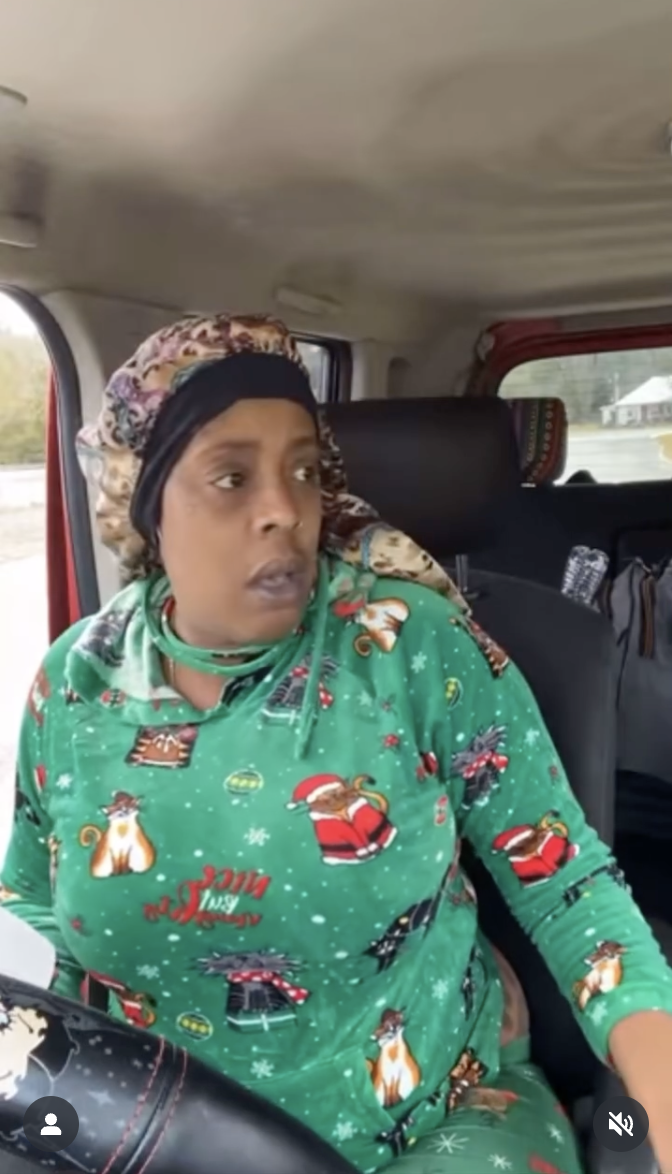
  • A Black woman’s car broke down in front of a white man’s house. His reaction made her cry.
    We need more moments like these.Photo credit: @realbillygotti/Instagram

    The world really doesn’t need to see any more hostile run-ins between people of different races. Of course, racism and hatred are very real issues, and ones that we must discuss in order to make progress. But with all the coverage of people behaving badly flooding our awareness through the media and online, it can be easy to write off humanity entirely. To believe that the world is inherently a divisive, dangerous, and ultimately declining place to live. When in reality, not everything is so bleak.

    That’s what makes sharing this story so important.

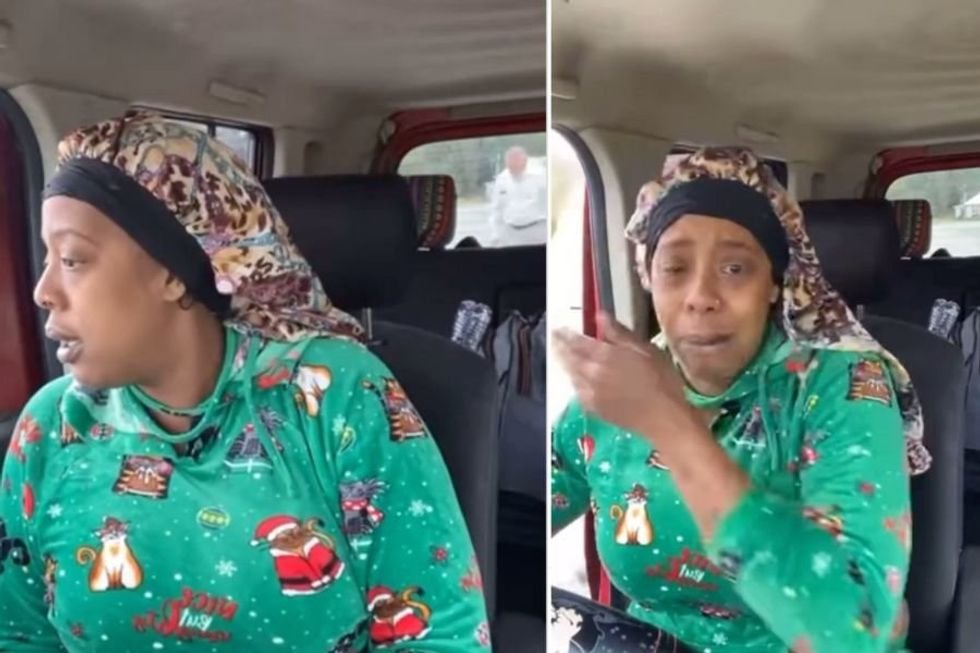
    In December of 2023, a Black woman named Jo’lee Shine was stuck in her overheated car in front of a stranger’s house, waiting for a tow truck to arrive.

    racism, karens, wholesome moments, southern hospitality, kindness, atlanta
    Jou2019lee preparing for the worst. @realbillygotti/Instagram

    When a white man, the homeowner, began approaching her, Jo’lee immediately started recording the interaction. And thank goodness she did, because this was a moment worth immortalizing.

    “I’m so sorry, my car ran hot,” she says in the clip, and begins trying to start the car to prove her situation.

    And then, in the sweetest southern accent you ever heard, we hear “don’t try to crank it baby.”

    We then hear him offer to put water in the car, made sure Jo’lee had coming to pick her up, and then…wait for it…asked if she wanted lunch.

    “We’ll be eating lunch shortly. While we wait on [the tow truck] if we get everything set up I’ll come get you and we’ll have dinner,” he says.

    This brings Jo’lee to instant tears. “That was so sweet,” she whimpers.

    racism, karens, wholesome moments, southern hospitality, kindness, atlanta
    Jou2019lee in tears after being invited to share a meal. @realbillygotti/Instagram

    With a chuckle, the man replies, “that’s the way we are.” he then shared how he just had 22 people over at his house the night before for “a family gathering.”

    Jo’lee declines the lunch offer, but profusely thanks the kind stranger as she wipes the tears that continue to fall. Just before he goes, the man says that he’ll check back in, joking that the tow truck “might be delayed” and she might change her mind.

    In her caption, Jo’lee wrote, “I wasn’t going to post this, but I wanted people to know that they’re still good people in this world.”

    Seems like that mission was accomplished. The video, which has gotten over 176,000 likes on Instagram, gave everyone a little dose of hope. Just take a look at some of these lovely comments:

    “This is who we are…it sucks that movies have put fear in people to that level. That makes me sad that there’s fear and division keeping us all from sharing love that I KNOW is in all of us.”

    “The media works to divide us, don’t believe their lies. We love all people.. God Bless.”

    “I’ll come get you when we get dinner on the table?!!” ❤️ ❤️ ❤️ ”

    “The way he called you baby without a mean tone in his soul.”

    “This renews my faith in humanity. He tried to help her without any thought of race.”

    “Just when we think humanity has died, this happens ♥️. Human kindness for the win.”

    Indeed, the world has its’ Karens…and even worse characters. But it also has people who invite strangers to dinner, just because it’s a nice thing to do…because it’s the “way they are.” It’s the way a lot of us are, when we let ourselves be.

    This article originally appeared two years ago. It has been updated.

  • Swim coach’s reaction when toddler tries to kiss him is a masterclass in teaching boundaries
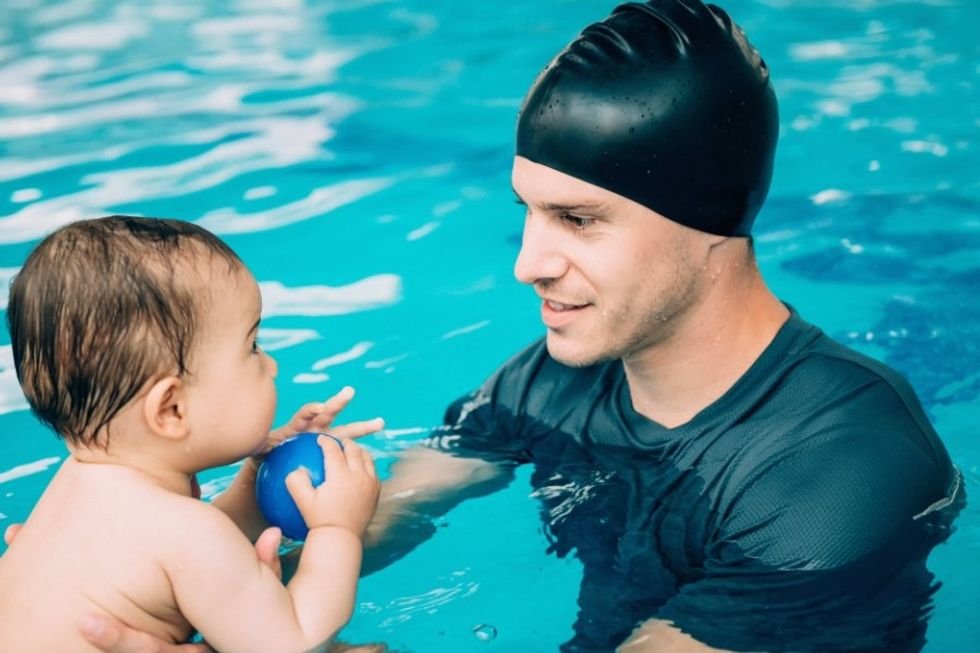
    Swim coach Jason Siegel navigated a moment with an affectionate toddler using wise, quick thinking.Photo credit: Courtesy of men_being_gentlemen and superheroswimacademy/Instagram

    People who work with children—teachers, coaches, mentors—are often beloved by the kids they serve, especially if they’re good at what they do. Those caring adult relationships are important in a child’s life, but they can also lead to some awkward situations as kids learn appropriate ways to show affection to different people. A baby might cover their mother’s face with slobbery kisses, but other adults may not appreciate that very much. As kids grow, they learn what’s okay and not okay, not just from their parents but from the village of adults in their lives as well.

    A perfect example of what that looks like was shared in a video showing a swim instructor at the end of a swim lesson with a toddler who hugged him and then went in for a kiss. The hug was expected and welcome—”Thank you, Mila. I love Mila hugs!” the swim coach said. But when she started to go in for a kiss, he immediately pulled back, gently saying, “No, no kissy. No kissy ’cause I’m coach. You only kiss Mommy and Daddy, okay?”

    The little girl looked a bit dejected and started to cry, and he quickly gave her an acceptable alternative. “Okay, hey! High five!” he said, while holding up his hand. “High five ’cause we’re all done!” She calmed right down, gave him a high five, and then he moved on to clean-up time.

    Watch:

    His expression at the end of the video says it all—he knew that was a teachable moment that could have gone very wrong, but he handled it with clear professionalism and toddler-friendly expertise. People loved seeing such a great example:

    “So sweet… I sometimes have young clients who want to give kisses and it’s so cute but you do have to tell them “no” because it’s an important boundary to learn. Not everyone wants kisses!”

    “On top of knowing not to do it to other people, it also teaches them for themselves that other people shouldn’t be just giving them kisses.”

    “The kid is absolutely adorable but that coach is on another level. Creating the boundaries while keeping it cool and recording the whole thing so the parents are extremely comfortable. Dude is setting a hell of example.”

    “It sounds like he’s got a good balance between encouraging her growth and setting appropriate boundaries. Kids can be incredibly affectionate, and it’s important to gently guide them in understanding what’s suitable.”

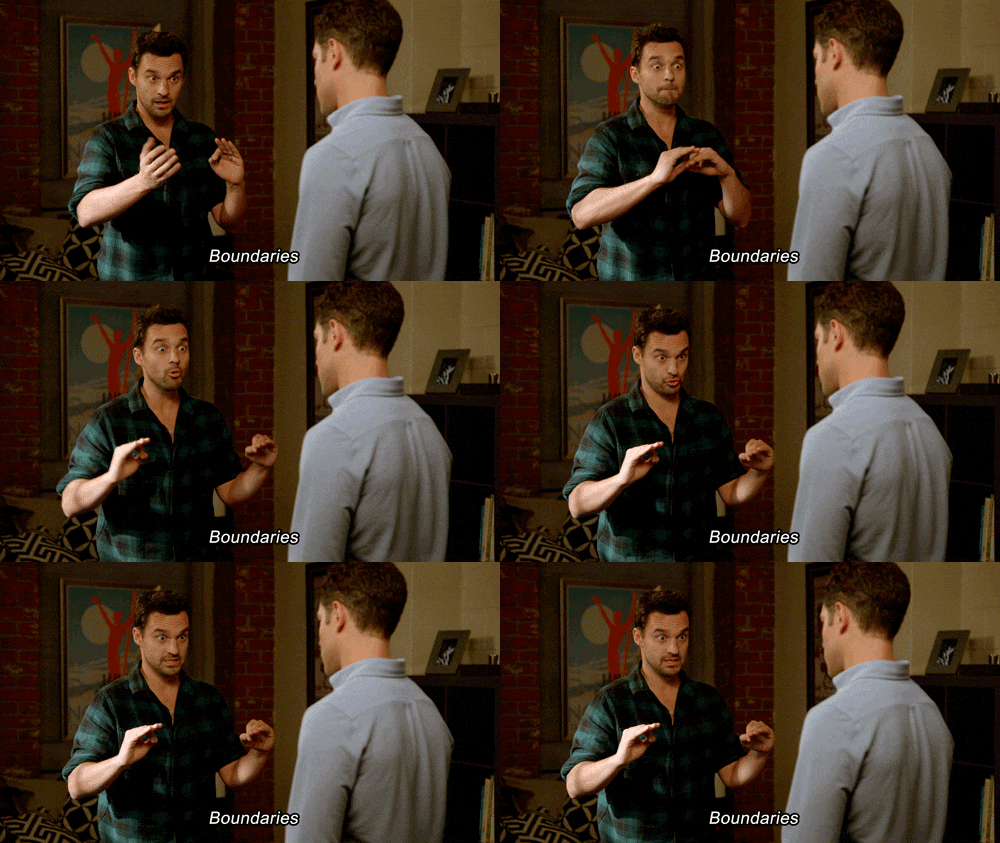
    boundaries, gif, new girl, setting boundaries, kids, adults
    Jake Johnson Fox GIF by New Girl Giphy

    “I also think it’s important for the parents’ comfort that a grown man swimming with their young girl isn’t overstepping boundaries/being predatory. From the outside looking in, it’s hard to know for sure when something is innocent or not. It’s better to just stay away from those situations as a whole.”

    “The little girls I used to babysit always tried to give me kisses (they were between 2-5) and I had to tell them that I’m not related to you, so you can’t kiss me. You can hi-five or hug me, but no kisses! They still give me running tackle hugs when they see me!”

    A few commenters pointed out that some cultures see kissing as totally acceptable, as it’s frequently used as a friendly greeting for people of all ages and genders. But even in those cultures, boundaries based on relationships and contexts are important to learn, and it’s helpful when adults help teach those lessons so it doesn’t all fall on the parents.

    In an article titled “Teaching Kids About Boundaries: Why empathy and self awareness play a major role,” Child Mind Institute includes a helpful video about teaching boundaries to children, and it confirms that the coach handled things in exactly the right way. In a section entitled “Rules work both ways,” the institute notes that when people model their boundaries, it’s important for children to empathetically listen. “People are in charge of their own bodies,” writes Rae Jacobson, author of the article and senior editor at the Child Mind Institute, “and it’s not okay to touch them if they don’t want you to, just like it’s not okay for someone to touch [you] in a way you don’t like.” By calmly modeling his boundaries, the swim coach gave his young swimmer a gentle but clear message about what was and was not okay and embodied both empathy and autonomy for her in a way she can understand and mirror when she’s older.

    Well done, Coach. Thanks for giving us all such a fabulous example to follow.

    This article originally appeared in January. It has been updated.

  • Swim coach’s reaction when toddler tries to kiss him is a masterclass in teaching boundaries
    It takes a village, as they say.Photo credit: Courtesy of men_being_gentlemen and superheroswimacademy/Instagram

    People who work with children—teachers, coaches, mentors—are often beloved by the kids they serve, especially if they’re good at what they do. Those caring adult relationships are important in a child’s life, but they can also lead to some awkward situations as kids learn appropriate ways to show affection to different people. A baby might cover their mother’s face with slobbery kisses, but other adults may not appreciate that very much. As kids grow, they learn what’s okay and not okay, not just from their parents but from the village of adults in their lives as well.

    A perfect example of what that looks like was shared in a video showing a swim instructor at the end of a swim lesson with a toddler who hugged him and then went in for a kiss. The hug was expected and welcome—”Thank you, Mila. I love Mila hugs!” the swim coach said. But when she started to go in for a kiss, he immediately pulled back, gently saying, “No, no kissy. No kissy ’cause I’m coach. You only kiss Mommy and Daddy, okay?”

    The little girl looked a bit dejected and started to cry, and he quickly gave her an acceptable alternative. “Okay, hey! High five!” he said, while holding up his hand. “High five ’cause we’re all done!” She calmed right down, gave him a high five, and then he moved on to clean-up time.

    Watch:

    His expression at the end of the video says it all—he knew that was a teachable moment that could have gone very wrong, but he handled it with clear professionalism and toddler-friendly expertise. People loved seeing such a great example:

    “So sweet… I sometimes have young clients who want to give kisses and it’s so cute but you do have to tell them “no” because it’s an important boundary to learn. Not everyone wants kisses!”

    “On top of knowing not to do it to other people, it also teaches them for themselves that other people shouldn’t be just giving them kisses.”

    “The kid is absolutely adorable but that coach is on another level. Creating the boundaries while keeping it cool and recording the whole thing so the parents are extremely comfortable. Dude is setting a hell of example.”

    “It sounds like he’s got a good balance between encouraging her growth and setting appropriate boundaries. Kids can be incredibly affectionate, and it’s important to gently guide them in understanding what’s suitable.”

    Jake Johnson Fox GIF by New Girl Giphy

    “I also think it’s important for the parents’ comfort that a grown man swimming with their young girl isn’t overstepping boundaries/being predatory. From the outside looking in, it’s hard to know for sure when something is innocent or not. It’s better to just stay away from those situations as a whole.”

    “The little girls I used to babysit always tried to give me kisses (they were between 2-5) and I had to tell them that I’m not related to you, so you can’t kiss me. You can hi-five or hug me, but no kisses! They still give me running tackle hugs when they see me!”

    A few commenters pointed out that some cultures see kissing as totally acceptable, as it’s frequently used as a friendly greeting for people of all ages and genders. But even in those cultures, boundaries based on relationships and contexts are important to learn, and it’s helpful when adults help teach those lessons so it doesn’t all fall on the parents.

    Well done, Coach. Thanks for giving us all such a fabulous example to follow.

    This article originally appeared in January

Health

An ER nurse shares the four essential medical skills everyone needs to learn but never talks about

Relationships

Woman sparks surprising debate after singing the praises of dating divorced men

Nostalgia

Gen Z has fallen in love with Bumpits and, just like that, early 2000s pouf hairstyles are everywhere again

Nature

Researchers dug beneath a 2,400-year-old tree and were shocked by the treasures they found