upworthy
Add Upworthy to your Google News feed.
Google News Button
Education

60 Sandy Hook survivors graduate high school, sharing complex feelings about the milestone

"A chunk of our class is missing."

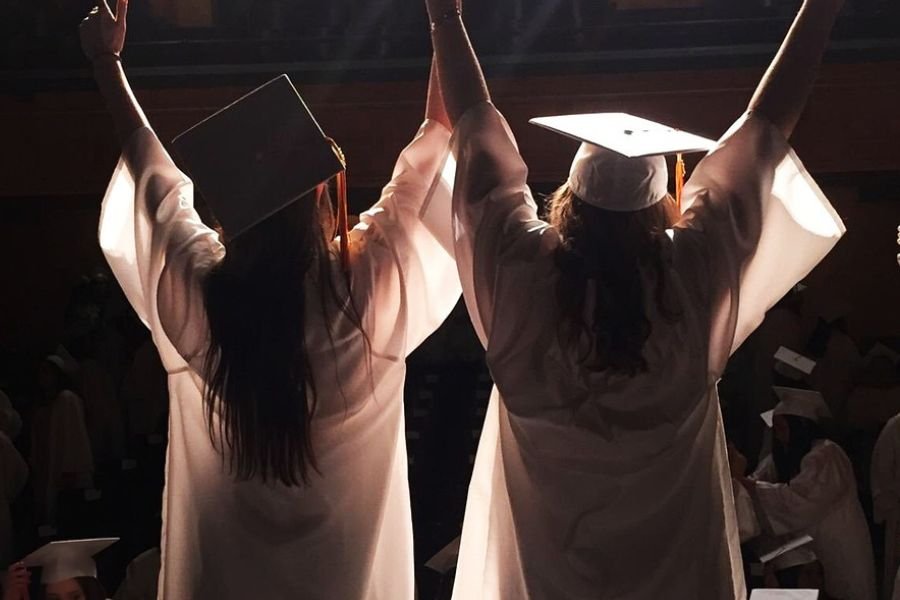
two graduates in cap and gown
Image by Stacey Kennedy from Pixabay

Graduation is a big milestone that can come with grief for some communities.

It's been nearly 12 years since a young man walked into Sandy Hook Elementary School in Newtown, Connecticut, with an AR-15. rifle and two handguns and opened fire, killing 20 first graders and six faculty members before turning the gun on himself.

Survivors of the Sandy Hook shooting—kids who watched their friends and teachers being murdered in their classrooms—are now graduating from high school, and they have complicated feelings about the milestone and the 20 classmates who aren't joining them.

A private graduation ceremony was held at Newtown High School on June 12, 2024, with 335 graduates including around 60 Sandy Hook survivors. Some of them shared their thoughts with journalists in the days leading up to graduation.


“I think we’re all super excited for the day,” Lilly Wasilnak, 17, shared with the AP. "But I think we can’t forget ... that there is a whole chunk of our class missing. And so going into graduation, we all have very mixed emotions — trying to be excited for ourselves and this accomplishment that we’ve worked so hard for, but also those who aren’t able to share it with us, who should have been able to.”

"The shooter actually came into my classroom," Emma Ehrens, 17, told CBS News. "So I had to, like, watch all my friends and teachers get killed, and I had to run for my life at six years old."

According to the AP, Ehrens was one of 11 kids who survived from Classroom 10. She was able to escape with a group of students when the shooter paused to reload his gun. Five students and both teachers in the room were killed.

“I am definitely going be feeling a lot of mixed emotions,” Ehrens said. “I’m super excited to be, like, done with high school and moving on to the next chapter of my life. But I’m also so ... mournful, I guess, to have to be walking across that stage alone. … I like to think that they’ll be there with us and walking across that stage with us.”

The survivors who are graduating this year are dealing with both the exciting what ifs of their futures and the tragic what ifs of their past as they remember their slain classmates.

"Just growing up with having the fear, and the what ifs of what could have happened if I stayed? Because I was, like, I was going to be next," Ehrens told CBS News.

"So even going to prom, you think, well, what if they were my prom date? Or, you know, what if they were my significant other? What if they were able to walk the stage with me," survivor Ella Seaver added.

“As much as we’ve tried to have that normal, like, childhood and normal high school experience, it wasn’t totally normal,” Grace Fischer, 18, told CBS. “But even though we are missing ... such a big chunk of our class, like Lilly said, we are still graduating. ... We want to be those regular teenagers who walk across the stage that day and feel that, like, celebratory feeling in ourselves, knowing that we’ve come this far.”

That desire for normalcy conflicting with their not normal childhood is part of what makes graduation such a bittersweet experience for these young people. They had so much taken from them at such a young age, and that trauma doesn't just disappear. Some of the students expressed that they are looking forward to moving away from Newtown and building a life in which the school shooting doesn't define them.

Sandy Hook was unique in that the victims were so young and there were so many of them, but the survivors aren't alone in their experience. In the years since the Sandy Hook massacre, the U.S. has seen dozens more school shootings, and there are thousands of school shooting survivors dealing with related traumas. Many of those survivors have become outspoken anti-gun-violence advocates, pressuring officials to enact stronger laws to keep guns out of the wrong hands.

But for now, the Sandy Hook graduates are celebrating a big life milestone, just as they—and their 20 missing classmates—should be.

Watch six of the Sandy Hook survivors share their stories on Good Morning America:


34 broken bones, a mural, and Buddy the Elf—what these three things have in common
True

The Bank of America Chicago Marathon took place on Sunday, October 12th. Every runner who took on the enormous feat of 26.2 miles is truly an inspiration. We’re proud to share three outstanding stories about the power of community, giving back and crossing the finish line. Not only did they run an outstanding distance, but they each also gave back by fundraising for an organization that changes lives for the better.

Running a marathon is so much more than race day. It’s sticking to a schedule, getting enough rest, learning how to fuel your body for long distances, and—perhaps the most challenging of all—building mental resilience.


Meet Leanne: Running after 34 Bone Fractures

Leanne was only 12 years old when during her middle school cross country practice, she fractured her right tibia, the shin bone in her leg. This wasn’t Leanne’s first time breaking a bone—it was actually her 34th fracture. After many years of being overlooked as "clumsy," Leanne felt immense relief and recognition when a doctor diagnosed her with brittle bone disease, an incredibly rare condition.

Lurie Children’s provided a care plan for Leanne to build strength and start running again. And as of October 12th, Leanne ran her second Bank of America Chicago Marathon. She said in an interview, “I never thought I’d run again. But against the odds, here I am, training for my second Bank of America Chicago Marathon... all because of Lurie Children’s.”

Leanne’s impressive journey is a testament to the incredible research of Lurie Children’s, where she gives back by volunteering at the hospital and running on its behalf. Talk about being a true inspiration.


Meet Everett: Running to Inspire Through Art

Everett is an artist who creates beautiful murals around the city of Chicago. He uses his art as a tool for storytelling for community and connection.

In addition to being an artist, Everett is a runner. He ran the 2025 Bank of America Chicago Marathon on behalf of Peace Runners 773, a non-profit organization that strengthens the community of Chicago. In this video, we follow Everett on a run to visit some of his favorite murals. The run ends at Garfield Park, where Everett just finished a mural that he dedicated to the organization—symbolizing growth, strength and togetherness. Everett didn’t stop there.

While building his strength as a runner, Everett is strengthening his city of Chicago. Through his running and artwork, Everett has brought more awareness and resources to his community.

Meet Joseph: Running on Behalf of Special Olympics


Joseph ran the Chicago Marathon on behalf of Special Olympics, dedicating each mile to one of 26 friends with a developmental disability. The last 1.2 miles were extra special. It was for one of his closest friends, Matt.

In this video, Joseph runs to Matt’s house. For every mile of this training run, he tells us a heartwarming anecdote about Matt. They met at camp and soon, Matt will be a groomsman in Joseph’s wedding. The duo even sends a Christmas card every year—most notably dressing up as Buddy the Elf and sharing a bowl of spaghetti with maple syrup (spoiler: it doesn’t taste good).

As Joseph runs, he says, “Before we get to Matt, a quick note about why I’m running on behalf of Special Olympics. Matt and I love sports. And so do many of my other friends. Donations help provide year-round sports training and competition for more than 20,000 people with intellectual disabilities across Illinois.”

Joseph is the perfect example of inspiration. Not only did he run an entire marathon, but he also found inspiration in his friends who love sports as much as he does.


Leanne, Everett and Joseph are three incredible people who have shown how much strength and perseverance it takes to run a marathon. Each runner is both empowering themselves and their community. Their dedication to the Bank of America Chicago Marathon shows that the people of Chicago have a passion for the city, their neighbors and their personal achievements.

Education

Social skills expert shares 3 'magic phrases' that make you more likable

Sometimes, we need to overcommunicate how we feel about others.

vanessa van edwards, likability, communications skills, people skills, people laughing, good advice

Vanessa Van Edwards and people at a party.

A familiar misstep people make when trying to be likable is trying to impress others. They want to show they are funny, intelligent, and a great storyteller. They think being the life of the party is the road to likability. However, study after study shows that it’s a lot easier to be likable. All you have to do is show interest in others. To put it simply: If you like people, you will become more likable.

There’s a slight wrinkle in the notion that liking more people makes you more likable. Many people you like aren’t sure that you like them. The psychological phenomenon known as signal amplification bias says it best. We tend to overestimate how clearly we broadcast our feelings and intentions towards others. So, the person we like and who likes us may not know the feeling is mutual.


“We think our signals are obvious,” Vanessa Van Edwards told Steve Bartlett on the Diary of a CEO podcast. “If we like someone or if we’re having a good time, we think, ‘Oh, they for sure know it.’ They don’t.” Van Edwards is a communications expert and the author of Captivate: The Science of Succeeding with People.

To help people clearly communicate their feelings, Van Edwards suggests three “magic phrases” to show you care. Check out the video below.


Phrase 1: ‘I was just thinking of you’

“You think of a lot of people in your life all the time,” she said. “If you are thinking of someone and you can text them: ‘I was just thinking of you, how are you?’ I was just thinking of you, how’d that project go?’ was just thinking of you. It has been a while since we talked.’ You see a movie, you see a documentary, you see a matcha latte, you see a mug, you see a ceramic candle, and you’re like, ‘Ah, this made me think of you,’” Van Edwards said. “My text messages, my conversations, are full of actual moments where I was triggered to think of that person, actually,” she said, noting the importance of being genuine. “If you don’t think of someone, they’re not a person you need to have in your life.”


Phrase 2: ‘You’re always so …’

"So if you're with someone and you're impressed by them or they're interesting or they're funny, say, 'You always make me laugh. You’re always so interesting,’ or ‘You’re always so great in interviews.' Giving them a label that is a positive label is the best gift you can give someone, because it's fighting that signal amplification bias,” she continued.


Phrase 3: ‘Last time we talked, you mentioned …’

“We are so honored when we get brain space—that you remembered and you’re going to bring it up,” she said. “And you specifically bring up something that they lit up with, something they were like, ‘Ah, it was great, it was exciting, it was wonderful.’”


If studies show the more you like other people, the more likable you become, Van Edwards has the next logical step in becoming more likable. She makes it clear that, due to signal amplification bias, many people you like may not even know it. When we employ her three ways to be more likeable, though, we can let people know we like them without making them feel uncomfortable, thus establishing bond to build on.

hotels, women, safety, trafficking, safety tips, traveling, crime, culture, viral tiktok
Canva

Woman's frightening experience reminds everyone to lock hotel door.

Staying in a hotel feels safe. The doors are heavy and solid, the key cards don't have any identifying information on it (should you drop it), and most hotels will have security or at least front desk staff on site 24/7. However, it's still important for anyone traveling alone — especially women — to stay vigilant.

If you've ever stayed in a hotel, you know there's an additional lock you can latch as an added layer of protection. But sometimes weird things happen that make us rethink the comfort and security many of us take for granted.


TikTok user TayBeepBoop had a disturbing experience when a hotel front desk person attempted to enter her room while she was inside.

Some readers may find the story to be unsettling but it's a powerful reminder of exactly why situational awareness and caution are so important in today's world.

Tay, obviously frightened, uploaded clips from the event on her TikTok page, which has since garnered 6 million views. In the video, which is mostly the floor, door and bed, you can hear the man outside of her room knocking loudly asking to be let inside.

Tay asks the man repeatedly why he attempted to walk into her room using the hotel master key to which the man explains there's a problem with the woman's car. There's only one problem. Tay doesn't own a car and is only in town on business where she did not rent a car to get around town, relying only on other modes of transportation.

So, what the heck was the man doing at her door?

@taybeepboop

Replying to @dani klarić this was a really long and hard video to make, it was sort of traumatizing and I’m kind of freaked out about staying anywhere now and I dont leave my house much anymore tbh because I already was dealing with PTSD about my safety. I’m OKAY which is why im able to go through this footage now. I genuinely don’t want anything to do with this hotel, this is a PSA to stay safe and cautious. I don’t want people to go after this worker because I still don’t know what his intentions were and he could have just been trying to do his job

Tay was staying at the hotel alone and made sure to latch the additional lock on her hotel room door, which is the only thing that prevented this hotel staff member from getting into her room. Since the situation was so scary and went on for quite some time according to her video, she called friends on FaceTime to be a witness and help comfort her. Eventually the man leaves after repeated attempts to get the scared woman to open the door and Tay was able to get a male business partner to escort her safely to another hotel.

But the comments were filled with stories from women who have had similar experiences, and a few who had good safety tips.


hotels, women, safety, trafficking, safety tips, traveling, crime, culture, viral tiktok Take care to practice extra safety when traveling alone. Photo by Mario Heller on Unsplash

"Please never say you’re alone in the hotel. I know you were shaken but please please don’t rely on front desk call the police. I’m so glad you’re safe"

"A car smoking in a garage and he takes 30 minutes to go upstairs, harass you, and speak to you in the phone BUT NOT CALL THE FIRE DEPARTMENT?!"

"As a former front desk agent. I’m almost 100% sure it’s illegal for hotel staff to go into a room knowing someone in the room. Please contact hotel"

Many people explained the danger of admitting you're alone upon check-in, while other commenters sympathized with the woman not thinking to call the police right away. With people traveling more as COVID-19 restrictions subside, there could be a greater chance for things like this happening so it's best to be prepared and err on the side of caution when traveling alone.

Women on the Road has several tips for hotel safety including making sure your door lock works, putting a chair under the handle of the door or buying a rubber door stop. The site also highlights the importance of locking your windows if they open and not opening the door for people you don't know.

- YouTube www.youtube.com

Another site geared towards safety is Solo Female Traveler and it recommends getting a floor higher in the hotel to make it more of a hassle for someone from outside to break in. It, too, reiterates the importance of locking the additional lock in the hotel room while you're inside.

While it's statistically unlikely you'll be a victim of a hotel robbery or whatever was happening with Tay, her experience is a reminder to research hotels and practice caution when traveling. In the end, Tay was safe, and has a thriving business sharing home tips and hacks for her audience of almost 2 million followers.

The rest of us should remember: always lock the deadbolt or chain.

This article originally appeared three years ago. It has been updated.


millennials, Gen Z, salon, hairstylist, TikTok, viral video, Alexis Rex, Rex Artistry, hair trends, Y2K fashion, confidence, generational humor, subtle color, bold contrast, Olaplex, client behavior, social media, Maryland salon, pop culture, self expression

A hair stylist trims a man's hair

While millennials and Gen Zer’s often get lumped together as the “young group,” they are certainly not the same. (Although it is kind of hard to tell with all the Y2K fashion floating around.)

But speaking as a millennial, we definitely have different approaches to life, many of which seem to come down to a sense of self-assurance. That goes for shopping, socializing, self-expression…and even going to the hair salon, apparently.


Alexis Rex (@rex.artistry), hairstylist and owner of Rex Artistry Salon in Maryland, gave a brilliant (and hilarious) demonstration of some key personality differences between her millennial clients and her Gen Z clients in a now-viral TikTok video.

subtle color, bold contrast, Olaplex, client behavior, social media, Maryland salon, pop culture, self expression Each generation has its own salon swag. Photo credit: Canva

First, Rex played her Millennial Customer.

Millennial Customer gently knocks on the door and immediately expresses her gratitude. “Hey girl! So good to see you! So excited!”

But at the same time, Millennial Customer wants in no way to be an inconvenience, so she immediately comes back with, “Where should I put my purse? It's okay, I'm just going to shove it in my own personal space so it's not in your way. At all."

Never one to demand attention, Millennial Customer wants a very subtle hair color change. Really, "it shouldn't even look like I got my hair done.” Not “super bold,” not “in your face.”

Then after flooding the hair stylist with compliments, Millennial Customer (ever wanting to be a good student) will ask a bunch of follow-up questions about how to maintain the style.

Then, Rex played her Gen Z Customer.

Gen Z Customer bolts through the door with a “Hey queen!” like a hurricane (who has time to knock?!) and is ready to plop her stuff down anywhere. Unlike her millennial counterpart, Gen Z Customer is perfectly fine to take up space unapologetically and even show up with hair that “hasn’t been brushed in a month.”

Gen Z Customer also knows exactly what she wants, and it’s anything but subtle. “I wanna do like in-your-face, bold contrast…I wanna look like a different f**king person. Let’s do it.”

The confidence…it’s…palpable.

Gen Z Customer has a different approach to complementing her hairstylist: “Oh my god! F**king Queen! You did that! God I love you.”

No further questions. Gen Z Customer already knows her brand of hair care products, and it’s “Olaplex. All Olaplex.”

hairstylist, TikTok, viral video, Alexis Rex, Rex Artistry, hair trends, Y2K fashion, confidence, generational humor It can be hard asking for what you want at the salon if you're from the generation that has a hard time even speaking on the phone. Photo credit: Canva

Rex’s post quickly racked up 8.6 million views, generating literally tens of thousands of comments about how spot-on her imitations were.

Millennials in particular chimed in, many of whom couldn’t help but applaud its accuracy of depicting how millennials seem to constantly be apologizing for simply existing.

“I’m a millennial and once I missed the armhole for a sec when putting the cape on. I was convinced I had ruined the appointment,” wrote one person.

Another added, ‘I’m sorry for my hair. I’m sorry my hair takes so long. I’m sorry I had to move my head, omg I’m sorry. You offered me a drink? I will say yes. And then sorry.”

Many were also quick to applaud how Gen-Zers seemed to have no issues in this arena.

“Gen Z just fully owning the ability to take up space,” one person commented.

"As a millennial I love Gen Z so much. They’re so free to be themselves and so open,” wrote another.

While there may be differences between generations, we can all learn something from one another. And we all enjoy getting our hair did.

By the way, Rex didn’t leave out her Gen X or Boomer clients. She has plenty videos of her imitating them, as well as some nifty style predictions on her TikTok, found here.

This article originally appeared last year.

Popular

Finally, someone explains why everyone needs subtitles when watching TV

No, you're probably not losing your hearing, and it's not just the actors.

subtitles, why use subtitles, dialogue, sound mixing, movie audio, Austin Olivia Kendrick, Vox, hearing, TV speakers, mumblecore
Vox/YouTubeVox/YouTube

Someone watching a video of Pete Davidson on their phone with subtitles at the bottom

It seems everyone needs subtitles nowadays in order to "hear" the television. This is something that has become more common over the past decade and it's caused people to question if their hearing is going bad or if perhaps actors have gotten lazy with enunciation.

So if you've been wondering if it's just you who needs subtitles in order to watch the latest marathon-worthy show, worry no more. Vox video producer Edward Vega interviewed dialogue editor Austin Olivia Kendrick to get to the bottom of why we can't seem to make out what the actors are saying anymore. It turns out it's technology's fault, and to get to how we got here, Vega and Kendrick took us back in time.


They first explained that way back when movies were first moving from silent film to spoken dialogue, actors had to enunciate and project loudly while speaking directly into a large microphone. If they spoke and moved like actors do today, it would sound almost as if someone were giving a drive-by soliloquy while circling the block. You'd only hear every other sentence or two.

subtitles, why use subtitles, dialogue, sound mixing, movie audio, Austin Olivia Kendrick, Vox, hearing, TV speakers, mumblecore An old silent movie houseCanva

But with today's technology, microphones are so small they can be strapped just about anywhere on an actor. This allows the actor to move about the set freely and speak at a normal volume without worrying that their words won't be picked up.

So then why can't we hear them? Turns out it's super complicated…and also not.

"A lot of people will ask, 'Why don't you just turn the dialogue up?' Like, 'Just turn it up.' And...if only it were that simple," Kendrick said before explaining, "If you have your dialogue that's going to be at the same volume as an explosion that immediately follows it, the explosion is not going to feel as big. You need that contrast in volume in order to give your ear a sense of scale."

Sure, you may be thinking, well that kinda explains it, but why do the music and other cinematic noises sound like they're beating on your eardrum while the dialogue sounds like the actors are whispering every line? That doesn't seem very balanced. There's more to it, and again, it falls back onto technology.

subtitles, why use subtitles, dialogue, sound mixing, movie audio, Austin Olivia Kendrick, Vox, hearing, TV speakers, mumblecoreGif of Steve Carell saying "loud noises" via Giphy


In the video, they explain how our televisions are too thin to hold large speakers facing in the correct direction, and until this video, it didn't dawn on me that the speakers to my television are indeed in the back. No wonder we can't hear. The actors are quite literally talking to our walls.

And there's more. Check out the full explanation in the video:

subtitles, why use subtitles, dialogue, sound mixing, movie audio, Austin Olivia Kendrick, Vox, hearing, TV speakers, mumblecore YouTube

While it may be a confusing trend, there's a reason for it as Kendrick explains. And, some experts like the World Literacy Foundation note that watching television and movies with subtitles is especially beneficial for children. Studies have shown that simply putting on subtitles improves literacy for kids, and many actors support the practice. This is good news for those worried about the literacy crisis in America.

If subtitles help us "hear" and improve literacy, then I'm all for them.

This article originally appeared last year.