upworthy
Add Upworthy to your Google News feed.
Google News Button
Pop Culture

Folks are admitting that Boomers weren’t totally wrong. Here are 19 things they got right.

OK, Boomer, you're right about this one.

boomers, gen x, millenials

The gaze of the approving Boomer.

Over the past few years, Baby Boomers (1946 to 1964) have been getting a lot of grief from the generations that came after them, Gen X (1965 to 1980), Millenials (1981 to 1996), and now, Gen Z (1997 to 2012). Their grievances include environmental destruction, wealth hoarding, political polarization, and being judgemental when they don’t understand how hard it is for younger people to make it in America these days.

Every Baby Boomer is different, so it's wrong to paint them all with a broad brush. But it’s undeniable that each generation shares common values, and some are bound to come into conflict.

However, life in 2023 isn’t without its annoyances. Many that came about after the technological revolution put a phone in everyone’s hands and brought a whole new host of problems. Add the younger generations' hands-on approach to child rearing and penchant for outrage, and a lot of moden life has become insufferanble.


These problems weren’t created by Boomers but by their hyper-online children and grandchildren who can’t seem to get their faces out of their phones.

A Reddit user named AnitaVodkasoda took to the AskReddit forum and asked posters to admit there were some things that Boomers got right. “What is something you can say 'I'm with the boomers on this one' about?” they asked, and many responses came from people fed up with the modern-day frustrations caused by technology and social media.

Here are 19 things that people think that Boomers got right.

1. App exhaustion​

"Any business which requires you to use an app. I don’t want to download an app, make an account, and remember said password for the account. Especially because the app doesn’t even work a lot of the time or is extremely convoluted with the frontend design." — Sammy_Henderschplitz

2. Let kids play

"Kids do great with totally unstructured outdoor play. They don’t need an organized game or activity. If you take a bunch of kids to a park and keep an eye on them they’ll figure out stuff to do together and often come up with creative and interesting things that adults wouldn’t have thought of. Just keep them physically safe and let them run around and do kid stuff. You don’t need to curate everything." — HeavyHebrewHammer

3. Pricey concerts

"Concert ticket pricing is too high. Once you get in a beer is $17!" — Whatabout-Dre

4. Tip creep

"Every business asking for tips at checkout. Digital menus. Not being able to own things anymore like software or having to pay monthly fees for car features." — mutualbuttsqueezin

5. Phones at concerts

"Phones at concerts. I take one pic when the artist comes on and then I just enjoy the show. You’re never gonna look back at your sh**** videos with you singing off-key in the background lol just enjoy the music." — Used_Eraser

6. Kids online

"Social media is unhealthy and children shouldn't have unrestricted access to the internet." — horrorflowers

7. Lazy tablet parents

"Parents who let their kids use tablets in public spaces with the volume all the way up, no headphones, and not doing it to stop an imminent tantrum (if they truly cannot get the kid out of that shared space for some reason) are trashy af. Fight me." — kishbish

8. Bring back knobs

"Touchscreens in cars suck." — sketchy_painting

9. Bad customer service

"Calling any business and getting an automated system that takes you 12 minutes to get through, doesn’t answer your question, and you can’t get a real person." — SexyJesus7

10. Raising entitled kids

"The 'my kid is never wrong' attitude every parent seems to have now. And we wonder why there’s a teacher shortage." — Cinderjacket

11. Emojis in work emails

"Learn to write a professional email. The number of Gen Z kids I’ve had who send me emails without salutations, with emojis and shorthand like lol omg etc, without proper spelling and punctuation, is crazy. That is fine for texting or exchanges with people you’re friends with, but it’s not for the workplace." — pistachiobees

12. Paper straws

"Paper straws suck." — JohnYCanuckEsq

13. Face tattoos

"Don't get tattoos on your face." — Disastrous-Aspect569

14. Gender reveals

"Just tell us if you are having a boy or girl. Or wait until the baby is born. We don’t need to assemble for some ridiculous reveal. I don’t want pink or blue dust all over the place." — Kevin Dean

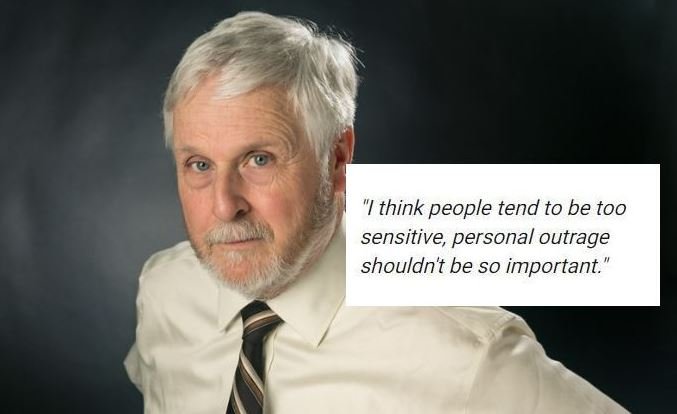
15. People are too sensitive

"I think people tend to be too sensitive, personal outrage shouldn't be so important. It's disheartening to see so many people whine and cry and fight over inconsequential nonsense while pressing issues remain unaddressed." — Empathetic_Orch

16. TV sounds terrible

"Movies, and some TV shows for that matter, are mixed idiotically these days. I don't appreciate having to crank the volume way up to hear the whispered dialog, only to have a music swell or explosion or something blow my head clean off. No amount of tweaking my sound system has fixed this." — broberds

17. Affordable housing

"Being able to afford a house." — The-Black-Douglas

18. Blinded by the lights

"Headlights are too damned bright now." — 15all

19. The people on your lawn

"Get off my lawn." — Disastrous_Motor_189

This article originally appeared on 8.30.23

dog experiments, dog tongue cleaner than humans, experiments by kids, cool science, dogs, fun science, experiments, science

A young teen boy holding a beagle.

Dogs come in a wide variety of breeds, along with their own unique personalities and needs. They can be guardians, helpful workers, loyal friends, snuggly companions, but there's one thing almost all dogs have in common: Licking.

Sure, some dogs lick way more than others, but it's rare to find a dog who never licks anyone or anything. Many dogs communicate and show affection by licking, which is sweet—if a little gross—depending on how slobbery they are. There's a common saying that dogs' mouths are cleaner than humans', which is a bit hard to believe when you see what some dogs put in their mouths, but it is true?


What does science say about dog tongues and saliva? Is a dog licking our face something we should worry about?


dog experiments, dog tongue cleaner than humans, experiments by kids, cool science, dogs, fun science, experiments, science A man being licked by a golden retreiver. Photo credit: Canva

It turns out, the answer to whether a dog's mouth is cleaner than ours isn't super straightforward.

An 8th grader named Abby tackled this question in a science experiment that won her a Young Naturalists Award from the American Museum of Natural History in 2011. Her family had gotten a dog and her mom kept telling her not to let the dog lick her face because dog mouths are full of bacteria. Instead of arguing, Abby decided to find out herself if this was true.

"I hypothesized that human tongues would be cleaner than dog tongues," she wrote. "I thought this because humans brush their teeth at least once a day. I hypothesized that dogs' tongues would be dirty because they were always licking dirty things like garbage."

After diving into the research about bacteria that live in and on humans and dogs, Abby decided she had a testable hypothesis. But this wasn't any old middle school science experiment. She applied for and got a grant to the State Hygienic Lab at the University of Iowa, where she was assigned a mentor to work with her.

You can read the nitty-gritty details of her experiment here, but it involved a lab, swabs, agar plates, and more. Here was the conclusion:

dog experiments, dog tongue cleaner than humans, experiments by kids, cool science, dogs, fun science, experiments, science A dog's tongue close-up. Photo credit: Canva

"I concluded that dog and human mouth flora are very different. (Flora means the bacteria found in a mouth or anywhere else.) The bacteria found in human mouths are more similar to another human's oral bacteria than the bacteria found in a dog's mouth.

"I also concluded that dogs' mouths are cleaner than humans' in some ways, and dirtier in other ways. Humans have more bacteria in their mouths than dogs do, based on the total number of bacteria. Most of the humans had a 'moderate' number of bacteria, and most of the dogs had 'few' bacteria. A possible explanation of this might be that dogs pant a lot, and maybe while panting, bacteria falls off their tongues along with their saliva. But dogs had more types of bacteria. The average number of different bacterial colonies in a dog's mouth was about 5.7. The average number of different bacterial colonies in a human's mouth was about 4.1. I think this is so because dogs sniff and lick a variety of things, like carpets, floors, chairs, grass, etc., so they pick up bacteria from many places."

But what about the licking of our faces? That's a bit of a subjective call, but Abby's results gave her some peace of mind:

"In conclusion, will I let my dog continue to lick me? The answer to the question is yes!" she wrote. "I will feel guiltless about letting my dog lick me because I found out that human and dog oral bacteria are different, so my dog's oral bacteria present no harm to me."

What do the experts say?

According to Colin Harvey, professor at the University of Pennsylvania’s School of Veterinary Medicine and executive secretary at the American Veterinary Dental College, comparing dogs' mouths to humans' mouth is "like comparing apples to oranges." As Abby found, the microbes in a dog's mouth are very different than those in a human's.

The American Kennel Club elaborates:

"Most of the bacteria in your dog’s mouth aren’t zoonotic, which means you probably won’t get a disease from a big old doggy kiss. There are exceptions to this. Dogs that eat a raw diet are at an increased risk of contracting salmonella, which can be spread to humans. You also probably shouldn’t share kisses with a dog that regularly raids the litter box.

In other words, kissing your dog is less risky than kissing another human, but that doesn’t mean that your dog’s mouth is necessarily cleaner than a human’s—they just have a mostly incompatible set of germs."

Keeping your dog's mouth healthy through regular teeth cleaning and dental check-ups can also help prevent issues that could potentially come from dog licks.

dog experiments, dog tongue cleaner than humans, experiments by kids, cool science, dogs, fun science, experiments, science A golden retreiver getting their teeth brushed. Photo credit: Canva

So there you have it. If your dog doesn't eat a raw diet and doesn't go snacking in the cat box (or some other equally fecal-bacteria-ridden place), their kisses are probably not going to hurt you. Guilt-free pooch smooches for the win!

This article originally appeared last year.

Learning

Sleuths debunk 5 supposedly healthy things that are actually terrible ideas

"Detoxes / cleanses are great for clearing out your wallet."

healthy food; healthy options; unhealthy food; fasting; juicing; supplements

Sleuths debunk 5 supposedly healthy things that are actually terrible. 5 things to do instead.

A lot of people reach for convenient items advertised as healthy when they're short on time. The rise of health and fitness influencers has also contributed to the proliferation of confusing information about what is considered healthy, and what actually is. It's no wonder people sometimes make unhealthy choices, believing they're doing right by their body.

Some people took it upon themselves to parse out the gimmicks from the multi-million dollar health and fitness industry. Their revelations may surprise you. If you've fallen for the hype of an item or product that turned out to be a dud, it's not your fault. Some things are heavily marketed as healthy, while others are things we've grown up believing were healthy. In a world that can feel oversaturated with information, it can be difficult to have time to research everything.


Suddenly, everyone's drinking green juice or swearing by a new protein bar. Since the bars promise to taste like raw cookie dough without the risk of salmonella, you throw a few boxes in your grocery cart, hoping for the best. After all, it claims to provide all of the vitamins for the day, and you don't have time to cook.

healthy food; healthy options; unhealthy food; fasting; juicing; supplements Homemade granola bars with chocolate chips – perfect for a delicious snack!Photo credit: Canva

Instead of wondering, here are some things people think are healthy, but actually aren't, and what you can replace them with instead:

1. Cereal, granola, and protein bars

Cereal bars are quick to grab when you're running late. The same goes for granola and protein bars. Some people even use them as a meal replacement, but they're not as healthy as people like to believe. If you flip over the package, you'll be met with a high sugar content and very little actual protein in many cases. One person in the Ask Reddit thread is aghast, "We all need to be taught how to read nutrition labels. I was and am still absolutely shocked by the amount of sugar and sodium that are in most packaged foods, throw serving size in there, and it's totally bananas."

Try this instead:

If the goal is to make a healthier morning selection while still packing in a little extra protein, eating whole fruits with a side of peanut butter will fill you up. Whole vegetables, cheese cubes, or mixed nuts are also easy to grab but are full of needed vitamins and healthy fats, minus the high sugar content. Good RX reminds people, "Eggs aren’t just a morning treat. Make a batch of hard-boiled eggs to have on hand as a high-protein snack. One hard-boiled egg contains over 6 g of protein."

healthy food; healthy options; unhealthy food; fasting; juicing; supplements Refresh with a healthy green juice boost.Photo credit: Canva

2. Detoxes

There's a detox for everything. One person shares in a Reddit thread about things people think are healthy, but aren't, because detoxes don't work in the area you're expecting. They write, "Detoxes / cleanses are great for clearing out your wallet." According to the National Institutes of Health (NIH), some detoxes contain laxatives that may cause acute diarrhea, which can lead to dehydration and malabsorption. The organization also explains that, "Some juices used in 'detoxes' and 'cleanses' that haven’t been pasteurized or treated in other ways to kill harmful bacteria can make people sick." Others may result in kidney stones for some users due to the high amount of oxalate found in leafy green foods, often used for green detox juices.

Try this instead:

Instead of taking your chances on a detoxing cleanse, Alix Leestma, RDN, CSOWM, senior dietitian at MultiCare Center for Weight Loss & Wellness, tells MultiCare Vitals that staying properly hydrated and eating a balanced diet will allow your body to detox properly. People's liver and kidneys are designed to detox your body naturally. “When dehydrated, our blood is more concentrated," Leestma says, "But when adequately hydrated, you’ll have the same amount of toxins in the blood but in smaller concentrations, which is easier on the kidneys to filter through.”

healthy food; healthy options; unhealthy food; fasting; juicing; supplements Making fresh orange juice in the kitchen. 🍊Photo credit: Canva

3. Juicing/fasting

Juicing is a way people are fasting while still feeling like they're getting in their nutrients. One person voiced concerns that juicing alone wasn't effective in maintaining the nutrients of the fruit, so it's best to eat the whole fruit. Northwestern University recently did a study exploring the effects of juicing. The results were surprising.

"The juice-only group showed the most significant increase in bacteria associated with inflammation and gut permeability, while the plant-based whole food group saw more favorable microbial changes. The juice plus food group had some bacterial shifts but less severe than the juice-only group. These findings suggest that juicing without fiber may disrupt the microbiome, potentially leading to long-term health consequences," Northwestern writes. Senior author Dr. Melinda Ring, director of the Osher Center for Integrative Health at Northwestern University Feinberg School of Medicine and a Northwestern Medicine physician, says, “Most people think of juicing as a healthy cleanse, but this study offers a reality check."

Try this instead:

“If you love juicing, consider blending instead to keep the fiber intact, or pair juices with whole foods to balance the impact on your microbiome,” Ring explains. You can also eat the fruit whole to ensure you're getting the fiber needed if blending it doesn't sound as appetizing as juicing.

healthy food; healthy options; unhealthy food; fasting; juicing; supplements Be careful with supplements.Photo credit: Canva

4. High doses of supplements

There's a supplement for everything, and some people take as many as they can in an effort to fill in the gaps of their diet. But excess supplements can cause issues, one person reveals: "I got a kidney stone this way. Wasn't fun." According to Healthline, water-soluble vitamins are more benign, even when taken in higher doses, because the excess is excreted in the urine. Fat-soluble vitamins found in some supplements can cause dangerous toxicity levels that cause irreversible damage.

Katie Mohan, a 57-year-old woman, was close to needing a liver transplant after beginning a regimen of a turmeric supplement. A report of an increase in liver damage due to supplement use on NBC prompted her to seek medical care. She was hospitalized for six days. Dr. Dina Halegoua-De Marzio, a hepatologist at Jefferson Health in Philadelphia, tells NBC, “Natural does not mean safe. When you cook with turmeric, that could be really safe. But some of the supplements now are 2,000 mg-plus, which is a very high dose of turmeric." According to the World Health Organization, a daily dose should be no more than 0-3mg per kilogram (2.2 pounds) of body weight. Which means, even a man weighing 200 pounds should only take less than 300mg of turmeric a day.

Try this instead:

Get the appropriate nutrients through a balanced diet and stick to one multivitamin daily, instead of several different supplements. Adding more nutrient-dense foods can also aid in boosting the vitamins you're hoping to make up for with supplements, according to the Navy and Marine Corps Public Health Center.

crowd, unique, personality type, nonconformist
Photo Credit: Canva

A person stands out in a crowd.

So many of us have the desire to compartmentalize our personality traits into neat little boxes. "Oh, she's such an INFJ. Oh, he's such a Gemini." Some of it is rooted (well sort of) in psychology, such as the Myers-Briggs Type Indicator, based loosely on Jungian ideas. Others rely on arguably less scientific data like stars and "rising signs." Humans aren't usually that simple.

That said, there's still value in understanding one's own personality and inclinations. Here's a confession: I've taken countless personality tests because I just couldn't figure out if I was an extrovert or an introvert. Neither description quite fit, and as someone constantly trying to understand what makes me tick, this has been frustrating.


Turns out, there are other options. The term "ambivert" got popularized in the 1930s (after being coined by Edmund S. Conklin in 1923), and it refers to a person "who has features of both an introvert (someone who prefers to spend time alone) and an extrovert (someone who prefers to be with other people) in their personality."

@tedtoks

Replying to @Factura🛄 now knowing what an ambivert is, how would you describe yourself? #ambivert #introvert #extrovert #adamgrant #psychology #TEDTalk #worklife

But for those who still don't quite relate, meet the otrovert. Just recently, psychiatrist Rami Kaminski published The Gift of Not Belonging, in which he discusses his coined term to describe a whole new type of personality. In an Insta-reel captioned "What is an Otrovert?" Kaminski mentions the polarization of introverts and extroverts. "When Jung invented the terms extrovert and introvert, he saw them as two fundamental orientations of the personality. I see the otrovert in the same way. A personality trait that faces away from the group."

He continues, "Extroverts and introverts are inherently communal, while the otrovert is an outsider to the group. In itself, it is not a problem or condition, nor is it a diagnostic label. It simply means that while most people learn to develop a sense of belonging to a specific group through social conditioning, otroverts remain social but not communal."

In writer Sarjna Rai's piece, "Struggle to Fit the Mold? The 'Otrovert' Personality Explains Why" for Business Standard, they write: "Unlike introverts or extroverts, otroverts are not defined by where they draw their social energy. Instead, the concept captures people who constantly feel like outsiders, and tend to look in a different direction altogether, not necessarily aligned with the rest of the group."

While it's impossible to group people into perfect categories, Rai explains that Kaminski claims the main thing that sets otroverts apart is their "reluctance to conform to group norms."

Writer Avery White lists signs one might be an otrovert in the article "7 Signs You Might Be an Otrovert" for VegOut. Among them is preferring "high-signal conversations and low-maintenance relationships." They give this as an example: "You’ll happily spend three hours exploring one idea with one person—and then not speak for weeks without either of you taking it personally. In other words, low pressure, low expectations, high connection.

Another on the list—and this is a big one according to Kaminski—is: "You can look extroverted in public—yet feel fundamentally 'other.'" This is actually the crux of the term, and in fact, what Kaminski formed The Otherness Institute for: as their website says, "those who feel they don't belong."

The site also shares that recognizing aspects of this type in yourself and others (if it applies) will help "balance between your individuality and your function as part of the social matrix that determines your well-being. The experience of otherness in a togetherness-minded world can be emotionally bruising. Often misunderstood and misdiagnosed, otherness may lead individuals to feel strange, lonely, and unwelcome in groups. Left unidentified, otroverts' non-belonging can result in a frustrating, futile lifetime effort of trying to 'fit in.'"

Some Redditors are scrambling to figure out if they fit into this category. In the subreddit r/INTP (referencing one of the Myers-Briggs personality types), the OP asks, "Maybe I am an 'otrovert?'" Under this, they write, "Dr. Kaminski described the otrovert child as 'neurotypical, friendly, curious, well-adjusted, and often popular' yet 'they resist being pressured into group activities.'"

While this can seem inconsequential in childhood, joining the peer group "becomes critically important" in adolescence, said the psychiatrist, and teens "start to gauge their self-worth based on the group’s ranking of popularity (or unpopularity).'

"Membership in a group, no matter how lowly, is better than being an outsider," he added. "Otroverts, however, are comfortable with being outsiders and find it impossible to feel like insiders, regardless of how welcome they are.'

There are a handful of commenters who feel seen, but many push back, claiming the term could easily apply to other personality traits. One writes, "I think it's easy to resonate with this description... but as some warning noted, there aren't enough studies done about this term that people should be running to adopt it. I resonated with it after reading about it... But I have ADHD and persistent depressive disorder... both of which coincide with the descriptions of an otrovert."

Time will tell if this new term sticks, but for now, it's helping a lot of people feel more understood.

This article originally appeared last year.


90s, Gen X, QVC, Hello Dolly, vintage dolls, porcelain dolls
Photo Credit: QVC, @80svintagevisions, Instagram

Two porcelain dolls being sold on QVC in 1991.

One of the most wonderful attributes of a QVC host is their ability to sell the heck out of anything. In 1991, this was the job of one such woman tasked with selling two porcelain dolls from the “Hello Dolly” collection by Albert E. Price. (A few online sleuths pegged her as Judy Crowell, though Upworthy spoke with her and she didn't recall.)

Whoever she was, this was quite a feat as these weren’t just any dolls. They were wide-eyed, cleft-chinned little siblings named Jaime and Jason. And they were certainly unique. Described as 16 inches and porcelain, the “brother/sister team” were selling for $50 each. (On screen, there’s a note that they retailed at $82 apiece.)


A clip of the set being hawked on QVC is making the rounds on social media, and it has many people genuinely intrigued. In the @Totally80sroom clip, we see two almost puppet-looking dolls, a boy and a girl, each clad in overalls with golden blonde hair. Jason is wearing a red hat, while Jaime has white bows in her hair. But it’s their expressions that truly stand out: both might be described by some as “frightened-looking” thanks to their intense, unique stares.

The camera zooms in on Jaime, who seems as if she’s side-eyeing the host with a tiny tear in one eye. The host asks, “Do they remind you of your two little ones? Or do they remind you of you and your brother when you were this age? Up to no good! Being put on restriction!”

She then laughs and tells a delightful story from her childhood. “Who was it… Jeff said to me, ‘Restriction? Who gets put on restriction? You get grounded!’” She lets out a hearty laugh. “Well, I was put on restriction! In first grade. And I remember my restriction was I couldn’t leave my own front yard. So I used to go up to the border. My border, where the grass—our grass—met the neighbor’s grass, and stand right on the edge. And say, ‘Nope! I can’t come over! I’m on restriction.’ So by the time the spanking was over, and all the sadness is gone from your eyes, then it became kind of a game.”

She pauses as if she's just remembering that she has a job to do. “And that’s probably what will happen to these two too. Fifty dollars for Jaime. And fifty dollars for Jason. It is your choice of porcelain dolls from Hello Dolly.”

dolls, clowns, porcelain, QVC, vintage dolls A white porcelain doll with a tear stain. Photo by Monique Layzell on Unsplash

The comments are fabulous. One points out the obvious. “They’re cute until you wake up in the middle of the night because of a noise and they’re sitting there staring at you!” Another has a similar thought. “They’ve looked like they’ve seen some stuff they weren’t supposed to.”

This person focuses on the excellent professionalism of the QVC host: “This hostess deserves an Academy Award for filling time talking about those horrendous dolls.”

These wouldn’t be the first dolls to raise some eyebrows. If TV and movies were an indication of the toys that kids had back in the '80s and '90s, it would seem we were all surrounded by clowns and Chucky dolls. While yes, we did have a few such things, they became more of a symbol of fear in media than in real life.

In a piece for Collider, feature writer Jenna Rae Isley discusses the 1982 Spielberg-written classic Poltergeist, in which a child’s toy clown becomes a nightmare for the audience. “In reality, a clown doll is just a clown doll. But in our imaginations and in Poltergeist, a clown doll is a sinister, watchful force, lurking ominously in the corner of our rooms, keeping us perpetually on edge until it ultimately makes its move.”

The very scary clown scene from the film Poltergeist. www.youtube.com, Moyer Movies

But according to research conducted by Scientific American staff, there are actual reasons that people across many cultures are afraid of clowns. After sending out a questionnaire with various clown-based scenarios, more people answered that they had coulrophobia due to ‘negative portrayals of clowns in popular culture’ rather than actual ‘frightening experiences with clowns.’” In other words, movie makers and artists determined them to be scary…and so they became scary. (Though according to the same research, some are truly afraid of the unsettling makeup, even that of Ronald McDonald.)

It’s worth noting that most people, at least according to this survey, are afraid of clowns because they’re masked. “In fact, the strongest factor we identified was hidden emotional signals, suggesting that for many people, a fear of clowns stems from not being able to see their facial expressions due to their make-up. We cannot see their ‘true’ faces and therefore cannot understand their emotional intent.”

To that point, Jaime and Jason do not seem to be hiding their true intent. They just seem scared…perhaps because they saw a clown.

feel good story, music, rock music, lost and found, musicians
Photo credit: Marcus Pollard on Facebook

Marcus Pollard is reviving a 77-year-old warehouse worker's lost rock music.

In the 1960s, Norman Roth and his band, The Glass Cage, were Canadian indie rockers who played small local shows and built enough of a following to land gigs in bigger cities. When Roth was 18, the band recorded a live performance that was never officially released and was eventually lost after they broke up shortly afterward. Now, thanks to a four-dollar thrift store purchase, the band's music is reaching a wider audience—58 years later.

In 2016, veteran rock music promoter Marcus Pollard bought an unlabeled vinyl record at a thrift store on a whim, despite the album being physically damaged. He fell in love with the six songs recorded on it and spent the next two years trying to track down any band members connected to the record.


"I searched in vain for two years trying to get any clue as to who was on the record, but to no avail," Pollard wrote on Facebook. "Then, in a last ditch effort I posted a clip on the Canadian Artists Records Appreciation FB page and... I got a hit!"

Pollard eventually received a reply that read, "Hey, that's my record!" from Roth, now 77 and working as a warehouse manager. Roth was floored that his band's long-lost recording had resurfaced, and he was able to listen to songs he hadn't heard in more than 50 years.

- YouTube youtube.com

After reuniting Roth with his lost music, Pollard went a step further. After consulting with the other band members, he set out to bring The Glass Cage's music back to life after remaining dormant for generations. Pollard spent the next eight years using his industry connections and expertise to officially release the album. Working with a team of professionals, he refurbished the damaged record, digitally remastered the songs, designed elaborate packaging, and developed a booklet detailing the band's impact on the Vancouver indie rock scene of the 1960s before they broke up.

The finished vinyl album, titled Where Did the Sunshine Go?, is scheduled for release on February 24, 2026.

"I feel like everyone has done something in their life that was dismissed," Pollard told CTV News. "And I wanted them to feel like what they created was actually important."

While Roth and his former bandmates are excited about the album's release, they aren't trying to relive their youth or chase the rock star dreams they once had. They're just happy that others will now have access to their music and are enjoying the ride.

"I'm not looking for accolades or super stardom—that's long gone," Roth told CTV News. "It's just saying to the world, 'I was here.' And I hope they enjoy it."

If you'd like to hear Roth's music, you can stream tracks by The Glass Cage on Bandcamp and purchase the vinyl when it's released.