upworthy
Add Upworthy to your Google News feed.
Google News Button
Pop Culture

Comedian gets a flood of love online after chugging a beer thrown at her by a heckler

What a champ.

hecklers, female comedian

When life gives you lemons, turn those lemons into beer and chug it.

Being a comedian (unfortunately) means having to deal with a heckler or two. It’s essentially a required skill set of the craft, right there along with delivering zinger call-backs and tongue-in-cheek observations about society. Some stand-up performers have practically made a career out of their clever on-the-spot comebacks to jabs from audience members.

Of course, insults are the least worrying thing to be hurled at a performer. It’s mind-boggling to think that literally throwing solid objects at a person would be deemed OK in someone’s mind, but clearly it’s a sad fact of life. And it’s no secret that comedians aren’t the only ones to deal with this—singers are also often on the receiving end of this truly inappropriate behavior.


While it isn’t fair to have to engage with this less-than-stellar display of humanity, when someone expertly reclaims control of an unexpected situation, it makes for a great story.

During her recent Saturday night set at Vinnie’s Comedy Club in Point Pleasant Beach, New Jersey, comedian Ariel Elias had a response to a heckler that was so badass, she became an instant online legend. It’s pretty much a masterclass on how to turn unfounded hatred into delicious comic gold.

The now viral video clip shows Elias doing her best to thwart a heckler’s political leaning jeers. Just as it seems like maybe, just maybe, the show can move on, a beer can sails through the air and smashes up against the wall behind her.

Without missing a beat, Elias picks up the wayward can, and begins to chug it.

Like. A. Boss.

In an interview with BuzzFeed News, Elias and fellow performer Gianmarco Soresi shared that there was a foreboding sense about the crowd that night. “I was like, ‘I hope they get thrown out during your set instead of mine,’” Soresi joked. “Sure enough, it was worse than either of us could have possibly imagined.”

The hecklers might have run rampant that night, but Elias was on her A-game and able to act fast.

“At first I was in shock. Did that really just happen?” she told BuzzFeed. “And then I saw the beer can and I was like, ‘I mean, I have to drink this. Like, there's nothing else I can do with this. This is the only way to recover. I have to drink it’…So I drank it!”

Her split-second decision got not only love from the crowd, but once the clip went viral she even got the attention from stand-up celebrities. Beloved names in comedy like Patton Oswalt, Whitney Cummings, Jim Gaffigan and Jimmy Kimmel (that’s right, two Jims!) showed their support online.

As for Elias, the situation left her sense of humor even stronger than before.

“This experience has really taught me to trust my gut, and to fill that gut with beer,” she quipped on Twitter, adding that “I’d really appreciate it if anyone could please just let my teachers know that chugging a beer has in fact been great for my career.”

It sucks that she had to deal with that, but at least Elias is getting some well-deserved positive attention for her hilarious take on “the show must go on.”

guitar, learning a skill, neuroscience, music, exposure, passive exposure, gardening

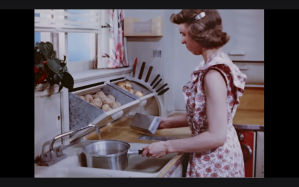
A woman learning how to play guitar.

Learning a new skill, such as playing an instrument, gardening, or picking up a new language, takes a lot of time and practice, whether that means scale training, learning about native plants, or using flashcards to memorize new words. To improve through practice, you have to perform the task repeatedly and receive feedback so you know whether you’re doing it correctly. Is my pitch correct? Did my geraniums bloom? Is my pronunciation understandable?

However, a new study by researchers at the Institute of Neuroscience at the University of Oregon shows that you can speed up these processes by adding a third element to practice and feedback: passive exposure. The good news is that passive exposure requires minimal effort and is enjoyable.


"Active learning of a... task requires both expending effort to perform the task and having access to feedback about task performance," the study authors explained. "Passive exposure to sensory stimuli, on the other hand, is relatively effortless and does not require feedback about performance."


woman reading, woman book, young woman, studying, new skills A woman reading a book.via Canva/Photos

How to pick up new skills faster?

So, if you’re learning to play the blues on guitar, listen to plenty of Howlin’ Wolf or Robert Johnson throughout the day. If you’re learning to cook, keep the Food Network on TV in the background to absorb some great culinary advice. Learning to garden? Take the time to notice the flora and fauna in your neighborhood or make frequent trips to your local botanical garden.

If you’re learning a new language, watch plenty of TV and films in the language you are learning. The scientists add that auditory learning is especially helpful, so listen to plenty of audiobooks or podcasts on the subject you’re learning about.

But, of course, you also have to be actively learning the skill as well by practicing your guitar for the recommended hours each day or by taking a class in languages. Passive exposure won't do the work for you, but it's a fantastic way to pick up things more quickly. Further, passive exposure keeps the new skill you're learning top-of-mind, so you're probably more likely to actively practice it.

What is passive exposure?

Researchers discovered the tremendous benefits of passive exposure after studying a group of mice. They trained them to find water by using various sounds to give positive or negative feedback, like playing a game of “hot or cold.” Some mice were passively exposed to these sounds when they weren't looking for water. Those who received this additional passive exposure and those who received active training learned to find the water reward more quickly.

gardening, woman gardening, gardening shears, leaning gardening, weeds A woman tending to her garden.via Canva/Photos


“Our results suggest that, in mice and in humans, a given performance threshold can be achieved with relatively less effort by combining low-effort passive exposure with active training,” James Murray, a neuroscientist who led the study, told University of Oregon News. “This insight could be helpful for humans learning an instrument or a second language, though more work will be needed to better understand how this applies to more complex tasks and how to optimize training schedules that combine passive exposure with active training.”

The one drawback to this study was that it was conducted on mice, not humans. However, recent studies on humans have found similar results, such as in sports. If you visualize yourself excelling at the sport or mentally rehearse a practice routine, it can positively affect your actual performance. Showing, once again, that when it comes to picking up a new skill, exposure is key.

The great news about the story is that, in addition to giving people a new way to approach learning, it’s an excuse for us to enjoy the things we love even more. If you enjoy listening to blues music so much that you decided to learn for yourself, it’s another reason to make it an even more significant part of your life.

- YouTube www.youtube.com

This article originally appeared last year.

steve jobs, steve jobs advice, santa clara, apple, technology advice

Steve Jobs speaks to the Santa Clara Valley Historical Association.

Steve Jobs was one of the greatest minds of our time because he could anticipate what people would love before they even knew it themselves. By blending art and technology, he helped create era-defining products like the iPhone, iPod, iPad, and Macintosh computer. He also helped guide Pixar to change how we see movies.

Jobs once described the epiphany that led him to embrace out-of-the-box thinking in a 1994 interview with the Santa Clara Valley Historical Association. The message was simple: you're just as smart as the people who created the parameters of the modern world, so break them and see what you can create.


- YouTube youtu.be

The realization that changed his life

In the interview, Jobs revealed:

"When you grow up, you tend to get told that the world is the way it is and your life is just to live your life inside the world, try not to bash into the walls too much, try to have a nice family, have fun, save a little money. That's a very limited life. Life can be much broader, once you discover one simple fact, and that is that everything around you that you call life was made up by people that were no smarter than you. And you can change it, you can influence it, you can build your own things that other people can use. Once you learn that, you'll never be the same again."

"The minute that you understand that you can poke life and actually something will, you know if you push in, something will pop out the other side, that you can change it, you can mold it," Jobs continued. "That's maybe the most important thing. It's to shake off this erroneous notion that life is there and you're just gonna live in it, versus embrace it, change it, improve it, make your mark upon it."

steve jobs, iphone, jobs apple, apple iphone luanch, steve jobs conference, stete jobs speech, Steve Jobs holds an iPhone 4 at the 2010 Worldwide Developers Conference.Photo via Matthew Yohe/Wikimedia Commons

His advice applies to everyone

Jobs's realization is empowering because he argues that the people who came before us were no more special than we are today, and that we shouldn't live our lives constrained by their limitations. Traditions from years ago may no longer serve us, and pathways to success that once worked may not be as fruitful today. Nobody knows how to live your life but you.

He added that the average person has the intelligence to make big, significant changes that can improve the lives of many. In fact, with all the information and technology available today, individuals have far more tools than those who originally created the parameters by which we live.

steve jobs, iphone, jobs apple, apple ipad luanch, steve jobs conference, stete jobs speech, Steve Jobs introducing the iPad in San Francisco on January 27, 2010.Photo via Matt Buchanan/Wikimedia Commons

"I think that's very important, and however you learn that, once you learn it, you'll want to change life and make it better, cause it's kind of messed up, in a lot of ways," Jobs said. "Once you learn that, you'll never be the same again."

The beautiful thing about this realization is that Jobs wasn't trying to gatekeep being a changemaker but instead invited everyone to the party. His breakthrough was an admission that the world is never finished; it is only a rough draft that we can either keep perfecting or throw away and start something completely different.

Look around, what do you think we can improve that no one else has considered? That's how you start thinking like Steve Jobs, and after we lost him in 2011, it's clear we could use more people who see the world the way he did.

discussion, debate, disagreement, conversation, communication, curiosity

How do you get someone to open their minds to another perspective?

The diversity of humanity means people won't always see eye to eye, and psychology tells us that people tend to double down when their views are challenged. When people are so deeply entrenched in their own perspectives they're refusing to entertain other viewpoints, what do we do?

Frequently, what we do falls into the "understandable but ineffective" category. When we disagree with someone because their opinion is based on falsehoods or inaccurate information, we may try to pound them with facts and statistics. Unfortunately, research shows that generally doesn't work. We might try to find different ways to explain our stance using logic and reasoning, but that rarely makes a dent, either. So often, we're left wondering how on Earth this person arrived at their perspective, especially if they reject facts and logic.


According to Stanford researchers, turning that wondering into an actual question might be the key.

discussion, debate, disagreement, conversation, communication, curiosity Questions are more effective than facts when it comes to disagreements.Photo credit: Canva

The power of "Tell me more."

Two studies examined how expressing interest in someone's view and asking them to elaborate on why they hold their opinion affected both parties engaged in a debate. They found that asking questions like, "Could you tell me more about that?” and ‘‘Why do you think that?" made the other person "view their debate counterpart more positively, behave more open-mindedly, and form more favorable inferences about other proponents of the counterpart’s views." Additionally, adding an expression of interest, such as, ‘‘But I was interested in what you’re saying. Can you tell me more about how come you think that?” not only made the counterpart more open to other viewpoints, but the questioner themselves developed more favorable attitudes toward the opposing viewpoint.

In other words, genuinely striving to understand another person's perspective by being curious and asking them to say more about how they came to their conclusions may help bridge seemingly insurmountable divides.

discussion, debate, disagreement, conversation, communication, curiosity Asking people to elaborate leads to more open-mindedness.Photo credit: Canva

Stanford isn't alone in these findings. A series of studies at the University of Haifa also found that high-quality listening helped lower people's prejudices, and that when people perceive a listener to be responsive, they tend to be more open-minded. Additionally, the perception that their attitude is the correct and valid one is reduced.

Why curiosity works

In some sense, these results may seem counterintuitive. We may assume that asking someone to elaborate on what they believe and why they believe it might just further entrench them in their views and opinions. But that's not what the research shows.

Dartmouth cognitive scientist Thalia Wheatley studies the role of curiosity in relationships and has found that being curious can help create consensus where there wasn't any before.

“[Curiosity] really creates common ground across brains, just by virtue of having the intellectual humility to say, ‘OK, I thought it was like this, but what do you think?’ And being willing to change your mind,” she said, according to the John Templeton Foundation.

discussion, debate, disagreement, conversation, communication, curiosity Curiosity can help people get closer to consensus. Photo credit: Canva

Of course, there may be certain opinions and perspectives that are too abhorrent or inhumane to entertain with curious questions, so it's not like "tell me more" is always the solution to an intractable divide. But even those with whom we vehemently disagree or those whose views we find offensive may respond to curiosity with more open-mindedness and willingness to change their view than if we simply argue with them. And isn't that the whole point?

Sometimes what's effective doesn't always line up with our emotional reactions to a disagreement, so engaging with curiosity might take some practice. It may also require us to rethink what formats for public discourse are the most impactful. Is ranting in a TikTok video or a tweet conducive to this shift in how we engage others? Is one-on-one or small group, in-person discussion a better forum for curious engagement? These are important things to consider if our goal is not to merely state our case and make our voice heard but to actually help open people's minds and remain open-minded in our own lives as well.

pit bull; dogs; pets; genetic mutation; Theo; long haired pit bull

A dog wearing a furry head covering.

Pit bulls continue to be labeled as "bad dogs," but no one would argue that the breed is ugly. Their big, blocky heads and tiny ears that barely cover their ear holes make them adorable shadows. But one house hippo is gaining attention for his unique look that screams pit bull... or teddy bear, depending on which end you're greeted with first.

Theodore is a brown pit bull who looks exactly as expected from his forehead down to his chin, but the rest of this pooch looks like he's dressed for Halloween. He's covered in fluffy, long hair from his ears to his tail, making him look like a golden retriever from the back and a pit bull from the front. His unique look is the result of a rare genetic condition.


Before finding his forever home with Joanna Meadows, Theo was rehomed six times. Based on earlier videos from his time with Meadows, the peculiar-looking pup also had some odd habits that may have frustrated previous owners. But for his forever mom, finding a dog perched atop a kitchen cabinet is nothing she can't roll with.

In an interview with GeoBeats, Meadows explains how Theo wound up with flowing locks and a typical bully-breed face.

"The reason he's so different-looking is because he has a mutation," Meadows says. "It's called FGF5, and that's the reason his coat's so long like this. He's got a pit bull face, and he looks like he's in a teddy bear costume. He was an accident. The owner was in a position where she really could not care for him."

Theo's first owner rehomed him with a friend, but unfortunately, that friend couldn't care for him for long before he ended up in an animal shelter. That began a revolving-door relationship with shelters before Meadows finally took him home. After so much rehoming, Theo was anxious when he arrived, but he soon settled in once he realized his new mom wasn't taking him back. As Meadows says, "As long as he's with me, he is content. He's happy."

Theo's human later explains that the mutation he has is rarely seen in pit bulls, though it can occur if both parents carry it. As for how his hair feels, apparently it's soft enough to belong in shampoo ads promising luscious locks. "His fur is super soft," Meadows shares. "It flows in the wind. It's almost feathery in some places. It's super, super soft."

The proud pup mom becomes emotional when she talks about how much he has changed since coming to live with her. She takes him everywhere, and he provides emotional support when she's feeling down. It seems Theo has found the perfect place to land, and commenters agree the pair truly belongs together.

"I can't believe he was returned six times. He looks like the sweetest teddy bear," one person writes.

"Thank you for giving this poor guy a home. Returned SIX TIMES. People are so awful," another shares.

"He looks like a mini Chewbacca!!! He's adorable! Thank you for making him your fur companion. He's living his best life now," someone else gushes.

One person imagines things from Theo's point of view, saying, "In the beginning he's like 'I know. This isn't going to work out. I know I'm going to get returned. So I'm not going to open my heart.' Thank you for approving him wrong. loving and adopting him he is adorable."

u2, karaoke, karaoke video, u2 karaoke singer, musicians
Photo credit: screenshots via Instagram

This guy's casual U2 karaoke performance has become a viral sensation.

Karaoke can be exhilarating, horrifying, awkward, hilarious—but it’s rarely nonchalant. That might be part of the reason one man went viral for a suave rendition of U2’s soaring anthem "With or Without You." It’s hard to belt one of rock’s most passionate songs while reclining in a booth, but somehow that just makes the whole thing even coolerl.

The clip shows Lugi, the singer of California duo Pengwich, singing the first verse, often closing his eyes as he channels his inner Bono. At first, the room is charged with the buzz of people talking. But it’s amazing to watch everyone suddenly realize, "Whoa, this dude is really good" and start paying attention. By the end of the video, as Lugi ascends into a sweet falsetto and belts with full-force vibrato, the entire mood has shifted.


"How does one maintain this level of cool in karaoke?"

People also responded to the performance online, with Instagram users marveling at the unique delivery. An account called FacesofRock1 shared the video, and the comments flooded in. Here are some of the best:

"Even better than the real thing, excuse the pun"

"He’s the main character in his own David Lynch movie."

"u2 is amazing and this guy nailed it. Sitting down. In the corner. 🔥🔥"

"This guy killin it and everyone loud and not paying attention. Unbelievable"

"All the patrons blissfully unaware they’re missing the greatness 🥀—>"

"That guy, that voice, that song, that drink, that pub... he did alright 👍🏻"

"Unc Smooth AF."

"What a legend"

"This is the coolest guy I’ve ever seen."

"Dude has been waiting 45 years for this moment🔥"

"Absolute stud."

"Nailed it from his chair!!👏👏"

"How does one maintain this level of cool in karaoke? 😂"

"It was a genuine moment for sure"

Upworthy reached out to Lugi, who offered some interesting context about the performance. "The ironic thing about this clip is that my usual approach to performing is the opposite of what happened that night," he said, pointing to a more animated and intense rendition of Radiohead’s "Creep." (Different styles, for sure, but equally memorable.) "I’m generally the guy they come to see jump on the bar or lie on the floor," he added. "But that particular night, the people were there to chat amongst themselves, so I chose to keep it personal and low-key. I didn't think anyone was listening, let alone recording."

Lugi never envisioned going viral via karaoke—his ultimate aim is to share original music, using these live covers as a way to "keep the performance momentum going." Ultimately, he just wants to create, no matter the outlet. "My first language is music," he said, "and if there's an available microphone, I'm probably gonna grab it. In my youth I was super shy, so I think I'm making up for lost time." As for the video itself? "I’m excited [it] went viral and the reactions are so positive. It was a genuine moment for sure, but then anytime I can lose myself in a song it's for real."

- YouTube www.youtube.com