A lot has changed since the early to mid 1900s. We no longer see “whites only” signs tauntingly hanging above water fountains or outside of pools or restaurants. The only place you’ll find a sign that says “No Blacks. No Mexicans. No dogs” now is inside of a civil rights museum, but this wasn’t always the case.
Living in the 21st century it can be easy to forget that in our not too distant past, segregation, racism and discrimination was the norm. Discrimination was written into laws and it took brave people to stand up against a system that held them as second class citizens. It wasn’t just the civil rights leaders we learn about in school that made a stand, it took people from all industries and walks of life to speak up even if it meant they may lose the little privileges they had.
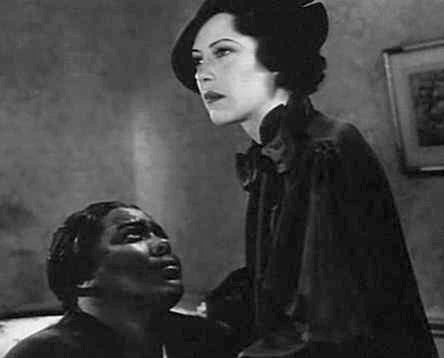
Fredrika “Fredi” Carolyn Washington was one of those people that used her voice during a time when it would’ve been easier to stay quiet. Washington was an actress and dancer in the 1930s who catapulted to fame with her portrayal of Peola Johnson, the daughter of a Black housekeeper who decided to pass for white to obtain access to better opportunities and social standing in a segregated America in the 1934 film Imitation of Life.
Just like her character, Washington was so fair-skinned that she looked white to those who didn’t know her, though that’s where the similarities to her character ended. Though she had blue-grey eyes and light brown hair with a loose curl, she had no personal interest in pretending to be white even if doing so would greatly benefit her career and her life.
Washington explained to the Chicago Defender in 1935 at the height of her fame, “I have never tried to pass for white and never had any desire, I am proud of my race.” In Imitation of Life, I was showing how a girl might feel under the circumstances but I am not showing how I felt.”
After her success playing Peola, Washington faced a dilemma. In order for her career to keep thriving after her breakout hit, she was advised to pass as white to get more roles. At the time, Black women were type cast in servant roles like maids, cooks, or caregivers, but Washington was too fair-skinned to believably play those parts. If she wanted lead roles, she would need to pass as white since only white women were allowed to play lead romantic interests.
“Early in my career it was suggested that I might get further by passing as French or something exotic. But there was no way I could do that, feeling the way I do. I felt you do not have to be white to be good. I’ve spent most of my life trying to prove that to people who thought otherwise,” Washington said in 1945.
Washington later starred in the 1937 film One Mile from Heaven, which was her first role since her success as Peola three years earlier. The actress had to use makeup to darken her skin for the role and, afterwards, she decided to walk away from Hollywood for good. Instead, Washington focused on African-American Civil Rights, even co-founding the Negro Actors Guild of America (NAG).
Washington expressed no regrets about her refusal to pass, saying, “But to pass, for economic or other advantages, would have meant that I swallowed, whole hog, the idea of Black inferiority. I did not think up this system, and I was not responsible for how I looked. I’m a Black woman and proud of it and I will fight injustices and encourage others to fight them until the day I die or until there is nothing to fight against.”
While quite a few Black people with fairer complexions and racially ambiguous features chose to pass as white during segregation (and beyond), Washington wasn’t alone in her refusal. Passing as white often meant completely alienating yourself from your family and friends, participating in the very treatment you were trying to avoid having inflicted on yourself, and living in fear of being found out. In fact, many Black authors of the Harlem Renaissance penned novels and essays about passing and its consequences, the most prominent of which being Passing by Nella Larsen (1929).
Washington rejected any idea of passing to make her life easier. Instead, she focused her efforts on bettering the lives of Black Americans through her co-founding of the NAG, her work with the NAACP, and lobbying for federal protections for Black people. She lived to be 90 years old.