Asheville city council approves reparations for Black residents in a unanimous 7-0 vote

The question of how to make up for hundreds of years of stolen labor from and economic discrimination against Black Americans has been hotly debated for years. When racial disparities can be traced directly to laws, policies and regulations that prevented Black people from earning or accumulating wealth generation after generation, the only just thing to do is to try to repair the damage.
Enter the idea of reparations, which literally means "to repair" through financial or other means.
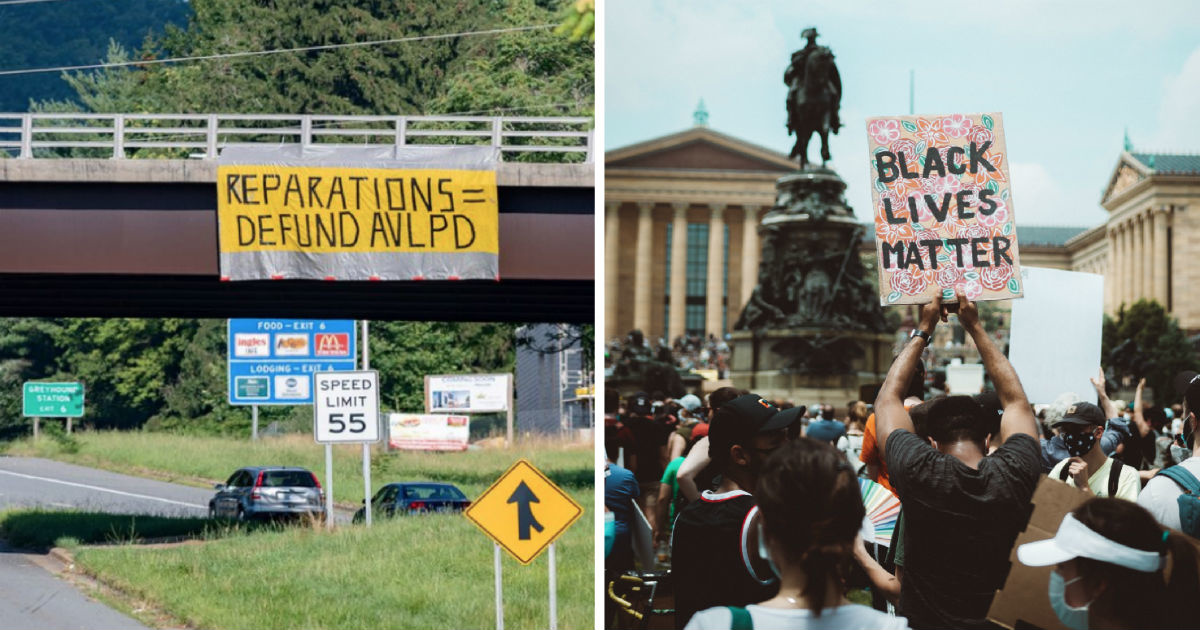
Asheville, North Carolina has just taken a big step forward with this idea by unanimously approving a resolution designed to repair the racial disparity among its residents. In a 7-0 vote, the city council apologized for the city's role in historic wrongs against Black people, including slavery and discrimination. It also announced that it will make reparations in the form of investments in the lives of Black people living in Asheville, who make up nearly 12 percent of the city's population.
"The resulting budgetary and programmatic priorities may include but not be limited to increasing minority home ownership and access to other affordable housing, increasing minority business ownership and career opportunities, strategies to grow equity and generational wealth, closing the gaps in health care, education, employment and pay, neighborhood safety and fairness within criminal justice," the resolution states.
Councilman Keith Young, one of two Black members of the council, said, "Hundreds of years of Black blood spilled that basically fills the cup we drink from today," according to the Asheville Citizen-Times. "It is simply not enough to remove statutes," he added. "Black people in this country are dealing with issues that are systemic in nature."
The measure does not specify making direct reparation payments to Black residents, but rather putting more of the city's resources into eliminating racial disparities. Councilman Vijay Kapoor said he voted in favor of the measure for moral reasons, but also referred to the "practical reason," which is that data shows large gaps between Black Asheville residents and other residents of the city.
"We don't want to be held back by these gaps," Kapoor said. "We want everyone to be successful."
Some will undoubtedly ask the question, "Why should people today, who have never owned slaves, pay reparations to people who have never been enslaved themselves?" But that question ignores two things: 1) The deep and ongoing economic impact slavery had on generations of families, and 2) Reparations aren't just about slavery, but also the century-and-a-half of ongoing discriminatory laws and practices designed to keep Black Americans economically oppressed that followed emancipation.
The question of how to manage reparations is a legitimate one, but there should be no doubt that some kind of reparations are in order. If you're still unsure of why, check out Kimberly Latrice Jones' excellent Monopoly metaphor, Trevor Noah's explanation of why poor white people can't h the same argument for reparations, and this video from Ta-Nehisi Coates beautifully testifying to Congress on why reparations are a perfectly reasonable expectation for Black citizens, considering the inheritance of our nation:
WATCH: Ta-Nehisi Coates' full opening statement on reparations at House hearingwww.youtube.com
Thank you, Asheville, for taking this step toward economic justice, to help repair the damage done throughout U.S. history. If we truly want to be the country we say we are, where all people have the same access to "Life, Liberty, and the Pursuit of Happiness," we have to honestly address the past wrongs that prevented certain groups from those inalienable rights and make amends to the citizens who have been negatively impacted by those wrongs for generations.

- She summed up the economic legacy of Black Americans in one ... ›
- Ta-Nehisi Coates gave a masterful rebuttal to Mitch McConnell's anti ... ›
- A man asked if all poor Americans should get reparations. Trevor ... ›


Student smiling in a classroom, working on a laptop.
Students focused and ready to learn in the classroom.
Fish find shelter for spawning in the nooks and crannies of wood.
Many of these streams are now unreachable by road, which is why helicopters are used.
Tribal leaders gathered by the Little Naches River for a ceremony and prayer.

Communications expert shares the perfect way to gracefully shut down rude comments
Taking the high ground never felt so good.
A woman is insulted at her job.
It came out of nowhere. A coworker made a rude comment that caught you off guard. The hair on the back of your neck stands up, and you want to put them in their place, but you have to stay tactful because you're in a professional setting. Plus, you don't want to stoop to their level.
In situations like these, it helps to have a comeback ready so you can stand up for yourself while making making sure they don't disrespect you again.
Vince Xu, who goes by Lawyer Vince on TikTok, is a personal injury attorney based in Torrance, California, where he shares the communication tips he's learned with his followers. Xu says there are three questions you can ask someone who is being rude that will put them in their place and give you the high ground:
Question 1: "Sorry, can you say that again?"
"This will either make them have to awkwardly say the disrespectful remark one more time, or it'll actually help them clarify what they said and retract their statement," Xu shares.
Question 2: "Did you mean that to be hurtful?"
The next step is to determine if they will repeat the disrespectful comment. "This calls out their disrespect and allows you to learn whether they're trying to be disrespectful or if there's a misunderstanding," Xu continues.
Question 3: "Are you okay?"
"What this does, is actually put you on higher ground, and it's showing empathy for the other person," Xu adds. "It's showing that you care about them genuinely, and this is gonna diffuse any type of disrespect or negative energy coming from them."
The interesting thing about Xu's three-step strategy is that by gracefully handling the situation, it puts you in a better position than before the insult. The rude coworker is likely to feel diminished after owning up to what they said, and you get to show them confidence and strength, as well as empathy. This will go a lot further than insulting them back and making the situation even worse.
Xu's technique is similar to that of Amy Gallo, a Harvard University communications expert. She says that you should call out what they just said, but make sure it comes out of their mouth. "You might even ask the person to simply repeat what they said, which may prompt them to think through what they meant and how their words might sound to others," she writes in the Harvard Business Review.
More of Gallo's suggested comebacks:
“Did I hear you correctly? I think you said…”
“What was your intention when you said…?”
“What specifically did you mean by that? I'm not sure I understood.”
“Could you say more about what you mean by that?”
Ultimately, Xu and Gallo's advice is invaluable because it allows you to overcome a negative comment without stooping to the other person's level. Instead, it elevates you above them without having to resort to name-calling or admitting they got on your nerves. That's the mark of someone confident and composed, even when others are trying to take them down.