America the beautiful: Here are 15 places in the U.S. that people say are the prettiest

We ranked the top 15. Which place came out on top?

america the beautiful, national parks, pretty place america
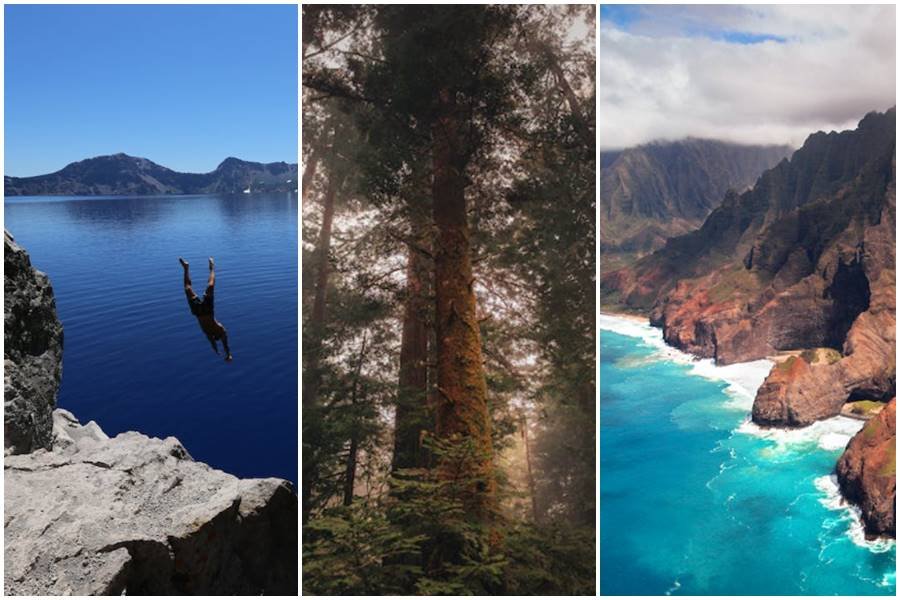
Crater Lake, the redwoods and Na Pali coast. Photo credit: via Lukas Rodriguez/Pexels, Andrea P. Coan/Pexels and Roberto Nickson/Pexels.

The one thing that all Americans and folks worldwide can agree on is that the United States is one of the most beautiful places on Earth. When tourists trek across the states, they are always blown away by how vast the country is and the number of different climates and bioregions encompassing all 50 states.

There are the deserts of the southwest, the rainforests of the Pacific Northwest and Hawaii, the tundra of Alaska and the grasslands of the midwest. Not to mention the beautiful coasts of California and the picturesque bays of New England.

America has many wonders, but which place is the most beautiful? A Redditor named DriedKitten posed the question to the AskReddit subforum and received over 1,100 replies.

To rank the responses on the Reddit post, we looked at the number of upvotes each suggestion received and then ranked them. It’s not the most scientific way of doing things, but it gives us a pretty good idea about the places in America that people think are most beautiful.

Here are the top 15 most beautiful places in America ranked.


1. Glacier National Park (523)

“That whole place is surreal. Going to the Sun Road is a national treasure.” — Andrunlc.

“The vistas of this road, on a motorcycle, were beyond breathtaking to experience. Would 100% do it again. Being on a bike allowed for stops at the waterfalls where there was no room for vehicles to pull over, and the views from the tunnels under the road were supernatural.” — Tastygrrrl

2. Grand Tetons (Wyoming)

“My vote would be for the Tetons. Holy sh**. The way they just rise up right in front of you when you exit the airport even.” — Bqzs

“Also early in the morning during the winter when the sun is reflecting off the snow along the side of the mountains. I think it’s called alpenglow.” — Fred Foreskin

3. Crater Lake (Oregon)

“On a clear, sunny day, there is no more beautiful place on earth than Crater Lake. Stunning blue water. Mountains all around.” — Commercial-Lawyer1629

“It’s a shade of blue I haven’t seen before or since. Can’t be captured in photographs. Something about it being incredibly clear and deep.” — Cutely Aware

4. Na Pali Coast (Kauai)

“Ludicrous I had to scroll this far to find Na Pali coast. I’ve been to around forty states – there is a LOT of incredibly scenic stuff in the US, but Na Pali is next level.” — BD401

“THIS. Kauai is absolutely beautiful. Taking a helicopter ride over the island is also an amazing sight. You see all the beautiful waterfalls that are a days hike away.” — PamelaThornton13

5. Redwoods (California)

“Drive up 101, and then detour towards Petrolia. There is absolutely nothing like it. Roll down your windows and drive 35mph. Smell the old growth. Stop at the pull out. Take a small hike. It’s worth it.” — Altril2010

6. Big Sur (California)

“Heaven on Earth, in my opinion.” — DriedKitten

“I felt like I was in some computer generated fantasy when I was there. It was just so beautiful and perfect.” — [Deleted]

7. Sequoia National Park (California)

“Paradise Valley in Sequoia NP is a favorite place of mine.” — Driedkitten

8. Mount Rainier (Washington)

“It is so odd and elusive. You come around a corner and BAM, there it is. But from a block away, you wouldn’t know it was there. It takes my breath away. Sitting on the Canyon Road East overpass on 512, you get a great view. I never want the light to change.” — Botryoid2000

Mt. Rainier, washington, mountains
Mt. Rainier photographed from Spanaway, Washington. via <a href="https://www.pexels.com/photo/a-mountain-with-a-snow-capped-peak-in-the-distance-18668133/">Dean Diemert/Pexels</a>

​9. Yosemite National Park (California) 

“Did a hike in Yosemite on January 1 last year. A spectacular way to start the year. I had seen photos of it, seen it in movies, and watched countless videos on YouTube about it, but -nothing- prepares you for the sight of El Cap as you turn that corner. I was very nearly moved to tears.” — ThrustersToFull

“It’s surreal in person, isn’t it? Just majestic.” — SocalRDB

​10. New England 

“I think it depends on what you like. In my opinion, I like the New England states because I’ve seen pictures of the autumn that they have there. It’s the perfect place for Halloween. I love everything related to horror. And Maine is the state where lots of horror stories from Stephen King books take place.” — Midnight_Wolf89

​11. Glacier Bay (Alaska)

“Took a week-long camping trip there one year for the Perseids meteor shower. It’s unreal.” — badatboujie

12. Pictured Rocks (Michigan)

“Unexpectedly incredibly breathtakingly beautiful.” — Immoveablebeast

“Yes! Highly recommend renting a pontoon boat for the day!” — idekmanijustworkhere

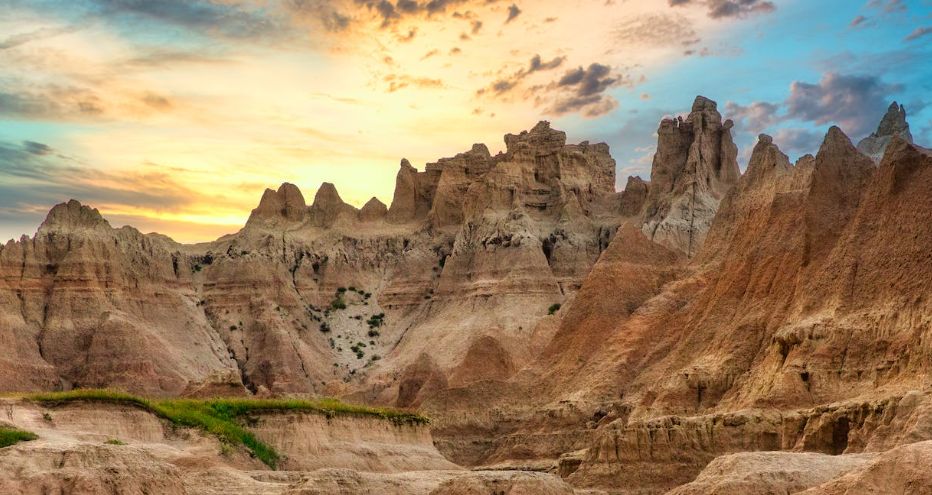
13. Badlands (South Dakota)

“There’s never anyone there, and you can hike pretty much the whole place. It’s so peaceful.” — Mayo_Man
badlands, south dakota, america landmark
A brown rocky mountain under white clouds. via <a href="https://www.pexels.com/photo/brown-rocky-mountain-under-white-clouds-4608715/">Sonja/Pexels</a>

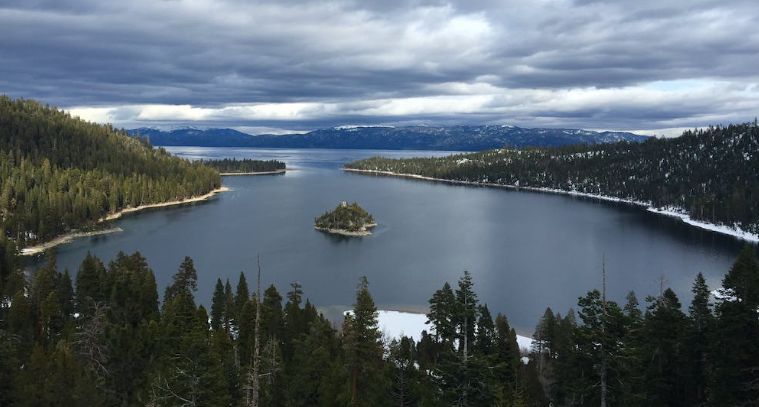
14. Lake Tahoe (Nevada)

“Gorgeous.” — Driedkitten
lake tahoe, american landmarks, natural beauty
South Lake Tahoe, Nevada. via <a href="https://www.pexels.com/photo/person-showing-lake-under-the-white-clouds-56924/">Manu/Pexels</a>

15. Utah’s National Parks

“Zion would be my pick for OP’s question.” — ljg1986

“Utah is so beautiful that they even have the most beautiful license plates. And I say this sitting in coastal California.” — Adin-CA

  • Shade up or shade down? Flight attendant settles the plane window etiquette debate.
    A passenger stares out the airplane window.Photo credit: Canva
    ,

    Shade up or shade down? Flight attendant settles the plane window etiquette debate.

    A rude passenger on a flight over the Arctic has people talking.

    Even though commercial airlines have been taking flight for 112 years, questions about etiquette still spark heated debates. Who gets the middle seat armrest? How many bags are fair to put in the overhead compartment? And one small argument continues to rage: Should the window shade be up or down, and who gets to decide?

    While plenty of online discussions ping-pong the debate, the topic went viral last month after a woman documented a flight across the Arctic Ocean. Passenger Kelly Meng was flying in an economy seat from Chicago to Tokyo when, unfortunately, a fellow passenger didn’t comply with others’ wishes.

    @kellymengg

    “Can we normalize keeping the windows up during day time flights” no please 😔 #flight #etiquette #greenscreen

    ♬ original sound – kelly meng

    Very sunny flight

    She explained in a TikTok video that the windows on this flight didn’t have “traditional shutters,” but rather dimmers that never allow them to get “100 percent opaque.” Because the flight is long (about 13 hours), many passengers wanted to sleep after dinner service, she said. But one passenger refused to dim their window beyond 75%, even after another traveler said the bright sun was blinding his eyes.

    At one point, Meng said, a flight attendant gently asked the woman to dim her window, but she refused. Meng concluded, “The lack of self-awareness is insane.”

    Unsurprisingly, many commenters sided with the window-seat passenger.

    “Imo, whomever pays for and sits in the window seats controls the window,” wrote one commenter, who received nearly 4,000 likes.

    Another person agreed: “Unpopular opinion, but bring an eye mask if it’s going to bug you. I totally see your point in this particular case, but I like to have my window open on shorter flights, especially if we’re flying over somewhere scenic.”

    A few others agreed with Meng. “Idk how people are siding with the ‘window seat’ person,” one commenter noted. “It’s as if someone is playing music over speakers and telling other people to put on their own headphones if you don’t want to hear the music.”

    Another commenter added, in part, that a bright window can make the cabin hot: “I don’t think people realize that having the shades open during daytime flights is not only blinding, but it also makes the cabin HOT. Especially if you’ve got the sun directly beaming on you.”

    Flight attendant settles it

    Upworthy spoke with a flight attendant for a major airline who preferred to go by the name Simone for this piece. She offered a definitive answer, but it’s slightly more complicated than one might think.

    “The person next to the window controls the shade, and it should be down if the sun is making the cabin too bright,” Simone said. “However, most people in the window seats are nervous travelers or children. We can’t ask anyone to lower their shades during flight, we can only ‘mean mug’ them when we walk by.”

    She offered this tidbit on how flight attendants sometimes get around the issue: “On the 787, the electric windows can be controlled by the flight attendants, and we aren’t supposed to set them on 5 and lock them, but we do.”

    As for takeoffs and landings: “Window shades should be up for takeoff and landing so flight attendants have visibility in case of an emergency. That’s the only time we can request the position of the window shade.”

    To be clear, while the airline doesn’t officially state a preference for in-flight shade position, Simone shared her own:

    “For ‘blank’ sake, lower the shade and go to sleep. You can only look at the clouds for so long. One problem is the sun shines so bright in the cabin and some people can’t see their laptops while trying to do work or read on their tablets. I hate when the shades are up during the day. Nobody needs to see my large pores and runny nose while I’m serving them sodas and snacks.”

  • People are sharing the ‘creepiest’ signs of animal intelligence they’ve ever seen firsthand
    People are sharing the wildest displays of animal intelligence they’ve ever witnessed.Photo credit: Corvus Moneduloides/Flickr & Canva
    ,

    People are sharing the ‘creepiest’ signs of animal intelligence they’ve ever seen firsthand

    “Seeing a crow solve a puzzle box in seconds after watching it once gave me chills.”

    One of the best things about house pets is that few of us expect them to be smart. There are the occasional owners who rigorously train their dogs, but most of us are perfectly happy with friendly, dumb pets—as long as they love us unconditionally and like to snuggle. However, every now and then, they surprise us and reveal just how smart they really are.

    Extending to the wider world of animals, most people simply have no idea how intelligent some species can be. It’s honestly mind-boggling.

    A recent viral Reddit thread asked people about the “creepiest” signs of intelligence they’d ever seen. Though the prompt didn’t specify animals, countless users chimed in with moments when they witnessed an animal do something so smart it made their jaws drop. It can even be a little unsettling.

    1. The canine empath

    “I was dog-walker when my daughter was a baby, and I had one dog who absolutely understood every word I said. … If she didn’t want to do something, such as cross the street to a trash can, you just had to explain why it was necessary and she’d cooperate.

    One time she got irritated because I wasn’t feeling well and was walking super slowly. She kept tugging on the leash til I finally told her I was feeling sick. She immediately lead me to a bench and sat there, totally calm, for like 10 minutes before leading me back home again.”

    Dogs can’t speak English, but they pick up on far more than you might realize. The smartest ones can learn hundreds of words, and many can even recognize when you’re speaking gibberish (or another language). They’re also exceptionally good at picking up on human nonverbal cues.

    Put it all together, and it can sometimes seem like they understand everything you’re saying.

    2. The guard crows

    “I’ve been feeding this family of 5 crows for years. They have gotten comfortable enough with me that they’ll come get snacks while I’m still sitting next to the food. I can call them with a specific whistle I use just for them, and they make a rattle noise (that sounds like the Predator) with me to thank me for food.

    One late night I hear this horrible loud screeching. It woke me up, so I ran outside to see what it was. There was a guy trying to break into a window in my house and the 5 crows were dive bombing him screaming as loud as they could. He ran away. … So I guess I have guard-crows now.”

    Crows are not only sneaky-brilliant, but they can also become your best buds if you treat them well. According to MIT Technology Review, “A 2020 study published in Science found that crows can think about their own thoughts. They can also recognize individual human faces, associate them with friendliness or danger, and pass that knowledge along to their peers.”

    If you’re cool with the local murder of crows, word may just spread.

    3. Puzzling crows

    “Seeing a crow solve a puzzle box in seconds after watching it once gave me chills, it felt like it was actually thinking things through. Stuff like that makes you realize some animals are way smarter than we usually give them credit for.”

    Crows are thought to be about as intelligent as a 5- to 7-year-old human child. Not only can they make friends, but they can also invent and use tools, solve puzzles, and maybe even count. By all accounts, they’re among the smartest animals in the world, and they may be hanging out in your backyard right now.

    4. The magpie truce

    “I ended up working as an adult really close to my family home I lived in since I was born. The area has always been occupied by Magpies which swoop at you all through summer. For those who don’t know, it’s terrifying.

    At work there was an injured Magpie that we fed and took care of for ages. When it got better enough to roam, it ‘told’ all the other magpies in the area and since then, about a decade ago, all the magpies in the area never swooped any of us who worked at the store again. And Alfred the magpie used to fly beside me when I’d ride my bike to work! And on the way back too, to make sure I was safe. So insane.”

    Though notoriously territorial and “swoopy,” magpies, like crows, can remember human faces. They can form strong bonds with humans who are friendly and helpful to them.

    5. The dog that needed thumbs

    “My dog starts barking at the door so I open it to see what’s going on. there’s a border collie sitting there waiting. I go to check on the dog and he gets up and walks a bit away, sits and stares at me. I follow him. this goes on till I’m in front of a house in my neighborhood.

    Collie stares at the doorbell. I ring it. no one answers. collie stares at the door. I knock, no answer. dog gets up and walks to the side gate and stares at me and then up at the latch. I open the gate for the dog. the dog walks into the back yard, turns around, sits and stares at me and then at the open gate. I close the gate and watch the dog relax. dog used me for my thumbs and wouldn’t even let me pet him.”

    Dogs frequently turn to humans for help in tough situations—it’s in their nature. When an owner or friendly human isn’t around, they’ll even seek out a stranger for a helping hand. It’s a distinctly social brand of genius.

    6. The sneaky octopus

    “I heard of an octopus who would break out of its tank at night and eat the crabs in a neighbouring tank. The aquarium staff didn’t understand how the crabs kept getting eaten until they watched cctv and saw what the octopus was doing. Creepy thing is, the octopus knew to replace the lids and return to its own tank. That must mean it understood the need for deception.”

    Variations of this story have been going around for years. It’s even a plot point in the popular novel Remarkably Bright Creatures.

    While the original source is difficult to verify, the story isn’t all that far-fetched. Octopuses are extremely gifted escape artists, able to solve puzzles, unscrew jars, and navigate mazes. They also seem to possess a strong understanding of what others—prey, humans, and other octopuses—may be thinking, and they have been known to use intentional deception.

    @jb2day

    🦑 Meet Susie, the amazing octopus! 🌊 Watch as she cleverly catches not one, but two crabs for dinner! 🦀 #OctopusLife #CleverCephalopod 🐙 #exoticpets

    ♬ original sound – JB Today

    7. The silent Border Collie

    “Was at a party and had a sudden mid conversation realization that we were all standing uncomfortably close to each other. My buddies border collie had slowly herded us all to the center of the room.”

    Herding is an instinct hardwired into the Border Collie. Needless to say, it can take some owners by surprise just how eerily good they are at it.

    “You will never remove herding instinct from a Border Collie and neither should you want to,” writes trainer Sarah Hedderly at DingBatt Dog Training.

    8. The ham dog

    “My dad’s German Shepherd figured out how to open the fridge, take out one slice of ham, and close it again. We only caught him because my dad set up a camera thinking my brother was sneaking food at night. The dog looked directly at the camera once and never did it again while we were home.”

    Similar to octopuses, dogs understand deception. They can sometimes tell when a human is lying to them and have even been shown to distinguish between an honest mistake and an outright lie. In turn, they can be pretty sneaky themselves.

    9. The dog that found its way home

    Move over, Homeward Bound: The Incredible Journey.

    “Not necessarily creepy, but I have no explanation for it – I’ve told this story before but when our dog was maybe 6 months old we took her to the groomers for the first time. My wife took her there in a taxi, she was lying on the floor the entire way with no way to see out. She had never been to that area before, and it was about 4 miles from our apartment, which itself was on the third floor of an apartment block. We get a call about 30 min later saying our dog had jumped a gate and ran out of the groomer, everyone’s freaking out, she’s a labradoodle but still a puppy, and she’s alone and scared in central London in the middle of the day.

    We started searching and my wife was inconsolable so I said maybe she should wait at home – she got there and our dog was sitting on our doorstep on the third floor, happy as Larry, just chilling her beans. She had jumped a 4 foot fence, got out of a locked door, then ran across 4 miles of central London traffic, crossing at least one highway, through streets she’d never been to or even seen, and got home around 25 minutes after she left the groomers.”

    It may be hard to believe, but dogs can follow a scent for miles. In one widely reported case, a dog returned to its owner after an 11-mile journey. Bonnie Beaver, executive director of the American College of Veterinary Behaviorists and a professor at Texas A&M University, told Time, “An eleven-mile distance is actually not terribly long for a dog.”

    10. The cozy pup

    “My dog knows how to turn on my wife’s heated blanket, and he knows he likes it on the 2 setting. He will change it to the 2 setting if she has it warmer or colder.”

    All the different things dogs can learn to do never cease to amaze. They can operate appliances, dial a telephone, and apparently even use a heated blanket. What’s creepy—in the best way—is that your dog may know things you don’t even realize it knows. Like humans, dogs can learn remarkably well through observation.

    It’s one thing to watch documentaries or learn in school about the brilliance of dolphins, crows, and even ordinary house dogs. But seeing surprising displays of animal intelligence for yourself can be downright eerie, in the coolest way.

  • From the Sequoias to ‘huge’ hardware stores, here are 14 U.S. places foreigners dream of visiting
    A forest (left) and a man in a hardware store (right).Photo credit: Canva
    ,

    From the Sequoias to ‘huge’ hardware stores, here are 14 U.S. places foreigners dream of visiting

    “I’d love to go to a Renaissance fair or at least a Medieval Times dinner show.”

    You probably couldn’t pay a Parisian enough money to visit the Eiffel Tower, or an Italian to swing by the Vatican, even though both landmarks are objectively extraordinary. It’s a fact of life that people take for granted what they see every day, no matter how naturally splendid or meticulously crafted it may be. But sometimes an outsider’s appreciation can help you marvel once again at the wonderful things in your own backyard. 

    Recently, non-Americans on Reddit offered this gift by sharing some quintessentially American things they’d like to witness or experience for themselves. At a time when political division is making many Americans feel disillusioned, the conversation offers some timely comfort—and maybe even a renewed sense of hope for the good things the country still has to offer.

    It’s also interesting to see how much American pop culture shapes what visitors find intriguing. Many people suggested fairly mundane things simply because they’ve seen them again and again in American movies and TV shows. For instance, one person mentioned the allure of Chinese takeout because of the iconic white cartons that appear a bajillion American films and television shows.

    Keep scrolling for American things people from outside the country are eager to experience, or grateful to have experienced in their lifetime.

    1. Sequoia National Park and the Grand Canyon 

    America, reddit, culture, travel
    The Grand Canyon at dusk. Photo credit: Canva

    Even Americans agree that these two spots are must-sees.

    “I promise, standing at the base of a giant tree is an experience that cannot be replicated…If you have a chance, learn about the ecology and also about fire history.”

    “As I’m American I always brushed off the Grand Canyon and never planned to see it. I got a random chance on a return trip from Vegas. Do it. See it. I’ve traveled a fair bit around the US and Europe and it remains the most amazing, breathtaking thing I’ve ever seen or experienced.”

    “I’m also an American, and pretty well traveled. The Grand Canyon brought me to tears. It’s one of only two placed I’ve ever gone to twice in the same year because it’s just THAT good. (The second was the Cliffs of Moher in Ireland.)”

    2. The rainforests of the Pacific Northwest

    “I bet they smell AMAZING!!”

    3. The French Quarter in New Orleans

    “Nothing else like it. And you cannot get bad food there unless you just want to eat at McDonalds………”

    4. Savannah, Georgia

    “Savannah is great!! I stayed a couple nights there and always wanted to go back. Do a ghost tour! And a horse carriage tour!”

    5. New England

    America, reddit, culture, travel
    New England trees in autumn. Photo credit: Canva

    “I reallllyyy wanted to go to New England for the longest time lol. Such pretty leaves.”

    6. Sedona, Arizona 

    “A friend said it was stunning but disconcerting because at times she felt things were off kilter. I like weird places and the geographic nature appeals, all those red rocks!!”

    7. San Francisco

    “I’m 30, an American and just landed in San Francisco this morning. It’s my first time here and I’m in love. Such a cool place. I’m actually moving here soon. Doesn’t feel real at all!”

    8. Tornado areas

    america, reddit, culture, travel
    A tornado in an open field. Photo credit: Canva

    “I lived in Mexico and Central America for many years, and one thing people kept asking me about was tornadoes…They thought it was an American thing, and a very common occurrence. Maybe because of Wizard or Oz. I had to sadly tell them I’ve never seen a tornado in my life. I’m from the west coast. They were definitely very disappointed. I also realized they don’t understand how dangerous they are. They thought it was more like lightning. Just happening in the background while people got on with their day.”

    9. Gigantic stores

    “Honestly just want to hit up some of those huge pc hardware stores…we don’t have anything like that scale here.”

    “I wanna visit a Walmart. The closest thing to a giant store like that are some larger supermarket chains in Germany … In the Netherlands we don’t really have large stores where you can find EVERYTHING you wish for.”

    10. Chinese takeout

    “I have a good friend from Switzerland and the first thing she wanted to experience was getting to-go Chinese food and eating it out of those white cartons with chopsticks…I guess the whole Chinese food take-out in those particular cartons is pretty American, kinda like fortune cookies.”

    11. Fast food restaurants

    “I’m American, but my Irish colleague was so excited to try a Baconator from Wendy’s when he visited.”

    “When my German friend visited she begged to visit In-N-Out because it looked ‘so fancy.’ She loved it. I surprised her by buying her a tshirt from there too.”

    12. Items/places made famous by movies and TV

    “Australian here, and I’ve always wanted to see a big yellow school bus, after being terrified of them in the opening scene of A Nightmare on Elm Street 2”

    “I just wanna walk into a 24/7 diner at 3am and get a giant milkshake. No reason, just movie vibes.”

    “My friend from England visited New York for business and thought it was wild that to-go coffee was served in the same blue and white cups she had seen on Law & Order.”

    13. Halloween festivities

    “I absolutely love American culture for Halloween, all those decorations, costumes and just the whole vibe about this holiday is something I would like to experience.”

    “One thing that I really love about American culture is Halloween haunted houses. There’s haunted houses…There’s haunted hayrides, some where zombies attack you, and you have to try to get them with paintball guns.There’s haunted 5k runs, kids haunted houses (Not scary, just silly), even haunted car washes.”

    14. Events that celebrate olden times

    “I’d love to go to a Renaissance fair or at least a Medieval Times dinner show.”

    Finally, people seem really eager to try rhubarb pie. Honestly, who can blame them?

  • An adorable compilation of cats interrupting serious news reports is pure joy
    A cat takes a stretch break on a desk.Photo credit: Canva
    ,

    An adorable compilation of cats interrupting serious news reports is pure joy

    Even the most stoic broadcaster can’t compete with the antics of a cat.

    Cats have an interesting way of showing up when you least expect them. Sometimes their mere presence at the oddest of times provides the perfect break from serious moments. This is especially apparent when they appear on news segments.

    On the @Explaining Instagram page, they share a montage of adorable cats appearing on news broadcasts, often without their owners realizing it. In the comments, the page explains that this usually happens because cats like to see and be seen: “Cats have a funny habit of interrupting video calls, and it is mostly because they are naturally curious and attention seeking.”

    In the clip, we see different breeds of cats yawning, stretching, and yes, jumping into the middle of news shots. Often they stand frozen, their mysterious eyes widened by the lights. Other times, they are oblivious to their surroundings.

    One interrupts a man doing the weather, while another jumps on a reporter doing a “man on the street” interview. The account adds that cats often think they’re the main event:

    “When they see their owner staring at a screen and talking, they often assume it is something important and want to be part of it. That curiosity can lead them to walk across keyboards, sit in front of the camera, or stare directly into the lens.”

    Cats have their reasons

    But surprisingly, there’s another reason a cat might hop into frame. The page explains: “Cats are drawn to warmth and elevated spots. Laptops give off heat, and desks are often one of the highest places in a room, making them the perfect place for a cat to settle down right in the middle of a meeting.”

    This fact is corroborated by veterinary experts. In a Catster article, Editor-in-Chief Christian Adams (reviewed and fact-checked by veterinarian Dr. Luqman Javed) notes that cats prefer elevated spaces.

    “Most times, laptops rest on an elevated surface, like a table, desk, or bed,” Adams writes. “The laptop offers a defined place to take a load off and a strategic vantage point. They can see who’s coming or going, peek out a window, or knock some pens on the floor—just for kicks.”

    Cats are also drawn to warmth.

    “For some cats, this might involve sitting near a window. Others might get more creative,” Adams writes. “Considering how warm laptops can get, most cats will gladly situate themselves right on the keyboard any chance they get. For cats, finding a warm laptop to lie on is like finding that perfect sleeping situation at night—cuddled up in your fluffy duvet, with the cool side of the pillow.”

    And of course, cats simply (usually) love their humans.

    “With that affection, comes the desire to be the center of our world—even at the most inconvenient times,” Adams adds.

    Cat adoration

    The Instagram clip already has over 164,000 likes and tons of comments. One person marvels at how fortunate we are to even be in the presence of these majestic beings, writing, “We’re so lucky that we get to live in a world where cats exist.”

    Another cat lover notes that cat people know who’s really in charge, writing, “I love how none of them try to stop or move their cat, we’ve accepted that they are really in charge here.”

    This person sums up the response quite nicely: “I believe if you wanna find good humans, drop a cat in front of them and see how they respond. I love every laugh and bit of joy these cats brought these news anchors and reporters.”

  • Researchers dug beneath a 2,400-year-old tree and were shocked by the treasures they found
    Giant, ancient trees glisten in the sunlight.Photo credit: Canva
    ,

    Researchers dug beneath a 2,400-year-old tree and were shocked by the treasures they found

    Close your eyes and let your imagination take you to the seaside coast of the southern Chilean rainforest. Now picture a giant cypress tree—an alerce, to be exact—thought to be a relative of the giant sequoia of North America. Beneath it is where the magic happens. Researchers have unearthed a massive number—more than 300—of fungal…

    Close your eyes and let your imagination take you to the seaside coast of the southern Chilean rainforest. Now picture a giant cypress tree—an alerce, to be exact—thought to be a relative of the giant sequoia of North America. Beneath it is where the magic happens.

    Researchers have unearthed a massive number—more than 300—of fungal species beneath one of these trees. While scientists already knew about the symbiosis between trees and fungi, they were shocked to find so many different types of fungi in a single soil sample. What this means for the ecosystem could be groundbreaking and, at the very least, supportive of the Darwinian view that the fittest species survive.

    The alerce tree

    According to writer Helen Pilcher’s article in Discover Wildlife, these trees are not only enormous, they can grow to be thousands of years old: “These slow-growing trees can grow as tall as the Arc de Triomphe, and as wide as a shipping container. Renowned for their longevity, some individuals have lived for over 3,600 years, making Alerce the second-longest-lived tree species on Earth.”

    The tree that is especially exciting to researchers in this study is called Alerce Abuelo. This individual, whose soil was studied alongside that of 31 other trees by researchers in Biodiversity and Conservation, is approximately 2,400 years old.

    How it works

    Pilcher explains the partnership: “These mycorrhizal fungi funnel water and nutrients into the tree roots, and help the plants to fight stressors, such as drought and pathogens. In exchange, the trees feed their fungal partners with sugars, fuelling the growth of underground networks that help shunt carbon into the soil.”

    On the National Park Service’s website, they also explain how mutually beneficial these relationships can be: “Mycorrhizal fungi form a mutualistic relationship with the Redwoods and other plants in the forest. A mutualistic relationship is when both organisms benefit. The fungi will combine their mycelium with the tree’s roots. As a result, the fungi make it easier for the trees to get more nutrients and moisture from the soil, and the fungi get access to sugars from the trees.”

    Why it matters

    At a time when many people are concerned about climate change happening at an alarming rate, this doubling of fungal species is promising. Pilcher reiterates how exciting it was that one tree had so many fungal species: “In addition, the fungal richness under Alerce Abuelo was more than two times greater than in any other sample. The study highlights the importance of protecting these older, bigger trees.”

    Pilcher also cites Adriana Correlaes, field science lead at the Society for the Protection of Underground Networks (SPUN), who exclaimed, “All that diversity means resilience.”

    The Nature Conservancy further explains how important it is to have thriving, healthy trees for a number of reasons: “Through photosynthesis, trees absorb carbon dioxide from the air and store it in its wood. Trees and plants will store this carbon dioxide throughout their lives, helping slow the gas’s buildup in our atmosphere that has been rapidly warming our planet.”

  • Scientists left cinderblocks in a barren part of the sea. 3 months later they were ecstatic.
    Scientists are turning simple concrete into the building blocks for a healthier ocean.Photo credit: Natural Parks Gallery & Canva Photos
    ,

    Scientists left cinderblocks in a barren part of the sea. 3 months later they were ecstatic.

    A viral video has been making the rounds lately that shows a giant (and extremely bizarre) ship opening up at its middle and dropping a metric buttload—that’s the official term—of cinderblocks directly into the ocean. The video is fascinating, so much so that I was certain it was AI-generated at first. After all, what kind…

    A viral video has been making the rounds lately that shows a giant (and extremely bizarre) ship opening up at its middle and dropping a metric buttload—that’s the official term—of cinderblocks directly into the ocean. The video is fascinating, so much so that I was certain it was AI-generated at first. After all, what kind of ship can part down the middle like that?

    Turns out, the video is real! The ship is called a split hopper barge and is often used to transport and deliver dredged soil. Dumping concrete like this looks like the world’s worst case of littering, but in actuality, the concrete blocks serve an important purpose that benefits sea life of all varieties.

    But how?

    For answers, look no further than the GARP — that’s the Grenada Artificial Reef Project (also known as the Grand Anse Artificial Reef Project or GAARP).

    With coral reefs under threat and disappearing all over the world, the team behind the project came up with an interesting solution they wanted to test out.

    In 2013, the scientists placed four concrete pyramids (basically, cinderblocks stacked together into something of a tower structure) in a barren part of the Caribbean Sea. The location was just off the coastal beaches of Grenada.

    In just 3 months, the pyramids had attracted tons of marine life.

    The block pyramids gave shelter to the animals who otherwise had nowhere to hide, nest, or feed in this part of the water. “An initial growth of algae and colourful encrusting sponge was soon followed by a varied range of invertebrates. These included feather duster worms, lobster, crab, and urchins. Excitement developed as we started to see a range of juvenile fish including squirrel fish, goat fish, grunts and scorpionfish,” says the official website.

    After a year, word must have spread among the fish, because the simple concrete blocks transformed into “buzzing diverse communit[ies] of marine life.”

    At around 18 months, things started to get really exciting. Stony and brain corals, described as the “building blocks of coral” began to appear on the pyramids.

    Over the following 10 years, the project has exploded with more and more coral growing on the blocks and more fish and other sea life moving in. “Each subsequent year more pyramids have been added to increase biomass. GARP is becoming a balanced ecosystem, home to over 30 species of fish, 14 different kinds of corals and many of the invertebrates and algae you would find on a naturally occurring reef.”

    Today, there are upwards of 100 pyramid blocks in the location. Other, similar projects are taking place in waterways all over the globe.

    GARP/GAARP isn’t the first or only project of its kind. Concrete has been shown again and again to make an excellent shelter for marine life and a perfect launching pad for new coral growth.

    People have tried other materials before, to varied results. One such project off the coast of Florida in the 1970s utilized millions (!) of old tires in an effort to create new fish habitats. Called the Osborne Reef, the effort is now considered a major ecological disaster as storms and sea currents have tossed many of the tires around, washing them ashore and even damaging otherwise healthy natural reefs nearby. Talk about a backfire. Major clean up initiatives to undo the damage are still underway.

    Specialized concrete structures are heavy enough to stay put in rough conditions and are one of the few things that can withstand years and years of being battered by rough, salty seawater without degrading.

    Coral reefs are disappearing around the globe at an alarming rate. Physical damage, both natural and manmade, along with pollution, coral harvesting, global warming, and bleaching wreaks havoc on natural ecosystems under the sea.

    Coral reefs aren’t just there to look pretty. They dampen waves and currents before they hit land, reducing erosion and protecting people who live on the coast. Reefs are home to a huge variety of marine life who use it for shelter and finding food. And, finally, they’re amazing destinations for scientific discovery—new species and even medical treatments are being discovered on reefs all the time!

    All that and the very existence of coral reefs may be in jeopardy, according to the EPA.

    There’s no easy fix to this grave problem. Natural coral reefs take thousands of years to grow and mature. So, even with all the cinderblocks in the world acting as growth platforms, it would be impossible for us to replace all the coral we’ve already killed or destroyed. Saving our oceans must be a multi-faceted effort, with initiatives that combat pollution and rising sea temperatures in addition to creating artificial reefs.

    But projects like GARP/GAARP are an awesome start. They may not save the planet all on their own, but if you ask me, those fish look pretty darn grateful for their new home.

    This article originally appeared last year. It has been updated.

  • A new law in Sweden requires its citizens to check on their cats at least twice a day
    A woman and her cat. Photo credit: Canva
    ,

    A new law in Sweden requires its citizens to check on their cats at least twice a day

    Cat owners can attest to how their furry friends enrich their lives, and how important it is to support their well-being in return. This isn’t just about feeding them and giving them shelter, but also providing social interaction. It’s considered so important to a cat’s well-being that Sweden passed a requirement for cat owners. The…

    Cat owners can attest to how their furry friends enrich their lives, and how important it is to support their well-being in return. This isn’t just about feeding them and giving them shelter, but also providing social interaction. It’s considered so important to a cat’s well-being that Sweden passed a requirement for cat owners. The rule? Check in on your cats or expect a fine.

    The Swedish Board of Agriculture set rules requiring cat owners in the country to check on their cats at least twice a day. Simply setting out food and water doesn’t count. The purpose of the rule is to ensure owners pay attention to their cat’s behavior and health. If a cat isn’t acting like itself, it could indicate illness, injury, or stress that might lead to more serious problems if left untreated.

    This rule applies to both indoor and outdoor cats. That means even if a cat is the prototypical barnyard cat, the owner still has to check on it to ensure it’s in good health. The rule also encourages more frequent check-ins if a cat is sick, pregnant, or injured.

    What’s the penalty for neglecting your cat in Sweden?

    The Swedish Board of Agriculture issues a harsh punishment if a cat owner neglects their pet:

    “If [the county administrative board] discovers that you have not followed the rules, they can demand that you correct the deficiencies. This requirement can be combined with a fine if you do not correct the deficiencies. You can also be sentenced to a fine or imprisonment for a maximum of two years if you are convicted by a court of violating animal welfare legislation.”

    Are cats actually social?

    This brings up a common misconception about cats. While they’re often considered solitary creatures, cats aren’t antisocial. They actually benefit from social interaction with humans; they just socialize differently than dogs. Although they aren’t pack animals and can be territorial, house cats do form strong bonds with their humans.

    House cats tend to see the humans they live with as peers. This is why domesticated cats lick, groom, and nuzzle their humans, much as they would other cats. It also explains why they sometimes present dead animals to their owners, since they consider you part of their safe “core territory” after a hunt. Another sign that a cat has bonded with you is when it gives you a “slow blink,” a gesture that indicates trust.

    Whether you already own a cat or are thinking about getting one, it’s best to interact with them regularly, regardless of whether there’s a rule requiring it. It’s a great way to make sure your kitty is safe while also providing social time that both of you can benefit from.

  • People are trying the Dutch practice of ‘dusking’ to reduce anxiety and spark creativity
    A person watches the sky as night falls.Photo credit: Canva
    ,

    People are trying the Dutch practice of ‘dusking’ to reduce anxiety and spark creativity

    The simple ritual of going outside to welcome nightfall can be extremely relaxing. Of course, this has been done since the dawn of time. However, the practice of “dusking” has recently regained popularity and has become a trend for people looking to boost their mental well-being. The Dutch have been doing this for ages. In…

    The simple ritual of going outside to welcome nightfall can be extremely relaxing. Of course, this has been done since the dawn of time. However, the practice of “dusking” has recently regained popularity and has become a trend for people looking to boost their mental well-being.

    The Dutch have been doing this for ages. In the Netherlands, dusking is referred to as “schemeren,” which translates to “be dusky, to be in twilight.” It’s the idea of letting the lights turn off while the starry night envelops the day. Watching the color of the sky subtly fade can do wonders for a busy mind.

    The sky at dusk. Photo credit: Canva

    In a piece for The Guardian, writer Rachel Dixon describes her time at the Dark Skies “dusking event” in the United Kingdom in February 2026. “The darkening sky is faintly illuminated by a sharp sliver of crescent moon and the first stars. Bats are swooping in search of supper, an owl is softly hooting, and the dark outline of a ruined castle looms beyond the walls.”

    She explains how this ritual has resurged, writing, “The custom had all but died out until it was revived by Dutch poet and author Marjolijn van Heemstra a few years ago. Now she is encouraging other countries to adopt dusking, running events in Ireland, Germany, and here in Yorkshire.”

    Dixon shares that van Heemstra also spoke at the event she attended. “Dusking is about looking at one point and seeing it fade. Don’t look around too much; focus. Trees are very good – they rise up for a moment and then fade away,” van Heemstra eloquently said.

    Not only is the concept beautiful, but it can also do wonders for anxiety and spark the imagination.

    In Country & Townhouse, Digital Editor Ellie Smith notes that dusking intentionally forces a pause, writing, “In today’s non-stop hustle culture, it’s rare that we sit and do nothing. But intentional moments of pause can offer many benefits for our mental wellbeing—studies show mindfulness can reduce stress and anxiety, boost sleep quality, and develop better self-acceptance.”

    She also shares the concept of choosing nothing at all. “The Dutch are well-versed in the art of doing nothing: niksen, which translates as ‘doing nothing without purpose,’ is another wellness concept entrenched in their culture which went viral in 2019 as a way to combat burnout.”

    Smith cites van Heemstra once more while describing someone who says they read their interior magazines at night. “When she can’t see the images sharply, she told me, her imagination takes over and populates the interiors with strange shapes and presences. In a blurred sketch, you invent your own boundaries, and there is dialogue between inner and outer worlds.”

    On a Facebook post about the North York Moors dusking event, many commenters were eager to share their thoughts. One explains, “Dusking is a ritual and modern practice that involves consciously observing the transition from day to night. It is seen as a form of ‘slow living’ or resistance to the 24-hour economy, where one consciously stops working and waits to turn on the lights until it is truly dark.”

    Another admits they already loved the concept without knowing it had a name, writing, “Love dusking. Although I didn’t know it had a name!”

People Skills

Expert reveals why chatting about the weather exposes more about people than you think

Culture

A neighbor complained that her rooftop yoga was “inappropriate for children” and promoted “Eastern religion.” She made them regret it.

Science

Doctors couldn’t figure out why a Florida woman kept having strokes. The answer turned out to be the way she curled up in bed.

Family

Mom took her teenage son to the ER, and the doctor seriously doubted their relationship