10 things that made us smile this week

I know, y’all. This week has been rough. We’ve got the omicron thing coming around the corner, schools telling parents that today is apparently School Shooting Day on TikTok (but don’t panic, even though we don’t really know how to gauge if there’s any real risk) and this on top of normal holiday season stress.…

happiness, joy, delight, uplifting
Photo credit: Apple TV/YouTube, @buitengebieden/TwitterLooking for a reason to smile? Here are 10 of them.

I know, y’all. This week has been rough. We’ve got the omicron thing coming around the corner, schools telling parents that today is apparently School Shooting Day on TikTok (but don’t panic, even though we don’t really know how to gauge if there’s any real risk) and this on top of normal holiday season stress. It’s … well, it’s a lot.

All the more reason we need to look for small joys and reasons to smile today. It’s easy to get bogged down in cynicism and negativity, but such things don’t serve anyone, and if we’re going to make it through these unprecedented times (oh, how I miss precedented times!) we need to maintain some hopeful energy.

While these 10 things won’t solve the world’s problems, they can help you smile, laugh and delight your way through the weekend.

Here goes:


Doggo loses it when it recognizes its human at the airport.

https://twitter.com/buitengebieden_/statuses/1471529824934105091

You can just see the instant of recognition, right? And then that tail wag. And that sweet squeaking. Puppy love at its best.

UPS driver goes the extra mile to congratulate a new mom on his route.

Dallen Harrell noticed he was delivering a lot of baby items to a particular house and decided to leave a message on Jessica Kitchel’s doorbell camera. He said he was a new dad himself and wished the family luck with their newborn.

“I just hope everything is going good,” he tells the camera. “God bless, Happy Holidays.”

Kitchel was so touched she shared his message on her Instagram, which resulted in a flood of goodwill and all-around awesomeness. Kitchel’s friends and family are buying out Harrell’s baby registry and a diaper company is supplying both families with diapers for six months—proof that a little human connection and kindness can go a long way. Read the full story here.

Guinea pigs racing down a ramp. Why is this so delightful? 

https://twitter.com/fred035schultz/statuses/1471532959052320774

I honestly don’t know why this video made me grin from ear to ear, but it did. It’s like perfectly coordinated chaos. Where are they coming from? Where are they going? Are they on their way to a guinea pig party? Who knows, but so fun.

This Lord of the Rings rap battle with the original cast is unexpected and hilarious.

A rap battle about why The Lord of the Rings is the best trilogy of them all on Stephen Colbert? Elijah Wood, Sean Astin, Billy Boyd, Dominic Monaghan, Hugo Weaving, Andy Serkis, Orlando Bloom, Viggo Mortensen, Method Man, Killer Mike and Anna Kendrick all together in one video? Yes, please.

The epic saga of workplace cats, Jean and Jorts, and their overly concerned coworker, Pam. 
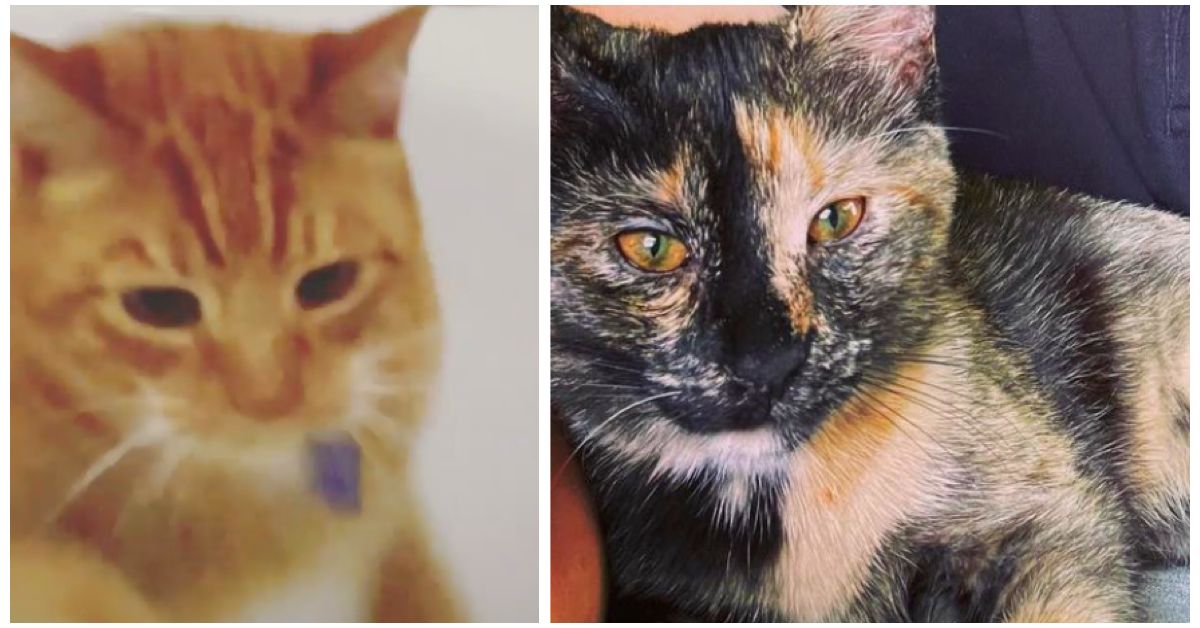
Jorts the dumb orange cat and Jean the smart torty. <a href="https://imgur.com/a/SbU5R4u">@throwawayorangeccat/reddit/imgur</a>

Once upon a time there were two cats, Jean and Jorts, who lived in a workplace with a bunch of humans. Jean was smart and Jorts was kind of a dolt, and the drama created around this fact resulted in the most hilarious coworker shenanigans ever told on Reddit. Jorts locks Jean in closets and Pam smears margarine on Jorts, and seriously, you just have to read this one in full. Trust me. Find it here.

This dog really, really, really wanted this very specific stick.

https://twitter.com/buitengebieden_/statuses/1471898689870434306

Poor snowman vs. perseverant doggy. Not sure who to root for here, but this is hilarious.

The ‘Ted Lasso and The Missing Christmas Mustache’ short is pure ‘Ted Lasso’ delight.

Some of us are missing Ted Lasso’s wholesome wisdom, and this Christmas claymation short voiced by the original cast is helping fill that void.

Kind man packed up his grill and a truckload of food to feed tornado-leveled Mayfield, Kentucky.

https://twitter.com/TheOrdonezTimes/statuses/1470140177175781376

After a tornado destroyed the town of Mayfield, Kentucky last weekend, Jim Finch decided to do what he could do: “feed the people.” Humans helping humans. Love to see it. Read the story here.

Throwback to this hilarious hugging a stranger at the gas station Christmas spirit video.

Mary Katherine Backstrom loves humanity and loves Christmas, and her story about sharing that spirit with random people at the Wawa was a delightful viral sensation. Watch and you’ll see why. Her laughter is contagious and the story is hilarious.

When one cockatoo is rocking out and the other thinks it’s totally extra.

https://twitter.com/notonebitsorry/statuses/1471212821606244353

You simply have to watch this video in its entirety. It’s like you can hear exactly what each bird is thinking. Totally different personalities. I laughed out loud like five times.

I hope that made you laugh a little or a lot and brought some much-needed delight to your day. Hang in there and share the joy, friends!


  • People born before 1990 are sharing their now-useless (but 100% nostalgic) skills
    From holding the phone on your shoulder to folding a map to knowing what "cornflower" and "goldenrod" are, here are pre-Y2K skills at their finest.
    ,

    People born before 1990 are sharing their now-useless (but 100% nostalgic) skills

    For instance, recording songs on tape from the radio while yelling at the DJ to shut up during the intro.

    Hey there, millennials! Welcome to the “Holy crapoly, I have real-life memories from 20 years ago!” club. It’s a strangely disorienting milestone to reach when you find yourself starting sentences with, “When I was young…” or, “Back in my day…” isn’t it? Your Gen X elders have been here for a while, but even we have moments of incredulously calculating how the heck we’ve arrived at this place. Time is a tricky little jokester, isn’t it?

    To highlight how much has changed for middle-aged folks since we were young, a user on Reddit asked people born before 1990 what useless skills they possess that nobody has a need for anymore. It’s both a hilarious trip down memory lane and a time capsule of life pre-Y2K. (Do kids these days even know what Y2K was? Gracious.)

    If you’re down for some good-old-days nostalgia, check out people’s responses:

    Making brown paper bag book covers

    “I can cover a textbook with a brown paper bag.”sourwaterbug

    Oh goodness yes. And there was always that one girl in class who had the art of the brown paper bag book cover perfected. (They’re probably Pinterest influencers now.)

    Maps on actual paper

    “I can re-fold a map correctly.” – JungleZac

    “Man remember actually using maps…I had an atlas with the road system in my car to navigate other states during road trips. Crazy.”jagua_haku

    How did we ever figure out how to get anywhere before GPS and Google Maps? (Two-inch thick road atlases in our car and stopping at gas stations to buy local maps while traveling, that’s how. Positively primitive.)

    Memorizing phone numbers and answering the house phone

    For real, though, kids these days don’t even know.

    “Remembering phone numbers.” greatmilliondog

    “Not only that, having to speak to your friend’s parents for a few minutes when you call their house.” Logical_Area_5552

    “How to take a message when the person they want to talk to isn’t there.” Amoori_A_Splooge

    How about dialing on a rotary phone, using a pay phone and making (or taking) a collect call?

    “Using your shoulder to hold a telephone up to your ear while doing multiple other things at once. Now, the phones are so damned small I drop them.” Regular_Sample_5197

    “100 ft phone cords ” mrch1ck3nn

    “I got in sooooo much trouble for stretching the phone cord into the bathroom for some privacy. Accidentally clotheslined Grandma She laughed about it but Mom was pissed!” AffectionateBite3827

    Recording songs off the radio was an art form

    I don’t think kids these days fully grasp how revolutionary Spotify and the like are for those of us who spent hours in front of the radio with our cassette tape recorder queued up at just the right spot waiting for the song we wanted to record to come on. And they will never, ever know the frustration of the DJ yapping right up until the lyrics start.

    Record to tape from the radio. Trying to make sure to not get the DJ/presenter talking sh-t or an ad”Gankstajam

    “‘Shut up, shut up, shut up!!! I’m trying to record my song!!!’” tearsonurcheek

    “Having the first side be tempting enough that they’d flip the other side to continue listening. That’s before continual playback machines existed. Had to flip the cassette.” CrunchyTeaTime

    “Haha yeah and trying to tell others so they don’t make random noise or knock on the door.” – anonymous

    “How about making cassette-based mix tapes, trying to figure out to the second, how many and which types of songs in which order, that would still fit perfectly on the length of tape per side.” – anonymous

    “People who make digital recordings do not have to worry about running out of tape.” – anonymous

    And there were many more, from rewinding a cassette tape with a pencil to writing in cursive to tearing the sides off of printer paper without tearing the paper itself. (Oh and, of course, the ability to count out change and understand what you’re supposed to do if something costs $9.91 and someone hands you $10.01.)

    Gotta love it when the things that used to be totally normal now sound like historic artifacts found in a museum. Kind of makes you wonder what normal things from today we’ll be laughing about in another 20 or 30 years.

    This article originally appeared three years ago. It has been updated.

  • 50 emotions that don’t exist in the English language, but we all have experienced
    Elderly man gently touches the forehead of another man outdoors.

    English may boast one of the lengthiest vocabularies in the world, but there are still entire emotional universes Merriam-Webster can’t quite encapsulate. Thankfully, other cultures can. Our ability to understand these layered, sometimes conflicting feelings proves that beneath our differences, we share the same emotional language.

    Here are some of the most beautifully specific emotions that have no English equivalent, grouped by the inner worlds they illuminate. Together, they show one thing: human feelings are far more connected than we might assume,

    1. The many faces of love, longing, and heartache

    words with no english equivalent, untranslatable words, emotions words, language, english, french, dutch, korean, chinese, german, words, unique words
    Woman in denim jacket covers face with sleeve, standing outdoors with blurred background. Photo credit: Canva

    Chappell Roan said it best: “love is a kaleidoscope.” One of tenderness, ache, inevitability, and memory. These words perfectly capture the emotional fine print of human connection.

    • Saudade (Portuguese) – A deep nostalgic longing for someone or something loved and lost. The love that lingers long after the moment is gone.
    • Tu’burni (Arabic) – “I hope I die before you,” said not morbidly but because life without the beloved would be unbearable.
    • Onsra (Boro, India) – Loving for what you know will be the last time.
    • Mágoa (Portuguese) – A heartbreak so profound that its traces remain visible in gestures and expressions.
    • Sielvartas (Lithuanian) – A seemingly endless grief or emotional turmoil, often tied to loss.
    • Toska (Russian) – Spiritual anguish with no clear cause—sometimes love-sickness, sometimes existential ache.
    • Koi No Yokan (Japanese) – The feeling that you’re destined to fall in love with someone. Not love at first sight, but the inevitability of it.
    • Forelsket (Norwegian) – The consuming, euphoric high of new love. Technically, we do have an English equivalent (puppy love).
    • Mamihlapinatapai (Yaghan) – A shared look between two people, both hoping the other will initiate something they both want.
    • Gigil (Tagalog) – The irresistible urge to squeeze someone because they’re impossibly cute or beloved.
    • Jeong (Korean) – A deep, multifaceted emotional bond encompassing love, affection, empathy, and attachment.

    These words prove that love cannot be reduced to a single emotion.

    2. Awe, inspiration, and emotional transcendence

    words with no english equivalent, untranslatable words, emotions words, language, english, french, dutch, korean, chinese, german, words, unique words

    Woman with outstretched arms in a sunlit field, enjoying the outdoors. Photo credit: Canva

    Some emotions lift us out of our everyday selves—through nature, art, music, or inner stillness. These words celebrate those moments when the world feels bigger, deeper, or more alive.

    • Tarab (Arabic) – A musical ecstasy that transports you.
    • Duende (Spanish) – The visceral, spine-tingling feeling you get from powerful art.
    • Shinrin-yoku (Japanese) – The restorative calm from “forest-bathing.”
    • Dadirri (Australian Aboriginal) – Deep, contemplative, respectful listening.
    • Querencia (Spanish) – A place where your soul rests and regathers strength.
    • Ailyak (Bulgarian) – Doing things calmly and slowly, resisting the rush of life.
    • Ataraxia (Ancient Greek) – A serene calm that comes from acceptance and clarity.
    • Sukha (Sanskrit) – True, lasting happiness not dependent on circumstances.
    • Eudaimonia (Greek) – A form of human flourishing that includes joy, purpose, and even the ability to hold suffering with grace.

    These are the emotions that open us up to natural beauty and to the deeper parts of ourselves.

    3. Yearning, wanderlust, and the emotional pull of place

    words with no english equivalent, untranslatable words, emotions words, language, english, french, dutch, korean, chinese, german, words, unique words

    Lush forest with vibrant green and orange foliage in soft, misty sunlight. Photo credit: Canva

    These words capture the feelings that tie us to geography—whether we’re longing to leave, ecstatic to go, or transformed when we arrive somewhere new.

    • Fernweh (German) – A longing for faraway places you haven’t visited yet.
    • Dépaysement (French) – The disorientation (good or bad) of being somewhere entirely unfamiliar. Think of it as reverse déjà vu.
    • Resfeber (Swedish) – The nervous excitement right before a journey begins.
    • Vårkänsla (Swedish) – The giddy, heart-lifting feeling when spring finally returns.
    • Iktsuarpok (Inuit) – The restless anticipation of waiting for someone to arrive.
    • Waldeinsamkeit (German) – Also belongs here for its nature-rooted serenity.

    These words remind us that our surroundings shape our inner world.

    4. Connection, community, and shared human vibes

    words with no english equivalent, untranslatable words, emotions words, language, english, french, dutch, korean, chinese, german, words, unique words

    Friends laughing and drinking coffee at a cozy cafe table. Photo credit: Canva

    Some feelings only exist between people in crowds, in friendships, in shared silences, or in the subtle emotional temperature of a room.

    • Gezelligheid (Dutch) – Cozy, heartwarming togetherness.
    • 분위기 / Boon-wee-gi (Korean) – The overall atmosphere or vibe of a situation.
    • Fika (Swedish) – A ritualized break to slow down and connect (usually over coffee).
    • Mokita (Kivila) – A painful truth everyone knows but agrees not to mention.
    • Commuovere (Italian) – Being moved to tears by someone’s story or kindness.

    Human life is held together by shared awareness, and these words embody some of those shared experiences.

    5. Strength, resilience, and grit

    words with no english equivalent, untranslatable words, emotions words, language, english, french, dutch, korean, chinese, german, words, unique words

    Woman with curly hair in sunlight, eyes closed, wearing a purple top. Photo credit: Canva

    These words show that courage and resourcefulness take many forms.

    • Sisu (Finnish) – Deep perseverance and courage in adversity.
    • Orenda (Huron) – The human will’s power to shape the world despite fate.
    • Jijivisha (Hindi) – A zest for life; desire to live fully and vibrantly.
    • 加油 / Jiā yóu (Chinese) – “Add oil!” A cheer of encouragement and solidarity.
    • Desenrascanço (Portuguese) – Cleverly untangling yourself from trouble using creativity.
    • Pihentagyú (Hungarian) – A relaxed-brain quick-wittedness; clever mental play.

    Some emotions are fuel to keep us going.

    6. Humor, embarrassment, and the awkwardness of existence

    words with no english equivalent, untranslatable words, emotions words, language, english, french, dutch, korean, chinese, german, words, unique words

    Man smiling with hand over face, standing outdoors against a blue sky background. Photo credit: Canva

    Humans are messy. These words capture the cringiness that makes us lovable.

    • Jayus (Indonesian) – A joke so bad it’s good.
    • Age-otori (Japanese) – When your haircut makes you look worse.
    • Litost (Czech) – The sting of suddenly realizing your own misery—often with a dash of revenge fantasy.
    • Lebensmüde (German) – “Life tiredness” that sometimes explains reckless behavior.

    They celebrate the ways we laugh our way through being human.

    7. Serenity, fulfillment, and slower ways of living

    words with no english equivalent, untranslatable words, emotions words, language, english, french, dutch, korean, chinese, german, words, unique words

    Hand painting a still life on canvas with blue and orange tones. Photo credit: Canva

    These words name feelings we desperately need more English words for—the grounded peace that comes from completing something meaningful or living at a human pace.

    • Yuan bei (Chinese) – Perfect, satisfying accomplishment.
    • Ailyak (Bulgarian) – Calm, unhurried living.
    • Meraki (Greek) – Pouring your soul, passion, and creativity into what you do.
    • Querencia (Spanish) – A place of inner refuge and strength.
    • Ataraxia (Greek) – Acceptance-based tranquility.

    These words are all about the intrinsic fullness that comes from finishing something well, doing things with heart, and letting yourself breathe.

    8. The hard-to-define emotional in-betweens

    words with no english equivalent, untranslatable words, emotions words, language, english, french, dutch, korean, chinese, german, words, unique words

    Woman sitting on a chair in the water, writing in a notebook at sunset. Photo credit: Canva

    Some feelings sit in liminal spaces, hard to define but unmistakably human.

    • Torschlusspanik (German) – The fear that the door of opportunity is closing as you age.
    • Desbundar (Portuguese) – Letting loose and shedding your inhibitions.
    • Dadirri (Aboriginal) – Quiet, contemplative inner listening.
    • Dépaysement (French) – Emotional disorientation abroad (also fits here).

    “Bittersweet” is an English word that comes to mind, but how nice to have even more words to choose from.

    Why these words matter more than ever

    Maybe the real beauty of these untranslatable emotions isn’t that other languages have them and English doesn’t. It’s that humans everywhere feel them, even if we don’t always know how to say them out loud.

    So the next time you experience something too complicated to explain, take heart: there’s probably a word for it somewhere in the world…and someone who’s felt it, too.

    Sources: Berlitz, BBC, Thought Catalog, Collective Hub

    This article originally appeared last year. It has been updated.

  • French toast isn’t actually French. How the ancient frugal meal got its contradictory name.
    Photo credit: CanvaFrench toast, left, and a man wearing a beret and striped shirt.

    We all know and love the fluffy, sweet, decadent taste of French toast. But what many of us don’t know is that it’s about as authentic to French cuisine as chicken parm is to Italian cuisine. In fact, the dish predates the country entirely. 

    From ancient Rome to your breakfast plate

    The earliest known recipe goes all the way back to ancient Rome. In a fourth-/fifth-century cookbook titled Apicius, you’ll find instructions for making Aliter Dulcia (“another sweet dish”), as it was called back then, which involved soaking white bread in a milk-and-egg mixture, frying it, then covering it with honey.

    According to some sources, this iteration of French toast was considered a luxury food intended for the wealthy. Only “fine white bread” with the “crusts removed” would be used. 

    However, fast-forward to Medieval Europe, and the dish served slightly more practical purposes. It not only revived otherwise stale and useless bread in a time when food really couldn’t go to waste, but the eggs used in the dish also provided necessary protein. 

    During this time period, the dish went by many names, but French toast wasn’t one of them. Germans called it “eggy bread,” the Irish called it “gypsy toast,” and the English called it “poor knights,” referring to its economical ingredients. Even the French called it pain perdu, or “lost bread.”

    Below, Max Miller of Tasting History recreated Suppa Dorata (often translated as “Golden Soup” or “Golden Sippets”), essentially the 15th-century Italian version of French toast, featuring a rich, crispy texture flavored with saffron and rose water rather than maple syrup or honey.

    The accidental birth of “French toast”

    Astoundingly, the term French toast actually refers to an American…an American who could have benefited from autocorrect. 

    As legend has it, in 1724, New York innkeeper Joseph French advertised it as “French toast” when he meant to call it “French’s toast.” A simple grammatical error became immortalized forever. 

    It seems, though, that French toast wouldn’t become America’s go-to name until World War I. Before then, it was called “German toast.” But when all things German became taboo, a name attributed to an Allied country seemed more befitting.

    Sidenote: Some might recall that in 2003, the United States was trying to rebrand French toast as “freedom toast,” similar to “freedom fries” instead of “French fries.” It did not catch on. 

    Breakfast, dessert, or something else entirely?

    Even after the name French toast stuck, people couldn’t agree on which meal it belonged to. As Miller explained, some felt it was best suited for lunch, while others thought it should be an after-dinner dessert. It wasn’t until 1866, when Godey’s Magazine (which brought us “Mary Had a Little Lamb” and that little holiday known as Thanksgiving) dubbed it an “excellent” breakfast choice, “equal to waffles.” Bold statement, indeed!

    Today, French toast still goes by countless other names and variations. In several countries, it’s a savory dish. In India, it’s served with spices, green chilis, onions, and even ketchup. Similarly, Italy places mozzarella between the bread slices before dipping them in eggs and frying them. Meanwhile, in places like Brazil and Spain, where it’s called “rabanadas” and “torrijas,” respectively, it’s served on special holidays like Christmas or Lent.

    @daenskitchen

    Torrijas (Spanish French toast). Full recipe over on my website!

    ♬ sonido original – Vibes by Ley

    No matter what you call it, this enduring dish is far more magical than it appears at first glance, carrying not only delicious comfort but also centuries of history in every bite.

  • An American in Paris explains European ‘bridge holidays’ and people are fascinated

    Photo credit: Canva Photos

    The Eiffel Tower, left, and a family at the beach.

    It’s no secret that work culture in Europe is a lot different from what it is in the United States. Europeans often get more time off and work fewer hours overall. Even so, you have to really live there to understand just how different things are.

    Justyn Lee is doing exactly that. He is an American living and working in Paris, and even he was surprised after moving there to discover a few new things about the work culture. One major takeaway? In France, the month of May barely exists.

    American living in Paris explains “le pont”

    In a LinkedIn post, Lee explains that France has four official holidays in the month of May. That’s kind of a lot, but not totally unusual compared to what Americans are used to. In November, we have Veterans Day and Thanksgiving, while in January there’s New Year’s Day and Martin Luther King Jr. Day. In France, there’s Labour Day, Victory in Europe Day, Ascension Thursday, and Whit Monday.

    However, he notes that “France does not operate on days. It operates on proximity.”

    Lee then explains something called “le pont,” which means “the bridge.” Whenever a holiday, or a day off from work, lands in the middle of the week, most companies just go ahead and make “the days in between disappear.”

    Americans are familiar with “the bridge” in a few scenarios. Most businesses are closed the Friday after Thanksgiving, for example. But in France, while it’s not legally mandated, it’s culturally accepted that most holidays turn into a four-day weekend.

    Lee says people take this opportunity to travel, go on vacation, or rest, only occasionally checking in on work. “Let’s circle back in June” is a common refrain.

    “May is not a month,” he writes. “C’est la vie.”

    It’s not just France that likes to stretch its holiday weekends

    The concept of “bridge holidays” is almost universal across European and Latin American work cultures. It exists under different names in France, Germany (Brückentage), Spain (hacer puente), Brazil (imprensar/emendar/enforcar), and more.

    There are tons of reasons for this extremely liberal vacation policy. European and Latin American countries have strong labor unions that protect workers’ rights, and most have universal healthcare, which lowers the economic pressures associated with working.

    Though bridge holidays and large amounts of paid time off are not completely universal, the U.S. does seem to be in the minority by not participating.

    How do countries like France keep the “trains running,” so to speak, in the month of May and other months full of holidays? Essential services are often still open, as are shops and small businesses in big cities like Paris. Tourism workers may not get such an extended break at the same time, since everyone is vacationing. But otherwise, typical office workers have a cultural agreement that non-urgent emails and meetings can simply…wait.

    Europeans chime in with a knowing nod

    Lee’s post struck a chord on LinkedIn, where dozens of commenters were eager to share their thoughts.

    “Love this post!” Marta Pastoriza Ares commented. “Haha Something veeery similar happens in Spain as well, and we also call it ‘hacer puente’ (bridging those bank holidays with the days ‘in between’). A culture trait I refuse to leave behind. Not ever!”

    “Very similar approach in Brazil when it comes to holidays,” Carolina O. Fraiel said. “We call it ‘imprensar’ (to squeeze), ’emendar’ (to connect) and ‘enforcar’ (to choke). And all it means is that people hope for holidays on Tuesdays and Thursdays to make the most of it.”

    “Very, very similar in Germany, we even also call those days between holidays and weekends ‘Brückentage’ (bridge days),” Alexander Lichanow said. “I would love to see US hustlebros froth and fume over this blatant disregard for grind culture.”

    Shahana Shaikh was fascinated by the unwritten rules in action: “Interesting how work culture isn’t just rules it’s the unwritten norms people quietly follow. Sometimes, without anything being formally announced, everyone just aligns around a shared rhythm. It shows that culture isn’t what’s written in policy, but what people actually practice every day.”

    And finally, Tim McNerney drew a humorous parallel to life in the U.S.: “European AE: Right guys, it’s July 31st. I’ll see you in September. Out of office is on. Leaving my work laptop at home. Don’t try and contact me. American AE: kidney surgery is tomorrow. Bring the docusigns by my bed, and I’ll make sure we get the red lines covered before they put me under. I should be good for the on-site the next morning too.”

    Americans in the comments were a bit flabbergasted to learn the meaning behind “le pont.” But would bridge holidays even work in America?

    Without federally mandated paid time off and some major changes to the cultural infrastructure, probably not. Americans also tend to get higher salaries than their European counterparts, and they like it that way.

    But that’s not to say that it’s all doom and gloom for overworked Americans.

    After COVID-19 and the work-from-home boom, many workers have found themselves with more flexibility than their office jobs previously allowed. In addition to formal “bridges” around Thanksgiving and Christmas, it’s become more normal for workplaces to be “quiet” around the holidays or during certain stretches of the summer.

    This understanding could become even more normalized in the coming years.

    The key thing that makes it work in France, though, is the social contract. There’s an unspoken agreement that life is more important than work, and things that aren’t urgent are sometimes going to have to wait. It’s an approach that we could, and probably should, adopt a little more of here at home.

  • Young woman surprises 87-year-old neighbor who lives alone by paying off his hearing aid bill
    https://www.tiktok.com/@julissa.and.delmar/photo/7600874367303634189Julissa Gomez and husband Anthony befriended neighbor Delmar Harter.
    ,

    Young woman surprises 87-year-old neighbor who lives alone by paying off his hearing aid bill

    “He’s definitely not just our neighbor anymore, he’s family,” Julissa Gomez tells Upworthy.

    Julissa Gomez, 28, and Delmar Harter, 87, are unlikely best friends, but it’s a bond that’s been building for a decade.

    “We met Delmar over 10 years ago when my parents bought their home in 2015,” Julissa tells Upworthy. “At first, our relationship was taking him to church and sharing meals here and there. But over time, we noticed that he was often alone during holidays and birthdays.”

    Over the years, Julissa and Delmar have been through many ups and downs of life together that has made their friendship stronger.

    “Delmar showed up for us in one of the hardest moments of our lives when my father passed away [in 2020], and that kind of kindness says everything about who he is. He’s definitely not just our neighbor anymore, he’s family,” she adds.

    Delmar’s hearing aids are paid off

    Gomez was able to surprise Delmar with the good news. Thanks to the success of the children’s book they wrote together called The Friendship Next Door with Delmar (published in 2025), was able to pay off his costly hearing aids. Gomez shared an emotional video on social media, with Delmar wiping tears from his eyes.

    “His reaction was very emotional,” she tells Upworthy. “He was so grateful and honestly a bit overwhelmed. Seeing that joy and relief on his face reminded us exactly why we started all of this. It was a really special moment for all of us.”

    With years of friendship under their belt, the pair wanted to share their story in a book that “encourages kids and people of all ages to be kinder and try to get to know your neighbors,” Julissa adds. 

    The goal was to help raise money to support Delmar’s living expenses and health needs.

    “We are so happy to now say that the book is now helping with his living expenses and things like his hearing aids,” she says. “Before he would just rely on his social security check, but now because of the power of the Internet his bills are all paid for.”

    How Julissa and Delmar became family

    When they first met in 2015, Julissa and her family embraced Delmar entirely.

    “We made it a point to start celebrating those days with him. After so many years of holidays, birthdays, and any special occasion that we celebrated together we then welcomed him into our family, and he truly became a part of it.” she shares.

    Julissa also notes that, “Delmar never married and his family live in other states, so we are the closest family he has now.”

    Julissa’s husband, Anthony, has also become close with Delmar.

    “After my dad passed away in 2020, my husband Anthony stepped in and took on a big role in continuing the love and care we had built as a family. Since then, my husband and Delmar have formed such a special bond. They are best of friends.”

    Julissa hopes that her friendship with Delmar can inspire others.

    “If there’s one thing we want people to take away, it’s that kindness doesn’t have to be big to make an impact,” she says. “Simply showing up for someone, especially during the times they feel most alone, can truly change a life.”

    Viewers respond

    Many people were touched by Julissa and Delmar’s friendship, as well as the good news of Delmar’s hearing aids being paid off:

    “I love him so so so much truly your story is the BEST.”

    “As a millennial grown woman that never saw any of my grandparents maternal or paternal this is a gem. You’re so blessed to have found a soul needing of love and attention.”

    “Oh now I’m cryingggg.”

    “I know his mama looking down on you with so much love for taking care of her baby boy ❤️.”

    “Something about an older man tearing up 🥹.”

    “😭😭😭 I can’t stop crying. I’m happy that Grandpa Delmar is happy. Damn I’m just thankful he found the both of you.”

  • The real inspiration for ‘Beauty and the Beast’ is far more heartbreaking than the fairytale
    Photo credit: Wikimedia CommonsPetrus Gonsalvus and his wife, Catherine, left, and a solo portrait of Petrus Gonsalvus.
    ,

    The real inspiration for ‘Beauty and the Beast’ is far more heartbreaking than the fairytale

    Beneath the legend was a family navigating lives shaped by exploitation.

    Beauty and the Beast is a fairytale-turned-Disney movie that virtually everyone on the planet is familiar with. But very few know that it was said to be based on a true—and deeply tragic—story.

    A boy taken from his home

    In 1537, at just 10 years old, a boy named Pedro Gonzalez was taken from his home in the Canary Islands and presented to King Henry II of France as a novelty gift because of his genetic condition, known today as congenital hypertrichosis, which causes the entire body to be covered in hair.

    Despite his “wild” appearance, Gonzalez seemed docile, inspiring the king to experiment with turning the supposed savage into a gentleman under the revised Latin name Petrus Gonsalvus.

    Gonsalvus grew up to be an educated, respected member of the court. At least, as respected as a man with his condition could be. However, there would be one more experiment awaiting him.

    Petrus Gonsalvus. Photo credit: Wikimedia Commons

    That moment would arrive in his twenties, after his protector, Henry II, died in a jousting accident on July 10, 1559. Ownership of him now belonged to the infamously cruel Catherine de Medici.

    Medici arranged a marriage between Gonsalvus and another Catherine without ever mentioning her soon-to-be husband’s condition to the bride.

    Petrus Gonsalvus and his wife Catherine by Joris Hoefnagel. Photo credit: Wikimedia Commons

    The family that became a spectacle

    Hypertrichosis has dominant traits and therefore easily passes down to children, which the Gonsalvus family soon discovered. The pair had seven children, four of whom were covered in hair.

    It wasn’t long before the “wild family” became a traveling sideshow of sorts, fascinating onlookers, painters, scientists, and nobles throughout Europe. Portraits of the family circulated among royal courts, where they were studied less as people and more as curiosities. Sadly, the Gonsalvuses would eventually be separated as, much like their father, several of the children were sold or gifted away as oddities.

    Children of Petrus Gonsalvus by Joris Hoefnagel. Photo credit: Wikimedia Commons

    Gonsalvus and his wife died within six years of each other, in 1618 and 1623, respectively, in Italy, though their graves were never located.

    How their story may have shaped a classic fairytale

    Fast forward to 1740, when a French author by the name of Gabrielle-Suzanne Barbot de Villeneuve published La Belle et la Bête (French for Beauty and the Beast) in a collection of stories titled La Jeune Américaine et les contes marins (The Young American and Marine Tales).

    While Villeneuve never explicitly confirmed Gonsalvus as an inspiration, historians have pointed out striking similarities between the real-life family and the famous tale: a gentle, intelligent man judged almost entirely for his appearance; a woman unexpectedly placed into a marriage she did not choose; and a relationship that slowly grew through familiarity and understanding.

    The Disney version then transformed the story into one filled with singing teacups, enchanted castles, and a hopeful ending. As we now know, the real history behind it paints a far sadder picture of how society once treated people who looked outside the norm.

    Centuries later, the story of Petrus Gonsalvus continues to fascinate people because it reveals just how easily humanity can blur the line between curiosity and cruelty. Beneath the legend, the paintings, and the fairytale comparisons was simply a family navigating lives shaped by exploitation they never asked for.

  • Fashion expert explains why ‘survival bias’ makes it seem like 19th century Victorian gowns were much smaller than they were
    Photo credit: CanvaA woman in the 19th century.


    It’s often fascinating how history is written. Perhaps it’s not for nefarious reasons, but it can lead to misconceptions about the reality of the past. From history to art to fashion, we see through certain filters often applied without us knowing.

    Fashion historian Dr. Serena Dyer has become popular online for sharing what clothing trends looked like decade by decade through the centuries. In a recent clip posted to social media, she shares a video of a 19th century gown with a thirty-nine inch waist. She points out that despite often seeing much smaller garments from this time period, larger ones were actually quite as common.

    Thirty-nine inch waist

    Dyer explains why this phenomenon happens. “This Victorian gown has a thirty-nine inch waist,” she begins. “And in the 19th century, this was not uncommon. Survival bias means that garments with enough fabric to be remade were recycled or worn as fancy dress. But tiny garments that were too small to be re-worn were disproportionately preserved in our attics and museum collections.”

    We zoom in on the exquisite brown silk garment. “This chocolate brown silk gown from 1864 in the collection of Bankfield Museum is a rare, glorious exception. Its large skirt, supported by a crinoline, and curvy bust supported the Victorian emphasis on proportion over tininess. So let’s stop pretending that the eighteen-inch waist was the standard and start accepting that bodies of all shapes and sizes have always existed.”

    The clip delighted some of the commenters. One Facebooker wrote, “Love this!! I adore the dresses from the era and have always thought, thank goodness I did not live back then, those dresses would look awful on me. Now I see they are just as beautiful in normal sizes!!”

    Survival bias

    In the piece, “Understanding Survival Bias in Vintage Plus-Size Clothing”, licensed aesthetician, makeup artist, massage therapist, and fashion expert who goes by Christine “The Glambassador,” explains what survival bias is and gives an example, unrelated to fashion. “Survival bias occurs when we form conclusions based only on what has lasted over time while overlooking everything that didn’t survive. A classic example of this comes from WWII, when statistician Abraham Wald analyzed bullet holes on returning planes. The military initially thought they should reinforce the areas that had been hit, but Wald realized they were only looking at the planes that made it back—meaning the planes that didn’t return were likely hit in the areas without visible damage.”

    She then reiterates what Dyer posted in her clip: “How does this relate to vintage plus-size fashion? The reality is that plus-size garments were often worn more frequently, handed down to younger family members, or altered over time, meaning they simply didn’t survive as well as their smaller counterparts. Unlike smaller garments, which were often stored away and preserved, larger garments had a higher likelihood of being used until they were unwearable.”

    1930s

    On “The Glambassador”‘s YouTube page one person shared a similar bias from the 1930s in the comments, writing, “I have a quilt made in the 1930s by my great-grandmother from the scraps of clothing during the 1930s. She told us that it was cheaper to cut down outgrown childrens’ clothing and make quilt than it was to buy a new blanket at the time. So, yeah, that was also something that happened to clothing at the time – remaking garments into quilts, throws, or even toweling.”

    “Curation is an art form”

    In a 2024 paper for New York University Gallatin School of Individualized Study, one student writer explains that relics of fashion or art in general are not only selection-biased, but often at the whim of the curators. “The priorities within museum curatorship dangerously contribute to our connection with the past by utilizing a limited selection of women’s garments to represent a general population. Curation is an art form. A curator’s choices can shape how visitors understand a topic or time period. Deciding what to display and where to place it creates a narrative of the topic the exhibition delves into, all for visitors to interpret as they explore each piece of art.”

  • Millennial asks Gen Zers what they do for fun, and the answers are surprisingly different
    Every generation has it's own flavor of fun.

    The coming-of-age era known as your twenties are a time for experimentation, branching out, learning about different aspects of yourself, and of course, having stupid fun.

    Of course, every generation‘s definition of fun varies. Just what might Gen Zers, those who navigated their teenhood through TikTok and basically came of drinking age during a global pandemic, do to elicit feelings of fun?

    Millennial content creator Ashley Tea wondered this very thing. In a video that went viral on TikTok in late 2023, she shared “I genuinely think millennials got to have a way better time than Gen Z does.”

    Millennials are already nostalgic about their glory days

    Tea then reminisced about her own experience of being “an emo kid in 2005,” going out to clubs, bars, and restaurants with her friends having a “fun, great, trashy” time.

    That simply wouldn’t be financially feasible in today’s economic landscape, Tea noted, leaving her “mystified” as to how today’s college-age adults might enjoy themselves.

    So again, Tea posed the question: “it’s a Friday night, a Saturday night…What do you do? Where do you go?”

    Gen Z’s answers to this question were eye-opening

    The responses to Tea’s question were illuminating, to say the least, and certainly different than how she spent her early 20s.

    For starters, Tea’s joke about “Gen Zers not having any fun at all” rang true for many people of that age group.

    “As a 23 year old: I don’t have any fun, hope that helps!” quipped one person.

    Another joked, “sometimes I sit outside if I’m feeling extra.”

    gen z, cheap things to do, fun, fun activities, millennials

    One obvious factor behind this is finances. With everything being far more expensive, many Gen Zers simply cannot afford to have a social life that resembles earlier generations.

    “As a 21 year old, the economy makes it difficult to have fun that way, I work 40 hours weekly and I’m either too tired or can’t afford it,” one person wrote.

    Another reason, which isn’t maybe as obvious, is surveillance. Tea noted that a lot of young people said that since either of their “parents can track their phones everywhere,” they are deterred from doing things that could get them into trouble. Perhaps that’s a win for safety, but there is something to be said about excessive levels of control.

    Then of course there’s the pandemic, which sucked the fun out of everything big time

    “I got ROBBED of my early 20s bs COVID started when I was 22 Nwo things are normal but all the good bars and clubs in my area didn’t survive the lockdown,” one person wrote.

    Plus, there’s a lack of third places to gather, leaving very little options beside staying home and scrolling on TikTok.

    So what does Gen Z actually do for fun?

    However, it’s not all gloom and doom, Tea discovered.

    For one thing, Gen Zers don’t “glorify binge drinking” nearly as much as Millennials and Gen Xers. According to recent research, Gen Z is drinking significantly less than previous generations, with nearly two-thirds planning to cut back or abstain entirely.Part of this comes down to Gen Z prioritizing health and wellness more than previous generations, and another part is the cost.

    When Gen Zers do actually have fun, it tends to lean towards more wholesome activities, like house parties (sometimes even themed house parties) and crocheting. Lots and lots crocheting apparently.

    Grocery stores are the new clubs.

    gen z, cheap things to do, fun, fun activities, millennials

    Then there’s self care, which genuinely is fun:

    gen z, cheap things to do, fun, fun activities, millennials

    Love that self care is considered entertainment these days.

    As promised, crocheting and taking care of one’s body are really all the rage with Gen Z:

    gen z, cheap things to do, fun, fun activities, millennials

    Fitness groups are a new way people are finding friends.

    And who doesn’t love a good coffee shop?

    gen z, cheap things to do, fun, fun activities, millennials

    Though of course, hanging out in coffee shops isn’t exactly anything new.

    Gen Z will be just fine

    So maybe things look quite a bit different for Gen Z than Millennials or other generations.

    That’s not entirely a good or bad thing, and it’s definitely to be expected in some ways. The struggle of rising costs and limited opportunities to form connections and have fun are undeniably issues that must be addressed. But the fact that Gen Zers are leaning into their creativity is worth noting too. If nothing else, it makes it clear that even though it might not look like it, there is still fun to be had.

    Now, I wonder what Gen Alpha’s young adult fun will look like in a few year’s time? If their slang is any indicator, it’s going to be weird.

    @damonsharpe

    Gen Alpha Slang the complete guide 🤓 all our viral videos in one! The latest slang at the end! #genalpha #genalphaslang @Charlie Belle

    ♬ Gucci Lemonade – Damon Sharpe & AXON & Kirsten Collins

    We’ll get back to you on that. But, honestly, more power to them.

    This article originally appeared two years ago. It has been updated.

Culture

French toast isn’t actually French. How the ancient frugal meal got its contradictory name.

Finance

The ‘average American’ put a price tag on ‘peace of mind.’ It’s worth a lot.

Culture

An American in Paris explains European ‘bridge holidays’ and people are fascinated

Culture

Young woman surprises 87-year-old neighbor who lives alone by paying off his hearing aid bill