The notion of living without an internal monologue is a fairly new one. Until psychologist Russell Hurlburt’s studies started coming out in the late 90s, it was widely accepted that everyone had a little voice narrating in their head. Now Hurlburt, who has been studying people’s “inner experience” for 40 years, estimates that only 30-50% of the population frequently think this way.
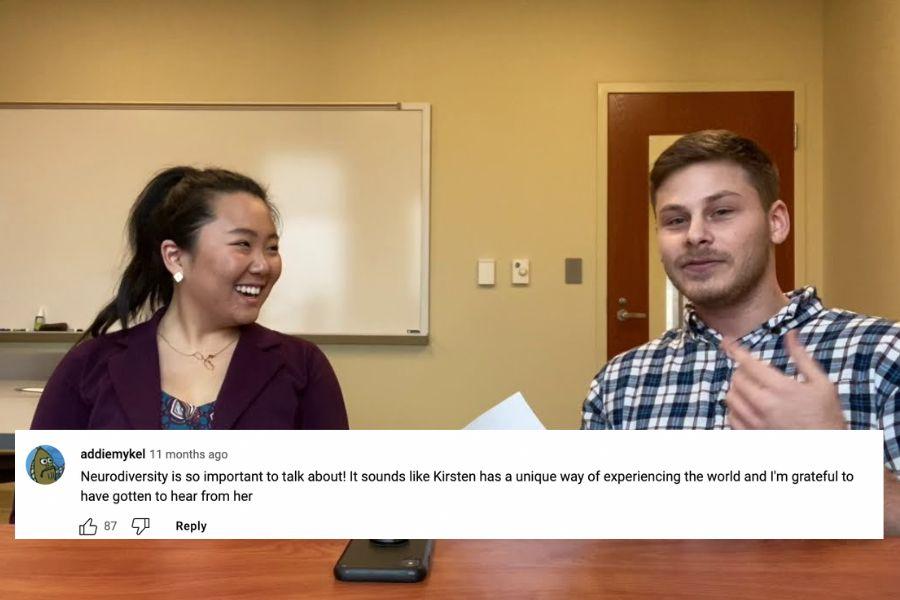
So what about the other 50-70%? What exactly goes on inside their heads from day to day?In a video interview originally posted in 2020, a woman named Kirsten Carlson gave some insight into this question, sharing how not having an inner dialogue affected her reading and writing, her interactions with others and how she navigates mental challenges like anxiety and depression. It was eye-opening and mind-blowing.
“Reading isn’t a particularly enjoyable activity,” Carlson admitted, explaining that rather than seeing images of characters and landscapes, she only sees words.
“In my head, every sentence has a shape so you can see the shape of a sentence. Keywords will pop out and I can file those away into my concept map, so at the end of reading something I can have a concept map of the main topics that I read about. It’s not images, it’s just the words.”
That said, she is apparently a “very fast” reader.This concept alone was hard for viewers to grasp. As one person wrote, “She’s broken my mind. I don’t even understand what I’m not understanding. I’ve never visualized a sentence in my life.”
While she “never daydreams,” Carlson does dream at night. However, she doesn’t recall any dialogue in those dreams. Carlson also shared that her alone time is always spent doing stuff like cleaning, cooking, watching Netflix, or studying. I can only imagine the things I’d accomplish if I didn’t get sidetracked with existential questions like “Is a hotdog a sandwich?” If only.
While Carlson’s way of thinking might seem vastly different from the norm, there are several commonalities. Like most people, she has stores of information that she can pull up at any time. Thoughts still can keep her up at night, even if she does picture her endless to-do lists rather than hear them. And not having an inner monologue offers no protection against things like anxiety or depression, which Carlson explains manifest physically for her. This is known as Somatic Anxiety. Rather than feeling mental overload, Carlson’s hands will start shaking, her stomach might get nauseated, and she’ll feel physically fatigued or disinterested in life.
Watch the video below:
As our understanding (and appreciation) of neurodiversity becomes more evolved, it’s likely that we’ll have even more fascinating conversations to absorb. No two people interpret the world that same way. Celebrating these differences reminds us that there is no one “right” way of thinking.
This article originally appeared last year.