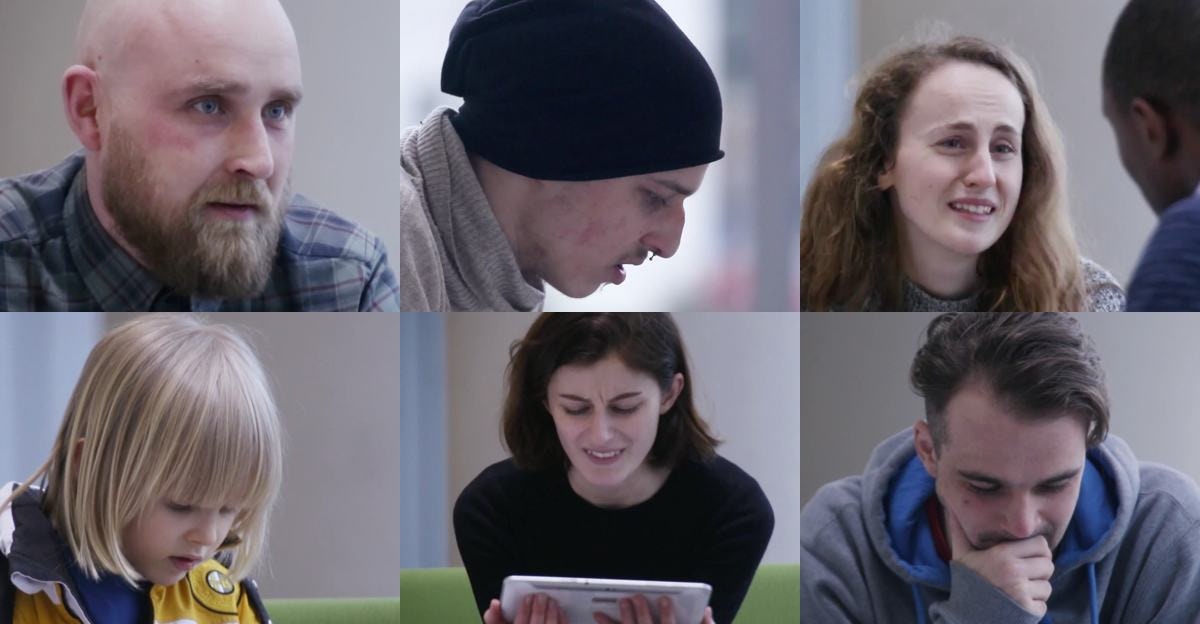
When a man asks people to translate a hate message he’s received, their response is unforgettable

Reading the words would be one thing. Having to think about what they mean is almost too intense.

Array
ArrayPhoto credit: All images via Lietuvos žmogaus teisių centras/YouTube


As part of an experiment, a man asks for help translating a Facebook message he has received.

There’s a man in Lithuania who speaks only English. The message is in Lithuanian. He can’t read it, so he asks some locals to translate it for him.

[rebelmouse-image 19498908 dam=”1″ original_size=”1200×624″ expand=1]


As he asks one person after another to translate the message for him, two things become obvious.

1. He’s received a message full of hate speech.

2. Translating it for him is breaking people’s hearts.

It’s nearly more than these people can bear.

There’s a sudden, powerful connection between the translators and the man they’re translating for. They want to protect him, telling him not to bother with the message.
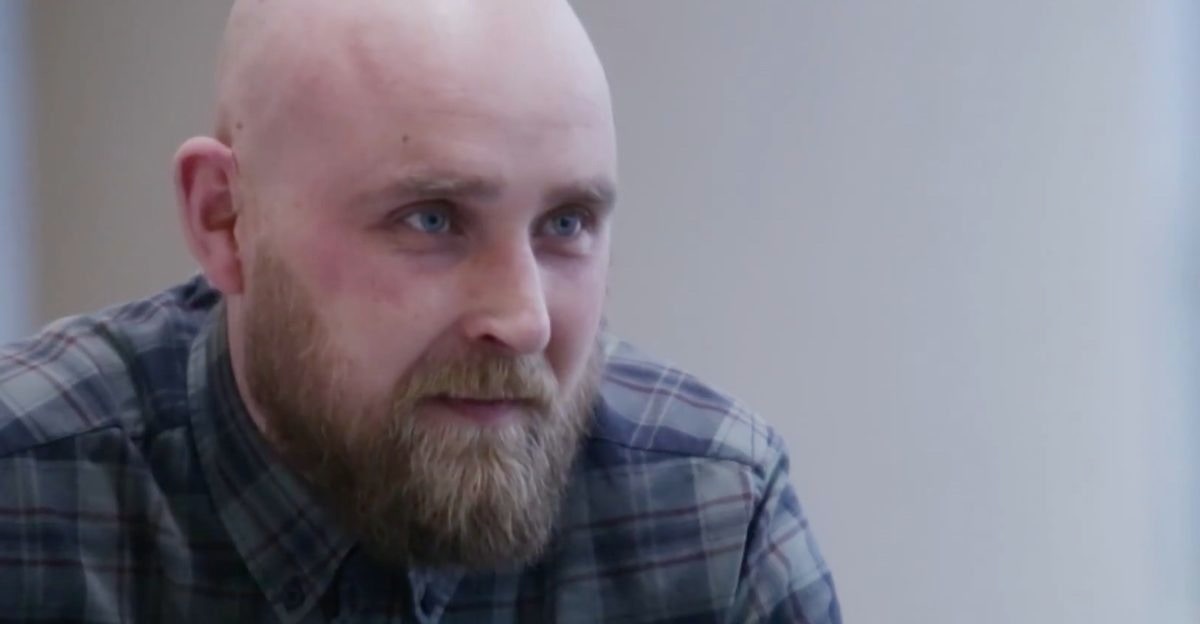
They apologize for the message.

They look like they want to cry.
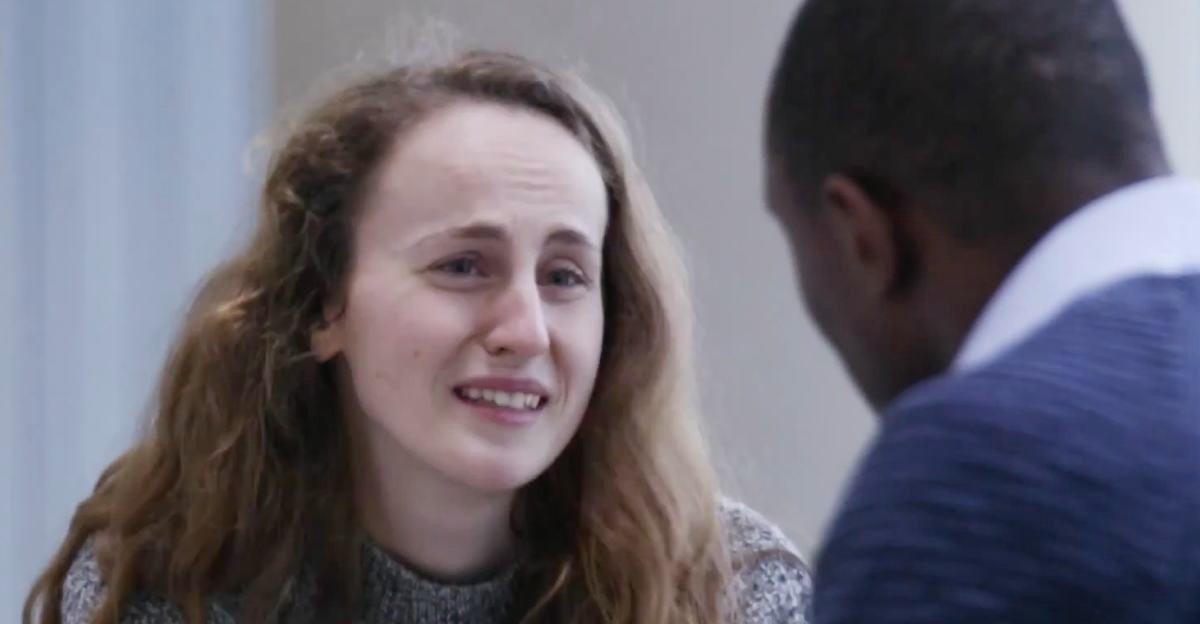
Words hurt.

Most of us would never think of saying such horrible things. This video shows people realizing in their gut what it must feel like when those words are pointed at them — it’s all right on their faces. And so is their compassion.

The Facebook message is horrible, but their empathy is beautiful. The video’s emotional power is what makes it unique, and so worth watching and passing around.

Here it is.

The video’s in English, subtitled in Lithuanian. Just watch the faces.

This article originally appeared on 04.10.15

  • ‘Are you serious?’ Man tries on women’s jeans to see if the pockets are ‘really that bad’
    Men's jeans and women's jeans have very different pockets. Photo credit: Canva

    It’s hard to say what makes every woman happy or what every woman wants, and as a woman myself, I’m not a fan of sweeping generalizations based on gender. However, there are certain elements of walking through the world as a woman that are fairly universal, which makes me feel confident in saying this:

    If you ever want to see pure, spontaneous joy, watch a woman put on a dress and suddenly realize it has pockets!

    fashion, clothing, women, pockets, dress with pockets
    Happy Fashion GIF by Rosanna Pansino Giphy

    Women’s clothes are notorious for having either no pockets (most dresses) or pockets that are barely usable (most jeans and dress pants). And this isn’t just a perception—a 2018 study by The Pudding found that, on average, the front pockets on women’s jeans are 48% shorter and 6.5% narrower than they are on men’s jeans. I have pants in my wardrobe that look like they have both front and back pockets, but they don’t; where the pocket opening would be is sewn shut. Faux pockets may sound dumb—because they are—but they’re not uncommon. And some pockets are so small you can’t even fit a ChapStick into them.

    To test whether women’s pockets really are as bad as they (we) say they are, popular vlogger Nick Wilkins tried on a pair of women’s jeans. The fit was great and they looked fine. But the moment he held up the items he usually puts in his own pockets, women collectively let out a loud “HA!” Sure enough, when he tried to put his phone and wallet in the pockets, his reaction reflected what women have said countless times ourselves: “Are you serious? That’s all it does?”

    Yep, that’s really all they do, and yes, they really are that bad.

    “Now I know why you guys wear purses,” Wilkins said before having an epiphany. “You guys don’t have pockets with dresses, too!”

    Exactly. Hence the “It has pockets!” elation described above.

    “Um, people who make women pants,” Wilkins said, “let’s start putting some depth in there, why don’t we.”

    Seriously, though, why don’t we? What’s up with women’s clothing and the dearth of pockets?

    As it turns out, the history of women’s clothing and pockets goes way back, and, of course, there have been various trends and shifts over time. Some people have posited that companies don’t put usable pockets into women’s clothing so that they can sell more purses and handbags. However, according to a deep dive in FASHION Magazine, that’s not quite the whole story. Believe it or not, we’re still living with leftover, outdated notions of men being active and women being passive, with men’s clothing needing to be functional and women’s clothing desiring form over function.

    “Essentially: Men are required to act and therefore need practical clothing,” writes Annika Lautens. Women are expected to simply appear and be watched—their beauty prioritized above all else. And these outdated gender ideals are still being sewn directly into our clothing.”

    The irony, of course, is that women tend to carry more things than men. Sure, sometimes that necessitates a purse, but sometimes you don’t want to carry something extra. Pockets are nice. They’re convenient, helpful, and functional. We want them. We need them. What in the name of patriarchy is the problem here?

    It can’t be that hard to make normal pants for women with decent pockets. Jeans with decent pockets. Dress pants with decent pockets. And yes, dresses with pockets, too. We are seeing more independent and female-led clothing makers providing pockets, and clearly the awareness about it is finally kicking in pretty universally. But as most women can attest, it remains an issue.

    Maybe women would simply be too powerful if we all had pockets. Maybe this will be our ultimate last stand. Pockets or bust, ladies. Pockets or bust.

    This article originally appeared [time-difference] ago. It has been updated.

  • Stylist has liberating response to ‘mid-forties ugly’ comment, and women are applauding
    Stylist Jennine Jacob shares the liberation that comes from "aging out of the patriarchy."Photo credit: @jennine.jacob/Instagram
    ,

    Stylist has liberating response to ‘mid-forties ugly’ comment, and women are applauding

    “Nobody prepared me for how comfortable I would feel about my looks at this age.”

    Gen X stylist Jennine Jacob posts a lot of content encouraging women not to fall victim to ageism and instead find confidence in their self-expression. But in a recent video, she got candid about how freeing it’s been to reject society’s norms in her own life.

    In the clip, Jacob referenced a woman on Instagram who shared that “no one prepares you for mid-forties ugly.” The video appears to come from content creator Susie Trigg Tucker, who got candid about the natural “grieving process” that comes with “your physical beauty changing.”

    Addressing her own gray hair and textured skin, Tucker urged other women to “lean into acceptance” and “work on redefining what makes us beautiful.” 

    But for Jacob, the experience hasn’t been quite so painful. In fact, it’s been rather liberating.

    “No one prepared me for how little I would care about what people think about my looks,” she said. “Nobody prepared me for how comfortable I would feel about my looks at this age.”

    “And yes, I have wrinkles, I have thinning hair, I have gray hair…I have all of the things that are like conventionally bad, but I literally could not care less,” she added. 

    Her reason for this laissez-faire attitude is simple. “I did my time in the patriarchy, and my time is done,” she shared.

    “I have never felt more free being so ‘ugly’…I am so grateful for it,” Jacob concluded.

    Judging by the comments, she’s not the only one who has felt this way. 

    “100000000000%!!!! I feel the best ever!!!!❤️”

    “I couldn’t agree more! Aging out of the male gaze is the best part! Now there’s an inner peace like I have never known. I wish this gift for all women.”

    Granted, it seems that Jacob did spend some time, as Tucker put it, “redefining what beauty looks like.” In previous videos, she shared that when she first turned 40, she used Botox, face tape, and filters in hopes of looking younger. Now she doesn’t use any of those things and says she feels “1,000x better.”

    Really, these two women aren’t arguing two different points of view. It’s perfectly natural for women (or anyone, really) to grieve a physical way of being that no longer exists one moment, and the next appreciate the wisdom and confidence that come with growing older. That’s pretty much adult life in a nutshell.

    Their conversation arrives at a moment when aging, beauty standards, and cosmetic procedures are being talked about more openly than ever. Social media feeds are filled with discussions about Botox, fillers, preventative treatments, and whether embracing natural aging is empowering or simply another unrealistic expectation placed on women.

    For some people, cosmetic procedures feel like a form of self-expression and autonomy. For others, rejecting those options can feel equally empowering. Increasingly, women are speaking honestly about the complicated emotions that come with getting older in a culture that has long prioritized youth.

    What voices like Tucker’s and Jacob’s show is that there isn’t just one correct way to navigate that experience. Some people grieve the changes that come with age. Others feel an unexpected sense of freedom when they realize they no longer feel pressured to perform beauty for anyone else.

    And, sometimes, those two feelings can exist at the very same time.

    What matters most, as both women suggest in their own ways, is giving people the space to define beauty and self-worth on their own terms. For many women entering their 40s and beyond, that definition is finally becoming something they get to write themselves.

  • People shared the ‘one question’ they’d ask God if they could, and the responses are profound
    People have questions for God.Photo credit: Canva
    ,

    People shared the ‘one question’ they’d ask God if they could, and the responses are profound

    Throughout human history, we have had a lot of gods, at least 18,000, to be specific. Most people believe in just one and forget about the other 17,999 that have fallen in and out of favor over the millennia. If we focus on the major god of the Abrahamic religions—Christianity, Judaism, and Islam—we, as mortal…

    Throughout human history, we have had a lot of gods, at least 18,000, to be specific. Most people believe in just one and forget about the other 17,999 that have fallen in and out of favor over the millennia. If we focus on the major god of the Abrahamic religions—Christianity, Judaism, and Islam—we, as mortal humans, still have many questions that remain unanswered in their holy books.

    For example:

    If you love us, why do you send a big percentage to hell?

    Why do you allow evil to happen?

    Who killed John F. Kennedy?

    Why do you only cure diseases that we can’t see? (And never cure amputees or burn victims?)

    Why do churches ask for money? Can’t you just make a bag of cash magically appear when the rent is due?

    Why is shellfish an abomination when it’s so damn tasty?

    lobster, lemon, lobster dinner, garnish, seafood, shellfish,
    A lobster ready to eat. Photo credit: Canva

    The problem is that humans can ask all the questions we like, and the big answer we usually get is: “God works in mysterious ways.”

    Well, a group of folks on Reddit wouldn’t accept that as an answer, so they got together and listed all the questions they would ask God if they had the chance. Many people questioned whether we truly have free will, while others wondered where God is when tragedies happen. It’s great food for thought, and just maybe God will one day pop into the comments section and sort things out.

    1. The question of evil

    “Are you willing to stop evil, but unable? Or are you able to stop evil, but unwilling?”

    2. Can I have a do-over?

    “Can I start all over again and retain my memories, please?”

    3. Where did you come from?

    “How were you created if you’re the creator?”

    This is a big question, and for many religious people the answer is simple: God is eternal and the “uncaused cause” of everything else. This rubs determinists the wrong way because they believe that everything must have a prior cause.

    4. The Fieri conundrum

    “Why did you allow Guy Fieri to create Donkey Sauce?”

    For the uninitiated, Donkey Sauce was popularized by Guy Fieri on his TV show Diners, Drive-Ins and Dives. Although it may have a bizarre name, it’s basically a mayo-and-garlic sauce that often features Dijon mustard, lemon juice, and Worcestershire sauce.

    5. The big three

    “I have no singular question, I have three that are combined…

    How can we have free will if you’re omniscient (all-knowing). You knew what colour my pajama pants were before I put them on tonight, yet I’m supposed to have made that decision myself with my own free will? That doesn’t make sense if you already knew.

    If you’re omnipotent (all powerful) then how could you make a stone so powerful that you couldn’t lift it… if you couldn’t, you’re not all powerful, if you can… then you’re not all powerful.

    If you’re all-loving then why is there so much pointless suffering?”

    6. Why such a poor communicator?

    “Why do you make yourself in a way that makes it so humanity has to follow a thousand-year-old book. Why can’t you just give us monthly updates or some sh*t via our phones. Seems a lot more effective.”

    7. The pizza predicament

    “Why is pizza such an unhealthy food? It should be something you consume all the time to stay in shape and fight cancer.”

    pizza, hot pizza, whole pizza, pizza sauce, cheesy pizza
    A whole pizza. Photo credit: Canva

    8. Yeah, really

    “Child cancer? WTF dude.”

    9. More evidence would be nice

    “Why don’t you just give us a clear evidence, before blaming us for not believing in you?”

    “If you have a plan for us and know everything that will ever happen, why do you blame us and condemn people to suffer forever for the crime of not doing what you wanted us to do when you already knew everyone who was going to was going to do that and counted on it?”

    10. A corgi question

    “Did you just put all the creation points in cuteness and herding skills when you made the corgi, or was there another plan for this dog?”

    @walnutthefluffycorgi

    Thinking about getting a corgi? Here are 3 potential cons of owning one! #corgi #fluffycorgi #pembrokewelshcorgi

    ♬ Fluffy Pancake – Oneul

    11. *taps watch*

    “Where have you been?”

    12. How hot?

    “Could you microwave a burrito so hot that you yourself could not eat it?”

    It seems that God would probably be able to eat a burrito cooked as hot as it can get, because that would only reach 212°F, the boiling point of water. Microwaves cook food by making water molecules vibrate, so once the temperature reaches the boiling point, the water turns into steam rather than getting any hotter.

    13. Why are we here?

    “It’s one of life’s great mysteries isn’t it? Why are we here? I mean, are we the product of some cosmic coincidence, or is there really a God watching everything? You know, with a plan for us and stuff. I don’t know, man, but it keeps me up at night.”

    14. Is it all about suffering?

    “The weird thing about this for me is wondering what I’d do next. like if god really answers ‘to suffer, it’s fun for me to watch you all be miserable’ do you just … go to work the next day”

    15. Reincarnation

    “What’s my soul’s goal so I can stop reincarnating already?”

    reincarnation, soul, spirit, death, afterlife, religion,
    Reincarnation. Photo credit: Canva

    16. The apple

    “All this over a piece of $&@%ing fruit?!?”

    17. The most important question

    “Are my cats and dog happy?”

  • I spent a week chatting with people over 80. Here are 4 pieces of wisdom they shared.
    Two hands of different ages grasp one another.Photo credit: Canva
    , , , ,

    I spent a week chatting with people over 80. Here are 4 pieces of wisdom they shared.

    There are only a few things in this life we can’t evade. One of them is aging. Sure, there’s Botox and facelifts and all that jazz to help us look younger. But in the end, our cells simply insist on keeping score, and no matter how hard some might fight it, our DNA is bombarded…

    There are only a few things in this life we can’t evade. One of them is aging. Sure, there’s Botox and facelifts and all that jazz to help us look younger. But in the end, our cells simply insist on keeping score, and no matter how hard some might fight it, our DNA is bombarded with hits that will eventually take us down.

    The good news is that with years often comes wisdom. I like to think of our minds as though they were hiking trails. Each trail has a sign, but instead of telling us which way to go, the signs remind us who we are. This past week, I was honored to read some of those signs at the senior home where my mom resides. Nearly every conversation, at least for me, yielded little sage sachets of advice that are truly invaluable.

    Know someone before you marry them.

    A woman in her early 80s shared that it takes about a year for someone’s “true nature” to be revealed, even in the most intimate of relationships. (This, at least according to a professor she had in graduate school.) In other words, she says, “A person can hide their psychological pathologies, on average, for about a year.”

    So, she wishes younger people would wait at least that long before moving in or getting married. “Slow down,” she said. “Really take your time before you take the leap. Everyone puts their best foot forward at first and then sometimes that mask can slip. Don’t get stuck.”

    elderly man, elderly woman, relationship, honeymoon phase
    A man kissing a woman near the ocean. Photo by Esther Ann on Unsplash

    Some research shows that the “honeymoon phase” can, of course, vary in length. Brides.com shares, “The honeymoon phase is an early part of a couple’s relationship where everything seems carefree and happy. It usually lasts from six months to two years and can be marked with lots of laughs, intimacy, and fun dates.”

    No matter how long that phase lasts, her advice to slow down and really get to know someone before fully committing seems like (mostly) a good idea.

    Listen to your doctors

    elderly man, doctor's office, health, blood pressure

    A doctor examining a patient’s wristu00a0with a stethoscope Photo by CDC on Unsplash

    I met a woman who was a retired OBGYN. We talked at length about perimenopause, hormones, and life after 50. She urges, “Do the research, but also (for the most part) listen to your doctors. Most of them know what they’re doing.”

    We both kind of laughed, and then she leaned in and said, “No. Really.” She added, “Nothing wrong with getting a second, or even third opinion. But listen and read all you can before it’s too late.”

    Understand that time is precious

    elderly, aging, friendship, time,

    Two men play chess. Photo by Vlad Sargu on Unsplash

    One thing my mom rather casually mentioned really stuck with me. This was how difficult it is to make new friends—and not for reasons one might think. Sure, senior living facilities can be just as cliquey as groups were in middle school. But for my mother, it was less about fitting in and more about fearing she would lose people as she grew to love them.

    “No one warns you how many of your new friends will pass on. When I first moved here, I befriended a brilliantly funny woman and within six months she was gone. This happens more and more and you never get used to it. You’re never prepared.”

    If you don’t want to eat dinner at 4:30, you don’t have to.

    On a simpler note, this one might be obvious to some, but it was certainly a common topic among the people with whom I spoke. Even though they serve dinner at 5:00 in many senior homes, it doesn’t mean you can’t put it in Tupperware and save it for later. To that point, just because people age, doesn’t mean they have to go to bed at 8:00 p.m. (Though for many, that timeline is just perfect.)

    One man noted, “Just because we all live in one place doesn’t mean we all become one person. We’ve got night owls and early birds and every other kind of bird you could imagine. Eat and sleep when you want to. It’s still your life.”

    His friend added, “If you want to play Mahjong at midnight, do it!”

    This article originally appeared last year. It has been updated.

  • Expatriate reveals 8 words and phrases that mean the opposite to Brits and Americans
    Evan Edinger shares how the meanings of certain words are opposite in the U.K. and the U.S.Photo credit: Evan Edinger/YouTube
    ,

    Expatriate reveals 8 words and phrases that mean the opposite to Brits and Americans

    The English language is full of idiosyncrasies and inconsistencies that can drive English learners batty. But even for native English speakers, some words and phrases can cause confusion in ways they may not expect. For instance, not only are there English words that mean opposite things depending on how they are used (called contronyms), but…

    The English language is full of idiosyncrasies and inconsistencies that can drive English learners batty. But even for native English speakers, some words and phrases can cause confusion in ways they may not expect.

    For instance, not only are there English words that mean opposite things depending on how they are used (called contronyms), but there are also words and phrases that have opposite meanings depending on where they are used.

    A person holding an American flag and a person holding a British flag
    A person holding an American flag and a person holding a British flag. Photo credit: Canva.

    Evan Edinger moved to the United Kingdom 13 years ago. He shares videos on YouTube about his experience as an American living in the U.K., including linguistic differences. For instance, saying the food in London is “quite good” may sound like a compliment, but it would likely be received as a bit of an insult by Londoners.

    “English is full of words that quietly flip meaning when you cross the Atlantic,” he says. “Words that you think sound polite or a compliment, like this one, can really land you in hot water if you use them across the pond.”

    “Quite”

    That’s because Americans generally use “quite” as an intensifier. If something is “quite good,” we see it as better than just “good.” For Brits, “quite” is often used as a dampener, so “quite good” can mean less good than simply “good.”

    “With all due respect…”

    Other opposite meanings are less subtle, like the phrase “with all due respect.”

    “I’ve lived in this country for over 13 years, and I’ve only found out this year, Brits do not mean this when they say it,” shares Edinger. “When an American says, ‘With all due respect,’ it’s usually just a polite way to pad out some criticism. ‘With all due respect, I think we should do it this way instead.’ Basically, ‘I respect you. I do. But I do disagree with you in this instance.’ In Britain, they say the same words, ‘with all due respect,’ but the implication is that they actually don’t respect you or your opinion at all. The amount of respect that you’re due? That’s in question. ‘With the respect you’re due,’ which, of course, is nothing.”

    “I’ll bear that in mind…”

    It’s a bit similar with “I’ll bear that in mind.” In the U.S., that usually means you’ll consider it and might actually do it. In the U.K., it more often means you have no intention of doing it and have probably already forgotten it.

    “Though diving deeper into the data, it would appear that Americans in the Northeast are significantly more likely to share the British stance,” Edinger adds. “I think that makes sense, actually. But overall, American culture prioritizes direct communication. If they like your idea, an American will probably tell you. Same as if they dislike it, you’ll know. As a lot of British culture emphasizes indirectness and not causing offense, expressions like, ‘I’ll bear that in mind,’ act as a polite way of refusing an idea without outright saying it to soften the blow.”

    To “table” something

    If you’re an American and you hear “let’s table that discussion,” it means, “Let’s not talk about this now. We’ll come back to it later, if we have time.” For Brits, it means, “Let’s talk about this right now.”

    “This is one expression that causes a lot of confusion in international meetings,” says Edinger. “In British English, to table a motion or an issue means to bring it forward for discussion. For instance, if an item is tabled in parliament, well, it has been figuratively put on the table to be addressed immediately.”

    In the U.S., it’s the opposite.

    “In both houses of the United States Congress, the motion to table is used to kill a motion without debate or further discussion,” he says. “Quite interesting that both countries’ political bodies have the same word that means quite literally the very opposite. It’s quite literally the difference between, ‘Well let’s talk about this immediately. It’s really important,’ and ‘Let’s never speak of this again.’”

    A “moot point”

    For Brits, a “moot point” is a point that’s debatable—something that can be argued either way, which aligns with its original meaning. A moot was an Anglo-Saxon assembly or court, so a moot point is one that would be argued there.

    For Americans, a moot point isn’t debatable—it’s irrelevant. It doesn’t matter. There’s no point in debating it at all anymore. (Or, as Joey on Friends would say, “Like a cow’s opinion.”)

    How did we end up with such an opposite meaning? Edinger explains:

    “Often, an important part of law school is arguing hypothetical cases in a moot court for practice. It’s similar to a mock trial. So, a moot point would be a point brought up in a moot court. During the 19th century in America specifically, this evolved more to focus on the hypothetical nature of the moot point.”

    Edinger points out that even the Supreme Court of the United States uses the term “moot question” to refer to a question that has no bearing on an issue.

    Solicitor

    In the U.S., when we hear the word “solicitor,” we usually think of a door-to-door salesperson or someone who knocks on the door trying to persuade us to buy something or believe something. People often hang “No Solicitors” signs on their front porches to deter them.

    A “No Solicitors” sign hangs on a door. Photo credit: Canva

    A “No Solicitors” sign in the U.K. might be confusing, as a solicitor is not a salesperson but “a qualified legal professional who provides specialist legal advice on different areas of law and is responsible for representing a client’s legal interests.” Americans would call them lawyers, but in the U.K., a lawyer could be anyone working in a law-related role.

    Public school

    A solicitor in the U.S. probably went to public school, and a highly regarded solicitor in the U.K. also probably went to public school, but the term means something completely different in each country.

    In the U.S., a public school is a free school funded by the government that anyone has the right to attend. In the U.K., a public school is one of the prestigious, selective, and expensive private boarding schools attended by the children of wealthy families. The famous Eton College is a public school in the British sense, but not at all in the American sense.

    To make matters even more confusing, what Americans call public schools, Brits call state schools. In the U.S., we usually use “state school” to refer to public universities.

    Momentarily

    If a pilot announces, “We’ll be landing momentarily,” Americans understand that to mean “very soon.” But for Brits, that sentence might be confusing, since “momentarily” means “just for a moment.” As in, maybe the plane will touch down and then immediately take off again.

    It’s the difference between “in a moment” and “for a moment,” which may not seem huge but could lead to big misunderstandings.

    It just goes to show that even when we speak the same language, there’s plenty of room for miscommunication.

    You can follow Evan Edinger on YouTube for more.

  • Mariel Hemingway’s emotionally raw poem about aging is hauntingly beautiful
    A woman studies her face in the mirror.Photo credit: Canva
    ,

    Mariel Hemingway’s emotionally raw poem about aging is hauntingly beautiful

    Actress and author Mariel Hemingway has quite the legacy. Her grandfather was the famed Pulitzer Prize– and Nobel Prize–winning author Ernest Hemingway. In fact, her family is full of writers, actors, painters, and opera singers. Like her grandfather, she came by her own talents at a cost. Many of those gifts in acting and writing…

    Actress and author Mariel Hemingway has quite the legacy. Her grandfather was the famed Pulitzer Prize– and Nobel Prize–winning author Ernest Hemingway. In fact, her family is full of writers, actors, painters, and opera singers. Like her grandfather, she came by her own talents at a cost. Many of those gifts in acting and writing came with deep mental anguish.

    While Hemingway continues a successful career onscreen—she was nominated for a Best Supporting Actress Oscar as a teen for her role in Manhattan—she is also a writer. In exploring her complicated family struggles, she never seems to shy away from stripping away any semblance of ego. This is reflected in her work, where she bares vulnerable parts of life: mental health, depression, and most recently, aging.

    Her prose poem resonated with women everywhere

    In a recent Instagram post, she shared a close-up photo of her face—no smile and perhaps just a dash of makeup. With Sheryl Crow’s “If It Makes You Happy” underscoring the photo, she wrote:

    “I have been talking about aging lately.

    But today it is not aging.

    It is wrinkles.

    The lines around my mouth I swore I would never have.
    The soft crepe skin at my neck that seems to appear overnight.
    The mirror catching me in light I did not ask for.

    Some days I do not care.

    Other days it feels like a punishment.

    I eat well.
    I move my body.
    I take care of myself.
    I do the things we are told will protect us.

    And still… time touches my face.

    There is a voice that whispers,
    Why this? Why me? Why now?

    I know it is fashionable to say we earned our wrinkles.
    That this is graceful.
    That this is beautiful.

    And yes… part of me knows that is true.

    But another part feels something deeper.

    What I realized is this.

    The ache is not about the wrinkles.

    It is about identity.

    Somewhere along the way we start to believe the mirror is telling us who we are.

    That youth equals value.
    That smooth skin equals worth.
    That beauty equals belonging.

    And that is the lie.

    Because there is a woman inside of me who has not aged one day.

    She is calm.
    She is radiant.
    She is grounded.
    She is sovereign.

    She does not disappear because my skin changes.

    She was never my skin.

    She is my rhythm.
    My breath.
    My voice when I stop performing.

    Time changes the body.

    But it does not touch the throne.

    When I remember that, something softens.

    I stop fighting the season.
    I stop punishing myself for nature.
    I stop confusing appearance with identity.

    This is not about pretending you love every wrinkle.

    It is about remembering you are not the wrinkle.

    It is not what you add.

    It is what you remove.

    Remove the belief that beauty is youth.
    Remove the fear that aging equals invisibility.
    Remove the story that your value lives in your face.

    When there is nothing left to remove, the Queen remains.”

    Fans respond

    Her prose has clearly resonated with fans. More than 92,000 people liked the post, and over 5,000 have commented so far. Famous and non-famous Instagrammers alike chimed in to share how touched they were.

    Go-Go’s guitarist Jane Wiedlin exclaimed, “Yes! Exactly what you said. We are not allowed to age, at the same time men are elevated as they age, for their sage wisdom.”

    Comedian Chelsea Handler simply wrote, “Beautifully said.”

    Another woman shared a personal anecdote: “Last Sunday was my 70th birthday. I looked into the mirror and cried tears of joy. Lines and dark spots? No! They were tears of joy, gratitude, and for my life. If you make it this far, it’s for a reason. Life is so worth living. Who cares what I look like? I’m covered in paint every day anyway!”

    It’s beautiful to age

    Hemingway is far from the first woman to openly discuss the beauty standards seemingly placed on women in society.

    In a recent appearance on the podcast How to Fail with Elizabeth Day, actress Kate Winslet didn’t hold back. “We’re so conditioned, women in our 40s, to think, ‘Okay, well, I’m creeping closer to the end,’” she said. “You know, you think you go into menopause and you’re going to stop having sex, and your boobs are going to sag, and your skin’s going to go crepey, and all these things.”

    She continued, “First of all, so what? And secondly, it’s just conditioning. You know, I think women, as they get older, become juicier and sexier and more embedded in their truth and who they are. More powerful and more able to walk through the world and care less.”

    It can seem easier said than felt. Luckily, many women are feeling more empowered to get raw thanks to celebrities using their voices.

  • A woman didn’t think she had an accent. A linguist proved her wrong with just one word.
    Who knew the word "bagel" was an accent giveaway?Photo credit: Canva
    ,

    A woman didn’t think she had an accent. A linguist proved her wrong with just one word.

    If you travel around the United States, you’ll find that Americans sound different everywhere you go. If you go from Boston to Birmingham, you’ll hear a big contrast in dialects and accents. Going from Seattle to San Diego, the differences would be much smaller, but they’d still be there. Some people don’t think they have…

    If you travel around the United States, you’ll find that Americans sound different everywhere you go. If you go from Boston to Birmingham, you’ll hear a big contrast in dialects and accents. Going from Seattle to San Diego, the differences would be much smaller, but they’d still be there.

    Some people don’t think they have an accent at all. It’s common for Americans outside the South and Northeast to believe they speak “normally,” unaware of the geographic “tells” in how they pronounce certain words. But as linguist Carson Woody demonstrates, sometimes just a single word can reveal where in the U.S. a person is from.

    A woman shared a social media trend in which people say three words that supposedly indicate where they’re from. She said she didn’t think she had an accent, but she only got as far as saying “bagel.” That’s okay, Woody said, because that was all he needed to clock her hometown.

    “Baby girl, you sound like the Pope,” Woody said. Sure enough, like Pope Leo XIV, she’s from Chicago.

    Woody said he understood what she meant when she said she didn’t think she had an accent.

    “A lot of people use the term ‘accent’ when referring to someone who has a distinct accent from them,” he said. “Like, ‘You have an accent, I don’t. Because you’re not from here and I am.’ You’re saying you don’t think you have an identifiable, regional accent. But linguistically, when we say, ‘an accent,’ what we’re talking about is just how you pronounce things. If you speak, you have an accent.”

    He explained that the way she pronounced the “a” in “bagel” gave away her location. He also shared that none of the various pronunciations of words are right or wrong.

    “Every accent, every dialect, every language, the way everybody speaks around the world are all equally valid and beautiful,” he said.

    What’s the difference between an accent and a dialect?

    As Woody said, an accent is the way words are pronounced. A dialect is broader, encompassing not only pronunciation but also grammar and vocabulary.

    So just how many dialects are there in American English? More than you might think. It’s hard to pin down an exact number because it depends on how broad or specific you want to get. Linguists recognize somewhere between three and 24 (or more) distinct American English dialects in the U.S. Within those dialects, there are hyperlocal pronunciation variations as well.

    For instance, there are some commonalities among Midwestern accents, but someone from Chicago will pronounce certain words differently than someone from northern Minnesota.

    Woody even shared how a dialect can practically—and in some cases actually—become a totally different language:

    Everybody has one

    As Woody pointed out, everyone has an accent. People in the comments even shared some metaphors that help illustrate this point:

    “Saying, ‘I don’t speak with an accent’ is like saying ‘I don’t type with a font.’”

    “Someone told me once to think of accents like fonts, you can’t really write or type without a font lol, everyone has their own accent that shows your heritage, family, origins, or even sometimes your personality. Humans are pretty cool.”

    “‘I don’t have an accent, everyone else does.’ ‘I don’t have a location, everyone else does.’ Same energy.”

    “If you eat you have a diet, and if you speak you have an accent.”

    “I had a professor years ago (ASL grammar) who could tell what part of the country someone was from or where they went to college by how they signed or finger spelled words. Even sign languages have accents!”

    And if you’re wondering what the other two words were that supposedly help indicate where you’re from, they’re “milk” and “eggs.” Apparently, ordering breakfast gives a lot away. Isn’t language fun?

    You can follow Carson Woody on YouTube for more linguistics fun.

  • A dad who lost his young son to cancer shared a note on male grief that has gone massively viral
    A father and his young son hold hands while walking.Photo credit: Representative image via Canva
    ,

    A dad who lost his young son to cancer shared a note on male grief that has gone massively viral

    Grief is an unfortunately universal and often inescapable feeling. Yet, due to certain societal norms, it can be harder for some people to embrace or fully work through than for others. In a Reddit post titled “100% Really Sucks,” a man wrote: “About ten years ago, our at the time 9-year-old son died of cancer.…

    Grief is an unfortunately universal and often inescapable feeling. Yet, due to certain societal norms, it can be harder for some people to embrace or fully work through than for others.

    In a Reddit post titled “100% Really Sucks,” a man wrote:

    “About ten years ago, our at the time 9-year-old son died of cancer. Hundreds of people asked my wife how she was doing, offered her support, etc. Lots of people asked me how she was doing, how the kids were doing, and how I had to be strong for her and our two remaining kids. Only a few close male friends asked how I was doing. Not one of my female friends did. Not even my mother. It never occurred to them.

    That really sucked. Not because I don’t think my wife deserved support. Of course she did – but so did I.”

    Reddit post. Photo credit: StreetKindly3614/Reddit

    The good news is that the OP bravely began a difficult discussion that seemed to resonate deeply with many people. The post received over 90,000 upvotes and 2.6 thousand comments. Clearly, people seem ready to talk about it.

    One Redditor noted that they shared a similar experience: “My wife and I divorced – after our marriage she chose drugs and alcohol and I chose to be a dad. People still ask me all the time how she’s doing through everything. She still gets invited to parent/kid meet ups even though the kids live with me 7 days a week. It’s unfair.”

    Another commenter added the importance of including men when an entire family needs support, writing, “It absolutely is unfair. I hope future generations will learn to be more supportive after seeing more great dads in action!”

    What was even more encouraging was that the Reddit community came together not only to commiserate but also to offer hopeful suggestions.

    Another commenter pointed out a similar situation, sharing, “We had a house fire. Lost everything. People in the community donated so many clothes and toiletries for my wife and kids. But nothing for me. One year later and I’m still struggling with wardrobe choices.”

    This Redditor was ready to help, writing, “What size do you wear bro? I have some nice clothes that I never wear I’d be happy to have dry cleaned and sent your way.”

    Not everyone, thankfully, had the same experience, though the post helped some feel a sense of gratitude:

    “My word, reading these comments just makes me appreciate my wife and my mom all the more. They actually support me when I let them know I am hurting or depressed.

    I do have to vocalize that I want the support in the moment because my wife will pick up on the fact that I’m down almost immediately and I’ll tell her I’m just having a down day. I don’t really deal with very bad depression but I do have days where it gets bad and she’s always there for me.

    When I was growing up, my mom never dismissed my feelings, never told me to ‘act like a man’.

    I’m so sorry to hear all of your stories of your struggles. I wish the best for all of you out there dealing with this type of stuff.”

    Society needs to encourage men to open up

    In the article “The Problem of Male Grief” for Psychology Today, Nick Norman, LICSW, discusses what he refers to as a “silent epidemic” among men.

    “According to the CDC, 1 in 10 men experiences anxiety or depression, but less than half reach out for help,” Norman wrote. “They are less likely to seek help for mental or emotional difficulties overall.”

    Norman seems to hit the nail right on the head when it comes to the Reddit post:

    “While there are common ways that men respond to grief, that does not mean that they are actually processing their emotions or coming to a healthy resolution. The real issue is not that men have some other means or manner of grieving. It is that the Western cultural expectation of men discourages grieving altogether.”

    He offered suggestions for men to create healthy spaces for one another:

    “The unspoken rules of oppressive masculinity often lead men to shame those who dare step outside of the limited emotional box we’re given. In this way, we become enemies of our brothers and create more pain when what we need is support. Although we may struggle with our own discomfort, we need to stop shaming other men for weeping and feeling authentically. We have enough challenges in this work. We owe it to one another to buoy each other up, or at least grant each other silent respect.”

    Mindfulness can help

    Jeanette Lorandini, LCSW, founder of Suffolk DBT in New York, spoke to Upworthy about the issue:

    “From a DBT [Dialectical Behavior Therapy] perspective, many boys grow up in environments where their emotions are invalidated. They are often taught very early that showing sadness or vulnerability is a sign of weakness and that they should ‘be strong.’ Over time, this can lead men to learn how to hide their emotions rather than understand or process them. They may become skilled at making their feelings invisible to others, but that does not mean those feelings are not there.”

    To counter this, Lorandini suggested men practice mindfulness to help process their emotions:

    “Mindfulness, a core component of DBT, encourages people to slow down, notice their emotional experience, and give themselves permission to feel sadness rather than push it away. We call that mindfulness of current emotion. When someone does not give themselves these important moments to grieve, they develop what we call inhibitive grief. It doesn’t go away but remains in a ‘holding cell.’ While it may not be a literal prison, it won’t go away until it is experienced. It often will show up in ways such as anger, substance use, working excessively, heavy screen time, or other maladaptive behaviors.”

    She added, “Grief does not require someone to fall apart, but it does require space to be felt. Learning to experience sadness in manageable moments, while continuing to move forward at a balanced pace, can help men process loss in a way that honors both their emotional needs and their role within their family.”

Education

Mortified teacher accidentally called a student ‘sweetie,’ and folks swooped in to fix the damage

Culture

In 1893, a popular magazine predicted how fashion would change over the next 100 years. It is wild.

Wholesome

Dedicated teacher gave his student $500 for a trip to Uganda. She showed up years later with a surprise.

Pop Culture

Man who raised and released an orphaned otter films her swimming to his kayak for cuddles