People share useless facts that simply won’t leave their heads
Ah, useless facts. Random knowledge that serves no purpose other than to take up space in our brains, and maybe, just maybe, win a trivia game (yeah right) or kill time at a party. Leave it to Ask Reddit to resurface all things odd and amusing, though. People shared their own useless facts that live…
Ah, useless facts. Random knowledge that serves no purpose other than to take up space in our brains, and maybe, just maybe, win a trivia game (yeah right) or kill time at a party.
Leave it to Ask Reddit to resurface all things odd and amusing, though. People shared their own useless facts that live rent free in their heads. And though they might be pointless, they are certainly entertaining.
Yep, this useless fact has stayed with us since elementary school. On the bright side, it’s been the source of many a fun meme.
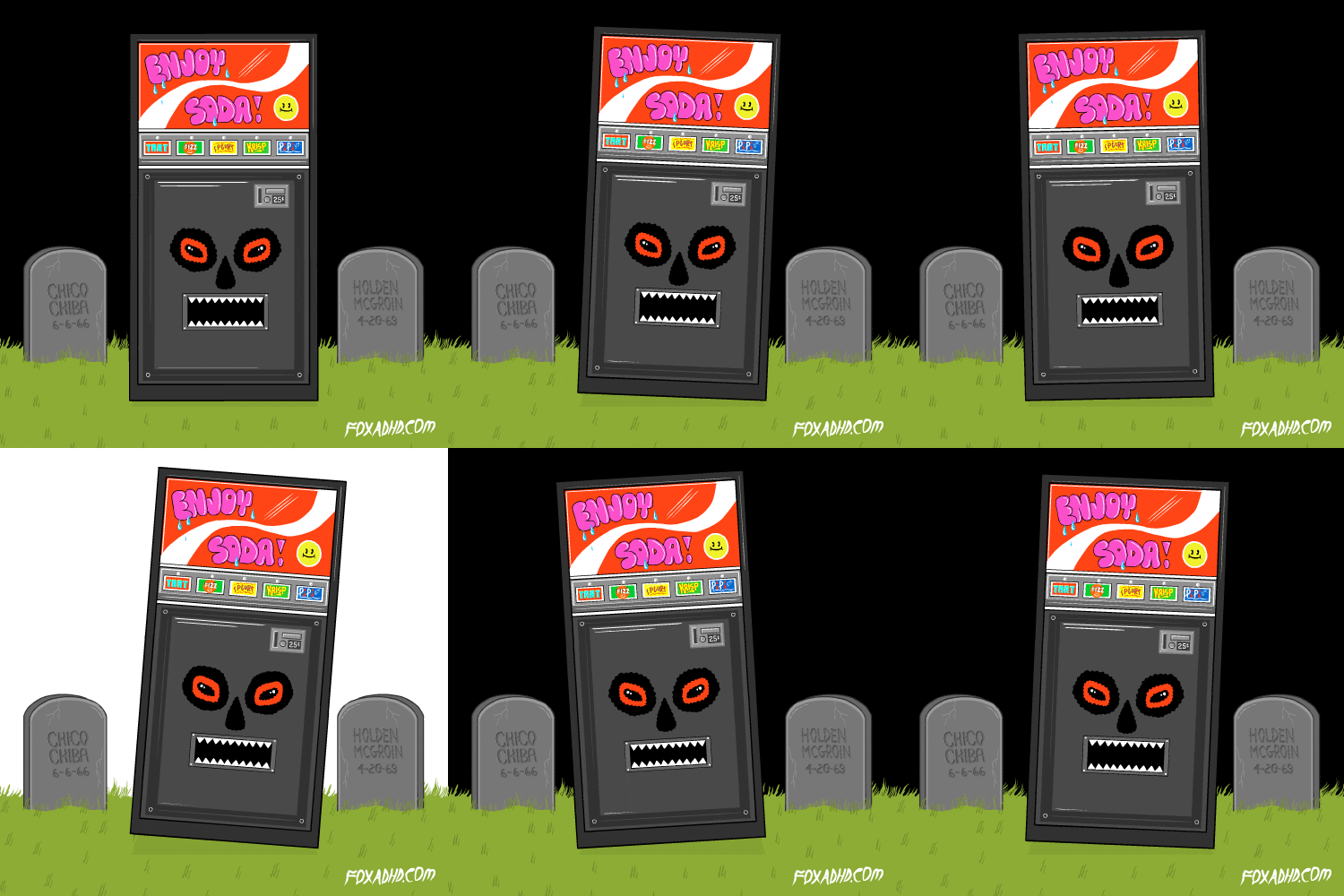
Vending machines are more deadly than sharks.
animation domination lol GIF by gifnews <a href="https://giphy.com/gifs/gifnews-josh-freydkis-soda-PTibzfPyqVujm">Giphy</a>
Think about this next time you go to retrieve a Snickers bar: Between 2002 and 2015, the National Electronic Surveillance System reported that vending machines caused four deaths per year in the U.S. Mostly due to people tipping the machines onto themselves.
Compare that to the shark-related deaths averaging out to just 0.6 deaths per year. Not sure how only about half of a person is considered dead, but math was never my strength.
This statistic might need to be taken with a grain of sea salt, however, given that those in landlocked states have next-to-zero chances of experiencing a shark attack. But there you have it, a useless fact to use when you’re at the beach.
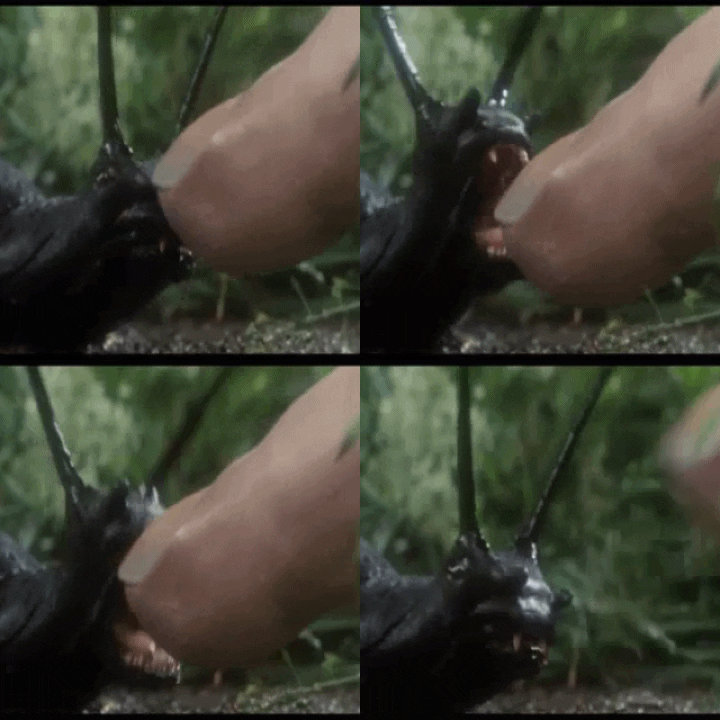
Snails have teeth.
horror finger GIF by absurdnoise <a href="https://giphy.com/gifs/absurdnoise-horror-movies-1292DytWbWPQ6k">Giphy</a>
“They’re not big enough teeth to hurt humans. That’s what makes it a useless fact to know. & it won’t leave my head because it’s juuuuuust disturbing enough to make me rethink my entire opinion on snails.” – ghosts-go-boo
But cows do not.
At least, no upper front teeth. Makes chewing—and dentist visits—easier I suppose.
The Sun is about 400 times bigger than the Moon but also about 400 times farther away from Earth. So they look to be about the same size.

A solar eclipse. <a href="https://upload.wikimedia.org/wikipedia/commons/thumb/c/c7/Solar_eclipse_1999_4.jpg/2080px-Solar_eclipse_1999_4.jpg">commons.wikimedia.org</a>
This explains how the sun can be completely blocked in an eclipse.
Pigeons and doves are in the same bird family.
Happy Animation GIF by sahlooter <a href="https://giphy.com/gifs/animation-artist-gifartist-ZeKN1wM5IOaA5npBBx">Giphy</a>
Columbidae is a subspecies of birds that are stout bodied, with short necks, and primarily feed on seeds, fruits and plants. Though one lives on as a symbol of peace and love, and the other is often considered a flying rat, the names are practically interchangeable.
However, thinking about Stevie Nicks singing, “just like a white-winged pigeon” doesn’t have quite the same ring to it.
The length of a jiffy…

back to the future great scott GIF <a href="https://giphy.com/gifs/back-to-the-future-marty-mcfly-great-scott-5y8sRBYSWWb16">Giphy</a>
According to ScienceFocus.com, physicists use a “jiffy” to define how long light takes to travel one femtometer (which is a tiny fraction of a millimeter). In layman’s terms, one jiffy equals one-fiftieth of a second.
So next time you say, “be back in a jiffy,” know that you better return really, really, really fast.
Most corn is inedible for humans.
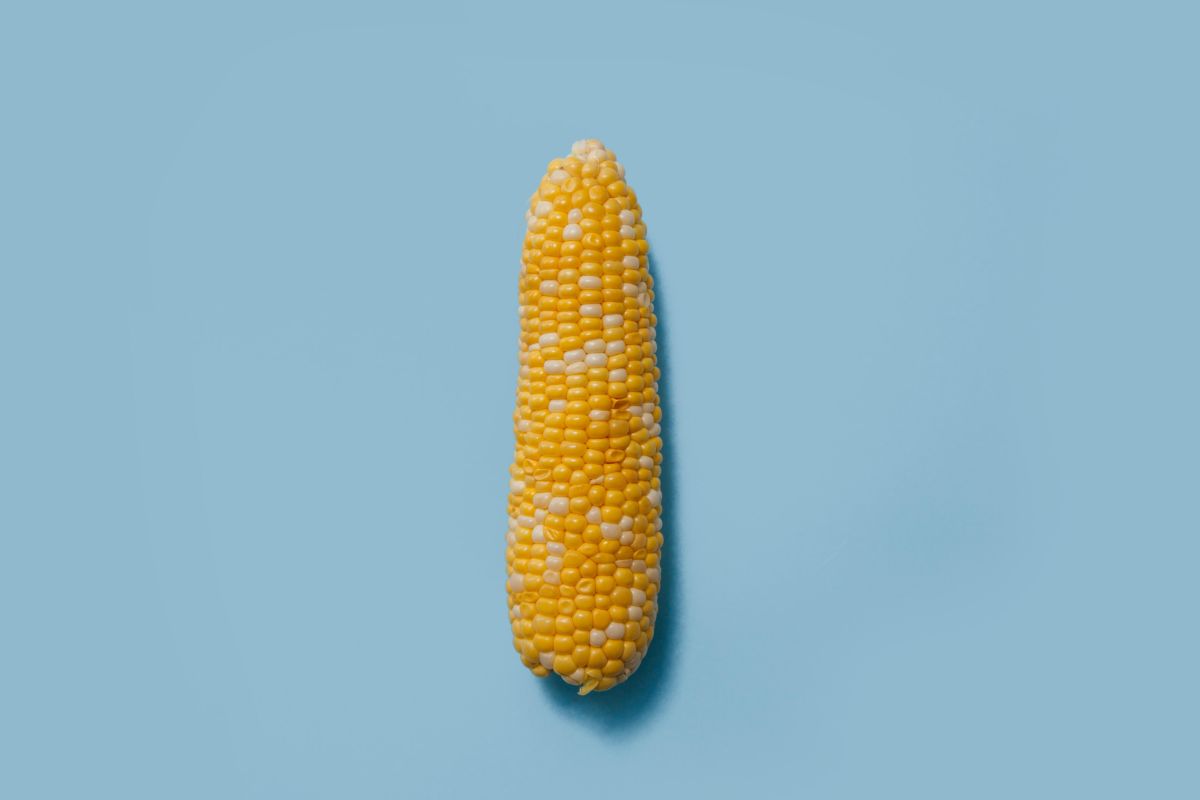
Who knew? Photo by <a href="https://unsplash.com/@charlesdeluvio?utm_source=RebelMouse&utm_medium=referral">Charles Deluvio</a> on <a href="https://unsplash.com/?utm_source=RebelMouse&utm_medium=referral">Unsplash</a>
“1% of the corn grown in the USA is sweet corn (the corn you eat as corn). The other 99% is field corn (or dent corn), which is fairly inedible raw and needs to be processed before human consumption. This field corn is also what they use for non-edible corn products, like ethanol, paint, cosmetics, etc. Yes, most corn goes to livestock feed. Ethanol and High Fructose Corn Syrup are up there as well. Yes, if you’re driving on a highway and are passing fields of corn, you very likely cannot eat it.” – Kat_lbltko1pl
Infants have flexible bones.
stretching GIF by AFV Babies <a href="https://giphy.com/gifs/afvbabies-babies-afv-stretching-3oEduKWvKUUuUvYCAw">Giphy</a>
Ever wonder why toddlers seem so much more flexible? This is because a baby’s skeleton is very different from an adult’s. Babies are born with about 300 bones (94 more than adults) that are joined together with pliable cartilage to make that whole birth thing possible. As they get older, the bones will fuse together. And suddenly that toe touch is nothing but a distant dream of the past.
Numbers from 1-999 don’t have the letter “a” in word form.

Sorry if your math teacher never told you. Photo by <a href="https://unsplash.com/@mbaumi?utm_source=RebelMouse&utm_medium=referral">Mika Baumeister</a> on <a href="https://unsplash.com/?utm_source=RebelMouse&utm_medium=referral">Unsplash</a>
Some vowels just don’t get the respect they deserve.
John Wilkes Booth and Lee Harvey Oswald are both known by three names. And each full name is composed of 15 letters.

surprised season 4 GIF <a href="https://giphy.com/gifs/season-4-the-simpsons-4×15-3o6MbncvDXRKrVyeru">Giphy</a>
Actually, this is not entirely correct. Oswald’s full name was not used until after Kennedy’s assassination, due to his habit of adopting false names.
Cockroaches molt.
Unlike a reptile shedding it’s skin, cockroaches molt out of their entire exoskeleton. Out crawls a soft, fleshy, ghostly-white creature that will turn brown over a few hours. You’re welcome for the nightmare fuel.
There you have it. Gems of wisdom no one asked for. They say knowledge is power. But in this case, I’d say knowledge is unnecessary. But still fun!
In a small village in Pwani, a district on Tanzania’s coast, a massive dance party is coming to a close. For the past two hours, locals have paraded through the village streets, singing and beating ngombe drums; now, in a large clearing, a woman named Sheilla motions for everyone to sit facing a large projector screen. A film premiere is about to begin.
It’s an unusual way to kick off a film about gender bias, inequality, early marriage, and other barriers that prevent girls from accessing education in Tanzania. But in Pwani and beyond, local organizations supported by Malala Fund and funded by Pura are finding creative, culturally relevant ways like this one to capture people’s interest.
The film ends and Sheilla, the Communications and Partnership Lead for Media for Development and Advocacy (MEDEA), stands in front of the crowd once again, asking the audience to reflect: What did you think about the film? How did it relate to your own experience? What can we learn?
Sheilla explains that, once the community sees the film, “It brings out conversations within themselves, reflective conversations.” The resonance and immediate action create a ripple effect of change.
MEDEA Screening Audience in Tanzania. Captured by James Roh for Pura
Across Tanzania, gender-based violence often forces adolescent girls out of the classroom. This and other barriers — including child marriage, poverty, conflict, and discrimination — prevent girls from completing their education around the world.
Sheilla and her team are using film and radio programs to address the challenges girls face in their communities. MEDEA’s ultimate goal is to affirm education as a fundamental right for everyone, and to ensure that every member of a community understands how girls’ education contributes to a stronger whole and how to be an ally for their sisters, daughters, granddaughters, friends, nieces, and girlfriends.
Sheilla’s story is one of many that inspired Heart on Fire, a new fragrance from the Pura x Malala Fund Collection that blends the warm, earthy spices of Tanzania with a playful, joyful twist. Here’s how Pura is using scent as a tool to connect the world and inspire action.
A partnership focused on local impact, on a global mission
Pura, a fragrance company that recognizes education as both freedom and a human right, has partnered with Malala Fund since 2022. In order to defend every girl’s right to access and complete 12 years of education, Malala Fund partners with local organizations in countries where the educational barriers are the greatest. They invest in locally-led solutions because they know that those who are closest to the problems are best equipped to solve and build durable solutions, like MEDEA, which works with communities to challenge discrimination against girls and change beliefs about their education.
But local initiatives can thrive and scale more powerfully with global support, which is why Pura is using their own superpower, the power of scent, to connect people around the world with the women and girls in these local communities.
The Pura x Malala Fund Collection incorporates ingredients naturally found in Tanzania, Nigeria, Pakistan, and Brazil: countries where Malala Fund operates to address systemic education barriers. Eight percent of net revenue from the Pura x Malala Fund Collection will be donated to Malala Fund directly, but beyond financial support, the Collection is also a love letter to each unique community, blending notes like lemon, jasmine, cedarwood, and clove to transport people, ignite their senses, and help them draw inspiration and hope from the global movement for girls’ education. Through scent, people can connect to the courage, joy, and tenacity of girls and local leaders, all while uniting in a shared commitment to education: the belief that supporting girls’ rights in one community benefits all of us, everywhere.
You’ve already met Sheilla. Now see how Naiara and Mama Habiba are building unique solutions to ensure every girl can learn freely and dare to dream.
Naiara Leite is reimagining what’s possible in Brazil
Julia with Odara in Brazil. Captured by Luisa Dorr for Pura
In Brazil, where pear trees and coconut plantations cover the Northeastern Coast, girls like ten-year-old Julia experience a different kind of educational barrier than girls in Tanzania. Too often, racial discrimination contributes to high dropout rates among Black, quilombola and Indigenous girls in the country.
“In the logic of Brazilian society, Black people don’t need to study,” says Naiara Leite, Executive Coordinator of Odara, a women-led organization and Malala Fund partner. Bahia, the state where Odara is based, was once one of the largest slave-receiving territories in the Americas, and because of that history, deeply-ingrained, anti-Black prejudice is still widespread. “Our role and the image constructed around us is one of manual labor,” Naiara says.
But education can change that. In 2020, with assistance from a Malala Fund grant, Odara launched its first initiative for improving school completion rates among Black, quilombola, and Indigenous girls: “Ayomidê Odara”. The young girls mentored under the program, including Julia, are known as the Ayomidês. And like the Pura x Malala Fund Collection’s Brazil: Breath of Courage scent, the Ayomidês are fierce, determined, and bursting with energy.
Ayomidês with Odara in Brazil. Captured by Luisa Dorr for Pura
Ayomidês take part in weekly educational sessions where they explore subjects like education and ethnic-racial relations. The girls are encouraged to find their own voices by producing Instagram lives, social media videos, and by participating in public panels. Already, the Ayomidês are rewriting the narrative on what’s possible for Afro-Brazilian girls to achieve. One of the earliest Ayomidês, a young woman named Debora, is now a communications intern. Another former Ayomidê, Francine, works at UNICEF, helping train the next generation of adolescent leaders. And Julia has already set her sights on becoming a math teacher or a model.
“These are generations of Black women who did not have access to a school,” Naiara says. “These are generations of Black women robbed daily of their dreams. And we’re telling them that they could be the generation in their family to write a new story.”
Mama Habiba is reframing the conversation in Nigeria
Centre for Girls' Education, Nigeria. Captured by James Roh for Pura
In Mama Habiba’s home country of Nigeria, the scents of starfruit, ylang ylang and pineapple, all incorporated into the Pura x Malala Collection’s “Nigeria: Hope for Tomorrow,” can be found throughout the vibrant markets. Like these native scents, Mama Habiba says that the Nigerian girls are also bright and passionate, but too often they are forced to leave school long before their potential fully blooms.
“Some of these schools are very far, and there is an issue of quality, too,” Mama Habiba says. “Most parents find out when their children are in school, the girls are not learning. So why allow them to continue?”
When girls drop out of secondary school, marriage is often the alternative. In Nigeria, one in three girls is married before the age of 18. When this happens, girls are unable to fulfill their potential, and their families and communities lose out on the social, health and economic benefits.
Completing secondary school delays marriage, and according to UNESCO, educated girls become women who raise healthier children, lift their families out of poverty and contribute to more peaceful, resilient communities.
Centre for Girls’ Education, Nigeria. Captured by James Roh for Pura
To encourage young girls to stay in school, the Centre for Girls’ Education, a nonprofit in Nigeria founded by Mama Habiba and supported by Malala Fund and Pura, has pioneered an initiative that’s similar to the Ayomidê workshops in Brazil: safe spaces. Here, girls meet regularly to learn literacy, numeracy, and other issues like reproductive health. These safe spaces also provide an opportunity for the girls to role-play and learn to advocate for themselves, develop their self-image, and practice conversations with others about their values, education being one of them. In safe spaces, Mama Habiba says, girls start to understand “who she is, and that she is a girl who has value. She has the right to negotiate with her parents on what she really feels or wants.”
“When girls are educated, they can unlock so many opportunities,” Mama Habiba says. “It will help the economy of the country. It will boost so many opportunities for the country. If they are given the opportunity, I think the sky is not the limit. It is the starting point for every girl.”
From parades, film screenings to safe spaces and educational programs, girls and local leaders are working hard to strengthen the quality, safety and accessibility of education and overcome systemic challenges. They are encouraging courageous behavior and reminding us all that education is freedom.
Experience the Pura x Malala Fund Collection here, and connect with the stories of real girls leading change across the globe.
Online, you’ll find hundreds of newfangled hacks to get food crispy and golden brown without the oil. But one new method taking over TikTok isn’t new at all. In fact, it’s centuries old.
Enter: salt frying. Recently, Roice Bethel (@roicebethel) went viral after sharing a clip of himself dropping chicharrones and popcorn kernels into a frying pan filled to the brim with salt and salt alone. Then voila, each of the foods puffed out, ready to eat…leaving some viewers dumbfounded.
In truth, the technique of using salt (or sand) to cook certain foods has been around for millennia in countries like China, India, and Greece. And you’ll still find it among street food vendors today. In India, for instance, far far (or fryums), made from potato starch, tapioca, and/or wheat flour, are often made this way.
In China, chestnuts roasted in large woks filled with hot sand are a seasonal winter staple, prized for their subtly smoky flavor. And in Bangladesh, peanuts are traditionally toasted in pans of hot black sand, which helps them roast evenly without burning.
Similar techniques have also appeared in parts of the Middle East and Mediterranean, where cooks have long relied on heated salt beds to gently cook or warm foods. Historically, these methods were especially useful in places where cooking oil was scarce or expensive, making salt and sand practical alternatives. Not to mention that watching foods cooks this way is also a treat for the eyes.
In Turkey, sand has also been a tried-and-true way to make coffee, seen below.
How salt frying works
Really, salt or sand frying isn’t so much frying as it is dry roasting. Frying food in oil makes food crispy by rapidly dehydrating the outer layer. The intense heat triggers the Maillard reaction, which is responsible for browning and complex flavors, and causes surface starches to gelatinize and harden while the inside stays moist.
When heated, salt and sand act as equally excellent heat conductors. Both can store and distribute heat evenly, surrounding food on all sides and eliminating hot spots. This creates a consistent cooking environment that mimics the effect of deep frying, only without added fat.
As Kurush F. Dalal, an archaeologist and culinary anthropologist, told Food & Wine, “it’s an incredibly cost-effective and very controllable process,” especially since you can reuse the salt you fry with. Tell that to the southerners among us who save every drop of their bacon grease!
Salt frying tips
Now, if you’re excited to try this cooking style out yourself, there are a few caveats—the most important being that this really only works on dry ingredients. Salt will stick to any damp ingredients and completely ruin the taste of the dish.
Second, it is advised to use coarse salt, according to Food & Wine. And at least one person on Reddit suggests that no matter what salt or sand you use, “let it heat for 15 minutes to let the volatile compounds evaporate (like iodine).”
Lastly, you’ll need a large, deep fryer-friendly utensil, like a wok or cast-iron skillet, that can hold a lot of salt or sand.
So, while it may look like a viral magic trick, salt frying is really just ancient ingenuity making a well-deserved comeback. Some things are timeless for a reason.
Tipping culture is ever-changing and, for many, has always been a bit confusing. Perhaps that’s why a training video was made circa the 1980s to give “tips” (pun intended) on gratuity after a meal.
The Instagram account Totally 80s Room (@totally80sroom) posted the clip, with a chyron reading, “How much should you tip?” We see a video of a young woman receiving her bill. She ponders, “Hmm, how much should I tip?” A male voiceover answers, “That’s a good question. The gratuity can range from 10% for acceptable service to 20% for exceptional service.”
An 80s training video on how to tip. Credit: Totally 80s Room, Instagram
The screen then flashes over to a “waitperson” rocking a stained shirt. Mascara drips down her face, while she casually blows bubbles with her gum. The voiceover continues, “But if your waitperson is blatantly bad or has some attitude, don’t tip. Just leave a penny to show you didn’t forget to tip. And tell the manager your complaints. Believe me, he wants to know.”
During this advice, the server then says to the customer, “Look. You’re just lucky I’m waiting on you.”
The question is posed: “Basically, did the waitperson do everything in their power to make your dining experience pleasant? Were they courteous? Were they knowledgeable about specials, preparation methods, menu accompaniments, and other aspects of the restaurant? Or don’t they?”
While the appropriate waitperson seems caring and calm, the “bad” employee files her nails and quips, “I ain’t got all day. Are ya gonna order or what?” The customer asks, “Ma’am, what’s the soup today?” The server is annoyed by the question. “Soup? I don’t know! Some kind of vegetable thing.”
People in the comment section have a wide range of views. Many joke about the absurdity of the video itself. “I hate when servers constantly tell me how lucky I am they are waiting on me.”
Others debate tipping etiquette in general with a variety of thoughts. “Always 20%.” “Australia = no tipping.” “15% if it’s okay service. 10% if it’s terrible service. 20% if the service was amazing and 0 if I have to order at the counter and get my own food.”
How tipping culture has taken over. Credit: WSJ, YouTube
Another notes how even the idea of a pressured gratuity has changed. “It’s not tipping anymore. It’s commission.”
What’s up with tipping anyway?
In MSN‘s recently posted piece, “The right thing: Should waiters expect a tip on every meal?” Jeffrey L. Seglin explains how much wait staff (and the restaurant owners) depend on these tips, especially in the United States. “The federal minimum wage in the United States is $7.25 per hour (a rate that hasn’t changed since 2009), and the federal tipped minimum wage is $2.13 per hour. Because the federal tipped minimum wage is below the federal minimum wage, most Americans who dine out know that most servers make a living wage based on the tips they receive.”
CNBC writer Emily Lorsch reveals that expected gratuity percentages have grown over the decades. While in the past few years tips have crept up to over 20% for some diners, it didn’t used to be that way. “During the 1950s, people commonly tipped 10% of the bill. By the 1970s and 1980s, that percentage had jumped to 15%.”
How tipping has evolved. Credit: Casually Explained, YouTube
Lorsch shares data from a study conducted by Creditcards.com, who claim that the sleek machines brought to the table may pressure many to tip more. “22% of respondents said when they’re presented with various suggested tip amounts, they feel pressured to tip more than they normally would.”
Regardless of steadfast tipping etiquette, it’s safe to say that wait staff should never file their nails at the table. Hopefully, that doesn’t change.
An interaction between a 4-year-old boy and a Cast Member at Disneyland highlights the importance of inclusion and shows that learning American Sign Language (ASL) can have an incredible impact on deaf people and their families.
Callie Foster, 38, and her husband, Leonardo Silva, 39, were recently at the park when their son, Luca, came across Disney Cast Members dressed as Jessie and Woody from the Toy Story series. The parents were taken aback when, for the first time at the park, the boy initiated a conversation in ASL with Jessie.
Jessie from Toy Story communicates in ASL
“Because we go to the parks often, we really try not to put that expectation on anyone. We never assume a character will know ASL, so usually we’re the ones interpreting for Luca; we’re used to stepping in to help facilitate those interactions,” Foster told People. “This time was completely different. Luca initiated it on his own. He signed to her first, and there was this split second where we all kind of looked at each other like, ‘Wait… did that just happen?’ And then she recognized it and started signing back to him.”
When Jessie and Luca first met, she didn’t know that he was deaf. Then, he looked up to her and signed, “What’s your name?” to which Jessie responded in ASL, “Name, J-E-S-S-E.” She then asked Luca, “Your name?” to which he responded, “Luca.” Jessie then said, “Nice to meet you,” and “Thank you.”
“Watching your child be included in their language… It’s a kind of magic you don’t forget,” Foster concluded the video.
This isn’t the first time Luca has gone viral for interacting with a character at Disneyland. Two years ago, when Luca was just 2 years old, a Cast Member playing Bo Peep communicated with Luca in ASL. When Luca approached Bo Peep, his mother signed, “This is Luca.” Bo Peep returned the greeting with, “Nice to meet you,” in ASL.
Bo Peep then knelt down to Luca’s height and signed, “You’re our friend.” Excited, Luca then tried to tell Jessie that her friend, Buzz Lightyear, was nearby.
Disney is committed to ASL inclusion in its theme parks
The fact that many characters in Disney Parks know ASL isn’t an accident. Since 1997, Walt Disney World Resort and Disneyland Resort have offered ASL interpretation at many attractions and shows. Sign language interpretation is a service that is available in parks for guests with hearing disabilities.
“When a show or new attraction that warrants Sign Language interpretation is being developed, my team at Walt Disney World Resort and the Disneyland Resort Accessibility team are included in planning conversations and rehearsal process. We work to ensure appropriate interpreter placement and lighting are being considered and to share show scripts and videos with the fantastic theatrical interpreters who do work for us,” Mark Jones, Manager of Accessibility and Services for Guests with Disabilities at Walt Disney World Resort, told Disney Parks Blog.
The passing down of stories, memories, and keepsakes is important in many families. But how to do that isn’t always so simple. A lot can get lost over the years, both figuratively and literally. And younger generations don’t always want or appreciate physical heirlooms. One woman shared a brilliant heirloom that belonged to her grandma,…
The passing down of stories, memories, and keepsakes is important in many families. But how to do that isn’t always so simple. A lot can get lost over the years, both figuratively and literally. And younger generations don’t always want or appreciate physical heirlooms.
One woman shared a brilliant heirloom that belonged to her grandma, which solves some of these problems. It’s called a perpetual calendar, and it keeps the whole family’s major memories in one spot. Essentially, it’s a ring of index cards that each have a month and day on them, but no year. As events happen in the family, they get written on the day they happened, with the year written next to them.
Watch Jenn Perez Miller explain how her grandma’s perpetual calendar, which she started in the 1970s, works:
The beauty of this idea is that it doesn’t take up a huge amount of space. If the cards eventually fill up, they can be stored physically or digitally and replaced with new ones, making the calendar filled with family memories essentially eternal.
Another plus is that people can decide what they think is important to document. Will your great-grandkids care if you replaced your carpet 60 years ago? Maybe, maybe not. But not all memories have to be monumental. There’s something special about seeing the everyday events our loved ones felt were worth noting.
A sample of what a perpetual calendar card might entail. Photo credit: Canva
People loved the idea:
“Brb, gonna go put a perpetual calendar on my wedding registry and start this from our wedding day.”
“If I came across something like this in an estate sale I’d immediately sit on the floor and read every single one.”
“My boyfriend’s grandma did this and we were cryinnnnng laughing…. She talked about diarrhea a lot.”
“This is the coolest thing I’ve ever seen.”
“This is some serious matriarchal behavior and i am sooo jealous that you have something like this!!!”
“I just love how women bring the family together in simple ways. 🥰”
“I love the idea of seeing the major and insignificant things that happen on the same day years apart. Puts things into perspective.”
“Genuinely this is such a treasure, future archeologists would lose their minds finding something like this.”
You can make a perpetual calendar yourself with index cards. Photo credit: Canva
The concept is not only simple, but it’s pretty easy to make yourself. All you need is index cards (one for each day of the year, including February 29th for leap years), a hole punch, and large binder rings. You could also use an index card box with dividers for each month instead of the rings.
Some of us might see this idea and love it, but wish we had started earlier. But it’s never too late, especially when you think of it as something to pass down through the generations. Someone has to start sometime.
Snoopy, everyone’s favorite beagle from the mind of Peanuts creator Charles Schulz, is the joyous gift that keeps on giving. So, when content creator Patrick Ferguson took the time to rank each and every one of Snoopy’s relatives, it’s no surprise fans were delighted.
Ferguson does this by playfully spoofing a popular “ranking” system commonly used on YouTube and Twitch. The idea is to put pop culture phenomenon (often movies or video games) and rank them in “tier lists.”
Standing below an initial shot of all the animated beagles playing instruments, he begins by stating, “Snoopy is the best thing ever drawn or animated, and his siblings are pretty cool too. So I thought I would introduce you to them all and place them on a ‘tier list’ as I count them down.”
He confirms where his references will come from: “I’m mainly discussing them from their role in Snoopy’s Reunion, but I will briefly mention the comic strips as well. And yes, ‘S’ tier does stand for ‘Snoopy tier,’ even on tier lists outside of this one.”
Snoopy family tiers
He begins with “Rover,” who he admits has a “cliché name even by today’s standards.” We see Rover, his light brown ears bouncing as he plays the resonator guitar. “Love his collar choice too. S tier.” From the Snoopy Town Tale fandom site, it’s reported that Rover only appeared in the TV special Snoopy’s Reunion, but never in the actual comic strip.
Next, we see Olaf, a pudgier dog in a red hat. He blows dust off a jug, which happens to be his instrument of choice. Ferguson insists that Olaf “deserves every good thing in life that comes his way. S tier.” A site dedicated to learning about the Peanuts characters confirms that Olaf is “warm and sensitive, with a big, gentle heart.”
We then see Molly, wearing a blue dress that Ferguson points out is similar to fellow Peanuts cast-mate Lucy’s signature style. Molly plays the mandolin and has some “really good, iconic Snoopy family qualities to her. I think I’ve gotta put her in S tier.” Like her brother Rover, Molly also only appeared in Snoopy’s Reunion.
Then there’s Spike, who Ferguson points out has the “second most iconic look in the Snoopy family. He plays a mean fiddle.” He also notes that Spike isn’t the only S-tier dog with that name in the animated TV lexicon. Ferguson is most likely referring to the bulldog from Tom and Jerry, or quite possibly the bulldog from the Looney Tunes universe.
The Peanutssite shares that Spike lives out in the desert: “He prefers a quiet, solitary life. His closest friends are the cacti and tumbleweeds. Spike is thoughtful and, at times, melancholic.”
Next up is Belle. “She should have her own plushie. I think I have to go with S tier on this.” It’s stated on the site that Belle “lives in Kansas City with her teenage son. Snoopy and Belle reconnected when Snoopy hopped the wrong train on his way to Wimbledon and ended up in Missouri.”
Up next is Marbles. The Peanutssite describes him as quiet and “weary of cats, often checking for them before entering a new place. Marbles is smart but lacks the imagination of his other siblings. He always finds himself confused by the games Snoopy plays.”
Lastly, we can’t forget the drummer. “Then we arrive at Andy. And this is the Snoopy sibling I want to pick up the most—but only after he and his scruffy fur are done jamming on the drum set. S tier.” Andy is described by the site as “a good traveler.” He “is always up for a walkabout, but his sense of direction is terrible.”
As if that wasn’t adorable enough, Ferguson wants to give credit to both the guardian of the Snoopy gang and his own mother. “And could we forget the woman who raised the entire Snoopy family? Missy. One of the few S-tier moms, aside from my own.”
Meet Patrick
Upworthy had the delightful chance to chat with Ferguson, who shares that he’s a huge Snoopy fan. “Some of my earliest memories of laughter involve watching Snoopy as the Red Baron. I wouldn’t call myself the biggest Peanuts fan, per se, but I’ve always called Snoopy the greatest thing ever drawn.”
He also further explains why he chose the tier system. “I made the video both to celebrate a character I love but never made a video for, and to poke fun at the idea of doing a tier list (a video concept I don’t see myself revisiting). The irony of having everyone at S tier plays into that.”
The best part was the online response. “I’m surprised how many people commented on the wholesomeness of the video, if for no other reason than I was being very silly in every aspect of making it, albeit in a way that was also pretty sincere.”
Snoopy appears alongside his friends in the Peanuts comic strips. Photo credit: Unsplash
The comments were definitely supportive and wholesome, indeed. The Reel has over 160,000 likes and nearly 500 comments. One Instagrammer shares, “Grinned so hard watching this. 10/10. No notes.”
A few people argue over which instrument the puppies are playing. “95 percent sure Rover is playing a resonator dulcimer and not a resonator guitar,” one person notes. “10/10 video, though!”
Another has thoughts on Spike, writing, “I’m kind of suspicious of the Snoopy with the mustache.”
This commenter sums up what many seem to feel quite nicely: “I want to cuddle all of them.”
Everything old is officially new again after mathematicians determined that trends tend to resurface “every 20 years or so.” So, while a de-cluttering organizer might tell you to pitch those low-rise skinny jeans, these researchers might say, not so fast!
The team of mathematicians, led by Emma Zajdela at Northwestern University, took a look at well over 150 years of women’s clothing styles and determined that they could calculate trends resurfacing about every 20 years, calling it, “the 20-year rule.”
In an article for Popular Science, Andrew Paul writes, “Clothing trends come and go, but in some cases, they don’t stay away for too long. For decades, both the fashion industry and its devotees have referenced the so-called “20-year rule,” which suggests society is liable to see certain styles return at semi-regular intervals. However, without any hard data to back up the claim, that “rule” has long remained more of a hypothesis.”
This is where the research comes in. Zajdela shares, “To our knowledge, this is the first time that someone developed such an extensive and precise database of fashion measures across more than a century.”
The research
Here’s how they did it. The Northwestern research team took a look at runway collections dating all the way back to 1869 and combined those trends with information from the commercial pattern archive. Explained on their site, “The Commercial Pattern Archive (CoPA) at the University of Rhode Island is both an extensive collection of commercially produced paper sewing patterns and a unique scholarly database used by costumers, fashion designers, museum professionals, scholars, and vintage aficionados the world over.”
What they then were able to do is measure waistlines, pant legs, skirt length, etc., to determine the formula. Paul writes that the study found the pendulum is always swinging. “Basically, the fashion industry is constantly fluctuating between originality and tradition. Once a clothing style is too popular, designers begin changing their new apparel just enough to stand out while still remaining desirable to potential wearers.”
Fashion is evolving
Plenty of Redditors have weighed in on the topic. On a thread entitled “Fashion stopped evolving 20 years ago…what do you think?”
A commenter proves that perhaps we’re about to shift trends. “Yes and no. 20 years ago was the last signature defining aspects of fashion that characterized it, but otherwise no. Fashion is still evolving as normal, we just haven’t hit a point where we get a shift that makes past fashion seem alien, and we shouldn’t expect it to happen anytime soon. No one walks around in a Victorian wardrobe today, and Victorians wouldn’t walk in ours. People keep craving a shift that makes the fashion landscape itself change, which simply isn’t going to happen.”
This person shares, in part, that indeed everything comes back in style. “There’s been actual change though, with tons of ebb and flow. The 90’s / early 00’s was really influenced by the 60’s & 70’s as well. 2010’s felt very 80’s with their own twist. I feel like we’re in the 60’s again (as in what people actually wore in the 60’s, not the media), with clean girl, beige, minimalism, whatever. But if you follow trends, you’ll see there’s been a lot of pushback against that now, especially since fashion is political. Give it a few years and we’ll be in the 70’s / 80’s. That whole (The) Devil Wears Pradaspeech about fashion trickling down is true.”
The Great Depression, which lasted from 1929-1939, caused economic turmoil worldwide. Families struggled to feed themselves, and went to extreme lengths to stretch food and utilize all available ingredients.
From soups and stews to cakes, these are 17 Great Depression recipes to try.
Soups, Stews and More
Beef and Noodles
“My grandmas go to: Bag of egg noodles 1 can of creamed corn 1 can Campbells chicken noodle soup 1 lb ground beef. Salt and pepper to taste. Brown ground beef, add all other ingredients, add enough water or light chicken stock to cover noodles if needed. Bring to boil, and reduce to a simmer for about 15 minutes, take off the heat and let it rest 10 minutes before serving with buttered white bread. I still make this to this day. My kids loved it too. Basically homemade Hamburger Helper.” – -__Doc__-
Hoover Stew
Ingredients
1 box noodles A can of tomatoes 1 package of hot dogs, or 1 can of sausage or meat A can of corn, peas or beans 2-4 cups water
Instructions
“Mix all ingredients together in a pot until boiling. Then simmer for 15-20 minutes until the noodles are tender. If you have aromatics, onion and garlic would be a great addition. If not, the recipe is great as is.” – Josuaross54
Zaprezna soup
“Depression soup… make a roux, add salt pepper and caraway seeds. Add water to make a thick soup texture. Use an egg or two mixed with flour and salt pepper and mix together to make dumplings.. drop into the soup to cook.. This was called zaprezna soup or depression soup. We ate it often in the 60’s after my dad abandoned us. Money was short but this soup was good.” – User Unknown
Chipped Beef On Toast
Ingredients
8 oz. dried beef jerky 2 tbsp butter or oil 4 tbsp flour 4 cups milk Salt and pepper to taste Sliced homemade bread, for serving
Instructions
“Add jerky and oil to a pan over medium heat. Cook until the meat softens, about 3-4 minutes. Stir in your flour and cook for 1-2 minutes. Add milk and bring to a low boil. Allow sauce to thicken for up to 5 minutes. Season with salt and pepper if you have it. Serve over homemade bread, toasted if desired.” – Josuaross54
Rivel Soup
“In Ohio…My mom would cook Rivel Soup when I was a kid in 80s and 90s. She still makes it. It’s milk based with flour dough balls in it. I hate it. Sometimes they would fry potatoes and put them in the soup.” – Vegetable_Record_855
Potato Soup
Ingredients
4 large potatoes, peeled and sliced (or 2 cans of potatoes) 2 garlic cloves, chopped One carrot, sliced A can of meat, sausage, or hot dogs (optional) 3 cups water or stock 3 cups milk Any herbs you have on-hand Salt to taste
Instructions
“Slice all your potatoes, garlic, and carrots. Add to a soup pot with the meat, water, and milk. Bring to a boil and reduce the heat, keeping the mix at a low simmer. Then, cook for 30 minutes until all veggies are tender. Add herbs and salt, if using. Serve hot.” – Josuaross54
Tuna Fish Stew
“My mother’s family always made tuna fish stew. It is celery, potatoes, canned tuna fish, milk, and hard boiled eggs. Sautee the celery until half way cooked, throw in some chopped potatoes and water. Cook until the potatoes are done. Thin the stew with some milk. Throw in chopped hard boil eggs. Salt and pepper to taste Serve over stale bread. It was cheap, quick, and really filling.” – RoseNoire4
1 package soaked dried beans, or 2 cans of beans One tomato, chopped 1 onion, chopped 2 cloves garlic, chopped 2 tbsp lard Two tbsp molasses One cup water
Instructions “Soak your beans, if using dried, overnight and drain the liquid. Prepare your veggies by chopping. Omit any vegetable that you do not have on-hand. Add lard to a stock pot and cook your vegetables until tender. Add the beans, molasses, and water. Cook all together with a lid on for 2-3 hours or until the beans have your desired consistency. Add more water if needed.
Milk Potatoes
“Milk potatoes. Fry sliced potatoes with salt, pepper and a bit of onion until almost done. Pour milk over potatoes and simmer until potatoes are cooked through.” – kms811•6y ago
Ash Cakes
“Ash cakes got their name because different renditions are cooked in the hot white ash of your campfire. These are only 3 ingredients but are filling and have a great texture.
Ingredients
½ cup cornmeal 1 cup meat stock or water 2 tbsp lard or grease
Instructions Mix both ingredients together in a bowl and allow to sit overnight to hydrate the cornmeal. Pat into a bread pan and refrigerate or add to your cool storage before allowing to set up. The next day, slice into 1-inch slices and fry in melted lard. Serve hot and crispy.” – Josuaross54
Sweets
Potato Donuts
“Potato donuts from depression era cooking with Dylan Hollis.” – BainbridgeBorn
Wacky Cake
“If you have interest in baking, make a wacky cake. It’s a chocolate cake that has no milk, butter, or eggs, because those items were scarce during the Depression, but it is so good! The recipe I linked has more steps, but I’ve known a lot of people to literally just dump and mix everything in the baking dish.” – gwhite81218
1 cup rice 2 cups milk 2 tbsp butter 3 tbsp honey, maple syrup, or molasses Pinch of cinnamon
“Combine all ingredients in a small saucepan and cook over low heat, about 20 minutes, stirring frequently. Taste for doneness and cook an additional 5 minutes, tasting until desired consistency. Serve warm.” – Josuaross54
“There was a thing for ‘apple’ pie made with Ritz crackers my grandmother made some time ago (she was born 1901 so def Depression life).https://www.allrecipes.com/recipe/9545/mock-apple-pie/ That recipe looks more complicated than the one grandma made, but there are a number of recipes online for it, including one made by Ritz, on the box.” – User Unknown
Hard Time Pudding
“Batter: 1 cup flour 1/2 cup white sugar 1/2 cup raisins (Optional, I hate them) 3 tsp Baking powder 1/2 cup water Syrup: 1 1/2 cup Brown sugar 1 TBSP. butter/marg. 1 tsp vanilla 1 1/2 – 2 cup water
Mix together flour, sugar, raisins, Baking powder, and water. Pour into a baking dish. In a sauce pan combine brown sugar, butter, water bring to boil then add vanilla and pour over the batter. Bake at 300 º for 1/2 hour.” – MsBean18
This article originally appeared last year. It has been updated.
It’s hard to believe it’s been over 10 years since the great Robin Williams left our world. The man left a fantastic legacy of laughs, from his time on TV’s Mork and Mindy to his performances in comedy hits such as Mrs. Doubtfire and Disney’s Aladdin.
Williams was also an incredible dramatic actor, giving memorable performances in films such as Dead Poets Society and Good Morning, Vietnam.
But the Comic Relief star always shined brightest when he improvised on stage, whether on talk shows or in stand-up comedy. One appearance on Martha Stewart Living from 2004 resurfaced last year because of how quickly he improvised jokes while cooking with Stewart. It’s also great because Stewart plays the perfect straight woman to Williams, although she has a tough time holding it together.
Their chemistry was spicy
Whenever Stewart mentions an ingredient, whether cumin or brown sugar, Williams turns it into a comedic riff. He also jokes in Spanish and does a few accents that feel off-color over 20 years later, but they’re delivered with the best intentions. Williams also walks a bit of a tightrope during the segment while he tries to keep his humor appropriate for daytime TV while reacting to Stewart, who is “rubbing the meat.”
“I feel incredibly honored to have grown up in an era where we had this wonderful man,” the most popular commenter on the YouTube video wrote. “His ability to change characters on the fly is remarkable,” another added. “His spontaneous humor is unmatched! He was an incredibly smart, kind and funny man. He is sorely missed!” another commenter said.
Who were Martha Stewart’s favorite guests on her show?
Years later, Stewart would admit that Williams was one of her favorite guests on the show. “We had so much fun because he was the fastest wit and the fastest mind and his mind was like a computer,” Stewart told AOL in 2022. “No matter what I said, he had a retort and he was so quick. I was marinating meat and he loved that—can you imagine what he did with ‘marinating meat’ and ‘rubbing the meat’ and ‘ooh la la?’ Watch the segment; it’s really good.”
Martha Stewart relationship advice hits different.
MARTHA, the definitive documentary on the life of the self-made icon, is now playing. pic.twitter.com/wJ55XHZiZU
What’s The Many Lives of Martha Stewart film about?
Although Martha Stewart has rarely been out of the spotlight over the past five decades, she was in the news after releasing the 2023 Netflix documentary about her life, The Many Lives of Martha Stewart.
The film follows Stewart’s journey from teen model to Wall Street stockbroker to the queen of entertaining and good taste. Eventually, she would become America’s first self-made female billionaire. The documentary also discusses the insider trading scandal that sent her to prison in 2004.
The film also reveals Stewart’s guiding philosophy. “I have two mottos. One is: Learn something new every day. And the second one is: When you’re through changing, you’re through,” Stewart says in the film. “Change that garden if you don’t like it. Rip it out and you start all over again.”
If you want to relive the hilarious moments between Stewart and Williams in your kitchen, here’s a recipe for the Chili Espresso Steak Rub.
This article originally appeared two years ago. It has been updated.