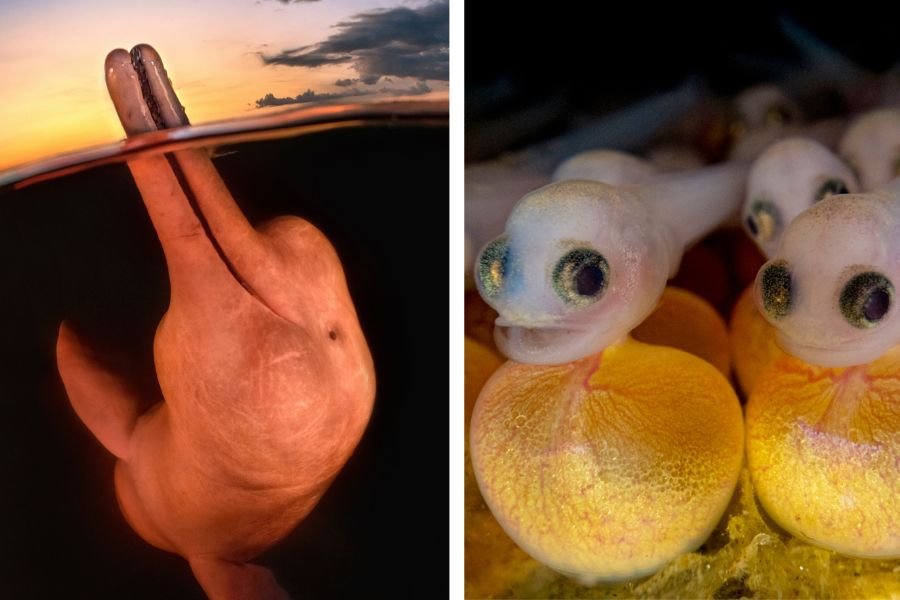
The winners of the Underwater Photographer of the Year contest were announced and they are incredible

From rare river dolphins to abandoned aircrafts, there’s an entire world to explore just below the water’s surface.

underwater photography
Photo credit: Kat Zhou/UPY 2023 (USA), Shane Gross/UPY 2023 (Canada)There's an entire universe down there.

Space might be considered the final frontier, but right here on planet Earth, entire universes remain unexplored beneath the water’s surface.

Every year, the prestigious Underwater Photographer of the Year contest highlights stunning images from all over the world that offer a small glimpse into this mysterious world, reminding us of its breathtaking beauty, fascinating wildlife and—perhaps most important of all—the need to respect and care for its resources.

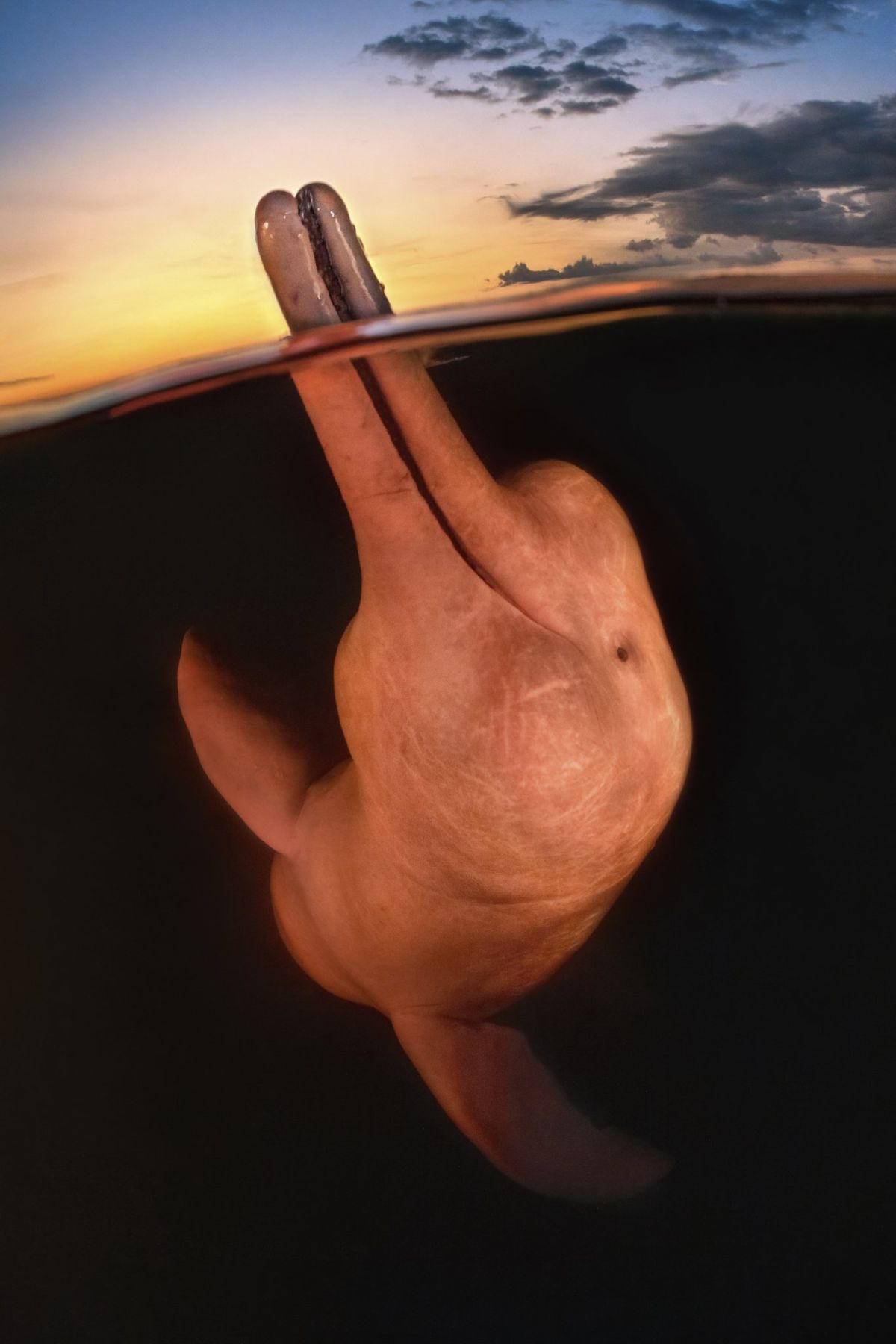
American photographer Kat Zhou won the title for 2023. (Technically, she also won Up & Coming Photographer of the Year—way to go, Zhou.) Her image of a rare Amazon river dolphin, captured at the perfect moment of smiling while poking its nose out from under the water, rose to the top in a sea of 6,000 entries. Due to river contamination and being killed or injured by fishermen, the species is listed as vulnerable in certain areas by the World Wildlife Organization, making this apparently happy interaction all the more impactful.

As judge Alex Mustard wrote, “In dark, tannic waters, Kat has created a striking composition capturing this rarely photographed and vulnerable species at the perfect moment…By far the best image we’ve ever seen of this species.”

Zhou also explained the river dolphin’s folklore in her entry.


Underwater Photographer of the Year 2023 Winner: “Boto Encantado” by Kat Zhou (USA)

Brazilian Amazon
river dolphin
“Boto Encantado” by Kat Zhou Kat Zhou/UPY 2023 (USA)

“There’s a legend among locals in the Amazon that river dolphins, or ‘botos,’ can transform into handsome men known as ‘boto encantado’ at night to seduce women. Though I did not witness this elusive boto transformation, at dusk I was enchanted by these beautiful mammals in a different way. After seeing how botos would sometimes bring their beaks above water, I knew I want a split shot at sunset. Though the water was so dark that I was shooting blind, this dolphin gave me a perfect pose and smile!

As indigenous communities settled by rivers in the Amazon, river dolphins began living in closer proximity to human populations, even making use of food scraps. Frequent dolphin sightings led to tales like boto encantado, but there’s a darker side to the legend, as it was often used to excuse pregnancies after women were assaulted or forced into prostitution. While botos are generally revered as mythical creatures, many scorned husbands have killed dolphins because of these stories. Furthermore, many river dolphins have also been killed for use as fish bait. Though there have been bans on this practice, it has not been eradicated. With this, alongside even bigger impacts like mercury poisoning due to the gold mining industry and large development projects that have disrupted the river ecosystems, I fear that one day botos will truly become no more than mythical creatures.” – Kat Zhou

Take a look below at the winners from other categories:

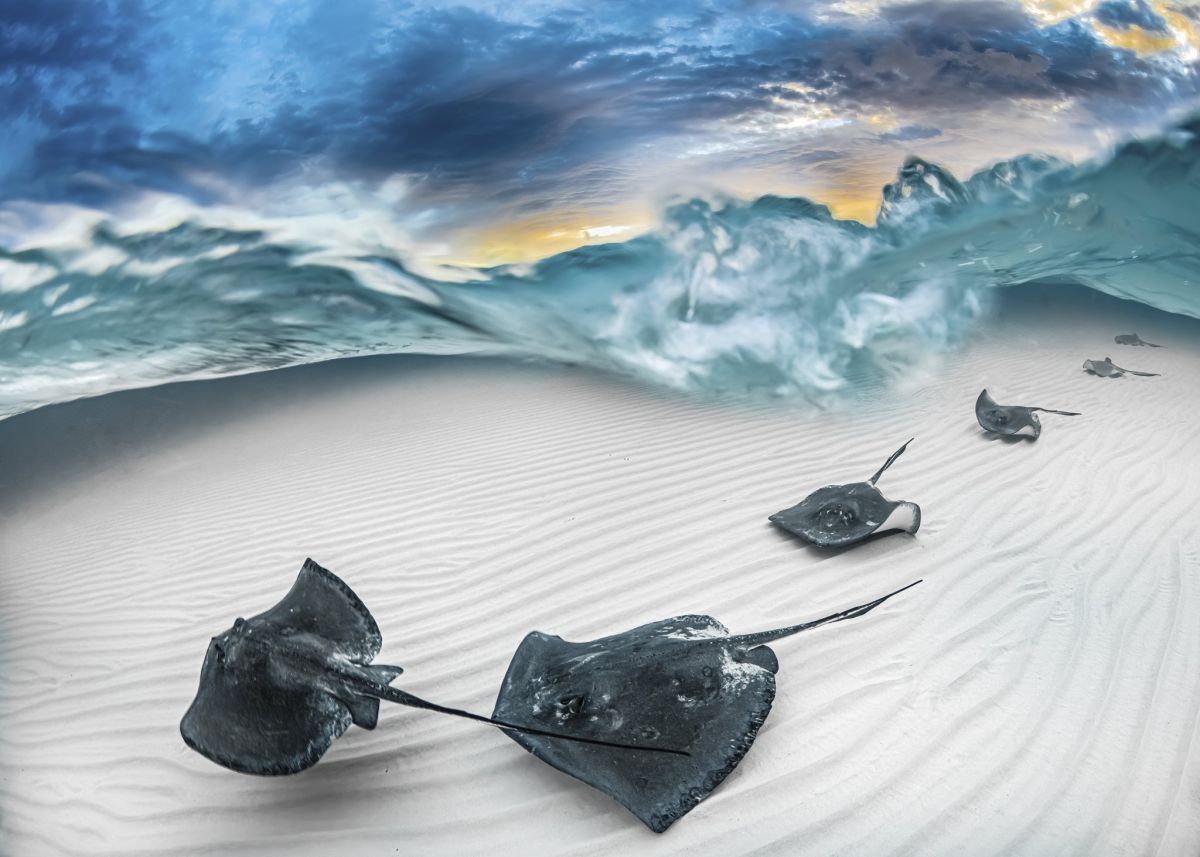
Wide Angle Winner: “Fade” by J. Gregory Sherman (USA)

Stingray City, Cayman Islands
stingrays
“Fade” by J. Gregory Sherman J. Gregory Sherman/UPY 2023 (USA)

“My dive partner and I chartered a boat to arrive at Stingray City on Grand Cayman before dawn so as to capture the morning light and undisturbed sand ripples. Just as the sun broke the horizon, a line of southern stingrays headed straight for me and I captured this image as they glided across the sand. Using a large dome port allowed me to create a split image showing the intensely colorful dawn sky contrasted against the nearly monochromatic stingrays and sand beneath the surface chop.” – Gregory Sherman

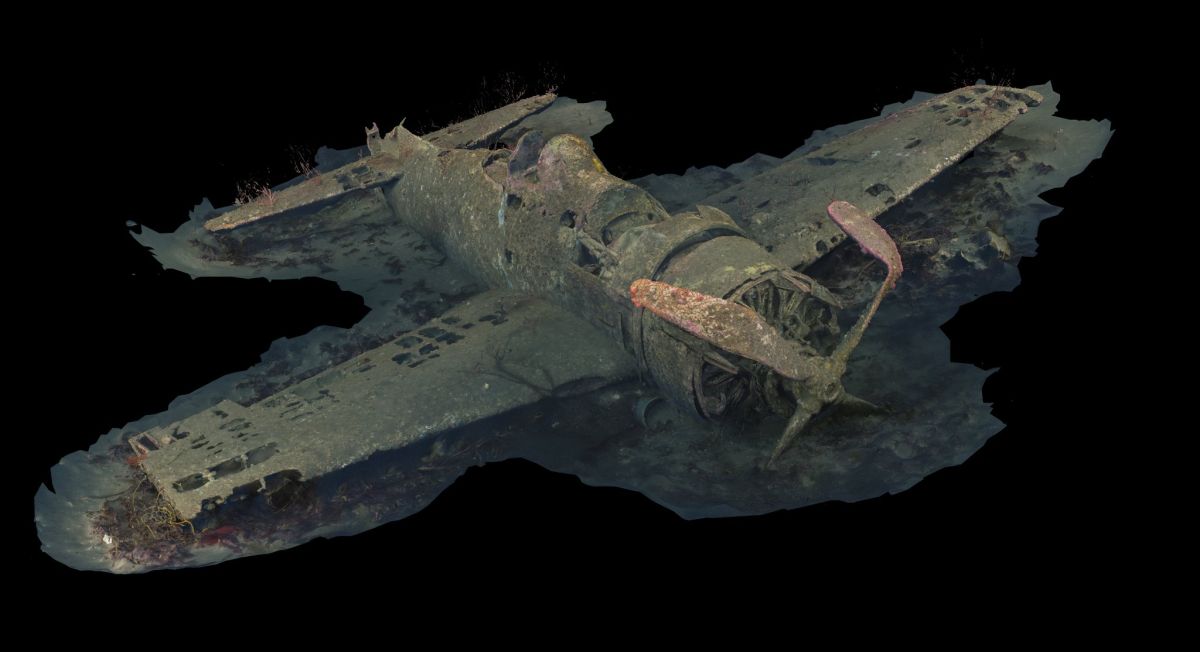
Wrecks Winner: “Engine with a Saddle” by Brett Eldridge (USA)

Point Loma, California
wrecked planes
“Engine with a Saddle” by Brett Eldridge Brett Eldridge/UPY 2023 (United States)

“We were out scanning targets in June when we saw a very small, but promising sonar blip 230 feet deep. I geared up and jumped in hoping for something special. After some searching, my heart started racing when I first saw fish then the propeller of an almost completely intact, single-engine WW II airplane! It turned out to be a F8F-1 Bearcat, a rare aircraft that Neil Armstrong famously once said was his favorite and has been described as ‘An Engine With a Saddle.’ Alone on the first dive with limited bottom time, I took enough photos to build a ‘draft’ model and identify the wreck. Needing a better photogrammetry model for the UPY contest and with deadlines quickly approaching, I booked December 19th and crossed my fingers. We fortunately had epic conditions and I got the photos I needed. It was my last dive of 2022.” – Brett Eldridge

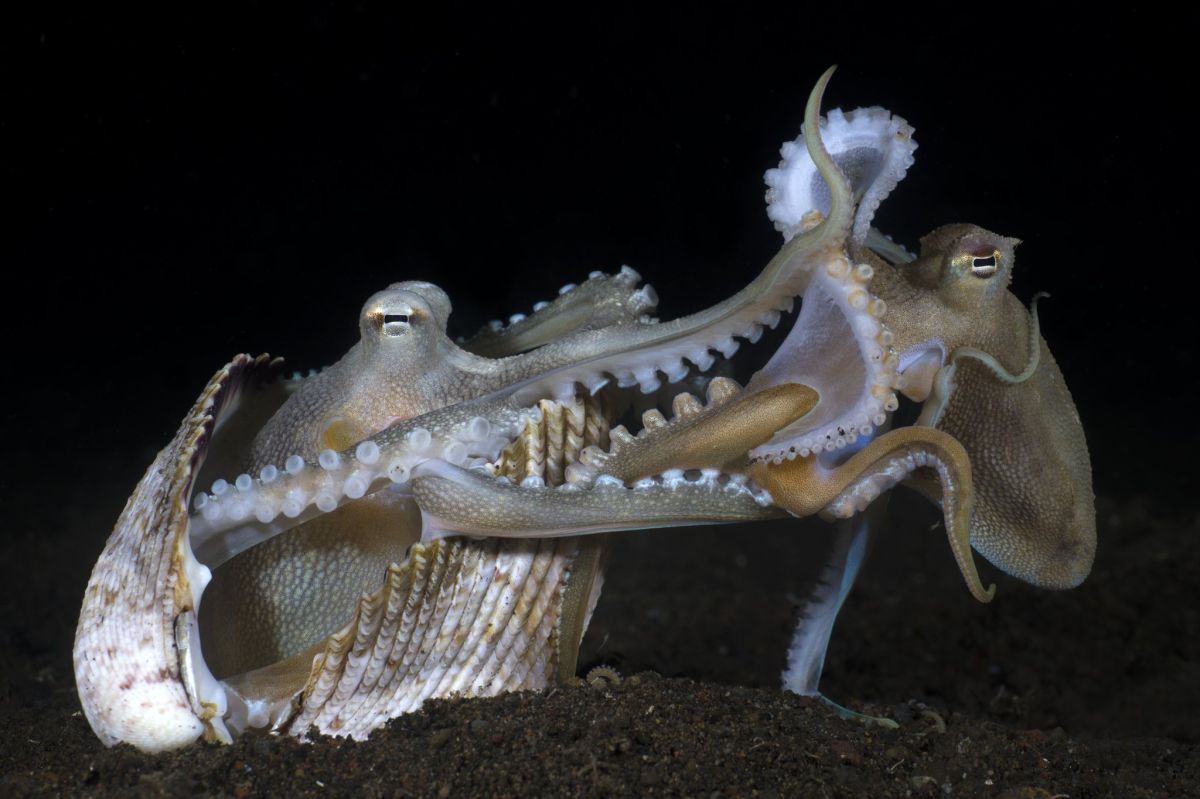
Behavior Winner: “Make Love Not War” by Yury Ivanov (Indonesia)

Tulamben, Bali
octopus
“Make Love Not War” by Yury Ivanov Yury Ivanov/UPY 2023 (Indonesia)

“A couple of coconut octopuses ‘making love’ (mating). I knew that I can find this species of Octopus at one of dive sites near Tulamben village (Bali, Indonesia) and they are active only at night time in that place. I dive there only after 7pm hoping to photograph something unique – their mating. I’ve done more than 30 night dives at the dive site and finally I got lucky. The photo shows the end of their love.” – Yury Ivanov

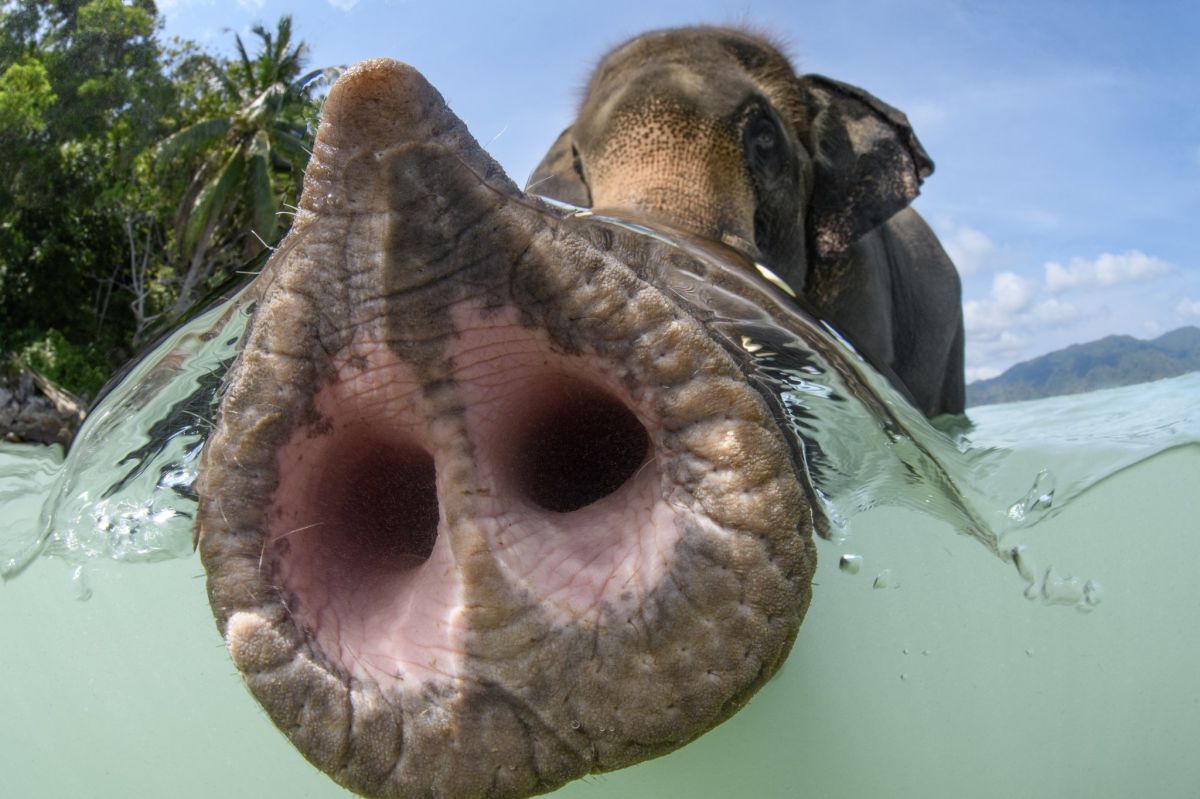
Portrait Winner: “The Trunk” by Suliman Alatiqi (Kuwait)

Phuket, Thailand
elephant
“The Trunk” by Suliman Alatiqi Suliman Alatiqi/UPY 2023 (Kuwait)

“The elephant’s trunk is one of the most distinctive anatomical features in the natural world and this photo aims to emphasize it. Luckily, he was curious about my camera and was happy to feel it out which gave me the opportunity to capture this perspective despite otherwise bad conditions for an over-under photo (choppy water and poor visibility). In my first attempts, the nostrils were not fully lit because of how close they were to the lens (which was necessary for the intended photographic effect). So I returned at a specific time window when I thought the sun’s angle would be optimal and managed to fully light the nostrils. This added a lot more detail to the key part of the image without which the photo would not be as effective.” – Suliman Alatiqi

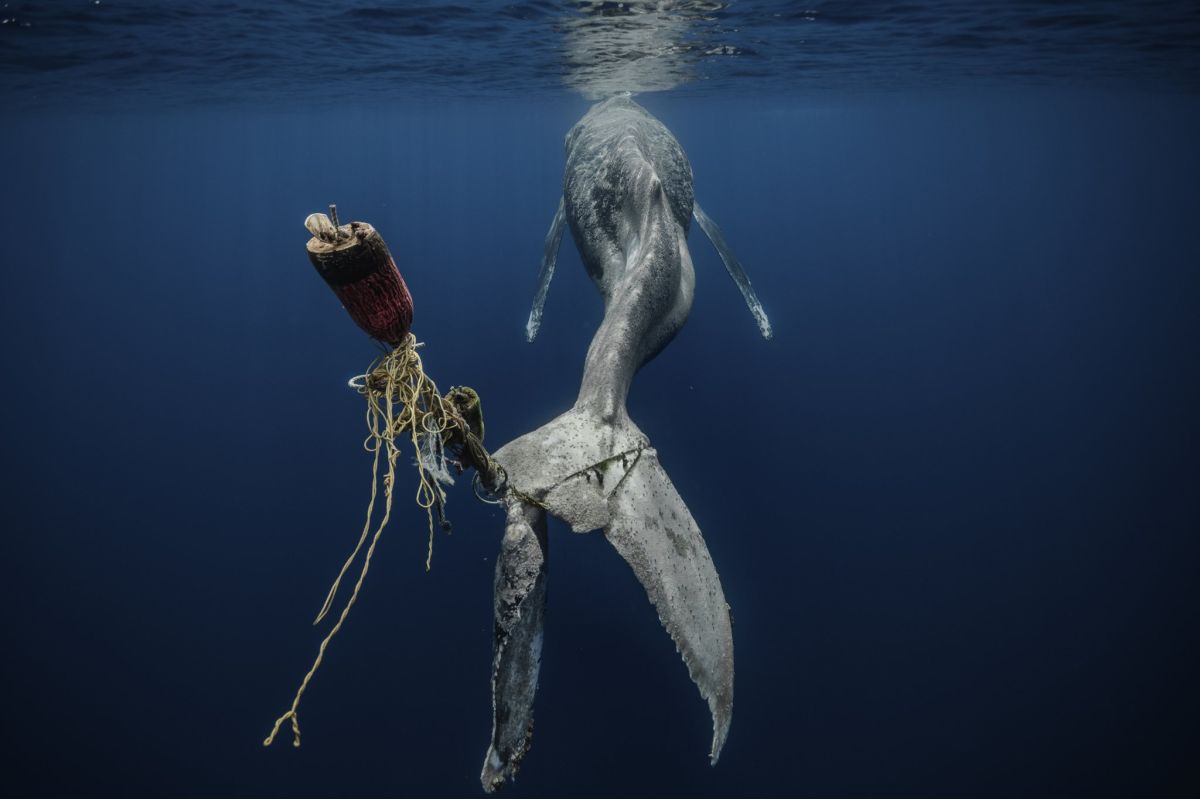
Save Our Seas Foundation Marine Conservation Photographer of the Year 2023 Winner: “Hopeless” by Alvaro Herrero (Spain)

Baja California, Mexico
whale
“Hopeless” by Alvaro Herrero Alvaro Herrero/UPY 2023 (Spain)

“A humpback whale dies a slow, painful and agonizing death after having its tail entangled in a ropes and buoys, rendering its tail completely useless. A reflection of what not only our oceans are suffering, but also our planet, the product of man’s selfishness and lack of responsibility. Taking this photograph was, for me, the saddest moment I’ve experienced in the ocean. Especially because I have spent so much time with humpbacks underwater, experiencing eye contact, interactions, and seeing with my own eyes how they are sentient and intelligent beings. But I’m ‘happy’ to being able to capture that moment and show the world what is happening, what we are doing. I really hope this image make us aware , open our eyes and drive us in to make real changes.” – Alvaro Herrero

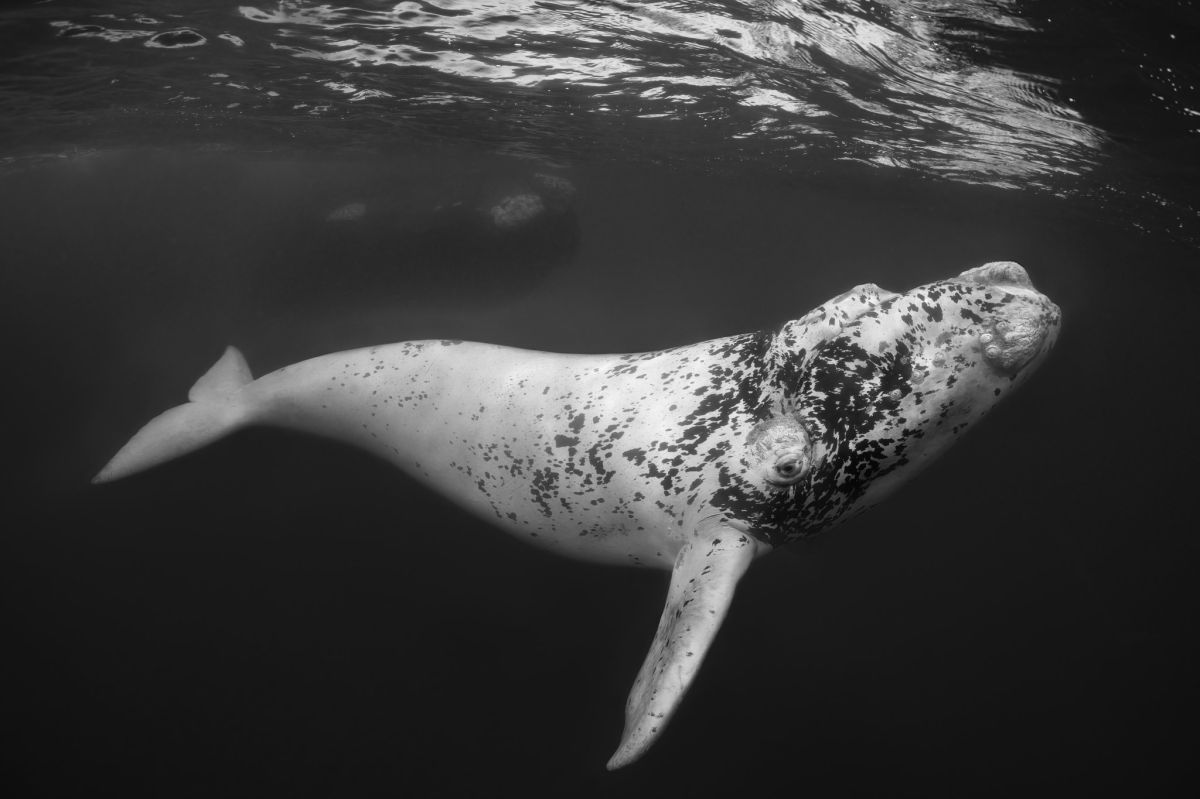
Black & White Winner: “El Blanco – The White One” by Don Silcock (Australia)

Península Valdés, Argentina
whale photos
“El Blanco – The White One” by Don Silcock Don Silcock/UPY 2023 (Australia)

“The image was taken on the last morning of a five-day trip to Peninsula Valdés in Argentina, in August 2022, under a special permit to enter the water with the Southern Right Whales that gather there between June and December each year. The mother, who can be seen in the background, accepted our presence and allowed the calf to interact with us. It was very playful but careful not to hit us with its tail and seemed to be really enjoying it all – almost as much as we were! White calves are very rare and referred to locally as ‘El Blanco’ or the white one!

Peninsula Valdés is an incredibly important safe haven and breeding ground for the Southern Right Whales of the southern Atlantic and Argentina has done an excellent job of managing it. It was, without doubt, my best ever underwater experience!” – Don Silcock

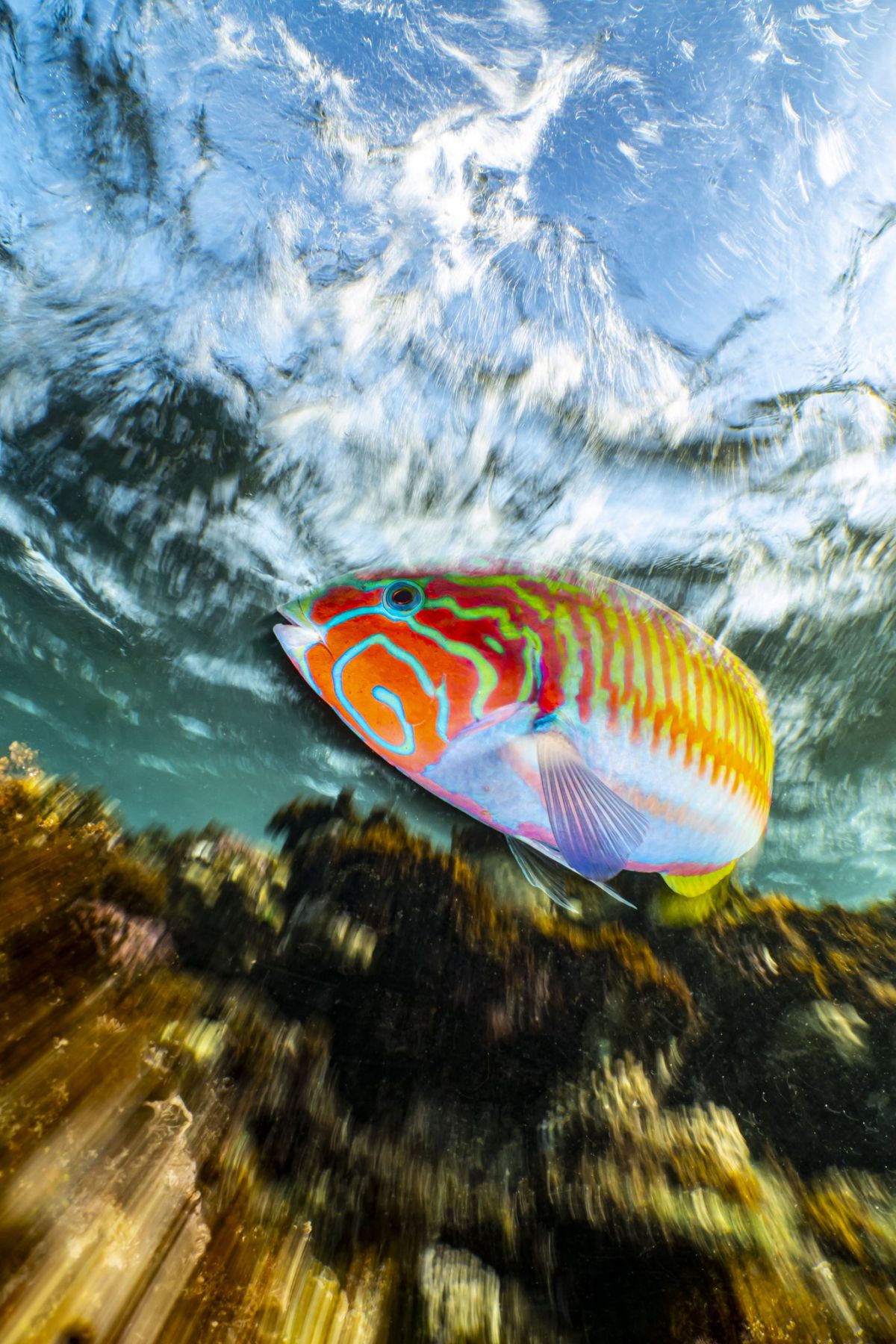
Compact Winner: “Klunzinger’s Wrasse In Motion” by Enrico Somogyi (Germany)

Marsa Alam, Egypt
underwater photography
“Klunzinger's Wrasse In Motion” by Enrico Somogyi Enrico Somogyi/UPY 2023 (Germany)

“When I was snorkeling in Marsa Alam I saw countless Klunzinger’s Wrasses. One of them was particularly curious and very interested in my lens. I was able to take some good classic wide angle pictures. After a while I figured it would be a good idea to try a long exposure. So I set my camera to the smallest aperture f11, the ISO value to 64 and the exposure time to 1/13s. For this picture, I moved the camera forward a bit while the shutter was released. This created the zoom effect in the lower part of the image. I was very happy with the result.” – Enrico Somogyi

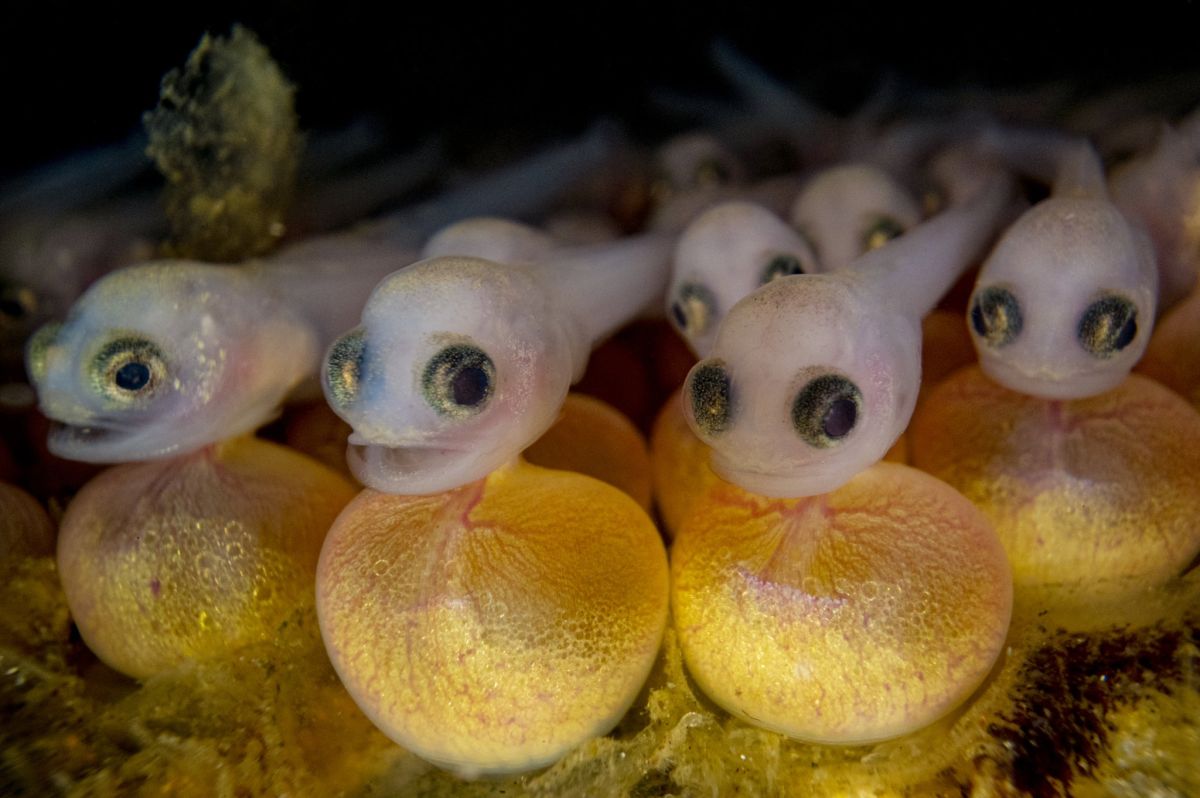
Macro Winner: “Unsung” by Shane Gross (Canada)

Location: Vancouver Island, Canada
baby fish photograph
“Unsung” by Shane Gross Shane Gross/UPY 2023 (Canada)

“Walking along a rocky shoreline we would peer under rocks using a probe lens and my camera’s LCD screen to check for plainfin midshipman nests. Once found I would lay on top of the barnacle-covered rocks, cutting my elbows, trying to compose images of fish most people have never heard of despite having one of the most interesting lifecycles of any animal. Plainfin midshipman are deep water fish that travel to the intertidal zone to spawn. The males sing to attract females and she will lay as many eggs as his singing deserves before moving on to the next singer. Now, the male has a chance to fertilize the eggs, but only if he is not beaten to the punch by a sneaker male who looks like a female. The singer male will then guard the nest never knowing the kids may not be his. Drama!” – Shane Gross

There are even more incredible images swimming around on the UPY website. You can even download a free yearbook featuring all the winning images and their captivating stories here.


  • Spanish nuns are fighting to preserve a giant rabbit breed in danger of extinction
    Photo credit: CanvaNuns in Spain are trying to save a rare breed of giant rabbit from extinction.

    Nuns at the Convent of St. Anthony of Padua in Central Spain are on a mission beyond their spiritual calling: to save a rare breed of giant rabbit from extinction. The eleven Franciscan sisters are currently caring for 35 giant rabbits at the convent, which weigh up to 20 pounds each.

    Sister Consuelo Peset Laudeña told Global Sisters Report that the rabbits hold historical significance in Spain. During the Spanish War, the rabbits were a crucial source of food for families and orphanages during food shortages.

    “Many families have managed to get by thanks to this animal, and now it seems we are forgetting that part of our history,” she told the publication.

    The journey to save giant rabbits

    The sisters at the Convent of St. Anthony of Padua have worked to preserve the rabbits for over 30 years. But ten years ago, they learned the rabbits were going extinct.

    “We contacted an association, I sent some photos, and they told me, ‘You have a spectacular animal, and it’s endangered,’” Peset explained.

    Their focus shifted into helping the rabbits breed, so the sisters worked with local Spanish authorities to establish a farm. They raised $5,700 to initially invest in the farm.

    Caring for the rabbits

    The sisters are tasked with feeding, cleaning, and maintaining the rabbits and their quarters. The rabbits are fed a combination of barley, hay, and corn. At the end of March 2026, a total of 90 births were recorded.

    “I do a visual check. I take a walk around and see which animals are listless or lethargic, and if any have died in the nests, they must be removed immediately,” Peset said.

    The rabbits live in temperature-controlled cages with proper ventilation.

    “Rabbits start to suffer at 26 degrees [Celsius; which is about 79 degrees Fahrenheit]; they tolerate the cold well, but not the heat,” Peset also added.

    The nuns feel called to protect the rabbits thanks to a encyclical given by Pope Francis titled Laudato Si’ in 2015. In that message, he called Catholics to care for nature and the environment.

    “We have to protect creation,” she said. “We are Franciscans. St. Francis is the patron saint of veterinarians, and that is the source of the love and admiration we feel for the Spanish giant rabbit.”

    What are Spanish giant rabbits?

    Spanish Giant Rabbits are a cross between the Flemish Giant and Spanish brown-type female rabbits. The rabbits weight up to 20 pounds, and each female rabbit can give birth to 22 pups each month.

    According to Farm Show Magazine in 2014, the rabbits are comparable in size to a small lamb. They were first bred in the early 1900s.

    The giant rabbits are not for sale. To further conservation efforts, the sisters have chosen to donate the rabbits to local schools, a nearby theme park, and to registered private rabbit breeders.

  • Cheddar Big Booty Cheeseburger wins Wackiest Cat Name contest, but these 9 runner-ups are clever, too
    Photo credit: NationwideCheddar Big Booty Cheeseburger and Brave Little Toaster.
    ,

    Cheddar Big Booty Cheeseburger wins Wackiest Cat Name contest, but these 9 runner-ups are clever, too

    One could argue that Munchie McPurryToes is a better name, but to each their own.

    There are many reasons people love giving their pets goofy names. A big one is that, unlike humans, they’ll never have to put it on top of a résumé, so we’re free to call them whatever we desire. Humans also give their pets adorable names because of anthropomorphism. When we give our pets human traits, they become more relatable.

    Giving our pets a truly unique name also makes us feel more attached to them. Research shows that when we give them a name we won’t hear anywhere else, they feel more personal to us, strengthening the bond. It’s the same reason why we give our loved ones nicknames. 

    Every year, the Nationwide pet insurance team recognizes the boldest and most unforgettable names among its roster of newly enrolled pets. This year, after over 200,000 votes were counted, the team recognized 10 cats with the wackiest names, and the winner was Cheddar Big Booty Cheeseburger from Benton, Arkansas. Cheddar Big Booty Cheeseburger is hard to beat, but the nine runner-ups have pretty amazing names, too. 

    2026 winner: Cheddar Big Booty Cheeseburger

    “He was one of two orange kittens in a litter of a stray I took in,” said cat mom Chantalece C. “This tiny little kitten grew into a sturdy unit of a cat, so when I would grab him, it was like picking up a triple-stacked cheeseburger.”

    Cheddar Cheeseburger is a wacky name in its own right, but she decided to add another quirky twist. “He really loves booty spankings too, so he deserved a big booty title,” she added. Thus, Cheddar Big Booty Cheeseburger.

    cats, funny cat names, funny cats, kittens, cat jokes
    Cheddar Big Booty Cheeseburger. Photo credit: Nationwide (used with permission)

    Runner-ups (who are also pretty amazing!)

    Bad Kitty 5000

    Small kitties often have the biggest purr-sonalities. Sometimes, that means snuggling, funny sounds, or smiley faces. Sometimes, that means, well, destruction. “If you met this lil’ monster, you would understand,” said cat dad D. D., on naming his frisky feline Bad Kitty 5000.

    cats, funny cat names, funny cats, kittens, cat jokes
    Bad Kitty 5000. Photo credit: Nationwide (used with permission)

    Brave Little Toaster

    “We rescued him from inside a car engine,” said cat mom Carly M. “He was small and so scared, we just kept trying to encourage him to be brave and kept telling him he was ‘such a brave little toaster.’ And it stuck. We call him B.L.T. for short!”

    cats, funny cat names, funny cats, kittens, cat jokes
    Brave Little Toaster. Photo credit: Nationwide (used with permission)

    Catatouille

    Looking for the right recipe for their new wacky pet, cat mom Yan L. and her boyfriend took inspiration from a rat—specifically the furry little chef from an animated classic. The result? A Michelin-star-quality pet name that’s also a little wacky. “I love the movie ‘Ratatouille,’” she said. “My cat is a grey tabby, which is a little like the rat in the movie. And he is a cat, so voila, Catatouille.”

    cats, funny cat names, funny cats, kittens, cat jokes
    Catatouille. Photo credit: Nationwide (used with permission)

    Goofus McDoof Business Horse

    “My girlfriend is a fan of American Dad,” said cat dad Nick R. “There’s a very niche character present in season 13—he’s only mentioned by name and never appears on screen.” Later, when a small orange kitten was discovered falling out of an engine bay, the couple knew they’d found the “embodiment of Goofus McDoof Business Horse.”

    cats, funny cat names, funny cats, kittens, cat jokes
    Goofus McDoof Business Horse. Photo credit: Nationwide (used with permission)

    Lucipurr Meowzebub, Lord of Cats

    “Cats are kind of demonic, but in a fun, charming way,” said cat mom Margot. “We love a good pun and were originally planning to name one cat ‘Lucipurr’ and the other ‘Meowzebub.’ Once we brought our kittens home, it became immediately clear that this orange menace needed both names. Thus, Lucipurr Meowzebub, Lord of Cats.”

    cats, funny cat names, funny cats, kittens, cat jokes
    Lucipurr Meowzebub, Lord of Cats. Photo credit: Nationwide (used with permission)

    Miso Tunacanopolis The First

    “Miso is his original name,” said cat mom Phuong N. “The ‘Tunacanopolis’ part is just a funny name I’ve always wanted to use. ‘The First’ alludes to the fact that Miso is my first cat, but also because Miso is the best cat in my admittedly very biased eyes.”

    cats, funny cat names, funny cats, kittens, cat jokes
    Miso Tunacanopolis The First. Photo credit: Nationwide (used with permission)

    Munchie McPurryToes

    “She was such a cute little munchkin when I got her at 3 months old, but ‘Munchkin’ was too much of a mouthful, so it quickly got reduced to Munchie,” said cat mom Morgan S. “From the moment I got her, she purred like an engine every time she snuggles up—and she does love snuggling very, very much—so, to capture her loud, reliable purr, I added McPurryToes as her last name.”

    cats, funny cat names, funny cats, kittens, cat jokes
    Munchie McPurryToes. Photo credit: Nationwide (used with permission)

    Orange Julius Ceasar Salad

    “We have always liked weird pet names,” said cat dad Steven S. “When we first got Jules, I would call him ‘Orange.’ I thought of names I could keep Orange in—it started off as Orange Julius, then evolved to Orange Julius Ceasar Salad.”

    cats, funny cat names, funny cats, kittens, cat jokes
    Orange Julius Ceasar Salad. Photo credit: Nationwide (used with permission)

    Statistically Significant

    “I’m a biologist, so the term ‘significantly significant’ is used a lot, and I always thought it would be cute for a cat name,” cat mom Renee G. said. “So, when I adopted her, it was the first option on my list.”

    cats, funny cat names, funny cats, kittens, cat jokes
    Statistically Significant. Photo credit: Nationwide (used with permission)

  • Cape May County Zoo welcomes two new capybara pups, and Buttercup is already an amazing mom
    Photo credit: Cape May County Park & ZooButtercup and her two new capybara pups.

    Somewhere in southern New Jersey, in a water-filled zoo habitat, two small animals you’ve probably never thought much about are about to take their first wobbly steps into the world.

    The zoo has not announced their names yet. For now, they’re simply Buttercup and Goomba’s babies—two capybara pups at Cape May County Park & Zoo, whose arrival has turned into a local love story.

    Born in mid-April 2026, they came into the world with their eyes open and alert; they were standing within hours. By their first week, they were nibbling grass alongside the adults, their tiny muzzles buried in clover as if they’d been doing it forever.

    Cape May County Commissioner Vice-Director Andrew Bulakowski put it simply:

    “What a wonderful joy to be blessed with additional capybara pups. Families love this exhibit, and their love will only grow with the sights of these new additions.”

    They will not grow up alone. Their extended family—Budette, Marigold, and a group of older siblings from Buttercup’s October litter and Marigold’s November litter—hovers around them like a serene, fuzzy welcoming committee. They are serious about the job, too: someone always stands watch. Someone always seems ready with a nudge or a nuzzle.

    Zookeepers and veterinary staff are monitoring Buttercup and her newborns closely, offering the young family regular breaks from the attention of visitors. Visitors who want a glimpse can watch from afar, on a bridge that overlooks the habitat. Patience is the price of admission to one of the sweetest scenes in the zoo.

    The new capybara pups are incredibly cute. It’s difficult to look at them and not feel something inside you scream with delight. That feeling is important. In a way, it’s the entire point.

    The world’s chillest giant rodent is stranger (and more important) than it looks

    If you recognize capybaras at all, you probably know them from the Internet.

    The barrel-shaped creatures have captured the hearts of millions online with their unbothered nature: capybaras soak in hot springs, capybaras let birds perch on their backs, capybaras quietly chew while chaos swirls around them. Capybaras are chill, patient creatures that look like they’ve unlocked a level of calm the rest of us can only dream of.

    But how well do you really know the humble capybara?

    Capybaras (Hydrochoerus hydrochaeris) are the largest rodents on Earth. An adult can weigh up to about 146 pounds and stretch more than four feet long. That can seem intimidating on paper, but in person, capybaras carry their size with a slow, steady ease.

    Their bodies are built for life between land and water, and every anatomical detail tells that story: their eyes, ears, and nostrils are positioned near the tops of their heads, so capybaras can survey their surroundings while almost entirely submerged. Their feet are partially webbed, making them powerful swimmers who can hold their breath for up to five minutes—a crucial feature when a jaguar is watching from the riverbank and the safest move is to slide under the surface and wait it out.

    Capybaras eat plants. They graze on grasses and aquatic vegetation with an almost comical level of focus. It’s a pretty strict diet, though they will add fruits and tree bark when the mood strikes or the season dictates. And they don’t just look calm; they talk. Capybaras communicate with an arsenal of barks, whistles, clicks, and soft purrs that help keep their tight-knit groups coordinated and close.

    How a capybara family does childcare

    In the capybara world, Buttercup’s new pups don’t “belong” to her and Goomba, the father. Rather, the entire group claims them.

    In the wild, capybaras don’t raise their young alone. The babies don’t rely on a single caregiver; they inherit a whole network of protection. Capybaras are profoundly social animals and live in stable groups where group bonds are maintained through constant tactile contact, mutual grooming, and scent marking. Females nurse each other’s pups. Older animals act as lookouts and babysitters, regardless of whether they share direct DNA. Scientists call this alloparenting: shared childcare built into the species’ survival.

    That shared responsibility is crucial. It gives capybara pups stronger odds of survival in those first fragile months. In some field studies, more than 70% of pups raised in stable groups survive their first year, a high rate for animals so low in the food chain.

    In New Jersey, Buttercup’s family follows the ancient capybara way, too. While the zoo’s visitors see a cute capybara cuddle pile, this mammalian cluster represents a finely tuned system designed to keep vulnerable animals alive.

    Why wetlands depend on capybaras

    In the wild, capybaras roam across much of South America and function as quiet ecosystem architects. You’ll find them in the vast Pantanal wetlands of Brazil and Bolivia; they graze in the seasonally flooded savannas of Venezuela and Colombia. Capybaras even venture into the rewilding landscapes of Argentina’s Iberá region. Basically, wherever freshwater meets grassland, capybaras tend to appear sooner or later.

    As professional grazers, capybaras help maintain diverse, open wetland vegetation. When they disappear, tall grasses quickly crowd out shorter plants, and overall plant richness drops by 25% or more. Simply put, when capybaras aren’t around, plants suffer. That change is drastic and can be felt through the insects, birds, and every other creature reliant on those important plants.

    Within the circle of life, as prey, capybaras also anchor South America’s food chains: they’re hunted by jaguars, anacondas, caimans, and large raptors (such as harpy eagles). They’re a major food source; a jaguar can devour dozens of capybaras in a single year. That stat sounds brutal, but if you remove capybaras from that system, the entire food chain begins to wobble.

    They’re also essential, given the way capybaras move seeds as they travel and graze. Constantly nibbling and wandering, capybaras have shaped how nutrients move through the wetlands. In conservation science, animals that hold this many threads together often receive a specific label: keystone species. Pull out a keystone, and the entire system starts to crack.

    Not endangered, but not untouchable

    Right now, the International Union for Conservation of Nature lists capybaras as a species of “Least Concern.” But that broad label can hide a lot of trouble.

    For example, the capybara’s habitat is disappearing rapidly as people drain or convert wetlands into farmland at alarming rates. Hunters target capybaras for their meat and skins, which are used to make leather. Climate change creates more intense droughts and wildfires in places like the Pantanal, the world’s largest tropical wetland. In 2020, fires burned an estimated 30% of the Pantanal biome in a single season, scorching millions of acres, as jaguars and charred caimans fled their home.

    So yes, there’s real danger here, despite the capybara’s “Least Concern” conservation label. But there’s also hope.

    capybara, pups, zoo, buttercup, conservation
    Capybara relaxing in water. Photo credit: Canva

    In early 2026, Brazil expanded its Pantanal national park, adding more than 116,000 protected acres to a landscape that badly needs institutional buffers. In Argentina, a long-term rewilding effort brought jaguars back to Iberá after roughly 70 years. Those jaguars now hunt capybaras again—for the first time in living memory—restoring a predator‑prey relationship that’s essential for local ecosystems.

    The picture is complicated and is always evolving, but crucially, there’s still a window for change.

    What a small New Jersey zoo has to do with all of this

    On a map, Cape May County Park & Zoo looks like a sweet coastal stop between beach towns. In practice, it’s part of a much larger conservation network.

    The zoo is free to visit and cares for more than 550 animals across over 200 species. Cape May County Park & Zoo holds accreditation from the Association of Zoos and Aquariums (AZA), which isn’t an easy feat: it signals that a zoo meets strict standards for animal care, conservation work, and education. Fewer than 10% of licensed animal facilities in the United States achieve accreditation, for context.

    Together, AZA-accredited zoos and aquariums spend well over $200 million a year on field conservation. They fund habitat protection, support research teams, and help maintain genetically healthy populations of animals that might otherwise go extinct.

    Buttercup and Goomba’s family exists, in part, because those in charge decided that capybaras deserve space, resources, and long‑term planning.

    Picture an excited four-year-old, hands sticky from Dippin’ Dots. She presses her face against the enclosure as Buttercup nudges her new pups towards the water’s edge. This child doesn’t know what the Pantanal is. She’s never heard of the term “keystone species.” There is no word for “alloparenting” in kindergarten. But she does know this: there’s a mother, and those little animals matter to her. They also seem to matter to the zookeepers who clean, feed, and check in on them every day.

    That simple realization—that another creature’s life is important, has value—is often where the seeds of conservation are planted.

    Two pups, one bigger story

    Right now, Buttercup’s newest pups are exploring their habitat one cautious step at a time. They nose at the water and trail behind older siblings as they wander through the grass. When something inevitably startles them, they retreat back into their capybara family—a pile of warm bodies and damp fur—where they’ll find safety, tucked beneath the chins of adults and between their sturdy shoulders.

    These tiny capybara pups are unaware of the fact that, very far away, others just like them graze the floodplains of the Pantanal and Iberá. They have no idea of their importance, no way to know that their species is the key to holding the entire wetland ecosystem together, one blade of grass at a time.

    But they don’t need to know that. Humans can own that knowledge—and do something about it. That’s the power of a story like this. Two baby capybaras in a New Jersey zoo aren’t a trivial subject; it’s a doorway. You start with Buttercup and Goomba’s adorable little family, and suddenly, context floods in. “Wetlands” are no longer a concept or a word in a textbook. They’re real, faraway places where animals like the capybara live, graze, and contribute to the ecosystem.

  • Cats save the day after family accidentally brings home the wrong dog from daycare
    Photo credit: Fox 9 Minneapolis-St. Paul|YouTube Family accidentally brings wrong dog home but their cats knew

    It’s not a secret that nearly all golden retrievers are identical. Honestly, magic has to be involved for owners to know which one belongs to them when more than one golden retriever is around. Seriously, how do they all seem to have the same face? It’s like someone fell asleep on the copy machine when they were being created.

    Outside of collars, harnesses and bandanas, immediately identifying the dog that belongs to you has to be a secret skill because at first glance, their personalities are also super similar. That’s why it’s not surprising when one family dropped off their sweet golden pooch at daycare and to be groomed, they didn’t notice the daycare sent out the wrong dog.

    The cats were the first ones to notice

    See, not even their human parents can tell them apart because when the swapped dog got home, nothing seemed odd to the owners at first. She was freshly groomed so any small differences were quickly brushed off. But this accidental doppelgänger wasn’t fooling her feline siblings.

    Once the dog was in their house, they noticed that their cats started behaving strangely towards their canine sibling. The cats started attacking the dog, likely trying to get it to tell them what they did with their real dog sister. Cat slaps and a house full of strange people didn’t dampen the imposter’s spirit though, in fact, that’s what helped reveal the switcharoo.

    This dog kept handing out face kisses and had no interest in seeing her favorite neighbor. After putting all of those things together, the owners decided to hightail it to the vet’s office to scan the dog’s microchip. Alas, they indeed had the wrong dog.

    It would have been a great prank, though.

    “We just never even thought that that would happen, and of course we thought we would know right? Like we’re her parents, we would know something was wrong, we would know right off the bat that it wasn’t Ehmi,” Kebby Kelley told Fox 9 Minneapolis-St. Paul.

    Seems both golden retrievers got to go on a really strange adventure that deserves a lifetime of delicious dog treats for the confusion.

    This article originally appeared three years ago. It has been updated.

  • Golden Retriever has the absolute sweetest reaction to toddler taking her first steps
    Photo credit: Photo by Stephen Andrews on UnsplashGolden Retriever energy plus toddler energy equals the greatest combo ever.
    ,

    Golden Retriever has the absolute sweetest reaction to toddler taking her first steps

    Taco was SO excited that he and his best bud were going to get to play together.

    Here at Upworthy, we often look for stories that will make you smile and warm your heart, and few things do that more quickly than a good doggo and an adorable kiddo. So when we ran across a ridiculously sweet story on The Dodo about a Golden Retriever and his little human sister, we simply had to share it. Taco (full name Taco Bell—seriously) is a good boy who had been lovingly waiting for his new baby sister, Vanora, to be able to play with him. And when the day finally came? Oh. My. Goodness.

    Claudia Hughes is the proud mom of the furry pup and his squishy human sibling. She told The Dodo that Taco had been smitten with Vanora ever since she came home from the hospital. “When we would lay her down on the floor or our bed, Taco would just lay down next to her,” Hughes said. That’s one attentive pup. Pet parents know there’s nothing more comforting than your fur baby looking out for your human baby, and Taco has been the ideal gentle watchdog.

    A dog who waited patiently for his playmate

    Hughes told The Dodo that the pooch would even get up for late-night feedings. Now that’s just beyond sweet. It’s no wonder the pup was itching for his playmate to get big enough to actually play with, and his reaction to his doggy dreams coming true is pure joy. The video of 3-year-old Taco seeing his toddler sibling taking some of her first steps has amassed more than 2 million likes on TikTok. Finally his sister can run around with him! Finally he can teach her the fun of having a dog for a big brother! Finally he gets to play! At least, that’s what I think he was thinking from his excited reaction.

    And how do we know dogs are excited? Well, they get the zoomies, and if you’ve never been able to witness the absolute unadulterated joy of the zoomies, just check out his reaction in the video. It’s like he’s silently screaming, “I’m so excited!!!”

    According to Hughes, Taco first started getting excited when he saw Vanora take steps in her walker, and more so when he saw her pushing the walker. But his excitement went off the charts when she could actually take steps unassisted. Don’t worry though, he was sure to keep his distance so as not to knock her down. He’s such a good doggy brother.

    Teaching kindness goes both ways

    Hughes told The Dodo, “We have shown Vanora that we hug Taco, we pet him gently and we give him kisses on his head.” She went on to say, “But if we get mad at him, we don’t hit him.”

    golden retriever, dog, pets, good doggo
    Such a good doggo. Photo credit: Canva

    It looks like both Taco and Vanora have learned important lessons in kindness. Since the video of Taco’s “Yay, she’s walking!” zoomies went viral, the two have continued to be best pals. Vanora has since perfected the art of throwing the ball for Taco to fetch, having practiced since she was barely able to walk.

    A family dog can be a source of joyful companionship for all, but sometimes a special bond is formed between a child and a pup. It’s clear that Taco and Vanora have that bond, which hopefully both will enjoy for many more years. Golden Retrievers come by their friendly, fun-loving, gentle reputation honestly, and it’s just delightful to see that energy in action.

    You can follow @_mostlyadorable_ and @tacothepolarpup on Instagram for more sweet photos and videos of Taco the good doggo and his family.

    This article originally appeared four years ago. It has been updated.

  • Diver convinces a tiny octopus to trade a plastic cup for a shell in Pixar-worthy video
    Photo credit: Pall Sigurdsson/YouTubePlastic is a problem for ocean wildlife.
    ,

    Diver convinces a tiny octopus to trade a plastic cup for a shell in Pixar-worthy video

    The cup wasn’t a safe choice, but the little cephalopod was stubborn.

    Sometimes taking care of our beautiful home planet looks like big, broad policies tackling issues like plastic pollution and habitat destruction. And sometimes it looks like taking the time to help one tiny creature stuck in an environmental bind.

    In a YouTube video that’s been viewed a whopping 20 million times, we see an example of the latter in action as some kind and compassionate divers attempt to convince an octopus to abandon the plastic cup it’s using for protection and trade it for a sturdy shell. Pall Sigurdsson has shared dozens of underwater videos on YouTube, but watching this particular video from his dive off the coast of Lembeh, Indonesia, in 2018 almost feels like watching a Pixar short film.

    “We spent a whole dive and most of our air saving this octopus from what was bound to be a cruel fate,” Sigurdsson wrote in the description of the video.

    “The coconut octopus, also known as veined octopus, is born with the instinct to protect itself by creating a mobile home out of coconut or clam shells. This particular individual however has been trapped by their instincts and have made a home out of a plastic cup they found underwater.”

    Why a plastic cup is so dangerous for an octopus

    It’s not just that the flimsy plastic cup didn’t provide the octopus adequate protection. Sigurdsson explained that a predator like an eel or a flounder would probably end up swallowing the cup with the octopus in it, likely killing both of them. Plus, even if the octopus abandoned the cup on its own, plastic simply doesn’t belong in the ocean.

    plastic in the ocean, plastic pollution, ocean wildlife

    Plastic doesn’t belong in the ocean. Photo credit: Canva

    “We tried for a long time to give it shells hoping that it would trade the shell,” he wrote. “Coconut octopus are famous for being very picky about which shells they keep so we had to try with many different shells before it found one to be acceptable.”

    The tentacles reaching out to test the weight of each shell, the divers searching for more options to offer it, the suspense of wondering whether the octopus really would abandon its pathetic plastic pollution protection… it’s just too much.

    Sigurdsson’s other underwater videos are also fun to watch. He shared one of another veined octopus who seemed to have no interest in him but became intrigued with his diver friend, Gary. The way it reaches out to touch just the tip of his finger and then shyly retreats feels like such a clear communication with no words being said.

    Just how smart are octopuses?

    Perhaps it is the fact that an octopus has nine brains that make them far more intelligent than anyone would have guessed before we started studying their behavior in earnest. They are known to solve puzzles, escape complicated mazes and traps, and take apart just about anything. It does make you wonder what these little guys were thinking when these divers were interacting with them. Was it curiosity? Judgment? An attempt at connection between species?

    It’s funny how one small interaction in one tiny portion of the vast ocean can say so much about us, for better and for worse. Human pollution is an enormous problem and saving one little octopus won’t save the world, but it sure gives us hope and motivation to keep trying for the sake of the vast number of creatures that live in the ocean as well as our own.

    You can find more underwater videos of ocean wildlife from Pall Sigurdsson on YouTube.

    This article originally appeared five years ago. It has been updated.


  • Couple buys new house and finds abandoned dog tied to a tree
    Photo credit: CanvaRepresentative Image: Who can say no to a pit pup?

    Molly, an adorable, affectionate 10-year-old pit bull, found herself tied to a tree after her owners had abandoned her. According to The Dodo, Molly had “always been a loyal dog, but, unfortunately, her first family couldn’t reciprocate that same love back,” and so when the house was sold, neither Molly nor the family’s cat was chosen to move with them.

    While the cat was allowed to free roam outside, all Molly could do was sit and wait. Alone. Luckily, the young couple that bought the house agreed to take the animals in as part of their closing agreement, and as soon as the papers were signed, they rushed over to check in.

    In a TikTok video, April Parker, the new homeowner, walks up to Molly, who is visibly crestfallen with teary eyes. But as soon as Parker begins cooing, “Baby girl…you’re gonna get a new home,” the pitty instantly perks up, all smiles and tail wagging.

    Welcome to the family

    “We are going to make her life so good,” Parker wrote in the video’s caption. “She will never be left all alone tied to a tree.”

    @mollysnewlife

    The people that sold our house to us left behind their 10yr old dog they had since it was a puppy. I was so stressed we wouldnt get the house and something bad would happeb to her. We are going to maje her life so good. She will never be left all alone tied to a tree. 😭😢@roodytoots

    ♬ Running Up That Hill (A Deal With God) [2018 Remaster] – Kate Bush

    The video has been seen upwards of 4 million times. Countless people commented on how enraging it was to see a dog treated so carelessly.

    “I’ve had my dog since she was 7 weeks old. She just turned 10 a few days ago. I literally cannot imagine doing this,” one person wrote.”

    Another added: “The tears in her eyes…she doesn’t understand why they could just leave her, it breaks my heart. People like that shouldn’t be allowed to be pet owners.”

    A new beginning for Molly

    Subsequent videos show Parker freeing Molly from her leash and introducing the sweet pup to her husband, with whom she was instantly smitten. It’s clear that this doggo was both relieved and elated to be taken in by her new family.

    Since being rescued, Molly has accompanied her new mom and dad everywhere.

    @mollysnewlife

    Replying to @ohitscourtney she won’t stop following us around. Its so sweet!! 🥰

    ♬ Lucky Girl – Carlina

    “She’s sticking to our side,” Parker wrote. “She won’t stop following us around. It’s so sweet.”

    Parker has created an entire TikTok channel documenting her newfound pet’s journey, aptly named “Molly’s New Life,” showing Molly enjoying warm baths, plenty of treats, cuddles…all the finer things in life.

    But what Molly seems to enjoy most of all is car rides:

    @mollysnewlife

    Taking Molly to get a treat! Stay tuned!! #mollysnewlife #goodgollymissmolly 🐕🐾🐶❤️

    ♬ Happy Together – Weezer

    And in case you’re wondering, the kitty is doing well, too, though it still prefers to stay outdoors.

    Molly also has two indoor cat siblings who instantly welcomed her into the family. The video below shows one of them, Joofus, comforting a trembling Molly with kisses during a thunderstorm.

    @mollysnewlife

    We had a big storm this morning and Molly was having a hard time. Joofus got on the bed and started comforting her. It was the sweetest thing. They got snuggled up and Molly went to sleep. Animals are amazing. mollysnewlife petsarefamily

    ♬ I Won’t Let Go – Rascal Flatts

    It seems that Molly has gotten the safe, loving home she’s deserved all along.

    A reminder of why rescue stories matter

    We know that animal abandonment is fairly common. According to the ASPCA, approximately 2.8 million dogs entered shelters and rescues in 2024 alone. And still, it’s really hard to fathom how humans can treat such innocent creatures with such blatant disregard when they provide so much pure joy.

    Thankfully, there are folks out there like the Parkers who know that taking care of animals like Molly is one of life’s most precious offerings.

    This article originally appeared two years ago. It has been updated.

  • Florida zoo captures adorable moment when a newborn baby sloth meets his dad
    Photo credit: Photo from Upworthy LibraryA proud sloth dad was caught on camera.
    ,

    Florida zoo captures adorable moment when a newborn baby sloth meets his dad

    If you thought adults sloths were cute, wait ’til you see this baby.

    Teddy, the two-toed sloth, has become a proud papa, and thanks to a video posted by the St. Augustine Alligator Farm Zoological Park, we all get to witness his adorable reunion with his newborn son. Mama sloth, aka Grizzly, gave birth to their healthy little one in February 2022, delighting more than 3,000 people on Facebook. Mama sloth was probably happy to give birth because a sloth’s gestational period is an entire year.

    The video, posted to the Florida zoo’s YouTube page, shows Grizzly slowly climbing toward her mate, who is at first blissfully unaware as he continues munching on leaves. Typical dad. Teddy quickly kicks into love mode once he sees his precious cub, however. Pretty soon it’s nothing but a sweet nose nuzzle fest. Be still, my sloth-loving heart!

    “Special Delivery! We have some big news to tell you: Grizzly had a baby! Grizzly and Teddy (the father) are Hoffman’s two-toed Sloths, and the family is doing well,” the St. Augustine Alligator Farm Zoological Park announced on Facebook.

    How do sloths raise their young?

    As with most mammals, male sloths don’t typically care for their young. Usually, a sloth mama will go it alone, spending up to six months with the little one clinging to her chest as she traverses the trees. Eventually she’ll spend time teaching the cub to climb, forage and even do the “poop dance” (yes, it’s a real thing with sloths). However, the zoo is allowing the father to be involved in the baby’s upbringing if he so chooses.

    “But since that is how they’ve elected to, we felt it was really important to keep them here that way,” a zoo curator said. “Mom and baby need time to bond together, and Teddy, very smartly, decided to give them some space.” In a follow-up video, Sarah, one of the zoo’s bird and mammal curators, praised Teddy for “very smartly” knowing when to give Grizzly and baby their “much needed space.” Healthy boundaries at their finest.

    Why this birth was especially remarkable

    The birth of the baby sloth is also notable because of the parents’ advanced ages. At the time of the birth, 37-year-old Grizzly was one of the oldest sloths ever to give birth, and 47-year-old Teddy was one of the oldest sloths ever recorded. The birth was the couple’s fourth child. They came to St. Augustine Alligator Farm Zoological Park in 2019 from Busch Gardens Tampa Bay. The Hoffmann’s two-toed sloths can be found in tropical rainforests across Central America, Northern South America, Peru, and Brazil.

    The family currently lives at an exhibit in the park known as Sloth Landing, where visitors can get up close with the animals while learning about the conservation of rainforest animals. “The Rainforest Encounter places you up close and personal with the sloths, even providing opportunities to touch these shy animals. A brief introduction will provide an overview of the species’ habitats, behaviors, and diet, and you’ll also learn about the conservation work being done at the Alligator Farm to protect sloths throughout the world,” it says on the zoo’s website.

    It looks like this sloth family of three will continue cuddling away at their sanctuary, and the internet is here for it.

    This article originally appeared four years ago. It has been updated.


Family

Single dad gets suspicious letter from his late wife and rushes to get a DNA test

Family

What parents teach kids when we allow them to take a ‘mental health day’

Pop Culture

Debunking doesn’t stop misinformation online. But researchers found ‘pre-bunking’ can.

Health

Doctor explains how to accurately predict your longevity with simple at-home test