A single door can open up a world of endless possibilities. For homeowners, the front door of their house is a gateway to financial stability, job security, and better health. Yet for many, that door remains closed. Due to the rising costs of housing, 1 in 3 people around the world wake up without the security of safe, affordable housing.
Since 1976, Habitat for Humanity has made it their mission to unlock and open the door to opportunity for families everywhere, and their efforts have paid off in a big way. Through their work over the past 50 years, more than 65 million people have gained access to new or improved housing, and the movement continues to gain momentum. Since 2011 alone, Habitat for Humanity has expanded access to affordable housing by a hundredfold.
A world where everyone has access to a decent home is becoming a reality, but there’s still much to do. As they celebrate 50 years of building, Habitat for Humanity is inviting people of all backgrounds and talents to be part of what comes next through Let’s Open the Door, a global campaign that builds on this momentum and encourages people everywhere to help expand access to safe, affordable housing for those who need it most. Here’s how the foundation to a better world starts with housing, and how everyone can pitch in to make it happen.
Volunteers raise a wall for the framework of a new home during the first day of building at Habitat for Humanity’s 2025 Carter Work Project.
Globally, almost 3 billion people, including 1 in 6 U.S. families, struggle with high costs and other challenges related to housing. A crisis in itself, this also creates larger problems that affect families and communities in unexpected ways. People who lack affordable, stable housing are also more likely to experience financial hardship in other areas of their lives, since a larger share of their income often goes toward rent, utilities, and frequent moves. They are also more likely to experience health problems due to chronic stress or environmental factors, such as mold. Housing insecurity also goes hand-in-hand with unstable employment, since people may need to move further from their jobs or switch jobs altogether to offset the cost of housing.
Affordable homeownership creates a stable foundation for families to thrive, reducing stress and increasing the likelihood for good health and stable employment. Habitat for Humanity builds and repairs homes with individual families, but it also strengthens entire communities as well. The MicroBuild® Initiative, for example, strengthens communities by increasing access to loans for low-income families seeking to build or repair their homes. Habitat ReStore locations provide affordable appliances and building materials to local communities, in addition to creating job and volunteer opportunities that support neighborhood growth.
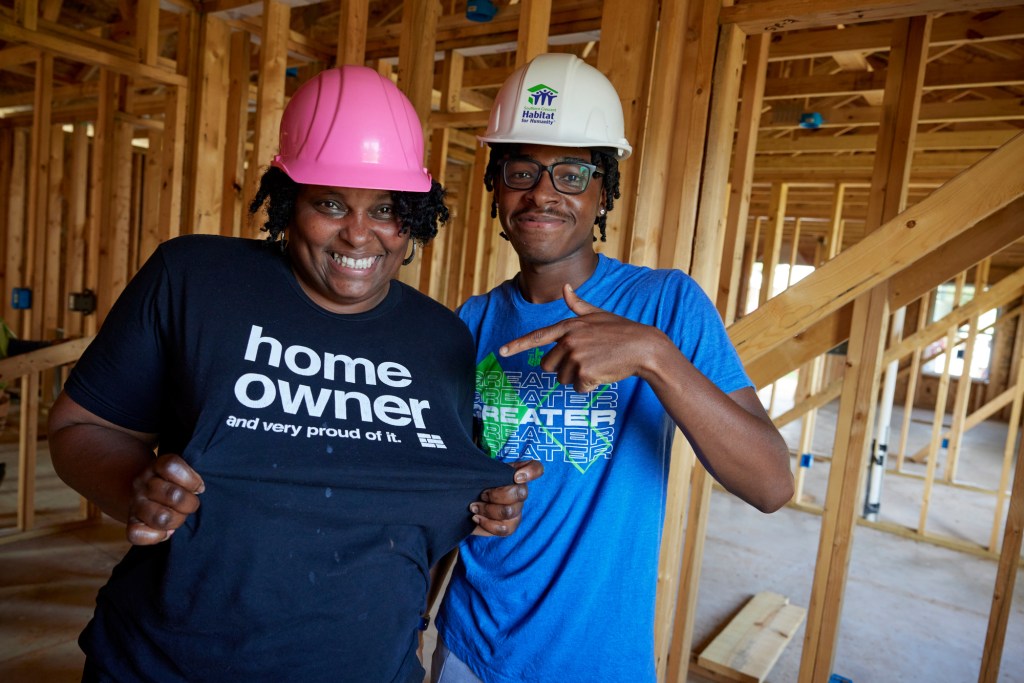
Marsha and her son pose for a photo while building their future home with Southern Crescent Habitat for Humanity in Georgia.
Everyone can play a part in the fight for housing equity and the pursuit of a better world. Over the past 50 years, Habitat for Humanity has become a leader in global housing thanks to an engaged network of volunteers—but you don’t need to be skilled with a hammer to make a meaningful impact. Building an equitable future means calling on a wide range of people and talents.
Here’s how you can get involved in the global housing movement:
Speaking up on social media about the growing housing crisis
Volunteering on a Habitat for Humanity build in your local community
Travel and build with Habitat in the U.S. or in one of 60+ countries where we work around the globe
Join the Let’s Open the Door movement and, when you donate, you can create your own personalized door
Every action, big and small, drives a global movement toward a better future. A safe home unlocks opportunity for families and communities alike, but it’s volunteers and other supporters, working together with a shared vision, who can open the door for everyone.
There are simple things we know to be true about happiness: Going for a walk in the sunshine just feels good. So does a hug, or hearing your favorite song. Petting a dog puts most of us in a better mood. And so does a little bit of intense exercise. Maybe not during, but definitely after, when we’re basking in the afterglow of our effort.
The science behind life’s simple pleasures is where things start to get really interesting. Happiness isn’t just one feeling, it’s a collection of several different feelings, and many of them come from our brain’s internal pharmacy of “feel good” chemicals, or neurochemicals. They’re known as the four happy hormones: Oxytocin, serotonin, dopamine, and endorphins.
The big questions of existence like finding our purpose, doing work that matters, and finding love aside, it’s really the little things that send our brain happiness signals throughout the day. And these feelings are really easy to trigger intentionally, once you know how.
Oxytocin—Love, Bonding & Connection
Oxytocin is known as the “love hormone,” and is most famous for playing a big role during childbirth. No wonder it’s highly associated with deep feelings of love, connection, belonging, bonding, and more. In short, it feels incredible, and a burst of oxytocin can be a overwhelmingly positive and life-affirming feeling.
But you don’t have to give birth or go on a romantic date to activate this neurochemical. Here are few things you can do to release oxytocin each and every day. Some of them might surprise you:
Any kind of physical human touch can do the trick. A long hug with someone you care about is ideal, but the touch doesn’t have to be associated with love, affection, or sex by any means. The professional, friendly touch from a massage or haircut can do wonders for your brain. Hair, especially, is inherently emotional for a lot of people—in addition to the light human touch, a fresh look boosts self-esteem, mood, and more.
In the absence of touch, prolonged eye contact can be just as powerful at helping your brain release oxytocin. If there aren’t any people you love around, try your dog: Veterinarian Dr. Julie Hunt at Embrace Pet Insurance tells Upworthy, “Research suggests that more oxytocin is produced when humans have prolonged eye contact with their dogs than any other common type of interaction.”
You don’t necessarily need a willing partner to touch you or stare into your eyes, whether they have two legs or four. Dr. Clint Salo from The Grove Recovery tells Upworthy that giving someone—even a stranger—a genuine compliment can have a powerful and positive effect on us. “Giving a genuine compliment can increase oxytocin by creating a brief moment of social connection,” he says.
Taking all of those positive feelings and writing them down is another technique that yields terrific results. As cheesy as it might feel, writing a line or two of gratitude in a journal has been shown to boost oxytocin. Chelsea Pottenger, author and founder of EQ Minds, suggests another method: “Write a letter to someone you love, even if you never send it. Just by writing it, it gives an oxytocin hit.”
Finally, if all else fails, give yourself a hug. It’s both important and effective.
Serotonin—Positive Mood & Euphoria
Serotonin is an absolutely crucial piece of “feeling happy.” People who suffer from depression are shown to have low serotonin levels, and SSRIs—one of the main treatments for depression—primarily work to correct that. That tells you almost everything you need to know about the importance of this neurochemical for our overall mood, demeanor, and wellbeing. It’s a natural mood stabilizer, helps regulate our sleep cycles, promotes learning and memory, and helps arousal and libido.
There are a few simple and surprising ways you can get a serotonin boost during the day and feel better almost instantly:
Even if you don’t have Seasonal Affective Disorder, almost everyone reports feeling a little cheerier on a bright sunny day versus a rainy one. It turns out, sunlight is absolutely crucial to our serotonin levels. Dr. Sam Zand, CEO and psychiatrist at Anywhere Clinic, tells Upworthy that a few minutes of sunshine first thing in the day does wonders: “Serotonin is highly affected by light and rhythm. Getting bright natural light during the first hour of the day will really help you maintain good moods.”
Because serotonin plays such a crucial role in memory, accessing positive memories can put us in a much better mood. Lisa Chen, LMFT and founder of Lisa Chen & Associates Therapy, tells Upworthy that one of the most powerful links to memory is actually our sense of smell, and we can use that to our advantage: “Smell something tied to a happy memory, like cinnamon. Scent has a straight line to emotional memory centers and can quickly shift our moods.”
Random acts of kindness make us feel great, and now we know why: It’s the serotonin. Pottenger tells Upworthy: “Do something for a stranger without expecting anything back. When you perform a random act of kindness with no strings attached, your brain releases serotonin.”
Finally, here’s a little trick that makes good use of our anatomy. Research suggests the vagus nerve is key to triggering the release and transport of serotonin. Intentional breathwork and even light humming or singing can stimulate that nerve and give us a little extra boost.
One thing that gets in the way of serotonin is stress, and its primary neurochemical, cortisol. Anything you can do to lower stress will improve your serotonin levels, like taking a few minutes for yoga, meditation, or just practicing better mindfulness.
Dopamine—Reward, Pleasure & Motivation
We get a rush of dopamine in our brains whenever we feel pleasure or reward—whether it’s ultimately good or bad for us. Sex, sweets, drugs, gambling, flirting, achieving a goal. They all give us some form of pleasure or satisfaction, and they’re driven by this very specific (and feel-good) neurochemical.
That makes dopamine a tricky one to navigate. Chasing it can be destructive, but luckily, there are plenty of natural and healthy ways to get the same pleasurable result:
Achieving a goal, even a small one, gives us a dopamine boost. This can be as simple as checking something off your To-Do list. Zand tells Upworthy that dopamine is “very responsive to ‘micro-completions’—meaning you can get a little shot of dopamine by completing small tasks like sending a text or cleaning one area of the house.”
Believe it or not, dopamine also responds positively to novelty. Changing even small things in our daily routine can give us a lovely little tingle of pleasure: Chen suggests things “like taking a new route or trying a new coffee flavor,” while Dr. Michael Valdez, Medical Director at Detox California, says it can be as simple as moving to another room to reset attention and focus.
Dopamine loves a reward, but it also loves the anticipation of a reward. Kelly Whaling, Licensed Clinical Psychologist at Prosper Health, tells Upworthy “Anticipating a positive experience or even vividly picturing it—like planning a vacation—can trigger dopamine because your brain begins predicting a reward.”
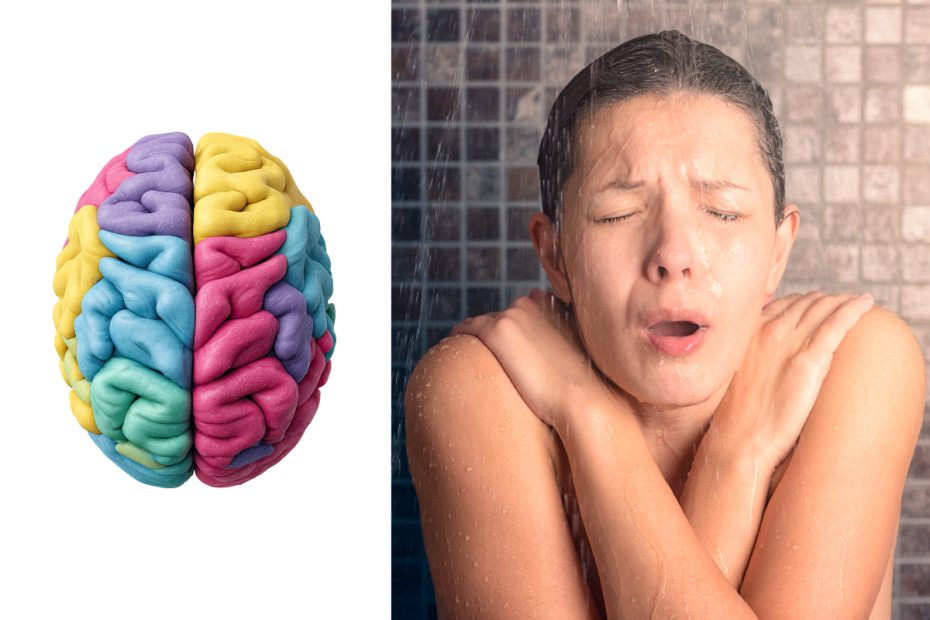
On a more physical level, a shock of cold water can trigger a substantial surge in dopamine. Research shows that a cold plunge can cause a 250% increase in dopamine and an elevated mood that lasts several hours. In the absence of a giant tub full of ice, a 30-second burst of cold water at the end of your shower can have a similar effect.
Dopamine, however, can be a double-edged sword. We technically get a small hit of dopamine every time we log into social media and see something interesting, or when we get a notification on our phones. This constant drip overstimulates our brain’s reward center and can fry our circuitry, making us less motivated to achieve goals and finish tasks. That’s why some people advocate for a “dopamine reset.”
Eli Elad Cohen, Co-Founder and Co-CEO at MediTailor, recommends something called Non-Sleep Deep Rest. It’s a sort of guided meditation and breathwork practice that lowers stress and anxiety and helps us feel recharged when tired. “[Research from Denmark] found it increases striatal dopamine reserves by up to 65%. Better than a nap for restoring motivation.”
If that sounds too complicated, try going one hour without your phone in nature or focusing on a single task to get a similar effect.
In the famous words of Elle Woods from Legally Blonde, “Exercise gives you endorphins. Endorphins make you happy. Happy people just don’t shoot their husbands, they just don’t!
She’s not wrong. Harvard Health writes that endorphins are “the body’s natural painkillers,” and help relieve stress and promote an overall feeling of well-being. They most famously come from exercise—i.e. the “runner’s high”—but there are many other ways of activating them.
Endorphins respond well to the arts. Listening to music or creating art of any kind is a great way to promote that feel-good sensation in your body. Bonus points if the song you listen to gives you the “chills.”
Eating spicy foods, while sometimes challenging, can also work. “[It] activates the body’s natural pain-relief and pleasure systems,” and releases endorphins, similar to a good workout, says Kelly Whaling.
Steven Sultanoff, Adjunct Professor of Psychology at Pepperdine University, suggests laughter. If you’re feeling down, try listening to some stand-up comedy or putting on an old favorite sitcom episode. “Laughter results in the secretion of endorphins. Humor also relaxes the brain by generating perspective and shifting negative thinking to realistic thinking,” he says.
Here’s a tip you might recognize: Humming or singing quietly, stimulating the vagus nerve, can also produce endorphins.
Fascinatingly, exercise doesn’t release endorphins simply to reward you for a job well done. It does so in response to physical exertion, pain, and stress. So the rule with endorphins is that sometimes, we have to feel a little bad before we can feel good.
Dr. Michael Drzewiecki, Director of Clinical Neuroscience at The Neurologic Wellness Institute puts it this way: “Doing hard things for short periods of time releases ‘feel bad’ chemicals called dynorphin, which leads to an upregulation of endorphin receptors. Essentially, to get a greater release of ‘feel good’ chemicals, it’s best to do something hard enough to trigger a short duration of ‘feel bad’ chemical release.”
Take this as a sign to finally have that tough conversation, tackle that home project, or challenge yourself physically and mentally.
Stacking the four for the best results
The four “happy brain chemicals” don’t always work alone. Many times, they operate in tandem.
There are many different dietary strategies and theories out there about how to optimize your brain health, but there does seem to be at least one “super food,” when it comes to feeling happy: Dark chocolate. Research shows that dark chocolate, ideally 70% cocoa or higher, can release oxytocin, serotonin, endorphins, and dopamine all at once.
But if you’re not a fan, don’t worry. Many of the tips and activities recommended by experts serve many purposes at once. Going for a walk in the sunshine with your dog can give you a rush of serotonin and oxytocin. Pairing breathwork and meditation before or after a workout can give you endorphins and serotonin. “Romantic time” with a partner can give you all four simultaneously.
We have more control over how we feel than we might think. While petting a dog or having a nibble of dark chocolate can’t account for your overall satisfaction and contentment with life and existence, these little daily things can bring us substantial joy in the moment. When we stack them consistently, we’re bound to feel pretty damn happy most of the time.
Comedian Pete Holmes isn’t just funny. He’s a deep thinker who digs so far beneath the crust of your average every day “observational” comic that he might just touch the lava. He takes an aerial view on everything from parenting to science to sex to faith, and all of the tiny minutia that comes with them. His rise as a beloved writer and stand-up has barreled through the atmosphere from tiny gigs to podcasts to TV shows.
Holmes and I have a mutual friend who put us in touch for this Upworthy interview. And although we had never met, I immediately felt like we were long lost friends upon answering his call. He was ready to break down not only the rules (or lack thereof) of comedy, but to deconstruct human thought and how the most sensitive people might navigate the world.
What especially stood out in this half hour chat beyond his quick wit, was his deep commitment to supporting other talented people. He seemingly laughs as easily as he makes others laugh, and that alone is a gift.
Upworthy: I must tell you there’s a podcast interview you did on You Made it Weird with Gareth Reynolds about Doritos where he did a Jay Leno impression. Do you remember this?
Holmes: “Of course!”
Upworthy: I legit look at this once a week when I’m having a bad day and need to laugh. Is there something that you come back to often when you’re in a bad mood and need to laugh?
Holmes: “Oh my God, first of all, I love Gareth so much. What a funny person! In fact, people come up and say, ‘I love your Doritos thing!’ Which is funny because I have a lot of jokes about Doritos, so I’m never sure what they mean.
To answer your question, what do I watch when I’m in a bad mood? I watch Nirvana the Band the Show. They just had their movie come out, and I think the whole second season is on YouTube.
I think Matt Johnson and Jay McCarrol are just two of the funniest people in the world, and I just watch clips from that show sort of endlessly if I’m looking to laugh. The ones that really get me are the ones that are a little bit over the line, and that’s what I like about them.
They’re just two friends finding fun together, and it just makes me so happy. So it’s not just the content, it’s the medium. It’s how they made it, and it really captures the feeling of two just free people, two people that realize that we’re in this weird reality, we’re in this weird world, and we’re only here for a little time. And one of the things we can do is be really funny and make each other laugh, and they just go at it with this innocence that I really admire.”
Upworthy: To that end, who would you say back in the day and now are your major influences as a comic?
Holmes: “I love that question. When I read the book SeinLanguage—which is I’m just so sure that Jerry Seinfeld regrets calling it. I don’t know him. I’m not basing that on anything that you don’t also have access to, just his comedy and his show. I’m just so sure that he is like, “Why did I call it SeinLanguage?“
But I read it because I didn’t really have control over our TV in our house. When a comedy special came out in book form, I could get the book and I could read it privately and re-read it. And he actually talks a bit about comedy theory in it as well. Anyway, I read this book and I just couldn’t believe that the kind of thoughts I was already having were not that different from the thoughts of a professional comedian.
I just didn’t feel like I had that tour de force, wild, loud guy Boston energy, if that makes sense. I felt way more in line with Jerry Seinfeld and Ellen and Ray Romano. These sort of like 7 p.m. show guys.
Okay, I don’t know if you’re old enough to remember, that was the fringe. In the ’90s, comedy was sort of for pirates. And a lot of my best friends are pirates. I’m just saying they hooked up late night, you know, freewheeling lunatics. And I just didn’t see myself up there. So Jerry Seinfeld once said about Robert Klein that he was the first comedian that he saw that was like, ‘Oh, it just seemed like me.’ And when I saw Seinfeld I was like, ‘Oh, this is like me, this is like a guy I know.’ So the book SeinLanguage and the fact that it was clean was really important to me.”
Upworthy: I read there was one point you had plans to be a youth pastor. Was that a real thing you were considering or just what your parents thought you would do?
Holmes: “No, it was my idea. You could look at it two ways: one, my parents were sort of detached in a way that you were like, ‘Shouldn’t you be more involved?’ Or you can be like they really were letting me find my own way, and I actually look at it more the latter.
It was as serious as when you’re in high school you want to be a teacher, you know what I mean? You just don’t know any other jobs. So I knew teachers that I admired, and I knew my youth pastor and my pastor that I admired. And this is a Steve Martin thing: he said, ‘Teachers are in show business.’ Pastors are too. And that doesn’t mean to say they’re phony or false. It just means if you’re up in front of a crowd holding their attention, you’re putting on a show. Teachers and pastors are doing something substantial, but they’re doing it in the style of a show.”
Upworthy: I saw a clip where you were talking about the idea of saying ‘Yes, thank you’ to the universe. It seems very Stoic. Are there other elements of that that help you in your daily life?
Holmes: “I would say that my understanding of ‘Yes, thank you’ has deepened a little bit. There’s a couple different altitudes you can look at that. One of them is just very basic—basic doesn’t mean bad—it’s just basic psychology. Meaning suffering comes from seeking and resisting. I know that’s sort of spiritual terminology, but it’s also psychological terminology. If you’re suffering, you’re by definition seeking a different experience.
And there’s pain or there’s discomfort, but suffering really comes from building a story. And anybody that has kids knows that that’s true. My daughter won’t go to bed, let’s say. And that really is, if we can pause and just be on a planet in outer space in these finite spaces, that is just so insignificant.
So when we’re resourced and with friends and rested and fed and all these things, we can see that. But often when your kid won’t go to bed, you’re not resourced and you start spinning out. People love talking about catastrophizing. You’re just making a story, and it’s never in your favor. You go, ‘She won’t go to sleep. Why is this happening to me?’ You start thinking about what you would be doing if she was asleep. ‘I can’t watch that show, I can’t relax. My whole life is just being a parent.’ None of that is really happening, your brain just sort of is torturing you.
It’s important to recognize that your brain doesn’t always have your best interest in mind. So giving it another path to take, which is ‘Yes, thank you.’ So the flight delayed is a good example, and just about the right temperature of spice for this exercise. You know it can be deeply upsetting when a flight is cancelled until you realize, you know, you don’t resist it, you just go with it, and you realize all you have to do is sit in your chair.”
Upworthy: Sometimes it just takes a little packaging, but just hearing you say that honestly reframed my thinking.
Holmes: “Me too! But it has to be simple. It can’t be like the Buddhists or whoever would say, ‘Don’t resist,’ right? That’s a little too conceptual. I want to get right to the phrase that’s easy to remember, that when you’re stressed you can go to it. To talk about the deepening of that, you can look at yourself. You are what’s aware of your experience, right? You haven’t always been this body, you haven’t always been this age, your name, your country. All of these are concepts that you sort of reinforce by thinking them over and over: ‘My name is Cecily. I live in America.’
All these are things. But what you really are is this space-like aware presence that encompasses your body, encompasses reality, your thoughts, your feelings, your emotions, your perceptions, right? So ‘Yes, thank you’ isn’t just a life hack. It’s actually your nature, meaning awareness or consciousness. This is almost over, by the way.”
Upworthy: Are you kidding? This is amazing. This is therapy.
Holmes: “Awareness is like a mirror, alright? So it’s like a mirror indiscriminately reflects what is in front of it. And you are like that. My voice is being recognized by you completely effortlessly. The feeling of your phone in your hand or your butt in your chair, all of that is just being registered completely defenseless. It just enters, it just comes in.
So thinking ‘Yes, thank you’ isn’t just a trick. It’s actually more in line with your nature. You do say yes to everything. I’m driving down the highway right now, every nanosecond this is just being embraced by my awareness. So when I can get my mind in line with my true nature, which is just free flowing, it’s spontaneous, it’s like jazz.
Like my daughter wouldn’t go upstairs two nights ago. She just wouldn’t even go upstairs to go to bed. And look, I can’t always do this, but in that moment I was able to go, ‘What is 10 minutes?’ And not 10 minutes where I’m trying to get her to go upstairs, 10 minutes where I just sit on the stairs with her, and now I’m looking at my stairs and I’ve never even seen them from that angle. I’m really just dropping the entire agenda. And I really think kids energetically can pick up on that. And I think grown-ups can pick up on that.
Like a good date that you’re on is somebody that’s just awake and aware and spontaneous. Why do we love spontaneity? Why do we love humor? Because it’s so alive and so accommodating and so fresh, right? You are alive, you’re accommodating, you are fresh. Those are aspects of you. I don’t mean you, Cecily, or me, Pete. I mean the thing that’s running the whole show. It’s ‘Yes’ to the whole thing. So when we get in tune with that ‘Yes,’ even when you’re miserable, even when you’re having a bad situation, a bad experience, if you can just sort of go with it.
You know the Stoics are like, ‘Control what you can control.’ You can get on another flight, and if you can’t, so they’re proactive, and I’m all about being proactive. But there is something about like, you know, a 40-minute delay where you don’t really need to look for another flight. You know what I mean? That’s really the right level for this practice.”
Upworthy: Do you find when you travel that you’re freer? I find I am when I’m out of my element and just going with the flow and not making a whole lot of plans.
Holmes: “Well, because when you’re home you have a lot more expectation for how things have gone. That’s why people like traveling, you know? And that’s an Eckhart Tolle thing. It’s like people like traveling because it forces them to be present. I would say when you’re being present, you’re actually being yourself. What you are is present, right? And everything else is mind activity.
Why does it feel so good to not think about anything? Why does it feel so good to just be? If you can stop the anxiety or the fear or the chattering thoughts, if you can just be still, it feels really good. That’s because the present moment and your true self, the nature of awareness, those are the same thing. People are just pointing to it using different words.
And when you travel, you are forced to go with the flow because you don’t even know what’s normal. ‘Oh, in Barcelona, they eat dinner at 10 o’clock.’ You’re completely out of control, so you surrender. And people are much more likely to say ‘Yes, thank you’ when they’re in Spain than they will at their home.”
Upworthy: Back to comedy, would you bill yourself as a ‘clean comic?’ And what are your thoughts on the concept of punching up or punching down?
Holmes: “I think a good entertainer should always be surprising, right? So like I think people that aren’t real fans of mine that just might come to a show, they might be surprised. There might be more swearing. There might be more sex stuff. But, to me, that’s sort of my job. I don’t want to just deliver what you’ve already seen.
Like my new special that just came out (Silly Silly Fun Boy) people have noticed that I’m swearing a little bit more in the beginning. And I’m like, yeah, it was the late Friday show and people weren’t there yet. There were huge sections of the crowd that were empty, and I’m filming a special, so I wasn’t asking. I was going out with a knife between my teeth like Predator. I was going out to insist that I do very well and that we get somewhere that we all want to be.
Other shows, the crowd—and by the way, the crowd was great—it was just kind of chunky up top. Other shows, you know, that’s not required. But I’m not doing a routine. It’s like what we were saying, I’m being present and fresh and alive for that crowd.
And to answer your question more directly… the hour that I’m touring now (which isn’t the hour that I just released) also has what I would call dirtier jokes. Meaning they’re not ugly, but they’re jokes that are sort of a little bit outrageous, I guess.”
Upworthy: So you feel like it’s not that you’re making a choice to be edgier? You’re just doing you.
Holmes: “Oh yeah, and that’s how material shows up too. I always liken it to if you’ve ever gotten an Amazon package on your doorstep and you don’t even remember what it is. That’s how the material shows up. I’m not trying to be a flashy artist like, ‘Oh I’m just the vessel.’ I’m just saying I’m living my life and certain things come up. I write them down, I perform them, people like them, and then you have about an hour and ten minutes of that and you have a show.
I’m not Marvel. I like Marvel, but I’m not Marvel thinking like, ‘Okay, we need a female-led 20-something that has…’ you know, like they’re trying to guess what people want and give it to them. They’re very good at that, but that’s not what I’m doing. I’m much more like a weather vane or a lightning rod. I’m just waiting to see what happens. But to finish my point: I’ll do these jokes—could be considered dirty, meaning I’m swearing, I’m talking about dicks, I’m talking about sex, whatever that might be. And then after the show, literally, this isn’t just something I’m making up, little old ladies will come up and tell me that they love how clean I am.”
Upworthy: The bar has changed, right? The line has moved.
Holmes: “Well, I think it’s the medium, going back to medium and message, right? I think it’s very possible that someone does what’s considered clean comedy, meaning they’re not talking about their penis, or sex, or about drugs, and they’re not swearing. They’re not saying the seven words, right? And that comedy can be toxic. It can be ugly. It can be encouraging really backwards thinking and harmful ideologies, right? By the way, I’ll defend someone’s right to be able to do that, I’m just saying what I see sometimes.
And then I think it’s quite possible to talk about your dick, talk about drugs, acknowledge the existence of sex, and say all of the seven words and do a joke that is really beautiful. In fact, I think that’s part of the message. I talk about this in the special. I am demonstrating to myself and to them: this is what it looks like to be ‘unembarrassingly’ human. I’m not ashamed. I don’t choose my thoughts. I don’t choose my feelings. I’m here to report on them and laugh at them, and thereby take away some of their power.
And that’s what you’re doing by laughing with me, you’re recognizing yourself in me and you’re laughing at yourself, and everybody leaves feeling a little bit lighter. Now did I say ‘f–k’? Yes, but if that’s your line in the sand, whether or not a comic says ‘f–k,’ that’s fine. That was me for the first 28 years of my life. It’s not my line anymore, and I’m happy to say that there are lots and lots of people that are nuanced, that are lovely, compassionate, generous, interesting, interested people that aren’t turned off by the full human experience.
By the way, I love clean comedy too. It’s just like I don’t think clean necessarily means it’s not going to be mean or ugly or somehow harmful, and I don’t think ugly means you swear. I think it’s completely what are you saying and how are you saying it? And I’m proud that even the jokes that I have that are about me letting myself down or making some sort of mistake, there’s something beautiful in the message. We can still laugh at that, and we can still not take ourselves too seriously, and we can get better.”
Upworthy: There are a lot of comics who have been punching down these days, and I’m hoping that becomes unpopular soon.
Holmes: “It’s always a pendulum, and it always goes back and forth. I will defend my fellow comedians whom I don’t agree with, their right to share their experience. That being said, it’s kind of like you wake up one day and every movie that’s in the theater is a horror movie, and you’re like, ‘When did this happen?’ And there can be a parallel there. Like Chris Fleming’s special was probably one of the best specials I’ve ever seen in my entire life, and it couldn’t have been more beautiful, but also deeply hilarious. So it’s not—nor has it ever only been—one thing.
Like look at pictures from 1972. It would look like everybody was a hippie. My dad was alive in 1972, he was not a hippie. These things get painted in these broad brushes, and you see certain trends in comedy, and it can start to feel like it’s been taken over by a certain perspective, but that’s not my experience. When we look at the bird’s-eye view, you’ll go, ‘Oh, every perspective was always being represented the whole time.’”
Upworthy: It’s an algorithm thing, you know?
Holmes: “I really feel like there’s room for everything. I don’t think there are any new groups. I don’t even think there are any really new perspectives. It’s just this constant fluctuation. But everybody was there the whole time. What it looked like, I can’t say, and nobody can. You can just live your life and make a difference where you can.”
There’s nothing more deflating than getting a bad haircut. You show the stylist a photo of how you want to look, sometimes inspired by a celebrity or fashion model, but when it translates to your head and face, it just doesn’t look right. Ultimately, much of the blame falls on the stylist for failing to execute the style or for not admitting it wouldn’t work.
Run Zhang of England shared her bad-haircut journey on TikTok, and millions of people have followed her transformation from disaster to a look that is cute and matches her upbeat, quirky personality. In the first video, she said she was excited to get a “cool girl…spiky” short haircut, similar to a “wolf” style. However, after the haircut, she didn’t look cool at all.
After the haircut, Run had to go straight to work and had no idea how to style her hair.
“This is not right at all. And I have to go straight to work. I’m driving three hours to go straight to work to look like a small fruit,” she joked while prepping herself for a day of embarrassment.
Maybe the haircut is…French?
“Why don’t hair stylists just say they don’t know how to do a cut?! It’s not even close!” Masdelaselva wrote in the comments.
Others joked that the hairstyle may be “French,” referencing an inspired scene from Fleabag in which Phoebe Waller-Bridge’s character tries to convince Sian Clifford’s Claire that her haircut isn’t terrible.
In a wonderful example of taking lemons and turning them into lemonade, Run enlisted her sister, Yun, to make her hair presentable.
“Yun’s been fixing my hair like a magician or an angel or perhaps a saint,” she said while revealing her new ‘do, which features a semi-slicked-back look held in place by old-school metal clips. Strangely, the new haircut kind of fits Run’s fun-loving vibe.
“Holy sh*t, your sister nailed that! I thought it was unsaveable, but I didn’t realize you had a team behind you,” Amy wrote. “Your sister is a miracle worker!” Harmony added.
Run and Yun did a fantastic job of turning a tragedy into a style that looks great until her hair grows back. One wonders whether Run will try to find another hairdresser who can get the wolf cut right or lean into her new ’90s-girl throwback hairstyle.
Until then, Run is still having trouble because she doesn’t know how to style her hair without Yun’s help.
Run’s bad-haircut saga started as a sad story about a woman who was destined to feel bad about her looks for a few months. But in the end, with a little ingenuity and help from her sister, she proved that she could turn a bad haircut into something that reflected her true personality. It’s a great reminder that nothing is impossible when we have people who can lift us up when we’re down.
Molly Bell Walls (@mollybellwallson) was sitting with her mother in a doctor’s office lobby, waiting for her dad to come out after an appointment. Her mom has stage 6 Alzheimer’s. In a video she posted on TikTok that has since been watched more than 19 million times, Molly is just trying to keep her mom engaged in conversation.
She mentions, almost casually, that her parents have been married for 40 years.
After Mom’s neurology appt today; waiting on Dad in the lobby. Trying to keep her occupied in conversation. It always turns to Dad. She looks for him constantly. Their love is so special. 🥰 #dementia#alzheimer#caregiver#alzheimersawareness
Her mom’s face changes. She pauses. Then, with the kind of genuine awe you can’t fake, she says: “Really? Yeah. Oh, my gosh. We are.”
She’s learning it for the first time again. And she’s just as delighted as she probably was the first time.
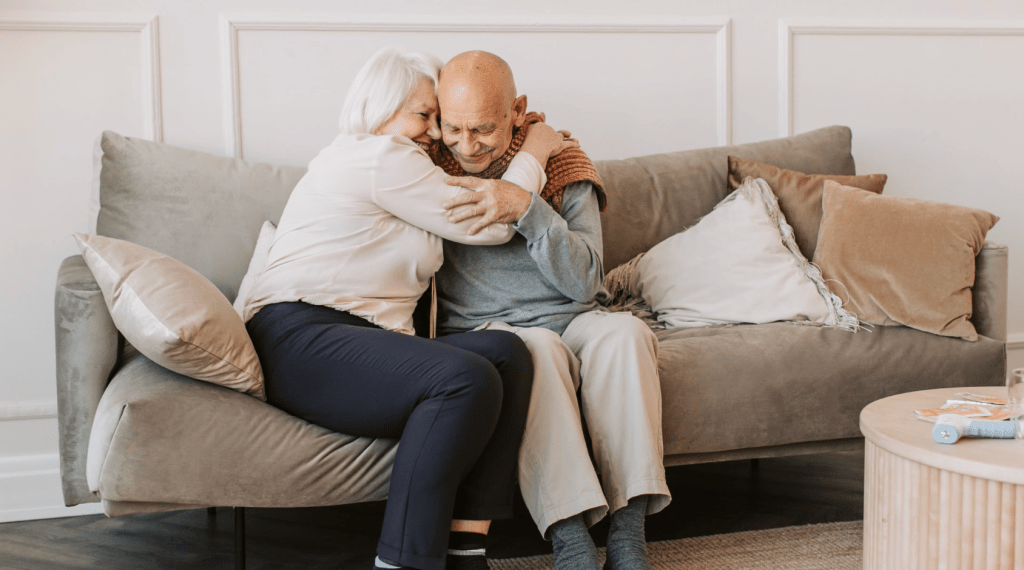
An older couple embracing on a couch. Photo credit: Canva
What makes the video so quietly devastating is what Molly wrote in the caption: her mom looks for her dad constantly. Conversations always turn to him. Even with so much gone, that part holds. The disease took the memories but apparently couldn’t touch whatever it is that makes her turn toward him in every room.
Commenters noted how present and warm she seems for stage 6, which typically involves significant cognitive decline. “She seems so alert and actively interacting,” one person wrote. After the initial moment, she and Molly chat easily about makeup – a tiny ordinary exchange that somehow makes the whole thing more moving, not less.
What stays with you isn’t the forgetting. It’s the rediscovering. Forty years of marriage, relearned in a lobby, and met with pure joy.
You can follow Molly Bell Walls at @mollybellwalls on TikTok.
Every parent knows the struggle of looking through their phone’s photo library only to realize they are missing from almost every single frame. We are the ones behind the lens, capturing the first steps, the messy faces, and the playground triumphs, but we rarely have proof that we were actually there. As PEOPLE reported, one mother in England recently received a beautiful remedy to this “invisible parent” problem from a complete stranger.
Elizabeth Green (@likedbyliz), a nurse and mother of two, was enjoying a rare day off at the park with her children, Will and Nora. While she was focused on playing with them on the slide, she noticed another woman nearby who seemed to be giving her children instructions to “get back up there.” Before Green could wonder what was happening, the woman approached her and asked to airdrop a few files.
When Green opened her phone, she was stunned. The stranger had captured several high-quality, candid photos of Green immersed in play with her toddlers. These weren’t the posed, “everyone look at the camera and smile” shots that parents usually fight for. They were authentic glimpses of motherhood in motion.
The gesture struck a deep chord with Green, who shared the photos on TikTok to thank the “random mom” for her kindness. The video has since resonated with millions of parents who feel the same longing to be documented in their daily lives. Green noted that while her husband makes a real effort to take photos of her with the kids, there is something uniquely special about a third-party perspective catching a moment you didn’t even know was happening.
Kids playing at an outdoor playground. Photo credit: Canva
Psychologists often talk about the power of “core memories,” those significant experiences that help shape a child’s sense of security and love. According to a study published in PMC, the quality of time parents spend with their children is a primary driver of long-term well-being. By capturing these images, the stranger didn’t just give Green a few photos, she gave her a permanent record of the “quiet” love that builds those memories.
The comment section of Green’s video quickly became a digital support group for parents. One user shared a story of an older man who nervously approached her at a library to share a photo he took of her with her baby, while a single mother commented that she would “sob” if someone did the same for her.
It is a simple act of service that costs nothing but a few seconds of time, yet it provides a lifetime of value. In a world where we are often told to mind our own business, this “random mom” proved that sometimes, the best thing you can do is notice someone else’s joy and make sure they have a way to remember it.
For more fun parenting videos, follow @likedbyliz on TikTok.
Stepmoms get a bad cultural reputation that most of them don’t deserve. The wicked stepmother is such a durable myth that it takes something pretty extraordinary to cut through it. This cut through.
At her dad’s wedding, a 15-year-old named Alex stood up to give a toast and proceeded to say something that made the bride cry before she’d barely gotten started. The clip was shared on TikTok by wedding videographer Sky Cinema Films (@skycinemafilms) and has since been watched more than 42 million times across a three-part series.
Alex started by saying the first word that came to mind when she thought of Beth was “affectionate.” Then: “She doesn’t have one mean bone in her body.” For Beth, hearing her stepdaughter-to-be say that out loud, in front of everyone, was already too much. You could see it on her face.
Alex went on to describe watching her parents’ divorce and what it felt like to suddenly have the concept of a “stepmom” become real. It was unsettling at first, she said. Then Beth showed up, and that changed. Beth became a partner in crime, a safe space, someone she could tell anything. They’d go shopping together. They’d commiserate about their glasses. The little things, stacked up, had turned into something that mattered.
Then came the line that the internet has not been able to shake: “Usually, divorce is hard. But this made it worth it.”
A woman hugs the bride at her wedding. Photos: Canva
She closed by saying something that holds up outside of weddings too. “Family isn’t always defined by last names or blood; it’s defined by love and commitment. I know Beth isn’t my mom, but I know she will always be there whenever I need her.”
Children of divorce carry a particular kind of weight, like the loyalty conflicts, the shifting households, the feeling of being torn in two directions at once. What Alex was describing, without quite naming it, was what it felt like to have that weight lifted by someone who didn’t have to do it. Beth chose this. She chose to show up, consistently, for a kid who wasn’t hers by birth, until the kid couldn’t imagine the family without her.
That’s what the 42 million views are really about.
You can follow Sky Cinema Films at @skycinemafilms on TikTok.
“It was a flash of inspiration.” For years, this husband’s beautiful tribute to his late wife was hidden from the world, until a hot air balloonist looked down.
Grief often demands a physical outlet, a way to channel the weight of loss into something that lives and grows. For Winston Howes, a farmer in South Gloucestershire, England, that outlet became a six-acre labor of love. After his wife of 33 years, Janet, died suddenly from heart failure at age 50, Howes found himself looking at a blank field on his farm and seeing a way to keep her spirit alive.
In the months following her death in 1995, Howes began planting 6,000 young oak trees. For nearly two decades, the project remained a private family sanctuary, unknown to the public. However, as The Guardian reported, the true scale of his tribute was finally revealed to the world when a hot air balloonist drifted over the property and looked down.
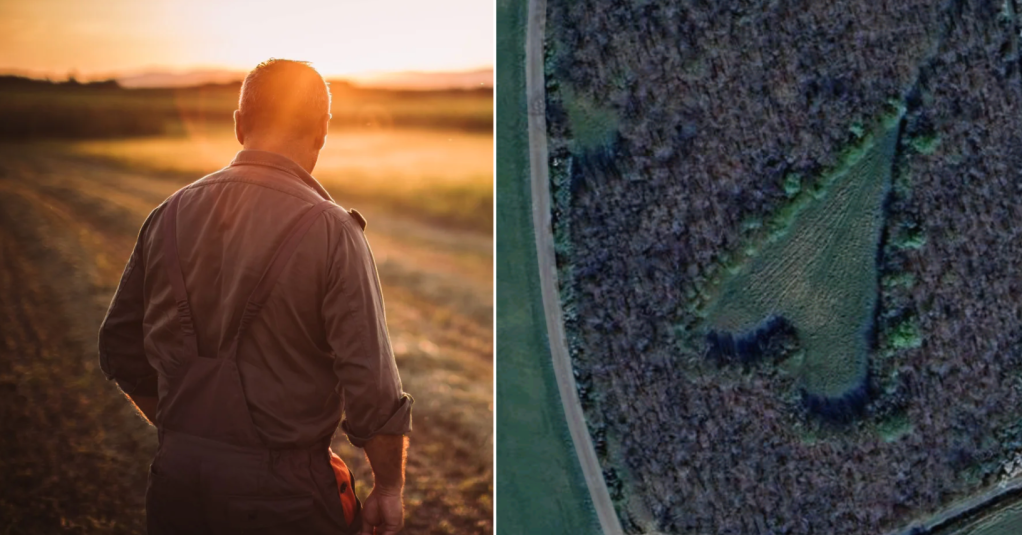
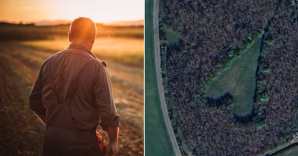
The aerial perspective revealed a perfect, massive heart-shaped meadow hidden in the center of the dense oak forest. Howes had strategically left a clearing in the middle of the saplings, creating a secret “room” in the woods that is entirely invisible from the road.
The heart-shaped meadow only viewable from above. Photo credit: Google Maps
“I came up with the idea of creating a heart in the clearing of the field after Janet died,” Howes explained. “I thought it was a great idea, it was a flash of inspiration.” He even added a sentimental detail that can only be appreciated from the sky: the point of the heart is aimed directly toward Janet’s childhood home.
Inside the heart, Howes placed a seat where he could go to sit and think. It is a quiet place where the bustle of the farm fades away, replaced by the rustle of oak leaves. According to the American Psychological Association, engaging in meaningful tributes is a vital part of the grieving process, helping to transform acute sadness into a lasting legacy of love.
When images of the heart-shaped forest went viral, they resonated with millions. Social media users across the globe were moved by the quiet, patient dedication required to plant thousands of trees by hand just to create a sanctuary for a person who was no longer there to see it.
As the oaks continue to grow and the forest thickens, the heart remains a permanent fixture of the Gloucestershire landscape. It’s nice to remember that while life may be fleeting, the love we leave behind can take root and grow for generations. It is a lovely and lasting tribute that will remain standing long after we are gone, proving that sometimes, the most beautiful secrets are the ones grown from the heart.
A grandmother always felt her middle granddaughter Lindsay, 15, looked slightly different from the rest of the family because she had blonde, curly hair, while the rest of her siblings’ hair was dark “I thought genetics was being weird and I love her,” she wrote.
But things became serious after Lindsay’s parents “banned” her from taking things a step further and getting a DNA test. If the family was sure their daughter was theirs, why would they forbid her from seeking clarity in the situation? After the parents laid down the law, the situation started to seem a little suspicious. “I told my son and [daughter-in-law] that there was something fishy around her birth she needed to know. They denied it and told me to leave it alone,” the grandma wrote.
Lindsay wouldn’t give up her quest. She approached her biology teacher, who admitted that it was “odd” for her to have such different traits. This confusion was too much for Lindsay, so she went to her grandmother for help. “She came to me distressed, asking me to buy a DNA test since she needs to know,” the grandmother wrote.
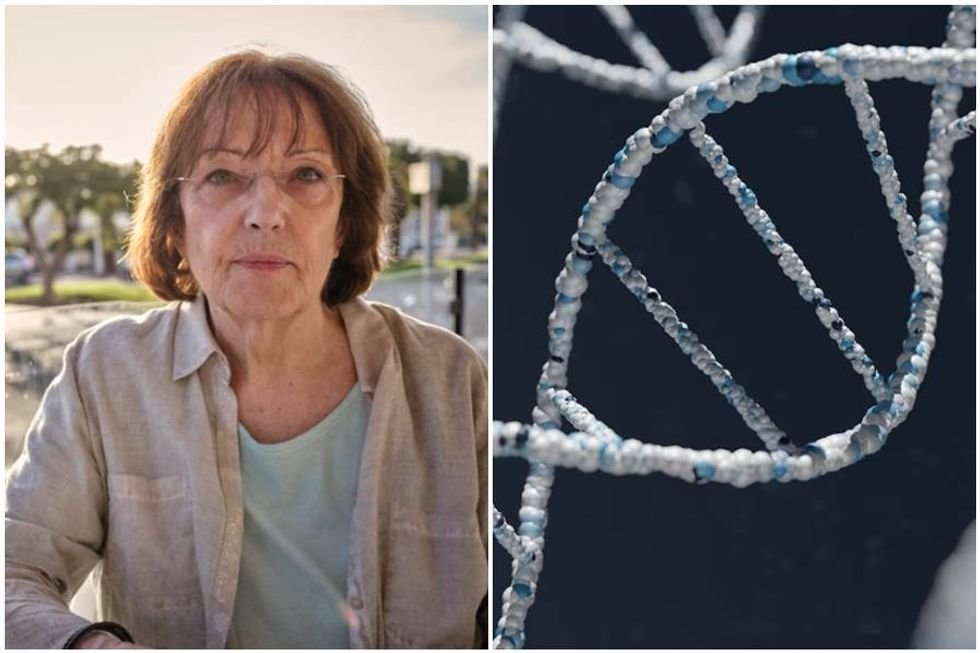
The grandmother’s post about her secret DNA test went viral. Photo credit: Canva
The DNA test that changed everything
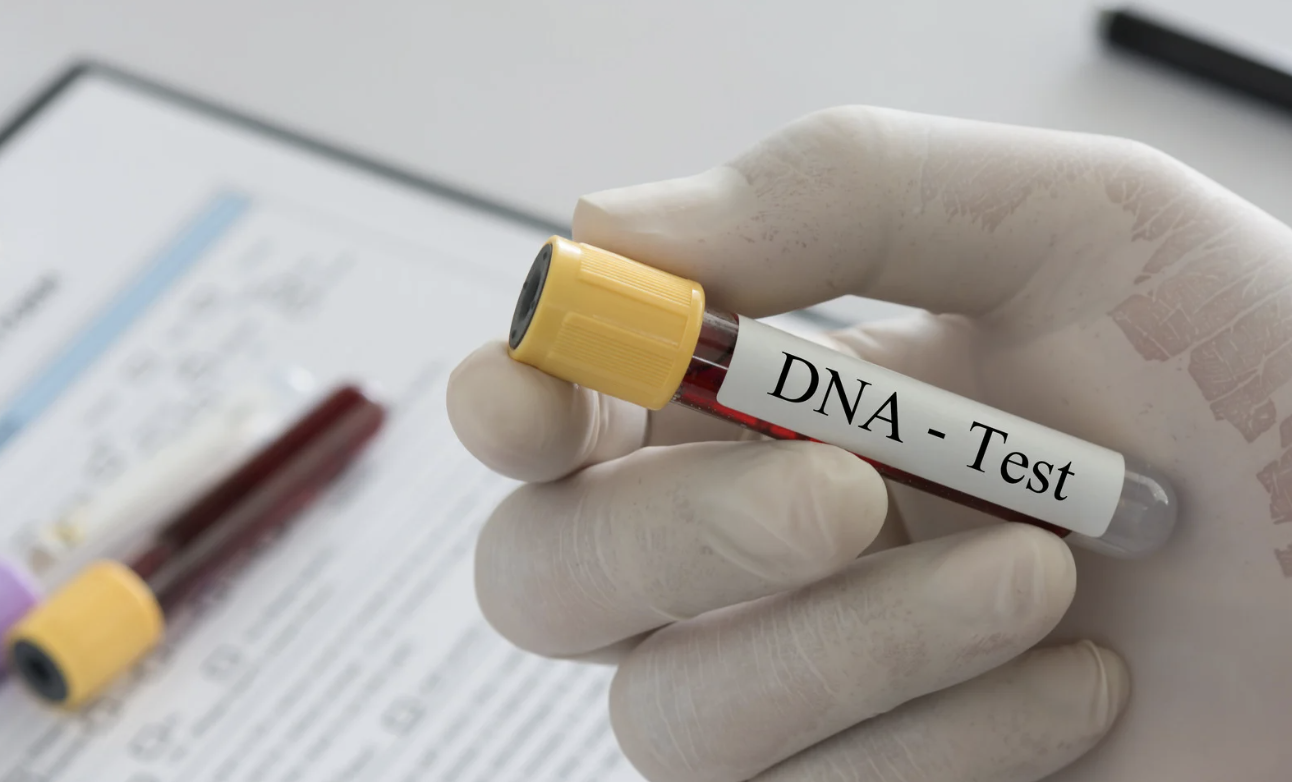
The grandmother purchased a DNA test and it proved their suspicions. “Long story short, she is not her mother’s kid,” the grandmother wrote. “My son got someone else pregnant and her bio mom gave her up.”
The interesting thing was that Lindsay was a middle child. So, the dad had a baby with another woman while he was with his wife. This revelation begs the question: How did the family suddenly have a baby out of nowhere without people being suspicious?
“They were on the other side of the country when she was born, and I met Lindsay when she was about 6 months old. Really not hard to hide the whole thing,” the grandmother wrote. “Our family has a history of miscarriages, so it’s common to drop news about a baby late in the pregnancy. They did the same with their oldest and didn’t think anything about it.”
The big revelation has caused friction in the family. The family no longer talks to the grandmother, which makes Lindsay even more furious about the situation.Should the grandmother have taken such drastic steps if she knew what could happen if her suspicions were true? The commenters on Reddit overwhelmingly supported the grandmother’s decision. The big reason was that Lindsay needed to know her family history for medical reasons.
“Your son and his wife suck for lying to her until she is 15 about something so important and trying to keep lying to her even after she obviously started to question things. There are medical reasons a person might need to know what their genetics are/are not, and if you hadn’t helped her, she would have found out some other way,” Shake_Speare423 wrote.
Another commenter noted that protecting the parents’ lie wasn’t nearly as important as Lindsay’s mental health.
“People have a right to know their genetic heritage. Lying about adoption is linked to increased suicidal ideation, anxiety, and depression. You put her safety and comfort ahead of your son’s preferences. Parental rights do not have greater value than a child’s right to access comprehensive medical care, and hiding an adoption does precisely that. Maybe some things, like a child staying healthy, should matter more than a parent’s right to lie, gaslight and manipulate their child as they see fit,” RemembrancerLirael added.
Reddit took the grandmother’s side
The commenters overwhelmingly supported the grandma for putting herself into an uncomfortable situation to protect her granddaughter’s mental and physical health. However, one commenter noted that she could have gone about it in a less polarizing way.
“Bit out of the norm for the responses here, but you should have gone through your son [and daughter-in-law] and convinced them. Told them that the biology teacher had highlighted that she had traits that didn’t make sense, etc. and convinced them that Lindsey would find out either way,” PhilMcGraw wrote. “It would have allowed them to find a way to tell her without it being forced on them angrily. A DNA test is the absolute worst way to be told. I’m sure they would have much rather told her than let her find out by a DNA test if that is what was coming.”
This article originally appeared three years ago. It has been updated.