
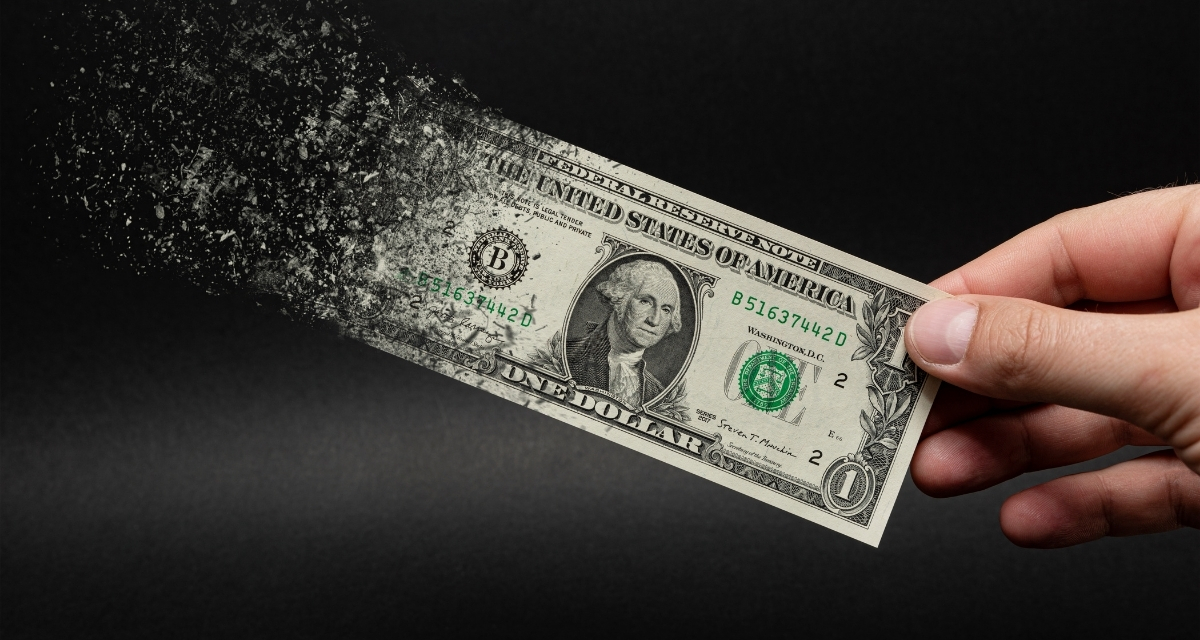
We see many symbols in our everyday lives that we likely don’t pay much attention to: the @ in our email addresses, for instance, or the % in our weather forecasts. But do we ever wonder where these symbols came from? Why they look like they do? Or how they came to mean what they mean?
One of the most commonly used symbols that most of us are clueless about is the dollar sign ($). Why does it have an “S” if there’s no “s” in “dollar”? Is there supposed to be one line or two? And where did the $ symbol even originate?
As educator and etymology enthusiast Rob Watts (better known as RobWords on YouTube) explains, the answers to those questions are surprisingly complicated.
The first written use of the dollar sign as we know it appeared in a handwritten letter sent by a man in New Orleans in 1778. Some may be under the impression that the $ is an amalgamation of “U” and “S,” as in United States, but nope. Its origin isn’t actually from the United States at all.
The international origins of the U.S. dollar start in Spain
In fact, we have to take a whole international tour through hundreds of years of currency history to arrive at what we think is the origin of the $. As Watts shares, we don’t know with 100% certainty.
The story begins with the Spanish real, the silver coin that served as the currency of Spain in the 14th century. A larger coin, worth eight times the value of the real, became known as a “piece of eight” in English. Those pieces of eight made their way to the Americas through colonialism in the 15th and 16th centuries.
“The discovery of huge, gleaming reserves of silver in Central and South America meant that they could also be made there, too,” Watts shares. “At the local mints, they took on a new name as well, based on the fixed weights of silver they were made from. They became known as the ‘peso,’ meaning ‘unit of weight.’”
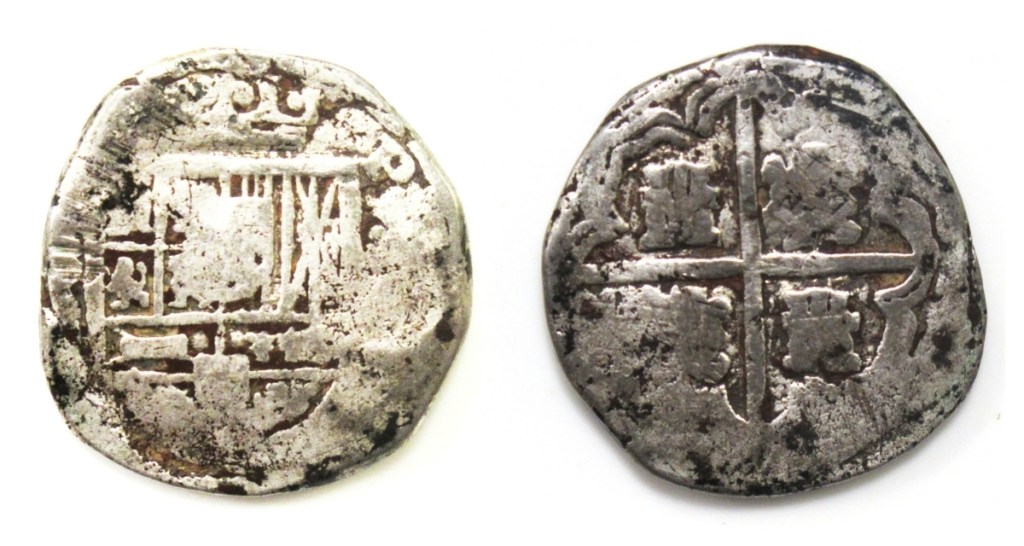
Because of their reliability and divisibility into smaller units, these pesos started being used not just in the Spanish-speaking colonies, but in British colonies in the Caribbean and North America as well.
Hold the peso thought. We’ll come back to it momentarily.
The word “dollar” can be traced back to the German Joachimsthaler coin
In the meantime, another coin of similar value from the German town of Joachimsthal had gained traction in Europe.
“In precisely the same way that a round slab of beef from Hamburg became known as a hamburger, this round slab of silver from Joachimsthal became known as a Joachimsthaler,” Watts explains. “And in exactly the same way that a hamburger is sometimes just called a ‘burger,’ a Joachimsthaler was sometimes just called a ‘thaler.’”
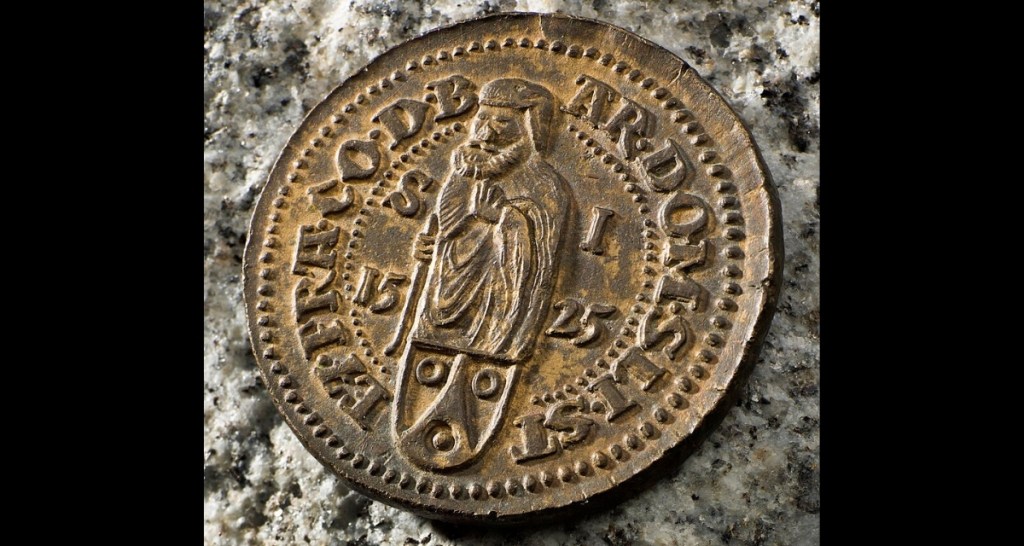
“Thaler” became “daalder” in the Netherlands, “daler” in parts of Scandinavia, and “dollar” in the English-speaking world.
But that dollar wasn’t the dollar we ended up with.
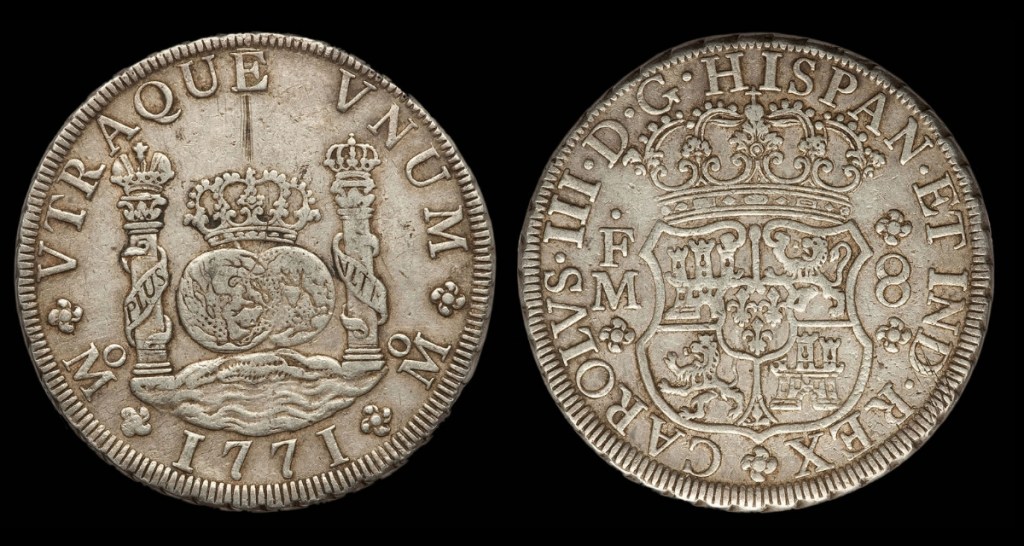
“By 1700, the thaler had been adapted to have almost exactly the same silver content as another coin that was competing for usage in Europe: the ‘piece of eight’ or peso,” says Watts. “And so, to help differentiate between the two similarly valued coins, people started referring to the peso as ‘the Spanish dollar.’ This Spanish dollar was the de facto currency of the Americas right up until the American Revolution.”
The dollar sign actually comes from the peso symbol
Prior to declaring independence from Britain, the U.S. used the British pound for accounting. But the Spanish dollar, or peso, was the coin most often used as currency, so post-Revolution, the U.S. adopted the dollar as its own. (The first official U.S. dollar coin was minted in 1792.)
So, long story short, the Spanish dollar, or peso, was the basis for the U.S. dollar. Which finally leads us to where the $ came from.
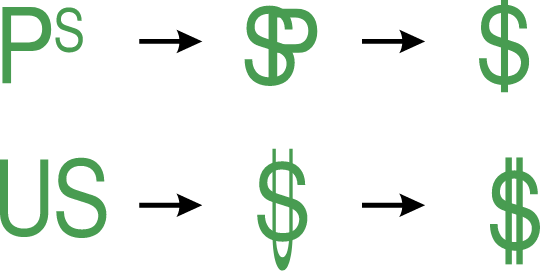
The symbol used for pesos way back when was “ps,” with the “s” written like a superscript. When written with a pen in one stroke, the “s” ended up with a line through it. And when someone wanted to indicate plural pesos, they would write the symbol twice. The second instance, written more quickly, ended up blending the “p” and “s” together to look more like a $.
Essentially, the evolution looked like this:
What about the double-lined dollar sign?
How did the $ with two lines come about? As shown in the image above, the two lines often lead people to the “U” plus “S” theory. However, Watts points out that the first printed version of the dollar sign appeared in 1797. That dollar sign actually had two lines, with no indication that “U” and “S” were the reason. Both versions of the symbol were in use by the close of the 18th century.
Watts goes into some of the other theories about where the double-lined dollar sign comes from. However, there doesn’t seem to be solid evidence to back any of them up.
Isn’t that wild? Who knew that our currency had such a complicated origin story? Or that we don’t even really know for certain why we use $ for the almighty dollar?
Thanks, Rob Watts, for making us all a little bit smarter. You can follow him on YouTube for more word fun.








.jpg)
.jpg)

