While doing research for her 2021 book, High Conflict, investigative journalist Amanda Ripley posed a question: “Are there examples of institutions that do conflict better, institutionally, sort of enshrined in what they do?”
That question led Ripley to the Bahá’í Faith and the process it uses to elect its governing bodies. Ripley specializes in exploring “depolarization” and found the faith’s electoral process to be a solid example of how to avoid polarization while electing the most qualified people.
Elections with zero electioneering? How?
Imagine a democratic election process with no nominations, no campaigning, no parties or factions, and no electioneering of any kind. Not a whisper of “You should vote or shouldn’t vote for so-and-so.” Not even an “I’d like to humbly put myself forward for consideration.” That’s what Bahá’í elections are like.
“It’s literally the opposite of elections today in the United States, in every way,” Ripley told the Society Builders podcast. “And yet, it’s happening all around the world, so it’s very encouraging.”
As a Bahá’í myself, seeing Ripley explain the Bahá’í electoral process from an outside perspective is fascinating. I’m so used to it, having participated in dozens of elections, that I sometimes forget how unique it is. But when contrasted with nearly every other democratic voting system, I can see why it drew Ripley’s attention.
Bahá’í elections at the local level
At the local level of administration (town, city, or county), Bahá’ís elect nine-member bodies called Local Spiritual Assemblies. The elected members of a Spiritual Assembly have no individual authority, but function as a collective, consultative institution that tends to the affairs of the community.
Here’s how these institutions are elected: Throughout the year, we spend time getting to know the members of our community, keeping in mind that we will elect some of these people to serve on the Local Spiritual Assembly each spring. No names are ever mentioned when discussing the Assembly election, though. We only discuss the combination of qualities necessary to serve, which include selfless devotion, a well-trained mind, unquestioned loyalty, recognized ability, and mature experience.
At election time, after prayer and reflection, every adult member of the community votes by secret ballot for the nine people they believe are best qualified to serve on the Assembly.
The way ballots are handled ensures that even the tellers who tally the votes don’t see who voted for whom. The nine people who receive the most votes overall are called to serve on the Local Spiritual Assembly.
Serving on a Spiritual Assembly is viewed as a sacred, selfless duty, not as a personal victory or promotion. As Ripley shared, “If you get asked to serve, you gotta serve. And the ego is really subverted in that process.”
How Bahá’ís conduct national elections
The electoral process looks slightly different at the national level, where we use a delegate system. I participated as a delegate in helping elect the National Spiritual Assembly of the Bahá’ís of the United States this year, so I can share an insider’s view of what that process looked like.
Last October, a total of 171 delegates were elected (again by secret ballot, with no electioneering) from electoral units around the U.S. Every adult Bahá’í has the opportunity and responsibility to participate in their local delegate election. And again, whoever receives the most votes serves.
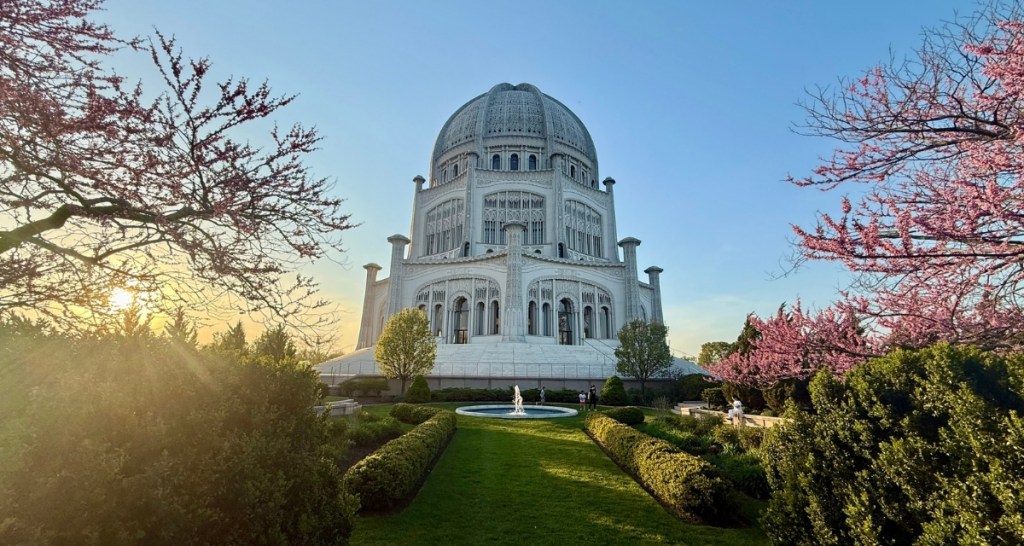
In April, those 171 delegates gathered for the Bahá’í National Convention at the Bahá’í House of Worship in Wilmette, Illinois. The purpose of the convention was twofold: to elect the National Spiritual Assembly and to consult and share what we’ve been learning through our community activities over the past year.
It may be hard to imagine, but the admonition against electioneering is taken to heart in elections at every level. The convention began on Thursday morning, and the election took place on Saturday. The delegates were together all day Thursday and Friday, and there was not a single conversation about who should or should not be elected to the National Spiritual Assembly.
Instead, we consulted about what’s been happening in our communities, sharing triumphs and challenges, heartening stories and heartfelt concerns. We discussed the qualities necessary to serve on the Assembly, but never names. Not even the slightest indirect hint about any particular individual.
What the actual voting looks like
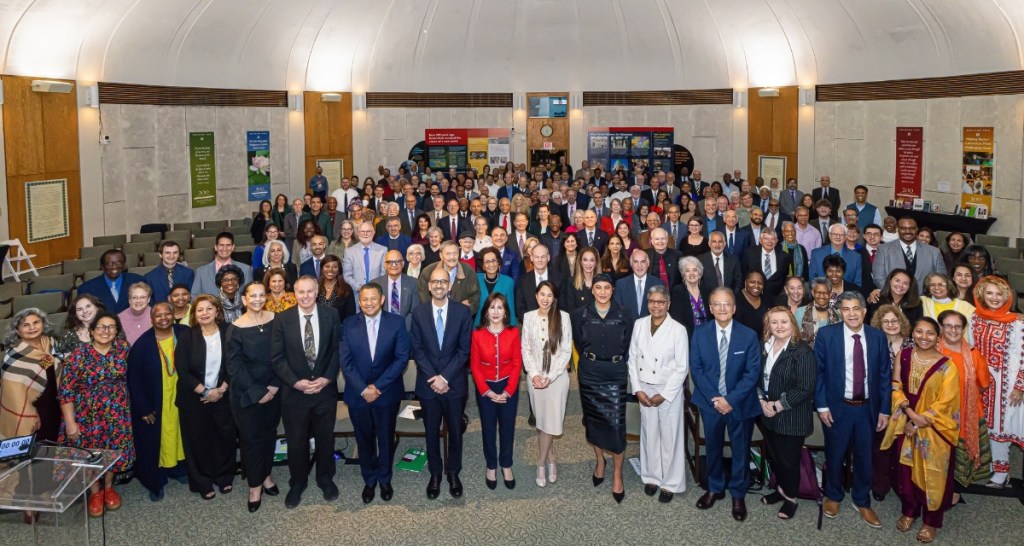
The morning of the election, the delegates gathered in the sanctuary of the House of Worship for prayer and meditation. Then we returned to the meeting hall downstairs to vote. Each of us silently filled out a paper ballot with the names of nine people we felt were most qualified to serve. Then we placed our ballots into plain white envelopes. Once all delegates had finished voting, we deposited the envelopes, one by one, into a box at the front of the room. The atmosphere was peaceful, calm, and reverent.
Our votes are secret and private—no one will ever know who we voted for unless we choose to tell someone. (In 30 years of participating in elections, I’ve never had another Bahá’í tell me who they voted for.) As delegates, we represent our local areas at the convention, but we are elected to vote according to our own consciences. No one from our electoral unit talks to us about who they want us to vote for.
The process is about as pure as an election process can be. And the result is a high-functioning administrative body that beautifully reflects our national community.
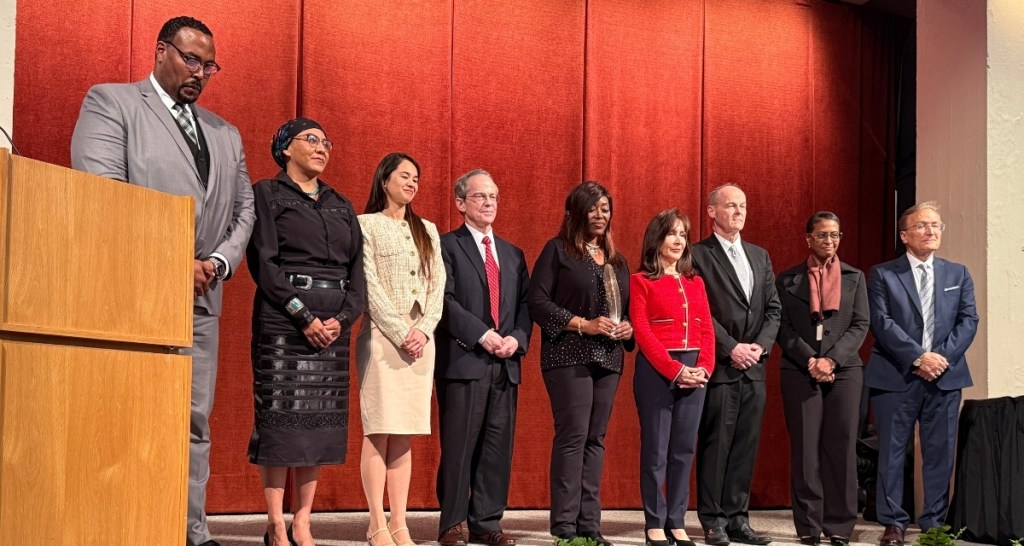
(Every five years, the world’s National Spiritual Assemblies from every country gather to elect the Universal House of Justice, the nine-member body that guides the international Bahá’í community. Again, no electioneering—just prayerful, conscientious voting by secret ballot.)
Bahá’í consultation: A low-conflict approach to making decisions
The other low-conflict element of Bahá’í administration that Ripley found in her research is the process of decision-making, simply referred to as “consultation.” As Ripley shared with the Aspen Institute, the ideal way to deal with conflict is to avoid it in the first place. Bahá’í consultation, she said, is designed “to keep the ego in check and keep high conflict less likely.”
When the Assembly needs to discuss an issue or make a decision, all members are encouraged to voice their thoughts and opinions frankly and openly. But as soon as an idea is presented, it becomes the idea of the group to discuss. It is no longer associated with the individual who shared it. Discussion centers on the idea itself and the spiritual principles that need to be applied to the situation. Ripley says this method aligns with how humans naturally function, helping “reduce the odds of the kind of binary, us-versus-them dynamic that we know tends to lead to high conflict.”
Of course, we are ever-evolving humans doing our best, not perfect beings. I have occasionally seen personal conflict arise over the years, and I’ve seen it handled well and not so well. But considering the inherent complexities of human dynamics, the Bahá’í system works remarkably well as designed and intended. Compared with how elections and institutions so often function, it’s truly a beautiful thing to witness and participate in.