upworthy
Add Upworthy to your Google News feed.
Google News Button
Humor

'God' asked people who should be sainted next. Here are the top 20 most popular responses.

Who do you think should become a saint?

saints, canonization, god, modern-day saints

Bernie Sanders, Steve Irwin, Dolly Parton.

It's hard to pin down the exact number of people who have been canonized or beatified by the Catholic church, but scholars say the number may be beyond 10,000. The most recent canonization by Pope Francis was Margherita della Metola in April of this year.

Margherita della Metola was an Italian Roman Catholic and professed member of the Third Order of Saint Dominic who lived 1287 to 1320.

A satirical Facebook page for God a.k.a. The Good God Above has nearly 4 million followers and he asked them an important question on November 1: "I have not canonized any new saints in a while. Any suggestions?"

via God/Facebook

The post received more than 9,000 responses of people debating which modern-day heroes are so holy they deserve to become saints. We decided to rank the top 20 vote-getters based on how many likes they received after being nominated by a commenter.

The number one vote-getter won by a landslide.

(Note: Some people were mentioned multiple times, so the numbers on the posted comments aren't the only numbers that we considered.)

Here are the top 20 people "God's" followers believe should become saints.


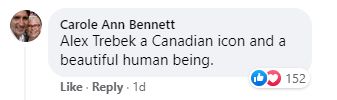
Alex Trebek (1940 - 2020)

via Facebook/The Good God Above

"Who should be a saint?" for $800, Alex. Trebek was the host of "Jeopardy!" for 37 years and one of the most recognizable TV personalities of all time. He should be canonized for his calm presence on one of TV's most tense game shows.

Lemmy Kilmister (1945 - 2015)

Ian Fraser Kilmister was known worldwide by one name: Lemmy. The lead singer and bassist of Motörhead should be canonized for partying as hard as he rocked. "I don't do regrets," Lemmy once said. "Regrets are pointless. It's too late for regrets. You've already done it, haven't you? You've lived your life. No point wishing you could change it."

George Takei (1937 - )

Takei has had one of the greatest second acts in American life. He became a sci-fi legend and one of the first Asian-American TV stars in the late '60s as Sulu on "Star Trek." In the social media era he's become one of the most popular faces of trending content. He should be canonized for the incredible work he's done for the LGBTQ community.

Pope Francis (1936 - )

Born Jorge Mario Bergoglio, Pope Francis has been one of the most popular and controversial Popes of the modern era for his unapologetically progressive views. He should be canonized for his work on climate change reform.

Sir Terry Pratchett (1948 - 2015)

Pratchett was an English humorist, satirist and author of comic fantasy novels, including the "Discworld" series. He should be canonized for celebrating all of the quirky and strange things that happen in "real life."

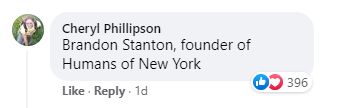
Brandon Stanton (1984 - )

Stanton is an American author, photographer and blogger best known for "Humans of New York," a photoblog and book. He should be canonized for his portraits of strangers who share intimate stories of strength, addiction, redemption, regret and love.

David Bowie (1947 - 2016)

Bowie is one of the most enigmatic performers of the past century whose work highlighted the concept of the outsider, whether it was an astronaut in space or someone living outside of traditional gender norms. Bowie should be canonized for showing humanity that there are no limitations on who they can be and how they can change.

Sir David Attenborough (1926 - )

Sir David Attenborough is the undisputed father of the nature documentary. Throughout his eight-decade career, his gentle, awestruck voice has served as humanity's guide to nature. He should be canonized for "Life on Earth," his series that examined the role of evolution in nature.

Dr. Anthony Fauci (1940 - )

Dr. Fauci, the director of the National Institutes of Health, has come to the forefront of American life for his leadership during the COVID-19 pandemic. He should be canonized for not losing his mind during former president Trump's long, rambling and factually inaccurate COVID briefings in 2020.

Ruth Bader Ginsburg (1933 - 2020)

The "Notorious RBG" became a liberal, feminist icon for championing women's rights as a member of the U.S. Supreme Court from 1993 to her death. She should be canonized for her strongly worded dissents in women's rights cases.

Robin Williams (1961 - 2014)

Williams was one of the most unique performers the world has ever seen. He completely changed American comedy with his intense, high-energy improvisational comedy performances on stage, TV and in film. He was also a talented actor, winning critical acclaim in films such as "Good Morning Vietnam," "Mrs. Doubtfire" and "Dead Poets Society." He should be canonized for his child-like love of whimsy.

Bob Ross (1942 - 1995)

Ross was the creator and host of "The Joy of Painting," an instructional television program that aired from 1983 to 1994 on PBS. His infectious love of art, distinctive hair and gentle voice made him the ultimate calming presence. He should be canonized for teaching the world how to paint "happy little trees."

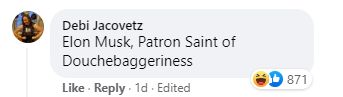
Elon Musk (1971 - )

Musk is the closest we'll have to a living Bond villain. He's a visionary billionaire who isn't shy about wanting to change the world, from how we travel to spend money. Like him or not, he should be canonized for creating the Tesla, a high-performance electric car that brought EVs into the mainstream.

George Carlin (1937 to 2008)

Carlin came to prominence as a counter-culture comic in the '70s where he was famous for outlining the "seven dirty words you can't say on television." However, clips of him from the late '90s and early 2000s where he eviscerates American greed, materialism and entitlement have made him still relevant to this day. He should be canonized for this incredible clip where he discusses the fact that there's a big club and "you're not in it."

"It's called the American Dream because you have to be asleep to believe it."

George Carlin - It's A BIG Club & You Ain't In It!

Fred Rogers (1928 - 2003)

Rogers touched the lives of countless children from 1968 to 2001 as the host of PBS' "Mister Rogers' Neighborhood." The puppeteer, songwriter and Presbyterian minister revolutionized children's television and should be canonized for changing the way we think about the inner lives of young children.

Jimmy Carter (1924 - )

Carter served as president of the United States from 1977 to 1981 and his biggest accomplishment was the Camp David Accords that ended the Israeli-Egyptian disputes. His post-presidency life has been dedicated to humanitarianism causes through the Carter Center and Habitat for Humanity. Carter was awarded the Nobel Peace Prize in 2002.

Carter should be canonized for his humility and commitment to service.

Steve Irwin (1962 - 2006)

The "Crocodile Hunter" wowed audiences by fearlessly tangling with deadly snakes, spiders, lizards and crocodiles. But at his heart, he was a true lover of nature and wildlife, and an educator who shared his knowledge and enthusiasm for animals with millions. Irwin should be canonized for his many contributions to the field of wildlife education and conservation.

Dolly Parton (1946 - )

Parton is such a national treasure that when they began pulling down Confederate statues in Tennessee a few years back, there was a petition to have them replaced with statues of Dolly. As a musician, Parton has sung some of the biggest hits in country music history, including "I Will Always Love You" and "Islands in the Stream." But she has also been a generous philanthropist, helping charities that benefit children and veterans.

If you got the COVID-19 vaccine you should thank Dolly. In 2020, she donated $1 million to help fund vaccine research at Vanderbilt University Medical Center.

Dolly should be canonized for creating the Imagination Library that has donated more than 100 million books to children.

Bernie Sanders (1941 - )

Vermont Senator Bernie Sanders is one of the most beloved political figures in the United States because he has always stood on the side of the oppressed and the working class regardless of whether it was popular. He's refused to be bought by Wall Street and has stood up against the Department of Defense, the fossil fuel industry, drug companies and private prison industries.

He should be canonized for his relentless quest to provide healthcare for all Americans.

Keanu Reeves (1964 - )

Reeves is a beloved figure in Hollywood because of his kind, down-to-earth nature. There are countless anecdotes around the internet of Reeves going out of his way to please a fan or inviting a member of the paparazzi to his table to sit with him during dinner. "The internet's boyfriend" is also a gentleman who never touches women when taking a photo with them.

Reeves should be canonized for quietly donating millions to children's hospitals.

This article originally appeared on 11.5.21

kids, school, school days, school week, schedule, 4 day week
Unsplash

Many school districts are moving to a 4-day week, but there are pros and cons to the approach.

American kids have fewer school days than most other major countries as it is, which poses a big challenge for families with two working parents. In a system designed for the "classic" stay-at-home mom model, it's difficult for many modern families to cover childcare and fulfill their work obligations during the many, many holidays and extra days off American children receive in school.

Some school districts, in fact, are ready to take things one step further with even fewer instructional days: for better or for worse.


Whitney Independent School District in Texas recently made news when it decided to enact a four-day week heading into the 2025 school year. That makes it one of dozens of school districts in Texas to make the change and over 900 nationally.

The thought of having the kids home from school EVERY Friday or Monday makes many parents break out in stress hives, but this four-day school week movement isn't designed to give parents a headache. It's meant to lure teachers back to work.

Yes, teachers are leaving the profession in droves and young graduates don't seem eager to replace them. Why? For starters, the pay is bad—but that's just the beginning. Teachers are burnt out, undermined and criticized relentlessly, held hostage by standardized testing, and more. It can be a grueling, demoralizing, and thankless job. The love and passion they have for shaping the youth of tomorrow can only take you so far when you feel like you're constantly getting the short end of the stick.

School districts want to pay their teachers more, in theory, but their hands are often tied. So, they're getting creative to recruit the next generation of teachers into their schools—starting with an extra day off for planning, catch-up, or family time every week.

Teachers in four-day districts often love the new schedule. Kids love it (obviously). It's the parents who, as a whole, aren't super thrilled.

- YouTube www.youtube.com

So far, the data shows that the truncated schedule perk is working. In these districts, job applications for teachers are up, retirements are down, and teachers are reporting better mental well-being. That's great news!

But these positive developments may be coming at the price of the working parents in the communities. Most early adopters of the four-day week have been rural communities with a high prevalence of stay-at-home parents. As the idea starts to take hold in other parts of the country, it's getting more pushback. Discussions on Reddit, Facebook, and other social media platforms are overrun with debate on how this is all going to shake up. Some parents, to be fair, like the idea! If they stay-at-home or have a lot of flexibility, they see it as an opportunity for more family time. But many are feeling anxious. Here's what's got those parents worried:

The effect on students' achievement is still unclear.

The execution of the four-day week varies from district to district. Some schools extend the length of each of the four days, making the total instructional time the same. That makes for a really long day, and some teachers say the students are tired and more unruly by the late afternoon. Some districts are just going with less instruction time overall, which has parents concerned that their kids might fall behind.

A study of schools in Iowa that had reduced instructional days found that five-days-a-week students performed better, on average.

Four-day school weeks put parents in a childcare bind.

Having two working parents is becoming more common and necessary with the high cost of living. Of course—"school isn't daycare!" But it is the safe, reliable, and educational place we send our kids while we we work.

Families with money and resources may be able to enroll their kids in more academics, extracurriculars, sports, or childcare, but a lot of normal families won't be able to afford that cost. Some schools running a four-day week offer a paid childcare option for the day off, but that's an added expense and for families with multiple kids in the school system, it's just not possible.

kids, school, school days, school week, schedule, 4 day week In a 4-day model, kids often (but not always) receive less instructional time. Photo by Ivan Aleksic on Unsplash

This will inevitably end with some kids getting way more screentime.

With most parents still working five-day weeks, and the cost of extra activities or childcare too high, a lot of kids are going to end up sitting around on the couch with their iPad on those days off. Adding another several hours of it to a child's week seems less than ideal according to expert recommendations.

Of course there are other options other than paid childcare and iPads. There are play dates, there's getting help from family and friends. All of these options are an enormous amount of work to arrange for parents who are already at capacity.

Working four days is definitely a win for teachers that makes the job more appealing. But it doesn't address the systemic issues that are driving them to quit, retire early, or give up their dreams of teaching all together.

@5th_with_ms.y

Replying to @emory here are my thoughts on my 4day work week as a teacher✨ #foryou #fyp #fypシ #foryoupage #foryoupageofficiall #teachersoftiktokfyp #teachersoftiktok #teachertok #teachersbelike #teachertiktok #tik #tiktok #viralllllll #teachertoks #teaching #teacher #tok #viralvideo #teacherlife #viral #trendy #teacher #teaching #worklifebalance #worklife #publicschool #publiceducation #school #student

A Commissioner of Education from Missouri calls truncated schedules a "band-aid solution with diminishing returns." Having an extra planning day won't stop teachers from getting scapegoated by politicians or held to impossible curriculum standards, it won't keep them from having to buy their own supplies or deal with ever-worsening student behavior.

Some teachers and other experts have suggested having a modified five-day school week, where one of the days gets set aside as a teacher planning day while students are still on-site participating in clubs, music, art—you know, all the stuff that's been getting cut in recent years. Something like that could work in some places.

In any case, the debate over a shortened school week is not going away any time soon. More districts across the country are doing their research in preparation for potentially making the switch.

Many parents don't theoretically mind the idea of their busy kids having an extra day off to unwind, pursue hobbies, see friends, catch up on projects, or spend time as a family. They're also usually in favor of anything that takes pressure off of overworked teachers. But until we adopt a four-day work week as the standard, the four-day school week is always going to feel a little out of place.

This article originally appeared in February. It has been updated.

washer, washing machine setting, how to use washing machine, laundry, laundry tips
Image courtesy of @granolabarpan/Instagram (with permission)

Stay-at-home mom Catrina shares shock at learning what the 'heavy' setting on her washer means.

Knocking out loads of laundry is a feeling of accomplishment that is unmatched. Depending on what needs to be washed, washing machines offer a variety of settings for the ideal clean. But even the most seasoned laundry pros can admit that they don't fully understand how to use them properly.

One stay-at-home mom shared her funny and relatable washing machine mistake. Catrina (@granolabarpan) got the shock of a lifetime when she realized that she had been using the "heavy" setting on her washer wrong for years.


"POV: today years old when it clicks why my blankets are sopping wet!!! I thought HEAVY meant heavy items being washed," she wrote in the video's overlay.

"Heavy on my machine means heavily soiled," she went on to add in the comments. "I thought it meant the stuff I was putting in the machine was heavy in weight/pounds."

Some moms are also realizing this for the first time. "Ok.. so I am 66 years old learning this???!! I always thought that heavy meant weight also😂," one person commented. Another person wrote, "Well I was today years old when I learned what heavy meant too…😂"

Others expressed confusion with so many settings, and reminiscing on simpler times. "Wait a minute. 😂. I think I need to for once go and read the manual because I have been wondering about all of the options," another user wrote. And another chimed in, "I want my old $250 3 options hot/warm/cold on/off washer back. It didn’t die it rusted out but took 25yrs to do it. I had 5 kids, plus my ex in-laws living with me."

Washing machine settings, explained

Struggling to understand the settings on your washing machine? You're not alone.

"Knowing these settings helps avoid common laundry mistakes, such as using the heavy cycle for heavy fabric weight instead of heavy soil, which can lead to ineffective cleaning or damage over time," Vanessa Ruiz, a professional organizer at Sparkly Maid San Antonio, tells Upworthy.

These are five washing machine settings and how they work:

1. Normal/Regular Cycle
Ruiz explains that this is your typical setting for day-to-day loads such as t-shirts, jeans, sheets, and underwear.

"These laundry loads are typically washed in warm water and the setting is rinsed with medium spin speeds through agitation in order to properly clean moderately soiled garments," she says. "This cycle is safe enough to wash a variety of different fabric content with a somewhat dirty load."

2. Delicate/Gentle Cycle
Ruiz notes that the delicate cycle is created specifically for delicate fabrics—lingerie, silk, lace, or embellished clothing—that may become damaged in a normal or regular wash.

"This cycle will use moderate spin speeds through gentle agitation to thoroughly dry clean and not damage clothes too easily," says Ruiz. "This is the preferred cycle when laundry items that require extra care or are labeled 'delicate' or 'hand wash' need to be washed."

3. Heavy Duty Cycle
The heavy duty cycle is specifically for heavily soiled items like work clothes, kitchen towels, and bedding.

"This setting uses higher water temperatures, longer wash times, and powerful agitation to remove stubborn dirt and grime. It’s perfect for those tough laundry jobs, but not recommended for delicate fabrics," explains Ruiz.

- YouTube www.youtube.com

4. Bulky/Bedding Cycle
This cycle is often confused with "heavy."

"This cycle accommodates larger, heavier items that absorb a lot of water, such as comforters, pillows, and sleeping bags," says Ruiz. "It uses more water, medium spin speeds, and longer wash times to thoroughly clean bulky items without causing damage or imbalance."

5. Quick Wash
In a rush? This is the perfect setting to use.

"It is an accelerated wash cycle designed for small loads of lightly soiled clothes, usually lasting 15 to 40 minutes," says Ruiz. "It’s great for when you need clean clothes fast and can save energy compared to longer cycles."

This article originally appeared last year.

couple fight, argument, upset woman, woman in sweatshirt, marriage

A woman can't stand what she's hearing.

Some folks in this world just have to be right. All the time. Even when you present them with every fact imaginable that proves they are wrong, they will resort to any rhetorical tactic they can to make it seem as though they are right. If that doesn't work, they turn to personal attacks.

People like this can be infuriating to deal with because talking to them is like screaming at a wall. Fortunately, communication expert Jefferson Fisher recently shared a two-step method on TikTok for dealing with these impossible people.


Fisher, who has become massively popular online, offers tips "to help people argue less and talk more."

@art_for_feeling

How to handle someone who is always right. 3 steps from @ Jefferson Fisher #power #insporation

Here is Fisher's two-step process for dealing with people who will never admit they are wrong:

Step 1. Diffuse the situation

"Know that the harder we work to prove that they're wrong, the more convinced they are that they're right," he says. "So what you're gonna do is diffuse that by just saying something simple as well, 'maybe you're right,' or 'maybe so.' That diffuses the whole situation."

Step 2. Open the conversation up

Fisher says you can encourage the other person to explore your ideas by saying: "'It's helpful for me to know that you're at least considering my thoughts, even if you don't agree with me.' Now you've made a safe space to have a discussion that's not threatening their identity. That's how you talk to somebody who thinks they're always right. So try that."

coffee, women having coffee, serious talk, women on couch, agreement Two woman having a heart-to-heart conversation. via Canva/Photos

Why identity matters

In his video, Fisher notes that people who won't admit when they are wrong have developed an identity based on always being correct. That's why, when they're confronted with the possibility that they may be incorrect, they will do anything to avoid admitting it.

Research shows that when people feel their identity is being attacked, they perceive it as an affront to their authenticity and value as human beings. This can lead to a physical reaction known as the amygdala hijack, where people feel as if they are being physically threatened. That's a big reason some people get enraged when discussing politics or religion. If their views on these issues are closely tied to their identity and those views are challenged, it can invalidate their entire sense of self.

angry, arms folded, angy man, won't listen, sneer A man who has dug in his heels. via Canva/Photos

The 'backfire effect'

Fisher explains that the harder we try to prove someone wrong, the more convinced they become they're right, due to a psychological phenomenon known as the "backfire effect." When people are shown facts that clearly contradict their views, they often cling to those beliefs even more strongly. That's because those beliefs are tied to emotion, not facts. When their views are challenged, it triggers defensiveness, and the brain works to protect their self-image rather than reconsider the belief.

Getting through to stubborn people who always think they're right isn't easy, but Fisher's advice can help break through the wall they erect when their beliefs are challenged. It's good for you and the other person. When you're never wrong, you never learn from your mistakes, and that can quickly lead to problems far worse than admitting you were wrong.

phone, toilet, hemorrhoids, smartphone, tiktok, social media, toilet health

A man looking at his phone on the toilet.

Have you ever been scrolling through social media on your phone and then suddenly wondered where all the time went? You glance at the clock and wonder, “OMG, did I really just spend 30 minutes mindlessly scrolling on this app?” Well, after a new report published in PLOS ONE, you’ll think twice about getting lost doomscrolling while sitting on the toilet.

A team of researchers at Boston Medical Center found that people who scroll on their phones while pooping have a much higher chance of getting hemorrhoids. Hemorrhoids are swollen veins, akin to varicose veins, that are either internal or external. They can be painful, itchy, and sometimes bleed.


Looking at your smartphone on the toilet could cause hemorrhoids

“Smartphone use on the toilet was associated with a 46% increased risk of hemorrhoids,” the paper found after adjusting for sex, age, fiber intake, and exercise activity. To come to this grim conclusion, the researchers interviewed 125 patients at the medical center and asked them about their toilet habits, including whether they scrolled through their phone or not.

phone, toilet, hemorrhoids, smartphone, tiktok, social media, toilet health A woman looking at her phone on the toilet.via Canva/Photos

What the researchers found was that those who bring their phone into the bathroom spend more time on the toilet; therefore, increasing the likelihood of developing hemorrhoids. “Of all respondents, 83 (66%) used smartphones while on the toilet,” the study found. “Furthermore, smartphone users spent considerably more time on the toilet compared to non-smartphone users, with many spending more than five minutes on the toilet per visit.”

Of those who looked at the phone on the toilet, 37.3% said that they sat on the throne for six to fifteen minutes. Non-phone users sat longer than six minutes only 7.1% of the time. "The likely explanation is that prolonged sitting increases pressure in the veins around the rectum, which can contribute to hemorrhoids," Dr. Ernesto Gonzaga, a gastroenterologist from the Hospital of the University of Pennsylvania, told ABC News.

“When you’re sitting on an open toilet bowl, you have no pelvic floor support,” Dr. Trisha Pasricha, the study’s senior author and a gastroenterologist at Massachusetts General Hospital, told CNN. The study said that 54% of people who use the phone while pooping are reading the news, and 44% said they were scrolling through social media.

phone, toilet, hemorrhoids, smartphone, tiktok, social media, toilet health A man looking at his phone on the toilet.via Canva/Photos

The study was conducted on people 45 and over

The study was conducted on people aged 45 and older, a beneficial group to examine because some individuals in this age group don’t bring their phones to the bathroom. The study would have been much harder to conduct on younger people.

“It was helpful to have this (45 and older) group because there were people who didn’t use their smartphones on the toilet. So we had a comparison group,” Dr. Trisha Pasricha, the study’s senior author, told CNN. “Having a third of people not bringing their smartphones to the bathroom helped us understand what a baseline could look like, especially as I imagine the situation is more profound for younger individuals.”

If you’re afraid of developing hemorrhoids, the first step is to make sure that, if you take your phone with you to the bathroom, you stop scrolling when you’re done evacuating your bowels. You can also eat more high fiber foods, such as fruits and vegetables, and be sure to exhale while pushing and not strain. It’s also important to keep a healthy weight and to avoid sitting for too long, whether on a toilet or in your car. Hemorrhoids are a pain in the butt, and they’re not worth it, no matter how great the latest tea is on TikTok.

This article originally appeared last year

sleep, andrew huberman, sleep hacks, neuroscience, sleep tips, sleep advice, how to sleep

Andrew Huberman and a woman sleeping.

There is nothing worse than lying in your bed, with your mind racing, and you can’t fall asleep. The longer you lie in bed, the more anxious you get about falling asleep, which makes it even harder to catch some ZZZs. You've tried clearing your mind, but can’t. You’ve tried counting sheep but reached 100. What do you do now?

On a recent Real Time with Bill Maher, neuroscientist Andrew Huberman made an off-the-cuff remark about a sleep hack that he swears by, and it's based on brain research. Huberman is a Stanford University neuroscientist and tenured professor of neurobiology and ophthalmology. He's also the host of the popular podcast Huberman Lab, which focuses on health and science.


How to fall asleep fast

“In fact, if you wake up in the middle of the night and you're having trouble falling back asleep, try just doing some long, extended exhales. And get this, this sounds really weird, but it has a basis in physiology. Keep your eyes closed and just move your eyes from side to side behind your eyelids like this, back and forth,” Huberman told Maher as he moved his eyes from side to side as if he was surveying a vast landscape. “Do some long exhales. I can't promise, but I'm willing to wager like maybe one pinky, that within five minutes or so, you'll be back to sleep.”

- YouTube youtu.be

Andrew Huberman’s hack is based on neuroscience

Huberman explained the exercise in greater detail on Mark Bell's Power Project podcast. In his appearance, he discussed the interesting connection between our eyes and their connection to the amygdala, an almond-shaped part of the brain that controls our emotional response. “Eye movements of that sort actually do suppress the amygdala [to] make people feel calmer, less fearful,” Huberman said. He adds that when we are on a walk, we move our eyes from side to side, to analyze the terrain ahead of us, and the amygdala calms down.

- YouTube www.youtube.com

“But for most people who are sighted, moving your eyes from side to side for 10 to 30 seconds is going to calm you down," Huberman said. "And this makes really good sense because, from an evolutionary perspective, an adaptive perspective, we've always been confronted with interpersonal threats and animal to human threats. Forward movement is the way that you suppress the fear response."

Americans aren’t getting enough sleep

Huberman’s video is important because many Americans need to get more sleep. A 2022 Gallup poll found that only 32% of Americans said they got “excellent” or “very good” sleep; 35% described their sleep as “good”; and 33% said their sleep was “fair” or “poor.”

Sleep is essential to maintaining good health. Getting at least seven hours of sleep a night is great for your memory, focus, emotional regulation, appetite, muscle recovery, and tissue repair. It also reduces the risk of chronic conditions like heart disease and diabetes. It’s great that Huberman shares his hack, which few people would have come up with without a background in neuroscience, to improve their sleep. It’s also another exciting way to show just how interconnected the body is, from eyes to brain and beyond. Sweet dreams.

This article originally appeared last year.