upworthy
Add Upworthy to your Google News feed.
Google News Button
Family

The Gen X 'stay at home mom' crisis is real, but what's the solution?

Some moms in their 40s feel like they were lied to about what their "resume gap" would mean.

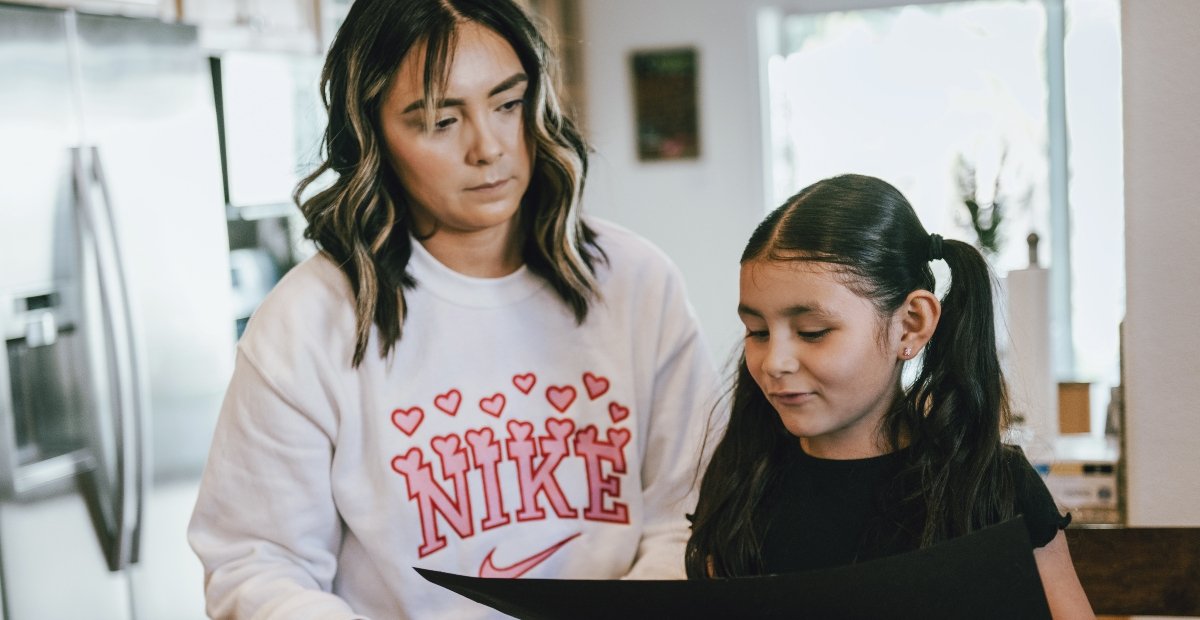
mom with school-aged daughter

40-something moms who stayed home to be with their kids are finding themselves in uncharted waters.

A few generations ago, parents had pretty clearly defined roles with the dad generally being the breadwinner and the mom being the homemaker and stay-at-home mother. Then, in 1848, the women's rights movement in the United States began with a powerful second wave coming in the 1960s and 70s, empowering women in the workplace, ushering in the era of two working parents, and producing an entire generation of "latchkey kids."

Now those Gen X latchkey kids are parenting Gen Z, with the pendulum of working motherhood having swung somewhat to the middle. We were raised to believe we could be anything we dreamed of being and that we didn't have to choose between being a mom and having a career. Gen X also became mothers during the heyday of parenting self-help books that impressed upon us the importance of attachment and hands-on childrearing, as well as the era of super-scheduled kids, whose activities alone require a full-time manager.

As a result, those of us in our 40s have raised our kids straddling two worlds—one where women can have all of the career success we desire and one where we can choose to be stay-at-home moms who run seemingly effortless households. At first, we were told we could have it all, but when the impossibility of that became clear, we were told, "Well, you can have it all, just not at the same time." But as many moms are finding as their kids start leaving the nest, even that isn't the full truth.

in 2023, a Facebook post by Karen Johnson, aka The 21st Century SAHM (short for "stay-at-home mom") nailed the reality many stay-at-home moms in their 40s are facing as they find themselves floundering with the glaring gap in their resumes.


"This is for all the moms in their 40s who put their careers on hold to do the SAHM thing because you knew you couldn't do both—career you loved and motherhood—and do both WELL, so you picked, saying to yourself, 'This is just for now and we'll see,'" Johnson wrote. "But now it's 15 years later and so much has changed in your career field that you know you can't go back. So really, when you 'took a break' all those years ago, you gave it up."

Johnson explained that yes, moms know they should be grateful for the time they've had with their kids. Most are. That's not the issue. Whether a woman chose to be a stay-at-home mom because she really wanted to or because childcare costs didn't work in the financial equation of the family, the transition out of it feels like completely uncharted waters.

"Okay, so you're looking for a 'career' with part-time hours and a 100% flexible schedule because you're still Mom-on-duty but you do have *just* enough hours during the day to reflect on the fact that you *do* have a college degree (maybe even 2) and although being a mom is the greatest and most important job in the world, you *might* actually want something more to your life than folding laundry and running hangry children to 900 events and remembering that they're all due for dental cleanings," she wrote.

Yup. The "default parent" role is real and weighted heavily toward moms as it is. For stay-at-home moms, it's 100% expected, and that doesn't suddenly end when it's time to start thinking about joining the workforce again.

And, of course, moms barely have time to try to figure all of this out.

woman in white long sleeve shirt holding brown and white labeled can

A working mom is the ultimate multitasker.

Photo by Memento Media on Unsplash

So, as Johnson says, "But for now, you cram yourself into the only pair of jeans you have right now that fit and find a t-shirt on the floor that isn't clean but isn't dirty and will pass for the 4 hours of mom-taxiing you're about to do and you tell yourself, 'I'll figure it out another day. Right now, I gotta get the kids to practice.'" Oof.

Johnson's entire post is worth a read, as it resonates with so many women at this stage of life. But just as telling are the comments from women who not only see themselves in Johnson's description but who feel like they were sold a bill of goods early in their motherhood. So many of us were led to believe that the skills and experiences of managing a family would be valued in the workplace simply because they should be and that the gap in their resume wouldn't matter.

"This hits hard. I am right there too. And all those volunteer hours & leadership positions people said would look good on my resume when I once again applied for jobs? Those people all lied. It means squat," wrote one person.

"Thank you! You spoke my heart. 42 this year, resigned from teaching almost 12 years ago, and never been more confused about my personal future, or exhausted in my present," shared another.

"I’ve never related to a post more in my life! THANK YOU. Your words perfectly summarize the loneliest, most important job in the world and how that perspective shifts in your 40s. It is confusingly beautiful," wrote another.

Some moms have chosen to see their post-stay-at-home era as a fresh start to learn something new, which might lend some inspiration to others.
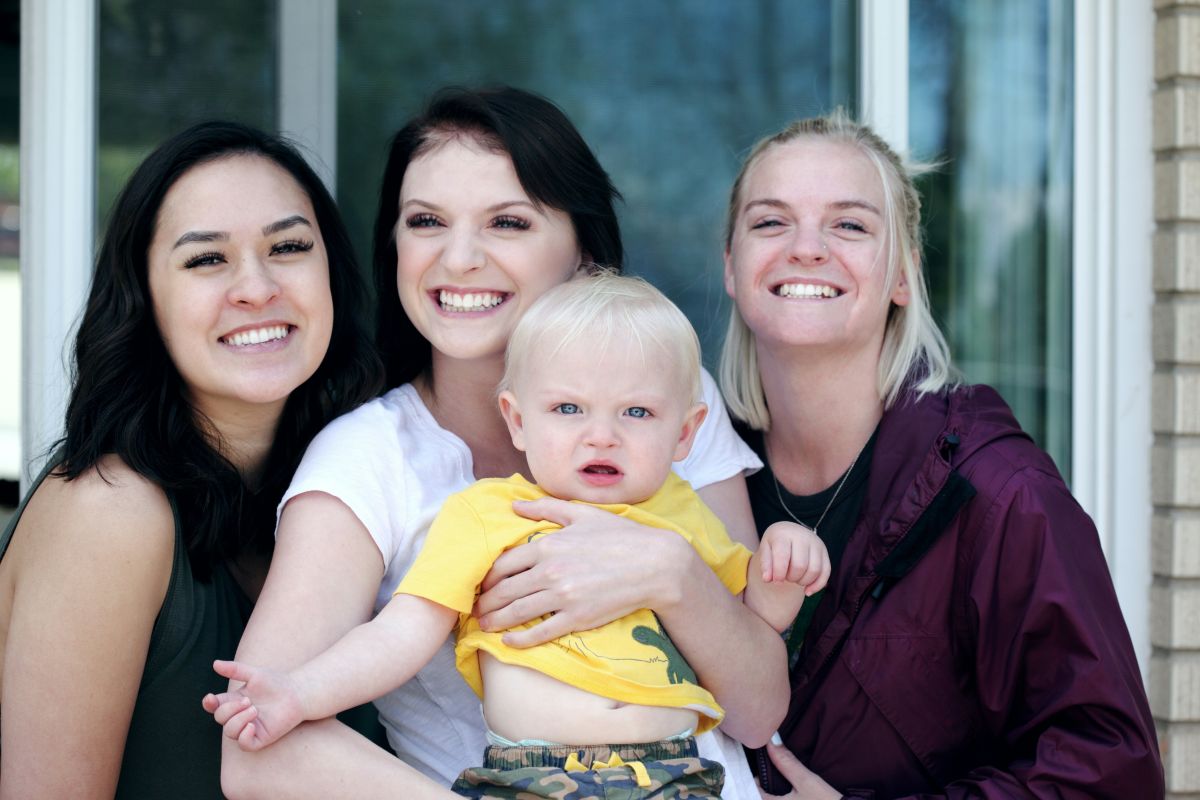
woman carrying baby with two ladies beside her smiling

Beginnings are often rough, but that's okay.

Photo by Alexander Grey on Unsplash

There is hope in the comments, too.

"I went back for my master’s degree at 47 years old. I’m now 50 in a new career I love and my husband is doing just fine pulling his weight with after school/carpool/dinner. Happy for the years I stayed home, happy with this new season too," shared one person.

"Yuuuup. I decided to go back to grad school at 45. It’s insane but every term I complete I’m like - omg I’m doing it! So don’t let sweaty out of shape bodies and carpool fatigue stop you. I take naps and write grad school papers and have meltdowns where I cry from the frustration of it all - but dammit I’m doing it!" wrote another.

One mom who is past this stage also offered some words of encouragement:

"So incredibly well written. I feel all these things and did throughout my 40s. Now I'm in my early '50s and I'm so glad I was able to stay home with my kids, but the guilt! The guilt of not using my education, the judgment of people who don't understand why someone would stay home with their kids, the social engineering... We just eat each other alive sometimes don't we? I wouldn't trade it for anything, but it is a very lonely road and one you always question. I can tell you that all three of my kids were so grateful to have a full-time parent. I might not have always been the best, but they were glad to always have someone to talk to if they needed it. It's hard to fill other people's buckets when your bucket isn't full, but the rewards do come back when the kids tell you thank you for everything that you've done. ❤️"

Being a mom is hard, period. Working moms have it hard, stay-at-home moms have it hard, moms who have managed to keep one foot in the career door and one foot in the home have it hard. There's a lot that society could do to support moms more no matter what path they choose (or find themselves on—it's not always a conscious choice), from providing paid maternity leave to greater flexibility with work schedules to retirement plans that account for time away from the workplace. Perhaps that would at least make the many choices moms have today feel more like freedom and less like choosing between a rock and a hard place.


This article originally appeared two years ago.

Actreses Quinta Brunson and Jennifer Aniston in an interview.
@variety/TikTok

The way Brunson comforted Aniston speaks volumes.

For those not familiar with Variety's “Actors on Actors,” it’s a live interview series where two actors discuss various aspects of their craft and career. Often, actors will be paired together because of a common thread. Margot Robbie and Cillian Murphy during the height of "Barbenheimer," for example. Or Anne Hathaway and Emily Blunt, who both starred in the 2006 classic The Devil Wears Prada.

So, it’s no surprise that two comedy queens, Jennifer Aniston and Quinta Brunson, would be paired together for the latest “Actors on Actors” segment. What people are astounded by, however, is the way Brunson handled a very serious moment.


At one point during the conversation, a producer off camera suggested that Brunson ask Aniston “what it’s like to watch Friends now.”

This clearly struck a chord with Aniston, who, already tearing up, said, “Don’t make me cry.”

Noticing this, Brunson softly said, “You’re already crying. Do you want a minute?” before assuring her, “We don’t have to talk about [this].”

@varietymagazine Jennifer Aniston gets emotional when asked about "Friends." #ActorsOnActors ♬ original sound - Variety

Tilting her head up to not let the tears fall, Aniston replied, “No, no, sorry, I just started thinking about...” before Brunson quickly said, “I know. Yeah.”

It’s evident that Aniston’s emotional reaction was triggered by the loss of her former Friends cast mate Matthew Perry, who died suddenly on October 28, 2023. The pair’s friendship remained strong even after the show ended in 2004; Perry even revealed that Aniston was the member of their group who reached out to him “the most” during his sobriety journey.

All this to say, Aniston was understandably triggered by the question. Brunson saw that, and acted accordingly. She once again offered, “We don’t have to talk about it,” waited while Aniston grabbed a tissue to compose herself, then masterfully guided the conversation to a joke.

“So, Jen, Friends is turning 30…and you are turning 30…When you were a baby on that show, you were so advanced…your fine motor skills were insane”

Viewers applauded the Abbott Elementary star for “taking care” of Aniston’s emotional wellbeing.

”Quinta gets props for saying to Jennifer, ‘We don’t have to go there if you don’t want to.’ I get why the producers were trying to create that buzzworthy moment, but I also appreciate Quinta’s willingness to derail it for Jennifer’s sake,” one person wrote on Youtube

“Quinta’s little ‘I know’ — it was so simple but so kind and empathetic,” added another.

Over on TikTok, comments were just as complimentary.

“Quinta handled this masterfully,” wrote one person.

Another echoed, “How Quinta handled that- that’s why she’s where she’s at.”


Seeing people take care of one another never gets old. You can watch the full conversation between Brunson and Aniston below:

This article originally appeared last year.

old letter, 1959, tony trapani, letter, secret letters, love letter, love stories, dads, fatherhood, father and son, parents, parenting
via SHVETS production/Pexels and Suzy Hazelwood/Pexels
Tony Trapani discovers a letter his wife hid from him since 1959.

Writing a letter is truly a lost art form, and many young people will never know the joy of it. You had to choose your words carefully and say everything you wanted to say. Once you sent it off, there was no way to be sure it was delivered. No way to know if it had been opened or read. You couldn't take it back or send it again. You just put it in the mailbox and hoped for the best. It was excruciating and magical all at the same time.

One story of a letter never delivered has captured the hearts of readers everywhere. A heart-warming local news story gone viral for the best reasons.


Tony Trapani and his wife were married for 50 years despite the heartache of being unable to have children. "She wanted children,” Trapani told Fox 17. "She couldn't have any. She tried and tried." Even though they endured the pain of infertility, Tony's love for his wife never wavered and he cherished every moment they spent together.

letter, secret letters, love letter, love stories, dads, fatherhood, father and son, parents, parenting Tony Trapani received the most important letter of his life, but he didn't see it for 50 years Photo by Álvaro Serrano on Unsplash

After his wife passed away when Tony was 81 years old, he undertook the heartbreaking task of sorting out all of her belongings. In particular was a mountain of papers stuffed into filing cabinets. Trapani diligently went through every single one.

That’s when he stumbled upon a carefully concealed letter in a filing cabinet hidden for over half a century.

The letter was addressed to Tony and dated March 1959, but this was the first time he had seen it. His wife must have opened it, read it and hid it from him. The letter came from Shirley Childress, a woman Tony had once been close with before his marriage. She reached out, reminiscing about their past and revealing a secret that would change Tony's world forever.

"Dear Tony, I bet you are surprised to hear from me after so many years. I was just thinking about you tonight like so many other nights. But I thought I would write you and find out how you are," the letter reads. "Tony, please don't be angry or surprised to hear this. I have a little boy. He is five-years- old now - grey eyes and beautiful black hair. What I am trying to say Tony is he is your son."


"Please, Tony if you can find it in your heart to forgive me, please come and see him," Shirley wrote in the letter. "Every day he asks me where is his daddy and believe me Tony I can't even answer him anymore. I would be forever grateful to you if you would just see him. ... I'll close now hoping and praying you will answer. P.S. His name is Samuel Duane."

Now, Tony faced the fact that he had a son that would be around 60 years old and he set out to find him.

For over a year, Trapani’s sister tried to track down the mysterious Samuel Duane Childress, until she finally contacted his wife, Donna.

Tony and Samuel met in January 2015 and he felt like a new dad. After meeting his father, Samuel said his mother told him she sent the letter, but Tony never responded. "Why my wife didn't tell me," said Trapani, "I don't know. She wanted children. She couldn't have any. She tried and tried."

It's easy to understand why it may have been hard for Trapani's late wife, Dolly, to pass along that sort of news. Though we'll never know what exactly must have been in her heart and mind when she hid the letter all those years ago.

"I always asked my mom, I said, 'Well what does he look like?'' Samuel said. "She said, 'Well, go look in the mirror."

The two met and caught up on a lifetime of memories with the understanding that they could never change the past. "Just to know him now is so important to me. It's going to fill that void," Samuel said.

But just to be sure, Tony took a paternity test to ensure they were father and son. Stunning everyone involved, the test came back negative. Tony was not the father.


letter, secret letters, love letter, love stories, dads, fatherhood, father and son, parents, parenting Tony and Samuel didn't waste time thinking about what might have been if he'd seen the letter earlier. Photo by Ire Photocreative on Unsplash

The news upset Tony and Samuel, but they still had a unique bond. They shared a relationship with Samuel’s mother and both have been on an incredibly wild ride after Tony found the mysterious letter.

“They're keeping that bond,” Donna said. “That paper doesn't mean anything to him. That bond has been made—and we're going to move on from here.”

Tony Trapani passed away in 2017, leaving him just two short years to connect with the man he once believed to be his son. If he'd seen the letter earlier, maybe they would have had more time. But that's all in the past, and by all accounts the men treasured the time they got together, and the relationship that they did have — not the one they wished for.

This article originally appeared earlier this year. It has been updated.

boomers, millennials, generations, grandparents, boomer grandparents, millennial parents, 90s, 2000s, technology, humor
via Canva/Photos

Boomer parents and grandparents sure do have some interesting habits.

When it comes to intergenerational conflict, you never hear too much about Gen Z having a hard time with Generation X or the silent generation having beef with the baby boomers. However, there seems to be some problem where baby boomers and millennials just can’t get on the same page.

Maybe it’s because millennials were raised during the technological revolution and have to help their boomer parents log into Netflix, while the grandparents get frustrated when their adult children don't know how to do basic homemaking and maintenance tasks. There’s also a political divide: Millennials are a reliable liberal voting bloc, whereas boomers are the target demographic for Fox News. Both generations also have differing views on parenting, with boomers favoring an authoritative style over the millennials' gentler approach, which leads to a ton of conflict within families.


A Redditor recently asked Xennials, older millennials, and younger Gen Xers born between 1977 and 1983 to share some quirks of their boomer parents, and they created a fun list of habits that can be both endearing and frustrating.

The users shared that millennials are frustrated with their parents' abilities to use technology but are touched when they send them a greeting card.

boomers, millennials, generations, grandparents, boomer grandparents, millennial parents, 90s, 2000s, technology, humor Baby boomers are a fascinating and endearing group. Giphy

Of course, it is reductive to reduce generations into a series of stereotypes, whether it’s millennials or baby boomers. But, for many, hearing that they aren’t the only person who gets frustrated with their boomer parents can be pretty cathartic and make them feel less alone.

Here are 15 boomer parent quirks that Millennials just don’t understand.

1. They save everything

"They save EVERYTHING (containers, jars, boxes, etc.) just in case they might be able to use it for something later. I feel like this habit was handed down from our grandparents' Great Depression upbringing."

"Absolutely! Shopping bags, empty yogurt containers, boxes that some product came in…..although I love me a 'good box!' I have all my iPhone boxes for no reason."

You know the old saying: Is she really a grandma if she doesn't rinse out used plastic baggies to save for later?


boomers, millennials, generations, grandparents, boomer grandparents, millennial parents, 90s, 2000s, technology, humor An average boomer's basement. Photo by Tania Melnyczuk on Unsplash

2. Scary texts

"Will text something foreboding like 'we need to talk;' then turns out she forgot a recipe."

"My dad will text me 'You need to call me right now' when it’s nothing. And not tell me major life events until well after the fact. Like my aunt had a heart attack and I found out a week later from her son. (And my dad did know.)"

It's true, generations have been battling over tone and punctuation in texts for years.


boomers, millennials, generations, grandparents, boomer grandparents, millennial parents, 90s, 2000s, technology, humor They love to scare their adult children with dramatic texts. Giphy

3. Stranger death toll

"My mom is ALWAYS telling me about dead people I’ve never met. I really do not care. I know that sounds awful, but I don’t have it in me to be sad for everyone on the planet when they pass."

“You remember my friend Carol? Her aunt had that above-ground swimming pool in her backyard. We swam in it a couple times one summer when you were about 9. Anyway, Carol’s mom just lost her brother-in-law. They were very close. Thought you’d want to know.”


boomers, millennials, generations, grandparents, boomer grandparents, millennial parents, 90s, 2000s, technology, humor Boomers love to talk about random people who have died, and large-scale tragedies. Giphy

4. They don't travel

"They act jealous of us traveling but refuse to go anywhere."

"Ooh good one. Mine act jealous of anything we do/buy that they can't solely because they can't get out of their own way and actually make things happen."

And, in general, they have more money and time to make it happen! But they often insist on being homebodies, to their own chagrin.


boomers, millennials, generations, grandparents, boomer grandparents, millennial parents, 90s, 2000s, technology, humor Boomers love staying at home for no good reason. Giphy

5. They print everything

"My Boomer FIL prints out EVERYTHING from his computer. I understand printing out instructions or recipes to help remember but do you really need a file cabinet full of forwarded emails from friends and sale adverts from 5 years ago? Oh well, at least he keeps it organized. Also, both TVs in the house run 24/7 playing reruns of 'CSI: Who Gives a Sh*t Anymore?'"

"I'm not on Facebook, but my dad is. Last year, he made a celebratory post on my birthday and all his church friends liked and commented on it. He printed up the post and all of the comments, stapled it into a little book, and MAILED me the printed Facebook comments..."


boomers, millennials, generations, grandparents, boomer grandparents, millennial parents, 90s, 2000s, technology, humor If it can't be held in their hand, they don't trust it. Giphy

6. 'From, dad' texts

"My dad sends text messages with, 'From, Dad' at the end of them. It cracks me up every time. He also states who he is every time he calls me."

This has to be one of the more endearing things the boomers do. Please never stop.

7. Irrational fears

"One quirk my dad had was that he was deathly afraid of the house burning down. Not from the standpoint of the danger of fire but when he was growing up, if your house burnt down, you were basically homeless and destitute. My mom is much more level headed about it. She always told my dad, that is why we have homeowners insurance."

8. Expired food

"My mother-in-law doesn't throw out expired food. She has food in her pantry that is several years past their expiration dates. Same with condiments in her fridge. You just can't trust any of the food she has on hand because more than likely than not it's way expired. When we have brought this up, that she needs to throw some stuff out, she insists it's absolutely fine. It's not. "

"My grandmother is the same way. Once, she opened her refrigerator, and there was a jar of pickles with mold floating on the surface of the liquid. I pointed it out, and she said it was still good. She would just scoop the mold out at a later time. She has an incredibly strong stomach and immune system."

They also love to stock up on and freeze certain staples, even milk.


boomers, millennials, generations, grandparents, boomer grandparents, millennial parents, 90s, 2000s, technology, humor They'll keep food for way, way too long. Giphy

9. Smartphone addiction

"You always hear a kids 'these kids always on their damn phones.' But when it comes to phone addiction, boomers are far worse."

"My mom drives five hours to see us, then spends the whole time texting people from her church or looking at Facebook."

"I once sat in their living room for over an hour before they decided to put their phones down and speak to me, only to phub me and pick them right back up."

It's not the Gen Alpha kids keeping Bejewled in business!

10. Rigid gender roles

"My dad still clings to the traditional division of 'men's/women's work.' He'll fix a car, do any outside work, clean out a clogged drain. Cooking? If it's any more complicated than making coffee or calling in a pizza, he can't/won't. I don't think he even grills anymore. Laundry? Hell no. Taking care of small children? He'll play with them but that's it."


boomers, millennials, generations, grandparents, boomer grandparents, millennial parents, 90s, 2000s, technology, humor They still hold onto outdated gender stereotypes. Photo by Frankie Cordoba on Unsplash

11. The TV is constantly on

"In-laws leave the TV on for all waking hours. And FIL gets irritated if someone talks over the episode of MASH or Walker, Texas Ranger, that he's already seen 50 times. Like clenching his teeth and stomping the floor."

"TV on 24/7. Constantly flipping between some version of Law and Order, HGTV, and Guy Fieri. Asking me 'did you see that commercial where…' No mom. I don’t have cable. I don’t see commercials. All of the time."


boomers, millennials, generations, grandparents, boomer grandparents, millennial parents, 90s, 2000s, technology, humor This is the generation that invented TV as background noise. Giphy

12. They are always right

"My dad...he's has to be right about everything and doesn't know what to do if you beat him to the point on something. He once was giving me a recipe that required cinnamon, cardamon, and clove and told me just to use Pumpkin Pie Spice! It's the greatest thing! 'Dad, I don't need to. I have all those spices on hand (I bake)' But...no! You have to use this. 'No, I don't. I don't need to buy something that I already have" It happens all the time."

"My parents are always right and they are not impressed about anything."

13. Obsessed with the weather

"Yes, my dad should have been a meteorologist. He used to have a weather alert radio that would sound off in the middle of the night and he would watch the weather channel constantly. We all had to quiet down when your local weather forecast on the 8's came on. He gets really excited about severe weather like when we might get thunderstorms or a tornado."

There's nothing quite like the thrill a boomer gets from relentlessly tracking every movement of an oncoming storm that will probably amount to some rain and little else.

boomers, millennials, generations, grandparents, boomer grandparents, millennial parents, 90s, 2000s, technology, humor They love intensely tracking a thunderstorm via The Weather Channel Giphy

14. One more thing

"Without fail, every time I'm leaving my mother's house and backing down the driveway, she comes back out of her house and stops me to say something else, even though we'd just spoken."

15. Mail stress

"My mom has an anxiety attack during the entire journey of a package or piece of mail she dispatched to me. No, she doesn’t know how to track. She will not rest until she knows that a package has arrived or a nominal check has been cashed. She calls when she is thinking about sending something, when she sent it, when it’s en route, and when it’s expected to arrive. God forbid it’s late. And if I don’t issue a prompt thank you, she will guilt me."

It all makes you wonder what new conflicts will pop up when the millennials become grandparents, and the Gen Z and Gen Alpha kids are the ones doing the griping. Probably that millennials will continue to insist on Googling things when traditional search engines have long been replaced, or that the 90s and 2000s kids will never stop listening to Lil Jon-era hip hop, no matter how old they get and how inappropriate it becomes.

Guess we'll see. Stay tuned!

This story originally appeared in January. It has been updated.

Humor

Neo-Nazis slowly realize this small town brilliantly pranked them for a great charity

Local residents in the small Bavarian town of Wunsiedel, came together to fight Nazis a hilariously perfect way.

Germany, Nazis parade, Nazis charity, Wunsidel, fascism
Image via YouTube

Neo-Nazis marching in a parade

In preparation for an upcoming neo-Nazi march in the small Bavarian town of Wunsiedel, local residents decided to fight back in a hilariously perfect way: by sponsoring each of the 250 fascist participants. According to Heeb Magazine, "For every metre they walked, €10 went to a programme called EXIT Deutschland, which helps people escape extremist groups."

The reason the Neo-Nazis show up in Wunsiedel every year is because Adolf Hitler's deputy Rudolf Hess was previously buried there. They apparently haven't been deterred by the fact that his grave was exhumed in 2011 and destroyed.


The brilliant prank was organized by a group called Right Against Right, which alerted people to their wholesome scheme through their website, which reads:

They run and run and run! Almost every week, neo-Nazis take to the streets to demonstrate. If you can't stop them, you can at least make them run for something worthwhile, like against themselves. This turns the funeral march into a fundraising march, and the demonstration into a charity event. For every meter run, fixed donations from companies and citizens go to EXIT Germany or projects working against neo-Nazis. Let's harness this charitable potential!

So if you're determined to march, you're stepping into a dilemma. With your support, things will go much better! Donate, share, and be there live when it's time to take a strong stand against the right – in your everyday life, online, or with a donation.The anti-semitic walkers didn't figure out the town's scheme until they had already started their march, and by that time, it was too late to turn back. The end result? The neo-Nazis raised more than $12,000 to fund programs to put an end to neo-Nazis.

Unfortunately, Neo-Nazi organizations still continue to crop up across the world In recent years they have been seen at political rallies. Even today in 2025, American political actors such as Tesla founder Elon Musk, have been accused of giving Nazi salutes at rallies in a not so thinly veiled sign of approval to those who posses anti-semitic and other far right win ideologies.


Neo-nazis, finland, nazis, germany, world war 2, hitler, history, funny, pranks NRM Finnish independence day demonstration, 2018.Image via Wikicommons

As the Guardian reported at the time, people in the town got fully into the spirit, "sponsoring" the 250 Neo-Nazi marchers, hanging hilariously mocking signs, including one posted at the end of the march, which thanked them for their "donations" to the anti-hate groups.

According to The Washington Post, “The 200 neo-Nazis had only two choices when they got to know about the plan: Either they proceeded, indirectly donating money to the EXIT Germany initiative, or they acknowledged their defeat and suspended the march. The neo-Nazis decided to pursue their plans — and participated in raising funds for an organization committed to their downfall.”

The plan worked so well, it was replicated in 2017 by the Jewish Bar Association of San Francisco, which started an "Adopt a Nazi (Not Really)" fundraiser on GoFundMe that ended up raising more than $150,000 in response to a Neo-Nazi march in the city.

Watch the YouTube video below:


- YouTube www.youtube.com


This article originally appeared eleven years ago.

predators, forensics, crime, women, awareness
via Екатерина Шумских/Pexels, Vladimir Konoplev/Pexels and Teona Swift/Pexels

Three women walking down city streets.

A forensics student named Alexandria recently shared vital information on TikTok that all women should know. She detailed the specific signs male predators are looking for when they choose a victim.

Her video is based on a 2013 study entitled “Psychopathy and Victim Selection: The Use of Gait as a Cue to Vulnerability.” For the study, researchers interviewed violent criminals in prison and asked them the type of women they’d be most likely to victimize.


The study found that the criminals all agreed that how the woman walked was a deciding factor.

“What the selected women all had in common was the way that they walked and how they generally held themselves in public,” Alexandria says in the video she later deleted but has been shared broadly across the platform.

@_alf_90_

How to walk for your safety! #women #safety #tips #walking #kidnapping #murder #attacks #fyp

“The selected women all had a similar ‘awkwardness’ to the way that they walked and carried themselves,” she continued. “The first part of the woman had a gait that was a little bit too small for their body, which resulted in smaller steps, slower speed and their arms more typically to their sides, or crossed, as well as their heads being down and not really taking in their general surroundings, which indicated three different things to these potential attackers.”

The woman’s body language signaled to attackers that she was fearful and anxious and because her head was down, she'd be easier to surprise. Alex then described the second type of woman the criminals said they’d target.

“On the other hand, the other part of the women that were selected had a gait that seemed a bit too big for their body and their arms tended to flail to the sides and seemed just overly awkward,” Alexandria continued.

The woman with the bigger gait signaled to potential attackers that she may be clumsy and won’t put up a good fight. “Because their arms were out and flailing to the side, it left the lower body open to, again, come around and grab them,” she said.

women, walking, predators, crime, body language Women walking down a street.Image via Canva Photos.

The video was helpful because Alexandria also discussed the types of women the attackers wouldn’t pursue. Alex says these women “walked with a gait that tended to be more natural to their body.” She adds they moved at the same pace as those in the immediate area, with their shoulders back and chins up and asserting a general sense of confidence.

“Essentially, the women that were not selected gave off an energy that said, ‘Don’t mess with me. I will put up a good fight.’ And that’s why they weren’t selected,” Alex said. “I know that it sounds silly, but something as simple as the way you walk or the way that you carry yourself in public could determine the likelihood that you become a target of a predator.”

According to the Center for Violence Prevention and Self Defense Training, detecting vulnerability is the biggest factor in who predators choose to victimize. Confusion, isolation, appearing insecure, unaware, unassertive, or distracted all play a part in who predators target, but being aware of these factors can increase safety considerably. They also note that access plays a part in being targeted, stating that, "Attackers tend to target people positioned near entrances, exits, or secluded areas where they can quickly grab and escape without arousing suspicion."

woman, crime, predator, safety, awareness Woman aware of her surroundings in a parking garage. Image via Canva Photos.

Alexandria concluded her video by sharing an acronym that can help prevent women from being victimized while in public: STAAR.

S(tride): Walk with a natural stride to your body with steps that are not too far apart or short.

T(all): Stand tall. Keep your shoulders back and your chin up. Assert a natural confidence and dominance to those around you.

A(rms): Swing your arms naturally by your sides, avoiding keeping them too close to your body or flailing out of your natural range of motion.

A(wareness): Stay aware of your surroundings. Take notice if something feels or looks off.

R(elax): Stay cool, calm, and collected and don’t indicate to a potential attacker that you feel or see something is wrong.


This article originally appeared last year. It has been updated.