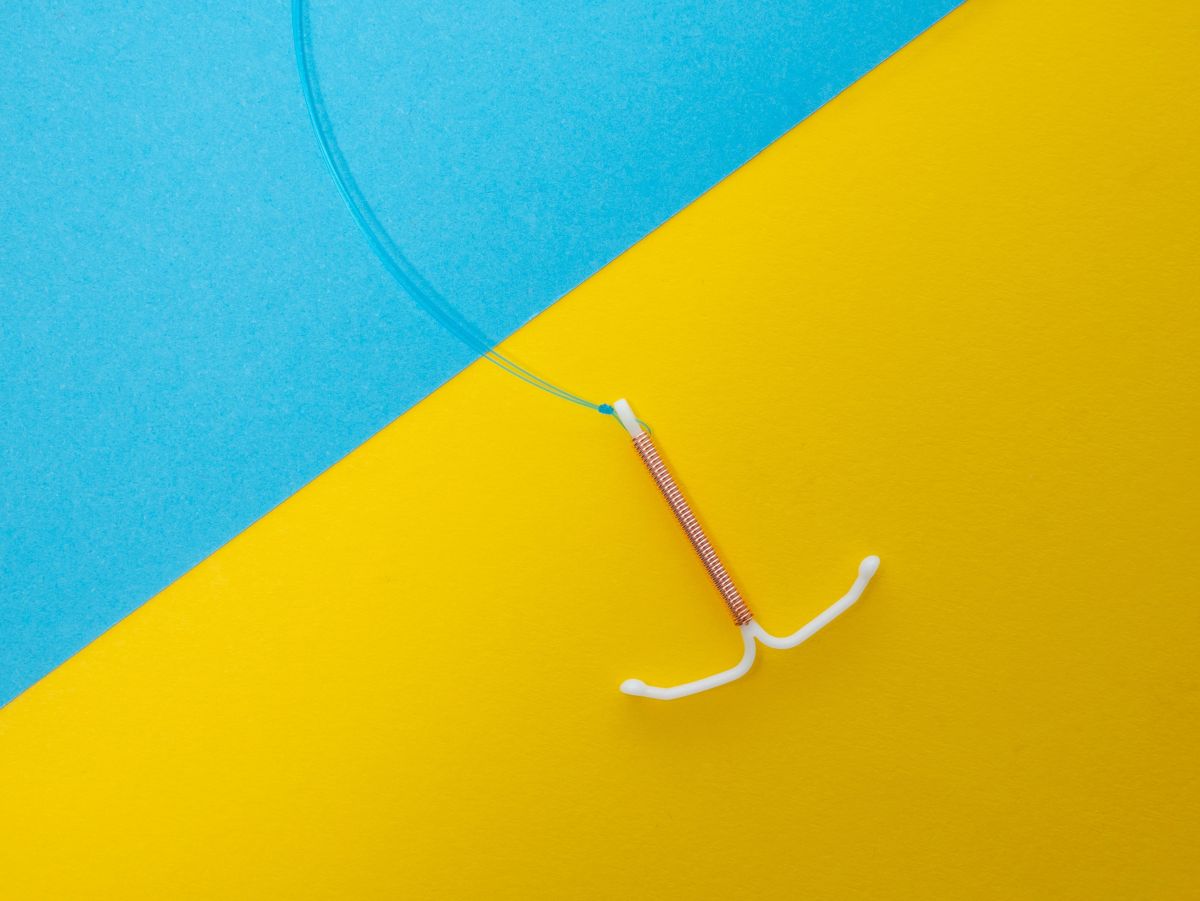
Long term birth control is something than many people look into when they know they’re either done having children or have no plans to have children for several years. There are different forms of long term birth control that people can get. The choices range from one month long protection in the form of a patch or cervical ring to things that last anywhere from three to ten years with options like the arm implant or one of the many IUD choices.
In the middle of all of those options are the Depo-Provera birth control injection. This form of birth control is injected via syringe at your gynecologist’s office, local health department or Planned Parenthood and protects you from pregnancy for three months. Every birth control user has their own reasoning for the type of birth control they use and the “depo shot” is fairly popular. It could be due to not having to remember a pill every day while also having a fairly short end date should someone choose to have a baby.
Recently the popular birth control has been under scrutiny after it was revealed that lawsuits had been filed due to a link between the birth control and a 450% increase in a specific type of brain cancer. This seemingly scary development has caused some of its users to panic with fear they could be exposing themselves to getting brain cancer. For some people, Depo-Provera is the only type of birth control they have found that works well with their personal chemical make up which has some people feeling like they’re now out of options.
It was this panic that led people to Dr. Jennifer Lincoln’s inbox. Lincoln is a board certified OBGYN who shares her medical knowledge on social media for people to reference and get accurate answers to medical questions related to those with female anatomy. Lincoln noticed an influx of people asking about the significant increased risk in developing brain tumors for those using the depo shot as their birth control option.
In a recent video posted to social media, the doctor shows a short clip of a video with text overlay reading, “when my birth control is going through a MASSIVE LAWSUIT for giving women brain tumors and I’ve been on it for 4 years and I’m still on it and I JUST FOUND OUT. I can’t do the pill because it’s too much, I can’t do the IUD because it looks too painful.”

Dr. Lincoln starts by sharing that she’s an OBGYN and has gotten a lot of messages about the lawsuit before going into exactly what’s happening and what people should and shouldn’t be concerned about.
“So there’s this study in the British Medical Journal that says using Depo-Provera leads to a 450% increase in a type of brain tumor called meningiomas, and when you Google ‘depo and brain tumors’ this is what you see. It’s almost all completely sponsored posts by lawyers so it seems like it’s really bad right,” she asks.
It’s at this point in the video where the OBGYN breaks down the numbers hoping to ease the minds of concerned people that come across her video. These types of studies can be difficult to read and when it comes to lawsuits, everything sounds scary. There’s currently a generation that grew up hearing commercial about the mesothelioma class action lawsuit and can still recite it even though they were not the target audience. Big lawsuits grab the attention of just about everyone, so Lincoln’s video just may calm the fears of those currently taking depo or those who have previously taken it.
“This is the one thing you need to know, people who are not on Depo-Provera have a 0.01% chance of being diagnosed with a meningioma. If you are on Depo-Provera, it is a 0.05% chance. That is a 450% increase but when you actually look at the actual numbers it’s not that scary and this is why getting your information in context and actually understanding it is really important but lawyers are not going to explain it that way.”
In the end, your risk of getting this particular type of brain tumor goes from 1 in 10,000 to 5 in 10,000 women according to Dr. Lincoln. While that slight increase may give some people pause, for others it may calm their worries about the terrifying sounding increase. Of course any chance of a product causing cancer is too high but with proper education people are at least be able to make a more informed decision before choosing or not choosing this option for their birth control needs.

In a small village in Pwani, a district on Tanzania’s coast, a massive dance party is coming to a close. For the past two hours, locals have paraded through the village streets, singing and beating ngombe drums; now, in a large clearing, a woman named Sheilla motions for everyone to sit facing a large projector screen. A film premiere is about to begin.
It’s an unusual way to kick off a film about gender bias, inequality, early marriage, and other barriers that prevent girls from accessing education in Tanzania. But in Pwani and beyond, local organizations supported by Malala Fund and funded by Pura are finding creative, culturally relevant ways like this one to capture people’s interest.
The film ends and Sheilla, the Communications and Partnership Lead for Media for Development and Advocacy (MEDEA), stands in front of the crowd once again, asking the audience to reflect: What did you think about the film? How did it relate to your own experience? What can we learn?
Sheilla explains that, once the community sees the film, “It brings out conversations within themselves, reflective conversations.” The resonance and immediate action create a ripple effect of change.
MEDEA Screening Audience in Tanzania. Captured by James Roh for Pura
Across Tanzania, gender-based violence often forces adolescent girls out of the classroom. This and other barriers — including child marriage, poverty, conflict, and discrimination — prevent girls from completing their education around the world.
Sheilla and her team are using film and radio programs to address the challenges girls face in their communities. MEDEA’s ultimate goal is to affirm education as a fundamental right for everyone, and to ensure that every member of a community understands how girls’ education contributes to a stronger whole and how to be an ally for their sisters, daughters, granddaughters, friends, nieces, and girlfriends.
Sheilla’s story is one of many that inspired Heart on Fire, a new fragrance from the Pura x Malala Fund Collection that blends the warm, earthy spices of Tanzania with a playful, joyful twist. Here’s how Pura is using scent as a tool to connect the world and inspire action.
A partnership focused on local impact, on a global mission
Pura, a fragrance company that recognizes education as both freedom and a human right, has partnered with Malala Fund since 2022. In order to defend every girl’s right to access and complete 12 years of education, Malala Fund partners with local organizations in countries where the educational barriers are the greatest. They invest in locally-led solutions because they know that those who are closest to the problems are best equipped to solve and build durable solutions, like MEDEA, which works with communities to challenge discrimination against girls and change beliefs about their education.
But local initiatives can thrive and scale more powerfully with global support, which is why Pura is using their own superpower, the power of scent, to connect people around the world with the women and girls in these local communities.
The Pura x Malala Fund Collection incorporates ingredients naturally found in Tanzania, Nigeria, Pakistan, and Brazil: countries where Malala Fund operates to address systemic education barriers. Eight percent of net revenue from the Pura x Malala Fund Collection will be donated to Malala Fund directly, but beyond financial support, the Collection is also a love letter to each unique community, blending notes like lemon, jasmine, cedarwood, and clove to transport people, ignite their senses, and help them draw inspiration and hope from the global movement for girls’ education. Through scent, people can connect to the courage, joy, and tenacity of girls and local leaders, all while uniting in a shared commitment to education: the belief that supporting girls’ rights in one community benefits all of us, everywhere.
You’ve already met Sheilla. Now see how Naiara and Mama Habiba are building unique solutions to ensure every girl can learn freely and dare to dream.
Naiara Leite is reimagining what’s possible in Brazil
Julia with Odara in Brazil. Captured by Luisa Dorr for Pura
In Brazil, where pear trees and coconut plantations cover the Northeastern Coast, girls like ten-year-old Julia experience a different kind of educational barrier than girls in Tanzania. Too often, racial discrimination contributes to high dropout rates among Black, quilombola and Indigenous girls in the country.
“In the logic of Brazilian society, Black people don’t need to study,” says Naiara Leite, Executive Coordinator of Odara, a women-led organization and Malala Fund partner. Bahia, the state where Odara is based, was once one of the largest slave-receiving territories in the Americas, and because of that history, deeply-ingrained, anti-Black prejudice is still widespread. “Our role and the image constructed around us is one of manual labor,” Naiara says.
But education can change that. In 2020, with assistance from a Malala Fund grant, Odara launched its first initiative for improving school completion rates among Black, quilombola, and Indigenous girls: “Ayomidê Odara”. The young girls mentored under the program, including Julia, are known as the Ayomidês. And like the Pura x Malala Fund Collection’s Brazil: Breath of Courage scent, the Ayomidês are fierce, determined, and bursting with energy.
Ayomidês with Odara in Brazil. Captured by Luisa Dorr for Pura
Ayomidês take part in weekly educational sessions where they explore subjects like education and ethnic-racial relations. The girls are encouraged to find their own voices by producing Instagram lives, social media videos, and by participating in public panels. Already, the Ayomidês are rewriting the narrative on what’s possible for Afro-Brazilian girls to achieve. One of the earliest Ayomidês, a young woman named Debora, is now a communications intern. Another former Ayomidê, Francine, works at UNICEF, helping train the next generation of adolescent leaders. And Julia has already set her sights on becoming a math teacher or a model.
“These are generations of Black women who did not have access to a school,” Naiara says. “These are generations of Black women robbed daily of their dreams. And we’re telling them that they could be the generation in their family to write a new story.”
Mama Habiba is reframing the conversation in Nigeria
Centre for Girls' Education, Nigeria. Captured by James Roh for Pura
In Mama Habiba’s home country of Nigeria, the scents of starfruit, ylang ylang and pineapple, all incorporated into the Pura x Malala Collection’s “Nigeria: Hope for Tomorrow,” can be found throughout the vibrant markets. Like these native scents, Mama Habiba says that the Nigerian girls are also bright and passionate, but too often they are forced to leave school long before their potential fully blooms.
“Some of these schools are very far, and there is an issue of quality, too,” Mama Habiba says. “Most parents find out when their children are in school, the girls are not learning. So why allow them to continue?”
When girls drop out of secondary school, marriage is often the alternative. In Nigeria, one in three girls is married before the age of 18. When this happens, girls are unable to fulfill their potential, and their families and communities lose out on the social, health and economic benefits.
Completing secondary school delays marriage, and according to UNESCO, educated girls become women who raise healthier children, lift their families out of poverty and contribute to more peaceful, resilient communities.
Centre for Girls’ Education, Nigeria. Captured by James Roh for Pura
To encourage young girls to stay in school, the Centre for Girls’ Education, a nonprofit in Nigeria founded by Mama Habiba and supported by Malala Fund and Pura, has pioneered an initiative that’s similar to the Ayomidê workshops in Brazil: safe spaces. Here, girls meet regularly to learn literacy, numeracy, and other issues like reproductive health. These safe spaces also provide an opportunity for the girls to role-play and learn to advocate for themselves, develop their self-image, and practice conversations with others about their values, education being one of them. In safe spaces, Mama Habiba says, girls start to understand “who she is, and that she is a girl who has value. She has the right to negotiate with her parents on what she really feels or wants.”
“When girls are educated, they can unlock so many opportunities,” Mama Habiba says. “It will help the economy of the country. It will boost so many opportunities for the country. If they are given the opportunity, I think the sky is not the limit. It is the starting point for every girl.”
From parades, film screenings to safe spaces and educational programs, girls and local leaders are working hard to strengthen the quality, safety and accessibility of education and overcome systemic challenges. They are encouraging courageous behavior and reminding us all that education is freedom.
Experience the Pura x Malala Fund Collection here, and connect with the stories of real girls leading change across the globe.
“Conversation about the weather is the last refuge of the unimaginative” is a quote often attributed to author and raconteur Oscar Wilde. Whether he said it or not, he’d probably wince at the idea of yammering on about the English rain or whether the autumn almanac was correct. However, he may have been missing the point of why we make small talk about the weather.
Dr. Thomas Smithyman, a clinical psychologist who helps people beef up their social skills, says we should view small talk about mundane topics, such as the weather, as a platform to show off our social competence and deepen relationships.
“Talking about the weather is this cliché, right?” he says in a YouTube video. “It’s everyone’s most dreaded, boring topic, but it works because it’s a commonality. We all have it in common. We’re all experiencing it.”
What does it really mean when you make small talk?
According to Smithyman, conversing about the weather isn’t about having keen insights into meteorology or comparing how much you’ve sweated; it’s to show that you are socially competent.
“Small talk can also signal to people that you understand how social interactions work,” he says. “If you can handle small talk, people trust you and can probably get into a bit of a deeper conversation without things getting terribly awkward. It’s just a little communication that says, ‘I know how to do this. I’m safe.’”
People usually think that being good at small talk means being entertaining, witty, or full of great stories. In reality, though, the key is to be a good listener and ask great questions. People tend to like those who appear to be interested in them. In fact, a Harvard University study found that when you ask a question and then two follow-ups, people like you more than if you quickly turn the conversation back to yourself.
Being good at small talk is about listening
“If you want to master small talk, it is luckily not about being the funniest or the most entertaining person,” Smithyman says. “If you look at good conversationalists, they don’t dominate, right? They actually are really good at making it easy for the other person to engage, because that’s what really helps a conversation flow.”
Think of it as a little test. The other person is thinking, “If this person can’t talk about the fact that it was slightly cloudy today, they’re not going to be able to help me with my existential crisis.” Or, “If they come off as awkward, or even sketchy, I’m not going to interact with them any further.”
The good news is that if you’re able to move beyond the usual introductory topics—such as the weather, sports, or traffic on the way to the party—and into more personal territory, you’ve likely been deemed a capable conversation partner and, possibly, even a friend.
Glenda Bridges had none of the usual warning signs. The 83-year-old Naples, Florida, woman wasn’t obese, didn’t have diabetes, didn’t have high blood pressure. But in the span of just a few days, she had three strokes. She said that one morning she woke up and “had no balance, and my vision was blurry,” according to the Gulf Coast News.
With each stroke, her brain was sustaining more damage, and doctors at NCH (the only Joint Commission-certified comprehensive stroke center in southwest Florida) needed answers fast.
Dr. Viktoria Totoraitis, a vascular neurologist at NCH, noticed something that other doctors might have missed: all three strokes had occurred in exactly the same location in Bridges’ brain. That wasn’t typical. “Blood vessels are like highways,” Dr. Totoraitis explained, “meaning they each go to a specific territory. So when a patient has a stroke, I know what blood vessel supplies that territory.” The fact that every stroke hit the same spot pointed to a single, consistent cause rather than random clotting events.
The strokes were what neurologists call wake-up strokes, meaning Bridges had gone to sleep without symptoms and woken up with them. Research suggests that roughly one in five acute ischemic strokes falls into this category, and they’re notoriously difficult to treat because the exact time of onset is unknown, complicating eligibility for clot-busting medications.
What Dr. Totoraitis needed to know next was exactly how Bridges slept. When she asked, Bridges answered: “On my side, kind of all curled up in a fetal position.” That detail, combined with something else in Bridges’ medical history, several prior neck surgeries and significant cervical spinal arthritis, led to an imaging test with Bridges positioned the same way she slept every night. The results were clear. “When she’s sleeping and curled up like that, because she does have a lot of cervical spinal arthritis, some narrowing, she was pinching off one of her vessels.”
The fix required no surgery. Dr. Totoraitis recommended Bridges change her sleeping position and wear a soft cervical collar at night. She also clarified that the fetal position is not dangerous for people without prior neck surgeries. For Bridges, though, the combination of arthritis, surgical history, and a habitual curl was cutting off blood flow to her brain every night.
Since making that small change, Bridges has not had another stroke.
Her case is an unusual one, but it carries a useful reminder: strokes don’t always look the way we expect. The fastest way to identify one remains the F.A.S.T. method: Face drooping, Arm weakness, Speech difficulty, Time to call 911. The sooner someone gets to a hospital, the more brain tissue can be saved.
In a 2023 TEDx Talk at Laguna Blanca School, Dino Ambrosi made a startling revelation that perfectly underlines the big question of the smartphone era: What is my time worth? Ambrosi is the founder of Project Reboot and an expert at guiding teens and young adults to develop more empowering relationships with technology.
Assuming the average person now lives to 90, after calculating the average time they spend sleeping, going to school, working, cooking, eating, doing chores, sleeping, and taking care of personal hygiene, today’s 18-year-olds have only 334 months of their adult lives to themselves.
“How you spend this time will determine the quality of your life,” Ambrosi says. However, given today’s young people’s tech habits, most of those months will be spent staring at screens, leaving them with just 32 months to make their mark on the world. “Today, the average 18-year-old in the United States is on pace to spend 93% of their remaining free time looking at a screen,” Ambrosi says.
An 18-year-old’s remaining time, in months. via TEDx
The idea that an entire generation will spend most of their free time in front of screens is chilling. However, the message has a silver lining. Sharing this information with young people can immediately impact how they spend their time.
How to get teens to reduce their screentime
Ambrosi says his work with Project Reboot through on-campus initiatives, school assemblies, and parent workshops has taught him that teens are more concerned about time wasted on their phones than the damage it may do to their mental health. Knowing which topic resonates can open the door to an effective dialogue about a topic that’s hard for many young people to discuss. When teens realize they are giving away their entire lives for free, they are more likely to reconsider their relationship with smartphones.
“I actually don’t get through to a lot of teens, as well as when I help them realize the value of their time and then highlight the fact that that time is being stolen from them,” Ambrosi told Upworthy.
A Common Sense Media study shows that, as of 2021, the average 13- to 18-year-old spent 8 hours and 39 minutes a day on entertainment screen time.
“It’s important to get them to view time as their most valuable resource that they can use to invest in themselves or enjoy life and tick the boxes on their bucket list. I really want them to see that it’s something they should take control of and prioritize, because we’re all under the impression that social media is free, but it’s actually not. We just pay for it with our time.”
Dino Ambrosi speaks at a school assembly. via Dino Ambrosi (used with permission)
Ambrosi believes that young people are less likely to give their time to tech companies for free when they understand the value of their time. “I find that kids really respond to that message because nobody wants to feel manipulated, right? And giving them that sense of being wronged, which I think they have been, by tech companies that are off operating on business models that are not aligned with their well-being, is important.”
His approach to getting teens to rethink their smartphone use is similar to that of the Truth Initiative in that it educates young people about the nefarious tactics big tobacco companies used to lure and addict young people. In a way, big tech companies are doing the same thing by luring young people into their products, connecting them with friends and influencers, while providing a product that rearranges their brain chemistry.
He also believes parents should be sympathetic and nonjudgmental when talking to young people about screen time because it’s a struggle that just about everyone faces and feels ashamed about. A little understanding will prevent them from shutting down the conversation altogether.
How to reduce my screentime
Ambrosi has some suggestions to help people reduce their screentime.
The ClearSpace app
ClearSpace forces you to take a breathing delay before using a distracting app. It also asks you to set a time limit and allows you to set a number of visits to the site per day. If you eclipse the number of visits, it sends a text to a friend saying you exceeded your budget. This can help people hold one another accountable for their screen time goals.
Don’t sleep with your phone
Ambrosi says to charge your phone far away from your bedside stand when you sleep and use an alarm clock to wake up. If you do have an alarm clock on your phone, set up an automation so that as soon as you turn off the alarm, it opens up an app like Flora or Forest and starts an hour-long timer that incentivizes you to be off your phone for the first hour of the day.
“In my experience, if you can stay off screens for the last hour and the first hour of the day, the other 22 hours get a lot easier because you get the quality rest and sleep that you need to wake up fully charged, and now you’re more capable of being intentional because you are at your best,” Ambrosi told Upworthy.
A teen boy looks at his phone in bed. Photo credit: Canva
Keep apps in one place
Ambrosi says to keep all of your social apps and logins on one device. “I try to designate a specific use for each device as much as possible,” he told Upworthy. “I try to keep all my social media time and all my entertainment on my phone as opposed to my computer because I want my computer to be a tool for work.”
Even though there are significant challenges ahead for young people as they try to navigate a screen-based world while keeping them at a healthy distance, Ambrosi is optimistic about the future.
“I’m really optimistic because I have seen in the last year, in particular, that the receptiveness of student audiences has increased by almost an order of magnitude. Kids are waking up to the fact that this is the problem. They want to have this conversation,” he told Upworthy. “Some clubs are starting to address this problem at several schools right now; from the talks I’ve given this semester alone, kids want to be involved in this conversation. They’re creating phone-free spaces on college and high school campuses by their own accord. I just think we have a huge potential to leverage this moment to move things in the right direction.”
We live in an era of incredible scientific advancements, from genetic editing to immunotherapy to nanotechnology. And yet, even the simplest science experiments using basic materials can still blow our minds.
People have been sharing what happens when you swipe two ice cream scoops against each other, with an unexpected result. It’s not surprising that some of one flavor transfers to the other. What’s weird is that both scoops transfer to each other, as if there’s an equal exchange of matter. How does that work?
Dr. James Orgill, a chemical engineer behind The Action Lab, explains the “surprisingly deep” physics principle behind the “impossible” transfer. Part of his explanation gets highly technical, involving quantum mechanics and thermodynamics. But it essentially comes down to the difference between “mixing” and “stirring.”
Orgill explains that when he first saw the ice cream transfer, he thought the chocolate and vanilla were mixing at the surface. “But the problem is that you can see that it’s not like a chocolatey-vanilla at the contact point,” he says in a YouTube video. “There’s still a clear layer of chocolate and a clear layer of vanilla.”
What’s actually happening relates to what Orgill calls “a surprisingly deep idea in physics,” which is how stirring and true mixing differ.
“This difference at first seems pedantic, but you’ll see that it turns out to be a line between reversibility and irreversibility, between systems that remember their past and systems that forget it forever,” he explains. “And once you see it, it explains not just the ice cream, but everything from fluid flows to entropy itself.”
Orgill demonstrates how stirring works by injecting blobs of dye into corn syrup suspended between two cylinders. As one cylinder spins, the colors stretch into layers and begin to mix. But when the motion is reversed, the dye blobs go back to their original places and shapes.
“This tells us something important about stirring,” he says. “It is reversible in principle. As long as material is only being stretched and rearranged into layers, the persistent state still contains a record of the past. Stirred fluids can act like history books.”
However, true mixing is a different story. The dye demonstration illustrates the principle of reversibility, but when you stir dye into a glass of water, it mixes so thoroughly that the process can’t be physically reversed.
“Over time, especially when you’ve created lots of thin layers with lots of surface area, diffusion smooths everything out,” Orgill explains. “Diffusion is the random thermal motion of atoms and molecules. Statistically, two initially separate groups of particles will spread out and interpenetrate. Once that happens, there’s no way to reverse the process. True mixing has actually occurred.”
Orgill then delves into the weeds of entropy, quantum mechanics, Loschmidt’s paradox, the Heisenberg uncertainty principle, and the irreversibility of time. What does that have to do with ice cream? Well, not much, thankfully.
“Luckily, our original ice cream experiment turns out to be a reversible process,” Orgill says. “What’s happening there is not mixing at the surface.”
Using two pieces of Play-Doh, Orgill shows that the ice cream scoops are actually “gouging” one another, not mixing.
“Imagine two spheres sliding past each other,” he explains. “As they pass, each sphere overhangs the edge of the other just a little bit. That overhanging section gets stressed out and torn loose. So instead of atoms diffusing together, the chocolate scoop rips a chunk out of the vanilla. And at the same time, the vanilla rips a chunk out of the chocolate. Those chunks get pressed onto the opposite surface at the same contact location. Both sides lose material and both sides gain material in the same spot. They’re not mixing. They’re taking bites out of each other.”
He explains and demonstrates that the same thing would happen if two planets were to collide. Bringing it back to a much smaller scale, people in the comments also note that the same thing happens when two cars scrape against each other.
Seeing Orgill’s models makes it easier to understand how such transfers happen. Essentially, the two objects smear a layer (ice cream, paint, or even planetary material) onto each other from opposite directions at the same time.
From ice cream cones to quantum mechanics to colliding planets—isn’t science fun?
You can follow The Action Lab on YouTube for more science explanations.
Being a clear communicator is a powerful social skill. Not only does it build relationships, but it also creates authentic connections.
But in high-pressure situations, confident speaking can start to crumble—we’ve all been there. For example, when talking to your boss or even on a first date.
It’s easy to start rambling and jumbling your words. To prevent this, communication expert Vinh Giang shares a clever 3-2-1 speaking trick that can help anyone slow down and communicate clearly and concisely when it matters most.
What is the 3-2-1 speaking trick?
According to Giang, it starts with training your brain for moments when you feel put on the spot.
“When someone asks you a question and you’re not prepared, what happens? Your brain hits the panic button,” he says in a YouTube video.
As you struggle to verbalize your thoughts, you may start to ramble—which, Giang notes, can lead to frustration and embarrassment. To avoid feeling flustered, he offers a 3-2-1 framework to keep in mind when speaking off the cuff.
“Without a communication framework to fall back on, your mind goes blank,” he explains.
The 3-2-1 framework consists of 3 steps, 2 types, and 1 thing. Using the example of avocados, he explains how it works:
1 thing
“The one thing about avocados that I love is that it’s great on a keto diet,” says Giang.
2 types
He switches to “ways” instead of “types,” explaining that there are “two ways to eat avocados: you can smash it up or eat it like a fruit [apple].”
3 steps
Finally, he explains that there are three steps to preparing avocados: “First step, cut it in half. Step two, mash it up. Step three, salt, pepper, and lemon.”
How to use the 3-2-1 speaking trick
Giang shares another example of how to use the 3-2-1 speaking trick, this time using the topic of travel. In a clip from a conference, he invites an audience member to offer three responses for each part. Her answers show how the method works in a real-life scenario:
1 thing
“The one thing about travel is it’s magnificent,” the audience member says. “You can go anywhere you want.”
2 types
“The two types of travel are: you can travel regionally and you can travel internationally via a plane,” she says.
3 steps
“Three steps to travel is plan it, book it, go!” she shares.
Giang congratulates her, noting, “That’s the difference between being prepared with a framework, because now you’re excited to communicate. When you’re not prepared, you’re not excited—you’re scared. You don’t want to communicate.”
The simple solution to stop rambling… If you want to learn what to say when you’re pausing and thinking, you need to learn how to use communication frameworks.
In the comments, people shared their responses to Giang’s video:
“I’m officially smarter than I was five minutes ago.”
“For an overthinker, this is gold. Thank you tons.”
“I’m 40 and honestly, this hits home. I’ve been in situations at work where I froze or rambled because my brain went blank under pressure. The 3-2-1 framework feels so practical and simple to apply—I actually tried it while watching and it gave me structure instantly. Definitely something I’ll practice more in meetings and daily conversations. Thanks for sharing this tool, Vin!”
“Immediately used this in a daily mundane small talk conversation that I’m having with someone, and I realized it’s not that I don’t like small talk because I’m not interested with someone… It’s because I don’t know how to do it. Managed to turn small talk into a chain of small conversations that led to more concrete discussions. Thanks a lot for this tip!”
“Yeah. This is a big problem that I have. For years I’ve struggled to communicate properly because my brain goes a thousand miles a minute and my mouth tries to keep up.”
Children are all naturally born scientists, with an incredible curiosity about the world around them. As adults, our job is to foster that spark so they can carry it throughout their lives.
“Kids are sources of chaos and disorder. Get over that fact,” science communicator Neil deGrasse Tyson said on the Impact Theory podcast. “Where does the disorder come from? It’s because they are experimenting with their environment. Everything is new to them, everything. Your job is less to instill curiosity than to make sure you don’t squash what is already there.”
Another job we have as adults is to make sure children are learning science correctly, which is why a toddler’s pajama shirt featuring the solar system is going viral on Reddit. It seems nobody at the clothing manufacturer took the time to review the science behind the graphic. In fact, it’s safe to say most kids as young as six could easily spot the flaws in the PJs.
Jupiter appears on the shirt as spotted, rather than striped as it does through a telescope. Although it’s known for its Great Red Spot, here it looks more like a strawberry.
Saturn appears spotted, like a chocolate chip cookie, rather than banded as it does in real life.
Neptune, a giant ice planet, is shown as cratered, like Mercury.
Mercury, conversely, is shown as a black-and-blue striped planet, more like Neptune.
Uranus is shown as the largest planet in the graphic, but in reality, it is about the same size as Neptune.
This is total conjecture, but it seems the graphic designer may have mislabeled Mercury as Neptune and Neptune as Mercury.
Reddit commenters also pointed out the questionable font, noting that the “o,” with its cursive-style tail, makes the word “moon” look like “Meeh.” And, to get super nitpicky, if this is meant to be an unbiased look at the solar system, why is there only one moon on the shirt when there are hundreds in our solar system, depending on how they’re defined?
The PJs’ astronomically incorrect design even bothered those in the scientific community.
“As a professional science communicator who works a lot with space at this age group, I am disappointed to see an adult get something wrong that any 6-year-old in the U.K. would correct,” Dr. Mark Gallaway told Newsweek.
Although the shirt may be wrong in many ways, it could be a blessing in disguise. The parent who purchased these PJs now has an opportunity for a teachable moment. They can take the pajamas and compare them to the actual solar system to see where the designer got things right or wrong. It’s also a chance to bring up one of the sad truths about the universe: Pluto isn’t among the PJ planets, because it was demoted. Thanks, Neil deGrasse Tyson.
Procrastination is more common than some might think. In fact, according to an article by Forbes senior contributor Bryan Robinson, more than 78 percent of working people procrastinate even though “it makes them anxious.” Some think it’s due to laziness, while others believe the anxiety itself creates a loop: they’re too anxious to get a task done, but not getting it done makes them even more anxious.
However, one theory behind why people procrastinate turns the whole “laziness” argument on its head.
Dr. Rick Hanson, a psychologist, shares a fascinating idea. In a comment attached to a clip posted on Instagram, he offers an entirely different view: “Procrastination is rarely about laziness or poor time management. It is more often something much more subtle. If I finish this, then what? If the pile disappears, who am I without it?”
He explains how having something that still needs to be tackled can feel like “proof” that we matter.
“Unfinished tasks can start to feel like proof that we’re busy, needed, in motion. They create a kind of background hum of identity. As long as something is pending, we’re still becoming. Still almost there.”
The fear of not existing
In the video, Hanson says people procrastinate “even when there are no obstructions to completing something, because sometimes they’re kind of afraid, almost at a deep level, that if they complete things, they’ll disappear. There will be almost no more basis for being. It’s the incomplete cycles in their life—the unfinished tasks, the various piles here or there—that almost give them a sense of psychological substance and existence.”
Hanson has ways to address this, and the first is to truly examine your motivations (or seemingly lack thereof).
“Look closely and ask yourself, ‘Is this really true? Do I go on existing because I have a number of undone tasks that I’m going to get to tomorrow or eventually? Is that why I keep on existing?’ Well, no. And notice the ways you can go on being. Or you have others you know who complete a lot of things, and they continue to exist just fine and really, quite happily.”
He says we must rewrite our inner monologue.
“Gradually realize for yourself, ‘Oh, I can complete these various tasks. And they then disappear from my life, understandably. I took care of it. And I’m still here, having a good time. And getting ready to accomplish the next important thing.’”
Upworthy spoke with Cort M. Dorn-Medeiros, a professional counselor and addiction specialist, who first noted that there are many real reasons people might procrastinate.
“Fear of failure, doubts about self-worth, perfectionist tendencies, emotional avoidance, and potential diagnoses such as attention-deficit-hyperactivity disorder (ADHD) or generalized anxiety disorder (GAD).”
That said, he does give credence to Hanson’s idea as well.
“We have strong cultural messaging that if we are not doing something, if we are not being productive, then we are not useful. All of our human value lies in the ‘doing’ rather than the ‘being.’ A lot of this is derived from Internet-based hustle culture, where speed is prioritized above all else. Do more, make more money, and do it faster and faster.
If we are left with nothing to do, then we are left sitting with our own thoughts and feelings. Procrastination is a good way to unconsciously avoid sitting with our feelings. If we are constantly focused on our to-do list and maintain it in a way that prevents progress by crossing things off, we manage our anxiety about ‘being’ rather than ‘doing.’”
Matthew Baker, LCSW, tells Upworthy it’s all about avoidance.
“Procrastination is almost always about avoiding something uncomfortable. For some people, finishing a project is what becomes the problem, not starting it. This is often because the brain gets rewarded from simply planning and organizing, even without actually doing anything. So some people avoid completing tasks because they’re already getting a sense of satisfaction from planning, and finishing means that this dopamine stream just…stops.”
If you never seem to get tired of blasting the same handful of early 2000s songs—maybe the emo tones of My Chemical Romance or something a little more upbeat and ’90s like *NSYNC—it’s not just you.
It’s no longer a mystery why so many of us seem to be “stuck” on the music we listened to as teens. Our musical tastes may evolve over time, and we always have room for new favorites (and a seemingly endless capacity in our brains for catchy lyrics), but there’s something about the songs of our youth that just hits different.
What’s behind the phenomenon
A therapist is going viral for explaining this phenomenon perfectly. It’s not just nostalgia, she says. It’s neuroscience.
Singing along to your teenage throwback songs is good for your brain. Photo credit: Vitaly Gariev on Unsplash
Nikki Roy is a therapist from Canada who specializes in helping her clients with “self esteem, confidence, identity, emotion work (lots of anger), living authentically, creating a life of alignment, and breaking free from the oppressive systems the world operates on,” according to an interview with CanvasRebel.
She uses her vast social media following to break down big, complex topics in bite-sized ways that can reach and help a lot of people.
Recently, she tackled a concept she calls “neural nostalgia.”
“This is actually really well-researched,” she says in a recent Instagram Reel. “The research found that the music you listen to as an adolescent or teenager actually imprinted on your brain and nervous system differently than music you’ll ever listen to at any other time in your life.”
She goes on to explain that when you’re a teenager, the pathways in your brain are still being built. The blueprint is still being developed, and it can be influenced by the music you listen to regularly. When you’re an adult and hear the music that, quite literally, “built you,” a lot of things come rushing to the surface.
“Dopamine, seratonin, all those things start rushing back,” Roy says. “You literally feel it in your gut. That specific music does something to you.”
According to Marble Wellness, “When we listen to music from our youth, several brain regions become active.” These include:
The hippocampus, where memories are formed and retrieved
The amygdala, which regulates emotions
The prefrontal cortex, which manages complex cognitive behaviors
Reward centers
It’s no wonder that our entire brain and mood can light up just a few notes into one of our favorite throwback songs.
“Music is my safe space”
Roy says she likes to use neural nostalgia as a coping skill in her own life. She uses throwback tunes to boost her mood or process difficult emotions.
“My car and music is my safe space,” she says. “And the music that got you through an especially hard time during that age, is probably always going to hit.”
Fellow Millennials are feeling seen in the comments:
“I have been listening to all the millennial jams lately and it has made my life so much lighter!”
“When ‘it just hits different’ is backed by science”
“When I was a kid I used to wonder why old people prefer to listen to their ‘old’ music when there’s so many good new music to listen to, now as and adult I fully get it”
“yessss, i’ve been catching the sunset by the beach every evening in my ‘95 jeep with the top down blaring 90s R&B & 80s rock. i feel so whole. everything is like a nostalgic hug”
“play your grandparents tunes from their teenage years too. they’ll light up”
Some folks were fascinated by the fact that they could remember the lyrics of songs they hadn’t heard in 20 or 30 years.
“I turned 38 yesterday and listened to the Space Jam soundtrack while I ran errands,” one commenter noticed. “Still knew every word but couldn’t remember my shopping list I wrote 30 mins before.”
Song lyrics stick in our brains and are notoriously easy to remember. Musical melodies act as a “scaffolding” that helps us fill in the blanks, and the way music triggers emotions makes the words more memorable than other pieces of information.
Those songs that imprinted on our brains while they were still developing? Their lyrics are so deeply embedded that they may never leave us, which is pretty incredible.
In fact, this phenomenon may one day be useful for treating Alzheimer’s disease, dementia, and other memory diseases.
More generally, neural nostalgia has a ton of benefits, according to Marble Wellness. Listening to the songs you loved as a teen can boost your mood, reduce stress, and even lessen feelings of loneliness. Even more powerfully, it can connect you to a sense of your authentic self—to who you were before the world shaped you, and to all the versions of yourself that came before and after.
It’s heavy and complicated, but you know it when you feel it.