
Check out this futuristic, organic vertical farm being built in Compton, California

When most people think of Compton, California the first thing that comes to mind is the city south of Los Angeles that birthed legendary gangster rap group N.W.A. featuring Dr. Dre, Eazy E., and Ice Cube. So it’s surprising to some that the “Hub City” has a rich history of farming. The city was settled…

Array
ArrayPhoto credit: via Plenty

When most people think of Compton, California the first thing that comes to mind is the city south of Los Angeles that birthed legendary gangster rap group N.W.A. featuring Dr. Dre, Eazy E., and Ice Cube. So it’s surprising to some that the “Hub City” has a rich history of farming.

The city was settled by Reverend Griffith Dickenson Compton who led around 30 settlers to cultivate the land in the late 1860s. In 1888, Compton donated his land and the area was incorporated by Los Angeles County as the City of Compton. The reverend made the donation with a guarantee from the county that a portion of the city would be zoned for agriculture.


Richland Farms, an agricultural area that still stands in the city, is a testament to the agreement Compton made all those years ago. The area is now home to the Compton Cowboys, a group of urban horse riders dedicated to highlighting the rich legacy of African-Americans in equine and western heritage.


Now, not far from historic Richland Farms, a 21st century vertical farm is sprouting up in Compton.

Plenty, an organic produce company, is currently building a massive, vertical hydroponic farm in a 95,000-square-foot warehouse in the city. When fully operational, the vertical farm will look like an extraterrestrial greenhouse you’d see in sci-fi films.
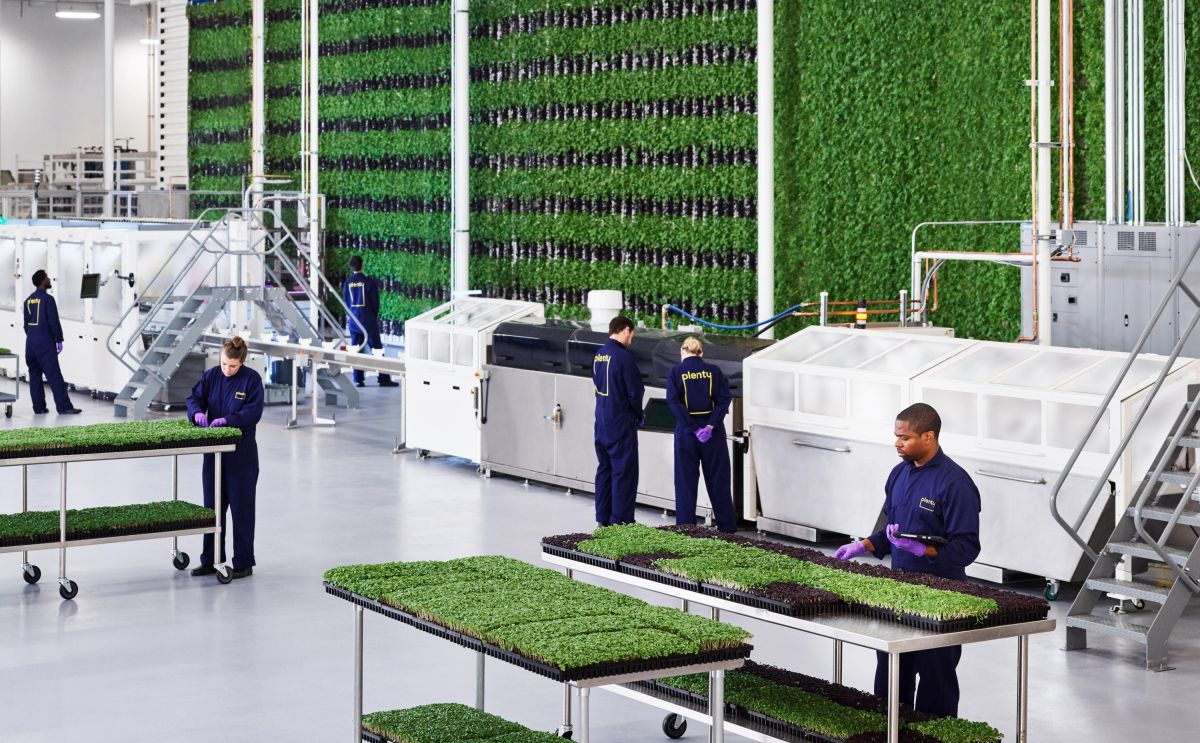
The warehouse will feature massive vertical farms with rows and rows of crops, futuristic LED lighting, and the food will be harvested by robots. “Just pure food like nature intended,” the company says.

The vertical design uses up a lot less land than a traditional farm.

Plus, farming indoors protects crops from the elements which make it easier to grow without pesticides.
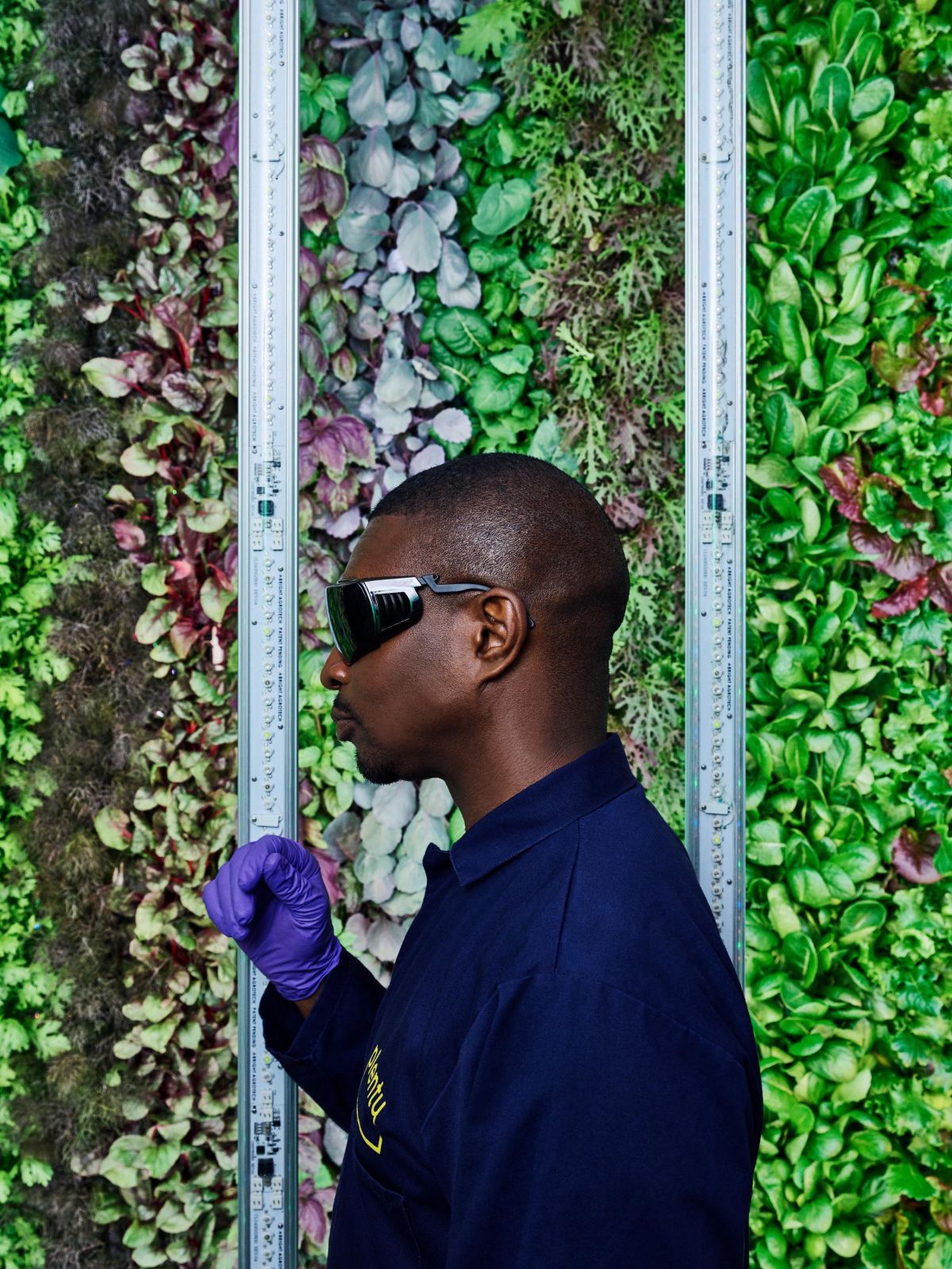
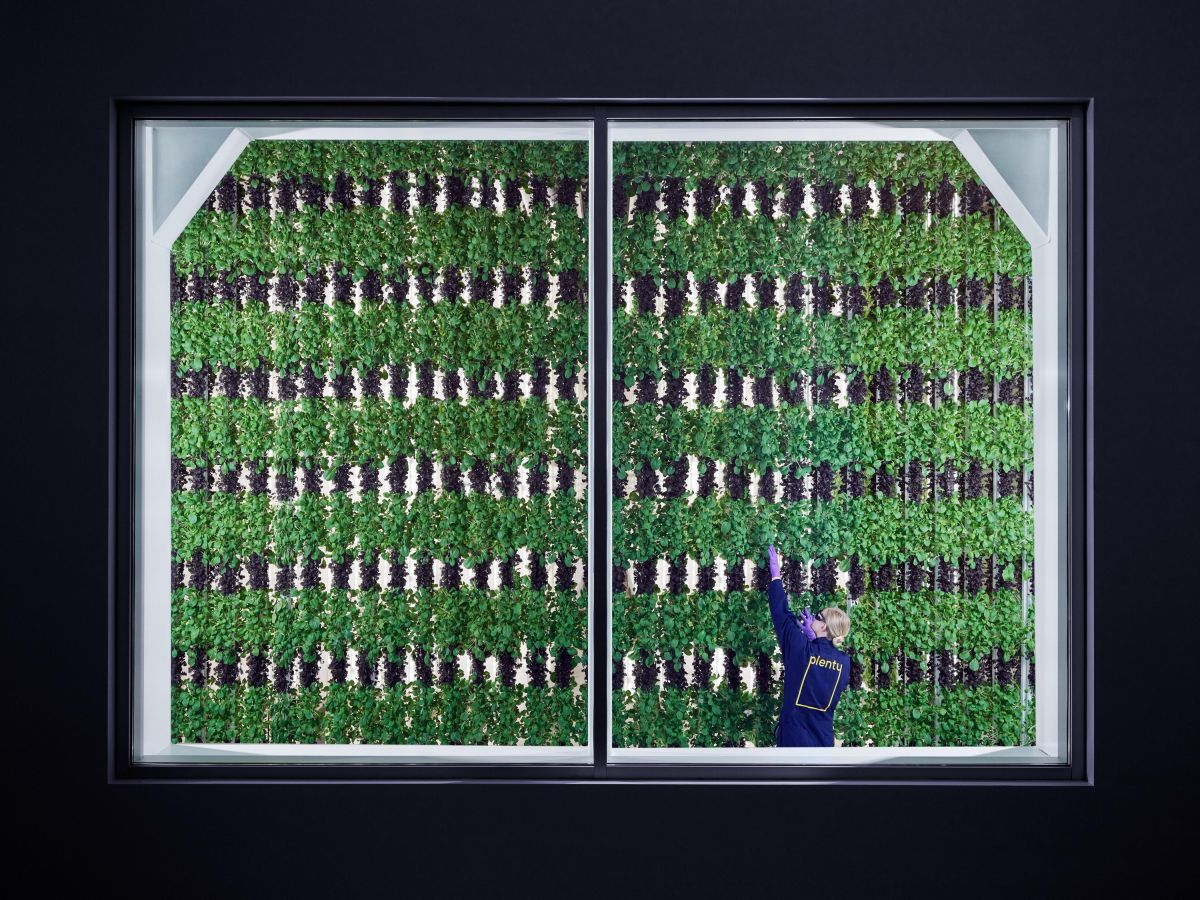


“From day one, it’s perfectly controlled…We don’t use pesticides, there’s no birds flying over our field pooping on the produce, there’s nothing to wash off, it’s usually not touched by human hands ever, and so we have a safe, clean product that is ready to eat right out of the package,” Dr. Nate Storey, the chief science officer and co-founder of the vertical farming company, told ABC.

Plenty also has farms in the Bay Area, Washington, and Wyoming.

Bok choy, fennel, arugula, and kale will be the first crops grown at the farm which looks to produce its first harvest in 2022. Compton mayor Aja Brown believes the farm’s goals are perfectly aligned with those of the city.

“To have a vertical farm that has the ability to produce organic fresh fruits and vegetables with little space and a little bit of water is just incredible, and I believe their mission to combat food insecurities is right in line with our vision that we have for Compton,” Brown said.

Plenty hopes to deliver fresh produce to local restaurants and get more fresh produce to consumers in the area. It already has over 400 Southern California grocery stores signed up to receive deliveries.

So who knows, maybe in the next few years, kale could be just as well known for coming “Straight Outta Compton” as gangster rap.

  • 50 years later, the iconic ‘Sesame Street’ counting song is overwhelming Gen X with nostalgia
    The pinball countdown is a total Gen X earworm.Photo credit: Sesame Street/YouTube

    Gen X is sometimes referred to as “the Sesame Street generation,” a moniker many of us wear with pride. Sesame Street was a childhood staple, along with Mister Rogers’ Neighborhood and The Electric Company. Countless Gen Xers owe a great deal of our early childhood education to those public television programs.

    Decades later, Gen X still finds songs and phrases from Sesame Street indelibly imprinted on our brains. If you say to an avid watcher, “A loaf of bread, a container of milk…,” they’ll automatically add, “and a stick of butter.” But there may be no more recognizable clip from the show than this iconic pinball counting song:

    One, two, three, four, five…

    It’s the jazz-funk earworm that never leaves us, and people have been resharing it in a wave of nostalgia. Comments like these are popping up on social media shares:

    “You never realize you’re missing something until you hear and see it 40 years later.”

    “I don’t think I’ve ever counted to 12 any other way in my life.”

    “Still my favorite way to count. I taught my daughters how to count like this & am now singing it to my granddaughter to teach her how to count. This has been stuck in my head my whole life.”

    Some people were surprised to discover that the song was sung by The Pointer Sisters, whose 1980s hits included “I’m So Excited,” “He’s So Shy,” and “Jump (For My Love).”

    “1. Love that song. Still sing it today, much to the annoyance of my family. I admit that sometimes I sing it, in fact, to be annoying. 2. Had no idea, at all, that it was anyone famous singing it. Until now.”

    “Damn it saw the graphic and now the song will be in my head for 2 days lol. That said I didn’t know it was the Pointer Sisters so that’s pretty cool.”

    “I have never forgotten and will always remember! But I did not know it was the Pointer Sisters! See, they are still teaching!”

    Jack Black talks about the pinball countdown masterpiece

    The brilliance of the pinball countdown lies in both the music and the animation. First, it’s so ’70s in the absolute best way. So very funky. So very psychedelic. But when you consider that the lyrics include only numbers—one to 12, plus whichever single number is featured—it’s amazing that it took such a permanent place in our psyches.

    Actor Jack Black has talked about the influence this specific song had on him and his creativity as a kid.

    “When I was a kid, I used to watch PBS,” he shared. “I’d watch Sesame Street, and I loved Jim Henson and all of his puppets. And all the people there were so funny and great, and I learned a lot. And one of my favorite things was this little cartoon that taught me how to count to…12.”

    Then he sang the counting part with his signature Jack Black flourish.

    “It was just really good music and really good animation, and it fired up my creativity like crazy,” he said. “And it inspired me.”

    How the Pointer Sisters helped create one of the most iconic Gen X memories

    The catchy little ditty was composed and produced by Walt Kraemer, whose company, Imagination, Inc., produced many animation pieces for the Children’s Television Workshop. He shared details of the 1976 recordings of the pinball countdown pieces in an email to blogger Matt Jones:

    “Those were indeed the Pointer Sisters. All four of them. At the time only three were performing regularly and I recall budgeting for just the three when June showed up at the session with the rest. It was a bonus. The basic track was performed by San Francisco Bay Area musicians and since there were to be eleven pieces of animation I had the track structured to accomodate three different lead instrument overdubs to give the pieces some variety. On some numbers Andy Narell plays a steel drums solo, on others Mel Martin plays a soprano sax solo, on the rest… I forget. Much credit should go to Ed Bogas for interpreting my melody ideas and for the musical arrangements.”

    “The concept and design was devised by our animation director, Jeff Hale. It was his idea that I create basic tracks then record as ‘wild-lines’ the Pointers shouting the various 2-11 numbers in different intensities and different compliments of voices. Then, each time the pin ball hit a selected number he would drop in these (off-key—couldn’t be helped) wild lines.”

    He also said that he realized after the fact that he “may have stolen the first five notes of the Woody Woodpecker Song.” Pretty sure no one noticed.

    … six, seven, eight, nine, ten, eleven, twelve

    There were actually videos for numbers 2 to 12, not 2 to 11. If you want to see all 11 of the shorts, here you go. (Fair warning: you’ll likely never get the song out of your head if you watch them all.)

    And why isn’t there a segment for the number 1, you may wonder? It’s a true Gen X mystery.

  • In 1997, Beatles producer George Martin was stunned by this Brazilian all-girls choir rendition of ‘Because’
    In 1997, George Martin was visibly moved by a choir performing The Beatles' "Because."Photo credit: Screenshots via the_beatlesrevolution on Instagram

    Who deserves the honorary title of “fifth Beatle“? You could make a case for several people: guest keyboardist Billy Preston, early drummer Pete Best, even manager Brian Epstein. But on a musical level, no one was more crucial to The Fab Four than producer George Martin, who worked on all of their albums.

    That close connection only highlights the beauty of a recently unearthed video: In 1997, an all-girls choir surprised a visibly emotional Martin by singing The Beatles’ “Because” at a Brazilian airport

    It’s unclear exactly where the clip originated, but a Brazilian TV network appears to have shared it during a broadcast. Multiple social media profiles have also posted the footage, including Instagram account the_beatlesrevolution, who offered some additional context. The video, they write, shows Martin arriving at the Rio de Janeiro airport to find the Meninas Cantoras de Petrópolis choir sweetly singing “Because.”

    “What a beautiful, brilliant human he was”

    The video opens with Martin approaching the choir, his eyes welling. (It’s a fitting response for a song with the lyric, “Because the sky is blue, it makes me cry.”) He smiles, vigorously applauds, and even wipes the tears from his face. Beatles fans reacted in the comments with a similar warmth, including these top replies: 

    “A genius & a gentleman!! ❤️”

    “My god, the beauty of this moment… I’m weeping.”

    “George Martin – he had one of the most amazing ‘jobs’ ever, the musical history he helped shape was astounding. 🙌”

    “This guy wrote a history! There’s no musician or a Beatles fan that wouldn’t cry to this. Tears with goosebumps!”

    “Wonderful legacy❤️”

    “When you realize that what you’ve achieved with your friends (and what friends!) is truly remarkable”

    “Just a beautiful video. Thank you so much for posting it. Sir George played a huge part in the Beatles story and here we see the joy he had, many years after they broke up, still being loved for his contribution to the Fab Four’s legacy ❤️”

    “I am moved by the performance as well. What a beautiful brilliant human he was. I am grateful he existed in my lifetime.”

    “Because” exemplifies George Martin’s connection with The Beatles

    “Because,” a highlight from 1969’s Abbey Road, was an ideal choice as a Martin tribute. The recorded version, built on lush vocal harmonies, opens with one of his signature instrumental contributions: a chiming electric harpsichord.

    The song also symbolizes his deep relationship with The Beatles: While he was less involved in recording 1970’s Let It Be, which featured final production by Phil Spector, Martin resumed his usual role on their studio swan-song Abbey Road. (For clarity’s sake, The Beatles didn’t complete and release Let It Be until after Abbey Road, even though they recorded it before.) 

    In an archival interview, Martin explained that “Because” features triple-layered three-part harmonies from John Lennon, Paul McCartney, and George Harrison. (While drummer Ringo Starr doesn’t appear on the recording, he did provide a metronomic hi-hat pulse in the others’ headphones.)

    For the song’s arpeggiated riff, Lennon was inspired by Beethoven’s “Moonlight Sonata,” after hearing Yoko Ono play it on piano. In multiple interviews, he recalled telling her to play the chords “backward,” using the result as a springboard into something new. 

  • If you see a person and two dogs in this photo, look again. It’s an optical illusion.
    If you see a man and two dogs, look again.Photo credit: @Rainmaker1973/X, @farhadge/X

    Optical illusions are wild. The way our brains perceive what our eyes see can be way off base, even when we’re sure about what we’re looking at. Plenty of famous optical illusions have been created purposefully, from the Ames window that appears to be moving back and forth when it’s actually rotating 360 degrees, to the spiral image that makes Van Gogh’s “Starry Night” look like it’s moving.

    But sometimes optical illusions happen by accident. Those ones are even more fun because we know they aren’t a result of someone trying to trick our brains. Our brains do the tricking all by themselves.

    The popular Massimo account on X shared a photo that appears to be a person and two dogs in the snow. The more you look at it, the more you see just that—two dogs and someone who is presumably their owner. Turn the photo every which way and it’s still the same conclusion.

    That’s a person and two dogs, right?

    But there are not two dogs in the photo. There are actually three dogs in this picture. Can you see the third?

    Full confession time: I didn’t see it at first. Not even when someone explained that the “human” is actually a dog. My brain couldn’t see anything but a person with two legs, dressed all in black, with a furry hat and some kind of furry stole or jacket. My brain definitely did not see a black poodle, which is what the “person” actually is.

    Are you looking at the photo and trying to see it, totally frustrated? The big hint is that the poodle is looking toward the camera. The “hat” on the “person” is the poodle’s poofy tail, and the “scarf/stole” is the poodle’s head.

    Once you see it, it fairly clear, but for many of us, our brains did not process it until it was explicitly drawn out. This outline helps somewhat:

    As one person explained, the black fur hides the contours and shadows, so all our brains take in is the outline, which looks very much like a person facing away from us.

    People’s reactions to the optical illusion were hilarious.

    One person wrote, “10 years later: I still see two dogs and a man.”

    Another person wrote, “I agree with ChatGPT :)” and shared a screenshot of the infamous AI chatbot describing the photo as having a person in the foreground. Even when asked, “Could the ‘person’ be another dog?” ChatGPT said it’s possible, but not likely. Ha.

    One reason we love optical illusions is that they remind us just how very human we are. Unlike a machine that takes in and spits out data, our brains perceive and interpret what our senses bring in—a quality that has helped us through our evolution. But the way our brains piece things together isn’t perfect. Even ChatGPT’s response is merely a reflection of our human imperfections at perception being mirrored back at us. They say seeing is believing, but when what we interpret what we’re seeing incorrectly, we end up believing things that might not be real.

    Sure is fun to play with how our brains work, though. Also a good reminder that what we think we see, even with our own eyes, may not be an accurate picture of reality.

    This article originally appeared two years ago. It has been updated.

  • Man walks around Brooklyn after blizzard to show off the most wonderful snow creatures
    A snowman sculpture in New York City.Photo credit: Instagram/WhatIsNewYork
    ,

    Man walks around Brooklyn after blizzard to show off the most wonderful snow creatures

    “Humans at their finest. It’s freezing and they made art.”

    Art is magical because it can be found anywhere at any time. So when New Yorkers got close to three feet of snow dumped on their city, many dug deep into their creative sides. They took to the parks and contributed to building a winter wonderland of whimsical snow creatures.

    Of course, this wasn’t just any snowfall. It was a full-on blizzard causing travel bans, school and street closures, and power outages in all five New York City boroughs and the surrounding cities and states in the Northeast.

    NYC Mayor Zohran Mamdani announced an old-fashioned snow day by FaceTiming an 8th-grade student named Victoria. “So my only ask to you is that you just stay safe, stay indoors during the height of the storm,” he told her. “Once that has passed, feel free to go out and sled.”

    Artists got creative

    For many residents, the powdery, white snow became a sculpting canvas. Photographer Matthew Dean Stewart took to a park in Brooklyn to show off some of the most adorable creations. Captioning the video, “I LOVE BROOKLYN,” we first see a puppy snowman who looks not unlike a Pixar character begging for love.

    Then he moves on to a more traditional snowman, complete with an orangey pink nose that he, of course, “boops.” Another snowman has an orange hat. Yet another is just basic snowballs piled atop one another.

    Stewart also points out a detailed pyramid that someone built. “How did they even DO that? That’s pretty impressive.”

    We next see a woman on the ground stirring strawberry ice cream in a silver bowl. “She’s making ice cream in the snow!” Stewart exclaims. She gives him a spoonful to which he replies, “This is so good. This is the best day of my life.”

    Aside from traditional snowmen (giant, faceless, tiny carrot-nosed), some sculptures were clearly made by potentially professional artists. One snowperson is wrapped around a tree, complete with hair made from leaves. “It has hair! And it has a butt!” Stewart points out.

    Another is a “study” Hello Kitty snow-cat. Then we get to the duck. “It’s a duck. What else would it be? That’s like super detailed,” Stewart quips.

    Some people got incredibly creative and used trees as the actual canvas and snow as the “paint.” “That is adorable. It looks like it has hair,” he says about one. Another artist used a similar idea to “paint” a snow lizard climbing a tree.

    Perhaps coolest of all: other artists built an actual igloo on which they’ve written “The people’s igloo.” They sit inside, illuminated by a light (possibly from a smartphone!).

    It’s Stewart’s joyous giggling and earnest commentary that gives the snow creature tour that extra delightful touch. “That s–t was whimsical as f$%$,” he concludes.

    The comment section agrees. The clip already has over 265,000 likes and thousands of comments. One notes, “The fact that I know without a doubt that every single one of them was made by fully grown adults and not one actual kid was around for the making of these snowmen is hilarious.”

    Others simply marvel at the whimsy of the city. “What a display of joy!” “This is incredible – so New York!” one writes. “Humans at their finest. It’s freezing and they made art. AI could never,” said another.

    A few of the artists eventually came forward to claim their work: Dori Miller (@dori.miller) writes, “I made that lizard!” And when asked who designed the “tree hugger,” Michael Galligan (@Michael_galligan) chimed in, “That was me and Maddy Rosaler (@maddyrosaler).”

    Dazed by the igloo, one Instagrammer writes, “I’m sorry, but there aren’t enough people in these comments talking about that igloo. A WHOLE IGLOO! WHAT? Incredible.”

    Perfect conditions for snowmen

    As terrific as these snow creations are, it takes a certain temperature and snow type to make it all work—even for the most brilliant artists. A 2015 article in Smithsonian Magazine explains the science behind it, citing perfectly-named physicist Dan Snowman, who says, “Snow can be either too wet or too dry.”

    “Scientists actually classify snow based on its moisture content—the amount of free water relative to ice crystals—not to be confused with the amount of water the snow would produce if melted. Snow comes in five categories: dry (zero percent water), moist (less than 3 percent), wet (3 to 8 percent), very wet (8 to 15 percent), and slush (more than 15 percent).”

    For snowman-building weather, it’s best to have moist snow. “Dry snow is like a loose powder with particles that don’t stick together very well, while slush is too fluid to hold a shape.”

    Temperature-wise, the weather needs to be just a bit above freezing. As for the “where” of it all: “Once the raw material is on the ground, it’s time to select your snowman-building surface. Level ground is best, but asphalt absorbs and holds heat from sunlight, so avoid driveways. A flat spot near the bottom of a large hill could provide shade and keep your creation safe from direct warmth from the sun—although it may wind up as a target for sleds.”

  • Philosophy expert shares the 300-year-old rule to tell if someone is a good or bad person
    Johann Wolfgang von Goethe and a scene at a restaurant.Photo credit: via Canva/Photos and G.Meiners/Wikimedia Commons

    What makes a ‘good person’ is hard to quantify, but sometimes, you just know it when you see it. But that’s the problem, you can’t always see it. Have you ever met somebody new and wondered if they were a good person with a mischievous streak or a bad person who can turn on the charm and behave occasionally? Determining someone’s true moral character is important, especially if you start dating them or have a business relationship. It is crucial to get to the core of who they are and know whether they can be trusted.

    Popular TikTok philosopher and Substack writer Juan de Medeiros recently shared a great way to determine whether someone is good or bad. His rubric for judging someone’s moral character comes from a quote commonly attributed to Johann Wolfgang von Goethe, a German poet, playwright, novelist, and intellectual known for works like Faust and The Sorrows of Young Werther.

    How can you tell if someone is a good or a bad person?

    “Here’s a pretty good indicator that somebody is a bad person and vice versa, how you can spot a good one. And this goes back to a simple rule, a moral aphorism by Goethe in which he writes, ‘Never trust someone who is unkind to those who can do nothing for him,’” de Medeiros shared in a TikTok video with over 45,000 views.

    “Never trust someone who is unkind to those who can do nothing for him.” —Johann Wolfgang von Goethe

    De Medeiros then provided real-world ways to determine whether the person you have questions about is good or bad. “A bad person is unfriendly to strangers, to the elderly, to children, to service staff, to anybody they’re not trying to impress,” he said. At the same time, the good person treats people equally, no matter what they can do for him. They’re good for goodness sake, not to get anything out of it.

    “A good person carries grace within them and shares it freely with abundance. A good person treats other people as they would like to be treated as well. And it doesn’t matter who you are, it doesn’t matter what your status is, they will treat you and see you as their equal,” de Medeiros said.

    What is ‘The Waiter Rule’?

    Goethe’s quote echoes the common red/green flag test that many people have on dates. Sure, it’s important if your date is courteous and treats you well on the date, but you really want to watch how they interact with the server. The rule is often called “The Waiter Rule,” outlined by William Swanson. Swanson, the former chairman and CEO of Raytheon Company, wrote in his book, 33 Unwritten Rules of Management, “A person who is nice to you but rude to the waiter—or to others—is not a nice person.” Boxer Muhammad Ali is also known for saying something similar: “I don’t trust anyone who’s nice to me but rude to the waiter. Because they would treat me the same way if I were in that position.”

    Rudeness toward the waitstaff also indicates that the person isn’t very smart. It’s not wise to be rude to someone who is in charge of your meal for the night.

    Conversely, a good person is kind to others without looking for anything in return because they want to spread joy and believe that others deserve respect. You are what you do, not what you think or believe, and when someone treats others with goodness, it’s a clear indicator of the type of person they are.

    In the end, we are all a mixed bag of behaviors and attitudes, and even the most perfect of us has a devil on their shoulder telling them that it’s okay to occasionally get into a bit of mischief. However, when it comes down to determining someone’s core character, how they treat those who can do nothing for them says everything.


    This article originally appeared last year. It has been updated.

  • A man at a bar bought a rude stranger a drink and used it as a brilliant lesson about consent
    An uncomfortable woman is approached by a man at a barPhoto credit: Canva

    The situation was familiar enough to be exhausting. A man at a bar had bought a woman a drink. She didn’t want to go home with him. He apparently felt those two things were in conflict.

    “You are not going to come home with me?” he said, audibly frustrated. When she said no, he pushed back: “But I bought you a drink.” She got up and walked away.

    A TikTok user who goes by @tripptokk10 was standing nearby when this happened, already at the bar ordering his own drink. He watched the woman leave, looked at the man still standing there working through his grievance, and made a decision. He ordered two shots.

    “I slide it over to him,” he explained in his TikTok video, posted December 20, 2025. They took the shots together. Then he leaned in and made his point: “So are you going to come home with me or what?”

    The logic was the same. The conclusion was absurd. That was exactly the point.

    In the video, filmed casually at home in a robe and bonnet, he explained what he was responding to: “This one’s for the boys who think buying a woman a drink at the bar means that she should go home with you. No, it doesn’t. She doesn’t know you.”

    A man stares at a woman at a bar.
    A man stares at a woman at a bar. Photo Credit: Canva

    The same creator posted a second video about another night, different bar, same basic dynamic. This time a man had approached one of his female friends, put his hands on her shoulders without asking, and kept going despite her visibly trying to shrug him off. When she tried to walk away, he reached for her hand. The TikTok user stepped in and told him to back off.

    What happened next is the part that stayed with people. The man started apologizing, directing the apology not at the woman he’d been grabbing, but at the guy who’d intervened. “You didn’t do anything to me,” the creator told him. “You were harassing her.”

    The man’s response: “I respect you so much.”

    He described how confused and frustrated he felt in that moment. “Go apologize to her and change your behavior,” he said in the video, “because an apology without changed behavior is just a manipulation tactic.”

    That line hit harder than the shot glass moment for a lot of viewers. The dynamic he was describing, where a man harms a woman and then seeks absolution from another man rather than the person he actually hurt, is one that gets talked about in academic gender studies literature but rarely gets explained so plainly in a 60-second video in a bathrobe.

    Neither incident is complicated. Nobody got arrested, nobody threw a punch, nobody did anything that required a news alert. What spread was simpler than that: one person noticed something wrong, said something proportionate, and kept his head on straight when the whole thing got weird. Apparently that’s still worth talking about.

    This article originally appeared earlier this year.

  • Why the iconic Boston accent is disappearing as the pronunciation of ‘R’ makes a comeback
    Why the infamous Boston accent is disappearing as the pronunciation of "R" makes a comeback.Photo credit: Canva

    Accents are regional in America. Two people can be from the same state but live hours apart, resulting in wildly different accents. The same is true for Massachusetts. People living in Cambridge don’t have the same accent as those living in Boston.

    The South Boston accent is so iconic that it has captured the hearts of people who have never even been there. This is likely due to a few famous Bostonians. Mark Wahlberg and his brothers, as well as the best-friend duo of Matt Damon and Ben Affleck, are all from Boston. They’ve let their native Boston accent shine on the big screen more than once, helping cement the accent’s popularity.

    Boston, South Boston, Boston accent, regional accent decline, losing Boston accent
    Boston, Massachusetts. Photo credit: Canva

    But sadly, the endearing way Bostonians drop their “R” for the “ah” sound is fading, and fast. In a few short decades, people may not understand why someone would teasingly ask a Bostonian to say “car keys.” The famous “park the car in the Harvard Yard” line won’t hit the same. All Rs will be present and accounted for.

    Where’s the Boston accent going?

    So what’s happening with the accent that many Americans like attempting to mimic? The simple answer: humans migrate. We’ve been migrating since standing upright became a thing. Sure, we don’t migrate to follow food sources anymore, but we do follow jobs, social safety-net programs, and educational opportunities. As people from other states and countries move into Boston, and Bostonians move out, the accent becomes a casualty.

    Boston, South Boston, Boston accent, regional accent decline, losing Boston accent
    A group of people take a selfie. Photo credit: Canva

    Katherine Loftus, a native Bostonian and mom of two school-aged children, is a little sad about the accent disappearing. Her young children don’t have the iconic accent and tease her a bit for not pronouncing her Rs.

    “It might sound funny because it’s almost sort of this surface level, like, ‘what’s the big deal if your kids don’t have the accent that you have,’ but I have to admit that there’s a real sadness to the fact that they don’t have it at all,” she tells The Boston Globe. “There’s something for me that I’m very proud of that I sound like my dad, that I sound like my grandparents, that I sound like when you hear me, you know who I am.”

    According to linguist Ezra Wyschogrod, the mesmerizing South Boston accent has already reached its peak. He explains that there’s a trend toward the homogenization of American speech as people move more frequently. The City of Boston Planning Department reports that there are currently more than 100 different languages spoken in Boston. Additionally, more than 285,000 Boston residents are multilingual.

    “A lot of one’s dialect, and even one’s language, gets codified at very young ages amongst peer groups, and there are much less peer groups in Boston where you have all the kids that are all Boston kids,” Wyschogrod tells The Boston Globe. “New accents form all the time, and for all we know, whatever new mix that Boston is, there could be some new accent that everyone just starts noticing.”

    Bostonians didn’t always have the iconic accent

    It turns out the missing R is something that only started around 100 years ago. Now, that pesky consonant is returning after a brief centennial hiatus. Wyschogrod doesn’t want people to worry. No one is revoking anyone’s Boston card if they don’t drop their Rs.

    “There was this interesting period where we were R-less, and now we’re back to this R-full speech,” Wyschogrod reveals. “We were distinctly New England before that. We were distinctly New England during this R-less period, and we’re going to be distinctly New England after.”

    The South Boston accent isn’t the only one getting the boot. As people do what they’ve been doing since the dawn of time—move—dialect is evolving. Today reports that multiple studies have shown that the “Southern twang, the Texas drawl, and even the beloved Brooklynese are all slowly changing.”

    Marjorie Feinstein-Whittaker, a speech and communications consultant, explains to Today that while the Boston accent might fade, it isn’t going to disappear completely.

    “I don’t think the accent is ever going away, honestly, but I do think it’s changing,” she says. “Our lives are much more varied than they used to be.”

  • How to live more productively by understanding your distinct ‘time personality’
    A person planning with a calendar (left) and a person running late (right).Photo credit: Canva

    It’s true that we all have the same 24 hours in a day. But it’s our own personal relationship to those 24 hours that greatly determines what that day looks like.

    Time is one of those things that is both a constant in our collective reality, and yet highly subjective to the individual. It’s why one person hears “We need to be there 6:30” and translates that to “We need to be out the door in fifteen minutes,” and another person translates it as “Oh, I have plenty of time to change my clothes, walk the dogs, listen to a podcast, and clean out that junk drawer!” And of course, these two individuals will be spouses. It is universal law. 

    It would seem that—much like how knowing whether you’re an introvert, extrovert, or somewhere in between can help you navigate social settings—knowing your MO when it comes to time management can really help make your day flow a lot smoother. 

    That’s where the four “time personalities” come in. 

    In an article for Verywell Mind, experts Kristin Anderson, LCSW, and Dr. Ryan Sultan, explained that most of us fall somewhere on a spectrum between “very rigid” and “very flexible.” There are, of course, various factors that dictate why we might fall into a certain spot—including neurodiversity, age, and other aspects of our overall personality. But regardless, knowing the gifts and challenges of our go-to time management settings can greatly affect how we “function.”

    See which one below seems to resonate the most. 

    The 4 Time Personalities

    1. The Time Optimist

      The never-ending mantra, or perhaps the “famous last words,” of this personality is “I’ve got plenty of time!” regardless of what the clock says.

      Because of this, Sultan says time optimists “don’t really feel pressure under a time crunch.” They truly believe they can fit multiple tasks into a short amount of time and don’t easily account for potential delays, which leads to chronic tardiness. 

      “They’re ones who leave for a dinner reservation with just enough time to get there, as long as there’s no traffic and they hit every green light,” said Sultan. 

      Folks who consider themselves time optimists might benefit from exploring the “double it rule,” which has you automatically double the amount of time you think it’ll take to get somewhere or complete a task. 

      2. Time Anxious

      Unlike time optimists, “time anxious” personalities feel an enormous amount of pressure, assuming “everything that can go wrong, will go wrong (e.g., traffic, delays, getting lost on the way).” Therefore, they attempt to ease this tension by showing up to things incredibly early. 

      Dealing with time anxiety involves many of the same tools to handle everyday anxiety, such as grounding techniques (5-4-3-2-1 technique, deep breathing), cognitive restructuring (challenging perfectionism, setting realistic goals), and structured planning (using calendars/apps, setting “worry time”). These strategies help shift focus from the future to the present, reducing the fear of wasted time. And maybe, just maybe, the time anxious can experiment with being fashionably late to low-pressure situations. 

      3. Time Bender

      For time benders, the whole concept of time is merely subjective. Where time optimists overestimate what they can accomplish within a certain amount of time, time benders create entirely different time rules for themselves. “Being 10 minutes late basically counts as on time,” Anderson uses as an example. 

      These are the curious, creative souls who thrive under pressure and easily lose track of time when they reach a flow state, or bounce from inspiring task to inspiring task.

      To help curb time-bending tendencies, a good option could be the “Pomodoro Technique,” which has you working in focused, 25-minute bursts followed by short breaks to maintain high energy and concentration. 

      “Time blindness” might sound very close to “time optimism” and “time bending,” but the former is associated with an actual inability to perceive the passage of time. That’s why Anderson and Sultan explained that this category is frequently found in those with ADHD or executive function issues.  

      4. Time Blind

      “It’s not that these folks don’t care about being late or making other people wait,” said Anderson. “Without external reminders or cues, it’s easy for them to lose track of how long things take, which makes sticking to a schedule more challenging.”

      Sultan added, “Their brains actually have a difficult time registering and processing temporal information, causing impairments in working memory, executive functioning, and temporal discounting.” 

      Though time blindness might be more deeply ingrained than the other three personalities, there are several proven tools that can help—from simple, tried-and-true methods like visual/audio timers (think hourglasses and analog clocks) to apps designed to help strengthen time estimation. And of course, these tools aren’t exclusively beneficial to those with bona fide time blindness. Optimists and benders can try them out as well. 

      Once you better understand how you uniquely navigate time, you’re better able to (a) incorporate strategies that help you work within your limitations and (b) give yourself a little grace. Perhaps that last part is most important.

    Science

    Philosophy expert shares the 300-year-old rule to tell if someone is a good or bad person

    Finance

    Frugal people share exactly how much money they saved on their best thrifty lifestyle changes

    Culture

    A man at a bar bought a rude stranger a drink and used it as a brilliant lesson about consent

    Culture

    Why the iconic Boston accent is disappearing as the pronunciation of ‘R’ makes a comeback