Most of us have a self-improvement checklist. Exercise more. Stress less. Sleep better. Be more present. It’s a lovely list. But it can also be quite mean and vague. And it tends to sit there, quietly judging us, while we scroll our phones in bed at 11 p.m.
However, you don’t need an elaborate morning routine or a 45-minute meditation practice to shift how you feel. Science keeps arriving at the same surprising conclusion: tiny actions, repeated consistently, change lives. Not because of magic. Because of biology.
Instead of a grand, sweeping declaration like, “Stress less” (what does that even mean?), start small. These 15 micro-habits take two minutes or less. Some take ten seconds. All of them have real research behind them. Begin with one. See what happens.
Morning habits for a strong start

1. Write it out
Before you pick up your phone—before the news, the texts, the notifications—grab a notebook and spend two minutes writing down whatever is on your mind. Not a diary entry. Not a to-do list. Just the messy, unfiltered stuff, like the dream you just woke up from or an event later you’re nervous about. Psychologist James Pennebaker spent decades studying what happens when people do this, and the results are striking: expressive writing reduces anxiety, improves emotional processing, and even strengthens immune function. Think of it as taking out the mental trash before the day fills back up.
2. Get moving, even a little
To change your day (on a micro level, at least), you don’t need a gym. You need two minutes and an open space. Go nuts! Jump. Sprint up your stairs. Do jumping jacks in the kitchen. Anything to warm up those muscles. Researchers at Victoria University found that just two minutes of all-out effort triggers the same cellular adaptations in your muscles as a 30-minute workout. Surprisingly, your body genuinely cannot tell the difference.
3. Anchor your identity
Spend 60 seconds stating—out loud or on paper—one true thing about who you are. Not a wish. A fact. Think along the lines of, “I am someone who shows up.” Or, “I take care of the people I love.” Neuroscientists have confirmed that self-affirmation activates brain reward pathways and buffers against stress. So, this is more than a pep-talk: it’s a reminder of who you are.
4. Savor that first sip
Before you gulp your coffee or tea, pause. Wrap both hands around the mug. Notice the warmth radiating from its contents. Breathe in the smell. Then, take one slow sip and actually taste it. Woohoo, that’s it! Research shows that even brief moments of sensory awareness lower cortisol and reduce anxiety. Who knew? Your morning drink has been waiting to do this for you the whole time.
5. Catch ten seconds of sunlight
Step outside, or at least to a window, within the first hour of waking, and let natural light reach your eyes for ten seconds. Andrew Huberman has spent years explaining why this matters: morning sunlight triggers a healthy cortisol spike that wakes up your immune system, sets your circadian clock, and produces serotonin. Skip it regularly, and your body’s internal timing slowly drifts. Ten seconds. That’s all it takes.
6. Visualize a good day
Close your eyes for one minute and picture one thing going well today. Not perfectly and not the entire day. Just one thing, well. The research here comes from the sports world, where mental rehearsal has been studied extensively. Studies show that imagining yourself performing an action fires the same neural pathways as actually doing it.
Mid-day habits to ease stress

7. Slow down on purpose
Once a day, pick one task that doesn’t actually need to be rushed, and deliberately don’t rush it. Walk a little slower. Eat a few bites without looking at a screen. Wash those dishes at a snail’s pace. Researchers who study “hurry sickness” (yes, it’s a real clinical term) have found that chronic time urgency keeps your amygdala on high alert, flooding your system with cortisol for hours. The antidote is choosing, for once, not to hurry. Your nervous system will slowly get the message that not everything is an emergency.
8. Leave your phone out of the bathroom
This one isn’t glamorous, but it matters. Studies have found that phones carry roughly ten times more bacteria than toilet seats. Besides, neurologists note that bathroom scrolling creates dependency, fragments attention, and eliminates one of the last quiet spaces in the day. The bathroom used to be a sanctuary. Reclaim it.
9. Sigh or hum out loud
A Stanford study published in 2023 found that the “physiological sigh”—a double inhale through the nose followed by a long exhale through the mouth—reduced stress hormones more effectively than mindfulness meditation in head-to-head trials. Alternatively, try humming. Humming for 60 seconds stimulates the vagus nerve through vibration, effectively shifting your body from fight-or-flight to rest-and-digest.
10. Run cold water over your hands
When anxiety peaks, hold your hands under cold running water for 30 seconds. Cold water on the skin activates what physiologists call the “diving reflex,” triggering the vagus nerve to slow your heart rate and engage the parasympathetic nervous system. It’s an ancient mammalian stress response that still works remarkably well.
11. Unclench that jaw
Right now, check: are your teeth touching? Is your tongue pressed against the roof of your mouth? Most of us spend hours a day with our jaws subtly clenched, and researchers now recognize this as a nervous system pattern, not just a dental one. The simple act of letting the jaw go slack, teeth apart, sends a signal to your brain that the perceived threat has passed.
Evening habits for rest and connection
12. Dim the lights
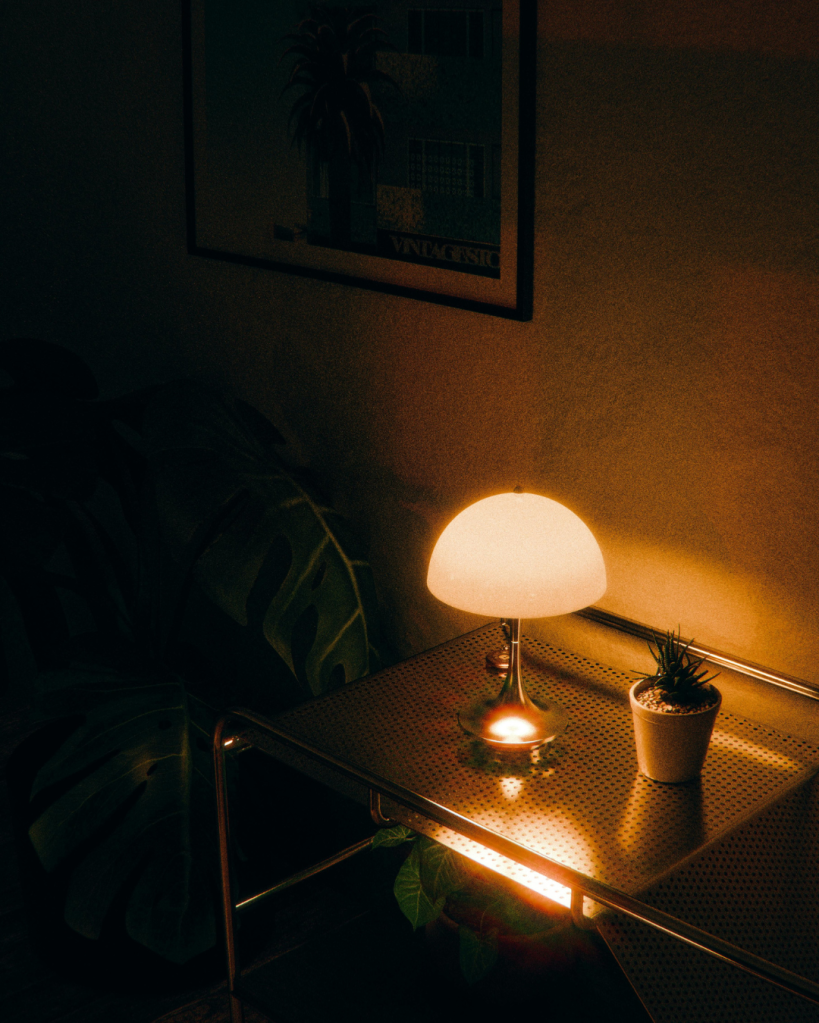
Around sunset, switch off your overhead lights and use softer lamps instead. The reverse can be catastrophic: a 2021 study in PNAS found that just a few weeks of bright evening lighting can delay your circadian rhythm by two to three hours, disrupting sleep, memory, and mood.
13. Hold a smile for five seconds
Yes, even a fake one. A landmark 2022 study involving nearly 4,000 people across 19 countries found that deliberately holding a smile—even without genuine emotion—makes people feel measurably happier. The science behind that? Facial muscles feed information back to the brain, meaning your mind will get the message. So, hold that grin for five seconds.
14. Give one genuine compliment
Before the day ends, tell someone something specific you admire about them. Not a generic compliment, like “great job.” Dig for something real. Maybe they handled a tricky moment with poise, or put in some extra effort while crafting that company-wide email. It could be as simple as, “Hey, your sandwich looked incredible during lunch.” Cornell researchers discovered that we consistently underestimate how much our words mean to others, and that compliment recipients feel far better than givers ever predict. The kicker? The givers feel better, too.
15. Finish your shower with 30 seconds of cold
A Dutch randomized controlled trial of over 3,000 people found that ending a shower with just 30 seconds of cold water reduced sick days by 29%. Going even further, there was no difference between 30, 60, or 90 seconds: the benefit kicks in almost immediately. This little dose of freezing also produces a lasting surge of dopamine and norepinephrine. So, while it’s unpleasant for about five seconds. Then it isn’t, and you feel great.
Don’t go overboard, okay?
Despite the headline of this article, you don’t have to do all 15. How about you just pick two? Try them for a week and notice what shifts. The point here isn’t perfection; it’s incorporating the smallest acts into your daily routine and watching them compound into tangible benefits. Remember, your nervous system is paying attention, even when you think nothing is happening. Feed it something good to work with.