
upworthy
Add Upworthy to your Google News feed.
Google News Button
Family

What nobody warns you enough about when it comes to having kids

Experienced parents are dropping truth bombs about parenthood.

parenting, motherhood, fatherhood, kids, children

Here are some things new parents need to know.

Parenting is as old as time, but there's never been a time in history when we've talked about it more. If you go into any bookstore, you'll find shelf after shelf filled with books about how to raise your kids. If you have questions about any element of parenting, there are countless websites and online groups you can consult.

And yet, most of us still go into it unaware of the reality of it, because let's face it, there's no way to adequately prepare for parenthood. No matter what you picture it being like going in, parenting will yank that image right out of your head, smash it into the ground and grind its heel right into the heart of it.


Okay, that's a bit dramatic. But only a bit.

Parenting is the hardest, most rewarding job on earth—a thrill ride that takes you on the highest highs and plunges you to the lowest lows.

Up and down you go, over and over again, sometimes squealing with delight, sometimes thinking you might puke and sometimes screaming "Stop the ride, I wanna get off!"

While it's not possible to truly prepare, it's good to hear from experienced parents what you might expect. Every kid, every parent, every family is different, but there are some near-universal things that people really should know going in.

A user on Reddit asked, "What is something nobody warns people about enough when it comes to having kids," and the answers didn't disappoint. Here are some highlights:

You have less control over how your kids turn out than you think.

"There's a very good chance they won't turn out like you think," wrote one commenter. That's not to say that you have no influence whatsoever, but each kid is their own unique person with their own individuality, and they also change as they grow. If you're too attached to an idea of how they should be, you may not fully appreciate who they are.

"People seem to often forget that they're raising people," shared another commenter, "as in, independent-thinking individuals whose actions, values, personalities, interests, and capabilities will potentially be completely unlike yours. I've seen a lot of parents struggle hard with that, and frankly, that's a possibility you should have made your peace with before you became a parent, imo."

Another person added:

"This is why many parent/child relationships are so strained. Many parents have a child thinking they are programming a perfect human being. Many are disappointed when the child is not the exact person they hoped (or worse, the polar opposite). Perfectly normal children grow into resentful, tired adults because of their parents' unrealistic expectations that have nothing to do with them."

The books aren't all that helpful.

women's yellow jacketPhoto by National Cancer Institute on Unsplash

We all want to look to "the experts" when raising our kids, and some things we find in parenting books can be marginally helpful. But they certainly aren't the be-all-end-all of good parenting.

"The books are fine for ideas, your experience, friends thoughts, paediatricians, therapists," wrote one commenter. "But at the end of it all you have this complicated little person you're in charge of with their own preferences, feelings, insecurities, abilities, and you have to do what works for them and your family and, of course, also raise someone who isn't a blight on humanity or menace to society."

Another wrote:

"As my mum says: 'The kid hasn't read the book.'

"Her parents tried to do everything by the book with her and she hated it. She was supposed to have pigtails, wear dresses, learn piano and not go climb trees and play soccer/football. She saved pocket money to get her hair cut short and her dad almost hit her for it. Did she stop pushing to be herself? Nope. She is a strong woman, but boy, does she have some scars on her soul.

"With her own three kids she watched what interests they developed and then helped them explore it further and to not forget to keep an open mind about other possible hobbies, sports, arts etc. I have no idea how to thank her properly for this."

It doesn't go by fast—until suddenly it does.

woman in black graduation gown with black mortar boardPhoto by Omar Lopez on Unsplash

"The days are loooong and the years are so very short," wrote one person. It's true. When you're in the thick of parenting and someone tells you how fast it goes, you might feel like strangling them. But then you look at your child who has changed so much and it does feel fast in hindsight.

"I've heard older people say this or the equivalent all my life," wrote another. "I always thought I understood. And then I had children. Now I understand. I keep looking at my kids and can't believe how much time has passed. I'll look at them doing something new and just be amazed. Seems like yesterday that my youngest couldn't lift her own head and now she's doing tuck rolls across the house."

"This is it!" shared a parent of young adults. "Mine are 18, 19 & 20. Empty-nest syndrome is a REAL thing. I always look back and think… How the hell did it go by so quick? I used to roll my eyes at people who would say stuff like this when they had 3 different practices, in 3 different places at the same time. It really goes by so quickly."

Your time—and sleep—are no longer yours.

grayscale photography of kid lying on bedPhoto by Annie Spratt on Unsplash

When they're babies, they wake up in the night for all kinds of reasons—to eat, to practice crawling, to say hi, to wail inconsolably for no explicable reason, and so on. When they're older, they wake up because they need to go to the bathroom or a drink of water or they're scared. Then, when they're much older, they suddenly stay up late and want to have deep, heart-to-heart talks at 10 p.m. Most of us expect the baby sleep deprivation stage, but there are sleep disruptions throughout a child's entire childhood.

"When they grow older, you don't have a private life anymore," wrote one commenter. "They stay awake longer than you."

"Never thought of this. The later part of the evening is my time usually," someone responded.

"Used to be my time as well," shared another commenter. "Since becoming a parent, my time is 4-6am. One reason why you start waking up early once you're older, probably."

I have a young adult, a teen and an almost-teen, and I can attest to waking up extra early simply to have uninterrupted time to myself.

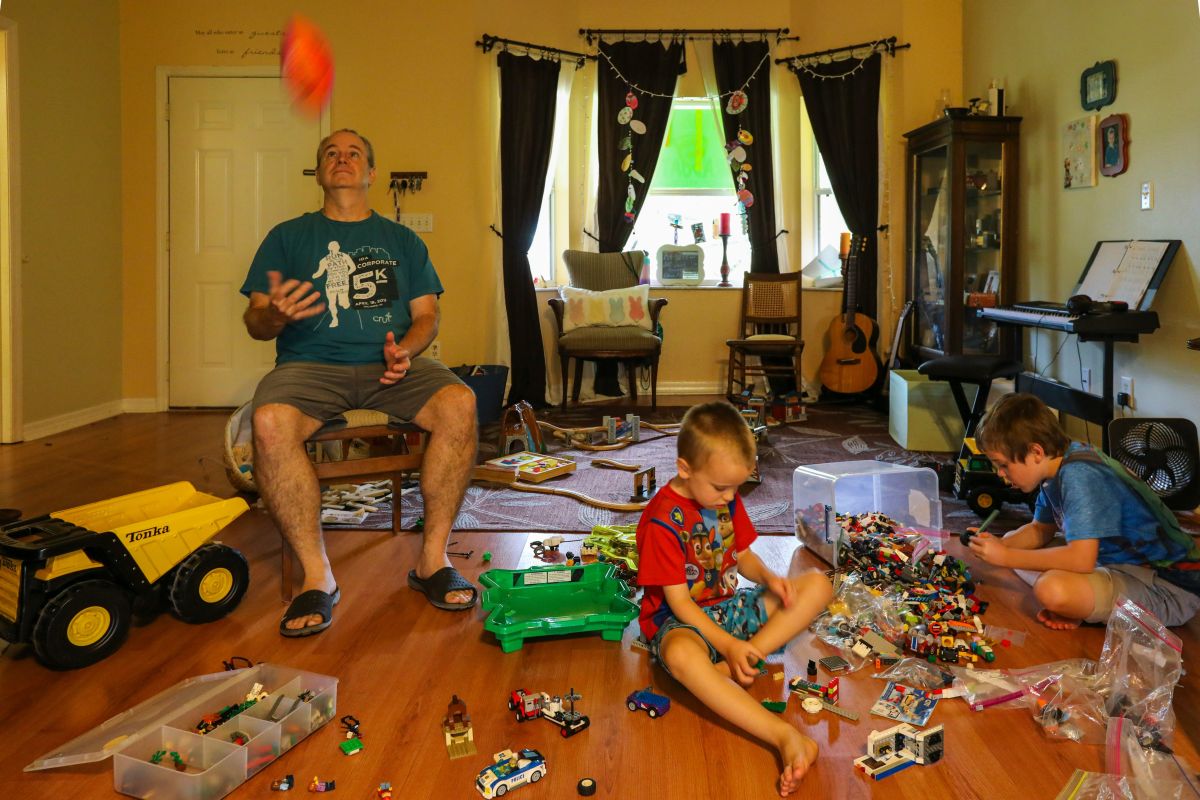
You will miss being able to think clearly.
man in gray crew neck t-shirt sitting beside boy in red and white crew neckPhoto by Mick Haupt on Unsplash

"For me, I stopped having a chance to think anything through without interruption," wrote a commenter. "I had a very hard time with that. I couldn't remember anything, couldn't make decisions, etc because every thought seemed to get interrupted.

"I'd just sit in my car alone sometimes so I could think."

Ah, the beautiful, quiet solitude of the car. Every mother I know enjoys a good "car bath" once in a while.

"I am so glad somebody said this," someone responded. "I was starting to worry I was getting early onset dementia, because my mind just feels like mush all the time. I can't remember things, I start sentences and can't finish them, I forget common words....my mind rarely gets to switch off because someone is always interacting with me or calling my name."

Part of the brain mush is because kids need things all the time. And part of it is that you now have an entire other person's life (multiplied by however many kids you have) to think about. Their health and well-being, their education, their emotional state, their character—it's a lot. So much more than you can really imagine until you're in it.

Take advantage of the middle years.

"How important the years between 7 and 12 are for building a bond (one that lasts into the teenage years)," wrote a commenter. "They are so hard to listen to at that age with all the starts and stops in conversation and they talk about the most boring thing's BUT it is so important to listen and converse at those ages. They will grow into teenagers that will talk to you, and be fun to talk to, but only if you can get through long boring conversations about Minecraft or whatever thing they are currently into."

Having teens and young adults, I have seen the truth of this advice play out. If you want your teens to talk to you, you have to listen well before they get to that age.

Another user shared what it meant to them when their mother did just that:

"I can remember being about 12 and wanting to share my biggest interest at the time with my mom, that being Bionicle, by reading to her all the books I had been collecting with my allowance. Sometimes she would involuntarily fall asleep, but my God she tried so hard to show an interest. I really didn't appreciate it at the time, focused on all the times she yawned or fell asleep, but now (16 years later) we both remember it fondly as the bonding time it really was."

And another shared just the opposite:

"My god, what an amazing mom you have. I vividly remember coming home from school around 12-13 yo, super excited to tell my mom all about my day, and she's sitting there reading her book, as always. No problem, I'm just telling her my stories while she's reading. Then that one time, I wondered is she actually listening? So I stopped mid-sentence and she didn't notice. I remember my heart just sank, and after that I never told her anything ever again. I don't think she noticed."

Diapering a doll isn't going to prepare you for wrangling a baby.

baby in white and black plaid shirtPhoto by Evelyn Semenyuk on Unsplash

"Practicing diapers on a doll doesn't count," wrote one commenter. "You're ready when you can do it on a cat."

HA. So true. Others shared their diaper wrangling woes as well:

"My first daughter was patient and would just let us change her. My second daughter wants nothing more than to roll over and crawl away. There's nowhere for her to go but she wants to go anyway."

"It's like, I am physically orders of magnitude stronger than her, how the hell does she still win?"

"My daughter has just perfected the alligator death roll technique when she doesn't want to be changed or put pants on lmao. And because she's 2 and a bit she laughs the whole time cause it's hilarious."

Don't even get me started on trying to get an unwilling jellyfish toddler buckled into a carseat.

All parents are winging it.

"I stupidly thought once I had a child I would automatically 'know' how to parent," wrote one commenter. "You're the same dummy before and after having a child, and you realize how much your parents were winging it."

"Leaving the hospital with that tiny fragile little being was terrifying," wrote another. "C-section delivery so they kept us a couple days longer. Lots of help from the amazing maternity ward, to the moment you realize you and your spouse are alone and now solely responsible for keeping this little baby alive."

"Yeah, it's like: "We can just leave? WITH the baby? Who approved this?" added another.

"The panicked looks my husband and I exchanged the first time we were left alone with our newborn will live forever in my mind," wrote yet another.

It really is surreal that you're just, like, handed a newborn baby and that's it. A whole life in your hands, and you're supposed to just figure out what to do with it. Good luck!

The relentlessness is real.

"Nothing prepared me for the sheer 'unrelentingness' of parenting," shared one parent. "Every day for many years has to be finished with a dinner/bath/bed routine that takes two hours, regardless of how tired, upset or unwell you are. Difficult enough if you've been at work all day, yes. But also if you're on holidays and got a little bit sunburnt, or been to a family wedding and overeaten, or spent the day assembling Ikea furniture and are just exhausted.

"As a childless adult you could occasionally say 'I'm just having takeaway tonight', and flop in front of the TV until bedtime. As a parent, that's not an option."

This is a truth that's hard to fathom but oh so real. Parenting never ends. You don't ever really get a break, even when you're lucky enough to kind of get a break. Your kids' well-being is always on your mind, even when you're not with them.

And it doesn't end at 18, either. Many commenters talked about how parenting is forever. You worry about your adult kids, too, just in a different way than when they were young and you were fully responsible for raising them.

woman in black shirt sitting beside man in white t-shirtPhoto by Hillshire Farm on Unsplash

This list might lead people to believe that parenting sucks, but it doesn't. I mean, sometimes it can, but that's true of anything in life. If you're fortunate and put in your best effort, the joy and fulfilment of parenting hopefully outweighs the hard parts. Getting a realistic picture of what it entails—both the delights and the challenges—can help people temper their expectations and take the roller coaster of parenting as it comes.


This article originally appeared on 11.22.21

the great depression; Florence Thompson; Mona Lisa of the Great Depression; Mona Lisa; the depression; depression era
Photo by Dorothea Lange via Library of Congress
The woman from the famous Great Depression photo didn't know about her fame for 40 years.

It's one of the most iconic and haunting photos of all time, up there with the likes of Hindenburg, The Falling Soldier, Burning Monk, Napalm Girl, and many others. It's called simply Migrant Mother, and it paints a better picture of the time in which it was taken than any book or interview possibly could.

Nearly everyone across the globe knows Florence Owens Thompson's face from newspapers, magazines, and history books. The young, destitute mother was the face of The Great Depression, her worried, suntanned face looking absolutely defeated as several of her children took comfort by resting on her thin frame. Thompson put a human face and emotion behind the very real struggle of the era, but she wasn't even aware of her role in helping to bring awareness to the effects of the Great Depression on families.


It turns out that Dorothea Lange, the photographer responsible for capturing the worry-stricken mother in the now-famous photo, told Thompson that the photos wouldn't be published.

Of course, they subsequently were published in the San Francisco News. At the time the photo was taken, Thompson was supposedly only taking respite at the migrant campsite with her seven children after the family car broke down near the campsite. The photo was taken in March 1936 in Nipomo, California when Lange was concluding a month's long photography excursion documenting migrant farm labor.

the great depression; Florence Thompson; Mona Lisa of the Great Depression; Mona Lisa; the depression; depression era Worried mother and children during the Great Depression era. Photo by Dorthea Lange via Library of Congress

"Migrant worker" was a term that meant something quite different than it does today. It was primarily used in the 30s to describe poverty-stricken Americans who moved from town to town harvesting the crops for farmers.

The pay was abysmal and not enough to sustain a family, but harvesting was what Thompson knew as she was born and raised in "Indian Territory," (now Oklahoma) on a farm. Her father was Choctaw and her mother was white. After the death of her husband, Thompson supported her children the best way she knew how: working long hours in the field.

"I'd hit that cotton field before daylight and stay out there until it got so dark I couldn't see," Thompson told NBC in 1979 a few years before her death.

the great depression; Florence Thompson; Mona Lisa of the Great Depression; Mona Lisa; the depression; depression era A mother reflects with her children during the Great Depression. Photo by Dorthea Lange via Library of Congress

When talking about meeting Thompson, Lange wrote in her article titled "The Assignment I'll Never Forget: Migrant Mother," which appeared in Popular Photography, Feb. 1960, "I saw and approached the hungry and desperate mother, as if drawn by a magnet. I do not remember how I explained my presence or my camera to her, but I do remember she asked me no questions. I made five exposures, working closer and closer from the same direction. I did not ask her name or her history. She told me her age, that she was thirty-two. She said that they had been living on frozen vegetables from the surrounding fields, and birds that the children killed."

Lange goes on to surmise that Thompson cooperated because on some level she knew the photos would help, though from Thompson's account she had no idea the photos would make it to print. Without her knowledge, Thompson became known as "The Dustbowl Mona Lisa," which didn't translate into money in the poor family's pocket.

In fact, according to a history buff who goes by @baewatch86 on TikTok, Thompson didn't find out she was famous until 40 years later after a journalist tracked her down in 1978 to ask how she felt about being a famous face of the depression.

@baewatch86

Florence Thompson, American Motherhood. #fyppppppppppppppppppppppp #historytok #americanhistory #migrantmother #thegreatdepression #dorthealange #womenshistory

It turns out Thompson wished her photo had never been taken since she never received any funds for her likeness being used. Baewatch explains, "because Dorothea Lange's work was funded by the federal government this photo was considered public domain and therefore Mrs. Florence and her family are not entitled to the royalties."

While the photo didn't provide direct financial compensation for Thompson, the "virality" of it helped to feed migrant farm workers. "When these photos were published, it immediately caught people's attention. The federal government sent food and other resources to those migrant camps to help the people that were there that were starving, they needed resources and this is the catalyst. This photo was the catalyst to the government intercepting and providing aid to people," Baewatch shares.

- YouTube www.youtube.com

As for Lange, Migrant Mother was not her only influential photograph of the Great Depression. She captured many moving images of farmers who had been devastated by the Dust Bowl and were forced into a migrant lifestyle.

"Broke, baby sick, and car trouble!" is just one of her many incredible photos from the same year, 1937.

She also did tremendous work covering Japanese internment in the 1940s, and was eventually inducted into the International Photography Hall of Fame and Museum and the National Women's Hall of Fame.

the great depression; Florence Thompson; Mona Lisa of the Great Depression; Mona Lisa; the depression; depression era Families on the move suffered enormous hardships during The Great Depression.Photo by Dorthea Lange via Library of Congress

Thompson did find some semblance of financial comfort later in life when she married a man named George Thompson, who would be her third husband. In total, she had 10 children. When Thompson's health declined with age, people rallied around to help pay her medical bills citing the importance of the 1936 photo in their own lives. The "Migrant Mother" passed away in 1983, just over a week after her 80th birthday. She was buried in California.

"Florence Leona Thompson, Migrant Mother. A legend of the strength of American motherhood," her gravestone reads.

schopenhauer, teacher, great phiosophers, philosopy hiistory, schopenhauer portrait
via Canva/Photos and Artistosteles/Wikimedia Commons

A math professor and Arthur Schopenhauer.

Philosopher Arthur Schopenhauer (1788-1860) transformed our understanding of the human condition by arguing that people are primarily driven by desire, rather than reason. As bleak as this may seem, he believed that the suffering caused by desire could be mitigated through art, compassion, and a life of simplicity.

Given that Schopenhauer was one of the greatest minds of his era, he had a unique understanding of how geniuses think. He believed that most highly intelligent people share a single trait: they like to keep to themselves. Julian de Medeiros, a Substacker and popular TikTok personality who discusses philosophy, discussed Schopenhauer’s thoughts in a video with nearly four million views.


@julianphilosophy

Simple sign of intelligence #introvert #smart #work #intelligent #home

What is a sign that someone is highly intelligent?

“This is a simple rule about intelligence from the philosopher Schopenhauer, who basically argued that intelligent people keep to themselves. In fact, that intelligent people need time and space. They tend to be introverted or, in his precise words, ‘it is the fate of all great minds to be alone,’” de Medeiros says.

Highly intelligent people don’t mind being alone

One would assume that some super genius who wants to be alone all the time is some miserable curmudgeon. However, de Medeiros argues that this is not the case. “For Schopenhauer, being alone did not equate loneliness. In fact, he said intelligent people prefer their own company. It's like they're never bored. There's so much that they want to do. They're happy to have time to themselves,” he continued.


Schopenhauer was pretty clear that he enjoyed being alone in a passage from his 1851 book, Parerga and Paralipomena:

“The ingenious person will, above all, strive for freedom from pain and annoyance, for tranquility and leisure, and consequently seek a quiet, modest life, as undisturbed as possible, and accordingly, after some acquaintance with so-called human beings, choose seclusion and, if in possession of a great mind, even solitude. For the more somebody has in himself, the less he needs from the outside and the less others can be to him. Therefore, intellectual distinction leads to unsociability.”

The video concludes with a warning from de Medeiros: “Intelligence can breed indifference because [if] you like being by yourself so much that you don't go out to spend time with people or with friends. This can make you a misanthrope."

Was Schopenhauer correct in his assumptions about intelligence?

Even though Schopenhauer’s ideas date back to the 19th century, a 2016 study published in the British Journal of Psychology shows he wasn’t wrong. A survey of more than 15,000 adults found that, for most participants, socializing with friends was positively associated with life satisfaction. However, for those with higher IQs, the pattern flipped. Participants with higher IQ reported higher life satisfaction when they socialized less frequently.

A 2023 study titled "The Psychological World of Highly Gifted Young Adults" found that highly gifted adults often enjoyed their own company over that of others because they had difficulty finding interests they shared with the average person. Highly gifted people just didn’t feel like they “fit in” socially in most environments.

Ultimately, one of the hallmarks of being highly intelligent is being incredibly cautious. So, if you’re a smart cookie and enjoy spending evenings at home with a good book instead of hanging out at a bar, don’t feel bad; there’s nothing wrong with being your own favorite company.

Pop Culture

In an iconic 1975 clip, a teenage Michael Jackson stuns Cher during hypnotic robot dance duet

The clip marks a turning point in Michael Jackson's iconic public persona.

jacksons, michael jackson, robot dance, Cher, 1970s TV

Cher and The Jackson 5 doing the robot dance.

One of the most distinctive aspects of Michael Jackson's mega-stardom was that he grew up almost entirely in the public eye. He began performing with his brothers at age five and remained a significant figure in American pop culture until he died in 2009.

He burst onto the scene as a child with an incredibly soulful voice. He became an electrifying performer as a teen before rocketing to superstardom at 20 with the release of his first solo album, 1979's Off the Wall. One of the pivotal moments when the public witnessed this transformation came in 1975, when 16-year-old Michael performed with his brothers, The Jackson 5, on The Cher Show.


The Jackson 5 and Cher performed a medley of the band's biggest hits, including "I Want You Back," "I'll Be There," and "Never Can Say Goodbye." But the most memorable moment came when Michael and his brothers broke into the robot dance during "Dancing Machine," and Cher did her best to keep up.

The Jackson 5 and Cher do the robot dance

It's fun watching Cher try to fall in line with the Jacksons, while Michael absolutely kills it, gyrating like an animatronic on hyperdrive during his solo.

- YouTube www.youtube.com

The Jackson 5 may have helped bring the robot dance into the public consciousness by incorporating it into performances of their 1973 hit "Dancing Machine." But it traces back to mechanical "mannequin" dances from the early days of film. In the 1960s, Robin Shields, a popular mime, performed as a robot on late-night talk shows. By the 1970s, dancers had set those moves to music on shows such as Soul Train.

- YouTube www.youtube.com

In a 2003 interview, Cher said she had to learn the moves on the fly from the Jacksons.

"Think of how hard it was for me to learn to do that, and the guys just knew how to do it. I've been working all day, and they just came on and said, 'Okay, sure, this is how you do it,'" Cher recalled. "I had a lot of fun on that show. It was a lot of work, but I had a lot of fun. You know, and I got to work with some great people."

What's also notable about the performance is that Michael's voice had changed, and he sang in a deeper register than he had as a child a few years earlier.

Things changed for Cher and the Jacksons in 1976

By the following year, things had changed for both The Jackson 5 and Cher. Cher reunited with her ex-husband, Sonny Bono, for The Sonny and Cher Show, which ran until 1977. In 1976, The Jackson 5 left Motown Records for Epic Records and changed their name to The Jacksons. Jermaine Jackson temporarily left the group to pursue a solo career, and he was replaced by his brother, Randy.

Here's The Jackson 5's complete performance on The Cher Show from March 16, 1975:

- YouTube www.youtube.com

mtv, music videos, mtv tribute, classic music videos, mtv videos, music video website
Photo credit: YouTube screenshot via The Original MTV VJs

This MTV tribute site features over 20,000 music videos.

If you’ve been online in recent weeks, you’ve probably seen dramatic headlines or social-media posts suggesting the demise of MTV. Not true! However, the company did recently shut down some of its channels devoted to its iconic early format of 24-hour music videos. As Rolling Stone reports, five MTV stations in the U.K. went dark, and others in Australia, Poland, Brazil, and France were expected to follow. Digesting that news, one viewer channeled their wistful nostalgia into an interactive "passion project": a tribute-styled website called MTV REWIND that salutes the network's "golden era."

The site, which is unaffiliated with MTV or parent company Paramount Skydance, features over 20,000 music videos pulled from YouTube and spread across six decades (the 1970s through the 2020s). It also includes a "shuffle" feature, retro commercials interspersed throughout the clips, and specific channels devoted to two classic MTV programs: the heavy-music staple Headbangers Ball and the hip-hop-focused Yo! MTV Raps.


- YouTube www.youtube.com

"It triggered something deeply nostalgic in me"

"Zero algorithm, just random discovery like MTV used to be," the site’s developer wrote in a trending Reddit thread. In the comments, he explained the initial spark: "I built this because I was feeling a sense of loss when MTV rug-pulled 24-7 video content. It triggered something deeply nostalgic in me. I spend a lot of time coding already and I like a challenge, so [I] thought to myself "[Why] can't I recreate the experience (maybe even make it better)[?] I've been listening to it non-stop since I started coding it on in the background and stopping to watch the videos learn about the music." In an informal AMA, the Redditor shared that building the site took 48 hours top to bottom.

Upworthy reached out to the developer, who went deeper on their love of MTV. "I am in my early 40s and grew up in the late 80s/early 90s when MTV was still pure music television," he said. "I remember coming home from school and MTV was just ON—it was the cultural hub. Watching the transition from music videos to reality TV felt like losing something important. That's what drove me to build this—preserving what MTV used to be." He also praised the "unique art form" of the music video format: "They're 3-5 minute films that combine visual storytelling, cinematography, choreography, and music into something greater than the sum of its parts. Directors like Spike Jonze, Michel Gondry, Hype Williams, they used the format to create legitimate art. MTV was the gallery that made it accessible to everyone."

- YouTube www.youtube.com

"Clicked, and immediately it plays Wham for me"

Lots of other users weighed in online with their feedback, even suggesting other vintage commercials. Naturally, they also had a lot of other opinions, with many sharing how deeply this whole thing scratched their nostalgia itch. Here’s a sample of the most enthusiastic comments:

"So many songs/bands from the ‘80s that I had completely forgotten about but instantly remember as soon as the video starts playin."

"This is really awesome. Doing something cool and fun just for the purpose of being cool and fun"

"Clicked, and immediately it plays Wham for me. New favorite website. Thank you."

"Super soaker 50 commercial brought be back."

"This is the perfect blend of random music discovery and pure nostalgia that I didn't know I needed."

"Reddit post of the year."

"I'm hooked! Saved to favorites and will be used whenever I host people."

"Dude, I'm stoked that there's a Headbanger's Ball option. That was instrumental, no pun intended, in the development of my music tastes and discoveries in the early-mid aughts."

Even though MTV is still alive and kicking, lots of people still used the recent news as a jumping-off point into a debate about what the network's final video should be. While a lot of people voted for The Buggles’ "Video Killed the Radio Star," the first clip ever aired on MTV back in 1981, some lobbied for a Weird Al-styled parody called "TikTok Killed the Video Star."

- YouTube www.youtube.com

portraits, paintings, painters, poses, posing, photography, sculpture, ancient rome, napoleon, george washington
By Till Niermann/Wikimedia Commons & Jacques-Louis David/Wikimedia Commons

This simple pose became an instant shorthand for leaders to signify their power and authority.

Posing in portraiture is an art in itself. In classical paintings of powerful figures such as royalty and generals, artists carefully considered not only likeness and features but also what the portrait would ultimately convey. Just as modern politicians on TV want their hair, teeth, makeup, and clothes just right, authority figures in the past were equally particular about how they appeared in portraits.

A strange pose commonly seen in sculptures and portraits dating back to Ancient Rome shows the subject with one arm raised, always the right, and gesturing or pointing with a slightly open hand. The pose is known as adlocutio.


One of the earliest and most famous examples appears in the sculpture Augustus of Prima Porta, completed in the 1st century AD by an unknown artist. It shows Augustus, the first Roman emperor, armor-clad and barefoot, with a baby Cupid riding a dolphin at his side. (Yes, really.)

Augustus strikes the signature adlocutio pose, giving the sculpture a sense of life and movement and reinforcing his power and authority. But what is he pointing at?

portraits, paintings, painters, poses, posing, photography, sculpture, ancient rome, napoleon, george washington The Emperor Augustus.By Till Niermann/Wikimedia Commons

The word adlocutio was used in Ancient Rome to describe a general or emperor addressing his soldiers. You can almost see it in the sculpture of Augustus; he is not pointing so much as gesturing animatedly while delivering a speech.

"In ancient Rome, gestures often spoke about one's position or rank in society," writes historian JP Kenwood. "One of the most common gestures in the visual language of Rome was the adlocutio, a posture and gesture that indicated the person—male citizens only, of course—was a person with authority giving a speech."

portraits, paintings, painters, poses, posing, photography, sculpture, ancient rome, napoleon, george washington Many politicians make use of specific hand gestures when making speeches.brooke from atlanta/Wikimedia Commons

It's easy to see, then, why the pose became a kind of shorthand in portraiture for power and leadership.

A famous 1801 painting of Napoleon crossing the Alps is another prominent example of the pose in action.

portraits, paintings, painters, poses, posing, photography, sculpture, ancient rome, napoleon, george washington Napoleon crossing the Alps.Jacques-Louis David/Wikimedia Commons

A few years earlier, George Washington was immortalized in the Lansdowne portrait. The president sat only once for the life-sized, iconic portrait painted by Gilbert Stuart.

portraits, paintings, painters, poses, posing, photography, sculpture, ancient rome, napoleon, george washington George Washington in the "Landsdowne portrait."By Gilbert Stuart/Wikimedia Commons

The pose, while old, is still as relevant as ever. If it ain't broke, don't fix it, right? A massive statue of Mao Zedong from 1970 features a strikingly similar gesture.

portraits, paintings, painters, poses, posing, photography, sculpture, ancient rome, napoleon, george washington A famous statue of Mao Zedong in China.By Noel Hanna/Wikimedia Commons

The adlocutio pose conveys authority and leadership by echoing an emperor's or general's address. That's simple enough. But there is more to the pose than meets the eye.

Crucially, subjects striking this pose always raise their right hand, never the left. The reason lies in subtle religious symbolism popular in Rome at the time the pose was established.

"In antiquity, the right hand symbolized divinity; when it was raised, you were thought to be closer to the gods," according to Meural. "And the left was the exact opposite, signifying the damned, the wrong, the befouled."

In times of limited sanitation, the right hand was often used for eating, while the left was reserved for bathroom tasks. As a result, it became known as the "unclean" hand, regardless of an individual's dominant side. Lauren Julius Harris writes that children who favored their left hand for reaching, eating, grabbing, or playing were often corrected, a practice that persisted as recently as the 19th century.

Raising the right hand was not only a symbol of power and status, but also of closeness to God. In fact, in portraits of men and women, the adlocutio pose was used deliberately to signal specific aspects of a subject's status.

portraits, paintings, painters, poses, posing, photography, sculpture, ancient rome, napoleon, george washington The iconic "Arnolfini portrait." By Jan van Eyck - Gennadii Saus i Segura/Wikimedia Commons

Today, with digital photography, we can take nearly unlimited photos of a subject in a wide range of poses, backgrounds, and lighting setups. Photographers can then select the portraits with the most potential and edit them to maximize the intended effect.

Ancient painters did not have that luxury. With only a brief sitting from the subject, they often had a single chance to get a portrait right, making time-tested poses like adlocutio a critical tool.

And while public portraits are far rarer today, adlocutio still works. Weirong Li, a leadership and communication expert who works with leaders and executives, tells Upworthy that "open elevated gestures boost confidence hormones... Ancient leaders discovered this instinctively—the raised palm signals 'I'm confident but not threatening.' I see this work in boardrooms constantly."