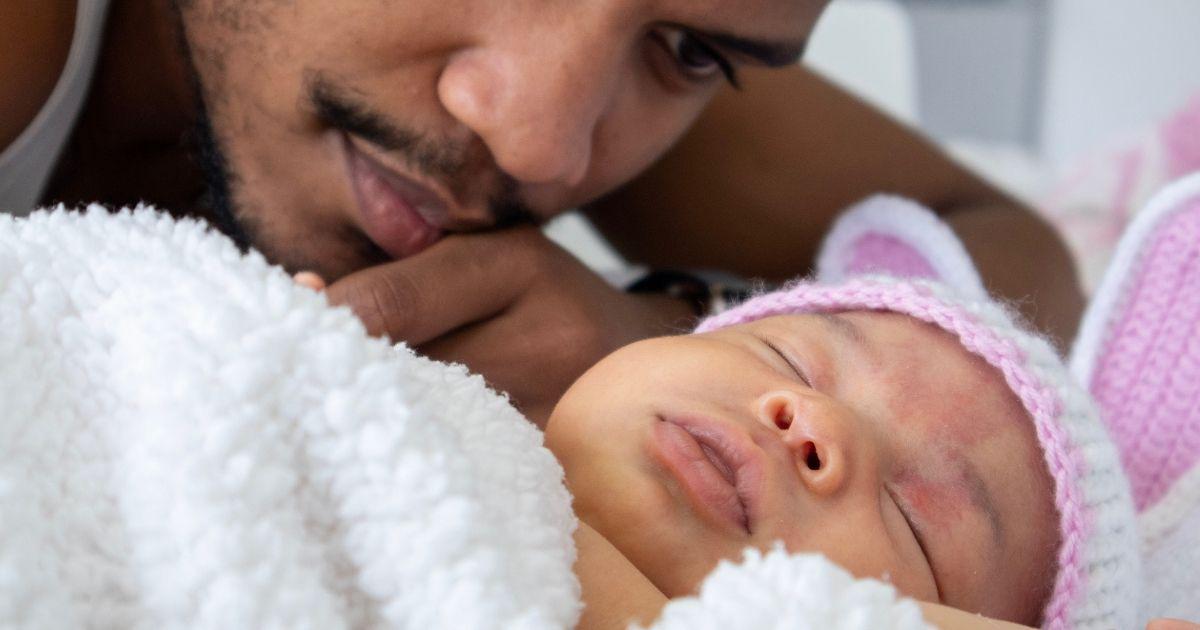
What nobody warns you enough about when it comes to having kids

Experienced parents are dropping truth bombs about parenthood.

parenting, motherhood, fatherhood, kids, children
Photo credit: Photo by Nubelson Fernandes on UnsplashHere are some things new parents need to know.

Parenting is as old as time, but there’s never been a time in history when we’ve talked about it more. If you go into any bookstore, you’ll find shelf after shelf filled with books about how to raise your kids. If you have questions about any element of parenting, there are countless websites and online groups you can consult.

And yet, most of us still go into it unaware of the reality of it, because let’s face it, there’s no way to adequately prepare for parenthood. No matter what you picture it being like going in, parenting will yank that image right out of your head, smash it into the ground and grind its heel right into the heart of it.


Okay, that’s a bit dramatic. But only a bit.

Parenting is the hardest, most rewarding job on earth—a thrill ride that takes you on the highest highs and plunges you to the lowest lows.

Up and down you go, over and over again, sometimes squealing with delight, sometimes thinking you might puke and sometimes screaming “Stop the ride, I wanna get off!”

While it’s not possible to truly prepare, it’s good to hear from experienced parents what you might expect. Every kid, every parent, every family is different, but there are some near-universal things that people really should know going in.

A user on Reddit asked, “What is something nobody warns people about enough when it comes to having kids,” and the answers didn’t disappoint. Here are some highlights:

You have less control over how your kids turn out than you think.

“There’s a very good chance they won’t turn out like you think,” wrote one commenter. That’s not to say that you have no influence whatsoever, but each kid is their own unique person with their own individuality, and they also change as they grow. If you’re too attached to an idea of how they should be, you may not fully appreciate who they are.

“People seem to often forget that they’re raising people,” shared another commenter, “as in, independent-thinking individuals whose actions, values, personalities, interests, and capabilities will potentially be completely unlike yours. I’ve seen a lot of parents struggle hard with that, and frankly, that’s a possibility you should have made your peace with before you became a parent, imo.”

Another person added:

“This is why many parent/child relationships are so strained. Many parents have a child thinking they are programming a perfect human being. Many are disappointed when the child is not the exact person they hoped (or worse, the polar opposite). Perfectly normal children grow into resentful, tired adults because of their parents’ unrealistic expectations that have nothing to do with them.”

The books aren’t all that helpful.

women's yellow jacket Photo by <a href="https://unsplash.com/@nci?utm_source=RebelMouse&utm_medium=referral">National Cancer Institute</a> on <a href="https://unsplash.com/?utm_source=RebelMouse&utm_medium=referral">Unsplash</a>

We all want to look to “the experts” when raising our kids, and some things we find in parenting books can be marginally helpful. But they certainly aren’t the be-all-end-all of good parenting.

“The books are fine for ideas, your experience, friends thoughts, paediatricians, therapists,” wrote one commenter. “But at the end of it all you have this complicated little person you’re in charge of with their own preferences, feelings, insecurities, abilities, and you have to do what works for them and your family and, of course, also raise someone who isn’t a blight on humanity or menace to society.”

Another wrote:

“As my mum says: ‘The kid hasn’t read the book.’

“Her parents tried to do everything by the book with her and she hated it. She was supposed to have pigtails, wear dresses, learn piano and not go climb trees and play soccer/football. She saved pocket money to get her hair cut short and her dad almost hit her for it. Did she stop pushing to be herself? Nope. She is a strong woman, but boy, does she have some scars on her soul.

“With her own three kids she watched what interests they developed and then helped them explore it further and to not forget to keep an open mind about other possible hobbies, sports, arts etc. I have no idea how to thank her properly for this.”

It doesn’t go by fast—until suddenly it does.

woman in black graduation gown with black mortar board Photo by <a href="https://unsplash.com/@omarlopez1?utm_source=RebelMouse&utm_medium=referral">Omar Lopez</a> on <a href="https://unsplash.com/?utm_source=RebelMouse&utm_medium=referral">Unsplash</a>

“The days are loooong and the years are so very short,” wrote one person. It’s true. When you’re in the thick of parenting and someone tells you how fast it goes, you might feel like strangling them. But then you look at your child who has changed so much and it does feel fast in hindsight.

“I’ve heard older people say this or the equivalent all my life,” wrote another. “I always thought I understood. And then I had children. Now I understand. I keep looking at my kids and can’t believe how much time has passed. I’ll look at them doing something new and just be amazed. Seems like yesterday that my youngest couldn’t lift her own head and now she’s doing tuck rolls across the house.”

“This is it!” shared a parent of young adults. “Mine are 18, 19 & 20. Empty-nest syndrome is a REAL thing. I always look back and think… How the hell did it go by so quick? I used to roll my eyes at people who would say stuff like this when they had 3 different practices, in 3 different places at the same time. It really goes by so quickly.”

Your time—and sleep—are no longer yours.

grayscale photography of kid lying on bed Photo by <a href="https://unsplash.com/@anniespratt?utm_source=RebelMouse&utm_medium=referral">Annie Spratt</a> on <a href="https://unsplash.com/?utm_source=RebelMouse&utm_medium=referral">Unsplash</a>

When they’re babies, they wake up in the night for all kinds of reasons—to eat, to practice crawling, to say hi, to wail inconsolably for no explicable reason, and so on. When they’re older, they wake up because they need to go to the bathroom or a drink of water or they’re scared. Then, when they’re much older, they suddenly stay up late and want to have deep, heart-to-heart talks at 10 p.m. Most of us expect the baby sleep deprivation stage, but there are sleep disruptions throughout a child’s entire childhood.

“When they grow older, you don’t have a private life anymore,” wrote one commenter. “They stay awake longer than you.”

“Never thought of this. The later part of the evening is my time usually,” someone responded.

“Used to be my time as well,” shared another commenter. “Since becoming a parent, my time is 4-6am. One reason why you start waking up early once you’re older, probably.”

I have a young adult, a teen and an almost-teen, and I can attest to waking up extra early simply to have uninterrupted time to myself.

You will miss being able to think clearly.
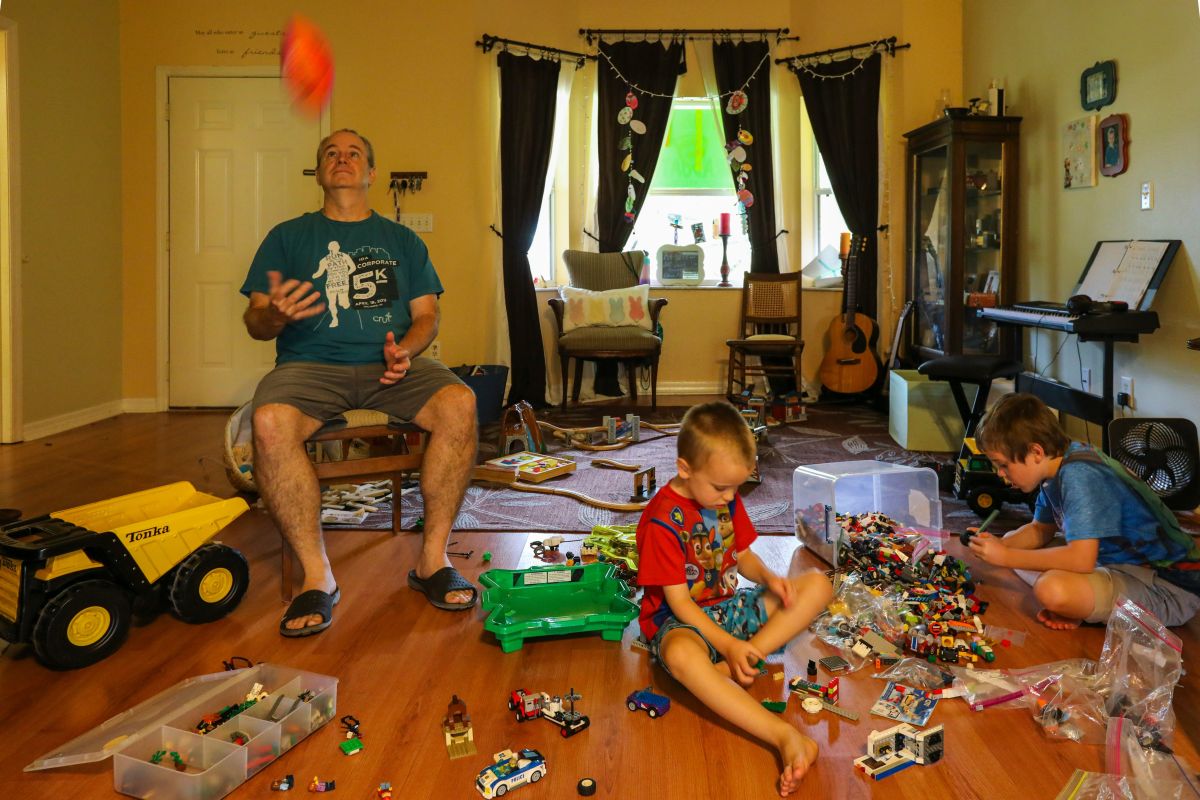
man in gray crew neck t-shirt sitting beside boy in red and white crew neck Photo by <a href="https://unsplash.com/@rocinante_11?utm_source=RebelMouse&utm_medium=referral">Mick Haupt</a> on <a href="https://unsplash.com/?utm_source=RebelMouse&utm_medium=referral">Unsplash</a>

“For me, I stopped having a chance to think anything through without interruption,” wrote a commenter. “I had a very hard time with that. I couldn’t remember anything, couldn’t make decisions, etc because every thought seemed to get interrupted.

“I’d just sit in my car alone sometimes so I could think.”

Ah, the beautiful, quiet solitude of the car. Every mother I know enjoys a good “car bath” once in a while.

“I am so glad somebody said this,” someone responded. “I was starting to worry I was getting early onset dementia, because my mind just feels like mush all the time. I can’t remember things, I start sentences and can’t finish them, I forget common words….my mind rarely gets to switch off because someone is always interacting with me or calling my name.”

Part of the brain mush is because kids need things all the time. And part of it is that you now have an entire other person’s life (multiplied by however many kids you have) to think about. Their health and well-being, their education, their emotional state, their character—it’s a lot. So much more than you can really imagine until you’re in it.

Take advantage of the middle years.

“How important the years between 7 and 12 are for building a bond (one that lasts into the teenage years),” wrote a commenter. “They are so hard to listen to at that age with all the starts and stops in conversation and they talk about the most boring thing’s BUT it is so important to listen and converse at those ages. They will grow into teenagers that will talk to you, and be fun to talk to, but only if you can get through long boring conversations about Minecraft or whatever thing they are currently into.”

Having teens and young adults, I have seen the truth of this advice play out. If you want your teens to talk to you, you have to listen well before they get to that age.

Another user shared what it meant to them when their mother did just that:

“I can remember being about 12 and wanting to share my biggest interest at the time with my mom, that being Bionicle, by reading to her all the books I had been collecting with my allowance. Sometimes she would involuntarily fall asleep, but my God she tried so hard to show an interest. I really didn’t appreciate it at the time, focused on all the times she yawned or fell asleep, but now (16 years later) we both remember it fondly as the bonding time it really was.”

And another shared just the opposite:

“My god, what an amazing mom you have. I vividly remember coming home from school around 12-13 yo, super excited to tell my mom all about my day, and she’s sitting there reading her book, as always. No problem, I’m just telling her my stories while she’s reading. Then that one time, I wondered is she actually listening? So I stopped mid-sentence and she didn’t notice. I remember my heart just sank, and after that I never told her anything ever again. I don’t think she noticed.”

Diapering a doll isn’t going to prepare you for wrangling a baby.

baby in white and black plaid shirt Photo by <a href="https://unsplash.com/@evysem?utm_source=RebelMouse&utm_medium=referral">Evelyn Semenyuk</a> on <a href="https://unsplash.com/?utm_source=RebelMouse&utm_medium=referral">Unsplash</a>

“Practicing diapers on a doll doesn’t count,” wrote one commenter. “You’re ready when you can do it on a cat.”

HA. So true. Others shared their diaper wrangling woes as well:

“My first daughter was patient and would just let us change her. My second daughter wants nothing more than to roll over and crawl away. There’s nowhere for her to go but she wants to go anyway.”

“It’s like, I am physically orders of magnitude stronger than her, how the hell does she still win?”

“My daughter has just perfected the alligator death roll technique when she doesn’t want to be changed or put pants on lmao. And because she’s 2 and a bit she laughs the whole time cause it’s hilarious.”

Don’t even get me started on trying to get an unwilling jellyfish toddler buckled into a carseat.

All parents are winging it.

“I stupidly thought once I had a child I would automatically ‘know’ how to parent,” wrote one commenter. “You’re the same dummy before and after having a child, and you realize how much your parents were winging it.”

“Leaving the hospital with that tiny fragile little being was terrifying,” wrote another. “C-section delivery so they kept us a couple days longer. Lots of help from the amazing maternity ward, to the moment you realize you and your spouse are alone and now solely responsible for keeping this little baby alive.”

“Yeah, it’s like: “We can just leave? WITH the baby? Who approved this?” added another.

“The panicked looks my husband and I exchanged the first time we were left alone with our newborn will live forever in my mind,” wrote yet another.

It really is surreal that you’re just, like, handed a newborn baby and that’s it. A whole life in your hands, and you’re supposed to just figure out what to do with it. Good luck!

The relentlessness is real.

“Nothing prepared me for the sheer ‘unrelentingness’ of parenting,” shared one parent. “Every day for many years has to be finished with a dinner/bath/bed routine that takes two hours, regardless of how tired, upset or unwell you are. Difficult enough if you’ve been at work all day, yes. But also if you’re on holidays and got a little bit sunburnt, or been to a family wedding and overeaten, or spent the day assembling Ikea furniture and are just exhausted.

“As a childless adult you could occasionally say ‘I’m just having takeaway tonight’, and flop in front of the TV until bedtime. As a parent, that’s not an option.”

This is a truth that’s hard to fathom but oh so real. Parenting never ends. You don’t ever really get a break, even when you’re lucky enough to kind of get a break. Your kids’ well-being is always on your mind, even when you’re not with them.

And it doesn’t end at 18, either. Many commenters talked about how parenting is forever. You worry about your adult kids, too, just in a different way than when they were young and you were fully responsible for raising them.

woman in black shirt sitting beside man in white t-shirt Photo by <a href="https://unsplash.com/@hillshirefarm?utm_source=RebelMouse&utm_medium=referral">Hillshire Farm</a> on <a href="https://unsplash.com/?utm_source=RebelMouse&utm_medium=referral">Unsplash</a>

This list might lead people to believe that parenting sucks, but it doesn’t. I mean, sometimes it can, but that’s true of anything in life. If you’re fortunate and put in your best effort, the joy and fulfilment of parenting hopefully outweighs the hard parts. Getting a realistic picture of what it entails—both the delights and the challenges—can help people temper their expectations and take the roller coaster of parenting as it comes.


This article originally appeared on 11.22.21

  • A failed ‘nugget’ experiment explains why you’ll never find onion rings at McDonald’s
    Photo credit: Wiki.comA vintage ad for McDonald's Onion Nuggets.
    ,

    A failed ‘nugget’ experiment explains why you’ll never find onion rings at McDonald’s

    But it did lead to the invention of one of the most popular fast-food items ever.

    Onion rings are a staple fast-food item. Yet you’re unlikely to find them at McDonald’s, one of the most recognizable fast-food chains in the world.

    However, once upon a time, Mickey D’s did experiment with its own version of the side item, and it’s easy to see why the idea was short-lived.

    It was the 1970s, and by then, allegedly thanks to a Texas-based drive-in restaurant called The Pig Stand, onion rings were already a popular fast-food item. However, McDonald’s’ entire brand is centered around efficiency and profit, and compared to fries, onion rings would have been more time-consuming to make and less cost-effective.

    Enter: Onion Nuggets 

    mcdonalds, food, history
    Photo credit: Wiki.comA vintage ad for McDonald's Onion Nuggets.

    According to Mental Floss, the rather baffling idea came from Rene Arend, McDonald’s first executive chef, who would later develop the somewhat controversial McRib. And get this: they actually predate chicken nuggets.

    Rather than cutting onions into thin rings, food workers would batter and deep-fry onion bits. However, it soon became clear that customers, especially children, didn’t enjoy this particular vegetable-to-batter ratio. You can almost picture the confusion at the counter: someone opens the box expecting a familiar crispy ring and instead finds a pile of tiny fried onion clusters. Technically accurate, sure. Emotionally satisfying? Eh, that’s another story.

    By 1984, they were discontinued. Alas.

    @mcdonalds

    should Mike tell us about McPizza next? #mcnuggets #mcdonalds

    ♬ original sound – McDonald’s

    How Onion Nuggets brought us Chicken McNuggets

    But Arend was then instructed to apply the concept to a chicken-based product, and voilà—the Chicken McNugget was born, and we were never the same. So you could say onion nuggets walked so chicken nuggets could run!

    Interestingly, McDonald’s could take Burger King’s approach, which essentially makes “rings” out of minced onions. According to Tasting Table, “The goal isn’t to recreate the diner-style onion ring, but to offer a salty, crunchy side that’s cheap, uniform, and easy to churn out by the millions.” However, some have criticized this recipe as more like “tiny onion flavored doughnuts.” Honestly, not seeing the problem there.

    There have been far worse mess-ups

    And when you think about McDonald’s’ long history of bizarre menu failures, including the 1960s Hula Burger (a pineapple slice with cheese), McSpaghetti, and Seinfeld-inspired Muffin Toppers, deep-fried onion bits don’t sound too strange. Some folks are even nostalgic about it and would love to see its glorious return. While the odds are never zero, they are quite low. 

    That’s not to say the restaurant won’t ever sell proper onion rings. But Mike Haracz, a former McDonald’s manager of culinary innovation, explains in a TikTok video that they would likely only ever be a “limited-time offer” so as not to compete with their “over-the-top profitable” French fries.

    If you’re jonesing for some McDonald’s onion rings, they’re occasionally served in places outside the United States, such as Turkey, Greece, Israel, and even Australia. Just as Haracz predicted, they’re limited-time items.

    We can probably all agree that if any menu item deserves a comeback, it’s the Apple Fritter.

  • Watch dancers with ‘insane core strength’ appear to float in mid-air for iconic AGT audition
    Photo credit: America’s Got Talent/YouTubeSofia Vergara's jaw dropping while watching dance audition

    “America’s Got Talent” auditions have given us all manner of dance performances, from expressive individuals to impressive group numbers that got the judges praising and the audience roaring. But AIRFOOTWORKS’ gravity-defying, core-busting dance routine, performed in 2024, is one that will surely go down as one of the greatest dance performances in AGT history.

    As the music began, no one knew what the apparatus made of poles and bars surrounding the dancers was for. But it soon became apparent that they would use it to lift themselves off the ground. What started with a simple pull-up, however, turned into an incredible synchronized dance to Justin Bieber’s “Where Are U Now” in which the dancers synchronized their movements without their feet even touching the ground.

    AIRFOOTWORKS dancing to Justin Bieber on AGT 

    The dancers, who hail from Japan, were mentored by Kenichi Ebina, who won AGT Season 8 in 2013. Their performance earned them a standing ovation from all four judges and the audience.

    “Everything about the performance was perfect,” said judge Sofia Vergara.

    “It was so creative and so different—and so difficult, by the way,” said judge Simon Cowell. “So you have a great mentor. However, even if you’ve got a great mentor, you’ve still got to be able to do what your mentor helps you to do. And you did it immaculately.”

    AGT fans agree with the judges 

    People in the comments were equally blown away.

    “How do people find out they have talents like this??? ✋ “

    “My toxic trait is thinking I can do this without any difficulty .”

    “Insane core strength.”

    “OBSESSED with this audition.”

    “What kind of core strength is this… flawless,

    Many people were disappointed that none of the judges hit the Golden Buzzer.

    “Why no Golden Buzzer?!?!?! If I’ve seen any act more deserving of it, I can’t recall. These guys were AWESOME!!!!!!!”

    Did they run out of golden buzzers? This is worthy.”

    “THEY DESERVED THE GOLDEN BUZZER!”

    “This performance absolutely deserved a golden buzzer. It was just spectacular.”

    “Can only assume all the judges were so enthralled and mesmerized by this performance they forgot there was a golden buzzer.”

    The ‘Golden’ performance

    AIRFOOTWORKS did, in fact, earn a Golden Buzzer from Howie Mandel during the Quarterfinals sending them directly to the finale, where the group performed to an EDM mix by Steve Aoki. While they didn’t receive enough votes to win the entire competition, they have certainly earned AGT royalty status.

    Since their AGT run, AIRFOOTWORKS have continued to take the world stage – reaching the finals of talent competitions in France and Italy, and performing at the Royal Variety Performance in the UK.

    For more talent auditions, you can follow America’s Got Talent on YouTube and TikTok.

    This article originally appeared 2 years ago. It has been updated.

  • Gen X woman describes what Halloween was like in the 80s with perfect accuracy
    Photo credit: ~ tOkKa/Flickr, CanvaHalloween costumes in the 80s were terrifyingly terrible.

    Halloween has come a long way since the 70s and 80s, when Gen X kids donned the worst mass-produced costumes known to man to go out and ask strangers for candy that we were sure was laced with poison or razor blades. Those sure were good times, though, weren’t they? Social media creator Kelly Manno shared a video describing what Halloween was like for kids who grew up in “the forgotten generation,” and holy moly is it accurate.

    First, Manno showed a photo of someone dressed in an “80s costume” for Halloween, with neon colors, legwarmers and big hair, and said, “Absolutely nobody looked like that in the 80s, especially on Halloween. We looked like this.”

    Then she showed a grainy photo of kids in the plastic masks and poorly printed costumes that were the hallmark of the age.

    “Every single member of Gen X can smell this photo,” she said. “It’s like a vinyl, like plasticky paint smell.”

    Manno explained that our parents only took a few photos of us per year, and Halloween was always one of them.

    “You knew, before you went out trick-or-treating, that you had to line up with your cousins in front of the fireplace, in your highly flammable costumes, with your mom chain-smoking Virginia Slims.”

    How about those masks

    Oh, those masks were the worst inventions ever. The eyeholes never lined up properly, so you were constantly trying to adjust them to be able to see even a little bit.

    “We would push our tongue through the slit in the mask. It would cut our tongue, but then we’d keep doing it again because we were eaten up with OCD and ADD and nobody cared.”

    Then Manno described the “garbage bag costumes” we had, which were basically trash bags printed with whatever character it was supposed to be. So janky. So sweaty. So crinkly when we walked. But somehow still socially preferable to your mom making your costume from scratch.

    “Look at us, we were terrifying,” Manno concludes. “No wonder people tried to poison us.”

    A stroll down ‘That actually happened’ lane 

    Her descriptions of what it felt like to trick-or-treat in those costumes and haul our own bodyweight in candy are spot on, and people who lived it are feeling the nostalgia.

    “So much truth in one video! I just saw, heard, and smelled my childhood.”

    “You are literally making me laugh so damn hard, cause you described it exactly as it was, but my mom smoked Winston’s!”

    “It was always freezing on Halloween that the vinyl/plastic suit would crack and tear halfway through the night.”

    “Or the rubber band breaking at the second house and you had to hold it up on your face at the door the rest of the night. Good times.”

    “The tongue thing is on point. I can still feel it. “

    “I can totally smell that picture lol. I remember the steam from inside the mask would have your lashes and eyebrows covered in dew then after a couple streets of running house to house the crotch would tear out. We would stay out until everybody turned their lights off and the pillow case was full.”

    “Yes!!!! And we used a pillow case for our candy. And no adult supervision.”

    “My mom made me really nice homemade costumes, but I remember begging for the plastic Strawberry Shortcake garbage bag one. So, she bought it for me one year. That was a terrible, sweaty experience. “

    “Let’s not forget having to inspect every piece of candy for razor blades. I swear I lost half my haul to my father in that clean up. “

    Kids these days have no idea, with their official city trick-or-treat hours and their parents walking around with them and their costumes that actually look like the thing they’re trying to be. The 70s and 80s were a wild time, and as funny as it is to reminisce about those Halloweens of old, most of us would agree that the experience has been much improved for our own kids.

    Pillowcases still make the best trick-or-treat bags, though. Some things do not change.

    This article originally appeared 2 years ago. It has been updated.

  • People swear these Gen X and Millennial names are ‘due for a resurgence’
    Photo credit: Canva1970s-styled dance moves. A woman sits next to her boom box.

    If you’re a Gen X-er or a Millennial, ask yourself how many Jennifers did you grow up with? How about Brians? Stephanies, maybe? It seems like it might be time for those baby names favored in the ’70s and early ’80s to make a comeback.

    After all, like most things in the world, the popularity of names is cyclical. Once something reaches its height of popularity, the pendulum swings back into another era. But if given enough time, all pendulums will pop right back with force, and everything Gen X will be “now” again.

    The 100 year rule

    In a recent article for The Every Mom, Senior Editor Kathy Sisson mentions the “100 year rule for baby names.” The theory goes that names re-circulate every century, and perhaps that’s now why there seems to be a resurgence of “vintage” names from the 1920s. (Think Hazel, Arthur and Evelyn.) She adds this fun fact: “Some expectant parents even wander cemeteries looking for vintage baby name inspiration on the headstones.”

    But some experts claim that people are most definitely not waiting a century to bring back popular names. In a 2025 piece for Good Housekeeping, Senior Parenting and Relationship Editor Marisa Lascala specifically compiled a list of “19 vintage 1970s baby girl names that are becoming popular again.”

    At the top of that list were “Angie, Deborah, Jamie, Leslie and Bonnie.” According to Lascala, “Gen X was born in a period of great change, and the baby names of the era were no exception.” Perhaps it’s the modern times we’re living in that are accelerating a need to go back to an era that felt more manageable. (This is all subjective and relative, of course.)

    @namingbebe

    Calling all Jennifers Michelles & Melissas #babynames #girlnames #1970s

    ♬ original sound – Colleen

    Time for a comeback

    This seems to be quite the popular topic. On the subreddit r/namenerds, someone posted a thread entitled “’Dated’ names you think are due for a resurgence.” They expound, “A lot of vintage names are quite popular these days – eg. Henry, Theodore, Josephine. But what about names that aren’t quite old enough to be cool again that you think are due for a resurgence?

    I’m thinking names around Gen X and Millennial eras, where the vast majority of people with these names are going to be between 30 and 60. Names too recently popular to be vintage, while old enough to be considered dated… some eventually will come around back into being stylish.

    Do you have any bets on what presently unpopular “dated” names will be popular again soon enough?”

    The OP adds that they simply love the name Todd, for example. “Controversial opinion, I really love the name Todd even though a lot of folks think it’s a boring white guy/dad name. I think it has all the makings of a popular name and I’m placing my bets it will come back in style soon. I’m also really fond of the name Heather.”

    Feeling nostalgic

    Over a thousand people chimed in on this post to share the names that resonated for them back in the day. Names frequently mentioned on the thread included “Emily, Lisa, Laura, Nicole, and Erin” for girls. For boys, “Brian, Ryan, Evan, Justin, Jeremy and Eric” came up time and again.

    Of the extremely popular name Lisa, one commenter shared that in some way, it fits with current trends, at least in the UK. “Lisa fits in with current UK trends (soft, short, L + S + ee sound), but it’s pinnacle Gen X/Millennial, so won’t make a comeback for a while. I hope it does make a resurgence one day though! I’d like Cynthia to come back now that people are likely to associate it with Erivo.”

    Some even recall well-loved ’70s/’80s names, but add a modern spin. “Vanessa, but call her Nessa.”

    And, a few point out that some older names that seem to have disappeared for one culture are still going strong in others. Take, for example, the name Camille. This Redditor shares, “Camila is crazy popular with Latino families and Latino-adjacent families, so this wouldn’t surprise me.”

    And of course, as people re-watch classic movies from the 1980s, certain names will reappear in the zeitgeist. So for better or for worse, we’ve probably got quite a few “Heathers” on the way. (And/or perhaps maybe a “Veronica.”)

  • 9 reasons the Artemis II space mission keeps bringing people to tears
    Photo credit: NASAChristina Koch looking out the window at Earth
    ,

    9 reasons the Artemis II space mission keeps bringing people to tears

    Some of it is the time we’re living in. Some of it is remembering who we are.

    Since the Orion spacecraft launched, sending the four astronauts of the Artemis II mission around the Moon, people have been grabbing tissues left and right. This particular space mission has evoked profound emotions in us collectively, but why? What is it that has us feeling it all so deeply?

    I’m not a psychologist or a sociologist; I’m just a human joining my fellow humans in the cryfest. But that human identity sits at the heart of the why question, so here are nine reasons I’ve observed that people are getting emotional over Artemis II.

    Photo, moon, surface, earth, space
    “A Setting Earth” taken on the Artemis II mission. (Photo credit: NASA)

    We desperately need something good and wholesome right now

    Let’s just acknowledge this one upfront. In too many ways, the world has felt like a horror circus in recent years, and many people have lost a bit of faith in humanity. We need some solid reminders that we’re actually okay, and Artemis II is full of them.

    Apollo and Artemis unite our past with our future

    The name Artemis holds poetic significance. In Ancient Greek mythology, Artemis was Apollo’s twin sister as well as the goddess of the moon, the hunt, wild places, and childbirth. The original lunar missions being named Apollo and the modern missions being named Artemis is a beautiful hat-tip to that ancient history, as well as a nod to this mission carrying the first woman to circle the moon.

    The Artemis II mission feels like a bridge between our past and our future.

    “The pairing of Apollo and Artemis is more than poetic,” writes Samantha Mathewson for Space.com. “In mythology, the twins balance day and night, or sun and moon. In spaceflight, Apollo represents what humanity has already accomplished, while Artemis represents what comes next.”

    It reminds us of how far we’ve come, both literally and figuratively

    Like others before them, the astronauts of Artemis II took some legacy keepsake items into space. Among them is a one-inch square piece of fabric from the Wright Flyer, the plane the Wright brothers used in their first successful flight in 1903.

    The significance of that tiny piece of fabric can’t be overstated. To fly through the air above Earth’s surface was a major milestone in human history. Did the Wright brothers imagine us going this far from Earth when they had just figured out how to get us off the ground?

    Innovation and progress require imagination, so they probably did imagine it. Just as the women who worked on the Apollo lunar program probably imagined women becoming astronauts one day.

    Christina Koch becoming the first woman to fly around the Moon isn’t the only sign of progress for women in the Artemis mission, though. Women played critical roles in the Apollo program as well, but they were smaller in number and not really visible to the public. Now we have this:

    It reminds us how small but special we are

    Earth may feel big to us, but in the context of the universe, our planet is infinitesimally tiny. And yet, we are here, eight billion individuals making our home on this little blue marble.

    Pilot Victor Glover delivered an impromptu message on Easter that reminds us of the unique reality of being human on planet Earth:

    You guys are talking to us because we’re in a spaceship really far from Earth. But you’re on a spaceship called Earth that was created to give us a place to live in the universe, in the cosmos.

    Maybe the distance we are from you makes you think what we’re doing is special. But we’re the same distance from you, and I’m trying to tell you—just trust me—you are special. In all of this emptiness—this is a whole bunch of nothing, this thing we call the universe—you have this oasis, this beautiful place that we get to exist together.

    Shifts the perspective a bit, doesn’t it?

    The naming of the Moon crater ‘Carroll’ hit us right in the heart

    If someone were to cry over just one part of this mission, it would likely be this moment when the astronauts asked Mission Control to name a Moon crater after Commander Reid Wiseman’s late wife, Carroll, who died of cancer in 2020:

    Crater Carroll. A bright spot on the Moon that her kids can look up to and see Mom. What an incredible tribute.

    Historic space missions are big deals. These astronauts represent all of humanity as we collectively breach new frontiers. And yet, it’s the personal relationships, our individual loved ones, the bonds of family and friendship that make us what and who we are as humans. This moment just beautifully highlighted the human in humanity, forever linking the personal with the universal.

    It’s healing something in Gen X kids who watched the Challenger disaster live

    There have been many space shuttle launches since 1986, but few have seen the widespread excitement and attention that Artemis II has received leading up to it. Perhaps that’s why so many Gen Xers who remember watching the Challenger explode as children were nervous to watch the launch and held our breath until the astronauts were safely out of the atmosphere.

    It may sound like an overstatement to call it PTSD, but watching a school teacher and astronauts we’d all been following on TV for months blow up on a live broadcast had an impact on our psyches. The shock and horror of it all, with none of the adults prepared to handle it, left a mark.

    Seeing a hyped launch become a successful launch and watching all the heartwarming footage from the shuttle feels healing in some way.

    It taps our sense of awe

    Being amazed by something outside ourselves is one of the best parts of being human. (It also happens to be incredibly good for our mental health.)

    Awe comes in many forms. At the launch of Artemis II, we saw it in the childlike excitement of BBC Science Editor Rebecca Morelle as she witnessed the shuttle take off firsthand.

    @bbcnews

    Nasa’s first crewed mission around the Moon in more than 50 years has taken off from Florida. #Nasa #Artemis #Rocket #Space #Moon #ArtemisII #USNews #BBCNews

    ♬ original sound – BBC News – BBC News

    But awe is often quiet and introspective. The photos we’ve seen from the astronauts on board the Orion have provided a view that we rarely get to see. Only when courageous humans launch themselves into space and look out a window do we get to see our world and our Moon this way.

    Taking a few moments to sit in awe of space and our place in it can be an emotional experience. Awe-inspired existential tears are good tears.

    It reminds us of what we’re capable of

    Humanity has always had its ups and downs, and they often happen at the same time. But science advancements, when done for the greater good and collective progress, are some of our biggest ups. This mission is a reminder of what we can do when we work together on innovating and creating instead of conquering and destroying.

    It reminds us we are one

    “This is an opportunity to remember where we are, who we are, and that we are the same thing,” Victor Glover said in his Easter message. “And that we got to get through this together.”

    We really are the same thing. Looking at Earth from space, there are no neatly drawn lines. There are no borders, no nations, nothing actually dividing us but rivers, oceans, and mountains.

    Of course, we are complex people with diverse cultures, languages, and identities. But seeing Earth from afar makes these differences seem far less significant. Certainly, they don’t seem worth killing one another over.

    Do you ever wonder how future history books will treat this time period we’re living in? What will they teach and what will they leave out? How will they analyze us? How will we be remembered?

    Will they know how we collectively wept over the naming of a Moon crater? Or will that detail—the one that defines us more than any war or conflict ever could—be omitted?

    I hope the beauty and humanity we’ve witnessed in this mission are remembered in the story of who we were, because it really is the best of who we are.

  • Netherland-based dance troupe performs epic routine to “Somebody That I Used to Know”
    Photo credit: Sergio Reis/YoutubeThe costumes, the choreo, the camera work…just, wow.

    Odds are you’ve heard Wally de Backer, aka Gotye, and his song “Somebody That I Used to Know.” It’s the Australian musician’s biggest commercial hit, selling more than 20 million copies since its release in 2011, making it one of the best-selling digital singles of all time. Not to mention it inspired several amazing covers, which you might have also stumbled upon.

    The music video, in its poignant simplicity, is every bit as iconic. Gotye stands naked facing the camera, as featured singer Kimbra faces him. As they sing, they are slowly “painted” into and out of the background of geometric shapes using stop motion animation. There’s a very Wes Anderson feel to it that adds so much to the story told in the song, making it all the more memorable.

    This dance troupe was up to the task

     All this to say…it would be a challenge to recreate the magic that’s so inherent in the original. And yet, Netherland-based dance troupe CDK clearly understood the assignment with their highly stylized movement performance set to the well-known art pop ballad.

    As thousands of viewers were quick to note, it’s not just the incredible dance moves that made this performance so captivating. It’s the killer combination of choreography, camerawork and costumes that make the piece impossible to turn away from.

    “This is pure art,” one person wrote. While another added, “I think I’m going to watch it everyday for the rest of my life.”

    Watch CDK’s Stunning Performance Here

    This group is clearly at the top of their game, simply by how easy they make it all look (like, I’ve already convinced myself that I can pull off those moves). But what’s more evident is that they enjoy what they’re doing to the nth degree. Over on their Instagram page, you’ll find equally mesmerizing routines set to Billie Eilish, Nicki Minaj, and more.


    Some fun facts about the song and its legacy

    1: Gotye allows small independent projects, like student films—and probably this dance piece—to use his music free of charge. “If someone wants to use it commercially I look at what the budget is and the creativity of the project,” he said, according to News.com.

    2: CDK isn’t the only group to have recently breathed new life into the song. Also in 2024, an electronic remix of the song titled “Somebody (2024),” created by electronic music producers Chris Lake, Fisher, and Sante Sansone, debuted. Much like its predecessor, “Somebody (2024) topped the charts.

    This article originally appeared two years ago. It has been updated.

  • Marriage counselor uses viral ‘Love on the Spectrum’ moment to explain triggers in relationships
    Photo credit: @expedition_marriage/InstagramMadison Marilla and Tyler White on Love on the Spectrum.

    During an episode from the latest season of Love on the Spectrum, Netflix’s heartwarming, critically acclaimed reality series that follows autistic individuals navigating the complexities of relationships, two fan favorites—Madison Marilla and her now fiancée, Tyler White—shared a moment that many couples face regardless of neurodivergence: emotional triggers. 

    As the two approached their date location, a fan can be heard saying, “Maddie! I love you!” This visibly affected Marilla, who explained that her autism causes “black and white thinking.” So hearing a nickname, like “Maddie,” causes her to feel “anxious and thrown off.” In fact, she noted it’s one of her “biggest sensitivities.” 

    In an Instagram post, marriage counselors Chris & Jamie Bailey break down how the couple’s handling of the situation was a prime example for anyone who witnesses their significant other getting triggered. 

    Chris and Jamie noted that in the clip, White stayed calm, moved towards Madison, validated her feelings without judgment, stayed present in the situation, listened to understand, and then, after Madison was able to express herself, he reassured her that they are a team and that he is there for her.

    And for her part, Madison “chose to process what was happening instead of reacting.” She also reminded herself that “it was going to be ok” and “moved forward” rather than ruminate. 

    All relationships deal with triggers

    While relationships involving autism or other forms of neurodiversity have their own unique set of challenges, Chris and Jamie noted that every couple will at some point face triggers. When that happens, each partner has a “responsibility.” The triggered person is responsible for their emotional regulation, while the non-triggered person is responsible for offering support. Both Tyler and Madison exemplified what can go right when each partner takes on their individual responsibility—especially staying present. 

    “What couples often miss is the simplicity of just remaining with your spouse during a trigger, “ Chris and Jamie added. 

    Judging by the comments, the Baileys were clearly not the only ones who felt Madison and Tyler offered a “masterclass in emotional regulation and communication.”

    “This was incredibly impressive. The way she worked through a trigger, the way he supported her and validated it. Well done everyone. We could all learn from this. ❤️”

    “Responding before reacting is something every single person I’ve ever met has struggled with. I love how hard she’s working to stay aware of her mind, heart and body and how best to keep them regulated in these really difficult situations.

    “This was such an incredible thing to witness. I’m so grateful for Madison’s ability to be vulnerable through this and to allow the world the opportunity to learn from her 😭 I needed this today!

    “These two humans are pure good. They totally get each other and provide such a safe space.”

    “I love that Tyler didn’t even try to hug her or touch her and he let Madison’s nervous system calm down first. Full respect!!”

    Expert-backed methods for dealing with emotional triggers in a relationship

    For your own triggers, awareness is the first step. Many people notice physical cues before anything else. It might be a racing heart, a tight chest, or a sudden urge to withdraw or lash out. Naming what is happening, even silently, can help create space between the feeling and the reaction. Simple grounding techniques, like slowing your breathing, focusing on your senses, or giving yourself permission to pause, can make a meaningful difference. Just as Madison demonstrated, reminding yourself that the moment will pass can help shift your nervous system out of alarm mode.

    When it comes to supporting a partner who is triggered, the goal isn’t to fix the feeling, but to help create safety. That often looks like staying calm, listening without interrupting, and validating what they are experiencing, even if you do not fully understand it. Avoid rushing them, minimizing their reaction, or immediately offering solutions. Instead, gentle reassurance and presence can go much further than advice.

    Of course, this kind of mutual support works best when both people are willing to take ownership of their emotional patterns over time. Conversations outside of triggered moments can help partners learn each other’s sensitivities, boundaries, and preferred ways of being supported. 

    As Madison and Tyler remind us, when both people are willing to meet each other with awareness and care, even the most uncomfortable moments can become opportunities for deeper connection.

  • U.S. women’s rugby player dropped the mic on viewer who mocked her BMI
    Photo credit: @ilonamaher/Instagram“BMI doesn’t tell you what I can do.”

    It seems like at least once a year, the debate over BMI (body mass index) resurfaces. Experts are quick to point out that it’s a flawed system: at best, it ignores key factors that shape a person’s body composition; at worst, it creates real health consequences, influencing eligibility for weight loss medications, insurance rates, joint-replacement surgery and fertility treatment. Then the conversation fades, life moves on and not much changes.

    And yet, despite the constant debunking, the belief in BMI still marches on. This time, it was hurled at the USA rugby star and Olympian Ilona Maher. More specifically, someone commented “I bet that person has a 30% BMI” on one of Maher’s TikTok videos.

    Could this person have simply been pointing out the inherent flaw of BMI and that Maher, an elite athlete, would be considered “overweight” using this system? Perhaps. But this is the internet we’re dealing with, so Maher (and others) interpreted it to be an insult.

    Under that context, Maher wasn’t having it, and chose “not to just ignore the haters.”

    A troll got taken to school about BMI

    “Hi, thank you for this comment. I think you were trying to roast me, but this is actually a fact. I do have a BMI of 30. Well, 29.3 to be exact,” Maher said in response video…which became something of a roast itself.

    Maher talked about how she had been considered “overweight” her entire life, and even recalled being “so embarrassed” to turn in a physical form to the office which had “overweight” written on it.

    “I chatted with my dietitian, because I go off facts, and not just what pops up here. You know, like you do.” she quipped while tapping her temples.

    What the numbers actually tell us

    Maher is 5-ft.-10-in. and 200 lbs, which is considered “overweight” by BMI standards. But as she explained, about 170 of those 200 pounds are “lean muscle mass.”

    “Do that math in your head…you probably can’t,” Maher said sarcastically.

    It’s easy to see through this example how bogus BMI really is, especially for athletes.

    Essentially, “BMI doesn’t tell you what I can do.”

    “It doesn’t tell you what I can do on the field. How fit I am. It’s just a couple of numbers put together,” she said. “It doesn’t tell you how much muscle I have, or anything like that.”

    Maher concluded by faux lamenting, “I do have a BMI of 30. I am considered overweight. But alas, I am going to the Olympics, and you’re not.” Maher went on to win a silver medal at the 2024 Paris Olympics.

    u.s. women's rugby, jill biden, 2024 olympics ilona maher
    The U.S. women’s rugby team with First Lady Jill Biden and members of the U.S. delegation to the 2024 Summer Olympic Games The White House/Public Domain

    Why This Hit Home for So Many People

    While Maher’s clapback was certainly satisfying, it also provided some much needed reassurance to folks. So many commented on how this outdated concept has affected (or still effects) their own body image or that of a loved one.

    How can I get my teenage daughter with a high BMI (but fit!) to understand this?! She feels shamed even at the doctor for her BMI.”

    “Dancer here, I’ll never forget at 13 being told I had the BMI of 24 of ‘overweight.’ I broke down and the nurse said it didn’t mean anything and all I could think was then WHY are you making me do this?!”

    A registered dietitian explains why BMI is so flawed. YouTube

    “I had to ask the doctor’s office to put a note on my child’s file to not bring up/talk about BMI in her check ups. It isn’t an accurate representation of health!”

    “Thank you for sharing your weight, bc seeing lbs numbers in different bodies has been so helpful in me loving mine. I’m nowhere near an athlete’s body but damn, the numbers really do us in.”

    Until a more affordable solution pops up, BMI will continue to rear its ugly head in doctor’s offices and in our psyches. Maybe this is a reminder that our bodies are so much more than height and weight every now and again is a good thing. And if it comes from an Olympian…even better.

    Maher also shut down any notions that her BMI was high due to anything other than muscle with a Sports Illustrated cover shoot in August of 2024. Um, yeah.

    Thin and fit are not the same thing. Thank you, Ilona Maher, for the powerful reminder.

    This article originally appeared two years ago. It has been updated.

Wholesome

9 reasons the Artemis II space mission keeps bringing people to tears

Science

Expert shares the 1 sentence that can instantly stop an argument from boiling over

Health

Waxers, doctors, and nurses share their unfiltered inner thoughts about your ‘privates.’

Culture

Netherland-based dance troupe performs epic routine to “Somebody That I Used to Know”