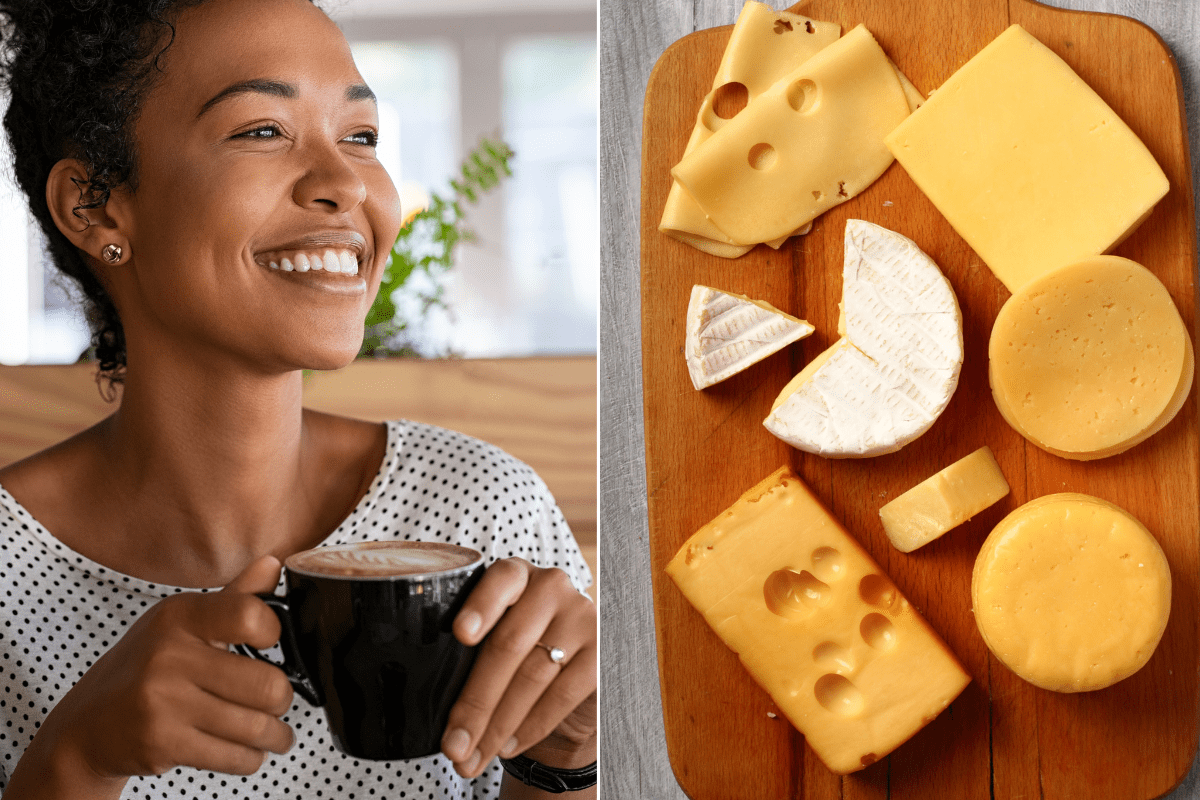
Whose idea was it to eat that? The strange ways 11 everyday foods were discovered.

Whose idea was it to let milk go bad and then eat it?

food, food history, origins of food, history, funny, fun facts, eating, culture, nutrition, taste, dining
Many of our favorite everyday foods have extremely strange origins.Photo credit: Canva Photos

Have you ever stopped to think why we eat the things we eat? Some of it seems natural, of course, like an apple growing from a tree. At some point in history, someone picked one, took a bite, and realized it was delicious.

Hunting and eating animals is similar. It’s part of our DNA, even if you choose not to partake, and you can easily trace the path from early hunter-gatherers to packaged chicken nuggets.

But at some point, humans started getting really creative. We picked coffee cherries, removed the seeds, and brewed them into a dark and bitter drink–why?! We smushed up grapes and let them sit around for a while and then drank their juices. We decided to try consuming cow’s milk that had gone really, really sour.

Whose ideas was it to try these things? Fascinatingly, many of our favorite foods, even the things we eat everyday, were the result of necessity or pure accidents. Here are some of the weirdest yet most interesting food origin stories.

1. Cheese & Yogurt


food, food history, origins of food, history, funny, fun facts, eating, culture, nutrition, taste, dining
Cheese is essentially just spoiled milk! Photo by David Foodphototasty on Unsplash

We know that cheese and yogurt both come from milk, often cow’s milk. We also know that milk goes bad extremely quickly and disgustingly. So how did we bridge that gap and come to discover these two amazing foods?

According to the National Historic Cheesemaking Center Museum (in Wisconsin; where else?) cheesemaking dates back thousands of years to Greek mythology and the ancient Egyptians. It’s said that milk was often stored in containers made from the stomachs of animals. The only downside of stomach containers is that they contained an enzyme called rennet that triggers coagulation in the milk, allowing it to separate into curds and whey.

Those Greeks and Egyptians must have been mighty surprised when the curds, in particular, turned out to be absolutely delicious. The BBC writes, however, that this accidental process was probably first discovered in the Middle East and Central Asia.

2. Wine

food, food history, origins of food, history, funny, fun facts, eating, culture, nutrition, taste, dining
It must have been fun to discover old grapes turned into wine. Photo by Lefteris kallergis on Unsplash

Today, the winemaking process is pretty complex, so much so that some people consider it an art. Or, at the very least, a craft of the highest order.

I’ve always been curious how we ever came up with the idea that we could get drunk off of grapes, long before the days of perfectly pruned vines and aged-oak barrels. Turns out, the story is not that dissimilar to the origins of cheesemaking, except it goes back even further. Humanity’s natural desire for a good party is apparently one of our most ancient traditions!

Early humans would forage large quantities of fruit like grapes and berries. The ones at the bottom, naturally, would get smushed and likely not be eaten for a while. They would have time to ferment, creating an alcohol-like substance, that must have been pretty pleasurable for anyone willing to go digging around at the bottom of the fruit pile.

Beer has a similar origin story, only instead of fruit, it was grains for bread that were left out too long and began to ferment.

3. Coffee

food, food history, origins of food, history, funny, fun facts, eating, culture, nutrition, taste, dining
Coffee fruit was making the goats a little too happy. Photo by Nathan Dumlao on Unsplash

Coffee is definitely one of the weirder things that we consume. The coffee beans we’re used to seeing do not appear exposed in the wild—they’re actually tucked away inside something called a coffee cherry. Each cherry contains two seeds, or coffee beans.

The story goes that an Ethiopian goat herder in the year 850 (give or take) noticed that whenever his goats ate the cherries, they would become energetic, playful, and just plain happier. Kaldi, the herder, is credited with being one of the first to forage the cherries. At first, the leaves were used to make tea, and then the berries were eaten directly to get the happy-energy effects. It wasn’t until a few centuries later that the beans were made into a beverage for the first time.

4. Tikka Masala

I absolutely love getting Indian food whenever possible and, like a lot of Americans, I adore Chicken Tikka Masala. But I never knew that it was created out of necessity as recently as the 1970s.

The widely accepted legend has it that a Glasgow chef named Ali Ahmed Aslam served a customer some chicken tikka one night and found the patron to be very hard to please. The man insisted that the chicken was too dry. So Aslam scoured the kitchen and whipped up a special sauce made of yogurt and tomato, which helped keep the chicken moist.

Pretty quickly, chicken tikka masala became famous across the globe. The Bristorian writes, “it is widely represented as the quintessential Indian dish despite its origin in the United Kingdom.”

5. Tomatoes

food, food history, origins of food, history, funny, fun facts, eating, culture, nutrition, taste, dining
Tomatoes were thought to be poisonous until very recently. Photo by Huzeyfe Turan on Unsplash

It doesn’t seem surprising at first that most cultures around the world regularly eat tomatoes, with a few exceptions. They grow in the ground and look beautiful. It’s not shocking that someone bit into one at some point in history and decided we should all get to enjoy them.

But what is surprising is that, in the Western world at least, tomatoes didn’t catch on for a long time. Even in Italy, which is practically synonymous with the tomato, Italians didn’t really eat them widely until the 19th century. That’s because tomatoes were long thought to be poisonous, a member of the nightshade family which contains many toxic plants.

One story claims that a man named Colonel Robert Gibbon Johnson ate tomato after tomato in front of a crowd in New Jersey to prove to the world they were safe. It’s probably not a true story, but it’s fun to imagine.

6. Tea

food, food history, origins of food, history, funny, fun facts, eating, culture, nutrition, taste, dining
Tea is one of civilization's most ancient drinks. Photo by Nathan Dumlao on Unsplash

Tea, like coffee, seems odd when you really think about it. Boiling dried up leaves and herbs in water? Whose bright idea was that?

It turns out, it was an Emperor’s idea! Tea is truly one of the most ancient beverages, and legend has it that Chinese emperor Shen Nung accidentally discovered the delectable drink in 2737 BC. He was supposedly sitting under a tree while his servant boiled him some drinking water, a common practice at the time. Some leaves are said to have fallen in from the Camellia sinensis tree, which gave the brew a pleasant aroma.

Shen Nung tasted it and was impressed, while also finding that it made him feel great. Tea was initially considered medicinal and didn’t become a daily drink until much later.

7. French fries
food, food history, origins of food, history, funny, fun facts, eating, culture, nutrition, taste, dining
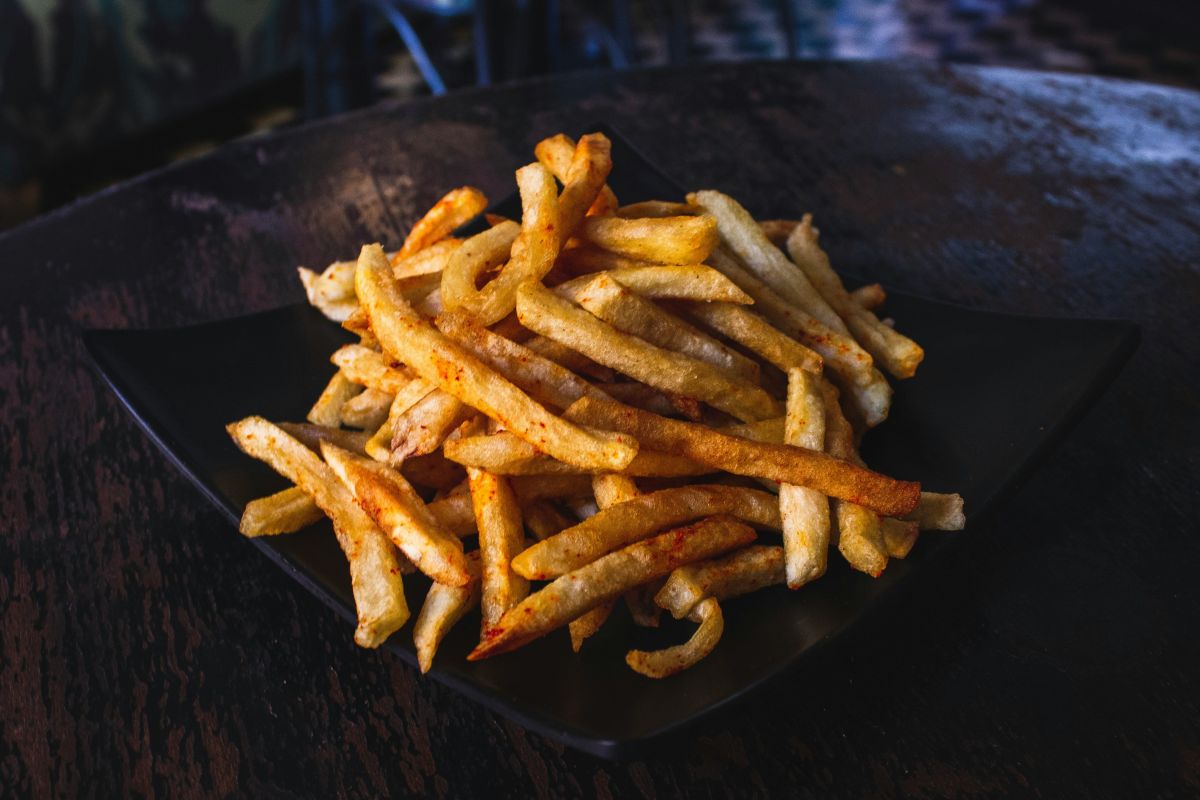
Fried potatoes began as a replacement for fried fish. Photo by Louis Hansel on Unsplash

Despite the name, French fries are said to have initially been discovered in Belgium.

In the 1600s, villagers near one of the country’s rivers would catch fish to try. Fried fish was an incredibly popular treat, but in the winter months, the river would freeze and catching fish would become impossible.

Out of necessity, they tried cutting up potatoes into a similar shape and frying those, instead. The result was delicious! When American soldiers came through the area during World War I, word spread quickly for obvious reasons.

8. Potato chips

The accidental invention of potato chips is a direct offshoot of French fries, so it deserves a spot on this list.

Some 250 years after the invention of fries, the story goes that a chef named George Crum had another difficult customer on his hands. (Seeing a pattern here?) The man was unhappy that his French fries were too soggy and thick.

Smithsonian Magazine writes, “Furious with such a fussy eater, Crum sliced some potatoes as slenderly as he could, fried them to a crisp and sent them out to Vanderbilt as a prank. Rather than take the gesture as an insult, Vanderbilt was overjoyed.”

They were called Saratoga Chips at first, a reference to their birthplace of Saratoga, New York. Experts say the potato chip may have officially been invented before this famous showdown, but George Crum undoubtedly helped popularize the snack.

9. Popsicles

food, food history, origins of food, history, funny, fun facts, eating, culture, nutrition, taste, dining
An 11-year-old accidentally invented popsicles. Photo by Alexander Grey on Unsplash

The official Popsicle brand itself says the frozen treat was invented by an 11-year-old boy in 1905.

Frank Epperson allegedly left a cup of soda, complete with a stick for stirring, outside on a cold night and was chagrinned to later find it frozen. However, one lick and he was convinced—frozen meant delicious! Young Frank named the treat after himself: “The Episcle.”

An entrepreneurial little bugger, Epperson perfected the popsicle and began selling them around local beaches before patenting the pops in 1924.

10. Cheetos/cheese puffs/cheese curls
food, food history, origins of food, history, funny, fun facts, eating, culture, nutrition, taste, dining
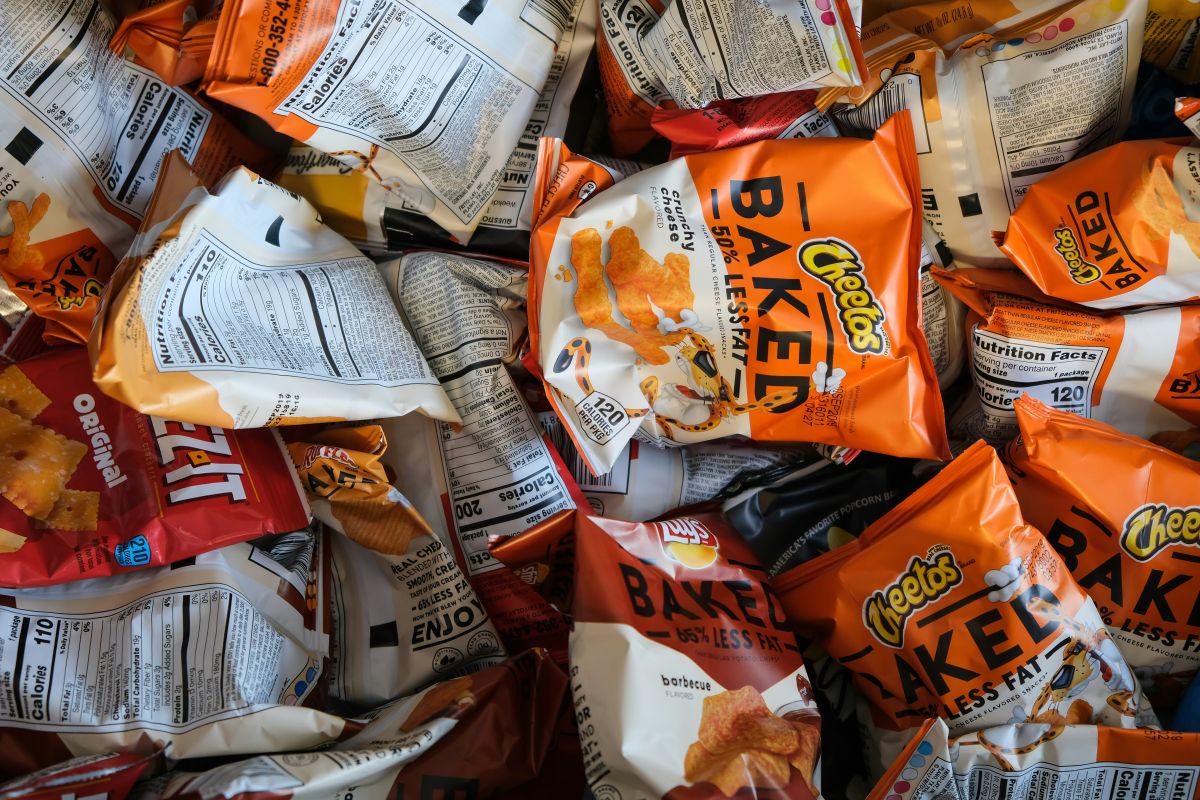
Cheetos and cheese puffs have a fascinating accidental origin. Photo by Ryan Quintal on Unsplash

I’ve always been curious about cheese curls, which are one of my all-time favorite snacks. What even is a cheese puff? The potato chip, though unique, makes sense: It’s a deep fried, thin slice of potato. Cheetos and cheese curls are just so far from anything found in nature it boggles the mind how they might have been invented.

Well, boggle no more! In 1935, cheese puffs were accidentally invented in a factory that made animal feed. Corn was ground in a grinder to make the feed, but when it came time to clean the machine, the workers fed moist corn through. The resulting waste product was airy, puffy blobs of corn that would fall to the ground.

A worker named Edward Wilson decided to try some and found them utterly delicious, and thus named them Korn Kurls.

11. Worcestershire sauce

I love a good happy accident almost as much as I love Worcestershire sauce on my burgers and steaks. Luckily, this story has both.

In 1835, drug store owners John Lea and William Perrins were asked to recreate a sauce a local baron had tried during a visit to India. Their creation was an utter failure, smelling horribly and tasting worse. So they hid the batch they created in the basement and forgot about it for nearly two years.

According to Great British Chefs, “When they rediscovered it, it had aged well, turning into the fermented, umami-packed sauce we use today.”


  • How to live more productively by understanding your distinct ‘time personality’
    A person planning with a calendar (left) and a person running late (right).Photo credit: Canva

    It’s true that we all have the same 24 hours in a day. But it’s our own personal relationship to those 24 hours that greatly determines what that day looks like.

    Time is one of those things that is both a constant in our collective reality, and yet highly subjective to the individual. It’s why one person hears “We need to be there 6:30” and translates that to “We need to be out the door in fifteen minutes,” and another person translates it as “Oh, I have plenty of time to change my clothes, walk the dogs, listen to a podcast, and clean out that junk drawer!” And of course, these two individuals will be spouses. It is universal law. 

    It would seem that—much like how knowing whether you’re an introvert, extrovert, or somewhere in between can help you navigate social settings—knowing your MO when it comes to time management can really help make your day flow a lot smoother. 

    That’s where the four “time personalities” come in. 

    In an article for Verywell Mind, experts Kristin Anderson, LCSW, and Dr. Ryan Sultan, explained that most of us fall somewhere on a spectrum between “very rigid” and “very flexible.” There are, of course, various factors that dictate why we might fall into a certain spot—including neurodiversity, age, and other aspects of our overall personality. But regardless, knowing the gifts and challenges of our go-to time management settings can greatly affect how we “function.”

    See which one below seems to resonate the most. 

    The 4 Time Personalities

    1. The Time Optimist

      The never-ending mantra, or perhaps the “famous last words,” of this personality is “I’ve got plenty of time!” regardless of what the clock says.

      Because of this, Sultan says time optimists “don’t really feel pressure under a time crunch.” They truly believe they can fit multiple tasks into a short amount of time and don’t easily account for potential delays, which leads to chronic tardiness. 

      “They’re ones who leave for a dinner reservation with just enough time to get there, as long as there’s no traffic and they hit every green light,” said Sultan. 

      Folks who consider themselves time optimists might benefit from exploring the “double it rule,” which has you automatically double the amount of time you think it’ll take to get somewhere or complete a task. 

      2. Time Anxious

      Unlike time optimists, “time anxious” personalities feel an enormous amount of pressure, assuming “everything that can go wrong, will go wrong (e.g., traffic, delays, getting lost on the way).” Therefore, they attempt to ease this tension by showing up to things incredibly early. 

      Dealing with time anxiety involves many of the same tools to handle everyday anxiety, such as grounding techniques (5-4-3-2-1 technique, deep breathing), cognitive restructuring (challenging perfectionism, setting realistic goals), and structured planning (using calendars/apps, setting “worry time”). These strategies help shift focus from the future to the present, reducing the fear of wasted time. And maybe, just maybe, the time anxious can experiment with being fashionably late to low-pressure situations. 

      3. Time Bender

      For time benders, the whole concept of time is merely subjective. Where time optimists overestimate what they can accomplish within a certain amount of time, time benders create entirely different time rules for themselves. “Being 10 minutes late basically counts as on time,” Anderson uses as an example. 

      These are the curious, creative souls who thrive under pressure and easily lose track of time when they reach a flow state, or bounce from inspiring task to inspiring task.

      To help curb time-bending tendencies, a good option could be the “Pomodoro Technique,” which has you working in focused, 25-minute bursts followed by short breaks to maintain high energy and concentration. 

      “Time blindness” might sound very close to “time optimism” and “time bending,” but the former is associated with an actual inability to perceive the passage of time. That’s why Anderson and Sultan explained that this category is frequently found in those with ADHD or executive function issues.  

      4. Time Blind

      “It’s not that these folks don’t care about being late or making other people wait,” said Anderson. “Without external reminders or cues, it’s easy for them to lose track of how long things take, which makes sticking to a schedule more challenging.”

      Sultan added, “Their brains actually have a difficult time registering and processing temporal information, causing impairments in working memory, executive functioning, and temporal discounting.” 

      Though time blindness might be more deeply ingrained than the other three personalities, there are several proven tools that can help—from simple, tried-and-true methods like visual/audio timers (think hourglasses and analog clocks) to apps designed to help strengthen time estimation. And of course, these tools aren’t exclusively beneficial to those with bona fide time blindness. Optimists and benders can try them out as well. 

      Once you better understand how you uniquely navigate time, you’re better able to (a) incorporate strategies that help you work within your limitations and (b) give yourself a little grace. Perhaps that last part is most important.

    1. An Eastern European asked Americans why they’re so ‘nice and cordial.’ The replies were totally wholesome.
      Americans are considered friendly and cordial by Europeans.Photo credit: Canva

      Europeans have always had hot takes on Americans and American culture. From portion sizes to garbage disposals to widely available air conditioning, there are plenty of things America has to offer that Europe just doesn’t.

      And when it comes to demeanor, it’s hard for Europeans to deny that Americans have a warmer presence. A 2025 survey by Upgraded Points asked 2,200 Europeans from 22 different countries for their opinions on Americans. In it, 64% reported that they found Americans friendly.

      On Reddit, an Eastern European who experienced American friendliness firsthand asked Americans why they are “nice and cordial.”

      An Eastern European’s take on Americans

      The Eastern European explained that they had been living in the United States for a few years, and shared what most interactions with Americans have been like.

      “I’ve noticed that common courtesies are much more, well, common, here in the US,” they wrote. “Examples like small talk by cashiers, moving men, etc. Even most people make witty responses, like they’re actually listening to what I said. I’ve said a few times, ‘Oh, I’m just watching Netflix over the weekend.’ And they’ll mention or recommend shows they’ve watched.”

      They went on to explain that it happens often and, seemingly, from a place of authenticity.

      @maraleebell

      Replying to @Tea Time I 100% get why some people say American friendliness feels fake 😨 … and why others say it’s real!

      ♬ original sound – Maralee Bell

      “They also always ask how I am, asking about my weekend plans, holding open the door for several people, and more,” they shared. “It just seems ingrained from an early age. And a lot of it seems genuine, very rarely forced.”

      The post ended, “I’ve just found this so refreshing as someone who’s from a region in the world where people don’t even make eye contact with you. This is seriously an underrated part of American culture in my opinion.”

      Americans respond

      Americans shared their wholesome replies as to why they are genuinely nice and cordial:

      “It’s fun to be nice to people, because it makes you feel happier inside.”

      “I dunno. Just how I was raised. I find it difficult to not be nice to strangers cause like why do I want to cause trouble and make a scene? All it does is hinder my day and cause more issues. Takes more effort to be mean than to just.. Not be.”

      “I read once that cultures with big melting pots of ethnicities (USA, Brazil) tend to be more outwardly friendly with smiles and body language as there were large portions of times when the country was largely immigrants that wouldn’t understand each others language so they’d smile at strangers because they couldn’t speak their language, and then that remained embedded in the culture. It was a convincing argument.”

      “I mean… another way to look at it is, ‘why wouldn’t you be?’ An ex-girlfriend of mine once said, ‘if you can’t find the joy in the small things in life, you’ll never be happy with any other successes.’ So when you meet someone, ask about them, smile, gas them up, make them happy. Those endorphins are contagious.”

      “Cordiality is how a nation of immigrants helps create social cohesion. Cordiality is a public practice of democracy. Cordiality is an implicit way of acknowledging equal standing under the law. We will see how long it lasts now.”

      “Yeah, I think that equality is such an American value that we have it engrained to smile and be cordial to strangers as a way of affirming a lack of class boundaries. I’ve spent lots of time with people from caste/servant/enormous-poverty-divide countries lately and some details in lack of respect to strangers have been really astoundingly off-putting.”

      “Because it costs nothing and makes people happy. I didn’t know why this is an American thing, but I particularly enjoy bullsh*t smalltalk and my German wife thinks I’m insane.”

    2. Brazilian pianist covers Guns N’ Roses with the weirdest instrument of all: rubber chickens
      Rubber chickens are an underrated instrument.Photo credit: @lordvinheteiro on TikTok

      There are many ways to pay tribute to a music artist through a cover of one of their songs. Some honor their inspiration by playing their hit song in a different genre of music. Others cover the song through different instrumentation or key changes. Then there’s the guy who performs his cover with rubber chickens.

      The professional pianist known as Lord Vinheteiro has gotten attention on TikTok by performing Guns N’ Roses’ song “Sweet Child O’ Mine.” Only, instead of the vocal stylings of Axl Rose, Vinheteiro sings the song through the squeaky voices of rubber chickens of varying sizes. And he nails it.

      @lordvinheteiro

      Sweet Child O’ Mine – Guns N’Roses sweetchildomine gunsnroses rubberchickens chickens chicken vinheteiro lordvinheteiro

      ♬ som original – Lord Vinheteiro – Lord Vinheteiro

      Commenters were equal parts impressed and amused:

      “How does one tune a rubber chicken?”

      “Next year’s Super Bowl show! UNRIVALED!!!”

      “If you close your eyes, it sounds just like Axl Rose.”

      “This is what the internet was invented for.”

      “I don’t care what y’all say… THIS IS TALENT.”

      “Simply awesome, Maestro!”

      “As a middle school science teacher would you mind if I showed this video to my students? We’re studying sound waves and this is a perfect example of frequency and pitch.”

      “Needed this smile. Thank you.”

      “Clucking brilliant.”

      Who is this rubber chicken maestro?

      Lord Vinheteiro, the professional name of Brazilian musician Fabrício André Bernard Di Paolo, has entertained the Internet since 2008. He gained attention through his expert piano skills—where he’s playing theme songs from cartoons or playing the piano at a distance with strings. All the while, Vinheteiro adds to the absurdity by looking directly into the camera with an expressionless face.

      Prior to his career as a YouTube content creator and music teacher, Paolo worked in construction. His videos grew in popularity in his native Brazil before gaining traction worldwide. Until recently, he showcased his classical music prowess by playing video game themes and other pop-culture favorites. In 2025, he began expanding his musical talent by incorporating rubber chickens into his content.

      While still showcasing his impressive piano skills, he frequently shows off his rubber chicken singing abilities using chickens of various sizes. Impressively, Paolo is able to hit the proper tone and pitch with expert grip and timing. This feat has earned him millions of views on rubber chicken versions of a wide variety of songs, from System of a Down’s “Chop Suey!” to Queen’s “Bohemian Rhapsody,” and even the “Imperial March” theme from Star Wars.

      If you are amused and fascinated by Lord Vinheteiro’s work, check out his social media for more. It may be piano and rubber chickens for now, but it’ll be interesting to see which instrument he masters next.

    3. Drummer creates amazing cover videos from wheelchair with innovative mouth-trigger kick pedal
      A drummer creates inspiring cover videos from his wheelchair with help from a mouth-trigger kick pedal.Photo credit: Screenshots via Jesse Avi on Instagram

      Drummer Jesse Avi has racked up millions of social media views with his precise, tasteful cover videos. But these clips are also fascinating and motivational on a deeper level: Avi, who uses the handle “The Slightly Different Drummer,” performs them all from his wheelchair, operating the kick drum with a pedal triggered by his mouth. 

      Avi has been posting his covers—everything from modern soul music (Silk Sonic’s “Smokin Out the Window”) to early ’80s power pop (Rick Springfield’s “Jessie’s Girl”)—since December 2025. But he truly reached social media virality the following month by tackling Incubus’ 1999 alt-metal classic “Pardon Me.” It’s a killer rendition, nailing José Pasillas’ deft snare rolls, cathartic crash cymbals, and powerful kick grooves. Both drummers and non-musicians responded, with the clip reaching over a million views on Instagram alone. 

      “This is inspiring”

      Here are some of the top comments: 

      “Dude you are LOCKED IN 🤘”

      “Is the trigger for the kick in your mouth this is AMAZING 💪🏻

      “Hell yeah button 👉🏻”

      “For any non drummers, please know this is incredibly tight playing”

      “Pardon me sir but this is amazing !!!!”

      “Nothing stopping you!!! 🔥🔥🔥”

      “Im about to have a major spine surgery and i have a fear of losing mobility in my legs after and nor being able to drum. This gave me hope even if the worst comes to pass. This is inspiring”

      “Obsessed with rhythm”

      Avi tells Upworthy he started playing drums around age 10, “obsessed with rhythm.” When he first saw the video for Hanson’s 1997 pop hit “MMMBop” on MTV, he found himself locking in on the drummer, Zac Hanson. “Something about the power and control behind the kit pulled me in, and the fact that it was just kids playing blew my mind,” he says.

      Soon enough, he was “banging on pillows” and quickly found himself behind an actual kit. But after a spinal cord injury at age 13, he stopped playing for several years—and when he started back, he couldn’t continue with the traditional drum setup.

      “At first, that was frustrating—because muscle memory and habit are huge parts of drumming,” he recalls. “But I also realized that if I wanted to keep playing at the level I expected from myself, I’d have to rethink things instead of resisting the change. In a lot of ways, it made me more creative. I had to analyze my playing from the ground up—literally. It forced me to become more intentional, more disciplined, and more technical about how I move around the kit. What could’ve been a limitation ended up reshaping my style and making me a more thoughtful drummer.”

      “I needed to retrain my brain”

      A major breakthrough came on July 5, 2005, after glimpsing a Def Leppard show at New Jersey’s FirstEnergy Park, where he worked as a dishwasher.

      “I’ll never forget it,” he says. “On my break, I was able to watch the band perform a few songs, and I was amazed at how Rick Allen, their drummer with one arm, could play so smoothy and perfectly. I drove home that night thinking to myself, ‘If he can do it, I can do it.’ Keep in mind, no YouTube or online videos were around for me to really watch him perform. So I spent the next few days [experimenting] with this pedal that I took from an electronic drum set I got for Christmas a few years earlier.”

      At first, Avi tried sticking the pedal under his arm, but it would fall right out. He tried sitting on it, but that proved too uncomfortable. After putting the device in his mouth, he found he could play simple beats.

      “It was hard, and I needed to retrain my brain that biting down is the kick drum now, not my leg,” he says. “Within a week, I was playing daily, and it never really stopped from there. I always continued to play on and off—sometimes I wouldn’t play for a year or so, and then I’d play for three years straight. As of recently I have been playing more, and it’s been a great feeling.”

      The technical side of his playing is pretty inventive: Avi bites down on the trigger every time he wants to hear a kick drum, which sends a signal to his “drum brain”—a Roland TD-3—and then into the Yamaha EAD10 drum module to create the kick sound.

      His videos have sparked a range of responses: both pro and casual musicians sharing their feedback, drummers asking technical questions, and people sharing how the videos inspired them.

      “I can tell you this: There are plenty of good people on this Earth,” Avi says. “I have really had some amazing comments and DMs from people all over the world. It’s incredible. The response has honestly been one of the most meaningful parts of sharing my videos. I’ve had everyday drummers reach out, and even a few professional players, letting me know they connected with what I’m doing. That’s something I don’t take lightly.” 

      “It’s been especially powerful hearing that something as simple as me playing and being consistent has inspired other people—whether that’s pushing through their own challenges or just picking up the sticks again,” he adds. “At the end of the day, drumming is such a tight-knit community. It doesn’t matter if you’re playing arenas or in your garage—we all understand the language of rhythm. Being able to connect with other musicians through that has been one of the biggest unexpected rewards.” 

      “I almost melted into the floor”

      So what makes the Incubus video so special? Even Avi isn’t sure, but maybe it’s due to the power of the song itself.

      “When I recorded that video, I honestly didn’t think it would do what it did,” he says with a laugh. “With everything going on in the world right now, the song has its own identity, right? Like, it starts tight. Then it gradually expands—more energy, more intensity, more space. When it hits the chorus, it feels like release. Not chaos but a release. It doesn’t say ‘I’m mad at the world.’ It’s more like ‘I’m overwhelmed, and I’m trying to understand it.’ I think people really connect with that.”

      “I could also be totally wrong,” he adds. “I don’t know what the algorithm was doing that day, but it sure reached a lot of people. It was crazy. I went from 12 Instagram followers to four thousand the next day. José Pasillas and [Incubus singer] Brandon Boyd both liked the video on Instagram, and I almost melted into the floor. I couldn’t believe it.”

      It’s one powerful moment of many for The Slightly Different Drummer, who’s inspired to keep pushing himself. 

      “I’ve been playing for over 20 years now, and what’s kept me going is that there’s always another level to reach,” he says. “Drumming isn’t just something I do—it’s part of who I am. It’s how I express myself, how I challenge myself, and honestly, how I connect with people.”

    4. A Millennial dad ordered his Gen Alpha daughter a ‘Skip-It’ toy from the ’90s and playfully ribs her for struggling
      Comedian Anthony Rodia bought his Gen Alpha daughter the '90s toy Skip-It.Photo credit: Instagram
      ,

      A Millennial dad ordered his Gen Alpha daughter a ‘Skip-It’ toy from the ’90s and playfully ribs her for struggling

      “It’s not that hard cuz we weren’t playing with iPads back then—we were outside!”

      Millennials grew up in the analog ’90s—a very different childhood than today’s plugged-in Gen Alpha.

      For Millennials who spent hours playing outside, there was one toy that bruised shins and nearly broke ankles: the Skip-It. Millennial comedian Anthony Rodia decided to introduce his Gen Alpha daughter to it.

      In a hilarious video shared with his followers on Instagram, Rodia documents his 10-year-old daughter trying her best to catch a rhythm while playing with the iconic ’90s toy. Rodia explains that he ordered one for her to test out from Amazon, and it leads to lots of laughs for them both.

      From the start, his daughter has a hard time getting into the groove. Rodia immediately starts ribbing her, playfully chirping, “What’s the matter? Our toys are a little too difficult for ya? A little harder than just being on your iPad?”

      She continues to swing the Skip-It around with no success, cracking up at the camera as her dad films and laughs. “Try to play with a toy we had when we were kids. You can’t even do a Skip-It!” he says as the Skip-It slides off her ankle and smashes into him.

      In the next clip, Rodia gives the Skip-It a try and immediately nails it. He jokes to his daughter, “It’s not that hard cuz we weren’t playing with iPads back then—we were outside! Playing with dangerous toys!”

      He shows off his Skip-It skills, folding his arms and even closing his eyes.

      Viewers respond

      In the comments, Rodia addressed viewers who thought he was being a little too tough on his daughter.

      “It’s crazy how many people are getting butt hurt that I’m breaking my daughter’s chops 😂😂😂😂 yet my 10 year old daughter is laughing about it,” he wrote. “If there was no banter in my house growing up, there was something wrong! Update: she kept trying and now mastered it 🤣🤷🏻‍♂️👍🏼.”

      Others loved the joyful interaction and the nostalgia it brought back:

      “This is just a healthy father/daughter dynamic,” one person wrote. “This is how my dad and I talk to each other. Love that man. Got plans to play videogames with him later tonight. He’s 73 years old.”

      Another wrote, “Lmao I had this and a pogo stick 😂.” And another Millennial added, “Now have her put on rollerblades and have her go down a hill at 90 mph with no pads or helmet! 🤣 how did we survive?”

      Millennials on Reddit also chimed in. “Get her a Bop-It next,” one commented. Another wrote, “This also makes me think of Razor scooters when you’d try to spin the bottom around and it’d whack you hard in your shins.”

      History of the Skip-It

      The Skip-It, as it was known in the 1990s, was actually inspired by earlier versions that launched in the 1960s. According to The Retroist, the earliest version was released by Canadian toy company Twinpak, which called it the Footsie. Another Canadian company, Reliable Toys, also had a similar version, named Skip-it (with a lowercase “i”).

      An American version, called the Jingle Jump, launched a few years later, but the Canadian design was deemed superior.

      Ultimately, the Skip-It Millennials grew to know and love was launched by Tiger Electronics in 1989 after the rights were purchased from American toy company the Paul E. Price Company. Thanks to Skip-It commercials on kids’ TV network Nickelodeon, the Skip-It craze exploded.

      In 2011, TIME magazine included the Skip-It on its list of the “All-TIME 100 Greatest Toys.”

      Clearly, the Skip-It is a beloved toy that’s still bringing smiles decades later.

    5. Man shares how not getting a wedding invite made him end a 10-year friendship, and it struck a chord
      A man shared how not getting an wedding invite made him end an 10-year friendship. Photo credit: @yonosoyasi5/TikTok
      ,

      Man shares how not getting a wedding invite made him end a 10-year friendship, and it struck a chord

      “I went through so much with this person that I thought I had made the cut.”

      As many are in the habit of doing, a man recently took to TikTok to “vent.” His “story time” was about his choice to end a 10-year friendship after not getting invited to said friend’s wedding. It soon became undeniably clear that he wasn’t alone in having an experience like this. 

      In the now-viral clip, the creator, @yonosoyasi5, explained that he understood that weddings are special, expensive moments, and therefore “not everyone can go.” 

      However, he admitted that “I went through so much with this person that I thought I had made the cut.”

      This blow ultimately caused @yonosoyasi5 to accept that the friendship as he knew it had come to a close. There was no animosity, but there wasn’t any effort, either. 

       “I wish him the best. I never wish him ill. But to say that I wanna be a part of his life now, it would be very fake. I just don’t care anymore,” he said. 

      Even when confronted by a member of that shared friend group, @yonosoyasi5 was upfront about his stance, saying, “What am I gonna hang out with him for? What’s the objective of me putting energy into this friendship?”

      TikTok reacts

      The video soon got an onslaught of comments from people who had similarly heartbreaking experiences—and developed similar mindsets. 

      “One of my BEST guy friends for 8+ years did not invite me to his wedding. I introduced him to his wife. They went out because of me. I have never been more hurt in my life. I cut off the relationship …and they always try to pull me back closer…I can never pull the knife out of my back.”

      “It’s not actually the wedding invite, it’s finding out the person doesn’t see you as a close friend.”

      “Once you exclude me from important moments, I will exclude you from my entire life.”

      “I think at our age we want to get back what we put into friendships/relationships. You love with your whole heart, so to not have it reciprocated is hurtful. I feel ya.”

      “Crazy…this happened to me…20 years of growing up down the drain.” 

      Lastly, one person even said, “friendship breakups are WORSE than romantic breakups.” 

      woman, alone, grief, breakup, friendship
      Woman sitting alone on a bench overlooking the water.Photo credit: Canva Photos

      Many experts seem to agree with this notion. Or, at the very least, that friendship loss triggers what’s known as “ambiguous grief,” which is the feeling of anguish that comes from losing someone physically while they are psychologically present (e.g., missing person, mental illness, divorce). Our stress responses are triggered, our feel-good chemicals get depleted, our sleep gets disrupted—which is all a science-based way of saying it hurts. Really bad.

      This level of ambiguous grief really depends on what the friendship personally meant to a person. In @yonosoyasi5’s case, it meant a great deal. Thankfully, there are ways to navigate these difficult transitions. 

      Coping strategies for friendship loss
      1. Allow yourself to grieve

      Even once you’ve reached acceptance and found other meaningful relationships, waves of yearning for what’s past may still creep up. Allow space for those feelings. They will pass. 

      2. Use it as a learning opportunity

      Without assigning blame, you can get curious about what might have caused the relationship to end. This way, you can set clear friendship intentions moving forward. 

      3. Engage in self-care

      Journal, meditate, reclaim old passions, exercise, and get outdoors. These things tend to help with grief of all kinds. 

      4. Appreciate the support systems you still have

      Taking stock of the good friends that remain in your life can help offset any feelings of loneliness and reinforce a sense of belonging, experts say. 

      Bottom line: cutting someone out of our lives hurts, but that pain might truly be the lesser evil in the long run. May we all have the foresight to know the difference and seek out those who do give us such grace. 

    6. Reese Witherspoon’s blunt advice for young fan’s career change: ‘Don’t chase your dreams’
      A young woman looking stressed and Reese Witherspoon.Photo credit: Jenn Deering Davis/Wikimedia Commons and Canva
      ,

      Reese Witherspoon’s blunt advice for young fan’s career change: ‘Don’t chase your dreams’

      “Everybody has dreams. Doesn’t mean you’re going to be that thing.”

      There is no expiration date for finding success in life, but knowing what you want to do at a young age can give you a significant advantage in a competitive world. The problem is that many folks aren’t sure which path to pursue. Do you follow your dreams or take the safer route to success?

      Actress Reese Witherspoon, who’s also had massive success as a producer and entrepreneur, says the answer is easy: follow your talents.

      A young woman unhappy in her career asked Witherspoon for advice on starting a new one, and the Legally Blonde star shared her thoughts on Instagram.

      Witherspoon’s career advice

      “Okay, well, what are your talents?” Witherspoon asked the woman. “And she had a hard time telling me what her specific talents were. And I thought to myself, this is very, very important. You don’t chase your dreams, you chase your talent.”

      “Everybody has dreams. Doesn’t mean you’re going to be that thing. You are supposed to do what you’re talented at,” Witherspoon said. “It’s your job in life to figure out what your specific, unique talents are and go chase them. That’s what you’re going to do. Chase your talents. Not your dreams.”

      Witherspoon’s advice is practical but also leaves the door open for some magic. If you are an incredible painter and an average singer, it’s best to focus on improving your painting skills. Focusing on your talents can also help you fulfill your dreams, but you have to hone your talent first.

      “It’s magic when your talents align with your dreams or when you recognize your talents can support your dreams,” one person wrote in the comments on Witherspoon’s video.

      reese witherspoon, actress, red carpet, legally blonde, black dress
      Reese Witherspoon in 2011. Photo credit: Eva Rinaldi/Wikimedia Commons.

      Career coaches chime in on Witherspoon’s advice

      Upworthy reached out to professional career coaches to see what they had to say about Witherspoon’s advice.

      “From a research standpoint, Witherspoon is right to push back on the blanket (and all too popular) advice to follow your dreams,” said Dr. Heather Maietta, the owner of Career In Progress, a global private practice that develops career professionals. “Strengths (or talent) alignment is strongly associated with engagement and performance.”

      happy employee, career, briefcase, success, leaping, shadow man
      A man leaping with a briefcase. Photo credit: Canva

      “However, decades of career development research suggest that sustainable career decisions sit at the intersection of three factors: demonstrated strengths (talents), genuine interest and motivation, and market demand and role economics,” she added.

      Karol Ward, a licensed psychotherapist who coaches corporate clients in professional growth, said that once someone has identified the talents they wish to cultivate, they should reach out to successful people in their network to create a roadmap for success. She shared some questions people should ask their connections:

      • Did they have clear intentions or a vision about what they wanted?

      • Did they create a specific plan, and if so, what did that look like?

      • Did they hire support people such as coaches, therapists, or financial planners?

      • Did they take classes, join organizations, or find mentors?

      • What resources do they recommend?

      • How did they choose who or what to spend their time on to reach their goals?

      Witherspoon has achieved her dreams by succeeding as an A-list actress, an incredibly difficult career to break into that takes skill, perseverance, and a lot of luck. So, one would think she’d tell everyone to follow their dreams, too. However, she believes the best way to find success is for people to be the best versions of themselves, and that’s an opportunity available to everyone.

    7. Figure skater Amber Glenn goes viral for act of kindness during rival’s moment of devastation
      Amber Glenn and Kaori Sakamoto.Photo credit: SpiritedMichelle, Phantom Kabocha

      Japan’s Kaori Sakamoto was all but set to take home the gold in the women’s singles free skate at the Olympics, having entered the final leg of the competition in second place. Considering this would be the three-time world champion’s final skate before retiring, it would have been the ideal way to go out.

      But things didn’t go to plan. Sakamoto apparently made a fatal mistake during a triple combo, placing her just under two points behind American skater (with the really cool hair) Alysa Liu, who ultimately won the gold.

      Understandably, there was anguish. 

      Sitting in the arena, Sakamoto’s let her tears fall. The Olympic broadcast camera attempted to capture the moment, but was disrupted by fellow skater Amber Glenn of the U.S. Glen had also experienced the sting of not winning gold and knew her rival needed privacy in that vulnerable moment.

      So, she put herself between Sakamoto and the camera. She waved her hands to relay that filming should stop, then turned to comfort her fellow athlete.

      “I only felt regret,” Sakamoto said, according to Olympics.com. “I’ve come this far and I couldn’t get it done. The frustration is unbearable. I felt like the bronze medal last time was a miracle, and I’m wearing a better medal around my neck yet I’m frustrated — which probably says a lot about all the work I put in the last four years. And for that, I just want to give myself a pat on the back.”

      Her stance exemplifies a phenomenon that is rather common among Olympic athletes. According to NPR, bronze medalists tend to be happier than those who win silver presumably because they are “viewing their wins through different standards of comparison.” Winning bronze is a pleasant surprise as you’re comparing it to not placing at all. The opposite is true of winning silver—you’re comparing it “upward” toward what could have been.

      Of course, the fact that it would be Sakamoto’s last Olympic skate added to her grief. As she put it, “I guess this is how my story ends. It hurts, I have to admit.”

      And who better to know what that grief might feel like than another athlete? That’s what makes this moment, however tragic, really quite beautiful. In an instant, there was no team division, just two kindred spirits who understood each other’s passion. The term “holding space” has become a bit of a joke these days, but it remains one of the kindest acts we can do for one another.

      The Olympics might be the biggest competition in the world, but moments like these remind us it’s not all about winning. 

    Culture

    An Eastern European asked Americans why they’re so ‘nice and cordial.’ The replies were totally wholesome.

    Pop Culture

    Brazilian pianist covers Guns N’ Roses with the weirdest instrument of all: rubber chickens

    Pop Culture

    Drummer creates amazing cover videos from wheelchair with innovative mouth-trigger kick pedal

    Nostalgia

    A Millennial dad ordered his Gen Alpha daughter a ‘Skip-It’ toy from the ’90s and playfully ribs her for struggling