Alvin Melathe

  • Brendan Fraser wows audience with pitch-perfect story of how he first met Harrison Ford
    Brendan Fraser (left), a cockpit (middle), and Harrison Ford (right). Photo credit: Monclair Film/Wikipedia & Kevin Paul/Wikipedia

    Some celebrities really live up to their fictional personas. Harrison Ford is certainly one of them, and this recent story from Brendan Fraser is a prime example of it. 

    During a panel at MegaCon Orlando, Fraser shared how he first met Ford while working together on the 2010 film Extraordinary Measures, based on a true story. In the film, they play two men who team up to develop a drug to save children from a life-threatening disease.

    As Fraser told the crowd, he randomly received a phone call from his costar, asking how quickly he could get to the airport. Not wanting to disappoint, Fraser replied, “I guess I can get in a cab now.” Apparently, as soon as he arrived, Ford was there waiting for him. The two then hopped on Ford’s plane, where Fraser was allowed to sit in the co-pilot’s seat. 

    @disadventurelife

    This is the first story he tells about Harrison Ford. Want me to share the second one too? #brendanfraser #harrisonford #megaconorlando #celebrityinterview @FAN EXPO

    ♬ original sound – Disadventurelife

    Showing himself to be a true Star Wars fan, Fraser recalled, “I’m Chewbacca, b**ches,” dusting himself off proudly. Honestly, who could say no to being Chewbacca to the OG Han Solo? And even if you aren’t a Star Wars aficionado, it’s heartening to see Fraser relive a positive memory from his earlier Hollywood years. 

    “I’m smiling ear to ear and damn I needed that,” one viewer on TikTok aptly wrote.

    Another gushed, “Han Solo flew you around? AMAZE AMAZE AMAZE.”

    “This made me cheese so hard what a legend,” added a third.

    This is only one of two hilarious Ford stories Fraser shared. Apparently, for one scene, Fraser couldn’t remember a newly updated line and was growing more flustered with each failed take. Ford, clearly done with the situation, grabbed a Sharpie, wrote the line on some duct tape, and promptly stuck it on his forehead so Fraser could simply read it. 

    “It was hysterical, but it totally defined Harrison,” Fraser recalled during an interview in Beverly Hills, according to the Orange County Register. “His philosophy on acting is ‘Do it, and do it right.’”

    The outlet also noted that Ford was only trying to help his co-star relax. It just happened to be in the most Harrison Ford way possible. 

    “Marlon Brando once said that an actor can’t care about anything or the audience will see it on his face. Maybe Brendan was caring too much,” he quipped. 

    It’s interesting to think about how this time must have felt for Fraser. After the success of The Mummy, he had become an Indiana Jones type in his own right. And there he was, a decade later, not only meeting the OG, but actually working alongside him. That kind of full-circle moment had to feel surreal and nerve-wracking all at once.

    And now, both universally loved actors have enjoyed their own renaissance of sorts: Fraser with his Hollywood comeback in projects like The Whale, Doom Patrol, and Rental Family, and Ford with Shrinking. Who knows—maybe we’ll see them share the screen again. If so, there will likely be even more great stories to come.

  • Woman leaves bachelorette trip after trusting her gut about sketchy men partying it up with friends
    Some girls out at a bachelorette party.Photo credit: Canva

    In a since-deleted story posted on Reddit last year, one woman showed how sometimes trusting your gut can be the best thing you can do, even if following it will seriously impact your friendships. It all started when a 24-year-old woman with the username @Yslbabycat went to a bachelorette party with five other friends in Italy.

    For brevity’s sake, we’ll call our main character “YBC.” One night, the six girls went bar and club hopping and met some new friends. “We met some young people, and they invited us to a party. We went and danced and met more people. The night kept going on longer, and we were very far from our lodgings. These young men with 2 women in their group told us to stay with them for the night,” she wrote.

    That’s when she had the first strong gut feeling.

    women's safety, trusting your gut, bachelorette party, intuition, travel safety
    Men and women dancing at the club. Photo credit: Canva

    “I wasn’t feeling this situation. It felt unsafe, but the group voted and I was in the minority,” she continued. ”I didn’t trust these men. Something seemed wrong. But I was at a loss as I could not split from my group and didn’t feel safe separating from them in the middle of the night.”

    Even though the girls locked their doors that night, the men could enter their rooms. Despite this the girls, besides YBC, all wanted to stay another day because the men promised to show them around Italy.

    Women hanging out by the pool during a bachelorette trip. Photo credit: Canva

    “I didn’t want to get into a car with them because I found them creepy. There were women in their group but it didn’t matter. They seemed even more suspicious to me, being overly friendly,” she continued. “The whole morning, I found the men staring at me a lot and also making some comments about my ethnicity—I am Korean and they could tell and it seemed that they were interested in me because of my ethnicity, asking me strange questions …including if I’m a virgin or not.. so in my head I could only think of perverted reasons for these questions because I thought these guys were sketchy and sizing us all up for some reason I couldn’t figure out yet.”

    YBC’s friends tried to tell her that it was just cultural differences and that the men weren’t being creepy, but she decided that she wanted to leave. So, she called her boyfriend, who was a few hours’ drive away in France, to come get her. She met him at a local store where YBC called the bride-to-be and informed her she was leaving. The bride-to-be screamed at her on the phone, chastised her for spoiling the “mood of the trip,” and told YBC to, essentially, “F*** off.”

    women's safety, trusting your gut, bachelorette party, intuition, travel safety
    Woman fussing on phone. Phot ocredit: Canva

    After YBC left, the other five girls went on a boat with the men who all tried to get them “extremely” intoxicated. They then began to aggressively pressure the girls into having sex. At the night’s end, the girls got away from the men and found another hotel. Even though YBC’s suspicions were confirmed, the bride-to-be was still upset with her and YBC did not attend her friend’s wedding.

    In the end, Reddit commenters overwhelmingly thought that YBC did the right thing by trusting her gut:

    “So all the other girls but the bachelorette confirmed that you were right and the guys were super creepy and yet the bachelorette is still pissed at you for getting yourself out of there?” user @YouSayWotNow wrote. “All of them are very lucky nothing really bad happened, and frankly, they should be embarrassed they didn’t take you seriously at the time.”

    “You may have saved the entire group by leaving early, as the men realized that you knew where they lived and could ID them,” user @RobinC1967 added. “Please don’t ever feel bad for getting yourself out of a sketchy situation. Stay Smart!”

    Most would agree that YBC did the right thing by trusting her gut and trying to lead her friends out of a potentially dangerous situation. Science supports her actions, too. According to a 2015 Psychology Today article entitled, “3 Reasons Why You Have to Trust Your Gut,” philosopher and writer Susanna Newsonen says that your intuition is encoded in your brain like “a web of fact and feeling” and is helpful because it’s “shaped by your past experiences and the existing knowledge that you gained from them.”

    Following your intuition can be hard, especially when there’s no concrete “evidence” for why you feel the way you do. In a 2024 article for VeryWellMind, writer and instructor LaKeisha Fleming helps identify the times when your gut is trying to tell you something and the top times you really need to listen. First, Fleming walks the reader through the signs of intuition—the physical and emotional cues that your body has something important to say:

    • Tension in the body or a thought that won’t go away
    • Heaviness like a “pit” in your stomach
    • A strong feeling that you should or shouldn’t do something (go somewhere, talk to someone, avoid some place, etc.)
    • The hairs on the back of your neck stand upright before something frightening happens
    intuition, gut feeling, discernment, body, listen
    An illustration portraying the brain listening. Photo credit: Canva

    Of course, Fleming notes, anxiety, trauma, and regular old overthinking can skew our intuition, so how do you know when to trust it? She notes the top four times you shouldn’t ignore your gut:

    1. When it comes to your and others’ safety:

    Does something seem off? Err on the side of caution and just listen to yourself. It could save you from danger like in YBC’s case.

    2. When you body is sending signals about your health:

    If your body is experiencing persistent symptoms like headaches and migraines, sudden weight change, nagging pains, unusual sensations, or digestive issues, they could be signs something is wrong internally or externally. Do you get a stomachache around a certain person? Does being in someone’s company make you feel nervous? Do you feel mostly fine except for this nagging pain that won’t go away? Pay attention to these cues.

    3. When something feels “off” in a relationship:

    Sure, it could be nothing, but it doesn’t hurt to check in if your romantic partner or friend is acting strangely, making you feel uneasy, or arousing suspicion. Gauge the severity of your feelings and plan how to respectfully connect, confront, or question the other person to understand what’s really going on.

    4. When you doubt yourself:

    A lot of times, self-doubt is the ever-pesky imposter syndrome rearing its head. Sometimes you may be picking up on legitimate shortcomings within yourself that you need more time to identify and improve (signed up for a marathon but haven’t trained or practiced much at all? Yeah, maybe listen to your body and sit the race out this time), but most other times, self-doubt is insecurity, which can be overcome. If you know you’re trained, educated, and skilled in a certain area, there’s a good chance you know what you’re doing and will do it well.

    In short, your gut will seldom steer you wrong. If you’ve got a bad feeling like YBC did, trust yourself and act accordingly. It could save your life.

    This article originally appeared two years. It has been updated.

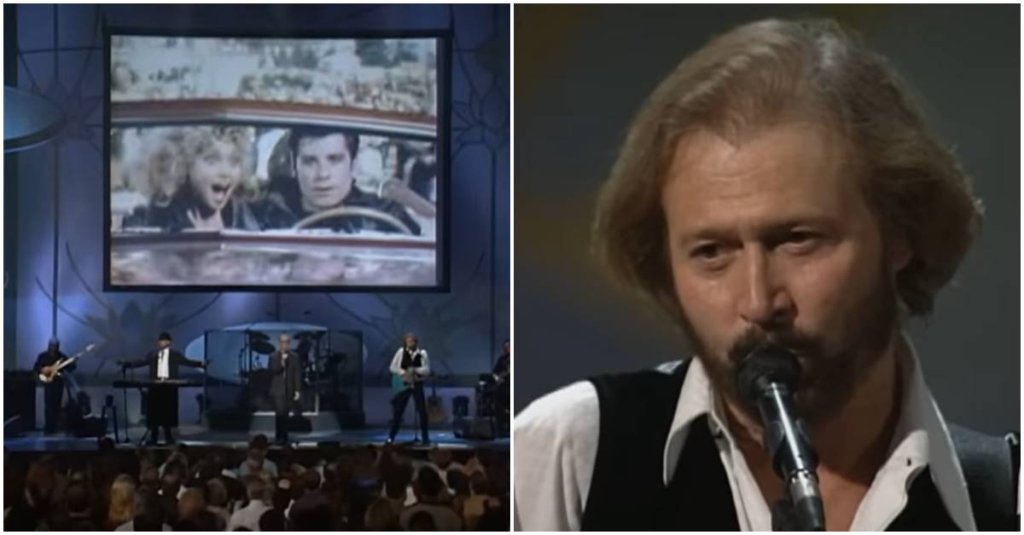
  • 19 years after writing it, the Bee Gees finally performed ‘Grease’ for the first time ever
    The Bee Gees performing 'Greece' in concert for the first timePhoto credit: @beegees/YouTube

    “Grease is the word, is the word that you heard/It’s got a groove, it’s got a meaningGrease is the time, is the place, is the motion/Grease is the way we are feeling”

    The title track to the 1978 film Grease, starring John Travolta and Olivia Newton-John, brought three generations together and hit number 1 on the Billboard Charts. The song is based on a movie about teenagers in the ‘50s, sung by a legend from the ‘60s and written by one of the biggest hitmakers of the ‘70s. In other words, there was almost no one alive at the time who didn’t love Grease!

    (And did you know that Grease was a Broadway musical years before the film? The story and songs, in many instances, are wildly different between the two, however.)

    Grease was written by Barry Gibb of the Bee Gees but sung by doo-wop legend Frankie Valli. Although the Bee Gees toured in the late ‘70s and made a comeback in the ’90s, they never played the song live until 1997 when it was part of their “One Night Only” concert and album featuring many of their biggest hits.

    What’s impressive about the song is that even though Valli does a great job singing it on the original recording, when you hear the Bee Gees sing it, it sounds exactly like something you would have heard them perform in the late ‘70s.

    During the performance, Barry Gibb points to Grease star Olivia Newton-John, who’s seen dancing with her daughter, Chloe Lattanzi in the audience (Newton-John passed away in August 2022).

    In the third verse, Valli’s vocal from the original is played so you can hear the difference. 

    The magic started when producer Robert Stigwood, fresh from the Travolta-starring ‘77 hit Saturday Night Fever, went into production on a film adaptation of the Broadway musical Grease. The film promised a killer soundtrack filled with new versions of the classic show tunes, but it needed a song for the film’s opening credits.

    So, Stigwood tapped Barry Gibb, lead singer of the Bee Gees, the band that had just launched into the stratosphere after being featured on the Saturday Night Fever soundtrack. Stigwood also happened to be the band’s manager and planned to feature them in a Beatles-based musical, Sgt. Pepper’s Lonely Hearts Club Band.

    Legend has it that Barry wrote the song “Grease” in one day. Instead of sounding like a ’50s doo-wop or rockabilly track, it was a slick-sounding disco-adjacent number about a feeling of generational confusion. The song was given to Valli, who’d had a recent comeback with the songs “My Eyes Adored You” (1975) and the 1976 nostalgia-dazed Four Seasons doo-wop disco number “December 1963 (Oh, What A Night).”

    Valli had the option of recording the song or appearing as the Teen Angel who sings “Beauty School Drop-Out.” The “Walk Like a Man” singer opted to do the theme song and Frankie Avalon was given the Teen Angel role.

    “I just remember that it all happened in one afternoon,” Barry Gibb recalled. “I was babysitting and my wife was out. And Robert Stigwood called up and said, ‘I have two wonderful new songs by John Farrar called ‘Hopelessly Devoted to You’ and ‘You’re the One that I Want.’ But we don’t have a song for the film’s title. Could you come up with a song called ‘Grease’?” I said, “How do you write a song called ‘Grease’? I don’t understand what direction I would take to do that.’ And Robert said, ‘Just Grease duh-duh-duh-duh-duh, Grease duh-duh-duh-duh-duh.’ So he wasn’t very helpful. But I understood that they really wanted something that was positive and sunny. It really all happened in that afternoon. I walked on the dock for a bit….”

    Indeed, the feature film version of the musical is known for its upbeat and optimistic music when compared to the slightly darker tones of the stage musical.

    Grease was a box-office smash and became the highest-grossing film of 1978. Unfortunately for Stigwood, his follow-up film, Sgt. Pepper’s Lonely Hearts Club Band, starring the Bee Gees, would be one of the biggest flops of the decade.

    To celebrate the 40th anniversary of “Grease” in 2018, Barry Gibb released the demo he originally recorded of the song accompanied by piano. Take a listen and chill out for a few minutes.

    This story originally appeared two years ago. It has been updated.

  • Lesbian couple answers the most common questions they get from strangers about having a baby
    Moms Allie and Sam Conway answer the questions the commonly get a lesbian parentsPhoto credit: @allieandsam/Instagram, used with permission

    Despite society having made a lot of progress when it comes to same-sex relationships and alternative families, it’s not so commonplace that many queer parents are still presented with questions about their lifestyle from straight people.

    And while queer parents probably (rightfully) grow tired of answering certain questions day in and day out, having open conversation helps break through the lack of understanding which causes stigma and misconceptions in the first place. In a now-viral video shared to their Instagram, lesbian moms Allie and Sam Conway answer commonly asked questions they get as a queer married couple with twins.

    What’s it like to be lesbian parents?

    Of course, they started with the age-old question:

    “Who’s the real mom?”

    Though people by and large are able to differentiate biological connection from emotional connection (like with adoptive parents or step-parents to take on an active role in their step children’s lives), this is still a question that same-sex parents face regularly. And it’s a fairly harmful one at that, as it implicitly undermines the non-biological parent’s role in the family.

    So, to Sam’s point: “We’re both the mom.”

    Allie also told Upworthy that the usual response to this answer is “oh my gosh! That’s amazing!” Which makes her—and us—”smile so much.”

    Next up:

    “Who’s the dad?”

    To which they replied: “there isn’t a dad.”

    This is also a question fused with negative connotation, as it suggests a father figure is necessary for raising well-adjusted kids. But research shows that kids born to same-sex parents fare just as well as the children of straight couples, indicating that what’s really necessary for a child’s development is two healthy, loving parents. That’s it.

    Okay, this next one actually had an answer that surprised some folks:

    “Who carried them?”

    Though Sam wanted to be the one to get pregnant, Allie agreed to try after Sam’s “long fertility journey” of three IUI’s, three embryo transfers and multiple chemical pregnancies with one miscarriage.

    However, the couple used Sam’s eggs, and Sam did the breastfeeding.

    How the heck did that happen, you might wonder. Don’t worry, you’re not alone. So did lots of viewers. Sam underwent induced lactation, which tricks the body into thinking it’s pregnant and producing breast milk—it’s something often utilized by adoptive mothers.

    What is induced lactation?

    Induced lactation replicates the natural hormone process that happens when a woman gives birth. In this process, women are often given hormone supplements, such as estrogen or progesterone, to mimic the effects of pregnancy. This process may go on for months. About two months before the expected birth, the woman is then given a breast pump to stimulate lactation.

    Lastly, a fun one:

    “What do the kids call you?”

    “Mummy and other mummy,” Sam quipped. “We’re rotating all day,” Allie added.

    Without proper understanding, stigma persists. That’s how myths like “queer parents turn their children gay” or “children of two-mother families are more likely to be bullied” continue. And while it’s certainly not the responsibility of parents like Allie and Sam to educate folks on the realities of queer parenting, it’s great that they do offer genuine insight.

    And thankfully, they are usually met with positive reactions from people, Allie tells Upworthy. Which only further encourages them to answer more question and offer glimpses into “different types of families.”

    At the end of the day, families are made up of people who love and support one another. Everything else is just window dressing.

    Check out even more heartwarming family content from Allie and Sam on Instagram and YouTube.

    This article originally two years ago. It has been updated.

  • Gay dad has a forceful response to a 7-year-old who called gay people ‘the devil’
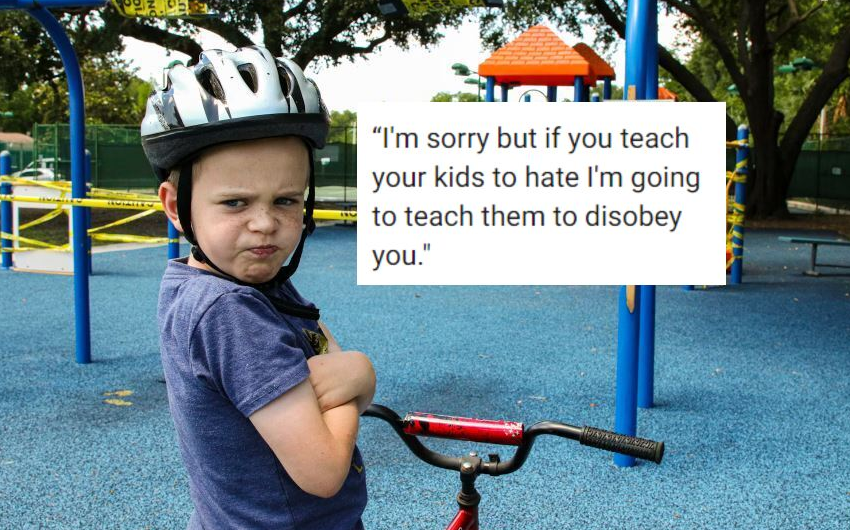
    A child looks really upset on a playground. Photo credit: Mick Haupt/Unsplash

    Robbie Pierce, his husband, Neal Broverman are no strangers to bigotry. The men and their two young children were traveling on an Amtrak train in California in 2022 when they were harassed by a fellow passenger at a stop in San Jose; an incident that made headlines.

    “All of a sudden, there was a man standing there next to me,” Pierce told The Advocate. The man told their son, “Remember what I told you earlier. They stole you and they’re pedophiles,” Pierce recounts. The man also said that gay people are abominations. (Broverman is the editorial director for print media at Pride, The Advocate’s parent company.)

    The police were called and the man was thrown off the train, but the incident was a frightening reminder that gay families could be the target of bigots any time and anywhere, even in liberal Northern California. “It’s a new level of homophobia out there,” Pierce added.

    Seven months later, Pierce’s son was the victim of harassment, this time from a child at a park.

    LGBTQ parenting, religious trauma, gay families, homophobia, parenting and religion
    A tire swing at an empty park. Photo credit: Dakota Lim/Unsplash

    “A random unattended 7-year-old at the park told me and my son that gay people are the devil,” he recounted in a viral X thread. “My son scoffed, but the boy said it was true because God said so.”

    Maybe it was the incident months prior. Maybe it was a lifetime of harassment and judgment. But whatever it was, in that moment, Pierce had had enough. He reacted to the boy’s hatred — which he probably learned at home — with his own lesson.

    “I told him parents made up God to make their Kids do what they want. His eyes got so big,” he wrote on X.

    It’s worth wondering: Did God really ‘say so’? Biblical scholars are split on the Bible’s true message around homosexuality. It appears open to interpretation, and it’s clear that many people choose to interpret the words in a hateful and negative way, going so far as to show their children that it’s OK to approach and confront gay people over their identities.

    Addressing complex issues like religion and sexuality with a young child, who’s a stranger, is a tricky needle to thread, so Pierce admits he had some reservations about his response. But he stands by his decision.

    “I’m sorry but if you teach your kids to hate I’m going to teach them to disobey you,” he wrote on X.

    As someone who has been harassed by religious, homophobic people in the past, Pierce took the opportunity to help steer a young child away from hatred. At the age of 7, most children believe whatever their parents tell them. However, Pierce planted a seed in the child’s mind that may one day encourage him to challenge his indoctrination when he gets older. The kid will likely remember that interaction for many years to come, and may look back at it with shame one day. That shame could be the much-needed catalyst for change.

    “I was shocked at first and then…well…you may have planted a seed to grow a fine human out of the little homophobic bigot he was being trained up as. I can’t argue with that,” one user wrote on X.

    The vast majority of commenters on X agreed with Pierce’s response to the child’s comment.

    However, some people thought Pierce’s response to the child was inappropriate.

    Bigoted words or not, it was still a child, and many people thought there may have been a more tactful way to teach the kid a lesson rather than invalidating his entire faith. Or perhaps Pierce could have tracked down the boy’s parents and given them an earful instead.

    One thing is clear: Something in our culture is definitely broken when we’re more intent on policing people’s responses to bigotry and hate versus addressing the root cause of these divides. The boy’s parents should be the one on trial in the court of public opinion for teaching their son that this kind of behavior is acceptable.

    No matter how one feels about Pierce’s reaction, what’s clear is that there is something very inappropriate about a 7-year-old child openly harassing LGBTQ families. The unfortunate problem is that this type of hyper-religious upbringing can cause lasting emotional and psychological trauma to a child. And it’s a common problem. A recent study in the growing field of religious trauma found that 1 in 3 Americans suffer from trauma related to religion at some point in their life.

    While we might be quick to dismiss the child’s behavior as innocent or simply as a symptom of growing up in a religious household, the more we learn about religious trauma, the more these children appear to be the victims of abuse. Hopefully Pierce’s words will help the boy rethink his relationship with his faith, and his parents, down the road.

    This article originally appeared two years ago. It has been updated.

  • Frustrated teen fixes neglected potholes for just $60 at Home Depot
    A teen boy (left) and a man fixing a pothole (right).Photo credit: Canva
    ,

    Frustrated teen fixes neglected potholes for just $60 at Home Depot

    After spending $600 replacing damaged tires, he took matters into his own hands.

    An 18-year-old in Michigan is getting attention for a bold move many disgruntled drivers understand, even if they wouldn’t take the same risk.

    Ali Chami, who lives near the border of Dearborn Heights and Inkster, had grown tired of navigating the pothole-ridden stretch of Cherry Hill Road during his daily commute. Like many others in the area, the issue had gone from a minor annoyance to an expensive problem.

    As reported by WXYZ-TV, he spent more than $600 replacing damaged tires over the past six months. He also saw a friend’s tire pop after hitting one of the same potholes.

    At a certain point, the frustration boiled over

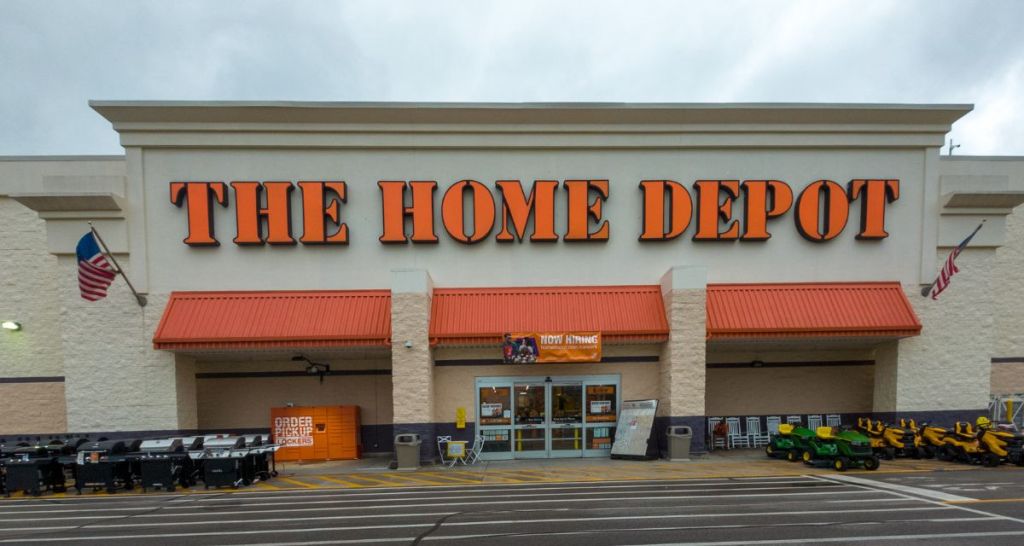
    So on a Saturday afternoon, instead of waiting for repairs, he decided to act. Chami went to Home Depot, spent about $60 on asphalt, and headed to the road to start filling potholes himself.

    Michigan, Michigan news, Home Depot
    Home Depot. Photo credit: Canva

    He documented the process on TikTok, where his candid commentary quickly struck a chord

    “Why is every single road but Cherry Hill getting fixed?” Chami asked in a video. “That s*** is pissing me off. I swear to God. So you want to know what I’m about to do? I’m about to go to Home Depot and I’m about to put some f****** asphalt on the road for all the these potholes.”

    Using a simple method, he got to work.

    “So pretty much, I just grabbed the cap of the bucket and I just scooped it out and spread it out, and I used it as a pushing point where I could just step on it and flatten it out,” Chami said.

    In a follow-up video, he celebrated the effort.

    “Yup, wallah, I do this s***,” Chami quipped.

    Other drivers passing by seemed to share his sentiment, honking or shouting in support. One driver even called out, “Potholes are getting horrible. I had to change my tire last week.”

    Videos go viral

    The videos quickly gained traction online, racking up more than 175,000 views and drawing the attention of local officials.

    John Danci, a representative from the Dearborn Heights Department of Public Works, acknowledged that the road has been a known issue for years. According to him, the delay is partly due to the complexity of the situation, as the road falls under three jurisdictions: the Wayne County Federal Aid Committee, Dearborn Heights, and Inkster.

    “Historically, between Dearborn Heights and the city of Inkster, the funding for a road project like this is much higher relative to our city budgets versus the county that gets a lot of state revenue,” Danci told WXYZ-TV.

    Mayor Mo Baydoun also responded, noting that temporary fixes have been attempted but are difficult to maintain in colder temperatures.

    “I can tell you that we have patched Cherry Hill a few times already,” Baydoun wrote on Instagram. “Unfortunately, nothing is going to stick with the temperatures continuing to drop. The good news is that the city has been awarded a $2.6 million grant to fix all of Cherry Hill from Gully-Inkster. Project is expected to begin June 1st.”

    potholes, city planning, home depot
    Image of a pothole. Photo credit: Canva

    While officials emphasized that residents should not attempt their own repairs due to safety concerns, Danci acknowledged the impact of Chami’s actions.

    “You did something that at least gained a lot of attention,” he told Chami.

    Chami, for his part, is not ruling out doing it again.

    “If it happens [raises money], then I’ll do it,” he told WXYZ-TV.

    Whether or not you agree with Chami’s actions, his feelings are certainly understandable

    Yes, taking on road repairs yourself can be dangerous and is not recommended. At the same time, when problems go unresolved for too long, it’s natural to want to be the solution that seemingly will never come on its own. 

    For many people, it’s not just about fixing the specific issue, but about feeling heard. And in this case, one teenager’s decision did just that, bringing new attention to an issue years in the making.

  • Comedian nails why the Millennial midlife crisis is unique and how to deal with it
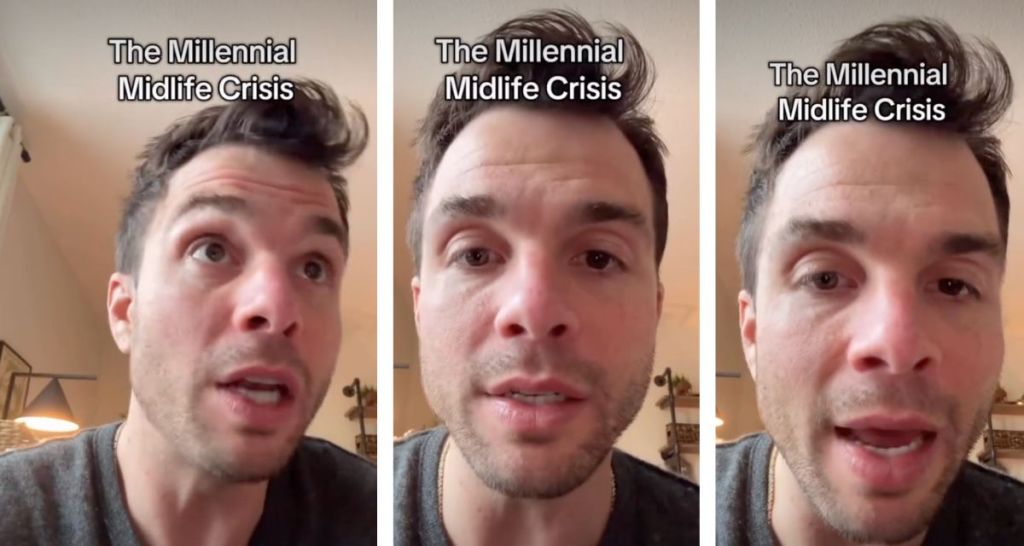
    Comedian Mike Mancusi explains what makes the Millennial midlife crisis unique.Photo credit: @mikemancusi/Instagram (used with permission)

    We’ve historically seen the midlife crisis represented by large and lavish purchases, or maybe by questionable dating choices. But for Millennials, the next in line to approach this milestone, the image doesn’t really resonate. A 35-year-old New York comedian was able to perfectly capture why. 

    Mike Mancusi recently went viral on TikTok and Instagram after pointing out why the Millennial midlife crisis looks a little different from those of previous generations.

    What makes the Millennial midlife crisis unique?

    For one thing, Millennials, by and large, can’t afford to buy “Lamborghinis” or get “second families,” Mancusi quipped. Instead, they cope with nostalgia, like going to Disneyland to relive their childhoods.

    Similarly, Mancusi argued that while other generations trigger their midlife crises by “looking forward” (“Whoa, I’m going to be old someday”), the Millennial midlife crisis is ignited by “looking back” and realizing that even though they “followed the blueprint” to success, they still aren’t “happy” or “fulfilled.”

    “That is a way different crisis,” Mancusi said, noting that it often manifests as a career-specific midlife crisis. Many Millennials come to the stark realization that, 15 years into a job they thought would give them meaning, it simply doesn’t deliver.

    Mancusi said there’s only one solution: build meaning outside of your job 

    “The more that you allow some job that you don’t even like to define your entire existence, the more it’s going to crush your soul,” Mancusi said. “You have to find something else to do. Whatever you want to call it. A hobby. A passion. But it has to be something that’s for you. It’s not to make you money, not to please your family, it’s for you.”

    While Mancusi said that interest could potentially grow into a career, that’s not really the point. What matters is that it allows you to “move forward” with a sense of autonomy and your passion intact.

    In the comments, many Millennials shared their newly discovered passions

    “I’m writing again after 5 years. I used to do it constantly. But then life got in the way after I lost all my notes for the last thing I was working on, bills, debts, and this summer, when I had all but given up hope, my creativity came roaring back like a Phoenix reborn.”

    “Started recording and releasing music this year.I can confidently say although it is actively losing me ALOT of money. I’m much happier than I was last year.”

    “For me, this has now become running. Quite the form of therapy in my opinion. Since it seems like very few people affording therapy.”

    “I started going out dancing/clubbing this year, something I basically skipped in my teens and 20s, and love being immersed in the music so much. I try to go at least one or 2 weekends a month.”

    Mancusi may have prescribed this midlife crisis antidote for Millennials, but the wisdom applies to any generation. No matter your age, time on this planet is temporary and nothing is guaranteed. So you might as well spend it doing the things that bring you joy—or die trying.

  • Chefs share 7 frugal ways to ‘gourmet-ify’ the humble chicken breast
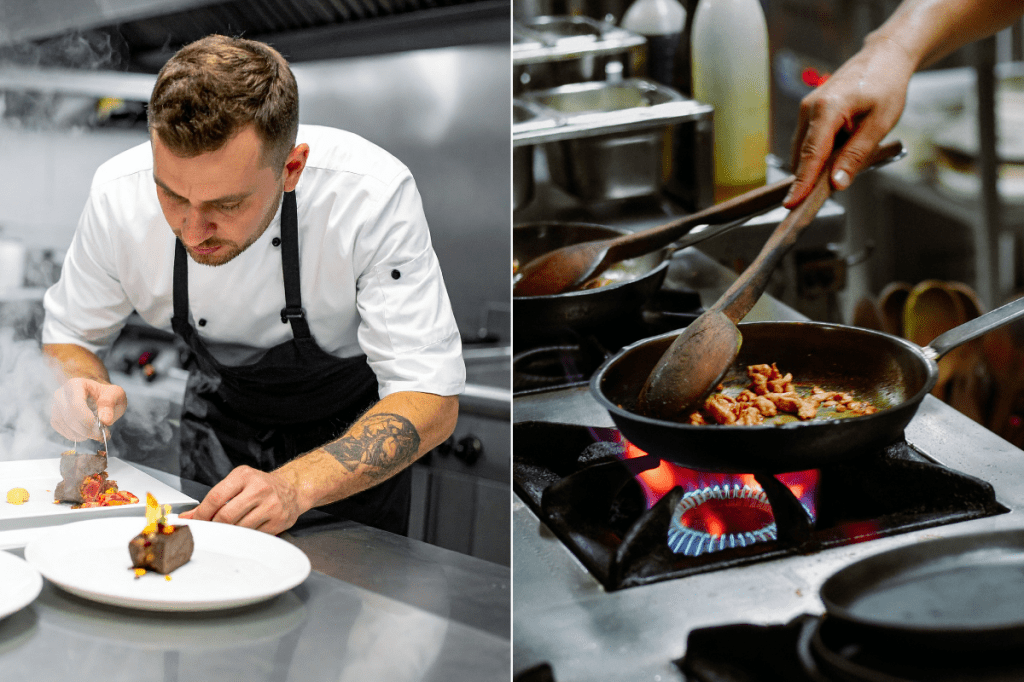
    Chefs reveal how to make restaurant-quality chicken breast at home.Photo credit: Canva
    ,

    Chefs share 7 frugal ways to ‘gourmet-ify’ the humble chicken breast

    Chicken at home doesn’t excite many people, but maybe it could.

    Chicken, and chicken breast in particular, is a staple in many households. It’s relatively affordable compared to other meats, versatile, and can be cooked in a variety of ways. It works well in pasta, casseroles, sandwiches, tacos, or even on its own. It’s easy to see the appeal.

    However, let’s be honest: not many people get overly excited about chicken night. Chicken breast, in particular, is high in protein but can be bland due to its low fat content. It needs the right seasonings or marinade, along with the right cooking methods, to really bring it to life.

    Professional chefs are sharing the secret techniques to “gourmet-ify” chicken without adding much, if any, extra cost. These tips can help turn a $3 chicken breast into a restaurant-quality dish:

    1. Brine

    Experts overwhelmingly recommend one step that almost everyone skips: brining.

    A dry brine is popular for Thanksgiving turkeys, where salt is rubbed all over the skin the night before. But chicken breasts can benefit even more from a wet brine, or soaking overnight in a saltwater bath. This technique not only allows the salt to penetrate deep into the meat, enhancing flavor, but also helps it retain moisture during cooking, resulting in a more tender texture.

    Brines can be as simple or as complex as you like, from just salt and water to mixtures with garlic, vegetables, vinegar, and more. Alternatively, a longer marinade can have a similar effect.

    2. Sous vide

    Baking in the oven isn’t necessarily the worst way to cook chicken (take a bow, microwave), but it’s definitely one of the easiest to screw up. Most people are all too familiar with baked chicken that’s dry and bland, or even undercooked.

    One easy way to achieve perfectly cooked chicken every time is to skip the oven and use a sous vide instead. A sous vide device heats a water bath to a precise temperature and maintains it for as long as needed. Better yet, it doesn’t require close monitoring like a grill or pan.

    You can usually pick one up for under $100 and use it every week.

    Just bag the chicken with your chosen marinade, butter, oil, and spices, then set the sous vide. All that juicy goodness will infuse into the perfectly cooked chicken in just an hour or two.

    Perfectly seared chicken breasts. Photo credit: Canva

    3. Sear and rest

    Alternatively, many chefs prefer searing chicken in a pan on high heat. It quickly locks in juices and flavors, gives the outside a nice golden color, and doesn’t require constant poking and prodding.

    Crucially, it’s important not to oversear and burn the chicken breast. Expert chefs recommend removing it from the heat when it’s just slightly underdone—around 155°F internally—and allowing it to finish cooking as it rests.

    (Cooking chicken to 165°F is one of the biggest mistakes people make with chicken breasts, according to cooking educator and YouTuber Ethan Chlebowski.)

    4. Trim and slice

    Jack Croft, head chef at one of London’s top restaurants, Fallow, demonstrates how he prepares a chicken breast in a recent YouTube video, using techniques from a Michelin-starred kitchen.

    Before cooking, he painstakingly removes blood spots, sinew, and other imperfections from the chicken breast to ensure the most tender final product possible. It’s not a necessary step for home chefs, but if you’re buying cheaper cuts—and who could blame you—it can make a noticeable difference in the final result.

    5. Use the juices

    “Chicken au jus” sounds fancy, but it really just means the chef saved some of the chicken’s natural cooking juices and reincorporated them into the dish. Anyone can do that at home.

    Pan drippings from a chicken breast are often rich in flavor, despite the meat’s low fat content, and can easily be turned into a sauce or gravy that really elevates the dish.

    The jus can even be stored with leftover chicken to help keep it moist when reheating.

    6. Salt and butter

    Chlebowski is adamant that you’re probably not using enough salt on your chicken breast.

    “Undersalted chicken tends to taste like diet food,” he says. “Properly salted food tastes like dinner.”

    If all else fails, add butter. Chicken’s dryness problem can be easily solved with a little butter in the pan before and toward the end of cooking, while its flavor problem can be fixed with the right amount of salt. It may make the dish slightly less “healthy,” but the flavor improves dramatically.

    Anthony Bourdain famously said that butter is the main reason restaurant food often tastes better than what we make at home.

    7. Wrap or stuff it

    Croft says stuffing chicken is one of the best ways to impress at a dinner party or date night at home—and it’s not nearly as difficult as it looks.

    Some great fillings for chicken breast include:

    • Mushrooms
    • Cream cheese mixtures
    • Spinach
    • Sauces (pesto, BBQ)
    • Mozzarella

    Inviting someone over and serving chicken breast isn’t likely to wow anyone. But a mushroom-stuffed chicken breast wrapped in bacon? That’s guaranteed to have people’s eyes popping.

    Chicken, when cooked right, is a good choice amid rising prices

    The price of most foods is going up. While chicken breast may be hard to describe as a “cheap” option (especially a quality cut) it is still more affordable than ground beef, lunch meat, ground chicken or turkey, and many other protein options. That’s what makes it such a great building block for your family’s meal plan.

    With a few chef-approved techniques up your sleeve, you can make it taste like a dish from your favorite restaurant.

Culture

Frustrated teen fixes neglected potholes for just $60 at Home Depot

Generations

Comedian nails why the Millennial midlife crisis is unique and how to deal with it

Life Hacks

Chefs share 7 frugal ways to ‘gourmet-ify’ the humble chicken breast

People Skills

Expert shares the one small habit that makes you instantly likable