upworthy
Add Upworthy to your Google News feed.
Google News Button
Popular

'Adults' are honestly confused by these 15 strange things the younger generations do

What's with the Dad Socks?

gen z, gen alpha, generations, generational differences, gen x, boomers, millennials, millennial parents, kids, teens
via Anna Shvets/Pexels

Adults are having a really hard time keeping up with the interests of Gen Z and Gen Alpha

When it comes to young people, every generation is different from the one that came before. It makes sense. Every group grows up in different economic, cultural, and technological circumstances, so of course they’re going to have different tastes and values. It’s also natural for younger generations to rebel against their parents and create their own unique identities.

However, these days, with the rapid changes in technology and culture spurned on by the internet, for some older people (Baby Boomers, Gen X), the younger generations (Millenials, Gen Z, Gen Alpha) are downright confusing. Further, Gen Z and Gen Alpha were raised during the pandemic, the #MeToo movement, and the murder of George Floyd, which have had an enormous impact on how they see the world.

To help the older folks who may be confused by “kids these days” feel less alone, a Redditor named 5h0gKur4C4ndl posed a question to the AskReddit subforum, “What is something about the newer generations that you can't seem to understand?”

A lot of the responses were centered around the younger generations’ relationship to technology.

The older generations also seem concerned that younger kids are a lot more prudish than their parents and should learn how to lighten up and have some fun — a big role reversal from previous generational wars.

Here are 15 things about the younger generations that older people don’t understand.

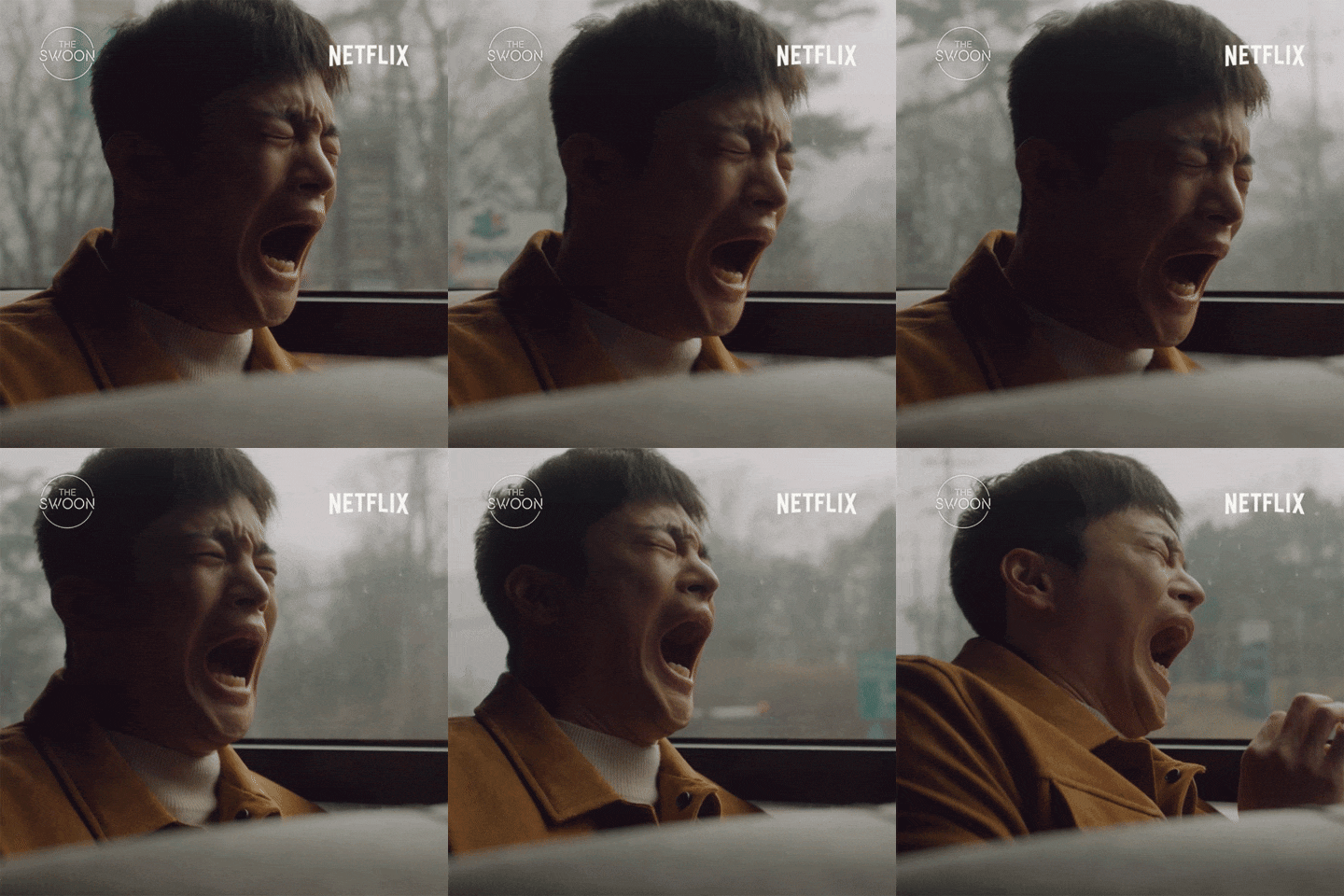
1. Recording yourself crying

For many younger people, everything is "content." Even their most intimate and private moments.

"THIS IS THE ONE. I do not know how intense your desire for external validation has to be for you to be in the midst of crying and think 'Lights, camera, action baby let's make sure as many people see this as possible.'" — Thrillmouse

"People who record themselves crying are already weird but posting it on the internet is weirder. imagine clicking 'post' to every social media they have. do they seriously not look at what they're posting online?" — TryContent4093

gen z, gen alpha, generations, generational differences, gen x, boomers, millennials, millennial parents, kids, teens Younger generations constantly turn everything into content.Giphy


2. Poor grammar

AI and automatic grammar checkers may be taking a toll on young people's ability to write for themselves.

"The emails I get from my students aged 18-25 are such a mess of incoherent garbage, I can't tell if they are lazy or if it's an actual literacy issue. And I'm barely older than they are so if this is a generational gap, it happened quickly!" — NefariousSalmander

"It's a block of text with no capitalization or punctuation. Imagine receiving 6 consecutive one-line texts at once. If you can figure out where the periods should go then you can make sense of it, but it's all texting abbreviations and slang. Something like, 'yo mr y u slow fixin my grade I trned in the lab last class my dad gonna take my phone lmk.'" — Ceesa


3. Learned helplessness

"I'm a middle school teacher. My kids will routinely claim they can't do anything and then shut down and do nothing. And then... It's easy and they do it. So basically it's the degree of learned helplessness. They know to ask when I go over, but if there are twenty kids and I get to them last, they will do nothing (no phones, nothing!) for twenty minutes and act surprised I'm irritated they didn't grab a damn pencil from the freeeee pencils on my desk. And then act surprised they're behind on the assignment!" — Scarletuba


4. The internet is forever

Pro tip: Never participate in one of those TikTok "street interviews" after you've had a few drinks.

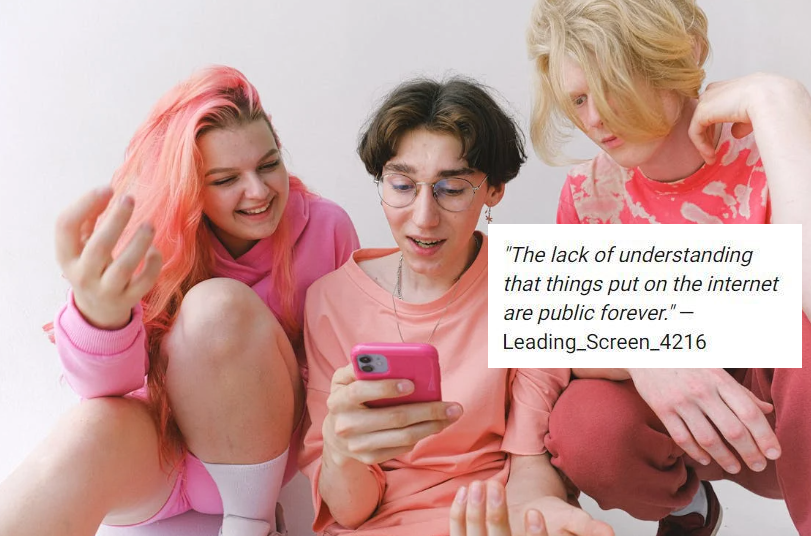
"The lack of understanding that things put on the internet are public forever." — Leading_Screen_4216


5. No self-confidence

"37-year-old attending college for the first time here. They have negative confidence. They barely speak above a mumble, especially when answering a question from the teacher. Most of them would rather die than talk to someone they're interested in. It's like 90% of them are cripplingly introverted." — Intelligent-Mud1437


gen z, gen alpha, generations, generational differences, gen x, boomers, millennials, millennial parents, kids, teens It seems like young people are easily deflated or embarrassed.Giphy

6. They need attention

Influencer and YouTuber are highly sought after career paths because of the fame and notoriety they bring.

"We were saying what we would do if we won the big lottery jackpot. The new 22-year-old hire said he’d become an influencer. Can you imagine winning a billion at 22 and that’s what you would do? Not start a business, travel the world, charity, sports, property… Learn something… but become an influencer… with a billion dollars. I mean, like, he’s gonna hire a marketing company to fabricate interest in his social media? He’s gonna spend money on stupid things to make people cringe or rage comment? With a billion dollars." — Covercall


7. Put your phone down

"Why do you want to watch 100% of a concert, that you paid good money for, through your phone lens?" — LeluWater

"I was yesterday in a Linkin Park cover band concert, a fuckin blast. There was that one guy, that spent every song recording HIS FACE 'singing' along. Not the band, his face. Please wake me up in 1995." — pls_tell_me

The older generations are right about this one. Recording an experience actively worsens your enjoyment of it in the moment.

8. Phone at the movies

"Why do they go to the movies only to scroll through their phone the entire time?" — IAmASurgeonDoctorHan

"My wife does this. Not at the theater, but we'll be watching a movie or TV show, and she'll be glued to her phone. Then when she looks up she doesn't get what's going on and we have to pause while I explain what just happened and why." — Project2R

Anyone who's fluent in smartphones can get caught up in this one. It's tough to get through a whole movie or show at home without checking your phone! We're all addicted.

gen z, gen alpha, generations, generational differences, gen x, boomers, millennials, millennial parents, kids, teens They have a hard time looking away from their phones.Giphy

9. Paranoia

"I’m in my forties and I manage a small group of people who are in their 20s to early thirties. What I notice most is how anxious and fearful they seem to be. Everyone is out to get them. I often get approached by subordinates who want me to do something about a colleague who is doing them wrong in some way. After I gather more information, it almost always is a case of poor assumption about someone else’s intentions, coupled with a desire to jump to the worst-case scenario. If I ask them a series of probing questions about other possible interpretations they often admit they didn’t consider those possibilities." — Reasonable_Human55

10. Putting on heirs

Comparison is the thief of joy. Only, young people who were raised on social media didn't get the memo.

"I don't understand why most of them want to look rich with expensive s**t and most of them act like they run businesses or something.They take pictures with cars that are not theirs for example. Dude chill, you're 16." — Honest_Math7760

"Because they are indoctrinated by social media that tells them they are a failed human if they don’t become a multi-millionaire entrepreneur." — Outrageous_Glove_467

gen z, gen alpha, generations, generational differences, gen x, boomers, millennials, millennial parents, kids, teens They believe in curating a certain appearance and lifestyle.Giphy

11. The new Puritans

It's weird for Gen Xers and Millennials to be old enough to witness the cultural pendulum swinging back the other way in several key ways.

"This weird new Puritan wave they are riding on. We struggled for generations to free ourselves from oppressive dogmas, and now they are all-in on the whole: 'if you like anything even remotely non-wholesome, you should be arrested and burn in hell.' ... Constantly calling for bans on anything that upsets them, instead of learning how to avoid the things that upset them." — SleepyCera

"The prudishness is so weird to me. Hearing young people talk about body counts' and how you should be married with kids by the age of 25, or you’re past your prime is absolutely insane. Even my Christian grandparents weren’t as sexually conservative as this generation. The complete demonization of partying, drinking, and going out is weird too—like I can see being traumatized by fentanyl and the general lack of safety around drugs, but I did most of my socializing as a young person by going to concerts and nightlife events and meeting people, and they seem to just…not do anything social?" — Counterboudd


12. Can't handle stress

"The absolute lack of capacity to deal with any emotional stress or upheaval without turning into a gibbering mess. ...I had someone messing around in a lecture, playing with their phone and being disruptive. I stopped the lecture and told them to put it away and pay attention or leave. They looked SHOCKED to have been called out and sat there quietly for the next 10-15 minutes until suddenly going all 'deer in the headlights' when asked a question in relation to the topic and then running the full length of the lecture hall and out the room. I was informed the following day that the student had went to counseling services to complain that I had 'put unreasonable pressure on him by asking him questions in class, and set off his anxiety.'" — Indiana_Harris

13. White socks with sneakers

"How pulling up white socks with sneakers was the most unfashionable middle-aged American dad clothing in the entire world. To being fashionable." — Awkward_Moments

"Socks with sandals too. And mustaches. Kids today think dressing like a dorky dad thirty years ago is cool. I laugh at them all the time." — IDigRollingRockBeer

gen z, gen alpha, generations, generational differences, gen x, boomers, millennials, millennial parents, kids, teens White dad sneakers are SO back.Giphy

14. Watching video games

It is impossible for anyone over the age of 30 to understand "streamer" culture.

"Why they'd rather watch someone else play a video game than play it themselves. That was a punishment when I was a kid, not entertainment." — DeadDevilMonkey

15. External stimulation

"Will never understand the constant need for external stimulation. I’m quite happy just to ponder my own thoughts. I love flying, because it gives me several hours to think on shit without distraction. Ask young people to put down their phone? It’s as if you asked them to chop off their left hand." — Midnight_Poet

Though older generations definitely have a lot of legitimate concerns about younger folks, much of the list was created in jest. In reality, there's a lot to like about Gen Z and Gen Alpha! They have a lot of fantastic qualities. For example, Gen Z is really driving change when it comes to work life balance; they refuse to make career their whole life, getting sucked into the same trap as previous generations. They're also, as a group, quite tolerant of different races and sexualities. They can also be extremely creative and willing to take big risks to achieve their dreams and get ahead in an economy that's stacked against them.

So cheers to you, young people. We only tease because we love you.

This article originally appeared last year. It has been updated.

Gen Z; Millennials; technology; cell phones; social media; teens and technology; teens social media

Gen Z is the first generation less cognitively capable than their parents. Denmark has the solution.

Nearly every parent hopes their child will be better off than they are: smarter, more secure, and more well-adjusted. Many parents see this as a stamp of successful parenting, but something has changed for children growing up today. While younger generations are known for their empathy, their cognitive capabilities seem to be lagging behind those of previous generations for the first time in history.

Dr. Jared Cooney Horvath, a teacher turned cognitive neuroscientist who focuses on human learning, appeared before Congress to discuss concerns about cognitive development in children. In his address to the members of Congress, he says, "A sad fact that our generation has to face is this: our kids are less cognitively capable than we were at their age. Since we've been standardizing and measuring cognitive development since the late 1800s, every generation has outperformed their parents, and that's exactly what we want. We want sharper kids."


kids, intelligence, sharp kids, generations, education, cognitive abilities Student smiling in a classroom, working on a laptop.Photo credit: Canva

Horvath explains that the reason this happens is that each generation has gone to school longer than the previous generation. Gen Z is no exception to the longer duration of time spent in school, but they're the first ones who aren't meeting this normal increase in cognitive development. According to the cognitive neuroscientist, the decline is due to the introduction of screens in the classroom, which started around 2010.

"Across 80 countries, as Jean was just saying, if you look at the data, once countries adopt digital technology widely in schools, performance goes down significantly. To the point where kids who use computers about five hours per day in school for learning purposes will score over two-thirds of a standard deviation less than kids who rarely or never touch tech at school," Horvath reveals.

In most cases, the decline in performance doesn't result in better strategies. The neuroscientist shares that the standardized testing has been adjusted to accommodate lower expectations and shorter attention spans. This is an approach that educators, scientists, and researchers went to Capitol Hill to express wasn't working. But not every country is taking the approach of lowering standards to meet lowered cognitive ability. Denmark went in the opposite direction when it realized their students were slipping behind.

France24 recently interviewed educators in Denmark following their seemingly novel approach to students struggling with cognitive development. Since the beginning of the 2025/2026 school year, Denmark has not only been having students turn in their cellphones, but they've also taken tablets, laptops, and computers out of the classroom. No more digital learning for the majority of the school day. Danes went old school by bringing back physical textbooks, workbooks, and writing assignments. The results have been undeniable. Even the students can't seem to deny the success of the countrywide shift in educational approach.

"I think the biggest issue has been that, because we kind of got rid of the books and started using screens instead, that we've noticed that a lot of the kids have trouble concentrating, so it's pretty easy to swipe with three fingers over to a different screen and have a video game going, for example, in class," Copenhagen English teacher, Islam Dijab tells France24.

Now, instead of computers being part of every lesson, Denmark uses computers very sparingly and with strict supervision. One student says that it has been nice not having screen time at school because she loves to read and write. But it wasn't just the lack of attention span children were developing, they were also developing low self-esteem and poor mental health due to the amount of time spent on devices.

kids, intelligence, sharp kids, generations, education, cognitive abilities Students focused and ready to learn in the classroom.Photo credit: Canva

The data showing the negative impact of screens on teens' brains has prompted a nationwide change in Denmark that extends outside of the classroom. Afterschool activities are eliminating or extremely limiting electronic use. There is also a national No Phone Day that encourages everyone to put away their devices for the day, and Imran Rashid, a physician and digital health expert, is petitioning parliament to ban social media use for children under the age of 15. The no phone movement in Denmark is a nationwide effort that hopes to right the ship before another generation feels the effects.

cleaning, cleaning tips, cleaning hacks, productivity, productivity hacks, adhd, twitter, x, social media

Chronic procrastinators share their weird tricks for tidying up the house.

A lot of people struggle to keep their homes clean and tidy. It can be because they don't have the time, the know-how, or the ability to keep up with how quickly things get dirty again. But for many people, the biggest challenge is simply getting motivated to start. For those folks, finding the right approach can make a world of difference.

Social media users and mega-procrastinators are chiming in with their weird, quirky, and laughably inefficient cleaning strategies that actually work.


It started when an old viral cleaning hack, posted by a user named Pontifier on Hacker News, resurfaced on X:

"I have a cleaning technique I call ant mode. A colony of ants can accomplish a lot. They can move immense amounts of materials, and create well organized groupings of things.

In ant mode, I pick up one thing, and then I put it in a place it belongs. If I don't know where it belongs, I put it down with something else of the same type. I'm only ever picking up one thing, I'm only ever putting it down in one spot. I envision myself becoming a colony of ants.

It's very helpful when moving lots of things from one spot to another, and I pretend that I am one of multiple ants making the same trip back and forth. It's surprising how effective it is because there's no thought required. No second guessing. There's no wondering what to do next, it's just pick up something out of place and move where it belongs.

The best thing about ant mode, is that I can stop anytime, and I've accomplished something. Things are better than I found them."

The post on X went viral, racking up more than 300,000 views along with thousands of likes and comments.

People began confessing that "ant mode" sounded strikingly similar to habits they'd unknowingly picked up on their own.

"I do this all the time," a user replied. "Totally haphazard, no method, just clean something, put something away, wash [something], organize something. Totally at the mercy of whatever I happen to see in that exact moment. No order, no plan, just keep going. These are incredibly productive 10 minutes."


Others began chiming in with their own methods as well.

"The jellyfish"

User Sivori explained their own method, "the jellyfish," which involves wandering the house aimlessly while picking things up and tidying. It's not efficient, but it works.

"I call this action 'entropy walking', I walk from room to room never with hands empty and slowly decrease entropy," user Full Body Alchemist wrote.

Chaining tasks

Another form of structured wandering:

"Also you can 'chain' tasks together: return nail clippers to bathroom, oh shoot trash needs emptied, drop off the trash and notice a charger that should be in the bedroom. it's more efficient because now there's fewer wasted return trips," user Flat suggested.

"Kindred piles"

"I prefer the 'kindred piles' technique," user TheFutureIsDesigned added. "All items of Type A (let's say tools) go to pile A. Don't need to figure out what kind of tool it is or which specific drawer it should go into. First just pile up all the tools. Office supplies. Books. Cables-adapters-extension-cords: if it conducts electricity, it goes into a separate pile. Etc. Even if you don't have the storage space/subdivisions to super-organize everything, at least you have things grouped by properties."

The "GAP method"

"I do [something] similar, for similar reasons," user Thea Nyktos wrote. "I call it the GAP method. Grab, Assess, Put. Grab the nearest thing. Assess where it belongs. Put it there. Rinse and repeat as long as I have the energy."

Timers and counters

Some people swear that turning cleaning into a game or a race is the key to getting themselves motivated:

"I started saying I'll pick up 30 things and count items I put away until it's 30. Similar items or things next to each other count as one. Once I hit 30 it's noticeable cleaner and I'm usually in a good groove to keep going."

"Another trick is just to clean for 5 minutes, set a timer. everyone can spare 5 minutes. you will be amazed at how much you can pick up, how much space you can clear in that time."

One thing at a time

"This is how I get my kids to clean," user StarFox added. "Pick up ONE THING and put it away. Don't even look at everything else, just one thing. OK, good, now do ONE more thing.' And so on until the job is done. With four kids and two adults doing this, cleanup is a breeze."

If all of these methods sound horribly inefficient, that's kind of the point.

"Ant mode" has been a popular idea in ADHD subreddits and other forums for a few years now. It strikes a chord with people who have trouble completing a task from start to finish.

The general concept lines up with how most experts agree people with ADHD should approach cleaning and other tasks. They're often advised to use timers and gamification for short bursts of motivation and to work in "sprints" rather than long, sustained periods. This isn't necessarily because they can't focus, but because the idea of tackling a huge, multi-pronged task (like cleaning the entire house, for example) can be so overwhelming that it causes their brain to slip into a kind of paralysis.

You know what's not overwhelming? Picking up one thing and putting it away.

- YouTube www.youtube.com

Though there is a strong link between the two, not all chronic procrastinators have ADHD, and vice versa. However, there is a lot of overlap when it comes to helpful strategies for both groups.

Some users in the X thread shared how being too focused on efficiency and perfection can ultimately cause them to get nothing done:

If you're not a procrastinator by nature and don't struggle with task paralysis, unstructured, inefficient techniques like the jellyfish or ant mode might seem extremely bizarre. But as the old expression goes, "don't let perfect be the enemy of good." For some people, just getting started at all is already a massive victory.

Science

Helicopters dump 6,000 logs into rivers in the Pacific Northwest, fixing a decades-old mistake

Forty years ago, restoration workers thought logs were the problem. They were wrong.

river restoration, washington, river fish, restoration, Yakama Nation, indigenous land, indigenoues tribes, salmon, trout, pacific northwest

Restoration workers now see how "critical" wood is to the natural habitat.

For decades, river restoration in the Northwestern United States followed a simple rule: if you saw logs in the water, take them out. Clean streams were seen as healthy streams, fast-moving water was seen as optimal, and wood was treated like a "barrier" to natural processes, particularly those of the local fish.

Now, helicopters are flying thousands of tree trunks back into rivers to undo that thinking.


In central Washington, one of the largest river restoration efforts ever attempted in the region is underway. More than 6,000 logs are being placed along roughly 38 kilometers, or 24 miles, of rivers and streams across the Yakama Reservation and surrounding ceded lands.

Nearly 40 years ago, Scott Nicolai was doing the opposite kind of work, all in the name of restoration.

"(Back then) the fish heads — what I call the fisheries folks — we stood on the banks, and we looked at the stream," Nicolai, a Yakama Nation habitat biologist, told Oregon Public Broadcasting. "If we saw a big log jam, we thought, 'Oh, that's a barrier to fish. We want the stream to flow.'"

river restoration, washington, river fish, restoration, Yakama Nation, indigenous land, indigenoues tribes, salmon, trout, pacific northwest Fish find shelter for spawning in the nooks and crannies of wood. Photo credit: Canva

At the time, logs were removed in an effort to simplify the habitat. However, it soon became clear that wood provided vital "complexity," creating sheltered pockets for salmon and bull trout to spawn and supporting algae that feed aquatic insects. Logs also slow water, spread it across floodplains, and allow it to soak into the groundwater. That water is then slowly released back into streams, helping keep them flowing and cooler during hot, dry periods.

The consequences of removing this "critical part of the system" (in addition to overgrazing, railroad construction, and splash dam logging) were made all too clear over the years as the rivers dried up and wildlife populations declined.

"We're trying to learn from our mistakes and find a better way to manage," said Phil Rigdon, director of the Yakama Nation Department of Natural Resources.

That's why Nicolai is now helping lead a project for the Yakama Nation aimed at rebuilding river complexity by returning logs to their rightful place. Many of these streams are now unreachable by road, which is why helicopters are used. Logs are flown from staging areas and carefully placed at precise drop locations marked with pink and blue flagging tape.

river restoration, washington, river fish, restoration, Yakama Nation, indigenous land, indigenoues tribes, salmon, trout, pacific northwest Many of these streams are now unreachable by road, which is why helicopters are used.Photo credit: Canva

The wood comes from forest-thinning projects led by The Nature Conservancy and includes species such as Douglas fir, grand fir, and cedar. Although some of the timber could have been sold, it is instead being used as river infrastructure.

For tribal leaders, the work carries even deeper meaning. During the helicopter flights, they gathered along the Little Naches River for a ceremony and prayer.

river restoration, washington, river fish, restoration, Yakama Nation, indigenous land, indigenoues tribes, salmon, trout, pacific northwest Tribal leaders gathered by the Little Naches River for a ceremony and prayer.Photo credit: Canva

"It was very simple: to bring what was rightfully part of this land back to us," said former tribal chairman Jerry Meninick.

The aftermath of the original restoration project illustrates how human concepts, such as the belief in the superiority of "cleanliness," can be limited and sometimes cause more harm than good. The miracle of nature, however, is that when left to her own devices, she can heal herself.

wine, couple, eye contact, blonde lady, smiling woman, starting into eyes

A man and woman making eye contact.

Have you ever been talking to someone at a party and noticed that, instead of looking you in the eyes while you're speaking, they keep peering over your shoulder? It can feel insulting, because it sends a clear signal: I'm not paying attention to you.

That's an obvious sign someone isn't listening. But what if you're talking to someone and want to know whether they're actually taking in the information and enjoying what you have to say, rather than just smiling and nodding along? Researchers at Concordia University recently conducted a study suggesting you can tell when someone is truly listening by paying close attention to their eyes.


How to tell when people are actually listening to you

Researchers found that when people are intently listening, they blink less.

"We don't just blink randomly," Pénélope Coupal, an honors student at the Laboratory for Hearing and Cognition, said. "In fact, we blink systematically less when salient information is presented."

Co-author Mickael Deroche, an associate professor in the Department of Psychology, adds, "Our study suggests that blinking is associated with losing information, both visual and auditory."

couple, eye contact, blonde lady, smiling woman, starting into eyes A man and woman making eye contact.via Canva/Photos

Researchers found that blinking isn't just tied to eyesight, but also to mental processing. When we try to focus on information in a distracting environment, we tend to blink less. In the study, participants wore eye-tracking glasses, and their blink rate slowed when they were listening to sentences compared with moments of silence between them.

So if you're speaking with someone at a party and notice they're staring at you intently and blinking slowly, chances are you have their full attention. Researchers do warn, however, that not everyone has the same blink rate, as some people naturally blink more often than others. Because of that, a better way to judge whether someone is listening is to notice whether their blinking slows down compared with their usual rate.

How to tell if someone is attracted to you

The research supports the idea that when people are attracted to someone, their blink rate tends to decrease.

Chase Hughes, a former U.S. Navy chief who specializes in interrogation skills and nonverbal analysis, writes on Medium that "blink-rate decreases when someone is interested in a person or topic. An increased or increasing blink-rate is indicative of a loss of interest or a response to stressful stimuli."

@marczell

Watch her blink rate. Less = locked in. 👀 #CIAProfiler #HumanProfiling #chasehughes #marczellklein #profiling #datingadvice #attraction

So what's the best way to determine whether someone is attracted to you? Hughes says to pay close attention to their gaze.

"[The] Number one way is, do they blink less often when you talk? Is their blink rate slowing down?" he told Marczell Klein on the Breakthrough Podcast. "And when somebody is really focused on someone else, you're gonna see their pupils dilate almost all the time. And you've probably seen that many times. And you're gonna see that blink rate start going down. They're gonna blink less and less often."


eye contact, brown-ahired lady, smiling woman, starting into eyes, man in a beanie A man and woman making intense eye contact.via Canva/Photos

It's hard being stuck in a conversation with someone who isn't listening, but it's great to have tools that can help you determine whether you're really getting through to them or if their mind is elsewhere.

Understanding the blink-rate theory can help you adjust how you communicate mid-conversation. If the other person is blinking rapidly and seems distracted, it may be a good cue to change what you're saying or how you're saying it. And if they're clearly not offering the common courtesy of listening, know it's time to excuse yourself so you can find someone who truly cares.

Culture

Europeans who moved to the United States share 13 reasons they prefer their new lives in America

"People who earn a lot of money can potentially earn A LOT more money in the US."

united states vs europe, europeans, europeans move to us, america, europeans in america, europeans move to america

Europeans share what they like most about living in the United States compared to Europe.

Moving across the world to a new country takes a lot of courage—and many people do it with the hopes of a fresh start and a better life. According to Pew Research Center, 53.3 million immigrants were reported living in the United States in January 2025—many coming from European countries.

While there are many differences between American and European culture, Europeans are fond of many things the United States has to offer. On Reddit, Europeans who moved to the United States opened up about the exact reasons they love living in America compared to Europe.


From finances to nature and more, Europeans shared 13 ways life got better when they moved across the pond.

- YouTube www.youtube.com

"People who earn a lot of money can potentially earn A LOT more money in the US." - futurus196

"Americans are really good at: Eh, f*ck it. Let's do it! And then they'll do it, doesn't matter what it is, because there's a sense of community that's uniquely American. Invite the neighborhood to a pool party, call your friends last minute for a Saturday grill, pile up in car for a road trip to NYC or Vegas, organize a legendary bachelor party... It's fun-loving spontaneity and a sense of adventure that I have not found anywhere else." - CaaaathcartTowers

"I also like the outdoors and nothing beats the fresh morning air in Florida, I was tired of built up cities where you could not even open your car window at the lights or else you die from the diesel fumes. It's still crazy for me to see plants that my mom would have in a pot on the window sill in Romania grow here in the ground to be 10x the size." - ratonbox

"I think culture is easier to integrate and way more diverse than Europe, plus high salaries and more choices of climates. You literally cannot find a place in Europe with good job market and warm weather." - djmanu22

"I’m British but used to live in Munich, Germany. I had very well paid jobs in both countries. I’ve travelled all over the world. However, from the moment I stepped foot in the US (first as a tourist) I fell in love. I’m now living in SoCal and I just love the lifestyle. I love the weather, the beaches, the way of life. Also, being British over here is pretty cool, you generally always get a great reaction to your accent. I had plenty of opportunities elsewhere but I also know I will here. The US is at the epicenter of western culture, I love what the country stands for. No place is perfect, the US certainly not, but the positives far outweigh any negatives." - SDunited

- YouTube www.youtube.com

"Nobody said it, I think one important aspect it's friendliness, open mind culture in America and an unlimited things to do and see if you have the money of course. Rich western European countries are socially inept compared to America. People are cold and unapproachable and [in] America it's the opposite. And America it really feels like a dream, never get bored, lots of indie culture, epic nature, national parks, amazing road drives ex. Pacific Coast, awesome states and cities like California, NY, LA, SF, or small towns..." - User Unknown

"Family here and in Spain. No one here wants to go back because the standard of living here is better. Bigger house, your own yard, higher salaries, etc. Additionally kids have a much better future. Unofficially unemployment rate for those 18-30 is 50%." - LolaStrm1970

"Better salaries, better social life (I love how kind and open Americans are, in my experience anyway), better opportunities, better healthcare (covered by my employer and it’s incredible). I also think the university system is way better here and top 20 universities in the US are better than any university I could go to in the UK minus Oxbridge. I’ve lived in the US, UK, EU, Asia and Middle East, and I love the US the most and believe that people take it for granted. It’s beautiful." - User Unknown

"On a big level, prices in US are lower without VAT and the inflation % is very low by comparison. Unemployment is extremely low in U.S. and it’s easier to find housing, rent out your home, and easier to find servicemen to fix things. On a small level, I have more (and cheaper) water, electricity, and gasoline. That means I can have air conditioning, a clothes dryer, and more. Simply put, I’m more comfortable in U.S. Final reason, I can drive to 5 different grocery stores in 5-10 min away, and the stores offer SO much variety because they have more shelf space. It’s a beautiful place to see a grocery store in the U.S. lol 😂" - Traveler5023

"US has its flaws. But after staying for a few years I found out it's really dynamic with great people from all over the world. The culture is mostly open to foreigners and I've never been discriminated against. It is easier to integrate. It is also more meritocratic so you can come as an outsider and do really well. You can have a really good quality of life here and earn great money that lets you e.g. save for retirement and potentially retire early. That's actually our plan. One day we'll retire back to Europe, however, we won't be relying on social security since we don't believe those systems will be in a good shape. We've also received outstanding health care here, even compared to back home, my wife gave birth to our little one and everything was pretty great." - Proper_Duty_4142

@thepasinis

Europeans vs Americans - Part 2!

"As much as the healthcare costs an exorbitant amount of money, I've been able to access treatments out here that I don't think would be as readily available in my home country. Other than that, my people are here. There's nothing for me in my country of origin." - Pour_Me_Another_

"People who are focused on work, money and those who gain a lot of personal validation from personal financial success over other aspects of life particularly tend to favor the US. The concept of having 'enough' tends not to feature as highly in their worldview." - jamesemelb

"I find Germany so boring… yeah, you can travel and have tons of vacations. But your day-to-day life is dull, I can’t tell for other European countries. The USA has a more rollercoaster approach to life; there are many ups and some downs, but you are always looking forward to the ride." - Zealousideal_Ad9966