Pro-vax mom gets in trouble with the law for having an unvaccinated sick baby.

Tensions run high in the anti-vax debate, because it’s literally a matter of life and death (Somebody please tell Jessica Biel). Sometimes situations are more nuanced than “I am an idiot, so I won’t be vaccinating my kid,” and the case goes to court. On April 30th, armed officers showed up at an Orthodox Jewish…

Array
Photo credit: ArrayArray

Tensions run high in the anti-vax debate, because it’s literally a matter of life and death (Somebody please tell Jessica Biel).

Sometimes situations are more nuanced than “I am an idiot, so I won’t be vaccinating my kid,” and the case goes to court.

On April 30th, armed officers showed up at an Orthodox Jewish woman’s apartment to serve her a summons for failing to vaccinate one of her nine children.


She wasn’t deliberately skirting her responsibilities to the community in the face of the public health emergency, though. The woman, identified as Jane Doe in court documents, is pro-vaccine, and vaccinated eight of her children. The summons she received was for her youngest son, who at eight months old, had been sick for several weeks.

Because the baby was experiencing fevers and ear infections, his doctor said to hold off on the vaccination until the baby recovered.

The Kings County Sheriffs’ office didn’t know that when they banged on her door at ten at night, scaring her (vaccinated!) children. Her kids were so afraid, and in order to calm them down, Doe told them that the armed guards were simply selling furniture. This is America after all—furniture salesmen have the right to bear arms.

“I’m a very responsible mother…I was very hurt about this whole thing,” Doe told Gothamist/WNYC. “I feel they’re coming very strong on me because of the public and because of the anti-vaxxers.”

In April, New York City declared an emergency order changing the immunization requirement from twelve months old to six months old. Doe was out of the loop as an Orthodox Jewish woman who doesn’t watch TV or use the internet, and her doctor didn’t mention it, even though the emergency order had been already declared.

Doe argued her case when she was summoned to court, and if the court rules in favor of the city, she will be charged an $1,000 fine.

Gothamist reports that the court has been pretty forgiving and understanding of circumstance. Doe was one of 209 individuals who had received summonses under the city’s mandatory vaccination order. Ninety of those cases were withdrawn after the defendants complied with the city’s order and vaccinated their children.

This article originally appeared on SomeeCards. You can read it here.

  • Desperate mom of 9 gives herself an emergency C-section, saving both of their lives
    Photo credit: CanvaDesperate mom gives herself an emergency C-section, saving both of their lives

    Bringing life into the world isn’t always as joyous as the media portrays. Several parents come through childbirth with physical, mental, and emotional trauma. But even among the most traumatic deliveries, the birth story of Inés Ramíez, a mother of nine in Mexico, likely catapults to the top of the list of the world’s most traumatic births.

    The International Journal of Gynecology and Obstetrics reveals in a case report originally published in December 2003, that a 40-year-old mother of nine gave herself an emergency cesarean section and lived to tell the tale. This wasn’t a self-inflicted operation to test her fortitude and pain tolerance. This was an act of desperation, utilizing different areas of personal experience to guide her actions.

    The mother lived in Oaxaca, a remote mountain town in Mexico without access to a local hospital. After delivering eight previous children, she’s an expert on how childbirth is supposed to go, but during her eighth pregnancy, something went wrong. Labor didn’t progress as it should’ve, and the baby couldn’t descend through the birth canal properly, resulting in a stillbirth.

    c-section; self-inflicted c-section; woman does own c-section; childbirth; delivering baby; emergency c-section
    Newborn’s first cry marks a fresh beginning. Photo credit: Canva

    Living in an extremely rural area with little access to everyday necessities, Ramíez was accustomed to seeing goats slaughtered for food. This knowledge came in handy when she went into labor with her ninth child at home with no other adult around to assist. When her labor stalled, showing the same signs as her previous pregnancy that ended in a stillbirth, the mom became desperate. According to the report she gave the hospital, she knew she had to get the baby out quickly, so she took three shots of hard liquor and cut into her belly. Ramíez’s husband was away deer hunting with no idea what was going on at home.

    OBGYN Shannon M. Clark shares the story on her Instagram page explaining how the mother was able to successfully perform her own C-section without dying from blood loss.

    View this post on Instagram

    A post shared by Shannon M. Clark, MD, FACOG (@babiesafter35)

    “She did a right paramedian incision vertically to gain access to her abdomen, so likely she entered somewhere near the midline between the rectus muscles, and then she cut her uterus in the same direction and delivered the male fetus. She didn’t report a lot of bleeding, but having done these a gajillion times, incisions that are up and down, either right to the side of the belly button, or above it, or below it, actually do not bleed very much because you get right in between those rectus muscles, and you avoid a lot of vessels that way,” Clark explains.

    It took her about an hour to complete the emergency surgery. Before passing out, likely from pain and shock, she directed one of her children to get her cousin, who is a local health assistant. The cousin arrived to find the mother still passed out with a gaping wound. Being that the community is so rural, her cousin didn’t have proper sutures, so she used a regular sewing needle and cotton thread to close the mother’s abdomen. The cousin then transported Ramíez in her car to the nearest clinic, 2.5 hours away, to stabilize her before continuing the drive to the hospital, which is eight hours away.

    After making it to the hospital, the doctors there were able to perform surgery to make sure nothing was amiss. They repaired her uterus and abdomen 16 hours after she performed her own C-section with a butcher’s knife. The mother healed well, leaving what appears to be a thin scar about six inches long next to her belly button.

    People who watched Clark’s video can’t fathom having the strength to do the same thing, with one woman writing, “I’m a nurse and I don’t think I could do this to myself. To someone else, maaaaaybe, but I’m not sure. The nurse who came out and used a needle and thread to sew this lady up was also incredible.”

    c-section; self-inflicted c-section; woman does own c-section; childbirth; delivering baby; emergency c-section

    Newborn baby. Photo credit: Canva

    Another says, “Well, when you’re on pregnancy number 9 you’re pretty much a professional. Whatever brand of liquor she drank should hire her to advertise. Never underestimate the power of love, adrenaline and survival instinct.”

    Even doctors are impressed: “I have to say, as an OB I am extremely impressed at how straight and nicely done her abdominal incision was.”

    This article originally appeared last year. It has been updated.

  • Woman quits 6-figure job to live on cruise ships and discovers complicated reality 2 months in
    Photo credit: abroadthattravels/InstagramA woman left her six-figure career behind to live on cruise ships full-time, but shares pros and cons.

    We’ve all thought about it. Almost every one of us has been at the beach, at a resort, or on a cruise and thought, “Wow, I really wish we could just stay forever.” The dread of going back to “real life” hits hard on that last day of vacation, and it’s hard to stop your mind from wondering what exactly it would look like to just… stay.

    Some bold folks actually do it. Cruise ships, in particular, are a popular destination for people who want to permanently live on “vacation” because they can be relatively affordable and come with built-in food, adventure, and entertainment.

    Emma, who is in her thirties, recently decided to pull the trigger and do exactly that. Earlier this year, she quit her six-figure job in order to live full-time aboard cruise ships.

    Emma’s partner of several years makes a living gambling on cruise ships as a professional poker player. Emma, who goes by A Broad That Travels, says he would be gone for weeks or months at a time sailing, and she finally had enough of all the time apart.

    “There was a point in time where we were just apart for more than half the year while he was cruising and I was doing my corporate grind, and it was really difficult,” she says. “There were some cruises and some adventures he was doing where I was like…we have to do this together.”

    So she decided to leave her six-figure career in corporate tech sales behind and join him. Though they had cruised a lot together, the couple had their first cruise as a part of their new lifestyle just two months ago, the first of a four-month stretch of non-stop cruising.

    “At the end of the day, if you’re not with the ones you love and you’re not doing something you enjoy, then what’s the point?” she says. “What’s the point of having a job that makes you a lot of money if you can’t enjoy the perks?”

    Everyone wants to know how Emma manages the finances of only working part-time and living on a cruise ship, and the answer is unique and fascinating: “The finances of the cruise actually work really well because we get free cruise offers from the casino. All we pay are port fees and taxes, which are minuscule in comparison to the standard costs of a cruise.”

    (Emma’s partner, Cael, for his part, also vlogs about the inner workings of his life as a poker player and how he’s able to get so many free cruises.)

    Living on Royal Caribbean cruises, sailing to exotic ports, partying, eating incredible food. They’re living the dream. Right?


    Except Emma says that, while living aboard cruises is fun and adventurous, the lifestyle comes with its challenges. Two months into her journey, she was hit by some of the “dark side” of full-time cruising.

    Many people who choose to live permanently on cruise ships are older and retired, or have enough savings to live off of for a while. Emma is young and still working part-time in data analytics and studying for her MBA, which poses some unique hurdles.

    “Too much of a good thing is challenging,” she says. “It’s fun and it’s really difficult.”

    Emma says the overstimulation—the constant noise, music, people, crowds—is a lot to handle. Finding a quiet space on the ship other than her tiny room to work or study has proven to be almost impossible. About four to six weeks in, she says in a video update, she found herself wanting to go home.

    “I think the biggest misconception is that people think it’s going to be just fun non-stop and that I’m on vacation the entire time,” she says. “I work and go to school, so I’m quite busy!”

    She says it’s challenging to get up every day to work, study, eat normally, and exercise when the entire cruise atmosphere is built around excess and partying.

    The lifestyle can also, surprisingly, get lonely. Emma says that it’s fun meeting people and making friends aboard the ship, but almost all of them disembark at the end of the week, never to be seen again. It’s hard to build community and lasting connections.

    “I’m definitely missing community engagement, things like that,” she says.

    On the cruise, everyone is a stranger, all the time. The other high-status cruisers Emma and her partner meet are often much older, so making friends their own age is a challenge.

    However, Emma says that they have found ways to make it work, and they’re adjusting to their new way of life.

    One thing that’s helped is making connections and friendships with the staff aboard. Those are the only other people that are doing anything close to resembling “living normal life.”

    They’ve found other ways to find community, family, and friendship as well: “We [recently] sailed with family for a 10-day cruise and had a blast! It’s really great to spend time with family after being away from home for so long.”

    She adds that the longer they stay aboard Royal Caribbean cruises, the more they start to see some of the same familiar faces.

    “We also ran into some friends on a cruise last month that we met on a cruise in the summer of 2024 going from Miami to Spain,” she says. “We ended up hanging out with them most of the cruise and catching up. We’re starting to notice a little bit of a community of frequent cruisers!”

    In the end, living permanently aboard a cruise ship (or any kind of vacation environment) seems appealing, but it’s not for everyone. The lifestyle shift can be jarring, and it can be a huge adjustment.

    “A few people have said it’s their dream to do what I’m doing and think there’s no way anyone could have any difficulty with the lifestyle,” Emma writes. “While it is fun a lot of the time, and it is an amazing experience, there are also many aspects of living on a cruise ship that are difficult for me. Travel is often glamorized and I don’t think people like when I break even a small part the illusion.”

    This article originally appeared last year. It has been updated.

  • Teacher lists the 10 basic skills she says 3rd graders no longer have, and it’s eye-opening
    Photo credit: CanvaChildren with backpacks entering school, text overlay: "Many don’t know their parents’ names…”

    When elementary school teacher @mommy_n_zachy went on TikTok to talk about the skills her students struggle with, it wasn’t to shame anyone. It was an honest cry for help. Her short video, which has now been viewed nearly five million times, has sparked a wide conversation about what children are, and are not, prepared for when they walk into a classroom.

    In the clip, she listed 10 basic skills many of her 3rd graders couldn’t do. Some forgotten skills, like reading an analog clock, counting physical money, or writing in cursive, aren’t entirely surprising given how technology has shifted daily habits for all of us. Many adults rarely use cash, handwritten letters, or wall clocks themselves.

    But more troubling is the fact that many kids cannot memorize their parents’ phone numbers or their home address. Even more concerning, students often don’t know how to use a dictionary, follow multi-step directions, tie their shoes, remember their parents’ names, know where their family is from, or recall the year they were born. These are practical safety skills and developmental milestones that help children navigate the world with more independence.

    What makes the situation even harder, she shared, is that many students don’t seem very interested in learning these basics. For teachers, starting from scratch on so many foundational tasks makes an already demanding job even more difficult, especially when large classrooms and limited time already stretch their capacity.

    “We are going to do our part as teachers, but we just need a little help at home, please,” she said. “We are a community. We work together. So let’s set our kids up for success. … If y’all can help us out, we need to go back to basics.”

    Her words touched a nerve. While some commenters placed blame on schools, the broader conversation that emerged was about how essential it is for parents and teachers to work together. Many adults pointed out that families juggling financial pressures, work schedules, limited childcare, or lack of support may not always have the time or energy to reinforce these skills. Others noted that teachers, too, face resource shortages and systemic challenges. The consensus was that partnership, not blame, is what helps children most.

    Fortunately, the skills @mommy_n_zachy highlighted are very teachable at home with simple routines. Parents can practice phone numbers as a little song or rhyme. Reading clocks can become a daily guessing game. Counting coins while unloading groceries can turn into a mini challenge. Tying shoes can be practiced for a few minutes before leaving the house. Writing letters to grandparents, labeling drawings, or even copying short messages can build comfort with script. Asking children to complete two-step or three-step directions can strengthen their working memory and confidence. None of these activities require extra money or special materials. What they need most is repetition, patience, and a supportive adult by their side.

    teachers, elementary school, 3rd grade, basic skills, teaching basic skills, writing in cursive, education, learning
    Dad helps daughter with homework at table; mom reads in background. Photo credit: Canva

    If anything, her viral video reminded many people that children thrive when all the adults in their world take part in their learning. Small efforts made consistently can make a meaningful difference, both in the classroom and beyond.

    This article originally appeared last year. It has been updated.

  • A hundred years ago, everyone wore hats. In 1960, they suddenly stopped. Here’s why.
    Photo credit: via Warmbru Curiosity/YouTube When did everyone stop wearing hats?
    , , , ,

    A hundred years ago, everyone wore hats. In 1960, they suddenly stopped. Here’s why.

    Old footage from the ’50s shows men, women, and children wearing hats everywhere they go.

    It was everywhere. Men, women, and even children did it every time they left the house. If you see old newsreel footage of men in the office or on commuter trains from the advent of the motion picture camera to the early ‘60s, nearly everyone is wearing a hat. Hats were just as common for women in that era. For a woman to go out without a hat in the first half of the 20th century was akin to going out without clothes.

    The funny thing is that everyone’s headgear is so similar in the old-timey footage that it makes previous generations look like big-time conformists. Then, in the early ‘60s, everything changed, and men and women started to go out in public with their hair exposed. Why did such a big aspect of fashion seem to change overnight?

    Warmbru Curiosity investigated the question recently in a popular YouTube video. Warmbru’s channel is a lighthearted look at some of the more unusual people and events from our history and how they have influenced the world in which we live.


    Why did people stop wearing hats?

    Warmbru says fashion changed dramatically after World War II, when people in developed countries began to care less about expressing their social status. “This was especially true among the younger generation the rise of youth culture in the 1950s and 1960s emphasized rebellion against traditional norms, including formal dress codes,” the YouTuber says.

    Mad Men, Don Draper, Jon Hamm, hats, mens fashion, men's hats, 1950s
    Don Draper from AMC’s Image via

    Another big reason for the change in fashion was technology. Cars became the preferred mode of transportation for many after World War II and indoor environments became more hospitable. “People spent far less time exposed to the elements as people increasingly moved to urban areas and started using cars,” Warmbru says. “The practicality of wearing hats diminishes. Hats can be cumbersome in cars and on public transport, improvements in heating and air conditioning reduce the need for hats to provide warmth.”

    Warmbru adds that President John F. Kennedy, elected in 1960, rarely wore a hat and his decision to go bareheaded became associated with modernity. Further, in 1963, the mop-topped Beatles proudly flaunted their hatless heads as they shook them while singing, “Wooooo.” Hat-wearing among women began to decline around the same time as the restrictive and complex headgear clashed with the burgeoning women’s liberation movement.

    Kennedy, John F. Kennedy, Jackie Kennedy, hats, men, men's fashion, 1960's, 1950's

    John F. Kennedy with his family Image via Wikicommons

    The decline in hat purchases meant that manufacturers closed and the headgear became harder to come by. This reduced availability further contributed to the decline in hat-wearing. As fewer people wore hats, there became a greater demand for high-quality hair products and services. “Why spend a fortune at the hairdressers or the barbers just to cover the end result with a hat?” Warmbru asks.

    Ultimately, there were many reasons why people stopped wearing hats. It appears that it was a combination of technology, influential people such as Kennedy and The Beatles, and the overwhelming mood of change that swept most of the Western world in the 1960s. But if one thing is true about fashion, it goes in cycles. So, it seems that hats may be ready for their big comeback.


    This article originally appeared two years ago. It has been updated.

  • Man who raised and released an orphaned otter films her swimming to his kayak for cuddles
    Photo credit: Courtesy of Mats Janzon /TikTok Leya comes up to Mats Janzon on his kayak for cuddles.

    When Mats Janzon found Leya, she was just a tiny baby curled up alone in the grass near his home in Sweden. Janzon was out on a quiet walk in the woods when he heard a soft peeping sound and saw it was a baby otter. He kept his distance for several hours, hoping her mother would return. When no one came, he searched the area and found that her mother had been killed on a major road nearby. Leya appeared to be starving and barely breathing, and he knew she wouldn’t make it without help.

    Janzon had volunteered with animal rescues while working as a pilot in Cyprus, but after moving back to Sweden several years ago, he felt a pull to leave his job and spend more time in nature. “This shift led me to focus on helping wildlife,” Janzon tells Upworthy. “I’ve cared for various animals, mostly birds, that seemed to find me. Huginn, a crow I rescued, stayed with me for three years before he was ready to join his own flock in the wild.”

    However, Janzon had never raised an otter before and didn’t know what to do. He was scared, as Leya needed care around the clock, but she began to thrive and quickly bonded with him. She would cry when he left the room and curl up in his lap to feel safe.

    “The first time she let me pet her, I remember thinking this can’t be real,” Janzon told the TikTok account SoulPaws Tails. “It felt like a dream, this wild, free otter choosing to trust me.”

    Still, Janzon kept second-guessing himself, wondering if he was doing the right thing. Otters are wild animals, and he knew Leya couldn’t stay indoors forever. So, starting with a plastic kiddie pool in the backyard, Janzon helped Leya learn to swim. She was awkward in the water at first, but little by little, day by day, she grew more confident.

    @matsjanzon

    Two years ago, our sweet otter pup Leya took her very first splash in a cozy baby pool, a moment that still melts our hearts! At just a few weeks old, tiny Leya was all curiosity and wobbly paws as she explored the shallow water filled with colorful floating toys. ?✨ Her first cautious pats at the surface turned into excited splashes as she chased the toys. Watching her dive and twirl, already showing off her natural otter grace, was pure magic. Now, at 2 years old, Leya’s likely out in the wild, thriving and possibly finding a safe territory for her own pups. ? We’re so proud of the strong, playful otter she’s become, and we’ll always cherish those early days of her splashing adventures in that little pool. ? Here’s to Leya, ruling the rivers and raising her own little swimmers! ?? #Throwback #FirstSwim #OtterMemories #WildAndFree #fyp #foryourpage

    ♬ The Moment of Love – Seok Jeong Ran

    Leya followed Janzon everywhere. Soon she became part of the family, which included another rescued crow and a cat. The animals would play hide and seek, chasing one another around the bushes. Janzon says it was like something out of a children’s storybook.

    Once Leya was totally comfortable in the water, he took her down to the lake. She looked up at Janzon as if to ask, “What now?” He nodded at her, and she jumped into the water. He realized that in some way he’d become a father to her.

    “I named Leya while sitting with her on my lap, gazing out over the lake in a near-meditative state,” Janzon tells Upworthy. “I quietly asked her, ‘Who are you? What should I call you?’ The name Leya popped into my mind, and when I said it aloud, she instantly looked up at me. That’s when I knew it was the name meant for her.”

    But as Leya grew, so did her wild instincts. She began to wander farther and stay out longer, and Janzon knew it was time to let her go. He describes it as “a strange kind of love—part pride, part heartbreak” but she started living the life she was meant to live.

    @soulpaws_tails

    This Otter Hope Into My Kayak Every Morning Just To Say “Hello”. Beautiful And Heartwarming Story of Leya The Otter #animals #animalsoftiktok #tiktok #otter #tiktok

    ♬ original sound – SoulPaws Tails

    “Leya is an old soul, brimming with energy and positivity, always finding opportunities in everything,” Janzon says. “Nothing seems impossible for her. She’s been a true inspiration and a dear friend during my transition from a conventional career to a life focused on something greater, not just working to pay bills, but making a difference by helping all living beings in our community.”

    At some point, Leya started staying away for days at a time. But even then, when Janzon was out for a morning kayak ride on the lake, he’d see her nose pop out of the water and start moving towards him. Leya knew he was there and would swim up and climb into the kayak for cuddles and a ride.

    Sometimes she’d even bring a snack with her:

    And sometimes she’d return after nearly a week away for a little snuggle time:

    People love seeing Leya’s bond with her human and Janzon’s peaceful videos that seem like something out of a dream:

    “Sorry, which fantasy world is this and can I have the Google maps link to get there?”

    “I wish the world could be like this.”

    “She’s your significant otter.

    “You are so lucky to be friends with a cute otter who also gets to live her own life. She chooses to be with you.

    “She’s just living her best life and I think you are too – good luck to you and enjoy it.

    otter, leya the otter, otter rescue, mats janzon, tame otter
    Leya and Mats hanging out in his kayak. Courtesy of Mats Janzon

    Mats says Leya is officially living her wild life now.

    “I last saw Leya at the end of May,” Janzon tells Upworthy. “Initially, we thought she’d find her own territory before winter, but after several long trips, she chose to stay under the house while the lake was frozen. When spring arrived, she resumed her search, staying away for up to 10 days before returning for brief visits, lasting a few hours to a day. Her last visit was unusually long, over a week. I suspect she may have been pregnant, eating heartily to prepare for a longer stay in a new territory farther away.”

    Janzon wants people to know that as much as he loves Leya, she’s not a pet. “When an animal trusts you, it creates a bond deeper than words can explain,” he told SoulPaws Tails. “If you’re thinking of adopting or rescuing an animal, especially a wild one, please do it with your whole heart and full responsibility. Do your homework, talk to professionals, ask questions, learn everything you can about animals like Leya. They aren’t pets. They’re living, feeling souls that deserve to be loved and respected for who they are.”

    You can follow Mats Janzon and see more videos of Leya on TikTok.

    This article originally appeared last year. It has been updated.

  • Chinese teacher shares 18 American names with delightfully awkward meanings in Mandarin
    Photo credit: CanvaSome American names sound really funny to Mandarin speakers.

    When you see a list of the year’s most popular baby names, what you’re really looking at are the most common baby names in a specific country or culture. If you live in the U.S., you likely know a whole lot of kids named Olivia, Emma, Liam, and Noah, but if you live in Thailand or Kyrgyzstan or Botswana, you probably don’t.

    Simply saying common names in different countries can sometimes result in hilarity. A name that sounds beautiful and has a lovely meaning in one language might sound odd and mean something very different in another. For instance, Odd is a common name in Norway, but it sounds…well, odd to and English ear. The former president of Vietnam had the last name Phuc, which surely led to some awkward moments for Americans who had to address “President Phuc.” (The “u” is pronounced more like the “oo” sound, but if you’d never heard it said, you wouldn’t know.)

    Chinese language and culture instructor Dr. Candise Lin is sharing American names that sound funny to Mandarin speakers because of what they mean when pronounced with Chinese phonetics, and it’s a hoot.


    1. Robin (pronounced Luo ben) = Running Naked

    2. Robinson (pronounced Luo ben shen) = God of Running Naked

    3. Nelson (pronounced Niao shen) = God of Pee

    4. Benson (pronounced Ben shen) = God of Dumb

    5. Mason (pronounced Mei shen) = God of Beauty

    6. Nicholas (pronounced Ni kou si le) = You Are So Stingy

    nicholas cage, names, surprised, language, translations
    Surprised Nicolas Cage GIF Giphy

    7. Isabella (pronounced Yi sheng bei la) = The Doctor Got Arrested

    8. Dylan (pronounced Di neng) = Low IQ

    9. Nancy (pronounced Nan si) = Difficult to Die

    10. Robert (pronounced Luo bo) = Carrot

    11. Ashley (pronounced Ao si ni) = Wear You Down to Death

    12. Logan (pronounced Nao geng) = Brain Stroke

    13. Tiffany (pronounced Ti fa ni) = Kick Your Ass

    tiffany, names, translations, chinese, mandarin

    Tiffany Darwish GIF by New Kids On The Block Giphy

    14. Martha (pronounced Ma hua) = Fried Dough Twist

    15. Jeff (pronounced Jie fu) = Brother-in-law

    16. Daniel (pronounced Da niu) = Big Shot

    17. Gordon (pronounced Gou dan) = Dog Balls

    18. Melanie (pronounce Mei ren li) = Nobody Cares

    A few of these names actually seem pretty rockstar in Mandarin. Mason as “God of Beauty’? Nothing wrong with that. Nancy being “Difficult to Die?” Heck yeah. But some are particularly unfortunate. God of Pee? Yeesh. Low IQ? Ouch.

    Of course, the names in Chinese are based on transliterations that aren’t exact. English and Mandarin have different sounds, so many of them are just the closest approximations that there are in terms of pronunciation. (But then along comes Tiffany, kicking ass as clear as day.)

    chinese characters, china, mandarin, language, english

    Chinese characters aren’t phonetic in the way that English letters are. Photo credit: Canva

    Naturally, people who have some beef with people who bear some of these names are having a heyday, with comments like “Ashley actually makes a lot of sense,” or “Not Gordon Ramsay actually being called Dog Ballz Ramsay.” But mostly people are just delighted to see how names they see as totally “normal” mean hilarious things in Chinese.

    As one person wrote, “This was awesome and about time! Chinese names get a lot of humor attention in English circles. It’s nice to know English names can also be a bit ridiculous in Chinese.” It’s likely that many of us have never thought about how American names might sound in other countries.

    But names not translating well is truly a universal phenomenon, and as long as we’re all laughing about it together, finding the funny when things—even our names—get lost in translation can be a fun way to connect across cultures.

    This article originally appeared last year. It has been updated.

  • ‘Are you serious?’ Man tries on women’s jeans to see if the pockets are ‘really that bad’
    Photo credit: CanvaMen's jeans and women's jeans have very different pockets.

    It’s hard to say what makes every woman happy or what every woman wants, and as a woman myself, I’m not a fan of sweeping generalizations based on gender. However, there are certain elements of walking through the world as a woman that are fairly universal, which makes me feel confident in saying this:

    If you ever want to see pure, spontaneous joy, watch a woman put on a dress and suddenly realize it has pockets!

    fashion, clothing, women, pockets, dress with pockets
    Happy Fashion GIF by Rosanna Pansino Giphy

    Women’s clothes are notorious for having either no pockets (most dresses) or pockets that are barely usable (most jeans and dress pants). And this isn’t just a perception—a 2018 study by The Pudding found that, on average, the front pockets on women’s jeans are 48% shorter and 6.5% narrower than they are on men’s jeans. I have pants in my wardrobe that look like they have both front and back pockets, but they don’t; where the pocket opening would be is sewn shut. Faux pockets may sound dumb—because they are—but they’re not uncommon. And some pockets are so small you can’t even fit a ChapStick into them.

    To test whether women’s pockets really are as bad as they (we) say they are, popular vlogger Nick Wilkins tried on a pair of women’s jeans. The fit was great and they looked fine. But the moment he held up the items he usually puts in his own pockets, women collectively let out a loud “HA!” Sure enough, when he tried to put his phone and wallet in the pockets, his reaction reflected what women have said countless times ourselves: “Are you serious? That’s all it does?”

    Yep, that’s really all they do, and yes, they really are that bad.

    “Now I know why you guys wear purses,” Wilkins said before having an epiphany. “You guys don’t have pockets with dresses, too!”

    Exactly. Hence the “It has pockets!” elation described above.

    “Um, people who make women pants,” Wilkins said, “let’s start putting some depth in there, why don’t we.”

    Seriously, though, why don’t we? What’s up with women’s clothing and the dearth of pockets?

    As it turns out, the history of women’s clothing and pockets goes way back, and, of course, there have been various trends and shifts over time. Some people have posited that companies don’t put usable pockets into women’s clothing so that they can sell more purses and handbags. However, according to a deep dive in FASHION Magazine, that’s not quite the whole story. Believe it or not, we’re still living with leftover, outdated notions of men being active and women being passive, with men’s clothing needing to be functional and women’s clothing desiring form over function.

    “Essentially: Men are required to act and therefore need practical clothing,” writes Annika Lautens. Women are expected to simply appear and be watched—their beauty prioritized above all else. And these outdated gender ideals are still being sewn directly into our clothing.”

    The irony, of course, is that women tend to carry more things than men. Sure, sometimes that necessitates a purse, but sometimes you don’t want to carry something extra. Pockets are nice. They’re convenient, helpful, and functional. We want them. We need them. What in the name of patriarchy is the problem here?

    It can’t be that hard to make normal pants for women with decent pockets. Jeans with decent pockets. Dress pants with decent pockets. And yes, dresses with pockets, too. We are seeing more independent and female-led clothing makers providing pockets, and clearly the awareness about it is finally kicking in pretty universally. But as most women can attest, it remains an issue.

    Maybe women would simply be too powerful if we all had pockets. Maybe this will be our ultimate last stand. Pockets or bust, ladies. Pockets or bust.

    This article originally appeared [time-difference] ago. It has been updated.

  • Millennial history teacher explains the 3 phases of Gen X and why they were ‘forgotten’
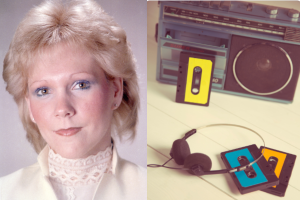
    Photo credit: via Canva/PhotosA cassette tape from the '80s.

    Generation X occupies an interesting time in history, for those who care to recognize that they actually exist. They were born between 1965 and 1980 and came into this world at an interesting inflection point: women were becoming a larger part of the workplace and divorce was at the highest point in history. This left Gen X to be the least parented generation in recent history.

    Gen X was overlooked in their domestic lives and culturally were overshadowed by Baby Boomers with their overpowering nostalgia for Woodstock, The Beatles, and every cultural moment celebrated in Forest Gump. Once Boomer navel-gazing nostalgia began to wane, a much larger and over-parented generation, the Millennials, came on the scene.

    “Whereas Boomers were the ‘me generation’ and millennials were the ‘me me me generation,’ Gen X has become the ‘meh’ generation,” Emily Stewart writes at Business Insider. But even if Gen X is a little aloof, that doesn’t mean they aren’t totally rad, awesome, trippindicular, and that it’d be bogus to define them any other way. To explain the unique history of Gen X and why they’re often overlooked, history teacher Lauren Cella created a timeline on TikTok to explain them to her Gen Z students.

    @laurencella92

    A love letter to Gen X from your millennial cousin? Gen X didn’t start the fire, so after this I will just leave them alone because they do not care ? But seriously for a generation that sometimes gets “forgotten” and stuck between the larger boomer or millennial cohorts, the genres they created paved the way for pop culture as we know it. I’m still not sure who let kids watch “The Day After” on TV or play on those hot metal playgrounds, but Gen X survived to tell the tale. Today, the so called “latchkey” kids, born 1965-1980 are actually super involved as parents, aunts, uncles, teachers (or maybe even grandparents)?. Kids today want to say they are “built different” but I think Gen X is the one holding down that title because they grew up tough, they saw too much, they made it out, and they know exactly who they are and wouldn’t have it any other way.✌️ g#genx

    ♬ original sound – laurencella

    In Cella’s video, she divides Gen X into three distinct phases.

    Phase 1: 1970s stagflation and changing families

    “Gas shortages meant stagflation. So parents either both had to work or maybe they were divorced. So that meant microwave TV dinners and kids that sort of raised themselves,” Cella explains. “There was no parenting blogs, there was no after-school travel sports, emailing. Like, none of that existed. Bored? Go outside.”


    Phase 2: The neon ‘80s

    “But then came the 1980s, where everything was big and loud. The hair, the bangs, the Reaganomics, mass consumerism (because now we can trade with China). The whole media just exploded,” Cella says. “But now we have TV, we have movies, we have TV, movies, home movies, TV movies, favorite TV movies, music, music, Videos, music, video, television. All these different genres and all these different cliques and all these different ways that you can express yourself.”


    Phase 3: 1990s post-Cold War Skepticism

    “Gen X sort of comes into the 1990s more sarcastic and skeptical,” Cella continues. “The Cold War ending meant that they rejected the excess of the eighties. And there’s the shift. Grunge, indie, alternative, flannels, Docs [Doc Martins]. At this point, the technology is also exploding, but not like fun home media, but like corporate media. So there’s this resistance to sell-out culture.”


    Cella has a theory on why Gen X seems forgotten, and it’s not just because CBS News famously denied its existence. She believes that it comes down to Gen X’s inability to call attention to itself. “So Gen X is a bridge between these two larger, more storied generations. So it’s not necessarily that they get forgotten. They don’t really want the attention. They’re kind of fine to just like, fly under the radar like they always have, because honestly, it’s whatever.”

    This article originally appeared last year. It has been updated.

Health

Strong 71-year-old woman is showing that heavy weightlifting is for seniors. Doctors agree.

Skills

Philosopher Socrates offered the perfect advice for anyone struggling with self-identity

Culture

Heckler flirts with comedian on stage and it turns into a surprise masterclass on romantic chemistry

Family

Man strokes strange woman’s hair as she slept in hilariously embarrassing mixup