A Colorado police department is sending mental health experts instead of cops to some 911 calls

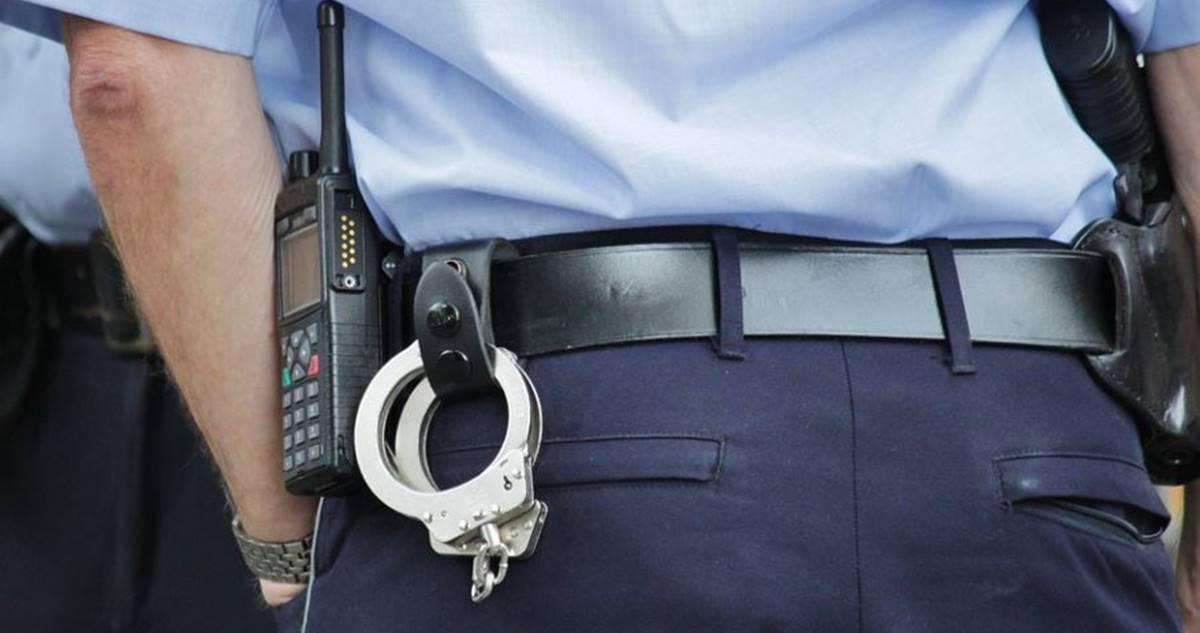
A police officer stands on-duty.
In the aftermath of the George Floyd murder in 2020, people have begun to rethink the role that armed police officers have in society. Does every problem need to be addressed by someone with the power to administer lethal force?
The Aurora Police Department in Colorado launched a six-month program last year that led to the creation of two mental health crisis response teams. The first pairs an officer with a mental health professional. The other pairs a mental health professional and a paramedic to handle mental health crisis situations where there is no apparent danger.
“When someone calls in to report either themselves or an individual in crisis, or maybe they just see someone who might need some resources and help, dispatch will put that in a call, and my team is able to click on the call, review everything and see if it meets criteria," Courtney Tassin, program manager for the Aurora Mobile Response Team, told 9News.
The Aurora Mobile Response Team's van is stocked full of food, water and hygiene products to help the people they encounter on the streets.
Over the first three months, the team went on 116 calls.
The Aurora Mobile Response Team launched in September
One study found that up to 10% of 911 calls nationwide could involve mental health issues. So it makes complete sense for police departments to respond to these situations with counselors trained in helping people with mental health issues instead of the knee-jerk reaction to send somebody with a gun.
Further, it allows police to do the work they’re trained to do instead of forcing them to act as mental health counselors. It also frees up the police so they can correctly respond to situations that may turn violent.
"A lot of times it's not appropriate for our officers to have to go to these calls, and you know, to possibly escalate the situation when it doesn't need to be so," Aurora Police Chief Vanessa Wilson told CBS News.
The unarmed response teams are also less intimidating to people already on the edge.
"We always focus on what's least restrictive," Tassin told CBS News. "How do we keep from further traumatizing this person who's already in a very vulnerable state?"
The response team could reduce police shootings
The response team is a humane way to deal with people having mental health issues and it may also save lives. According to the Treatment Advocacy Center, people with untreated mental illness are 16 times more likely to be killed during a police encounter than other civilians approached or stopped by law enforcement.
“By dismantling the mental illness treatment system, we have turned mental health crisis from a medical issue into a police matter,” said John Snook, executive director of the Treatment Advocacy Center. “This is patently unfair, illogical, and is proving harmful both to the individual in desperate need of care and the officer who is forced to respond.”
The Aurora Police Department’s new program is a welcome challenge to the status quo that’s been in place in America for decades. For too long we’ve tacitly agreed that the state’s only response to civil disturbances should be sending a person with a gun. Now, thanks to the calls for justice that happened after the death of George Floyd, people are waking up to the idea that cops can’t and shouldn’t solve everything.
"We have calls for people that are in mental health crisis every day," Sergeant Aaron Bunch said. "Police officers are trained to do a lot of things. What they don't have are Master's degrees in social work."
- A 17-yr-old's friends called the police to check on him. The police ... ›
- L.A. City Council votes to replace some police officers with unarmed ... ›
- Denver is sending mental health experts instead of cops in response ... ›
- Why therapists are sounding the alarm on big box therapy companies - Upworthy ›
- What’s the point of being successful if you don’t have time to enjoy life? - Upworthy ›
- Your child's mental health diagnosis is not parental failure - Upworthy ›


a man sitting at a desk with his head on his arms Photo by
Can a warm cup of tea help you sleep better? If you believe it, then yes. Photo by 
A woman is getting angry at her coworker.via
A man with tape over his mouth.via
A husband is angry with his wife. via 
Three women sit on a blanket in the park. 
Two women engaging in a pleasant conversation inside a coffee shop
Two men engaging in a peaceful disagreement.
Resurfaced video of French skier's groin incident has people giving the announcer a gold medal
"The boys took a beating on that one."
Downhill skiing is a sport rife with injuries, but not usually this kind.
A good commentator can make all the difference when watching sports, even when an event goes smoothly. But it's when something goes wrong that great announcers rise to the top. There's no better example of a great announcer in a surprise moment than when French skier Yannick Bertrand took a gate to the groin in a 2007 super-G race.
Competitive skiers fly down runs at incredible speeds, often exceeding 60 mph. Hitting something hard at that speed would definitely hurt, but hitting something hard with a particularly sensitive part of your body would be excruciating. So when Bertrand slammed right into a gate family-jewels-first, his high-pitched scream was unsurprising. What was surprising was the perfect commentary that immediately followed.
This is a clip you really just have to see and hear to fully appreciate:
- YouTube youtu.be
It's unclear who the announcer is, even after multiple Google inquiries, which is unfortunate because that gentleman deserves a medal. The commentary gets better with each repeated viewing, with highlights like:
"The gate the groin for Yannick Bertrand, and you could hear it. And if you're a man, you could feel it."
"Oh, the Frenchman. Oh-ho, monsieurrrrrr."
"The boys took a beating on that one."
"That guy needs a hug."
"Those are the moments that change your life if you're a man, I tell you what."
"When you crash through a gate, when you do it at high rate of speed, it's gonna hurt and it's going to leave a mark in most cases. And in this particular case, not the area where you want to leave a mark."
Imagine watching a man take a hit to the privates at 60 mph and having to make impromptu commentary straddling the line between professionalism and acknowledging the universal reality of what just happened. There are certain things you can't say on network television that you might feel compelled to say. There's a visceral element to this scenario that could easily be taken too far in the commentary, and the inherent humor element could be seen as insensitive and offensive if not handled just right.
The announcer nailed it. 10/10. No notes.
The clip frequently resurfaces during the Winter Olympic Games, though the incident didn't happen during an Olympic event. Yannick Bertrand was competing at the FIS World Cup super-G race in Kvitfjell, Norway in 2007, when the unfortunate accident occurred. Bertrand had competed at the Turin Olympics the year before, however, coming in 24th in the downhill and super-G events.
As painful as the gate to the groin clearly as, Bertrand did not appear to suffer any damage that kept him from the sport. In fact, he continued competing in international downhill and super-G races until 2014.
According to a 2018 study, Alpine skiing is a notoriously dangerous sport with a reported injury rate of 36.7 per 100 World Cup athletes per season. Of course, it's the knees and not the coin purse that are the most common casualty of ski racing, which we saw clearly in U.S. skier Lindsey Vonn's harrowing experiences at the 2026 Olympics. Vonn was competing with a torn ACL and ended up being helicoptered off of the mountain after an ugly crash that did additional damage to her legs, requiring multiple surgeries (though what caused the crash was reportedly unrelated to her ACL tear). Still, she says she has no regrets.
As Bertrand's return to the slopes shows, the risk of injury doesn't stop those who live for the thrill of victory, even when the agony of defeat hits them right in the rocks.