This article originally appeared on 10.17.22
Do you ever step back and marvel at the miraculous things human beings have figured out how to do?
Less than 200 years ago, no human being had ever played a saxophone, there was no such thing as anesthesia and if you had even a simple brain tumor, you were just out of luck.
Now, a team of doctors in Italy has successfully performed a highly complex, nine-hour brain surgery on a man while he was awake and while he played the saxophone. Not only that, but the patient reported feeling “tranquility” during the surgery and only spent a few days in the hospital after the surgery before being discharged.
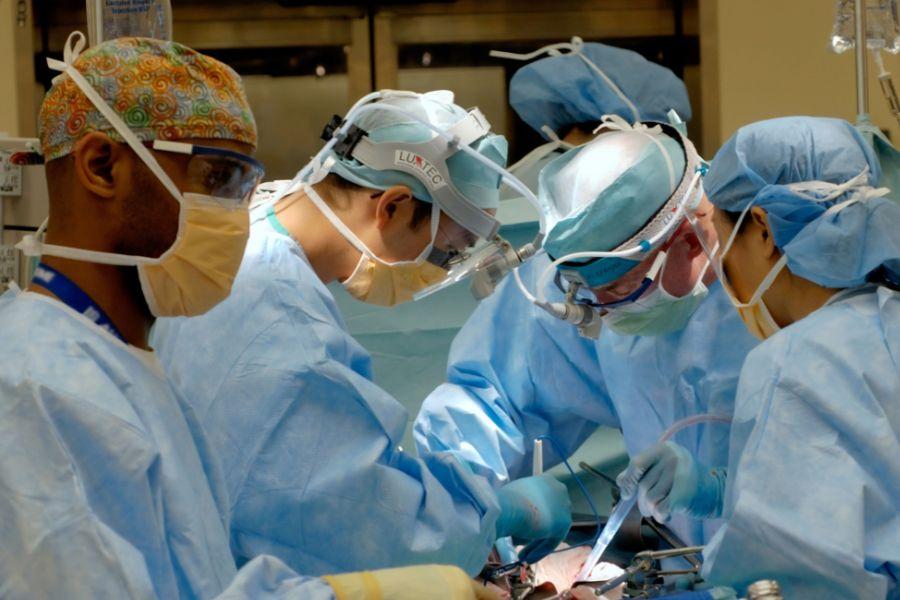
According to CBS News, a 35-year-old male patient had a brain tumor removed at Paideia International Hospital in Rome, Italy, on October 10. The surgery was led by Dr. Christian Brogna, a neurosurgeon who specializes in complex cancer surgeries and “awake surgery,” in which patients are not put under general anesthesia. According to the Mayo Clinic, certain brain surgeries actually require a patient to be awake and responsive during the procedure to lessen the risk of the surgery damaging areas of the brain that could affect vision, movement or speech.
Dr. Brogna told CBS News that this particular surgery was located in “a very, very complex area of the brain” and also pointed out that the patient is left-handed. “This makes things more complicated because the neural pathways of the brain are much more complicated,” he said. Recent research shows that left-handed people differ in brain asymmetry from right-handed people and that the right and left hemispheres of the brain tend to be more connected in people who are left-handed.
The team of 10 who successfully completed the surgery was made up of neurosurgeons, anesthesiologists, neuropsychologists, neurophysiologists and engineers from around the world. Though other awake craniotomies that included a patient playing a musical instrument have been done before, the level of complexity and cutting-edge technologies used in this surgery made it a notable accomplishment.
Why the saxophone? The man had told the surgeons that retaining his musical abilities was of the utmost importance to him.
“Awake surgery makes it possible to map with extreme precision during surgery the neuronal networks that underlie the various brain functions such as playing, speaking, moving, remembering, counting,” Brogna said in the hospital’s news release. Playing music during the surgery gave the surgeons a visual of where those functions were in the patient’s brain and helped them ensure they were keeping them intact.
Several times during the surgery, the patient played the theme song from “Love Story” by Francis Lai and the Italian national anthem on his saxophone. (You can watch him playing in the video below shared by Voice of America.)
“To play an instrument means that you can understand music, which is a high cognitive function,” Brogna told CBS News. “It means you can interact with the instrument, you can coordinate both hands, you can exercise memory, you can count — because music is mathematics — you can test vision because the patient has to see the instrument, and you can test the way the patient interacts with the rest of the team,” he said.
Such surgeries require intense preplanning and familiarity with the patient’s normal functioning, and the team met with the patient six or seven times in the 10 days leading up to the surgery.
“When we operate on the brain, we are operating on the sense of self, so we need to make sure that we do not damage the patient as a person — their personality, the way they feel emotions, the way they get through life,” Brogna told CBS News. “The patient will tell you what is important in his life and it is your job to protect his wishes.”
As amazing as surgery like this is, Brogna reminds us that there’s still so much we don’t know about the way the brain works. Prodecures like this one help doctors learn in addition to helping patients.
“Each operation in awake surgery not only allows to obtain the maximum result in terms of removal of the pathology, but it is a real discovery,” Brogna said in the hospital’s news release. “Each time it offers us a window into the functioning of this fascinating, but still in many ways mysterious organ, which is the brain.”