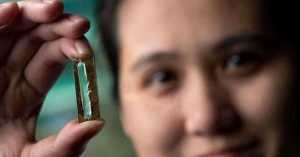
Two Inuit women demonstrate what an ‘Eskimo kiss’ actually looks like
Most Americans have heard the term “Eskimo kiss” and probably have a mental picture of what one is. What many of us may not know is that 1) Eskimo is an outdated term that is generally rejected by the indigenous people of the north to whom it refers, and 2) what we imagine about that…
Most Americans have heard the term “Eskimo kiss” and probably have a mental picture of what one is. What many of us may not know is that 1) Eskimo is an outdated term that is generally rejected by the indigenous people of the north to whom it refers, and 2) what we imagine about that “kiss” is not actually accurate.
An Inuit daughter and mother duo shared what a kunik—the correct term for it—really looks like in a video on TikTok. Shina Novalinga shares a lot about Inuit culture on her TikTok channel, and her mother Kayuula Novalinga often joins her to demonstrate this expression of affection.
First, they showed what people usually think of when they think of an “Eskimo kiss”—two people rubbing their noses together. Then they shared what they actually do, which is press their nose against someone’s cheek.
“Usually it’s done with a lot of emotion,” Shina says. “The more love you have for a person, the stronger you do it.”
The demonstration is adorable, with their giggles and obvious affection for one another. And people in the comments greatly appreciated the cultural lesson. How many of us ever even questioned what we’d been taught or even wondered where our impressions came from?
Many commenters from Southeast Asia—Vietnam, Indonesia, the Philippines, Thailand and more—shared that their family members also express close affection in this way.
Shina and Kayuula are Inuit throat singers as well, which is a unique and fascinating art form. Take a listen:
Traditional Inuit throat singing involves two people, usually women, standing face to face. Each makes sounds using their throat, belly and diaphragm, matching each other’s rhythm until one of them stops or giggles. Evie Mark, a throat singer and professor at Nunavik Sivunitsavut, told the BBC, “It’s a very intimate thing so for sure you’re going to be triggered to smile or laugh, especially when you start seeing the person’s eyes when you’re singing together.”
Shina’s mother has her own TikTok channel as well, where she shares more about being an Inuit woman. (Sometimes you’ll see the word Inuk instead of Inuit—Inuk is singular, Inuit is plural and also used as an adjective.)
We can all benefit from learning about cultures outside of our own, and social media makes it easier than ever to expose ourselves to people from all different backgrounds. Thankfully, some people use their channels for the specific purpose of sharing—free education everyone can benefit from.
Thank you, Novalingas, for sharing your gifts and culture with us all.

A single door can open up a world of endless possibilities. For homeowners, the front door of their house is a gateway to financial stability, job security, and better health. Yet for many, that door remains closed. Due to the rising costs of housing, 1 in 3 people around the world wake up without the security of safe, affordable housing.
Since 1976, Habitat for Humanity has made it their mission to unlock and open the door to opportunity for families everywhere, and their efforts have paid off in a big way. Through their work over the past 50 years, more than 65 million people have gained access to new or improved housing, and the movement continues to gain momentum. Since 2011 alone, Habitat for Humanity has expanded access to affordable housing by a hundredfold.
A world where everyone has access to a decent home is becoming a reality, but there’s still much to do. As they celebrate 50 years of building, Habitat for Humanity is inviting people of all backgrounds and talents to be part of what comes next through Let’s Open the Door, a global campaign that builds on this momentum and encourages people everywhere to help expand access to safe, affordable housing for those who need it most. Here’s how the foundation to a better world starts with housing, and how everyone can pitch in to make it happen.
Volunteers raise a wall for the framework of a new home during the first day of building at Habitat for Humanity’s 2025 Carter Work Project.
Globally, almost 3 billion people, including 1 in 6 U.S. families, struggle with high costs and other challenges related to housing. A crisis in itself, this also creates larger problems that affect families and communities in unexpected ways. People who lack affordable, stable housing are also more likely to experience financial hardship in other areas of their lives, since a larger share of their income often goes toward rent, utilities, and frequent moves. They are also more likely to experience health problems due to chronic stress or environmental factors, such as mold. Housing insecurity also goes hand-in-hand with unstable employment, since people may need to move further from their jobs or switch jobs altogether to offset the cost of housing.
Affordable homeownership creates a stable foundation for families to thrive, reducing stress and increasing the likelihood for good health and stable employment. Habitat for Humanity builds and repairs homes with individual families, but it also strengthens entire communities as well. The MicroBuild® Initiative, for example, strengthens communities by increasing access to loans for low-income families seeking to build or repair their homes. Habitat ReStore locations provide affordable appliances and building materials to local communities, in addition to creating job and volunteer opportunities that support neighborhood growth.
Marsha and her son pose for a photo while building their future home with Southern Crescent Habitat for Humanity in Georgia.
Everyone can play a part in the fight for housing equity and the pursuit of a better world. Over the past 50 years, Habitat for Humanity has become a leader in global housing thanks to an engaged network of volunteers—but you don’t need to be skilled with a hammer to make a meaningful impact. Building an equitable future means calling on a wide range of people and talents.
Here’s how you can get involved in the global housing movement:
Speaking up on social media about the growing housing crisis
Volunteering on a Habitat for Humanity build in your local community
Travel and build with Habitat in the U.S. or in one of 60+ countries where we work around the globe
Join the Let’s Open the Door movement and, when you donate, you can create your own personalized door
Every action, big and small, drives a global movement toward a better future. A safe home unlocks opportunity for families and communities alike, but it’s volunteers and other supporters, working together with a shared vision, who can open the door for everyone.
The best flights are uneventful. Timely, smooth, and relaxing. Even a little boring. However, that’s not always in the cards.
A lot of things can happen in the air, including unforeseen medical emergencies. Thankfully, this one has a happy ending thanks to the help from two selfless strangers.
Woman on Delta flight unexpectedly goes into labor minutes before landing
Ashley Blair was pregnant and due in about two weeks, but really wanted to be with her mom in Oregon when the baby arrived. So, she hopped a Delta flight through Atlanta and was well on her way when things took an unexpected turn.
Pregnant mothers are generally discouraged from flying this late into a pregnancy, and some airlines may forbid them entirely. But life happens. Sometimes, travel is unavoidable, and in Blair’s case, she still had a few weeks left before she was supposed to go into labor, making the risk relatively low.
The baby had other ideas.
CNN reports that Blair went into labor when her Delta flight was about 30 minutes away from landing at Portland International.
Two hero paramedics step up to help
A paramedic is never truly off the clock. Even though Tina Fritz and Kaarin Powell, two friends and emergency workers, were flying home from vacation in the Dominican Republic, they’d already been called to action not long after the plane took off.
Fritz and Powell were attending to another passenger when flight attendants made an urgent announcement: Was there a doctor onboard?
They rushed to Blair’s side and, with the help of flight attendants, began shuffling passengers around to make enough room to deliver the baby. Unfortunately, there were no medical tools or sterile equipment available on the plane, and the baby was coming fast, so there was no time to lose.
150-some passengers, and the crew, all pitched in to help. Photo Credit: Edgar Zuniga Jr./Flickr
Passengers work together to help
Right as Blair was getting ready to start pushing, the pilots announced that the plane was about to begin its landing procedure. That usually means all passengers and crew must take their seats.
This was going to have to happen fast.
Fritz and Powell told flight attendants that they needed blankets, and lots of them. Passengers all over the plane passed theirs back so that Blair could be comfortable as she began pushing.
They also needed shoelaces, of all things. One to use as a tourniquet for an IV, and another to tie off the umbilical cord. That is, before they cut it with a butter knife, which was all that was available.
Truly an amazing MacGyver-like delivery. Just a few quick pushes and the baby was born. Some passengers barely even knew anything was happening outside of a few murmurs and folks standing up or moving around.
According to all reports, Blair and baby girl Brielle were healthy and stable when the plane arrived.
A beautiful irony in the teamwork
Airplanes and airports are notorious for bringing out the worst in humanity. Passengers berate flight attendants, fight over seats, and throw etiquette and human decency into the wind over the most minor inconveniences.
So, it’s amazing to see an example of 150-some odd strangers working together to tackle a true medical emergency. It wasn’t the smooth, convenient, and peaceful ride some passengers probably had in mind—but it’s one they won’t soon forget.
There’s a particular kind of magic that happens when professionals doing routine work get hit with a genuinely extraordinary situation. The instinct is usually one of two things: clinical efficiency or unexpected warmth. Sometimes, gloriously, both.
That’s exactly what happened on April 4, 2026, when Caribbean Airlines Flight BW005 was descending into John F. Kennedy International Airport from Kingston, Jamaica. One of the passengers, a heavily pregnant woman, went into labor. The pilot calmly radioed Kennedy Tower with the situation and requested a direct routing in. Air traffic control lined everything up: clearance to land on Runway 4R, ground crew briefed, medical personnel arranged at the gate.
Then, a few minutes after touchdown, ground control checked in.
An airplane pilot. talking to air traffic controller. Photo credit: Canva
“Caribbean five, ground.”
“Yes sir, go ahead.”
“Is it out yet?”
“Yes, sir.”
“All right. Tell her she’s got to name it Kennedy.”
“Ahh, Kennedy. Will do.”
“All right. Have a good day.”
That was it. The audio, which CBS Mornings shared on April 6, has been making the rounds online ever since, mostly because of the timing of the whole thing. A mother had just delivered a healthy baby on a Boeing 737 mid-descent. The pilot had just helped coordinate that situation while flying a plane. And the ground controller, having calmly walked the flight through one of the more unusual arrivals at JFK that week, decided the appropriate sign-off was a dad joke about naming the kid after the airport.
According to Caribbean Airlines, the flight never even formally declared an emergency. The crew handled it within standard procedures, and upon landing the mother and newborn were attended to by medical personnel and received the care they needed. Everyone was fine.
What’s stuck with people online isn’t really the medical drama, though. It’s the ground controller’s instinct to make a joke. There’s a version of this exchange that’s all clipped efficiency, and we’d never have heard about it. But this particular controller, in the middle of a shift at one of the busiest airspaces in the country, decided the moment called for a small human gesture. A pop of warmth on a frequency that’s usually nothing but headings and altitudes.
It’s nice to see that the people running our infrastructure are people. They’re listening, they’re paying attention, and once in a while they’re trying to give a stranger they’ll never meet a little something to remember the day by.
Whether the baby actually ends up named Kennedy is up to the family. But somewhere out there is a woman who can tell her child a true story that starts with “you were born on a plane, and the man on the radio who guided us in picked your name.”
They also have enough experience to take some pride in decisions that, in hindsight, were the right moves. The good news is that at 40 there is still plenty of time to learn from our successes and failures to set ourselves up for a great second half of life. These lessons are also valuable to the Gen Zers coming up who can avoid the pitfalls of the older generation.
The Reddit thread that hit a nerve
A Reddit user who has since deleted their profile asked millennials nearing 40 what their biggest mistakes were at this point in life and they received more than 2,200 responses. The biggest regrets these millennials have are being flippant about their health and not saving enough money when they were younger.
They also realized that the carefree days of youth are fleeting and impossible to get back. So they should have spent less time working and more time enjoying themselves. Many also lamented that they should have taken their education more seriously in their 20s so they have more opportunities now.
The responses to this thread are bittersweet. It’s tough hearing people come to grips with their regrets but the realizations are also opportunities to grow. Hopefully, some younger people will read this thread and take the advice to heart.
Here are 21 of the most powerful responses to the question: “Millennials of Reddit now nearing your 40s, what were your biggest mistakes at this point in life?”
On health and relationships
1. “Not taking care of my hearing, not even 35 and going deaf.” – Kusanagi8811
3. “Staying too long at a job in my 20s, just because it was safe and easy. When I finally got the motivation to leave, ended up with an almost 50% pay boost.” – Hrekires
4. “Thinking that I could and should put myself on the back burner for anything and anyone else.” – lenalilly227
5. “Smoking and not dealing with my sh** the right way.” – Allenrw3
6. “Pining after the wrong person.” – runikepisteme
7. “I turned 40 this year and just started liking who I am. Why the fuck did it take 40 years for self acceptance?” – guscallee
8. “Take care of your f***ing back. Lift with your knees. Sure it’s rad when you grab a fridge by yourself and lift it in the back of a moving truck unaided, but one day that shit is going to have consequences that won’t just magically go away by resting and ‘taking it easy’ for a week.” – GuyTallman
9. “I wish I spent more time with my dad while I had the chance.” – CharlieChooper
10. “I’m 37. I absolutely could have taken better care of my body, but I’m in relatively good health. I’m starting to realize how important it is to maintain my health. I do also think I drank far too much in my 20 and early 30’s. I’m trying to rectify that now, but it’s hard. So that I guess.” – dartastic
On work, money and missed opportunities
11. “I’m not sure if people have experienced the same but when I entered my 30s I became convinced I was rapidly running out of time. Rather than using that as motivation I let it paralyze me with indecision because I ‘couldn’t afford to make the wrong choice.’ Consequently, I’m now 39 and, though I’ve had great things happen in my 30s, I regret spending so much time worrying and so little time committing to a course of action.” – tomwaste
12. “Work to live, don’t live to work. You have half your working life after you turn 40 but only 20-25 years to really live it up before the responsibilities become heavy and your joints start to ache. Live life. Really LIVE it. Experience as much you can. Every sensation, sight, sound, touch. Be open. Be brave. Live your first few decades in the fast lane. You have the rest of your life to take it easy, when you have no choice.” – MrDundee666
13. “I should have paid more attention to my parents telling me to save money and less attention when they were teaching me about purity culture.” – Arkie_MTB
14. “If I could tell my 18 year old self one thing, it would be to save 10% of every paycheck I ever got.” – PutAForkInHim
15. “Thinking that I have time to do everything I want only to find myself loosing time, and the endless energy I used to have in order to purse them.” – ezZiioFTW
A man with a regrettable sunburn. Photo credit: Canva
16. “Not wearing sunscreen.” – blueboxreddress
17. “Not recognizing the importance of work/life balance earlier in life. My late teens, all 20’s, and early 30’s were spent pulling 60-100+hr weeks because I thought it was what was required to succeed. How wrong I was. Others stabbed me in the back and reaped the reward.” – [Deleted]
18. “When you get out of college, keep your friends. No matter how hard it is. Hold on to them.” – mpssss22
19.“Should have bought a home. We qualified 20 years ago for enough to buy a small 2 bedroom but I didn’t think we could afford it. That 2 bedroom would be worth nearly 3Xs and paid off by now. We pay nearly double in rent what our mortgage would have been. Gotta love the SF bay area cost of living.” -Thelazywitch
20. “Always ask for more pay. Starting, yearly, before leaving, whatever. Get that money.” – SensibleReply
What younger generations can take from this
Reading through these responses, one thing becomes clear: most of these regrets aren’t about big dramatic failures, they’re about the small, quiet choices that compound over time. The good news is that the same principle works in reverse. Small, quiet choices toward health, connection, and financial security add up, too.
This artice originally appeared five years ago. It has been updated.
Call it a rite of passage, a baptism by fire, or simply a necessary evil, but a terrible summerjob is pretty much a staple of young adulthood. Those concert tickets aren’t gonna pay for themselves, after all. Some summer jobs are heinous by the sheer amount of manual labor involved. Others are just plain weird. I remember one year working as a “live strolling table.” Yep, just walking around attached to an elaborately dressed table offering hors d’oeuvres and champagne. A human-furniture hybrid. How do you put that on a resume?
No matter the role, there is one thing all summer jobs have in common: they teach us humility in one way or another … especially once we see that first paycheck. There’s simply no way to prepare for seeing two weeks worth of hard work equate to a (usually) paltry sum. Hopefully that experience alone makes generous tippers of us all.
Back in 2022, during one of his popular “hashtag” bits, Jimmy Fallon asked people to share their own “funny, weird, or embarrassing story about a bad summer job” as part of his iconic #hashtags challenge.
When Jimmy Fallon asked, people delivered
Here are 15 that might make your own summer job memory feel a little less dreadful:
“I planted trees for the US Forest Service one summer in HS. Our foreman would go through our lunches, eat our cookies and chips, and take bites out of our sandwiches. We were all about 15 so too afraid to tell.” – @dumpster_diva
“One summer I worked at Taco Bell during lunch and Furr’s cafeteria during dinner. People would see me at both and ask if I was twins.” – @kerrikgray
“As a young comedian I was hired to MC an event for a furniture store. The owner paid me 5 bucks for every time I would fake trip and fall on my way to the mic. He said he was a 3 stooges fan.” –@Brentfo4242
“I applied for a job while in high school at a toy store. I called back days after the interview asking if they had any news for me. They told me I got the job, and they forgot to tell me. They had me scheduled for that day and was told ‘you’re late.’” – @RockerSam91
“In high school, I worked at an insurance agency…let’s just say the bus ride to and from work was the best part of the job.” – @SharonZurcher
“In high school I worked at a bounce house company. My first day working was an elementary school field day and the huge inflatable slide starting deflating and collapsing with kids at the top…angry parents staring at me like I had an answer for this at 16 years old.”–@calamari_carly
“In middle school my friend and I got paid to fill, lick and seal about 500 envelopes with documents for a lawyer – a penny per envelope. 3 hours later, we asked for 2 cans of soda from his cooler. He said sure, and took $2 each from our pay. We made a dollar.” – @CameronFontana
It gets weirder from here
“I worked at a dog kennel. A guy brought in 2 dogs to stay a month. He told me to give a pill every morning to dog #1. So, I did for the month. When he returned, I brought out dog #1 and he said, ‘Hi, dog #2!’ My face turned so red. Oh, well. The dog survived.” – @TheTomeWebster
“I babysat identical twin boys where one constantly screamed and got into mischief but potty trained early while the other was quiet, well behaved but always blowing out diapers. They never did anything ‘identical’. I’m shocked that I still wanted kids after that!” –@overbaughs
“Worked at Crumbl in high school. One coworker had the exact same shifts as me, and she was a theater kid. Like MAJOR theater kid, was cracked out 24/7, randomly performing theater at work. I am not proud to say I memorized 10 Shakespeare monologues because of her.” – @itstherealmeboo
“I held human hearts with a white cotton glove during open heart surgeries, so they didn’t ‘slip’.…No pressure! That’s why l am now a planetary medium and asteroid deflector. Much less stress.” – @rosamalvaceae
“I worked for a local sweet corn farm. I had to sort the corn into boxes for their stands around the state or local grocery stores. It came off the truck onto a conveyor belt by the 1000s. I literally saw thousands of corn cobs in my dreams at night.” – @jdianemiller
“In high school my mom got me a job working with the city to clean an island in the local lake that ducks lived on. Everyday I had to fight a duck, and everyday I needed a bandaid after getting bit by a duck. It was a nightmare and I still hate ducks 30 years later.”– @KingSergioS
“Hired at an amusement park for the summer, taking summer college classes at the same time…Show up for my 1st day to a supervisor who says ‘Oh, the girl who didn’t show up!’ Proceeds to show me the previous week’s schedule where I had 40 hours during my class time. He rolls his eyes when I explain and gives me every crappy task he can find…….I left after the 2nd day, never picked up my check, but kept my employee ID & got in for free all summer!” – @trixiebelle47
What bad summer jobs actually teach us
While certain summer jobs, like the ones above, sound like a total nightmare, there have been studies that indicate they may lead to better school outcomes, similar to other out-of-school activities such as sports and clubs. That said, recent reporting from CNBC and other outlets confirms that low-wage, entry-level positions are among the first to be compromised by the rise of artificial intelligence. So unfortunately, not as many heart-holding gigs will be available.
This article originally appeared four years ago. It has been updated.
In 2007, Wes Dixon gave his teenage girlfriend Kelsey Dixon (@kelseyrileydixon) a cherry tree sapling for their first anniversary. They planted it in his mother’s backyard in Pennsylvania and did what seemed like a sweet but slightly impractical thing: they decided to take a photo with it every year.
They kept that promise for nearly two decades. Through high school graduation, through moving 3,000 miles away, through marriage, through the year they forgot and had to make peace with the gap in the series — they kept coming back to that tree. The annual photo became a living timeline of their relationship, the tree growing taller and wider behind them as they changed too.
Then came the pregnancy photo. Kelsey was expecting twins, and her mother-in-law was keeping an eye on the tree back in Pennsylvania. That’s when she noticed something she’d never seen before in 17 years.
The cherry tree had sprouted new shoots from one of its roots. Basal sprouts, sometimes called suckers, a cluster of small new growth emerging from the base of the original tree. In nearly two decades it had never done this. It did it the year the Dixons were expecting their first children.
“My mom sends me a picture,” Kelsey narrated in a video posted to her Instagram, “and there’s a little baby tree growing. She pointed out that it’s growing from one of the roots of the main cherry tree.”
The video hit 48 million views. Kelsey and Wes appeared on ABC News and the TODAY show to tell the story. The comment that seemed to capture what people were feeling: “We’re so much more connected to these beautiful living beings on earth than we can even fathom.”
There’s no scientific reason to think the tree knew. Basal sprouting is a normal form of vegetative reproduction for ornamental cherries, triggered by stress, root disturbance, or just the right conditions underground. The timing was coincidence.
But it was a very good coincidence, and the Dixons are not inclined to overthink it. Kelsey has since written a children’s book called “Roots and Wings,” inspired by the tradition and the sprout, and partnered with plant retailer The Sill on a line of trees meant for marking meaningful moments — anniversaries, births, new beginnings.
They also, for the record, skipped 2019. Kelsey said she’s made her peace with it. “I kind of love it now that we missed it,” she told Newsweek. “It’s a good demonstration of imperfection being part of life and relationships.”
The tree is still in the backyard. The baby branches are still growing.
Korynn Patterson, an elementary school counselor and social worker in Maryland, knew exactly what she needed to do when a brand new student walked into her office “sad” and “scared”—she took her into her arms for an empathetic embrace.
Patterson shared the sweet interaction with the young student who recently moved to the United States from a Spanish-speaking country. And with the help of a fellow female student to translate, she was able to comfort her.
“Our new student doesn’t speak any English and I paid my translator in fruit snacks ☺️,” she wrote in the caption.
Ms. Patterson models empathy with emotional student
In the viral video shared with her followers on TikTok, Patterson hugged her student and asked her student translator to say, “I know you must be very scared, but can you tell her you’re very brave? You’re a very brave girl.”
The student is crying and tells Ms. Patterson that she misses her mom and doesn’t want to go to class. Patterson responds, “Tell her I am going to sit in class with you for a little bit, okay?”
Patterson offers her a fidget toy to help her with anxiety and more reassurance that she “knows she is scared [and] that she is there to help her.” The three keep things light talking about Paw Patrol. Ms. Patterson then tells the upset student that they can spend time at lunch and recess together as well.
#stitch with @theclassyclinician Here’s the update before the real update! ☺️ I will be posting the students update video on Monday. Stay TUNED and Thank you guys so much for ALL of your support! Welcome to the family! ❤️✨ #schoolcounselor#socialwork#fyp#explore
In the video overaly, Patterson explains more about the girl’s story.
“At her age, school was optional in her country,” she shared. “She is experiencing HUGE culture shock…I’m always happy to be a safe space for my students. Being that her whole world is changing, she needs to feel some sense of safety. I affirm them just as they affirm me.”
Here’s the update on the girls that have stolen our hearts, our little translator and new student. She calls me azul 🦋🩵 Thank you all SO MUCH for your love and support. All links to support us are in my bio 🥹💙 Stay tuned for the next update! #schoolcounselor#socialwork#fyp#explore#schoollife
In an interview with Upworthy, Patterson shared, “I am overwhelmed in the best way by all the love and the support that we have gotten from all of you! I am so grateful to be in position to touch so many lives of all ages, races, and walks of life.”
She created an Amazon Wishlist for those looking to support her students.
Patterson also created two follow-up videos (here and here) that updated viewers on the student. In one video, the girls are back in Ms. Patterson’s office eating lunch and chatting with each other. They tell her they are now “best friends.”
Ms. Patterson shared that the student was moved down a grade to help her “catch up” with English, and the young girl notes that she is trying to learn English through her schoolwork. Ms. Patterson continues to pick up Spanish through her students.
Viewers respond
The emotional video garnered an overwhelming response from viewers, who praised Ms. Patterson for her tenderness towards the student as well as her translator:
“the baby who’s translating is such an empath i’m crying rn🥺.”
“She is not only translating words, she translates empathy. That girl did an amazing job.”
“As a future school counselor, I am CRYING 🥺 kids are so precious.”
“All of us immigrant kids are crying coz we know exactly how that lil girl feels 🥺🥺”
“I cried for this whole interaction. My heart breaks for baby girl but you guys are awesome.”
“The fact she felt SAFE with you speaks volumes!!!!! Great job Queen 👸🏽.”
Hope MacGregor (@hopemacgregormusic) had been going through her divorce quietly. No announcements or no dramatic posts, just long walks with her dog through her neighborhood in Jackson, Tennessee, sometimes twice a day, letting the movement help her think. After a while she started running.
She didn’t know anyone was watching.
One afternoon a neighbor stepped out of her house and waved her down mid-run. MacGregor stopped, assuming something was wrong. The neighbor came toward her and said she didn’t want to seem intrusive. Then she said what she’d stepped outside to say.
“I just want to let you know how proud I am of you. You were walking, and now you’re running.”
MacGregor burst into tears on the spot.
The neighbor hadn’t known about the divorce. She’d just been watching someone move through the neighborhood over weeks and months, noticing the quiet progression from walks to runs, and decided one day that she was going to say something about it. She hadn’t known what it would mean.
MacGregor shared the story on her Instagram account @hopemacgregormusic on April 18. “It meant so much to me,” she said in the video. “This genuine angel came out of her house.”
They didn’t exchange numbers. MacGregor kept running. But the moment stayed with her in the way that only certain unexpected kindnesses do — the ones that arrive at exactly the right time from someone who had no way of knowing that.
MacGregor is a West Point graduate and former Army helicopter pilot who later became a lawyer and then an Americana singer-songwriter. Her music, she’s said, is about helping people feel a little less alone when they’re lonely. Apparently the same is true of her neighbors.
National anthem fails can be really uncomfortable. Sometimes, a singer just can’t hit the notes, or worse, they forget the words mid-song. The American national anthem, for example, is notoriously difficult to sing due to its unique pacing and wide vocal range. Other times, even when the singer is flawless, technical difficulties involving stadium equipment can cause the whole thing to go awry.
Viewers and fans watching the Buffalo Sabres vs. Boston Bruins NHL playoff game the other night were nearly treated to yet another national anthem disaster. Instead, something pretty amazing happened.
Singer’s mic cuts out, fans pick her right up
The Sabres have a tradition. They play the Canadian national anthem—”O Canada”—before each and every game, even when their opponent is not Canadian. It is a noble way of honoring the sport’s large Canadian fan base and a friendly wave to Buffalo’s nearby neighbors in Ontario. Residents of the two regions intermingle constantly, and Southern Ontario is actually visible from Buffalo’s arena.
But when singer Cami Clune stepped up to perform the anthem before Game 5 of the NHL playoff series between the Sabres and the Bruins, she immediately ran into technical difficulties. Just seconds into the song, her mic cut out.
The 19,000 or so hockey fans at KeyBank Center—most of whom are American—didn’t skip a beat. They chimed in without hesitation and helped Clune finish the anthem with flair as her mic went in and out.
Just listen to the incredible unscripted moment:
Moment sparks a huge reaction
The clip of the group singing went viral across social media, racking up more than 100,000 views on the official NHL YouTube channel. Clune’s video drew another 60,000 views. The Sabres post, captioned simply “Chills,” racked up nearly a million views on its own.
Commenters from Canada were incredibly moved by the seemingly simple gesture:
“Thanks Buffalo fans, means a lot in these times, it’s good to see this.”
“This is exactly what Canada needed. Thank you Buffalo!”
Americans, for their part, were proud to be reminded of the goodness of their friends and neighbors:
“Was at the game last night and we did not hesitate. We Love You Canada our great neighbors.”
“Thats the America I remember. Thank you, Buffalo.”
Clune, meanwhile, took the near-gaffe in stride. She was moved by the way the entire stadium came together to have her back.
“Well that was interesting!! Thank you all for singing along with me. We have the best fans ever!” Clune wrote on Instagram.
It’s common for sports fans to boo other countries’ national anthems. Buffalo fans made an inspiring choice.
Booing at sports games does not usually come from a place of hatred. It is often a playful way to engage in the rivalry. For example, American and Canada hockey fans have long booed each other’s national anthems during high-stakes Olympic Games matchups.
However, Buffalo fans have proven themselves over and over to be a little bit different. Not only are they some of the fiercest (and wildest) sports fans around, but they are also among the most hospitable.
In this case, maybe they just sensed the moment. It has not been an easy year or two when it comes to United States-Canada relations. And let us be frank, Canada has not been super pleased with the U.S. for some time now, as evidenced by its own sports fans’ reactions to our anthem.
But the real story is not on the news every night or coming out of the mouths of politicians. Basic human kindness and mutual respect between neighbors still exist. Buffalo fans took the opportunity to remind us that we are all on the same team. The fact that they already knew every word of their neighbor’s national anthem is incredibly moving and powerful.