Here at Upworthy, we often look for stories that will make you smile and warm your heart, and few things do that more quickly than a good doggo and an adorable kiddo. So when we ran across a ridiculously sweet story on The Dodo about a Golden Retriever and his little human sister, we simply had to share it. Taco (full name Taco Bell—seriously) is a good boy who had been lovingly waiting for his new baby sister, Vanora, to be able to play with him. And when the day finally came? Oh. My. Goodness.
Claudia Hughes is the proud mom of the furry pup and his squishy human sibling. She told The Dodo that Taco had been smitten with Vanora ever since she came home from the hospital. “When we would lay her down on the floor or our bed, Taco would just lay down next to her,” Hughes said. That’s one attentive pup. Pet parents know there’s nothing more comforting than your fur baby looking out for your human baby, and Taco has been the ideal gentle watchdog.
Hughes told The Dodo that the pooch would even get up for late-night feedings. Now that’s just beyond sweet. It’s no wonder the pup was itching for his playmate to get big enough to actually play with, and his reaction to his doggy dreams coming true is pure joy. The video of 3-year-old Taco seeing his toddler sibling taking some of her first steps has amassed more than 2 million likes on TikTok. Finally his sister can run around with him! Finally he can teach her the fun of having a dog for a big brother! Finally he gets to play! At least, that’s what I think he was thinking from his excited reaction.
And how do we know dogs are excited? Well, they get the zoomies, and if you’ve never been able to witness the absolute unadulterated joy of the zoomies, just check out his reaction in the video. It’s like he’s silently screaming, “I’m so excited!!!”
According to Hughes, Taco first started getting excited when he saw Vanora take steps in her walker, and more so when he saw her pushing the walker. But his excitement went off the charts when she could actually take steps unassisted. Don’t worry though, he was sure to keep his distance so as not to knock her down. He’s such a good doggy brother. Hughes told The Dodo, “We have shown Vanora that we hug Taco, we pet him gently and we give him kisses on his head.” She went on to say, “But if we get mad at him, we don’t hit him.”
It looks like both Taco and Vanora have learned important lessons in kindness. Since the video of Taco’s “Yay, she’s walking!” zoomies went viral, the two have continued to be best pals. Now 4 years old, Vanora has perfected the art of throwing the ball for Taco to fetch, having practiced since she was barely able to walk.
A family dog can be a source of joyful companionship for all, but sometimes a special bond is formed between a child and a pup. It’s clear that Taco and Vanora have that bond, which hopefully both with enjoy for many more years. Golden Retrievers come by their friendly, fun-loving, gentle reputation honestly, and it’s just delightful to see that energy in action.
You can follow @_mostlyadorable_ and @tacothepolarpup on Instagram for more sweet photos and videos of Taco the good doggo and his family.
This article originally appeared three years ago and has been updated.
A single door can open up a world of endless possibilities. For homeowners, the front door of their house is a gateway to financial stability, job security, and better health. Yet for many, that door remains closed. Due to the rising costs of housing, 1 in 3 people around the world wake up without the security of safe, affordable housing.
Since 1976, Habitat for Humanity has made it their mission to unlock and open the door to opportunity for families everywhere, and their efforts have paid off in a big way. Through their work over the past 50 years, more than 65 million people have gained access to new or improved housing, and the movement continues to gain momentum. Since 2011 alone, Habitat for Humanity has expanded access to affordable housing by a hundredfold.
A world where everyone has access to a decent home is becoming a reality, but there’s still much to do. As they celebrate 50 years of building, Habitat for Humanity is inviting people of all backgrounds and talents to be part of what comes next through Let’s Open the Door, a global campaign that builds on this momentum and encourages people everywhere to help expand access to safe, affordable housing for those who need it most. Here’s how the foundation to a better world starts with housing, and how everyone can pitch in to make it happen.
Volunteers raise a wall for the framework of a new home during the first day of building at Habitat for Humanity’s 2025 Carter Work Project.
Globally, almost 3 billion people, including 1 in 6 U.S. families, struggle with high costs and other challenges related to housing. A crisis in itself, this also creates larger problems that affect families and communities in unexpected ways. People who lack affordable, stable housing are also more likely to experience financial hardship in other areas of their lives, since a larger share of their income often goes toward rent, utilities, and frequent moves. They are also more likely to experience health problems due to chronic stress or environmental factors, such as mold. Housing insecurity also goes hand-in-hand with unstable employment, since people may need to move further from their jobs or switch jobs altogether to offset the cost of housing.
Affordable homeownership creates a stable foundation for families to thrive, reducing stress and increasing the likelihood for good health and stable employment. Habitat for Humanity builds and repairs homes with individual families, but it also strengthens entire communities as well. The MicroBuild® Initiative, for example, strengthens communities by increasing access to loans for low-income families seeking to build or repair their homes. Habitat ReStore locations provide affordable appliances and building materials to local communities, in addition to creating job and volunteer opportunities that support neighborhood growth.
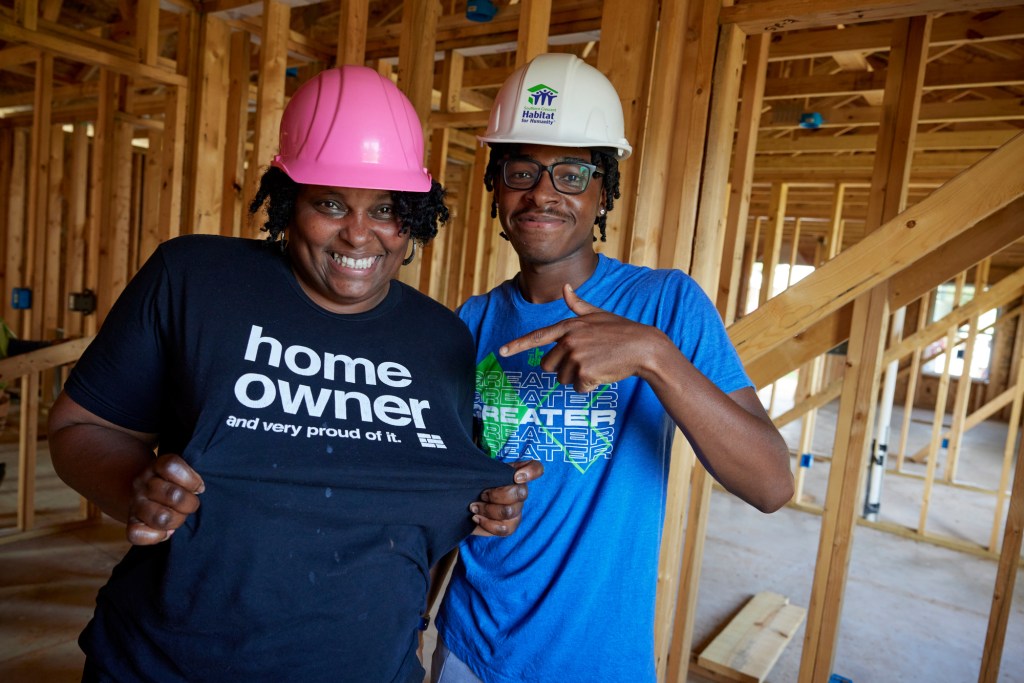
Marsha and her son pose for a photo while building their future home with Southern Crescent Habitat for Humanity in Georgia.
Everyone can play a part in the fight for housing equity and the pursuit of a better world. Over the past 50 years, Habitat for Humanity has become a leader in global housing thanks to an engaged network of volunteers—but you don’t need to be skilled with a hammer to make a meaningful impact. Building an equitable future means calling on a wide range of people and talents.
Here’s how you can get involved in the global housing movement:
Speaking up on social media about the growing housing crisis
Volunteering on a Habitat for Humanity build in your local community
Travel and build with Habitat in the U.S. or in one of 60+ countries where we work around the globe
Join the Let’s Open the Door movement and, when you donate, you can create your own personalized door
Every action, big and small, drives a global movement toward a better future. A safe home unlocks opportunity for families and communities alike, but it’s volunteers and other supporters, working together with a shared vision, who can open the door for everyone.
It was everywhere. Men, women, and even children did it every time they left the house. If you see old newsreel footage of men in the office or on commuter trains from the advent of the motion picture camera to the early ‘60s, nearly everyone is wearing a hat. Hats were just as common for women in that era. For a woman to go out without a hat in the first half of the 20th century was akin to going out without clothes.
The funny thing is that everyone’s headgear is so similar in the old-timey footage that it makes previous generations look like big-time conformists. Then, in the early ‘60s, everything changed, and men and women started to go out in public with their hair exposed. Why did such a big aspect of fashion seem to change overnight?
Warmbru Curiosity investigated the question recently in a popular YouTube video. Warmbru’s channel is a lighthearted look at some of the more unusual people and events from our history and how they have influenced the world in which we live.
Why did people stop wearing hats?
Warmbru says fashion changed dramatically after World War II, when people in developed countries began to care less about expressing their social status. “This was especially true among the younger generation the rise of youth culture in the 1950s and 1960s emphasized rebellion against traditional norms, including formal dress codes,” the YouTuber says.
Don Draper from AMC’s Image via
Another big reason for the change in fashion was technology. Cars became the preferred mode of transportation for many after World War II and indoor environments became more hospitable. “People spent far less time exposed to the elements as people increasingly moved to urban areas and started using cars,” Warmbru says. “The practicality of wearing hats diminishes. Hats can be cumbersome in cars and on public transport, improvements in heating and air conditioning reduce the need for hats to provide warmth.”
Warmbru adds that President John F. Kennedy, elected in 1960, rarely wore a hat and his decision to go bareheaded became associated with modernity. Further, in 1963, the mop-topped Beatles proudly flaunted their hatless heads as they shook them while singing, “Wooooo.” Hat-wearing among women began to decline around the same time as the restrictive and complex headgear clashed with the burgeoning women’s liberation movement.
John F. Kennedy with his family Image via Wikicommons
The decline in hat purchases meant that manufacturers closed and the headgear became harder to come by. This reduced availability further contributed to the decline in hat-wearing. As fewer people wore hats, there became a greater demand for high-quality hair products and services. “Why spend a fortune at the hairdressers or the barbers just to cover the end result with a hat?” Warmbru asks.
Ultimately, there were many reasons why people stopped wearing hats. It appears that it was a combination of technology, influential people such as Kennedy and The Beatles, and the overwhelming mood of change that swept most of the Western world in the 1960s. But if one thing is true about fashion, it goes in cycles. So, it seems that hats may be ready for their big comeback.
This article originally appeared two years ago. It has been updated.
When Mats Janzon found Leya, she was just a tiny baby curled up alone in the grass near his home in Sweden. Janzon was out on a quiet walk in the woods when he heard a soft peeping sound and saw it was a baby otter. He kept his distance for several hours, hoping her mother would return. When no one came, he searched the area and found that her mother had been killed on a major road nearby. Leya appeared to be starving and barely breathing, and he knew she wouldn’t make it without help.
Janzon had volunteered with animal rescues while working as a pilot in Cyprus, but after moving back to Sweden several years ago, he felt a pull to leave his job and spend more time in nature. “This shift led me to focus on helping wildlife,” Janzon tells Upworthy. “I’ve cared for various animals, mostly birds, that seemed to find me. Huginn, a crow I rescued, stayed with me for three years before he was ready to join his own flock in the wild.”
However, Janzon had never raised an otter before and didn’t know what to do. He was scared, as Leya needed care around the clock, but she began to thrive and quickly bonded with him. She would cry when he left the room and curl up in his lap to feel safe.
“The first time she let me pet her, I remember thinking this can’t be real,” Janzon told the TikTok account SoulPaws Tails. “It felt like a dream, this wild, free otter choosing to trust me.”
Still, Janzon kept second-guessing himself, wondering if he was doing the right thing. Otters are wild animals, and he knew Leya couldn’t stay indoors forever. So, starting with a plastic kiddie pool in the backyard, Janzon helped Leya learn to swim. She was awkward in the water at first, but little by little, day by day, she grew more confident.
Two years ago, our sweet otter pup Leya took her very first splash in a cozy baby pool, a moment that still melts our hearts! At just a few weeks old, tiny Leya was all curiosity and wobbly paws as she explored the shallow water filled with colorful floating toys. ?✨ Her first cautious pats at the surface turned into excited splashes as she chased the toys. Watching her dive and twirl, already showing off her natural otter grace, was pure magic. Now, at 2 years old, Leya’s likely out in the wild, thriving and possibly finding a safe territory for her own pups. ? We’re so proud of the strong, playful otter she’s become, and we’ll always cherish those early days of her splashing adventures in that little pool. ? Here’s to Leya, ruling the rivers and raising her own little swimmers! ?? #Throwback#FirstSwim#OtterMemories#WildAndFree#fyp#foryourpage
Leya followed Janzon everywhere. Soon she became part of the family, which included another rescued crow and a cat. The animals would play hide and seek, chasing one another around the bushes. Janzon says it was like something out of a children’s storybook.
Once Leya was totally comfortable in the water, he took her down to the lake. She looked up at Janzon as if to ask, “What now?” He nodded at her, and she jumped into the water. He realized that in some way he’d become a father to her.
“I named Leya while sitting with her on my lap, gazing out over the lake in a near-meditative state,” Janzon tells Upworthy. “I quietly asked her, ‘Who are you? What should I call you?’ The name Leya popped into my mind, and when I said it aloud, she instantly looked up at me. That’s when I knew it was the name meant for her.”
But as Leya grew, so did her wild instincts. She began to wander farther and stay out longer, and Janzon knew it was time to let her go. He describes it as “a strange kind of love—part pride, part heartbreak” but she started living the life she was meant to live.
“Leya is an old soul, brimming with energy and positivity, always finding opportunities in everything,” Janzon says. “Nothing seems impossible for her. She’s been a true inspiration and a dear friend during my transition from a conventional career to a life focused on something greater, not just working to pay bills, but making a difference by helping all living beings in our community.”
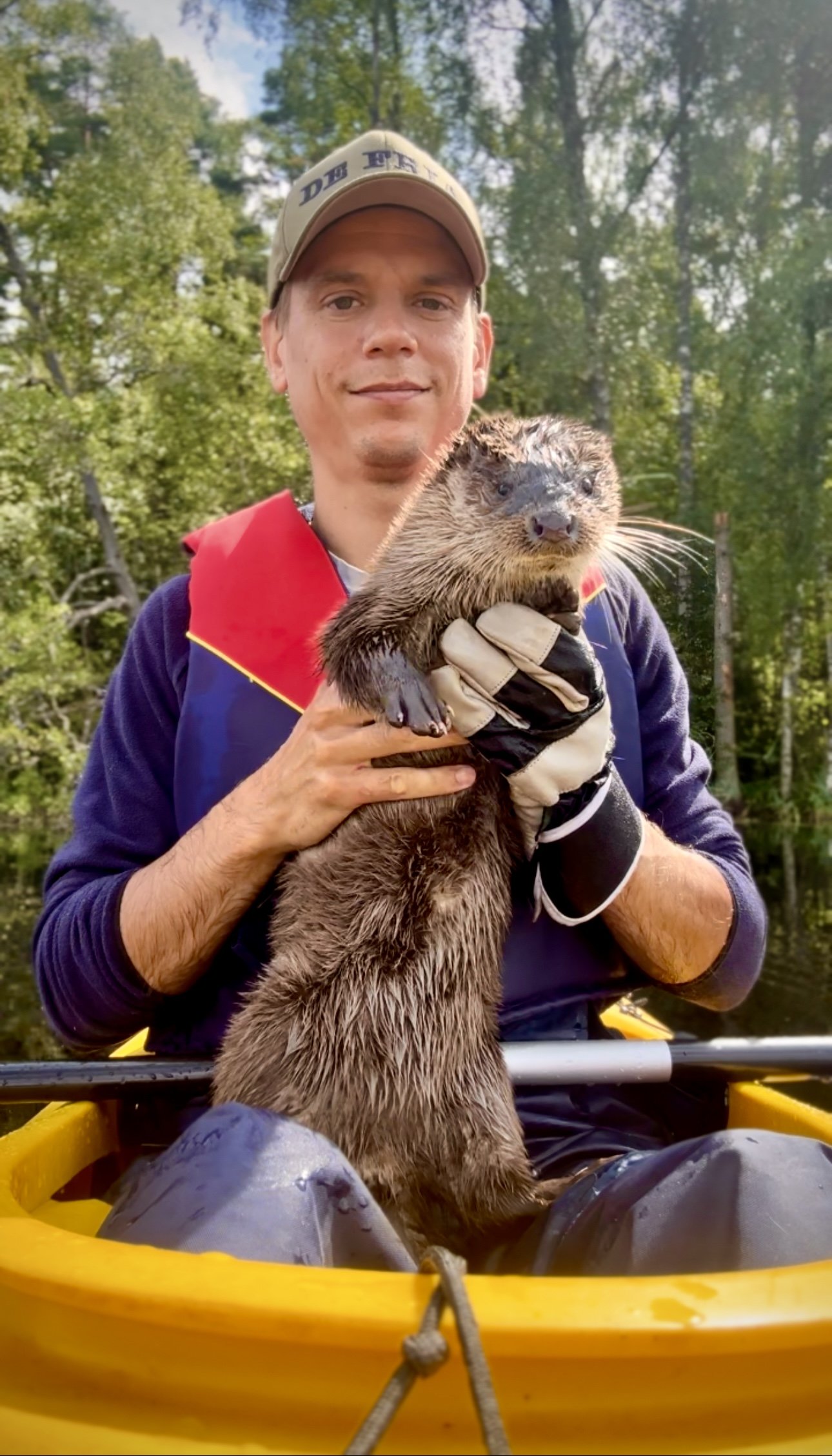
At some point, Leya started staying away for days at a time. But even then, when Janzon was out for a morning kayak ride on the lake, he’d see her nose pop out of the water and start moving towards him. Leya knew he was there and would swim up and climb into the kayak for cuddles and a ride.
Mats says Leya is officially living her wild life now.
“I last saw Leya at the end of May,” Janzon tells Upworthy. “Initially, we thought she’d find her own territory before winter, but after several long trips, she chose to stay under the house while the lake was frozen. When spring arrived, she resumed her search, staying away for up to 10 days before returning for brief visits, lasting a few hours to a day. Her last visit was unusually long, over a week. I suspect she may have been pregnant, eating heartily to prepare for a longer stay in a new territory farther away.”
Janzon wants people to know that as much as he loves Leya, she’s not a pet. “When an animal trusts you, it creates a bond deeper than words can explain,” he told SoulPaws Tails. “If you’re thinking of adopting or rescuing an animal, especially a wild one, please do it with your whole heart and full responsibility. Do your homework, talk to professionals, ask questions, learn everything you can about animals like Leya. They aren’t pets. They’re living, feeling souls that deserve to be loved and respected for who they are.”
You can follow Mats Janzon and see more videos of Leya on TikTok.
This article originally appeared last year. It has been updated.
When you see a list of the year’s most popular baby names, what you’re really looking at are the most common baby names in a specific country or culture. If you live in the U.S., you likely know a whole lot of kids named Olivia, Emma, Liam, and Noah, but if you live in Thailand or Kyrgyzstan or Botswana, you probably don’t.
Simply saying common names in different countries can sometimes result in hilarity. A name that sounds beautiful and has a lovely meaning in one language might sound odd and mean something very different in another. For instance, Odd is a common name in Norway, but it sounds…well, odd to and English ear. The former president of Vietnam had the last name Phuc, which surely led to some awkward moments for Americans who had to address “President Phuc.” (The “u” is pronounced more like the “oo” sound, but if you’d never heard it said, you wouldn’t know.)
Chinese language and culture instructor Dr. Candise Lin is sharing American names that sound funny to Mandarin speakers because of what they mean when pronounced with Chinese phonetics, and it’s a hoot.
1. Robin (pronounced Luo ben) = Running Naked
2. Robinson (pronounced Luo ben shen) = God of Running Naked
3. Nelson (pronounced Niao shen) = God of Pee
4. Benson (pronounced Ben shen) = God of Dumb
5. Mason (pronounced Mei shen) = God of Beauty
6. Nicholas (pronounced Ni kou si le) = You Are So Stingy
7. Isabella (pronounced Yi sheng bei la) = The Doctor Got Arrested
8. Dylan (pronounced Di neng) = Low IQ
9. Nancy (pronounced Nan si) = Difficult to Die
10. Robert (pronounced Luo bo) = Carrot
11. Ashley (pronounced Ao si ni) = Wear You Down to Death
12. Logan (pronounced Nao geng) = Brain Stroke
13. Tiffany (pronounced Ti fa ni) = Kick Your Ass
Tiffany Darwish GIF by New Kids On The Block Giphy
14. Martha (pronounced Ma hua) = Fried Dough Twist
15. Jeff (pronounced Jie fu) = Brother-in-law
16. Daniel (pronounced Da niu) = Big Shot
17. Gordon (pronounced Gou dan) = Dog Balls
18. Melanie (pronounce Mei ren li) = Nobody Cares
A few of these names actually seem pretty rockstar in Mandarin. Mason as “God of Beauty’? Nothing wrong with that. Nancy being “Difficult to Die?” Heck yeah. But some are particularly unfortunate. God of Pee? Yeesh. Low IQ? Ouch.
Of course, the names in Chinese are based on transliterations that aren’t exact. English and Mandarin have different sounds, so many of them are just the closest approximations that there are in terms of pronunciation. (But then along comes Tiffany, kicking ass as clear as day.)
Chinese characters aren’t phonetic in the way that English letters are. Photo credit: Canva
Naturally, people who have some beef with people who bear some of these names are having a heyday, with comments like “Ashley actually makes a lot of sense,” or “Not Gordon Ramsay actually being called Dog Ballz Ramsay.” But mostly people are just delighted to see how names they see as totally “normal” mean hilarious things in Chinese.
As one person wrote, “This was awesome and about time! Chinese names get a lot of humor attention in English circles. It’s nice to know English names can also be a bit ridiculous in Chinese.” It’s likely that many of us have never thought about how American names might sound in other countries.
But names not translating well is truly a universal phenomenon, and as long as we’re all laughing about it together, finding the funny when things—even our names—get lost in translation can be a fun way to connect across cultures.
This article originally appeared last year. It has been updated.
Living a frugal life is all about saving money. Frugal people pay attention to how much they spend on pretty much everything they buy. But even penny pinchers know that for quality, life-improving items, certain things are worth splurging on. On a Reddit thread of frugal people, member WildRootKitchen posed the following question to fellow…
Living a frugal life is all about saving money. Frugal people pay attention to how much they spend on pretty much everything they buy. But even penny pinchers know that for quality, life-improving items, certain things are worth splurging on.
On a Reddit thread of frugal people, member WildRootKitchen posed the following question to fellow frugal shoppers: “What’s one thing you splurge on that’s worth every penny?”
Frugal people spilled on the things they don’t mind dropping money on. These are 35 splurges frugal people say are worth “every penny.”
“For me, it’s a solid pair of boots and a good mattress. If my feet and back are shot, the whole day’s downhill from there. I’ll eat leftovers and skip takeout all week if it means I’m sleeping right and walking easy. Also decent coffee and laundry service are creeping up the list too.” —WildRootKitchen
“Air conditioning. I make money so I can be comfortable, not be uncomfortable so I can save money.” —strwbrymocha
“AC/Heat, always. I’ll never bat an eye at a higher utility bill so long as my sleep goes uninterrupted.” —MediumBullfrog8688
“A house cleaner. Maybe that doesn’t sound frugal, but for the mental health benefits I get from knowing every two weeks I will come home to a spotless house, it’s something I will continue to prioritize over many other expenses.” —mzmonarda
“Gym membership, mattress and pillow, running shoes, quality ingredients from supermarket.” —LoudSilence16
“I have a method for splurges on unfamiliar items. I’ll buy a tool from harbor freight or a cheap version of something I’m interested in to see if I actually need the item or if I’m interested in it. If I use it a bunch and it breaks, then I splurge on a high quality version. If it just sits somewhere either because I didn’t need it as much as I thought or I wasn’t as interested as I thought, then I’m only out a few bucks. Example: I really enjoy cooking, I wanted to learn how to make sausage. I bought a cheap sausage stuffer on amazon for like $30. I used the hell out of it and it broke broke a couple years later. I did some research and bought a LEM 5lbs sausage stuffer that was like $120 and now I have a high quality piece of equipment that works WAY better than my POS amazon stuffer and it will likely outlive my great grandchildren. Also, name brand hardware like faucets. Learned my lesson from buying cheap faucets. Now I’ll just buy Moen.” —40ozT0Freedom
“I live in rural South Carolina. It’s worth it to me to pay for quarterly pest control service from a professional. There are a lot of insects, rodents, reptiles, etc.” —snarkker
“Vacations.” —Proud_Trainer_1234
“An ergonomic desk chair. Back pain is no joke. I only wish I had done it much sooner. Not 20 years into my desk job. At least I should have another 20 years with a good chair and no back pain. I spent $700 on my chair and it was worth every penny. The frugal me shopped around but this was the cheapest one I could find new, some outlets were selling the exact same chair for over $800. 10 year warranty on the chair was a nice bonus too. My husband found the exact same chair secondhand for $100 so now we match. His doesn’t have a 10 year warranty but that’s OK for $100.” —Bunnyeatsdesign
“Buy a second pair of good boots and rotate them. Letting the leather air out a day before wearing the shoes again really help extend their life. I have two cats. I feed them the best grain-free food they will eat. Not only does this extend their life span, the daily litter box collections are much smaller than if they get grain.” —Childless_Catlady42
“I tend to indulge myself when it comes to exercise stuff. The gym classes that I’ll actually go to, the races, the equipment, the good clothes & shoes. I know that everyone talks about a good mattress for their back, but for me, no mattress is as effective as yoga and weight lifting. As long as I keep my core strong, I don’t have back spasms. And running has been amazing for my mental health along with physical, and helped me make some amazing friends. Totally worth every penny.” —kaizenkitten
“I dedicate a decent portion of my budget to ‘self care’. Think massages, pedicures, manicures. It’s the one thing I forward to it every month, as it’s some of the only downtime I have right now.” —YesChef__
“Professional Movers. Stop asking your friends ( especially over 30) to help you move! It’s not worth a six pack of beer and some pizza.” —1tiredmommy
“Business class/first class — never once have I regretted it. We live reasonably the rest of the time, but when it comes time to travel, this is an indulgence that we grant ourselves.” —Weekly_Leg_2457
“Just here in case nobody said tattoos yet. Good work ain’t cheap & cheap work ain’t good.” —Clear_Beat5117
“Reverse osmosis filter. Makes tap water taste good again.” —wonminus1
“Ethical meat. I feel better about eating it, I’m supporting local farmers, and the taste and quality blows supermarket meat out of the water. At this point, I am perfectly happy only eating meat a few times a week (my husband and I are both former vegetarians) and making sure that when we do eat it, it comes from animals who only had one bad day. (This goes for eggs, too – pasture raised/certified humane whenever it’s available. We don’t eat much dairy for health and animal welfare reasons.)” —dzwonzie
“I’m frugal to the max most of the time, but come spring I spend money on flowers, shrubs, things for gardening. That’s my guilty pleasure. I listen to audiobooks from my library. I haven’t watched tv in years because trying to get local channels is impossible. So no streaming service, no cable, but I’m content. I can splurge without feeling guilty like I’ve saved up for it.” —Garden_Lady2
“Furniture. Well made, excellent cushions, materials…both indoor and out.” —ildadof3
“Ice cream.” —Clutcha15
This article originally appeared last year. It has been updated.
What makes a ‘good person’ is hard to quantify, but sometimes, you just know it when you see it. But that’s the problem, you can’t always see it. Have you ever met somebody new and wondered if they were a good person with a mischievous streak or a bad person who can turn on the charm and behave occasionally? Determining someone’s true moral character is important, especially if you start dating them or have a business relationship. It is crucial to get to the core of who they are and know whether they can be trusted.
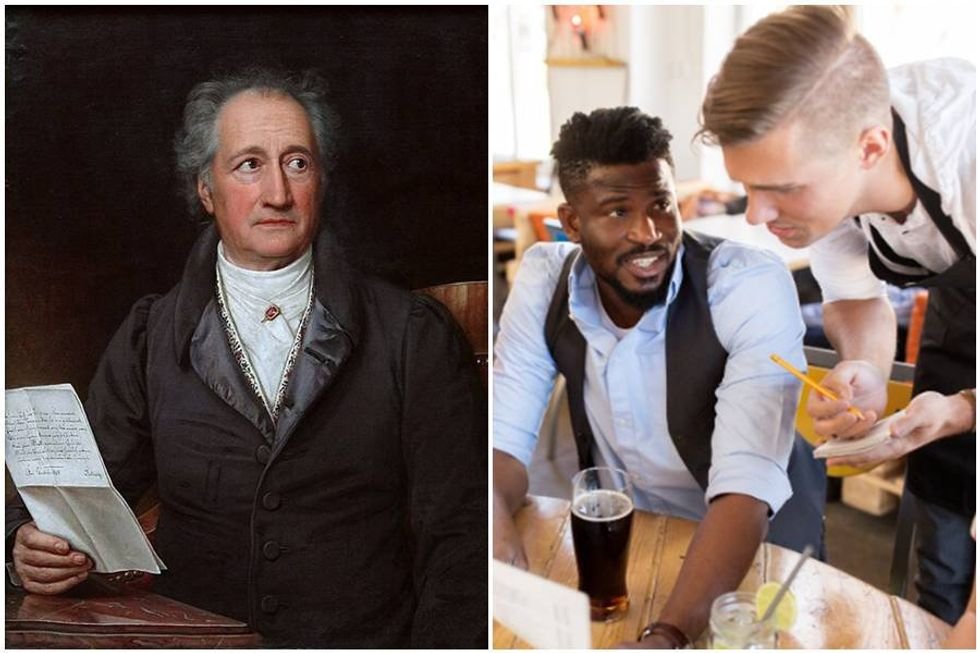
Popular TikTok philosopher and Substack writer Juan de Medeiros recently shared a great way to determine whether someone is good or bad. His rubric for judging someone’s moral character comes from a quote commonly attributed to Johann Wolfgang von Goethe, a German poet, playwright, novelist, and intellectual known for works like Faust and The Sorrows of Young Werther.
How can you tell if someone is a good or a bad person?
“Here’s a pretty good indicator that somebody is a bad person and vice versa, how you can spot a good one. And this goes back to a simple rule, a moral aphorism by Goethe in which he writes, ‘Never trust someone who is unkind to those who can do nothing for him,’” de Medeiros shared in a TikTok video with over 45,000 views.
“Never trust someone who is unkind to those who can do nothing for him.” —Johann Wolfgang von Goethe
De Medeiros then provided real-world ways to determine whether the person you have questions about is good or bad. “A bad person is unfriendly to strangers, to the elderly, to children, to service staff, to anybody they’re not trying to impress,” he said. At the same time, the good person treats people equally, no matter what they can do for him. They’re good for goodness sake, not to get anything out of it.
“A good person carries grace within them and shares it freely with abundance. A good person treats other people as they would like to be treated as well. And it doesn’t matter who you are, it doesn’t matter what your status is, they will treat you and see you as their equal,” de Medeiros said.
an instant green flag was when my current bf took me to a restaurant n the waiter brought us our food but had clearly forgotten about his drink and bc he didn't want her to feel bad he went "hey sorry I forgot earlier but could I also have a glass of water with my *drink name*?"
Goethe’s quote echoes the common red/green flag test that many people have on dates. Sure, it’s important if your date is courteous and treats you well on the date, but you really want to watch how they interact with the server. The rule is often called “The Waiter Rule,” outlined by William Swanson. Swanson, the former chairman and CEO of Raytheon Company, wrote in his book, 33 Unwritten Rules of Management, “A person who is nice to you but rude to the waiter—or to others—is not a nice person.” Boxer Muhammad Ali is also known for saying something similar: “I don’t trust anyone who’s nice to me but rude to the waiter. Because they would treat me the same way if I were in that position.”
'I don't trust anyone who's nice to me but rude to the waiter. Because they would treat me the same way if I were in that position.'
— The Loneliest Sport (@LoneliestSport) April 5, 2023
Rudeness toward the waitstaff also indicates that the person isn’t very smart. It’s not wise to be rude to someone who is in charge of your meal for the night.
Conversely, a good person is kind to others without looking for anything in return because they want to spread joy and believe that others deserve respect. You are what you do, not what you think or believe, and when someone treats others with goodness, it’s a clear indicator of the type of person they are.
In the end, we are all a mixed bag of behaviors and attitudes, and even the most perfect of us has a devil on their shoulder telling them that it’s okay to occasionally get into a bit of mischief. However, when it comes down to determining someone’s core character, how they treat those who can do nothing for them says everything.
This article originally appeared last year. It has been updated.
Generation X (those born between 1965-1980) grew up eating classic Americana meals. During the 1970s, comfort meals like tuna casserole and salmon roquettes were popular meals.
Gen X also grew up eating some pretty unhinged (but all the more yummy) sandwiches. These meals are steeped in childhood nostalgia.
And to this day, Gen Xers are still fond of their favorite dishes they grew up eating. Together, they discussed on Reddit their most-loved home-cooked dishes that they still whip up, starting with sloppy joes.
Here are 17 iconic Gen X comfort meals to keep in mind the next time you make dinner:
“Breakfast. We will have a ‘breakfast for dinner’ at least a couple times a month. Yum!” – fadeanddecayed, KddKc
“Pizza bread! My mom would cut Italian bread into pieces, put butter and garlic salt on them, then pour some spaghetti sauce on them, cover with mozzarella cheese, and broil for like ten or fifteen minutes. Super easy and quick to make and so tasty. I’m sure my mom loved that I was so into something that took roughly zero effort for her to make.” – hornybutired
“Grilled cheese and soup.” – reincarnateme
“Meat loaf. I use 2 pounds ground beef, replace bread crumbs with minute rice, add 1 pkg beef soup flavoring, chop an entire onion for it, and mix BBQ sauce into mixture. Oh, important: do not overmix! Place all ingredients into bowl, then mix quickly 10 or 12 swirls of a large spoon. Grease loaf pan, carefully place mixture in, pat down & bake about an hour. (Extra info: for even better flavor, mix the night before, pat into loaf pan, cover with plastic, put into fridge overnight. Remove from fridge about an hour before baking. BE SURE TO REMOVE PLASTIC WRAP! [Esp. If in Pyrex glass loaf pan])” – jehardt, AbbyM1968
“White guy tacos.” – najing_ftw
“Skillet dinner. Kielbasa, bell pepper, onion, spuds in a cast iron pan. One dish. Easy peasy.” – UnimportantOutcome67
“Chicken pot pie or chicken ala king.” – sattersnaps
“Fried catfish, greens, and red beans and rice.” – User Unknown
“Shepherds pie, technically cottage pie if it’s ground beef. Homemade enchiladas, usually made as a layered casserole instead because I don’t have time to roll them. Pork chops with mashed potatoes and veggies.” – XerTrekker
“Fried rice with chicken or pork leftovers.” – AlternativeResort181
“Hot hamburgers: hamburger patty open face on Texas toast thickness bread, cover with fries then cover that with brown gravy. Wife’s variation is hamburger patty over rice with brown gravy.” – EnricoMatassaEsq
“Stuffed peppers. I make it much more easily by cooking it all in one large frying pan ‘deconstructed’. Sauté onions garlic and ground beef, add cut up peppers, tomatoes or tomato sauce, sometimes a little spinach, then add separately cooked rice, salt and pepper and serve. It comes together pretty quickly and tastes just as good as stuffing and baking peppers in the oven.” – Affectionate-Map2583
“Macaroni and cheese with cut up hot dogs. Seriously, that’s what I ate tonight.” – Dazzling-Walrus9673
“Homemade Stroganoff casserole. Ridiculously easy to make. Ingredients:
1.25-1.5 lbs. Ground Beef 1 each of large white onion, green pepper, and red pepper 1 can mushroom pieces, drained and rinsed 12 oz. Bag of wide egg noodles 1 can cream of mushroom soup 16 oz. Sour cream Worcestershire Sauce Louisiana Hot Sauce White or Black Pepper Panko bread crumbs
To Make: Preheat oven to 360 degrees. Worcestershire, hot sauce, garlic powder, and pepper are all to taste, depending on how much flavor and punch you want it to have. Cook noodles per instructions. Drain. Peel and slice onion (not diced), core and cut peppers into strips Brown meat, onions and peppers along with liberal amount of Worcestershire; garlic, pepper, and hot sauce. Add mushrooms. Cook until meat is fully brown, onions are translucent and peppers are tender. Drain. Combine drained meat, etc. with whole can of soup, half of the sour cream. Gradually add noodles into the mix. Add sour cream as needed to maintain consistency. Add Worcestershire, hot sauce, and pepper to taste. Dump into large, deep Corning dish or whatever. Cover too with bread crumbs. Cover and bake for forty minutes.” – CynfullyDelicious
This article originally appeared last year. It has been updated.
Visiting different states within America can sometimes feel like traveling to a completely different country, given the significant cultural differences and accents. Visiting parts of Louisiana may make you feel like you require a translator to navigate your vacation, as people often speak Creole or Cajun—both of which have very thick, unique accents. Southern Mississippi also has a mishmash of accents that range from Cajun to a non-distinct regional accent.
But one thing North Carolina has in common with states like Texas, Mississippi, and Louisiana is that they all have a range of southern colloquialisms that translate fine between southern states. It’s when those creative southern phrases make their way above the Mason-Dixon Line that causes some confusion. Many southerners who travel north for work, pleasure, or relocation adapt quickly to not using uniquely southern phrases after experiencing looks of bewildered confusion.
Oftentimes, southerners don’t even know where their beloved and well-used phrases originated or why. As far as a Google search pulls up, there’s never been a child born in the world who has ever been small enough to be “knee high to a grasshopper,” but that’s not going to stop PawPaw from saying it. People who are used to hearing the sometimes outrageous phrases simply interpret them themselves and add them to their own lexicon for future use.
General Southern expressions to keep in your pocket
1. “You don’t believe fat meat is greasy.”
This is an expression often used when someone is intent on not listening to advice. It essentially means they won’t believe it until they see or experience it themselves. We all know someone who has to learn lessons the hard way, and this is the saying that conveys that message without sounding harsh.
A phrase like this is used a lot by elders. It just adds a little dramatic flair when they’re making plans. In a conversation, it would go like this: “So, I’ll see you next Sunday at the potluck, right?” There may be a pause for emphasis along with a fist perched on their hip before responding, “The Lord willing and the creek don’t rise.” Just know they’ll be there as long as they wake up in the morning and there’s no natural disaster preventing them from getting there.
3. “There’s more than one way to skin a cat.”
This particular one is a phrase my husband uses often. It is often said by men doing manual labor, whether it’s at work or around the house. If someone is trying something that isn’t working, they have to come up with a better idea of how to make it work. If the original person pushes back on trying it a different way, that’s when you’ll hear, “There’s more than one way to skin a cat.” To date, no one has skinned a cat to prove a point, that I’m aware of, but there’s debate on its origin. It’s believed to come from a phrase used in the mid-1600s in England, “There’s more than one way to kill a dog than hanging.”
Eventually, it got changed to the cat idiom southerners say today, though some suggest the phrase came from when women’s coats were made from cat fur…(that’s information you can’t unlearn). Either way, as someone who has lived in the south for more than 20 years, you can rest assured that the only people skinning cats down here are taxidermists with the pet owner’s permission. Just know they’re saying there’s more than one way to get the job done.
4. “Don’t pee on my leg and tell me it’s raining.”
This is just a fancy way of telling someone not to lie to you.
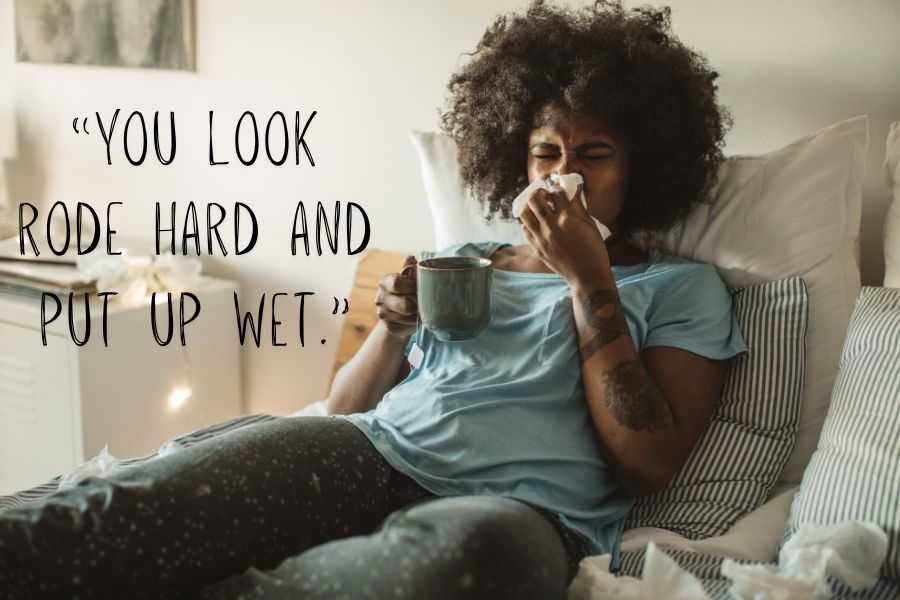
5. “Well, you look rode hard and put up wet.”
Honestly, if someone says this to you, you’re looking mighty bad. This means not only do you look exhausted, but you also look disheveled, and maybe even ill. When people say this, it’s not meant to be rude. They’re typically genuinely concerned about your well-being, whether it be that you appear to need a break or you need to rest and get some soup in your belly.
6. “P*ss or get off the pot” and “Fish or cut bait.”
These two phrases mean the exact same thing. They’re calling out someone’s lack of progress and can be applied to all sorts of situations. It means to do what you’re supposed to be doing or get out of the way so someone else can do the job you won’t. By the time someone says this, they’re a little annoyed, so it’s best to go ahead and “pee or get off the pot” before they move you over and do it themselves.
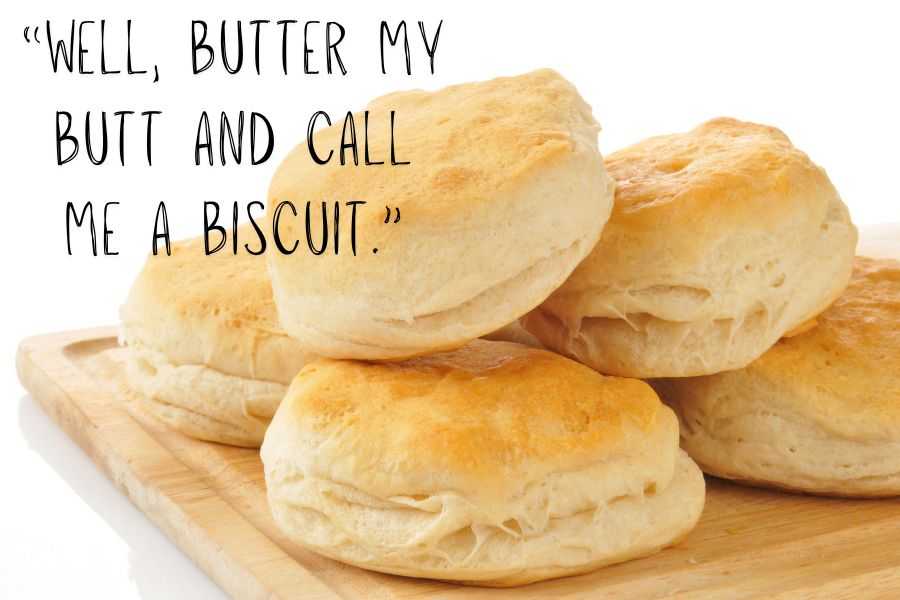
7. “Well, butter my butt and call me a biscuit.”
You can stick this in the same category as, “Well, I’ll be a monkey’s uncle.” It’s meant to convey genuine surprise and delight in information they’ve just received or upon seeing someone they haven’t seen in a while and weren’t expecting. It’s a fun one to say, even outside of the South, due to the humorous element.
8. “I’ve got a hitch in my giddy-up”
You’ve got a limp due to hurting yourself somehow, or you’re feeling under the weather in some way that’s slowing you down.
9. “Why, bless your little pea-pickin’ heart.”
Ouch! You’ve just been insulted, and they wanted to make sure you knew. “Bless your heart” on its own can be said in a condescending way or a genuine, “I’m so sorry you’re going through this” way. Using tone and context clues can help you decipher the difference. But when they add “little pea-pickin” right in the middle of the phrase, go grab some ointment because that was meant to sting.
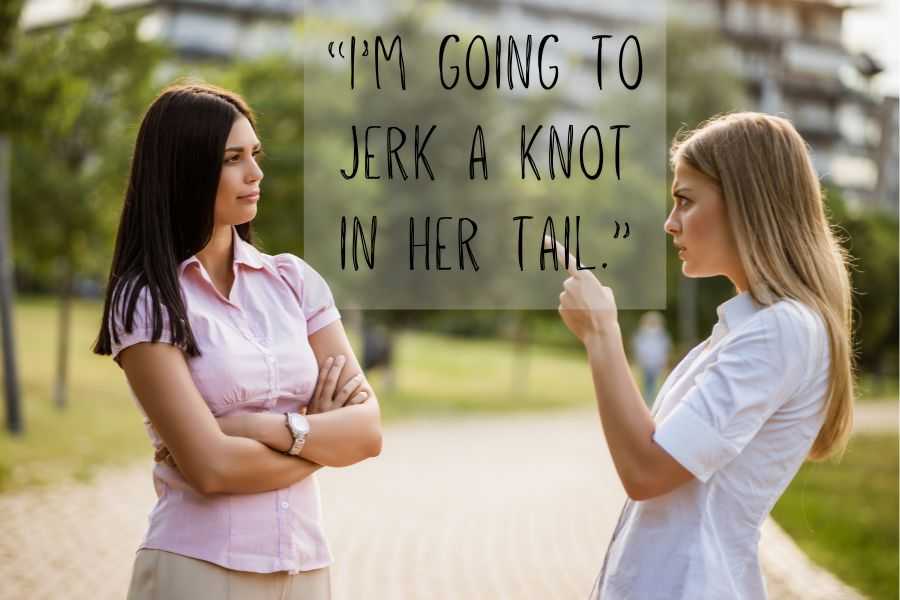
10. “I’m going to snatch her baldheaded.”
Whoever is the target of that comment should probably avoid being around the person making it. See also, “I’m going to jerk a knot in her tail.” When it’s an adult directing the comment at another adult, it could simply mean they’re going to have a verbal confrontation. But, depending on the person, it could also mean physical confrontation because that is not off the table in Southern culture. If it’s a parent directing the expression towards their child, then it usually means that the child is going to get into trouble.
11. “Pull your dress down, everyone can see Christmas.”
This feels self-explanatory, but it’s something you might hear a friend say to another friend to address a wardrobe malfunction. You may also hear a parent telling their young daughter a version of this as they’re learning how to properly sit in a dress. Also see, “Pull down that skirt! We can see clear to the promised land.”
12. “They fell out of the ugly tree and hit every branch on the way down.”
Also in the vein of calling someone unattractive, one might say, “He’s so ugly he could make paint peel.”
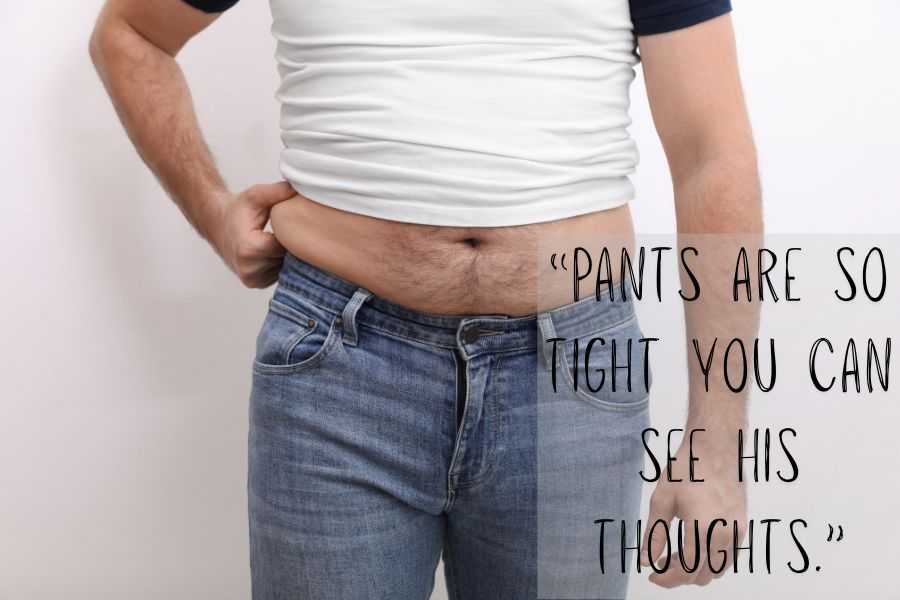
13. “Pants are so tight you can see his thoughts.”
Those are some really tight pants.
14. “She’s just as loony as a Betsy Bug.”
Until today, I had no idea what a Betsy Bug was, but apparently it’s a type of beetle that eats decomposing wood. There doesn’t seem to be an explanation for what makes the beetle loony, though.
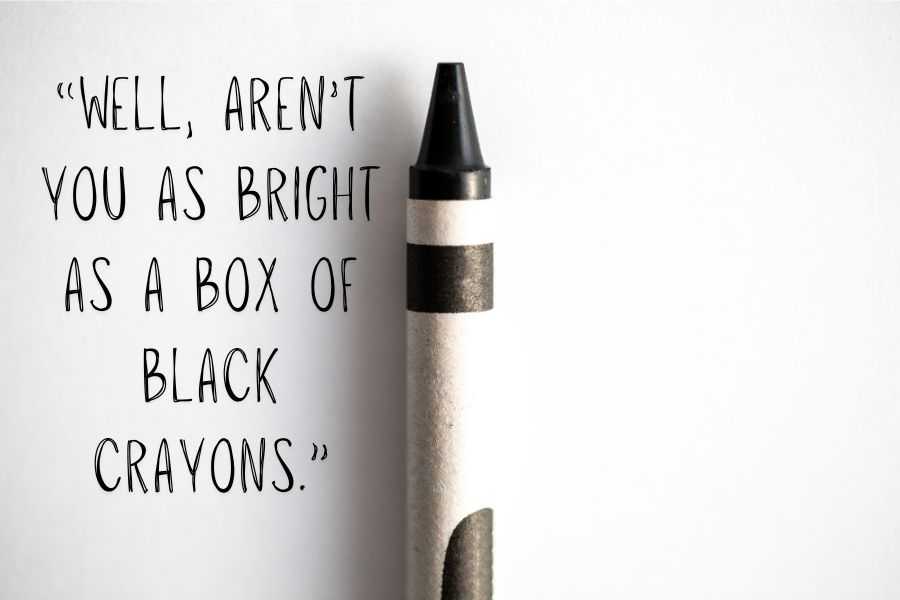
15. “Well, aren’t you as bright as a box of black crayons.”
Have you ever seen a bright black crayon? If southerners are good at one thing, it’s insults.
16. “That boy’s so dumb he’d throw himself on the ground and miss.”
See also: “He ain’t got the good sense God gave a mule,” and, “If he had an idea, it would die of loneliness.”
Bonus sayings you don’t want to miss
Clearly, southerners have a way with words, but there are a few more that can be fun to pull out for a party trick. A favorite is, “That really burns my biscuits,” but a close second is, “I’m fuller than a tick on a dog’s behind.” If you want to get around the ears of nosey children while having a chat about an adult encounter, some people in the south will say, “He took me to church,” “I was singing opera,” or “We stayed in and played the piano.”
Whenever you decide to pull out any of these phrases, just make sure it’s not one that’ll make someone “madder than a wet hen,” and you’ll be golden.
We’re all probably familiar with the term “mansplaining,” when a man explains something to a woman in a condescending or patronizing way. Often, this takes the form of a man explaining a subject to a woman who already knows it at an expert level. The female neuroscientist who was told by a man that she should read a research paper she actually wrote comes to mind.
Often, mansplaining can show up in small interactions that minimize or infantilize a woman’s knowledge and expertise. It can be a man spouting off facts because he thinks it makes him seem interesting, or giving unsolicited fitness advice at the gym in a poorly disguised flirting attempt. But sometimes the irony at play is just too much to bear. Frankly, it’s often delicious.
In 2024, some next-level mansplaining was caught in the wild. Georgia Ball, a professional golfer and coach who’s racked up over 3 million likes on TikTok for all her tips and tricks of the sport, was minding her own business while practicing a swing change at the driving range.
People practicing on the driving range.via Canva/Photos
A man tries to give a female PGA pro golf tips
It takes all of two seconds on Google to see that when it comes to incorporating a swing change, golfers need to swing slower, at 50-75% their normal speed…which is what Ball was doing. And this is what prompted some man to insert his “advice.”
In the clip, we hear the man say “What you are doing there … you shouldn’t be doing that.” Exhibiting the patience of a nun, Ball simply tells him that she’s going through a swing change. But her attempts at reason are unfortunately interrupted, multiple times, when the man repeatedly assures her that, since he’s been playing golf for 20 years, he knows what he’s talking about.
He then insists, repeatedly cutting her off, that she’s going too slow on her swing and should be following through. Cue Ball’s incredulous look to the camera.
Watch the whole, cringe-inducing interaction here:
Hoping to appease him, Ball finally gives a hearty swing, writing “I knew I had to make this a good one” on the onscreen text. As the ball sails through the air, the man says, “See how much better that was?” completely taking credit for her swing. Which is hilarious because she didn’t change a thing she was doing.
Poor Ball then tries to tell him that even the “best players in the world” slow down their swing when going through a swing change. And she’d know. Not only is she a golf coach, but she’s also a certified PGA professional. “No, I understand what you’re saying, but I’ve been playing golf for 20 years,” the man repeats. At this point, Ball is just “trying to keep it together.”
A group of people playing golf, via Canva/Photos
People in the comments couldn’t handle the mansplaining
Sure, this guy might not have known who Ball was, but it’s pretty evident that the last thing she needed was this guy’s “advice.” And thus, the “mansplaining” jokes commenced in the comments section.
Here’s a small sampling:
“As a guy, this is the first time I’ve ever seen ‘mansplaining’ happen.”
“The way he took credit for your next swing.”
“But did you consider that he’s been playing golf for 20 years?”
“*implement nothing he says* ‘See how much better that was’ HAHAHAHAH.”
“My hope is that he comes across this video and it keeps him up at night.”
Others couldn’t help but praise Ball for keeping her cool.
“He doesn’t even give you a chance to explain, just forces his opinion and advice onto you. Goon on you for staying calm and polite,” one person wrote. Of course, others felt Ball was being “too nice” to the man. One even exclaimed, “there’s no reason to be so polite!”
Ball told BBC that it wouldn’t be in her nature to shut the man down harshly, even if that’s what he deserved. “I wouldn’t interrupt and say that,” she says. “I suppose it’s just the humble side of me.”
Perhaps worst of all, this kind of behavior is pretty common, especially for female athletes. A fellow female golfer even commented, “So glad you posted this because it is my BIGGEST frustration when I’m at the driving range. Unfortunately, men always feel the need to comment on my swing or want to coach me. Guys take note: Please don’t.”
On the bright side: as annoying as it is that Ball had to endure that (not to mention what it says about the very real b.s. that women in general have to put up with on the regular), she laughed it off and just went on about her life being awesome at what she does. Just like the other smart, capable women of the world. It’s almost like…maybe women don’t need advice, so much as they need
Ball isn’t holding onto any grudges over the incident
“I have a lot of interaction with males and females every single day [on the course]. And I’d say it’s mostly always positive,” she says. “I’m just glad I can look back at it now and laugh about it because the majority of people and golfers are all just out to help each other.”
Even though her time on the golf tee with the mansplainer was uncomfortable, the reaction to her discomfort has been positive. “The reaction has been so positive,” she told the BBC. “All the support, the comments, the messages, it’s just been so good. And I’m just so grateful for everything that’s come through.”
This article originally appeared two years ago. It has been updated.