Extinction isn’t like leaving for a long trip or studying abroad. When it happens, there’s no coming back. The moment a species disappears, it takes with it millions of years of evolution and an irreplaceable thread in the fabric of life on Earth. That’s it. Bye! Gone forever.
Which is why what happened on February 20, on a remote volcanic island in the Pacific Ocean feels so extraordinary.
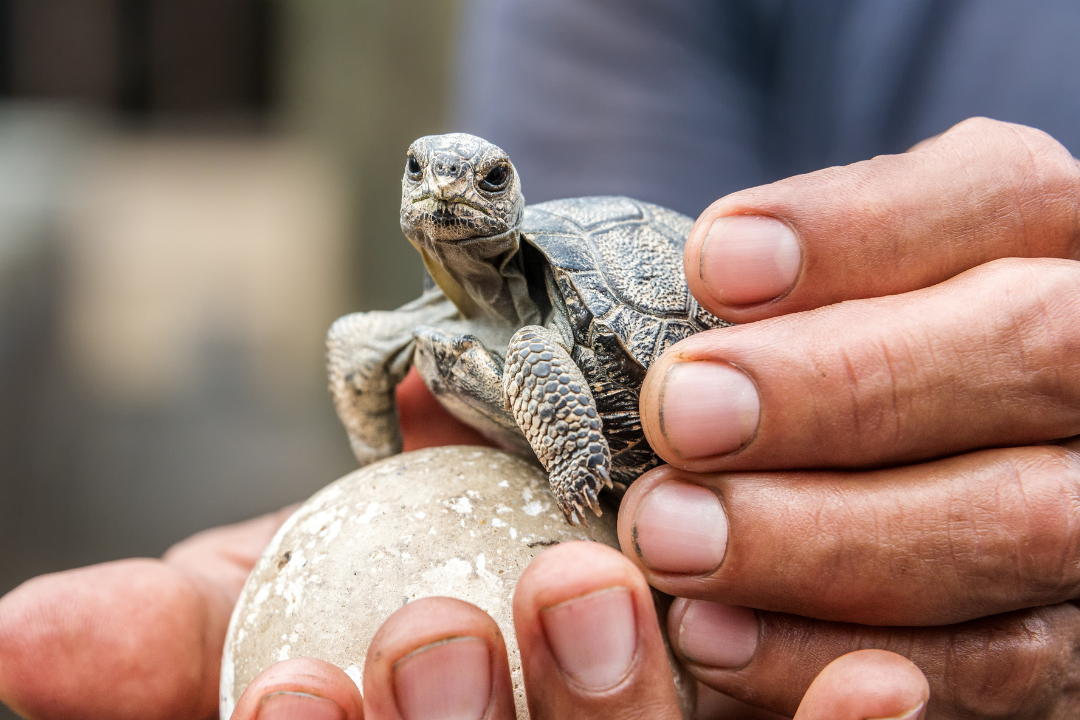
A species that, by all accounts, should have been extinct returned home. That morning, rangers on Floreana Island in Ecuador’s Galápagos Islands set down their packs and gently placed 158 juvenile giant tortoises onto the wet ground—the first of their lineage to set foot on the island in roughly 175 years.
These animals weren’t supposed to exist. Their subspecies was declared extinct in the 1850s. The forces that wiped them out—overhunting, invasive predators, habitat destruction—are exactly the kinds that usually can’t be reversed. But this time, somehow, they have been.
First, here’s what was lost
Long ago—before whalers, settlers, feral cats, and invasive rats—Floreana Island was home to as many as 20,000 giant tortoises. These weren’t just large, slow animals living out their days in the sun. They were ecosystem engineers that carved trails through the vegetation, swallowed whole fruits and deposited seeds miles away, planting forests with every lumbering step. The island’s entire web of life depended on these tortoises.
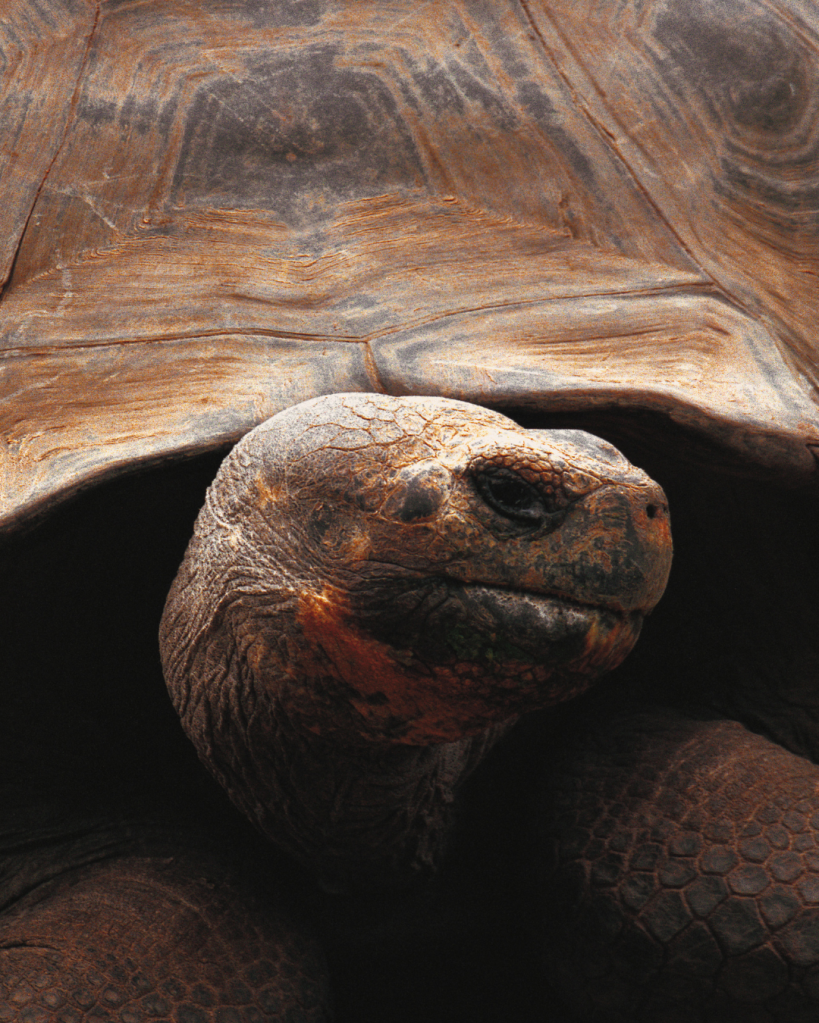
In the 1800s, passing ships discovered that giant tortoises were essentially the perfect food supply for long sea voyages. They could survive in a ship’s hold for months without food or water. A single vessel could haul away 700 tortoises in one visit. Altogether, passing ships took an estimated 100,000 tortoises from across the Galápagos.
And then, sometime around 1850, the Floreana tortoise was simply…gone. On top of that, humans had brought rats, cats, dogs, goats, and pigs with them—devastating the surrounding environment. These new animals destroyed native vegetation and ate tortoise eggs. A massive wildfire in 1820 didn’t help either.
By the time anyone thought to do something, it was too late. Or so everyone thought.
A wild tale
In 2008, scientists exploring Wolf Volcano on Isabela Island noticed something strange. Some of the tortoises had an unusual shell shape: the unique saddleback shell associated with Floreana.
They conducted DNA tests, and the results were nearly unbelievable. These tortoises carried the genetic fingerprint of the “extinct” Floreana lineage.
It turns out that centuries earlier, those same whalers who had stripped Floreana of its tortoises had occasionally offloaded live tortoises onto Isabela Island, as provisions to be retrieved later or to lighten their ships. Some of those tortoises survived, bred, and passed their genes on for nearly 200 years.
The Floreana tortoise had been hiding in plain sight the whole time.
Scientists sprang into action. They selected 23 hybrid tortoises from Wolf Volcano that showed the strongest Floreana genetic signal and brought them to a breeding center on Santa Cruz Island. Starting in 2017, they carefully bred them over generations, patiently guiding their lineage back toward its original form.
By 2025, they had more than 600 hatchlings.
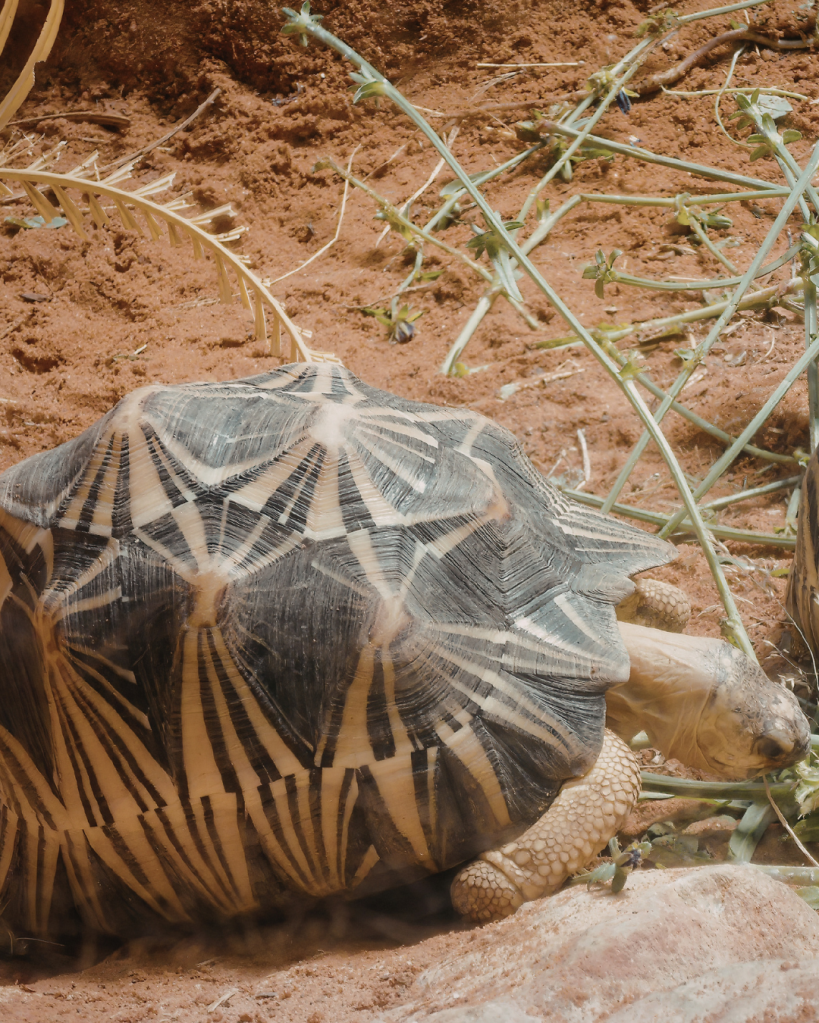
Dr. Jen Jones, chief executive of the Galápagos Conservation Trust, described the moment as “truly spine-tingling,” adding that it validated two decades of collaboration among scientists, charities, and the local community.
But wait—they didn’t just show up and release tortoises
Before a single tortoise set foot on Floreana, the island needed years of preparation.
Remember, Floreana had been overrun with invasive rats and feral cats, the same forces that drove the tortoises to extinction in the first place. They needed to go. In October 2023, the Floreana tortoise team launched a massive eradication campaign with helicopters, aerial baiting, and ground traps.
Oh, and here’s a crucial aspect that’s often overlooked: the island’s approximately 150 residents were actively involved in this endeavor, not mere spectators.
Before the baiting began, community members set up protective enclosures for their pets to prevent harm. Farmers adapted their agricultural practices to best serve the project. Locals also helped with the trapping.
The results were almost immediate. Native Galápagos rails—small birds that disappeared from the island entirely because of rat predation—have already started coming back on their own. Nature, it turns out, is extremely ready to bounce back the moment you give it a chance.
And they’re watching every step
Each of the 158 released tortoises carries a GPS tracker that pings its location every hour via satellite.
On top of that, NASA Earth observation data is overlaid to map vegetation, rainfall, and soil conditions across the island. Scientists use all of this information to build habitat models that can project ecosystem conditions decades into the future, which matters a lot when you’re dealing with an animal that can live over a century.
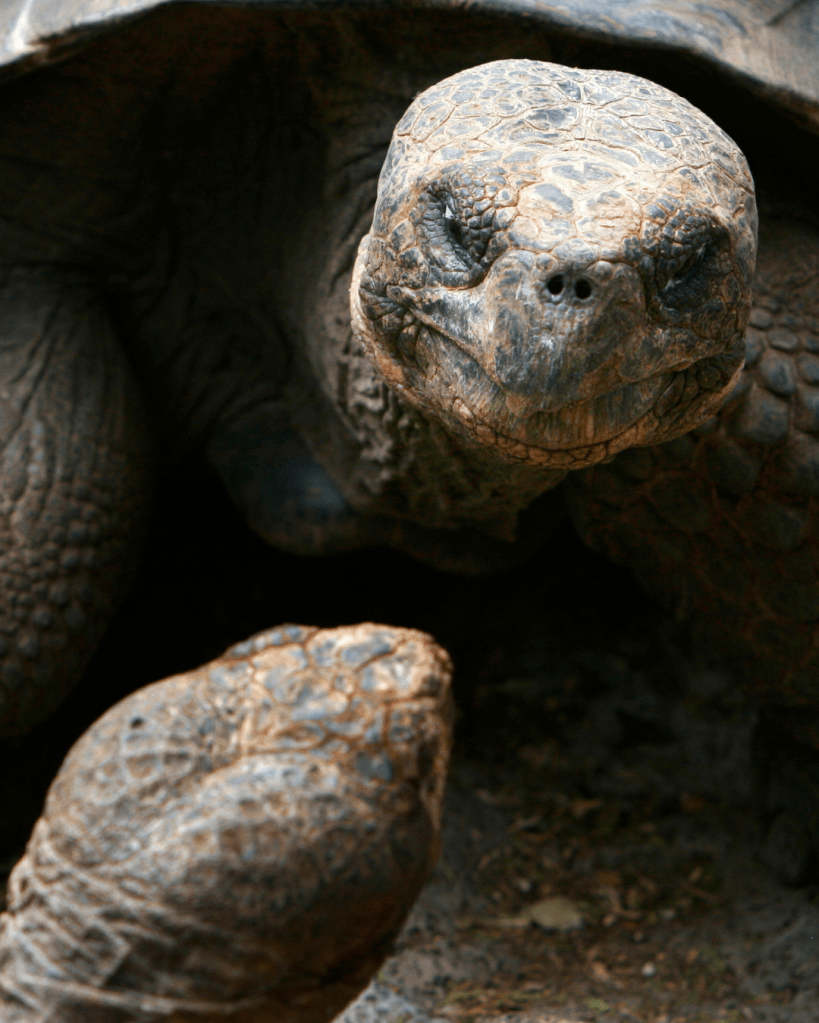
The plan is to release 25 to 100 more tortoises each year, with each group’s release location guided by data on where current tortoises are thriving. Slow and steady. Rather fitting, really.
This is just the beginning
The 158 tortoises are Phase One of a plan to reintroduce 12 locally extinct species to Floreana over the coming decade. Next up? The Floreana mockingbird, a fascinating species that arguably inspired Charles Darwin’s theory of evolution when he visited the island in 1835. Sadly, it now only exists on two tiny offshore islets.
After that: Darwin’s finches, Galápagos racer snakes, the lava gull (the world’s rarest gull), and, eventually, the Galápagos hawk, the apex predator whose return would signal a fully restored food chain.
Each species added to the island increases the likelihood that the next will succeed. That’s how ecosystems work. And honestly, it’s a pretty good lesson for the rest of life.