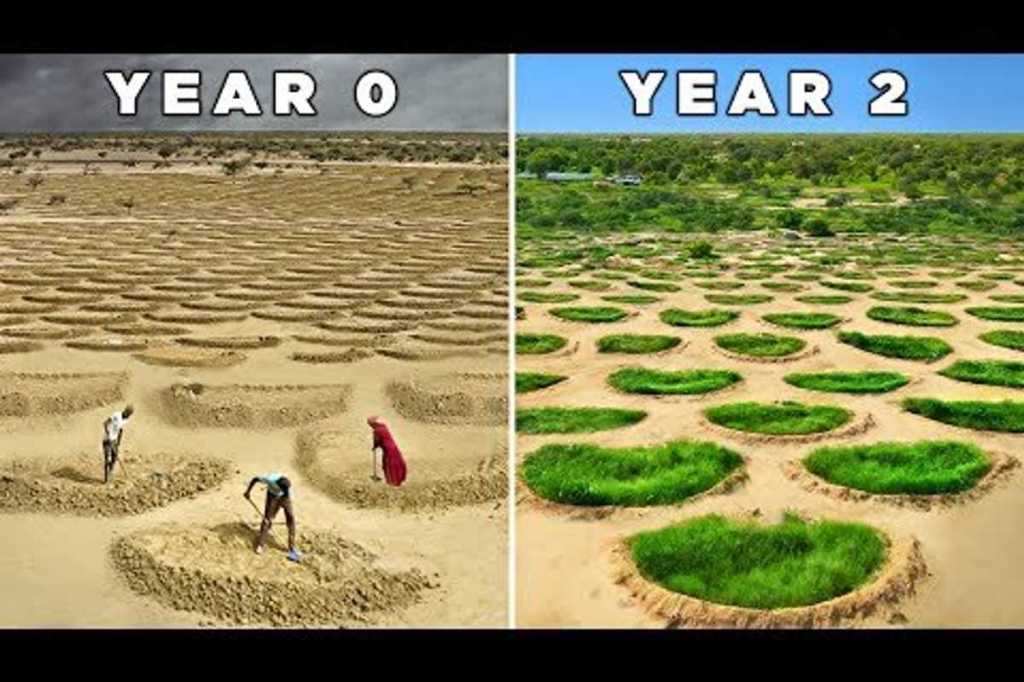
Can a farm grow in a desert without bringing in enormous amounts of water? With the right method, yes.
In 2007, the Great Green Wall initiative was launched by the African Union, with a vision of a big, beautiful wall of greenery spanning the width of Africa to keep the Sahara Desert from encroaching on the rest of the continent. Since then, there have been successes and failures, celebration and criticism, and the future of the project is tenuous. However, we can still see within it some inspiring examples of how local and global collaboration can help counter the effects of climate change.
Just a few years ago, the Sahel region at the northern edge of Senegal was a “barren wasteland” where nothing had grown for 40 years. But the United Nations World Food Programme (WFP) and local villagers teamed up to regreen the area, bringing back agriculture, improving the economy of the people who live there, and preventing the climate migration that desertification ultimately leads to.
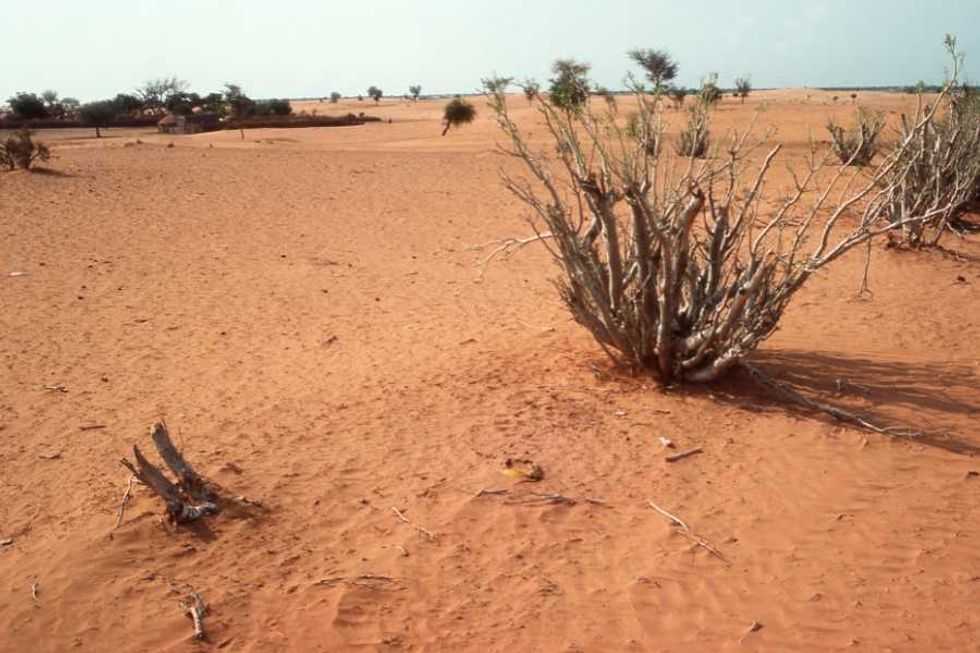
How do you hold back the world’s largest hot desert?
According to Andrew Millison, a permaculture designer and instructor at Oregon State University, the Sahara desert has expanded by about 10% in the past 100 years. The idea behind the Great Green Wall is to build a barrier of vegetation to stop that desertification, which threatens the ecosystems and economies of the Sahel—the region south of the Sahara that separates the desert from the savanna.
In a video from February of 2024, Millison shared the collaborative nature and progress of one Great Green Wall project in Senegal, including the rejuvenation of 300,000 hectares (about the equivalent of 600,000 football fields) of seemingly unusable land.
Watch:
“The process started with the community-based participatory planning,” WFP program policy officer Bakalilou Diaby shares in the video. “By the end of this process, it was agreed that one of the major action is the land reclamation or land recovery project.”
At first, it took some time to convince the community that the regreening of the degraded landscape was even possible, but after learning about how to improve the land, “the people believe and they are convinced, and they are also committed,” says Diaby.
The ‘forgotten’ half-moon method of harvesting water
One of the keys to this particular regreening project is using long-forgotten techniques for harvesting water. When soil is crusted and sunbaked and hard as cement, rainwater doesn’t penetrate and it’s impossible for plants to take root. The solution? Half-moon-shaped ditches dug in such a way that water flows into them on the straight side, with an embankment built on the rounded side to hold the water in. Each half moon is 4 meters in diameter and takes about a day for one person to dig.
Local vegetation domesticated on the Sahel thousands of years ago, such as sorghum and millet, are planted in these half-moons, rehabilitating the land and feeding the local community at the same time.
“This is nothing new—we have not invented a technology here,” explains Sebastian Muller from the WFP resilience team. “The half moon technology is actually an endogenous technology to the Sahel and has been forgotten over time. We have rescued it from the past.”
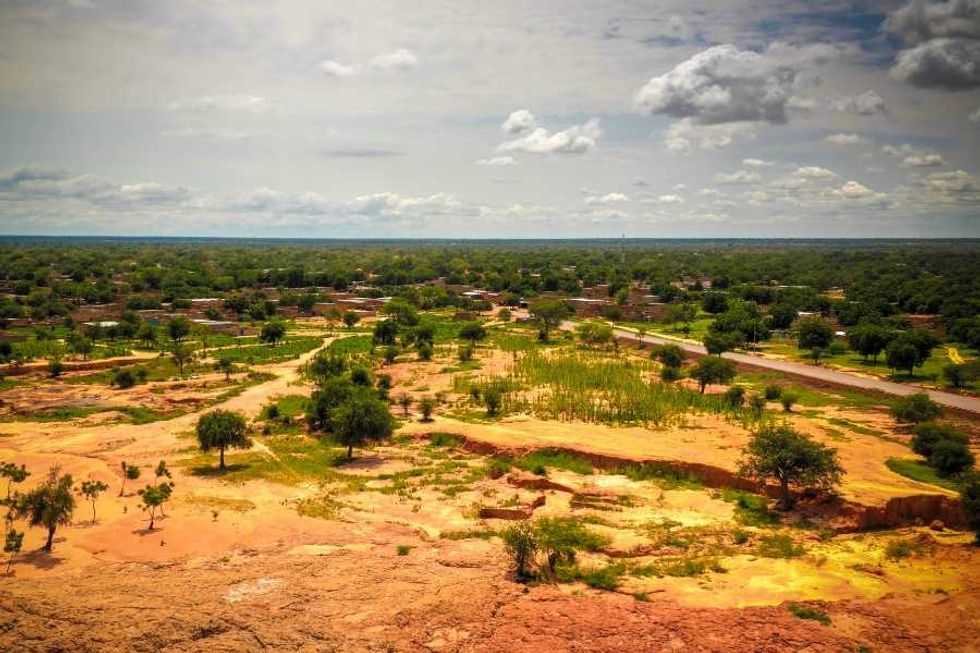
Not only does capturing water in the half moons help with the immediate need to grow food and contribute to the Great Green Wall, but 10% to 15% of the water will actually soak into the ground to replenish the water table, creating a more sustainable agricultural process.
“That way we actually achieve a balance of water. So we are not depleting the water resources, but we’re making sure that we keep enough water in the ground for future generations,” says Muller.
Other crops such as okra and tomatoes are grown in horizontal horticulture beds, and between those ditches grow trenches with fruit trees in them.
Engaging indigenous wisdom for sustainable farming
“This is just a very first step in this pilot,” adds Muller. “We’ll also be using other native species that will be planting in the pits that will drive the rejuvenation of the soil and the protection of the soil as the system starts growing into abundance and producing food and life for the people here.”
According to Muller, the “syntropic farming” methods being employed were developed in Brazil and are based on global indigenous practices that mimic the way natural forests grow and thrive. These natural growing dynamics make agriculture more sustainable, continually replenishing the land rather than continually depleting it—truly a testament to global collaboration carried out at the local level with local community support.
“This project was really, really interesting because the World Food Programme wanted to demonstrate how you could take the most devastated areas and turn them back into resilient, food-producing locations,” says Millison. “And they specifically placed their project on a very degraded landscape that had been taken down to bare, compacted earth.”
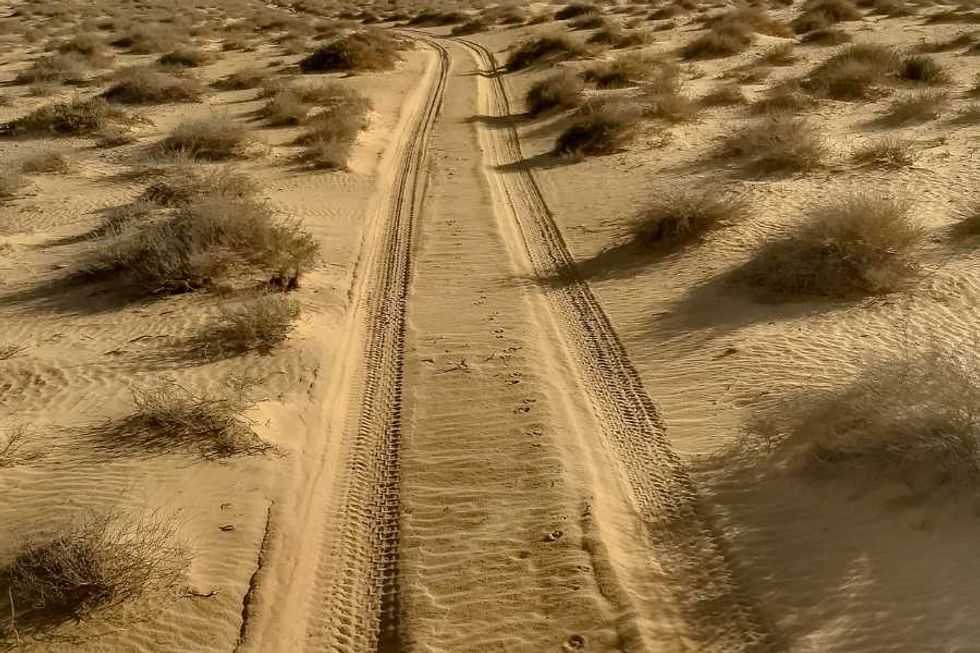
Unfortunately, it’s not only a changing climate that we have to contend with. The Great Green Wall in the West African nations of Nigeria, Niger, and Burkina Faso, has been impacted by terrorism and insurgencyterrorism and insurgency. Such widespread insecurity makes doing the environmental work the project demands difficult, and in some cases, impossible.
Still, if this desertified “wasteland” can be rejuvenated so successfully, it provides hope for recovering other land that many people might write off as useless or barren. As climate change continues to alter the Earth’s landscape—literally—we’ll need to keep working together both locally and globally to find solutions like the Great Green Wall and support their implementation.
You can learn more about successful permaculture practices on Andrew Millison’s YouTube channel.
This article originally appeared in January.